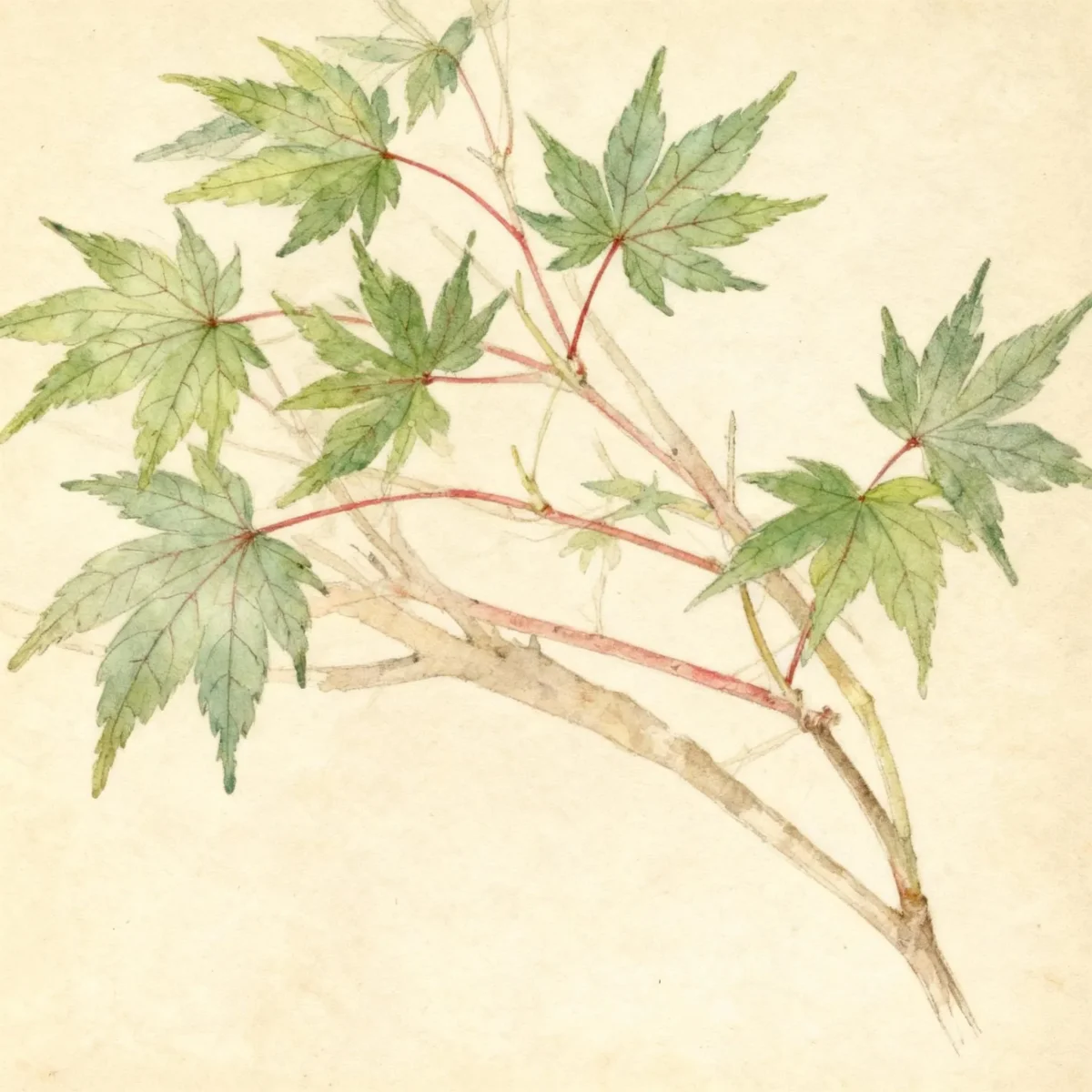
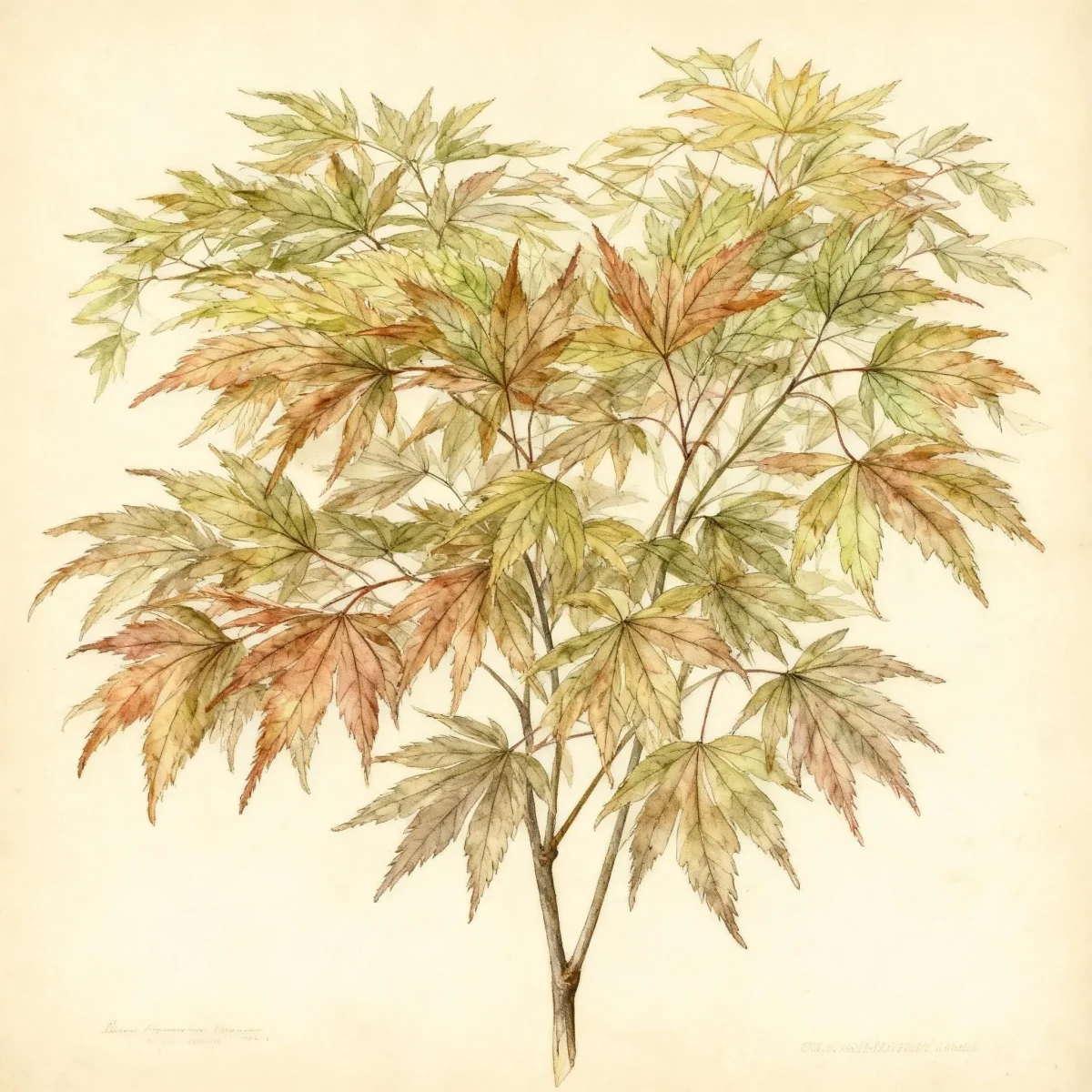
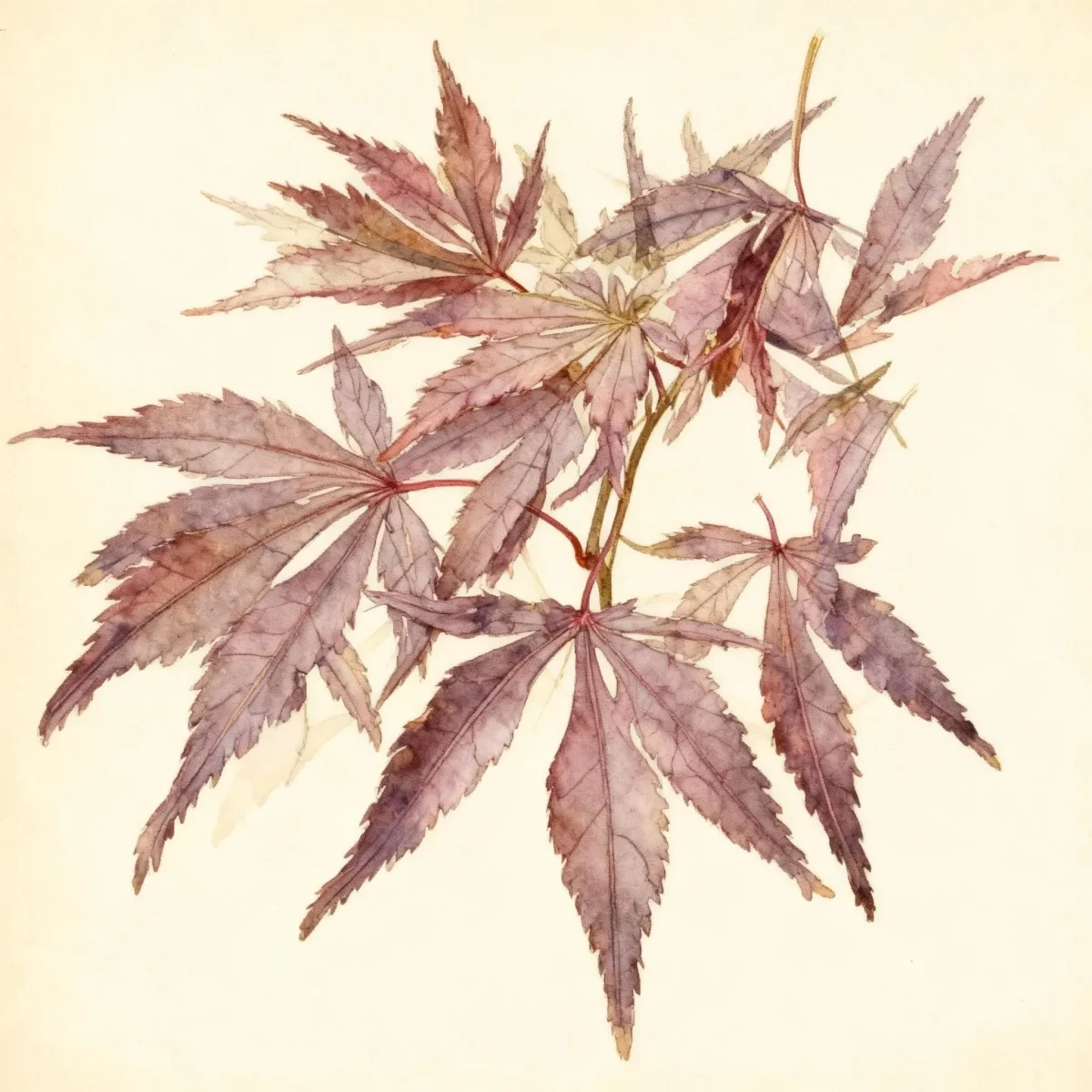
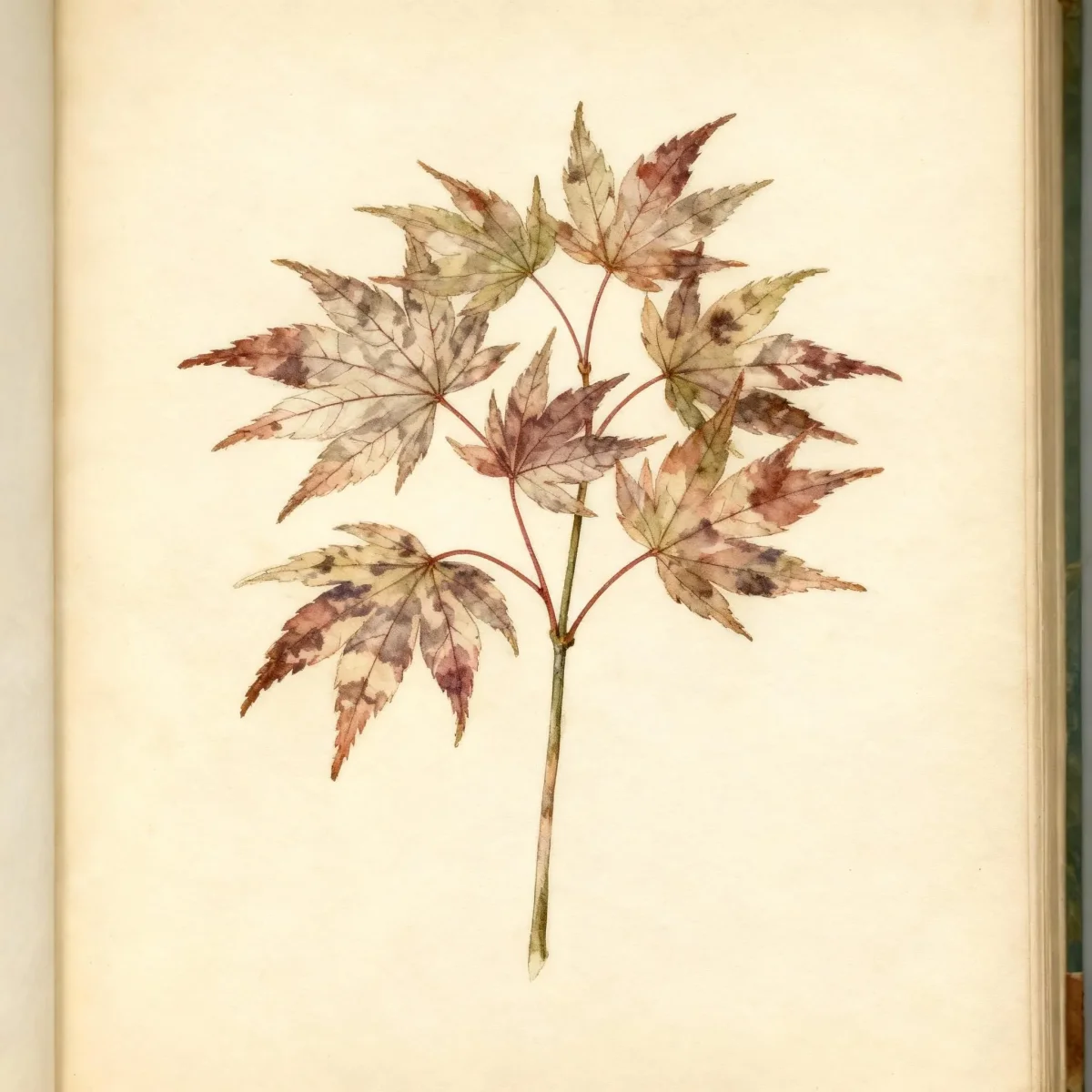
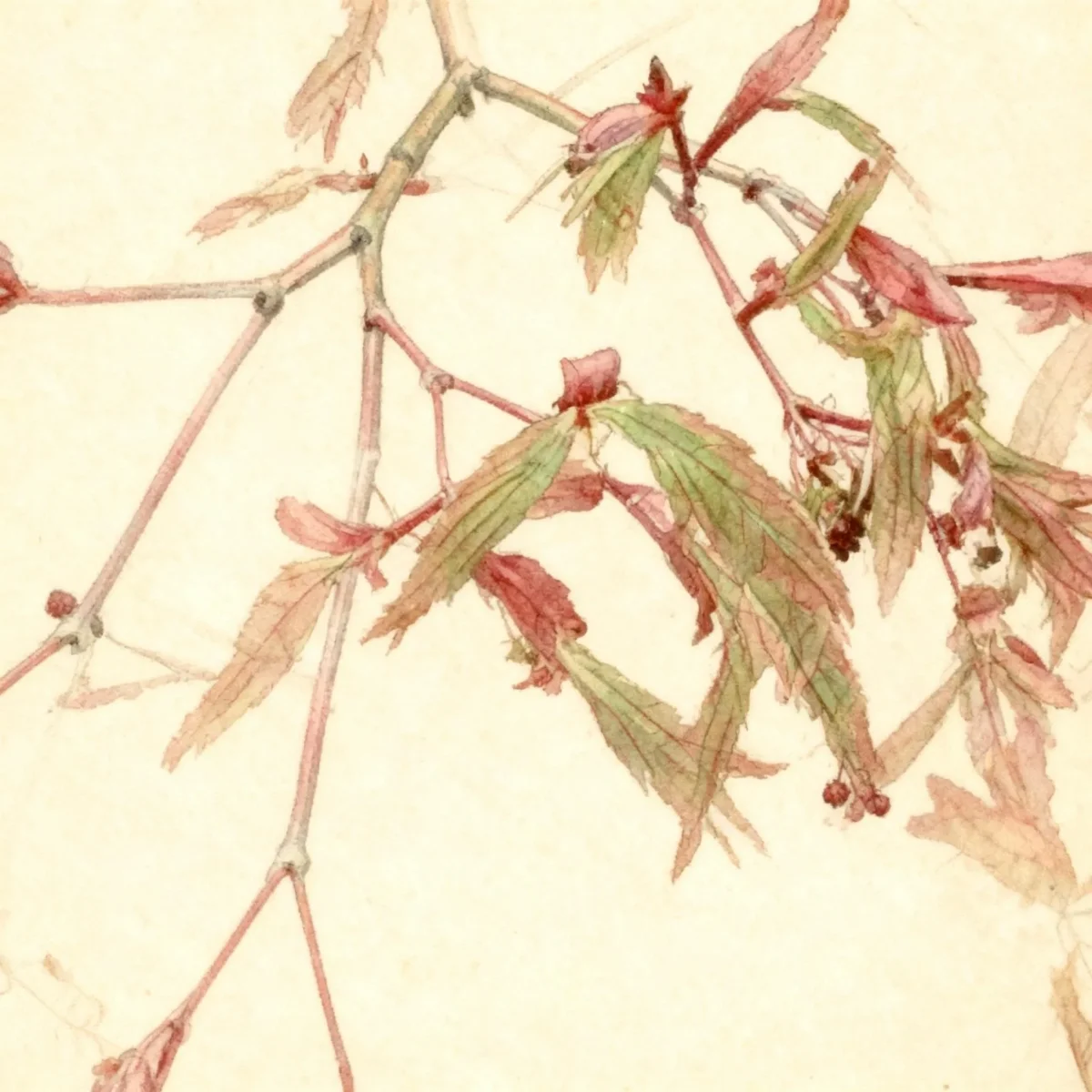
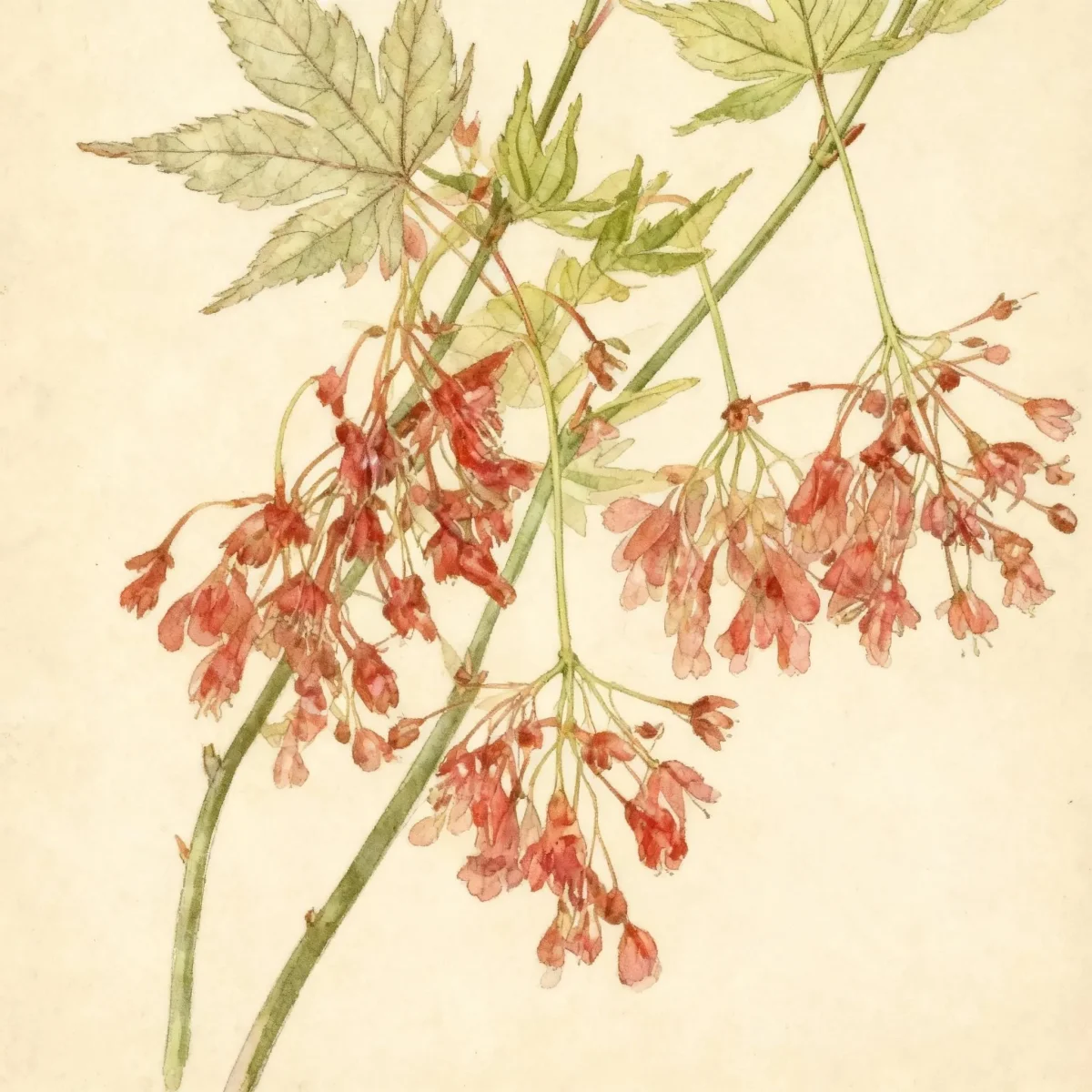
Japanese maple (Acer palmatum 'Higasayama')
Acer palmatum 'Higasayama', Japanese maple, features stunning variegated spring foliage that matures to green, offering layered seasonal interest.
Scroll down to discover growing tips, care requirements, companion plants, and more
Complete Plant Information
Overview
The Acer palmatum ‘Higasayama’ is a highly sought-after cultivar of the Japanese maple, prized for its spectacular, slow-developing variegated foliage. This upright small tree offers dynamic color throughout the season, starting with creamy white margins tinted pink over green spring leaves. Its relatively compact, mature size makes this Japanese maple a strong vertical accent in designed landscapes.
Growing Acer palmatum ‘Higasayama’ successfully relies on providing consistent moisture and protection from harsh environmental factors. While it can handle full sun in cooler climates, southern gardeners must site this variety where it receives afternoon shade to prevent leaf scorch during hot summers. The overall appeal of this cultivar lies in its unique leaf patterning and excellent vertical structure.
Gardeners value this specimen for transforming small spaces or softening woodland margins where dappled light prevails. Its low maintenance needs, once established in ideal conditions, ensure that the beauty of the variegated leaves remains the main focus throughout the growing year.
Fast Facts
- Plant Family: Sapindaceae
- Plant Type: Tree
- Hardiness Zones: USDA Zones 5-9
- Size at Maturity:
- Height: 15-20 ft
- Spread: 12-15 ft
- Bloom Time: April
- Bloom Description: Red
- Sun Exposure: Full sun to part shade
- Water Needs: Medium
- Maintenance Level: Low
How to Grow
Planting Acer palmatum ‘Higasayama’ is best achieved in the fall or early spring when temperatures are moderate. Choose a location offering moist, organically rich, slightly acidic, and very well-drained soils; sandy loams are tolerated well. Ensure the chosen site is protected from strong winds, which can damage the developing leaves.
Maintain medium water needs by keeping the soil consistently moist, especially during hot summers when scorching is possible. Applying a layer of mulch will effectively retain soil moisture and keep the roots cool, which is crucial for a healthy Japanese maple. Fertilize lightly in the spring before the leaves emerge.
Pruning should be kept to an absolute minimum for this ornamental tree. If necessary, avoid spring or summer pruning entirely, as this often results in significant sap bleeding. The correct time for any shaping or removal of dead wood is late fall through mid-winter.
Landscape Uses
Japanese maples are fundamentally grown for their dramatic foliage and refined shape, making the Acer palmatum ‘Higasayama’ an exceptional focal point. Use this cultivar as a specimen plant where its slow growth and distinctive leaf coloration can be appreciated up close. It works wonderfully as an accent near entryways or within mixed borders edging a patio space.
Due to its upright habit, this Japanese maple functions well near the periphery of a border, providing layered screening without becoming overly dense. It also excels as a sun-dappled understory element beneath larger, high-canopy trees, mimicking its native woodland environment. Consideration for container culture is also possible for smaller spaces, though monitoring moisture will become more frequent.
Standout Features
Flower Qualities
- Insignificant
Noteworthy Characteristics
Acer palmatum, commonly called Japanese maple, is a deciduous shrub or small tree that typically grows to 10-25’ (infrequently to 40’) tall. It is native to Japan, Korea and China. General plant form is rounded to broad-rounded, often with low branching. Each palmate green leaf (2-5” long) has 5 or 7 but less frequently 9 pointed toothed lobes. Small reddish-purple flowers in umbels bloom in mid spring (April). The flowers are rather attractive close up, but are not particularly showy from a distance. Flowers are followed by samaras (to 3/4” long) in pairs. Samaras ripen in September-October. Fall color includes shades of yellow, red-purple and bronze. Cultivars (often grafted) are quite variable. Genus name is the Latin name for a maple tree. Specific epithet is in reference to the palmate nature of the leaves. Each leaf has several lobes (typically 5-7) that all originate from one point looking like an open hand with outstretched fingers. ‘Higasayama’ is an upright cultivar that is noted for its variegated foliage which changes colors throughout the growing season. This small tree typically grows to 6-8’ tall and to 3’ wide over the first 10 years, but eventually matures over time to 15-20’ tall and to 12-15’ wide. Palmate leaves (to 2 1/2” long) are divided into lanceolate, slender tipped lobes (usually 7) with toothed margins. Lobes on spring leaves are green-striped along the center midribs with contrasting creamy white margins tinted with pink. Leaves mature to green in summer. Leaves turn bright shades of gold and red in fall. Small reddish flowers in spring are somewhat attractive on close inspection, but are not showy from a distance. This cultivar was named after Mt. Higasa in Japan.
Tolerances
- Rabbit
- Black Walnut
Potential Problems
This fine specimen can be susceptible to various fungal diseases, including stem canker, leaf spots, fusarium, botrytis, anthracnose, and verticillium wilt. Monitoring for these requires vigilance, especially regarding poor air circulation in dense plantings. Ensuring excellent drainage is the best defense against root rots associated with overly wet soil conditions.
Insect pests such as aphids, scale, borers, bagworms, and root weevils can bother your Japanese maple. Mites can also become troublesome if the location is too hot or dry, stressing the plant. If you notice early leafing followed by frost damage, site the plant where it receives slight protection from late spring cold snaps.
Chlorosis, a yellowing of the foliage, is a common sign that the soil pH is too high; amend the soil to ensure it remains slightly acidic for optimal nutrient uptake by the Acer palmatum ‘Higasayama’.
Frequently Asked Questions
What hardiness zones is Japanese maple suitable for?
The Acer palmatum ‘Higasayama’ is best suited for USDA Hardiness Zones 5 through 9.
How large does Japanese maple grow?
This specific cultivar typically matures to a height between 15 and 20 feet, with a spread ranging from 12 to 15 feet wide.
What sun exposure does Japanese maple need?
Acer palmatum ‘Higasayama’ thrives in locations ranging from full sun to part shade. Remember that southern gardeners should prioritize morning sun and afternoon shade.
When does Japanese maple bloom?
The small, reddish flowers of this Japanese maple appear in April.
Conclusion
The Acer palmatum ‘Higasayama’ stands out due to its dynamic, variegated foliage that shifts from pink-margined in spring to deeper tones in autumn. This low-maintenance Japanese maple provides essential vertical interest in garden design. Before planting, confirm your site offers consistently moist, well-drained, slightly acidic soil to ensure the best performance from your new specimen.
Companion Planting
When selecting companions for your Acer palmatum ‘Higasayama’, aim for plants that share similar requirements for moisture and light conditions. Plants that thrive in dappled shade and consistently moist soil provide an ideal understory or border contrast. Consider pairing it with shade-tolerant groundcovers like Hosta varieties, particularly those with deep blue or chartreuse foliage to offset the lighter tones of the Japanese maple.
For vertical contrast, consider evergreen foundation shrubs that remain visually interesting in winter when the maple is dormant. Rhododendrons or Azaleas often appreciate the slightly acidic soil conditions favored by this tree and provide excellent textural contrast when both are in bloom. Ensure planting distances respect the mature spread of 12-15 feet for the Acer palmatum ‘Higasayama’.
Seasonal Care Calendar
Spring preparation involves fertilizing just before the leaves emerge and carefully watching for late frosts that could damage the delicate new variegated growth. Mulching applications should be refreshed at this time to lock in spring moisture. Conversely, spring pruning must be strictly avoided to prevent heavy sap flow.
Summer care revolves primarily around irrigation; although the Acer palmatum ‘Higasayama’ is listed as medium water need, hot, dry spells require supplemental watering to prevent scorching, especially in high-sun areas. Check regularly for signs of mite activity if the weather is particularly hot.
Late Fall to mid-winter is the critical window for any necessary pruning or shaping of this Japanese maple. Hard pruning during the growing season must be avoided. Inspect the base of the tree, ensuring mulch is not piled directly against the trunk (avoid creating a volcano mulch effect) to prevent moisture retention and pest harborage.