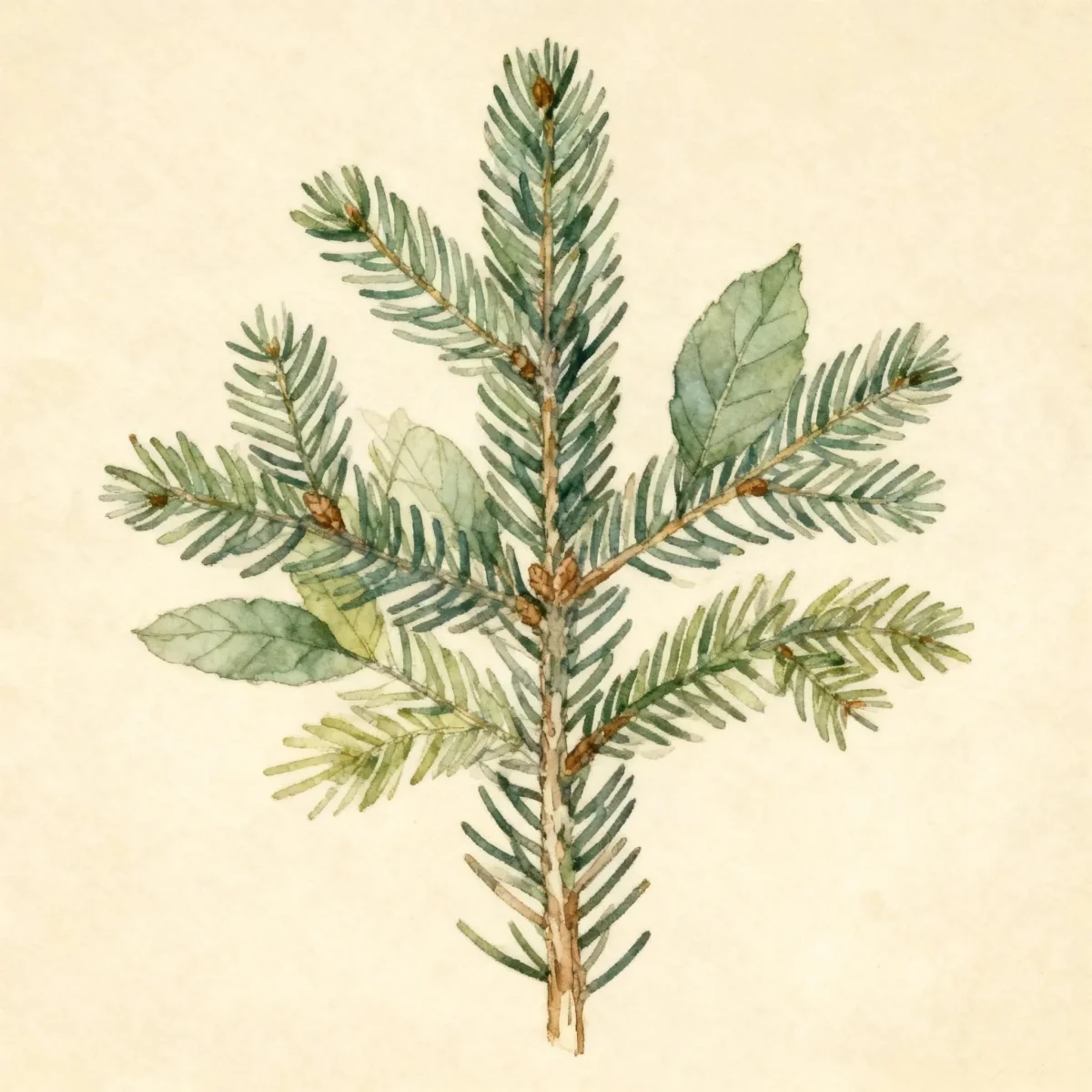
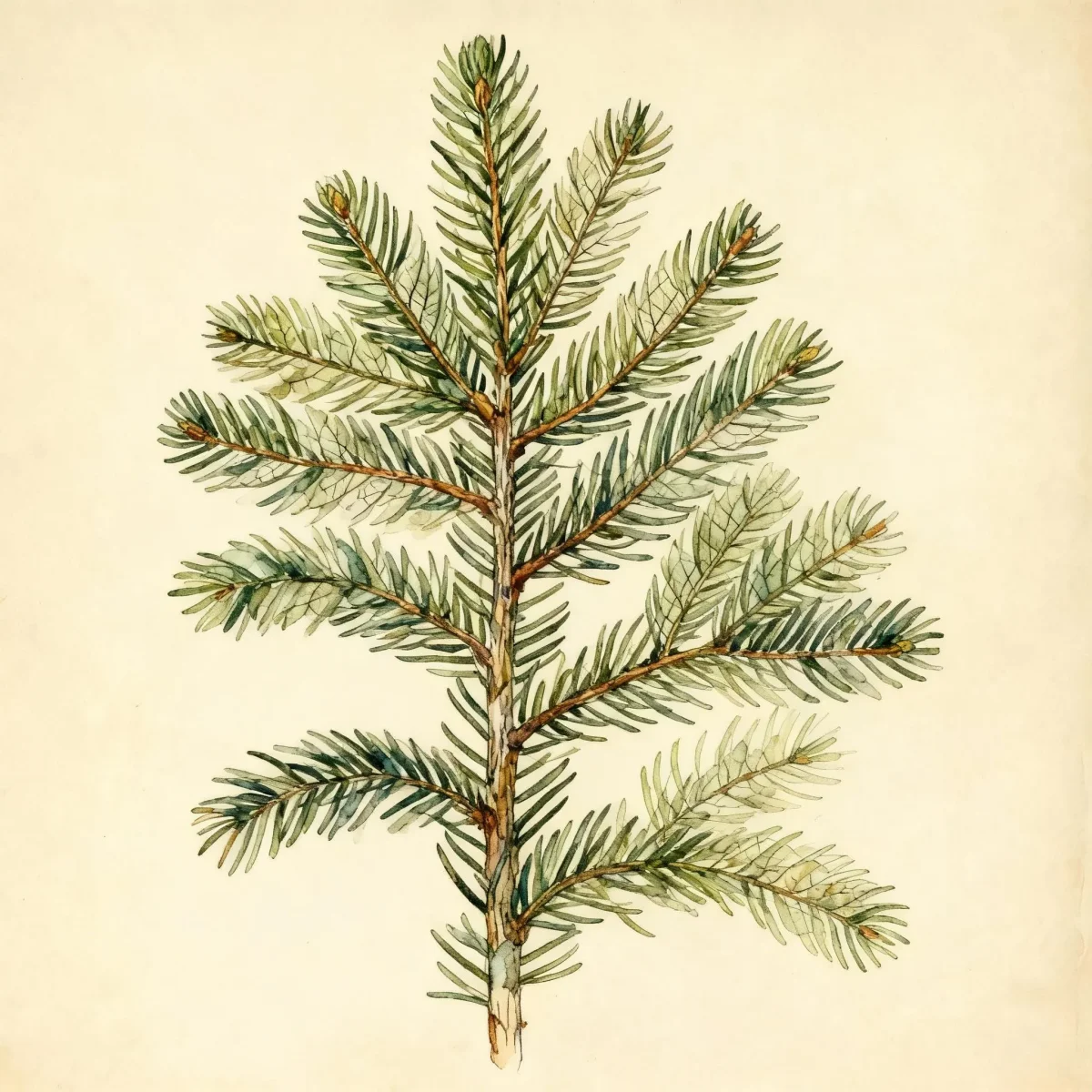
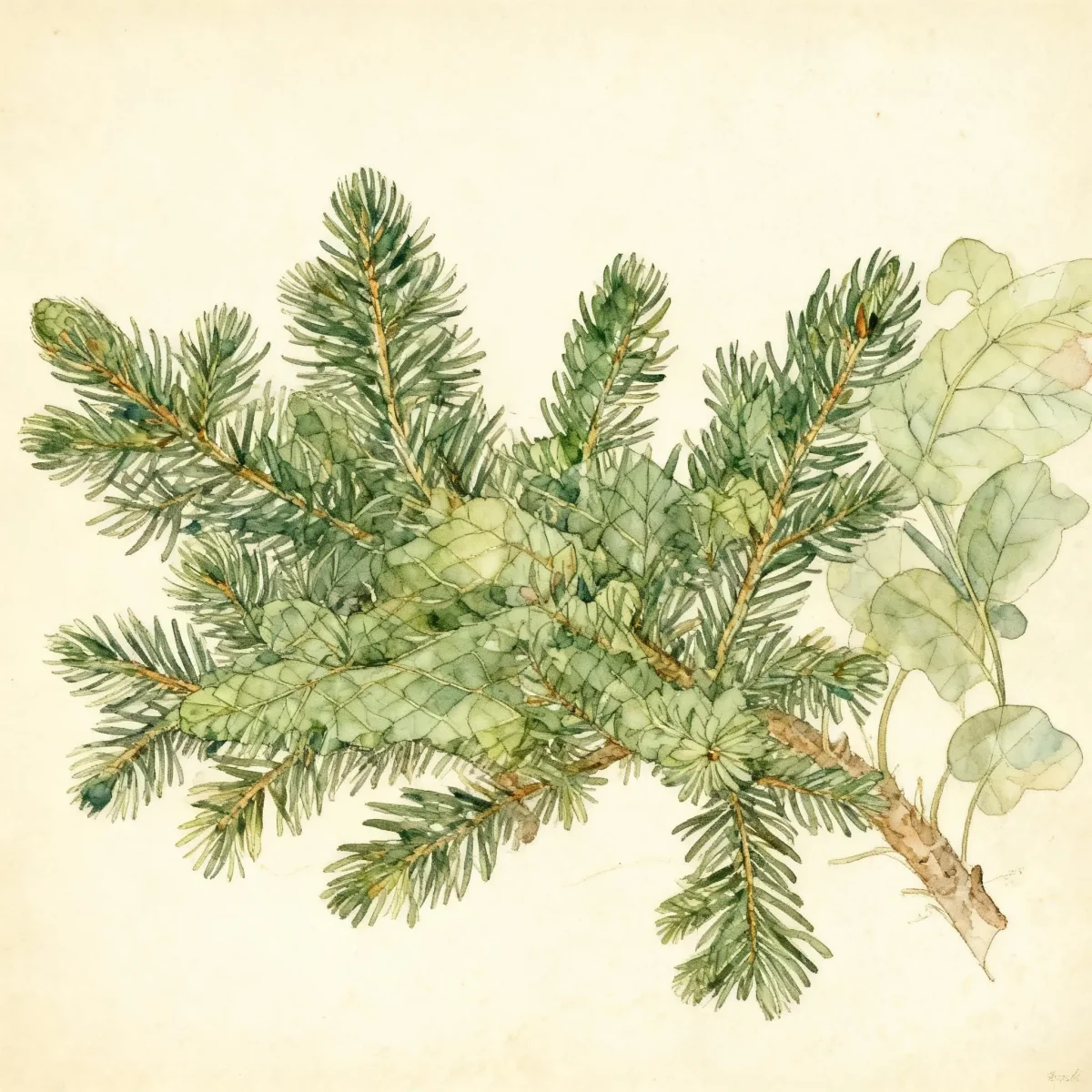
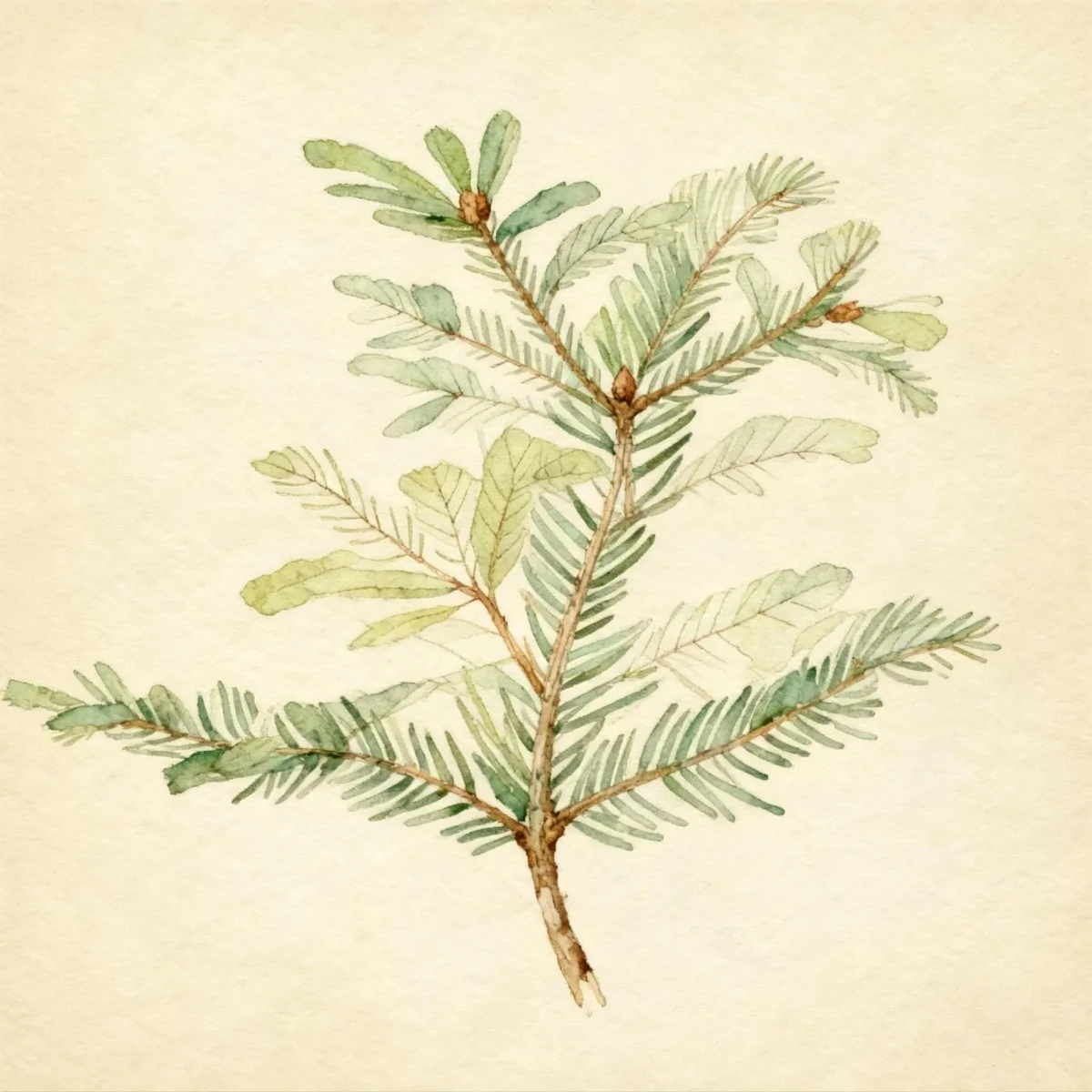
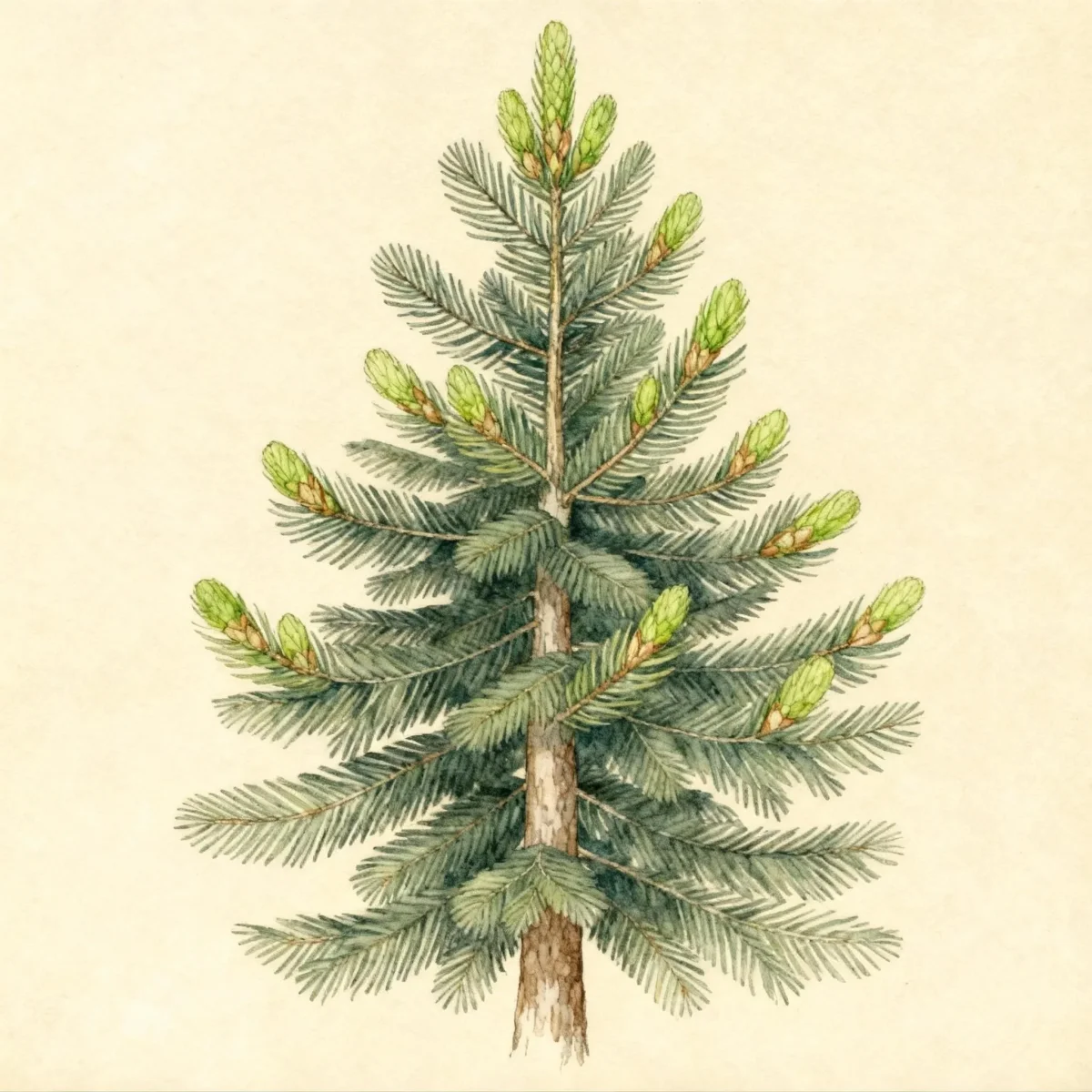
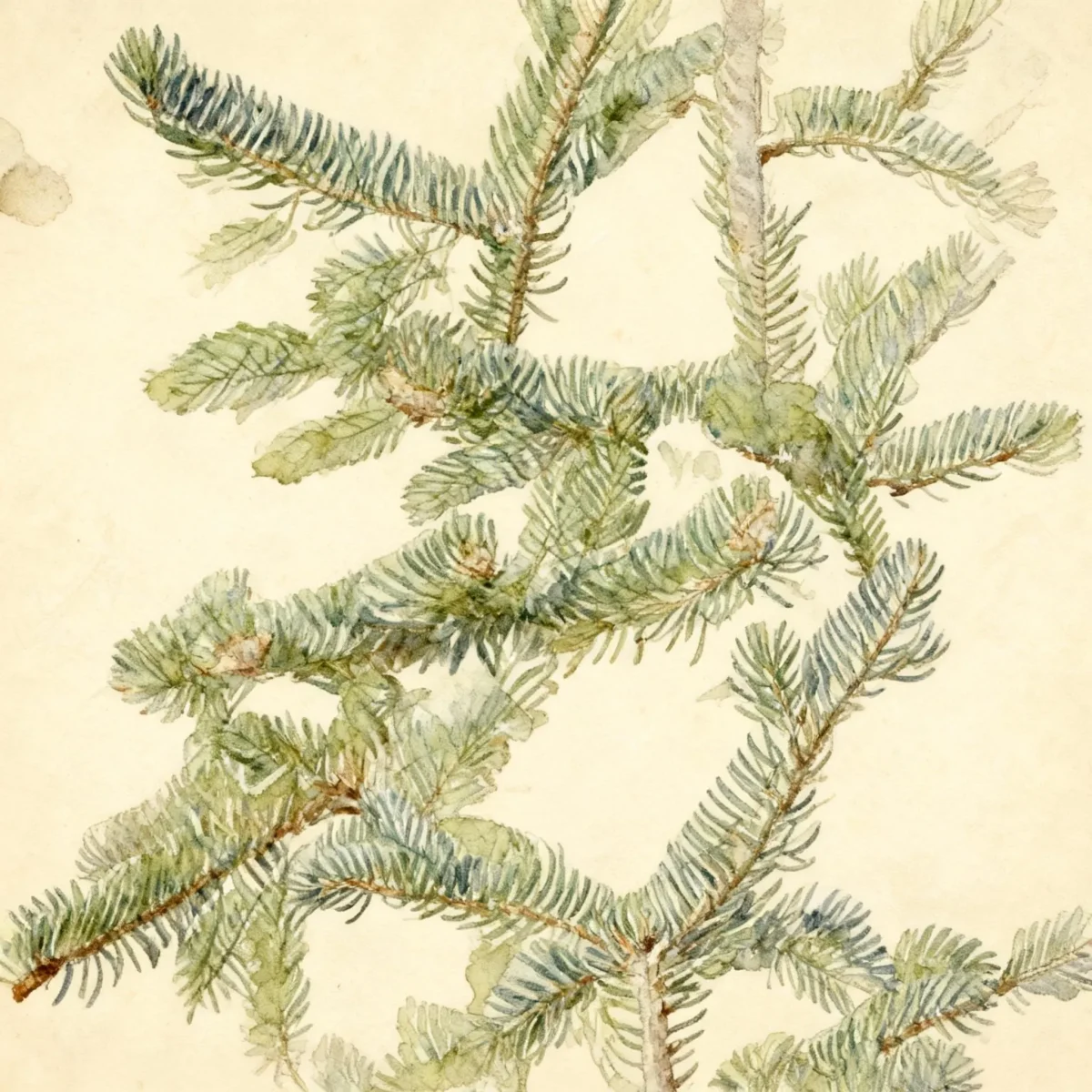
Balsam fir (Abies balsamea 'Nana')
Dwarf evergreen conifer, Abies balsamea 'Nana' provides dense, aromatic dark green needles in USDA Zones 3-6. Ideal specimen plant.
Scroll down to discover growing tips, care requirements, companion plants, and more
Complete Plant Information
Overview
The Abies balsamea ‘Nana’, commonly known as dwarf Balsam fir, is a highly prized, densely growing, slow-spreading evergreen perfect for smaller garden spaces. This cultivar retains the wonderful aromatic quality typical of its larger cousin but is suited for areas where a 70-foot tree is impractical. Its rich, dark green needles provide year-round color and texture.
This miniature conifer offers a symmetrical, pyramidal shape without the need for constant shaping, making it a fantastic low-maintenance focal point. It forms a durable, structural element in the landscape, contrasting well with fine-textured perennials or broadleaf shrubs. The slow growth rate of Abies balsamea ‘Nana’ ensures it remains compact for years.
Gardeners value this variety for adding that classic, often northern forest aesthetic to foundation plantings, rock gardens, or specimen placement. While the full-sized Balsam fir is a major component of the boreal forest, the ‘Nana’ form brings that same appeal to more managed settings, provided its cool climate needs are met.
Fast Facts
- Plant Family: Pinaceae
- Plant Type: Needled evergreen
- Hardiness Zones: USDA Zones 3-6
- Size at Maturity:
- Height: 1-2 ft
- Spread: 1-2 ft
- Bloom Time: Non-flowering
- Bloom Description: Non-flowering
- Sun Exposure: Full sun to part shade
- Water Needs: Medium
- Maintenance Level: Medium
How to Grow
Planting the Abies balsamea ‘Nana’ should ideally occur in spring or early fall to allow the roots to establish before temperature extremes hit. Success hinges largely on soil quality; these firs require rich, consistently moist, slightly acidic, and, critically, well-drained soils. Avoid low spots where water pools, as the plant is intolerant of poor drainage, which can lead to root rot.
Ongoing care requires consistency, particularly regarding moisture. Maintain the medium water needs by ensuring deep, regular watering, especially during dry spells, but never allow the soil to become waterlogged. While it thrives best in full sun for the best density, it tolerates light afternoon shade. Be aware that Balsam firs are native to cool climates; they struggle significantly or grow poorly in hot and humid summer conditions common south of USDA Zone 5.
Due to its adaptation to cooler environments, take extra care during winter, applying mulch to stabilize soil temperature and prevent freeze-thaw cycle damage to shallow roots. Fertilization is usually unnecessary in rich soils, but if growth is slow, a balanced, slow-release fertilizer applied in early spring can be beneficial. Pruning is rarely needed for the dwarf Abies balsamea ‘Nana’ due to its naturally compact habit.
Landscape Uses
The diminutive size of the Abies balsamea ‘Nana’ makes it an exceptional specimen fir for the landscape, perfect for showcasing near entryways or as a focal point in smaller Asian-inspired gardens. Unlike its towering relative, this cultivar is ideal as an ornamental yard tree requiring minimal overhead space. Its dense form also lends itself well to placement in rock gardens where its texture can be highlighted against stone.
While the full-sized Balsam fir is famous commercially as a Christmas tree due to its attractive fragrance and needle retention, the ‘Nana’ version offers that same aesthetic up close in the garden. Use it in foundation plantings where a permanent, sturdy green accent is required but height must be severely restricted. It pairs effectively with contrasting textures, such as hostas or low-growing Japanese maples, provided companion plants share similar acidic soil preferences.
Standout Features
Noteworthy Characteristics
Abies balsamea, commonly called balsam fir, is native to moist woods and bottomlands from Labrador to Alberta south to northern Minnesota, Wisconsin, New England, New York and further south in the Appalachians to Virginia. It is a primary component of the boreal forest that stretches across Canada. This is an aromatic, symmetrical, narrow, pyramidal to conical evergreen conifer with a spire-like crown. It typically grows to 50-70’ (less frequently to 90’) tall and to 15-25’ wide. It appears, albeit in a diminished shrubby form, as far north as the timber line. Resinous branches are densely clad with flattened, shiny, dark green needles (to 1” long). Needles are unstalked with circular bases and are white-banded beneath. Smooth gray-brown bark (greenish when young but brown and scaly on older trees) is covered with blisters which contain a sticky aromatic resin. Cylindrical seed cones (to 2-4” long) appear at the crown. Cones are purple when young. As is distinctive with the firs, the cones appear upright on the branches. Cones disintegrate (scales drop) after the seeds ripen, often leaving only the erect central spike of the cone axis.Genus name is an ancient Latin name for a tree described by Pliny around 77 A.D.Specific epithet refers to the fragrant quality of the tree.‘Nana’ grows only 1-2 feet tall and as wide and has dark green needles. Dirr states that it is probably the same as Abies balsamea f. Hudsonia also listed as A. B. ‘Hudsonia’.
Tolerances
- Insect pests include Balsam woolly adelgids, bark beetles, spruce budworms, aphids, bagworms and scale.
- Spider mites may occur in hot conditions.
- Disease problems include cankers, heart rot, root rot, needle rust and twig blight.
- Trees are generally intolerant of urban pollution.
Potential Problems
While the dwarf Balsam fir exhibits good resistance when placed in its preferred cool climate, vigilance is required against specific pest and disease pressures. Insect threats commonly associated with its larger relatives persist, including troublesome pests like the Balsam woolly adelgids, which can cause significant dieback, and spruce budworms. Regular scouting, especially in spring, helps catch infestations early before they severely compromise this slow-growing specimen.
Disease management relies heavily on correct cultural practices. Since this fir is intolerant of wet roots, ensuring excellent soil drainage is the single best defense against major issues like heart rot and root rot. Furthermore, because Abies balsamea ‘Nana’ dislikes urban stress, avoid planting it near heavily trafficked, polluted areas, as it is generally intolerant of urban pollution, which can lead to needle blight.
Frequently Asked Questions
What hardiness zones is Balsam fir (Abies balsamea ‘Nana’) suitable for?
The Abies balsamea ‘Nana’ is hardy in USDA Zones 3 through 6, requiring cooler summers to thrive long-term.
How large does Balsam fir (Abies balsamea ‘Nana’) grow?
This dwarf cultivar is compact, typically reaching only 1 to 2 feet in both height and spread at maturity.
What sun exposure does Balsam fir (Abies balsamea ‘Nana’) need?
It requires full sun to part shade; while it tolerates some shade, optimal density and health are achieved with plenty of direct light.
When does Balsam fir (Abies balsamea ‘Nana’) bloom?
This plant is a needled evergreen and is Non-flowering.
Conclusion
The Abies balsamea ‘Nana’ provides exceptional, year-round, aromatic structure in a perfectly miniature package, making it an indispensable choice for specialized evergreen interest. For gardeners located within USDA Zones 3 to 6, planning your planting during favorable moist, temperate periods will significantly boost establishment success for this beautiful dwarf Balsam fir.
Companion Planting
Selecting appropriate companions helps ensure the soil conditions suit the Abies balsamea ‘Nana’. Look for plants that prefer the same acidic pH and rich, consistently moist, well-drained media. Excellent companions include low-growing rhododendrons, azaleas, and various heaths or heathers, as these share similar preferences for cool, protected root runs. Avoid arid-loving succulents or plants that require alkaline soil, as these will compete poorly with the Balsam fir’s needs.
Seasonal Care Calendar
For optimal health, tailor care to the season. In early spring, after the ground thaws, apply a light layer of well-aged compost if soil enrichment is desired, being careful not to pile material against the trunk of the Abies balsamea ‘Nana’. Summer requires monitoring moisture levels closely; supplemental watering is crucial during dry periods, especially if site location is marginal for its cool climate heritage. In late autumn, ensure the plant is well-hydrated before the ground freezes, as winter moisture stress is common for evergreens exposed to wind and sun.