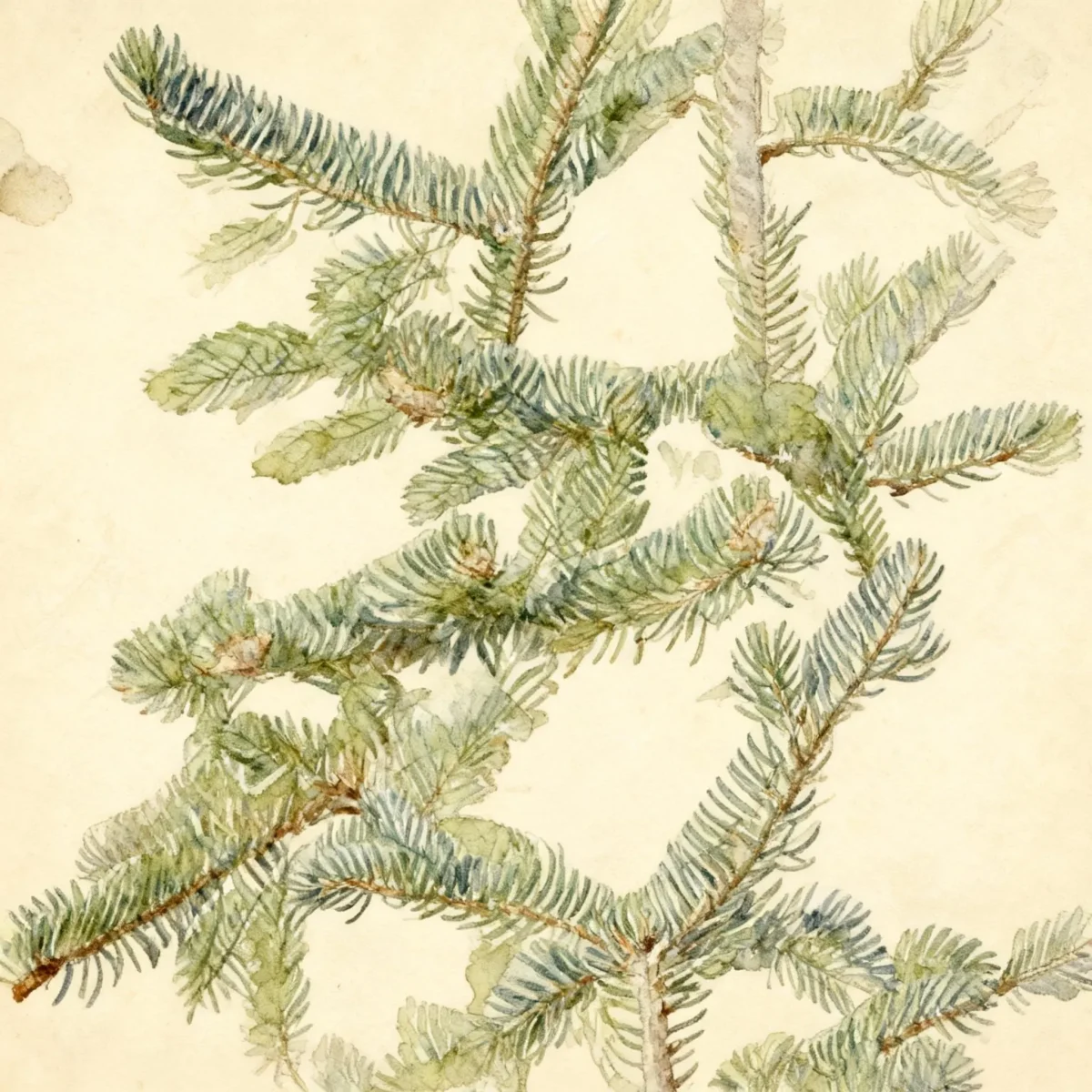
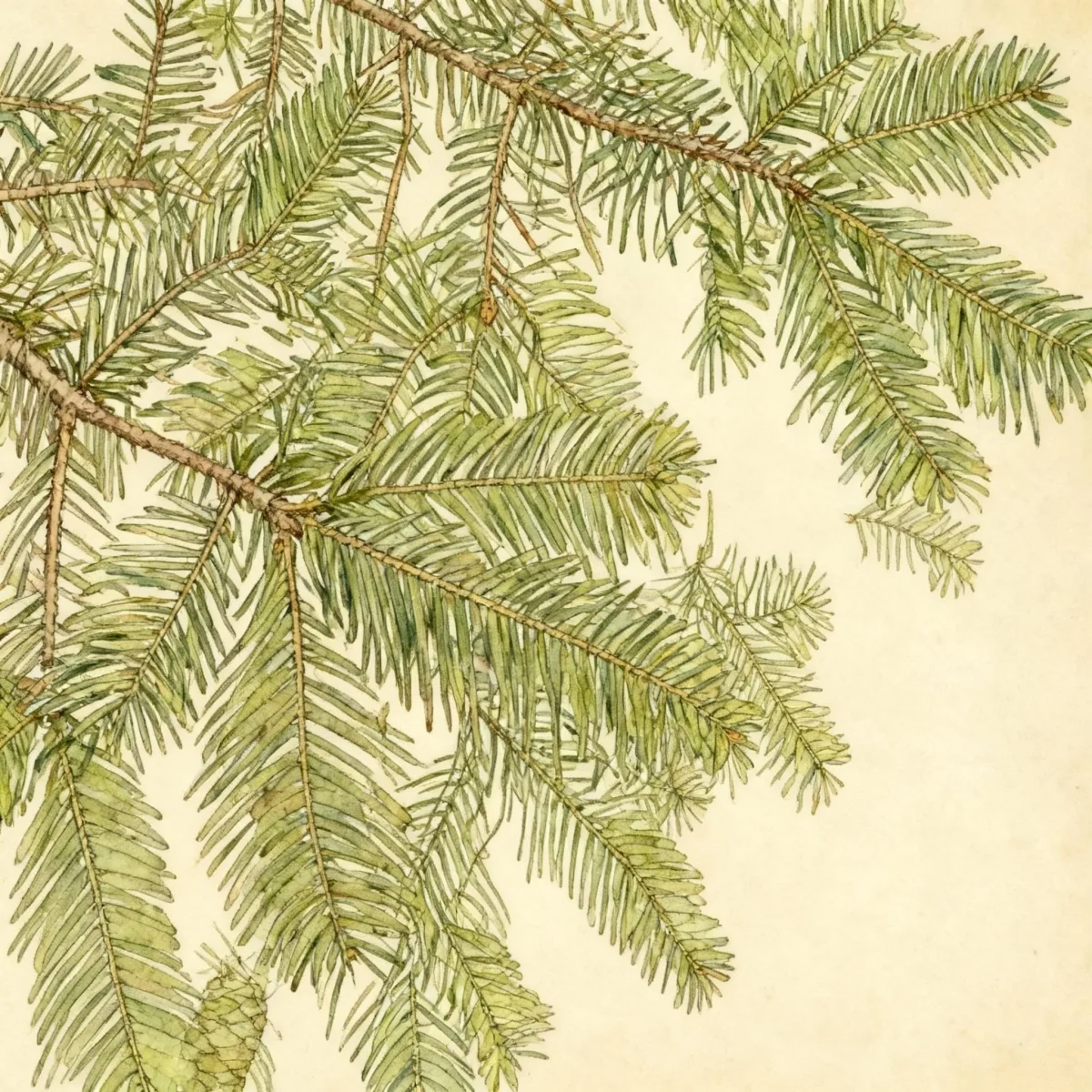
Korean fir (Abies koreana 'Silberlocke')
The Abies koreana 'Silberlocke' Korean fir is a slow-growing, compact evergreen featuring stunning dark green needles with silver undersides.
Scroll down to discover growing tips, care requirements, companion plants, and more
Complete Plant Information
Overview
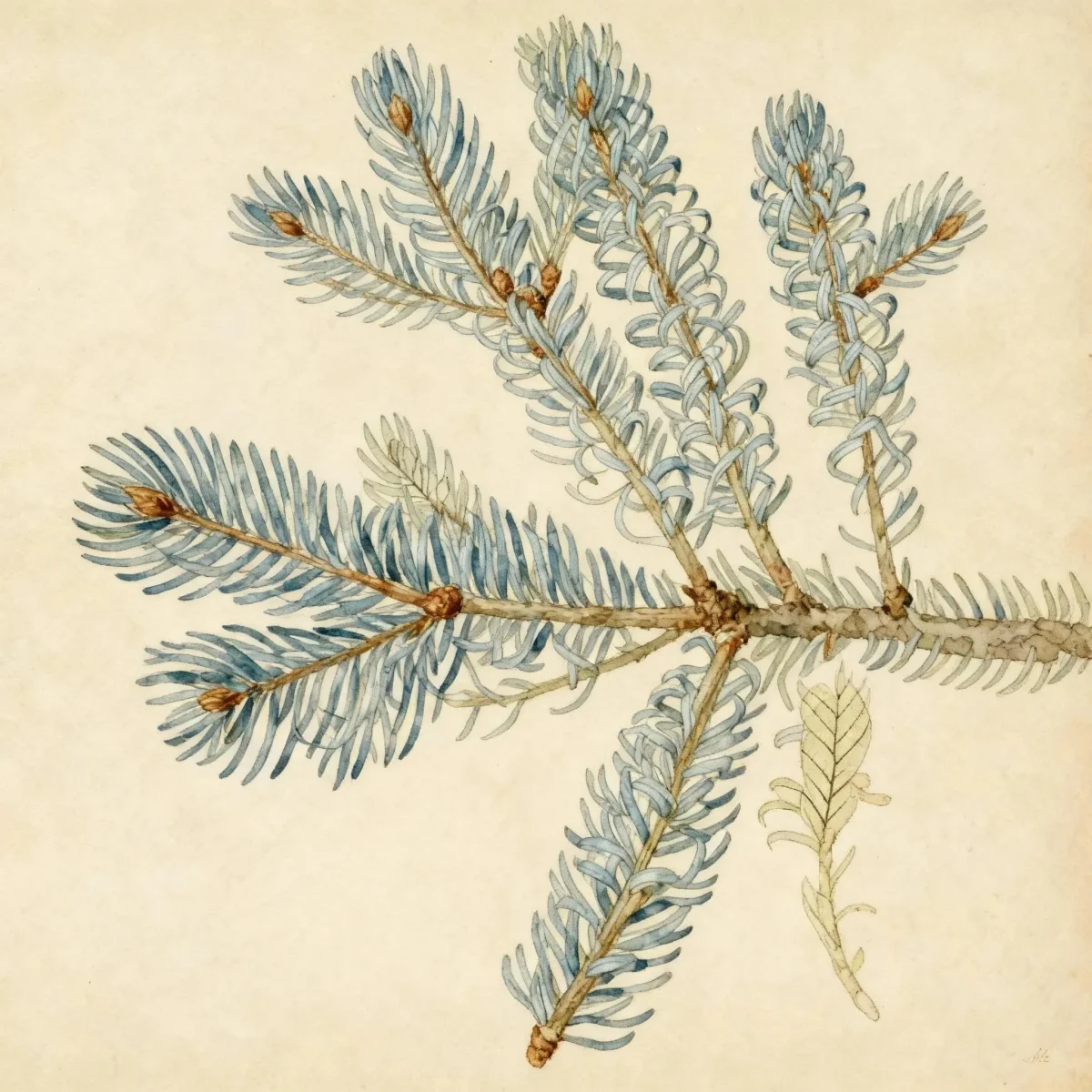
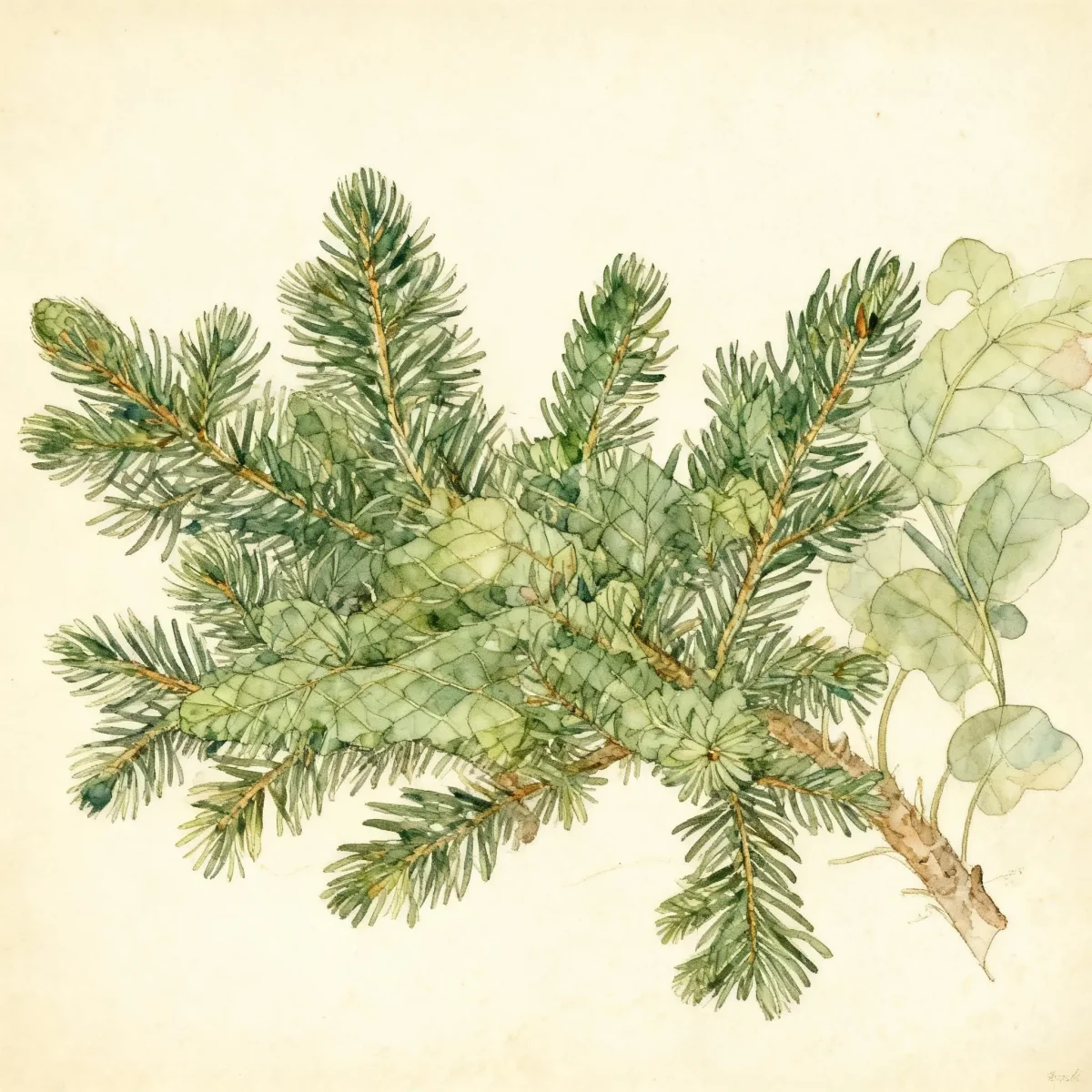
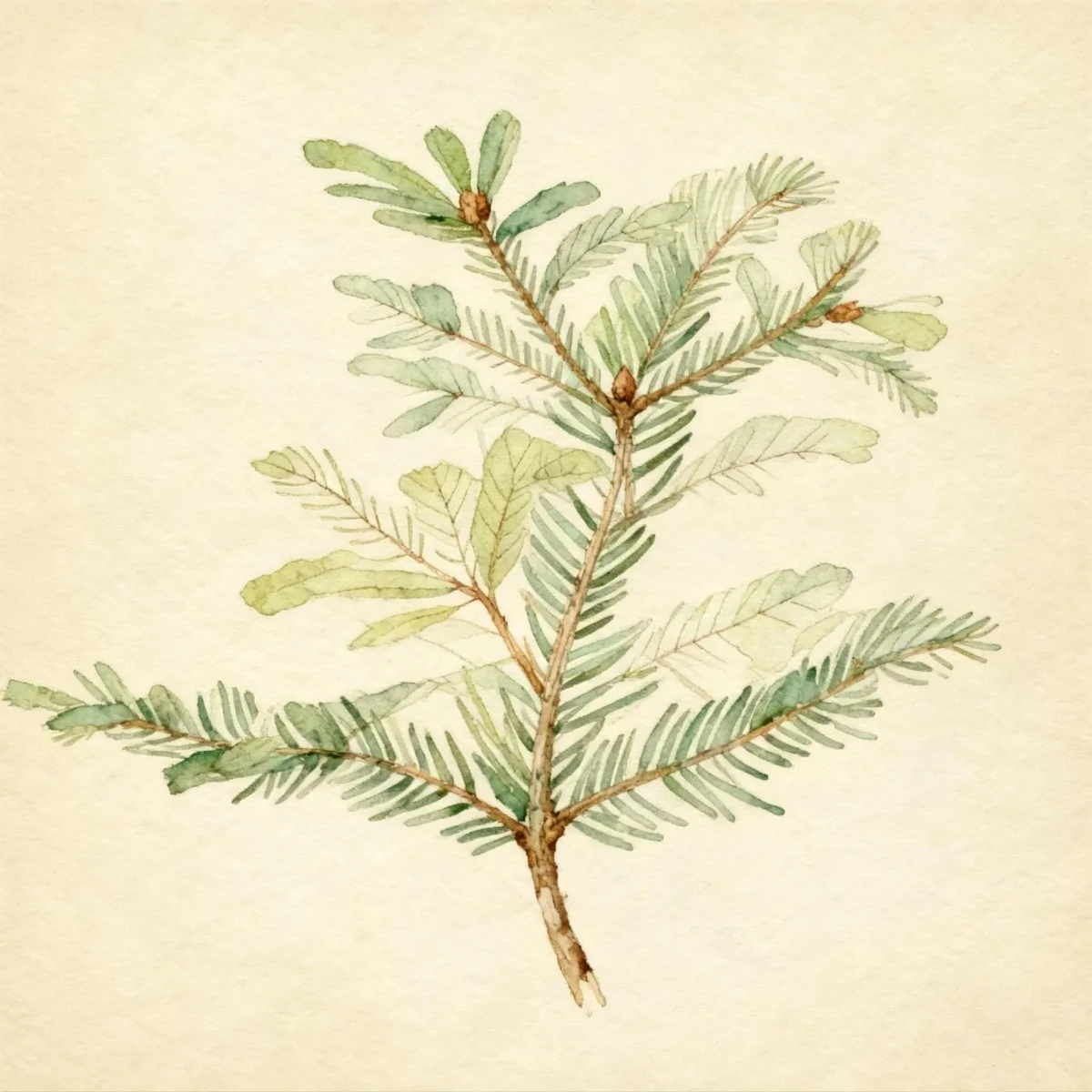
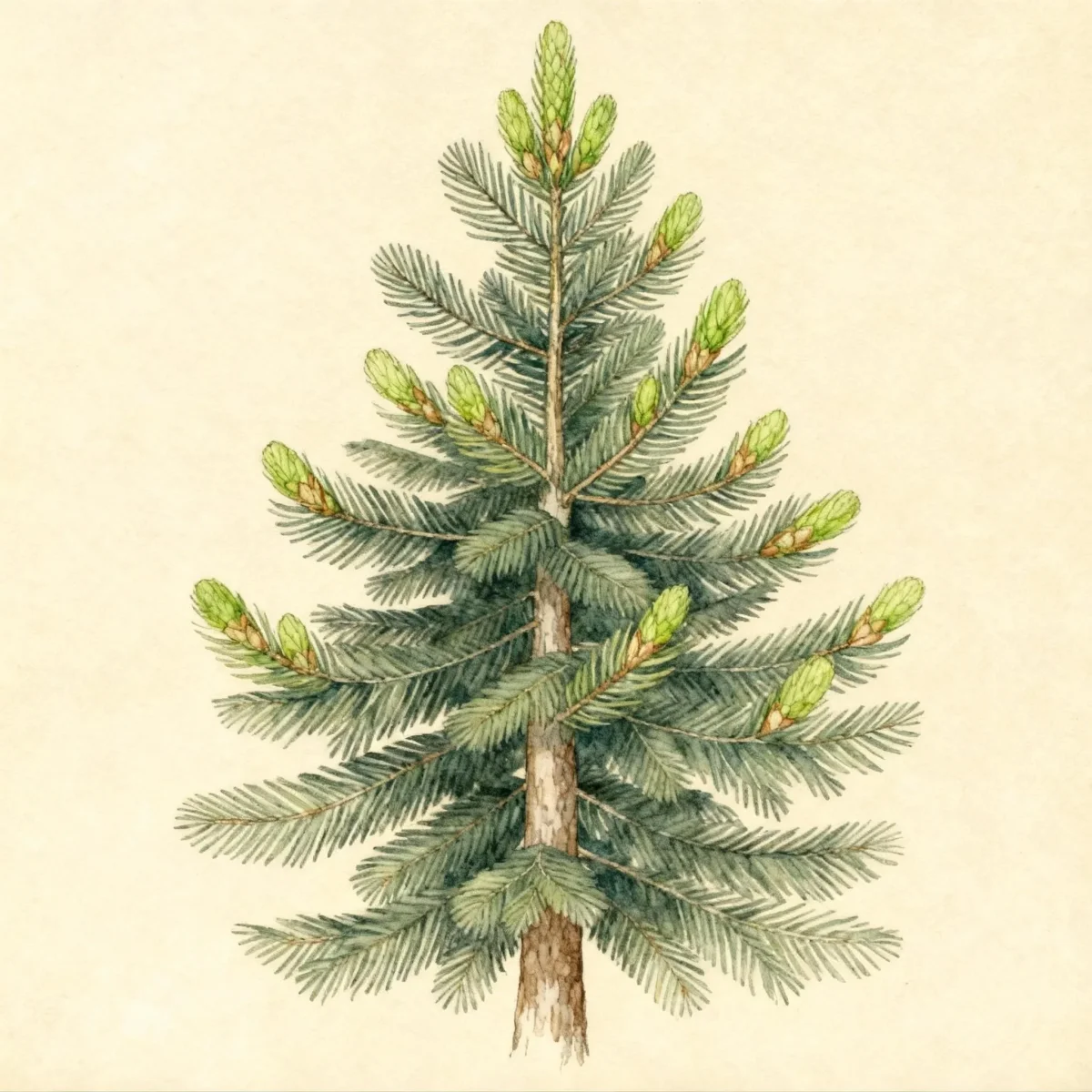
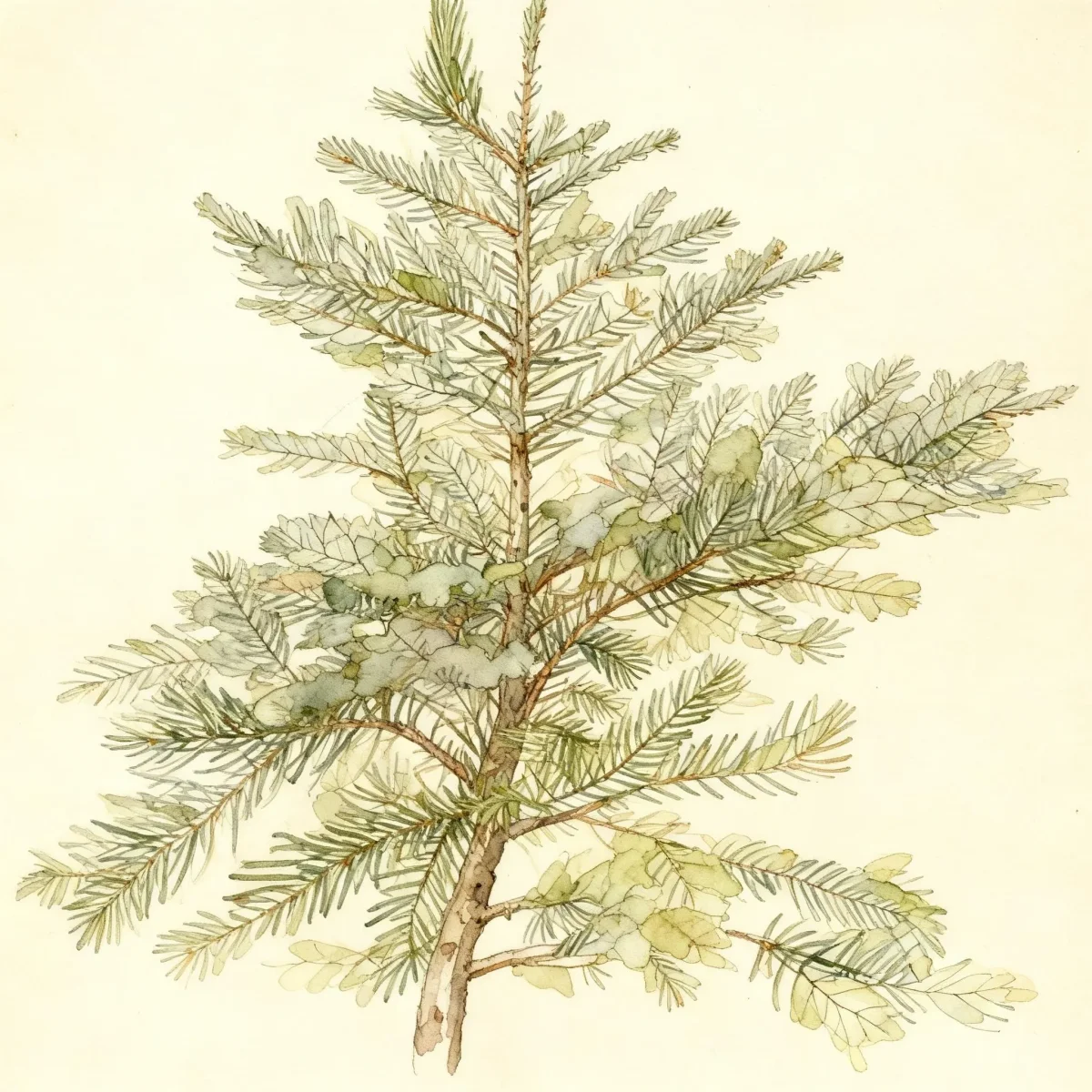
The Abies koreana ‘Silberlocke’, or Korean fir, is a highly valued conifer prized for its unique twisted, silvery needles. This cultivar is renowned for maintaining a compact, pyramidal form, making it a striking specimen tree even when young. Its distinctive foliage showcases a bright, silvery underside as the needles curl, creating continuous year-round visual interest.
As a needled evergreen, the Korean fir offers structure and color throughout the winter months. While it matures slowly, gardeners can expect a handsome specimen, though it demands specific cultural conditions to thrive. Its beauty is best appreciated in cooler climates where the summer heat is not excessive.
The availability of early, upright purple cones adds another layer of ornamental appeal to this cultivar. Gardeners seeking a visually textured specimen that provides year-round structure will find the Abies koreana ‘Silberlocke’ an excellent, albeit medium-maintenance, choice for the landscape.
Fast Facts
- Plant Family: Pinaceae
- Plant Type: Needled evergreen
- Hardiness Zones: USDA Zones 5-7
- Size at Maturity:
- Height: 20-30 ft
- Spread: 10-18 ft
- Bloom Time: Non-flowering
- Bloom Description: Non-flowering
- Sun Exposure: Full sun to part shade
- Water Needs: Medium
- Maintenance Level: Medium
How to Grow
The ideal planting time for the Korean fir is typically in the spring after the danger of hard frost has passed, or in the early fall. Success hinges on providing rich, consistently moist, slightly acidic, and exceptionally well-drained soils. Avoid locations where water pools, as these trees grow poorly in wet soils or heavy clay. Planting in cool locations is highly recommended.
Watering should be consistent, especially during the first few years as the root system establishes. Once mature, the Abies koreana ‘Silberlocke’ requires medium water input to maintain soil moisture, but never soggy conditions. Minimal fertilization is usually necessary if the soil is rich, but monitor for signs of nutrient deficiency. Pruning is generally only required to remove damaged or crossing branches, as the natural pyramidal habit is highly desirable.
Gardeners located south of USDA Zone 7 should proceed with caution, as the Korean fir is not recommended for hot and humid summer conditions. Furthermore, these trees are often adversely affected by urban air pollution, so site selection away from heavy traffic corridors is also beneficial for long-term health.
Landscape Uses
The Abies koreana ‘Silberlocke’ excels as a compact fir planted specifically in the landscape within favorable, cool summer climates. It serves wonderfully as an ornamental yard tree, providing a strong vertical accent that draws the eye year-round. Because of its dense structure and attractive foliage, screening capabilities are excellent when multiple specimens are planted along a property line.
Consider positioning this cultivar where its silvery undersides can be easily observed, perhaps near an entryway or prominent viewing area. While not recommended for very hot regions, in suitable zones, it pairs well with contrasting textures, such as broadleaf deciduous shrubs or groundcovers with different leaf architectures. Plantings should allow adequate space for the mature spread of 10 to 18 feet.
Standout Features
Noteworthy Characteristics
The ‘Silberlocke’ cultivar is distinguished by its recurved needles that dramatically showcase the silvery undersides, contrasting sharply with the dark green upper surfaces. This Korean fir specimen typically develops into a compact pyramid, reaching around 8 feet in its first decade before steadily growing to maturity. Its ability to produce early, upright purple cones makes this cultivar a visual favorite among fir enthusiasts.
Tolerances
- No serious insect or disease problems.
- Insect pests for fits include Balsam woolly adelgids, bark beetles, spruce budworms, aphids, bagworms and scale.
- Spider mites may occur in hot conditions.
- Disease problems include root rots, needle rust and twig blight.
- Trees are generally intolerant of urban pollution
Potential Problems
While generally hardy, the health of your Abies koreana ‘Silberlocke’ depends heavily on avoiding adverse conditions. The primary cultural issue is intolerance to heat and humidity; high summer temperatures can stress the tree, making it susceptible to secondary pests like spider mites. Prevention involves ensuring excellent drainage and slightly acidic soil.
Pests common to firs, such as Balsam woolly adelgids and various scale insects, should be monitored periodically. Inspect the needles and bark, especially in early spring and late summer. If pests are detected, targeted treatment based on the specific pest life cycle will be necessary.
Fungal issues like root rots pose a significant threat if soil drainage is poor. Always amend soil appropriately at planting to ensure rapid water percolation, as avoiding excessively wet soils is the single best defense against most serious tree diseases. Urban pollution also requires careful site selection for plant survival.
Frequently Asked Questions
What hardiness zones is Korean fir suitable for?
The Abies koreana ‘Silberlocke’ is best suited for USDA Hardiness Zones 5 through 7.
How large does Abies koreana ‘Silberlocke’ grow?
This cultivar typically reaches a mature height between 20 and 30 feet, with a spread ranging from 10 to 18 feet wide.
What sun exposure does Korean fir need?
The Korean fir prefers full sun to part shade conditions for optimal growth and needle coloration.
When does Abies koreana ‘Silberlocke’ bloom?
This conifer is non-flowering, though it does produce attractive purple cones when relatively young.
Conclusion
The Abies koreana ‘Silberlocke’ offers exceptional texture and year-round interest, making it a standout choice for specialized garden niches, provided environmental conditions are met. Its unique, silvery-backed foliage ensures that this Korean fir adds elegance to the cool-summer landscape design. Before planting, confirm your location falls safely within Zones 5-7 and verify your site offers the required rich, well-drained soil structure.
Companion Planting
Selecting companions for the Abies koreana ‘Silberlocke’ should focus on plants that share similar needs for acidic soil and moisture consistency, while avoiding competitors for root space near the base. Consider underplanting with spring-blooming acid-lovers like Rhododendrons or Azaleas, whose broad leaves contrast nicely with the fir’s fine texture. In cooler climates, Japanese Forest Grass (Hakonechloa macra) provides soft, draping movement near the base without growing too tall.
For seasonal color contrast, consider planting low-growing, shade-tolerant perennials such as Hellebores near the drip line. These bloom early, providing interest before the fir fully flushes out in the spring. Always leave a clear mulch ring around the base of the fir to help moderate soil temperature and moisture levels, avoiding overly dense planting that restricts air circulation.
Design Ideas
The pyramidal habit of the Abies koreana ‘Silberlocke’ lends itself well to formal or semi-formal landscape designs where symmetry and strong vertical elements are desired. Use a single specimen planted off-center to anchor a mixed border, ensuring it is viewed against a dark background (like a fence or dark stone wall) to highlight the silvery needle undersides. In modern landscapes, its clean lines work well when paired with structural hardscaping elements like gravel or simple boulders.
For smaller properties within the acceptable hardiness range, this fir can act as a central focal point viewed from a primary window. Because of its dense branching, it also functions effectively as a year-round screen. Remember to account for its mature size in your planning, positioning it far enough from structures to allow for the 10 to 18-foot spread.