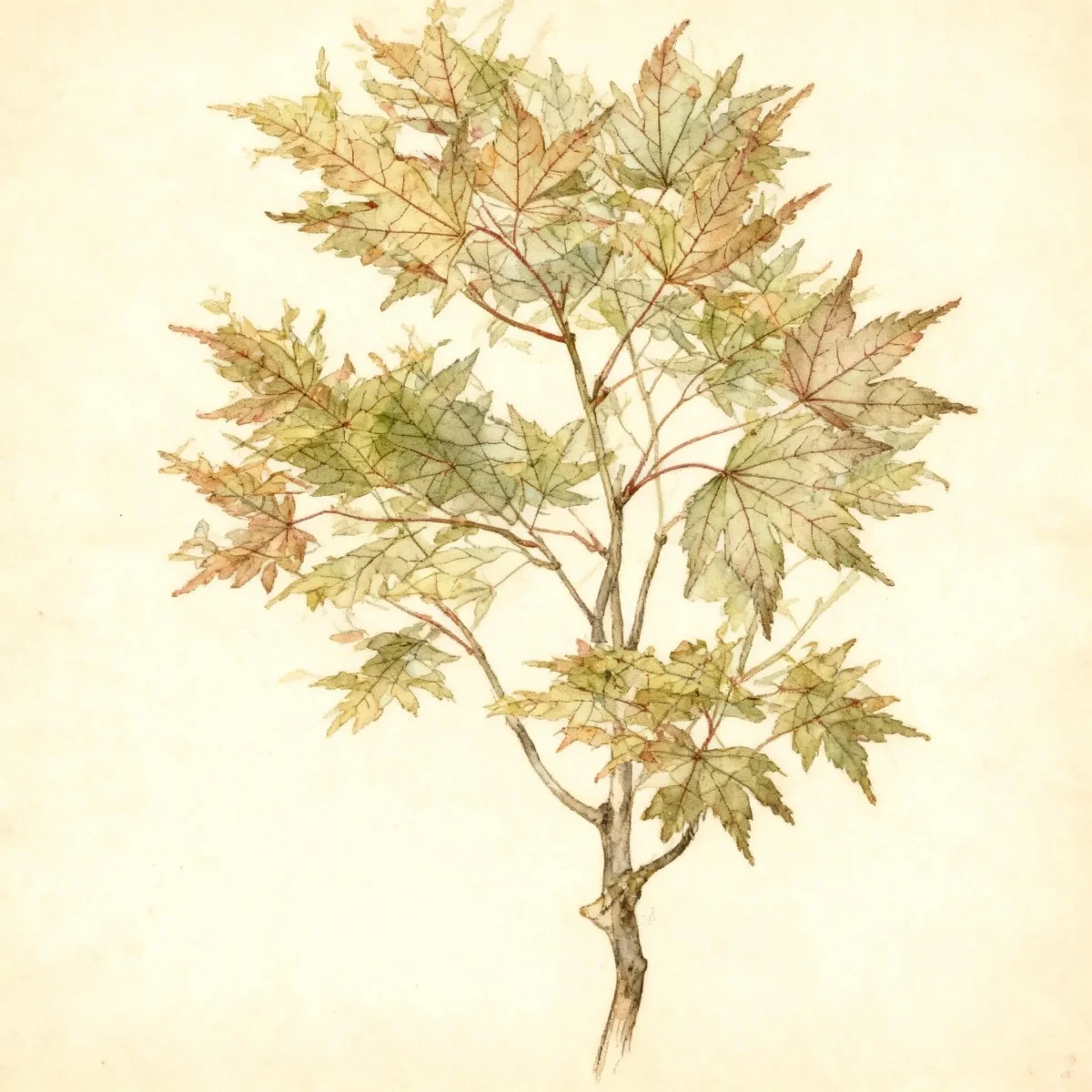
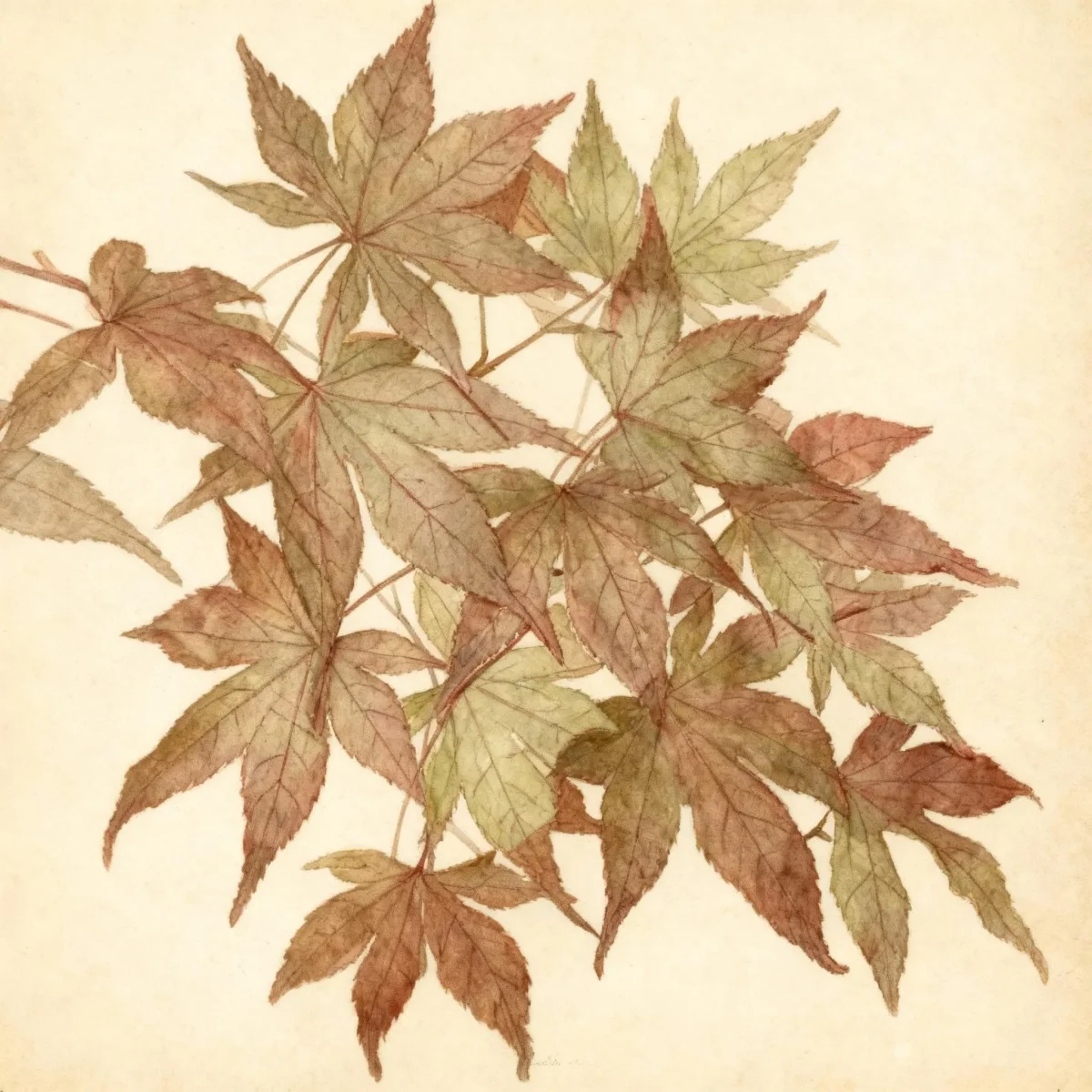
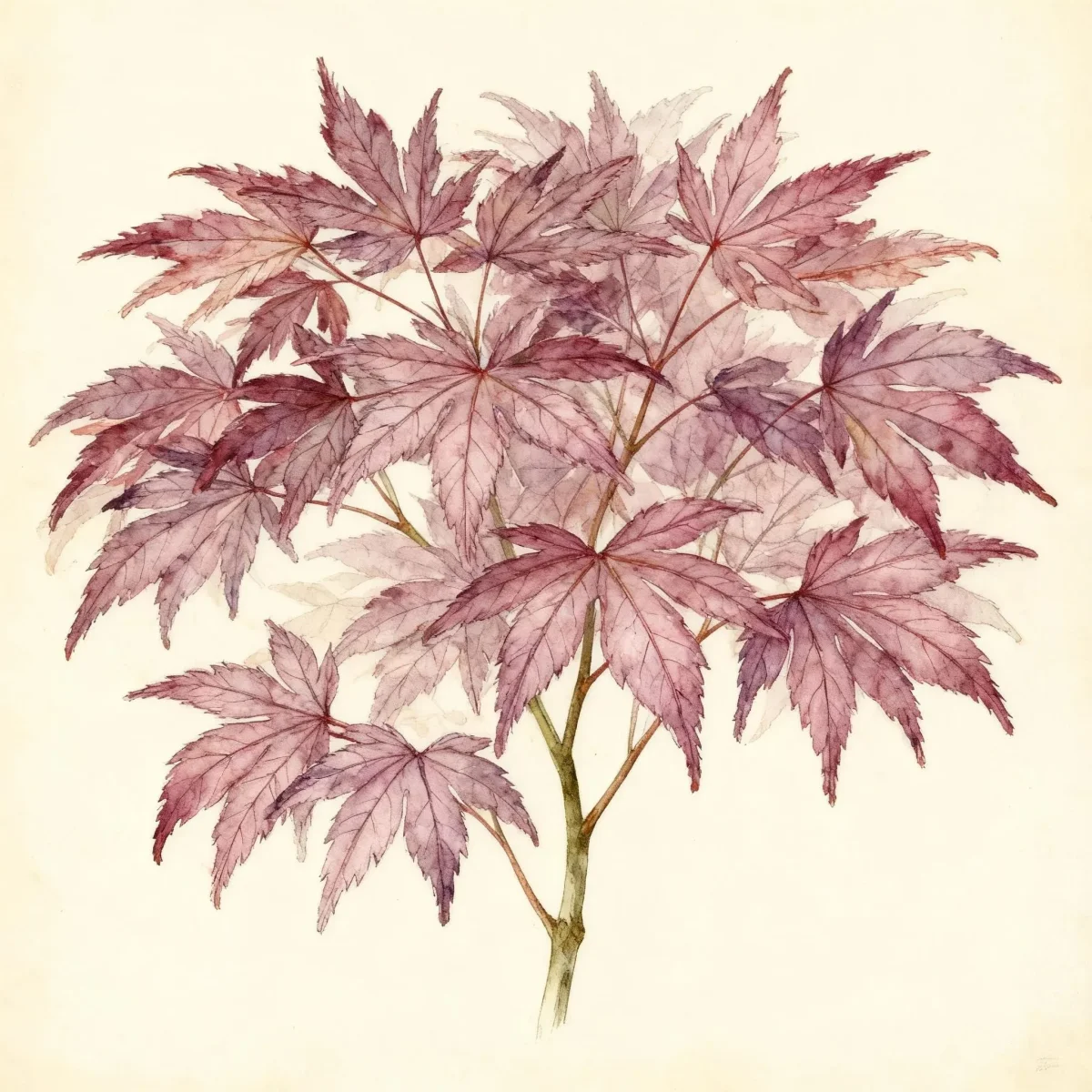
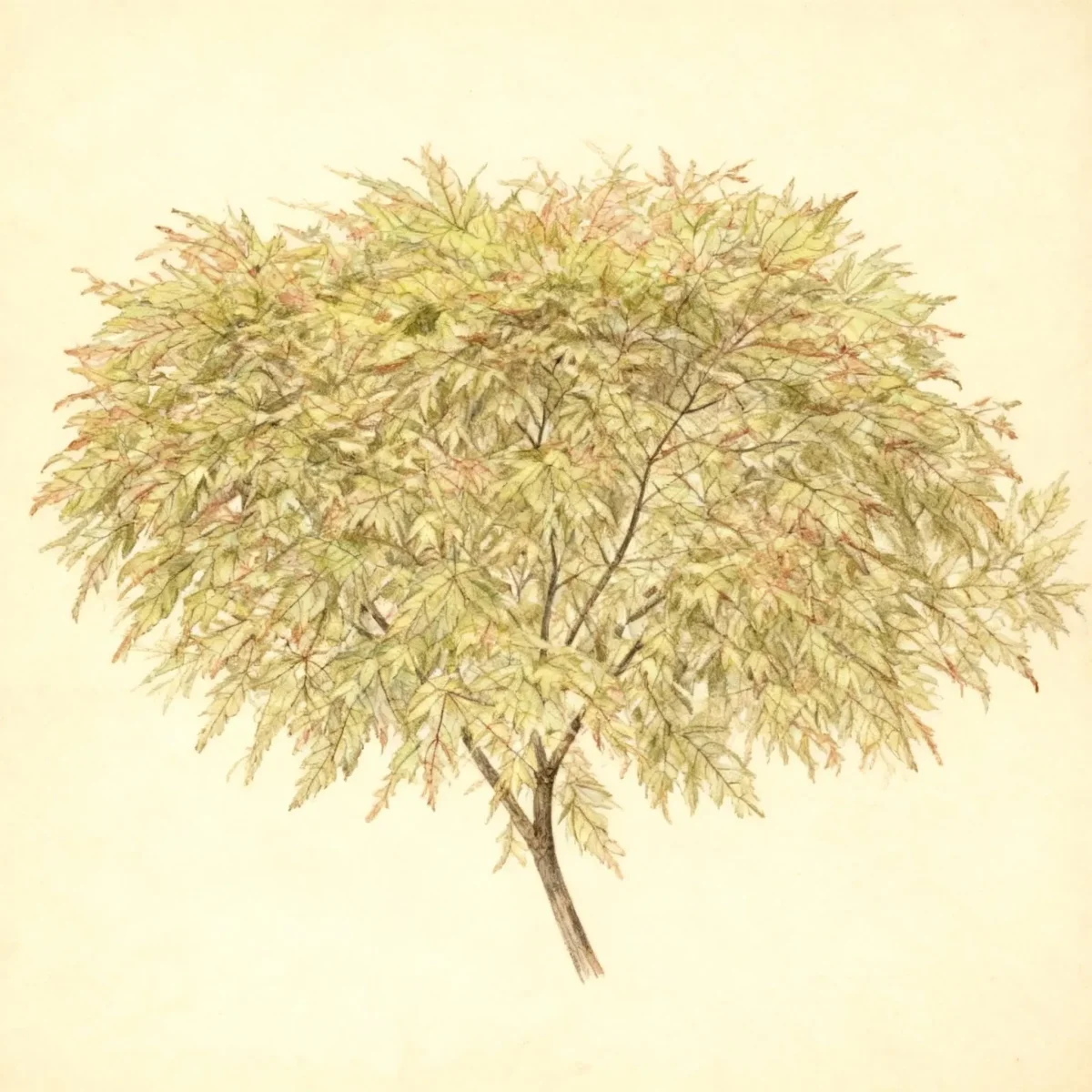
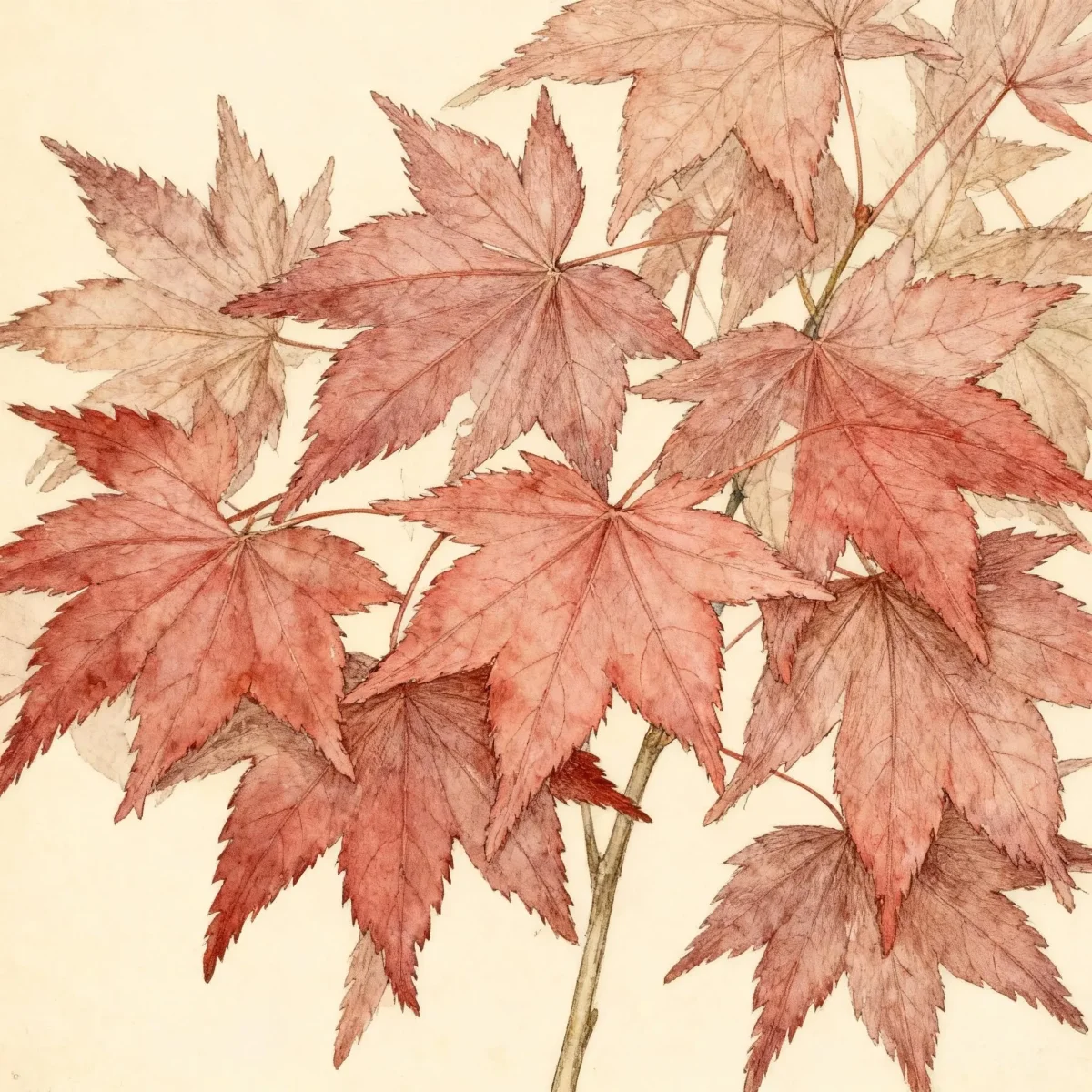
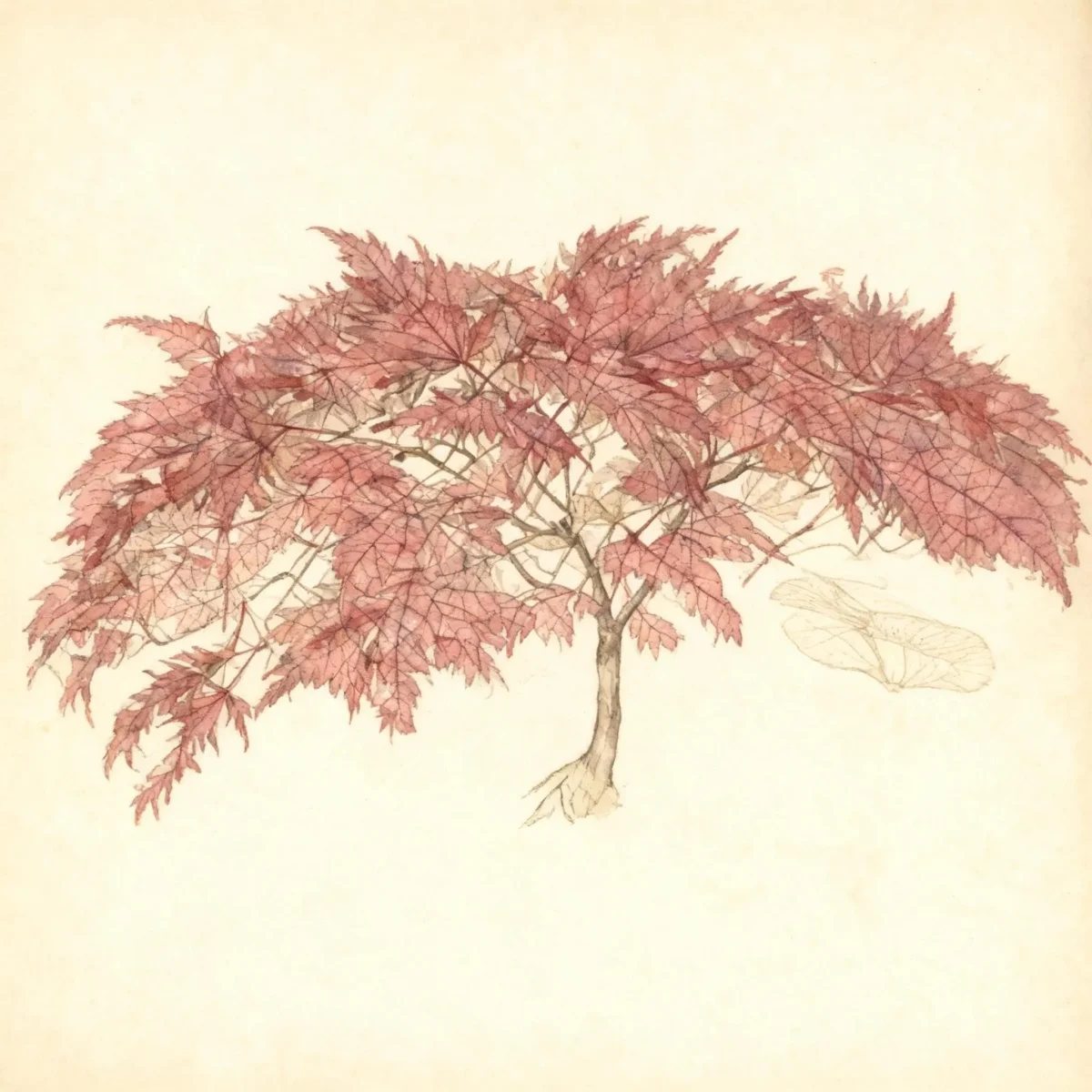
Japanese maple (Acer palmatum 'Burgundy Lace')
Acer palmatum 'Burgundy Lace' is a stunning Japanese maple prized for deep burgundy, deeply-cut foliage and low maintenance needs.
Scroll down to discover growing tips, care requirements, companion plants, and more
Complete Plant Information
Overview
The Acer palmatum ‘Burgundy Lace’ is a highly sought-after cultivar of the Japanese maple, celebrated primarily for its richly colored, deeply dissected foliage. This cultivar develops a naturally rounded-spreading crown, offering excellent architectural interest even when dormant. Gardeners value the consistent, deep burgundy color that the leaves of this Japanese maple maintain through much of the summer season.
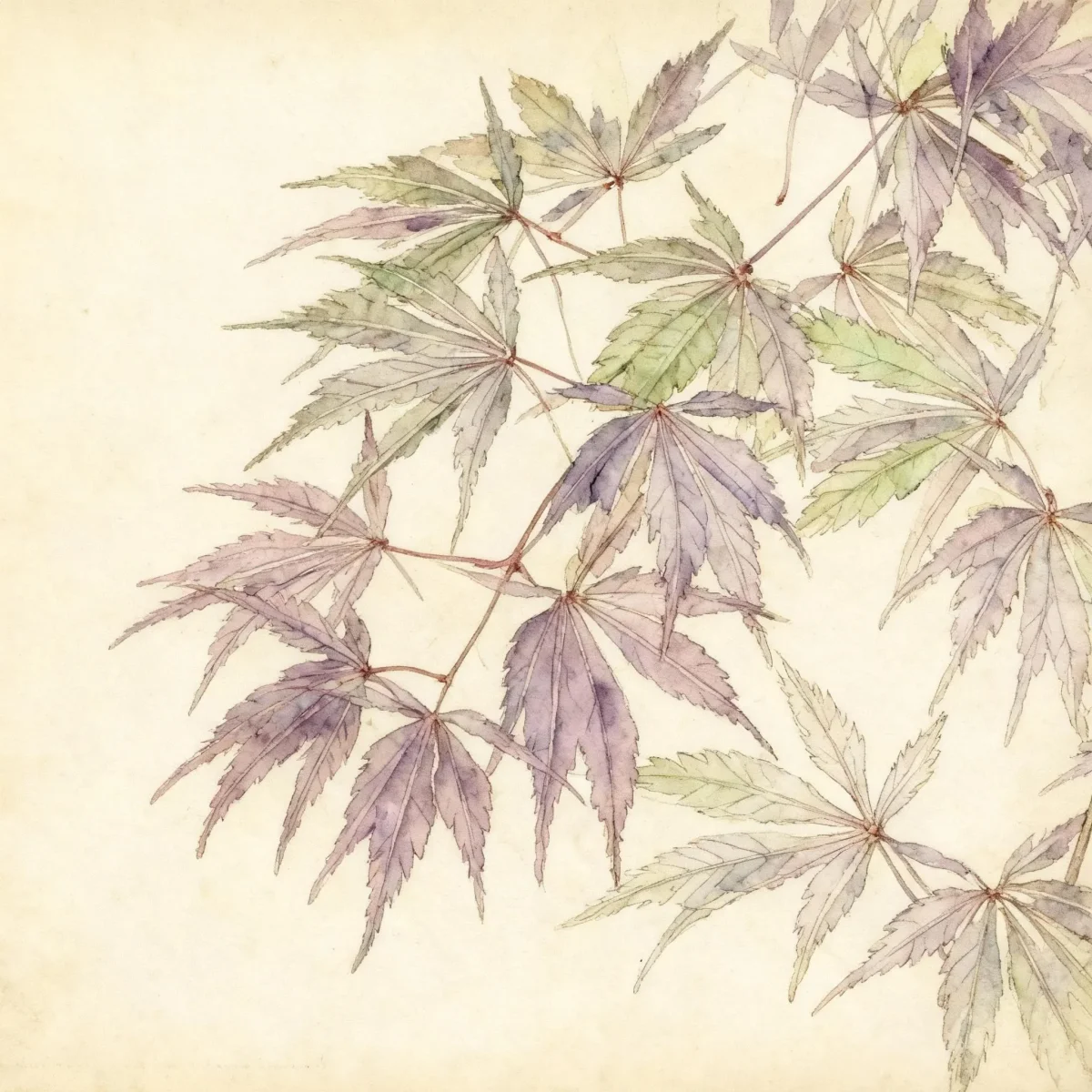
Maturing typically between 8 to 12 feet tall and spreading 10 to 15 feet wide, the Acer palmatum ‘Burgundy Lace’ remains manageable for residential landscapes. Its fine texture, created by the seven narrow, serrated, and deeply-cut lobes on each leaf, contrasts beautifully with broader-leaved shrubs and trees. It offers reliable performance and low maintenance, making it a staple for accent planting.
This small tree provides visual depth throughout the growing season, transitioning from its summer burgundy to vibrant red and bronze tones in the fall. Whether used as a focal point or placed in dappled shade, the unique leaf shape and color of this Japanese maple ensure it remains a captivating specimen plant year-round.
Fast Facts
- Plant Family: Sapindaceae
- Plant Type: Deciduous shrub
- Hardiness Zones: USDA Zones 5-9
- Size at Maturity:
- Height: 8-12 ft
- Spread: 10-15 ft
- Bloom Time: April
- Bloom Description: Reddish purple
- Sun Exposure: Full sun to part shade
- Water Needs: Medium
- Maintenance Level: Low
How to Grow
For optimal health, situate your Acer palmatum ‘Burgundy Lace’ in moist, organically rich, and slightly acidic soils that offer excellent drainage. While it tolerates full sun in cooler northern zones, southern gardeners should ensure this Japanese maple receives afternoon shade to prevent leaf scorch during hot summers, especially if soils dry out. The preference leans toward well-drained sandy loams.
Watering should be consistent, aiming to keep the soil evenly moist—this is crucial, as dryness combined with strong sun exposure often leads to scorched foliage. Applying a layer of mulch around the base helps immensely by retaining soil moisture and keeping the root system cool, which is vital for these maples. Always locate your specimen where it is sheltered from harsh, drying winds.
Maintenance for the Acer palmatum ‘Burgundy Lace’ is generally low. Fertilize lightly in the spring just before the leaves unfurl. Practice minimal pruning; if necessary, perform cuts in the late fall or mid-winter. Avoid pruning during spring or summer, as this often results in significant sap bleeding from the cuts.
Landscape Uses
Japanese maples are fundamentally prized for their superior aesthetic qualities—namely their captivating foliage color and refined structure. The Acer palmatum ‘Burgundy Lace’ excels as a specimen or accent piece, drawing the eye with its lacy, dark leaves. It works beautifully when grouped around the foundation of a home or positioned near an entryway where its form can be fully appreciated.
Due to its manageable size, this cultivar fits perfectly within woodland garden margins, providing structure underneath taller deciduous trees that cast dappled shade. It can also serve as a soft screen or partition in the landscape. Consider planting it against a neutral backdrop, such as light-colored stone or pale green evergreens, to allow the rich burgundy tones of the Japanese maple to truly stand out.
Standout Features
Flower Qualities
- Insignificant
Noteworthy Characteristics
Acer palmatum, commonly called Japanese maple, is a deciduous shrub or small tree that typically grows to 10-25’ (infrequently to 40’) tall. It is native to Japan, Korea and China. General plant form is rounded to broad-rounded, often with low branching. Each palmate green leaf (2-5” long) has 5 or 7 but less frequently 9 pointed toothed lobes. Small reddish-purple flowers in umbels bloom in mid spring (April). The flowers are rather attractive close up, but are not particularly showy from a distance. Flowers are followed by samaras (to 3/4” long) in pairs. Samaras ripen in September-October. Fall color includes shades of yellow, red-purple and bronze. Cultivars (often grafted) are quite variable.Genus name is the Latin name for a maple tree.Specific epithet is in reference to the palmate nature of the leaves. Each leaf has several lobes (typically 5-7) that all originate from one point looking like an open hand with outstretched fingers.‘Burgundy Lace’ (Matsumurae Group) is a small tree with a rounded-spreading crown that typically matures to 8-12’ tall and to 10-15’ wide. It is particularly noted for its attractive burgundy-red leaves. Each palmate leaf has seven narrow, serrated, deeply-cut lobes (divided 3/4 way to leaf base). Leaves usually retain excellent burgundy color well into summer before turning bronze to green. Bright red fall color. Twigs are green. ‘Burgundy Lace’ was introduced into commerce in 1958 by Vermeulen & Sons in New Jersey
Tolerances
- Rabbit
- Black Walnut
Potential Problems
Watch out for several potential health issues common to maples, including stem canker, various leaf spots, and root rots. Fungal problems like Verticillium wilt and anthracnose can also occur, often exacerbated by poor air circulation or overly wet conditions. Monitor insect pests such as aphids, scale insects, borers, and bothersome root weevils.
Foliage is particularly vulnerable early in the spring; late frosts can damage the tender, newly emerged leaves, leading to scorched or damaged tips. High pH soils can induce chlorosis (yellowing), which negatively impacts the rich color of the Acer palmatum ‘Burgundy Lace’. Ensuring proper soil acidity and good air movement helps mitigate many of these concerns.
Frequently Asked Questions
What hardiness zones is Japanese maple (Acer palmatum ‘Burgundy Lace’) suitable for?
This fine cultivar is adaptable to USDA Hardiness Zones 5 through 9.
How large does Japanese maple (Acer palmatum ‘Burgundy Lace’) grow?
At maturity, the ‘Burgundy Lace’ typically reaches a height between 8 and 12 feet, with a spread ranging from 10 to 15 feet wide.
What sun exposure does Japanese maple (Acer palmatum ‘Burgundy Lace’) need?
It performs best in full sun to part shade conditions, though shade is recommended in hotter regions to protect the foliage from intense afternoon sun.
When does Japanese maple (Acer palmatum ‘Burgdish Lace’) bloom?
Flowering occurs in April, marked by small, reddish purple blooms.
Conclusion
The Acer palmatum ‘Burgundy Lace’ offers exceptional fine texture and deep burgundy color, making it a standout choice for low-maintenance, high-impact garden design. Providing it with consistent moisture and protection from harsh winds will ensure the vibrant leaves of this Japanese maple thrive for years. Before planting, confirm that your site falls within USDA Zones 5-9 and that the soil conditions are appropriately acidic and well-drained.
Companion Planting
When designing a space featuring the Acer palmatum ‘Burgundy Lace’, select companions that either accentuate its color or provide bold textural contrast. Hostas, particularly those with chartreuse or blue foliage, pair beautifully with the dark leaves of this Japanese maple, as their wide leaves offer a strong counterpoint to the fine, lacy texture of the maple.
Consider utilizing shade-tolerant groundcovers such as Japanese Forest Grass (Hakonechloa macra) to soften the edges of the planting bed. These grasses move gracefully in the slightest breeze, complementing the delicate structure of the ‘Burgundy Lace’ cultivar. Since this maple prefers acidic soil, ensure any surrounding plants share similar cultural requirements for optimal collective health.
Seasonal Care Calendar
Spring maintenance centers around fertilization and frost protection. Fertilize in early spring just before bud break and be vigilant against late frosts that could damage the new, tender leaves of your Acer palmatum ‘Burgundy Lace’. Water deeply and regularly as temperatures rise to prevent stress that leads to leaf scorch.
In summer, focus mainly on monitoring soil moisture; deep, infrequent watering is better than shallow sprinkling. Summer is also the time to monitor closely for pests like scale or spider mites. Avoid any routine pruning during this period to prevent sap loss, saving major cuts for dormancy.
The fall is when the foliage of the Acer palmatum ‘Burgundy Lace’ transitions from deep burgundy to shades of bronze and finally to bright red before leaf drop. Winter preparation involves ensuring a good layer of mulch remains intact over the root zone to insulate against extreme temperature swings, protecting this lovely Japanese maple through the cold months.