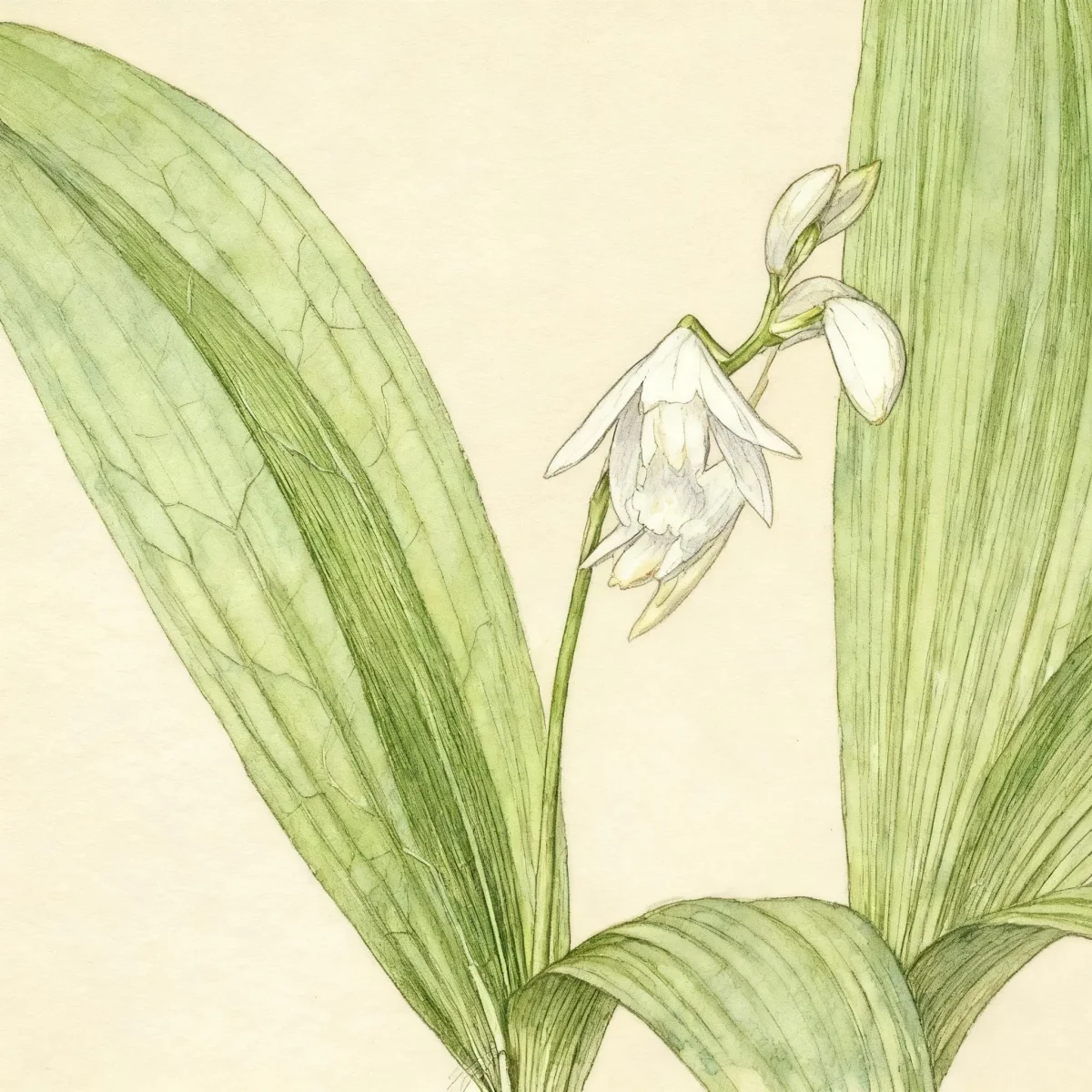
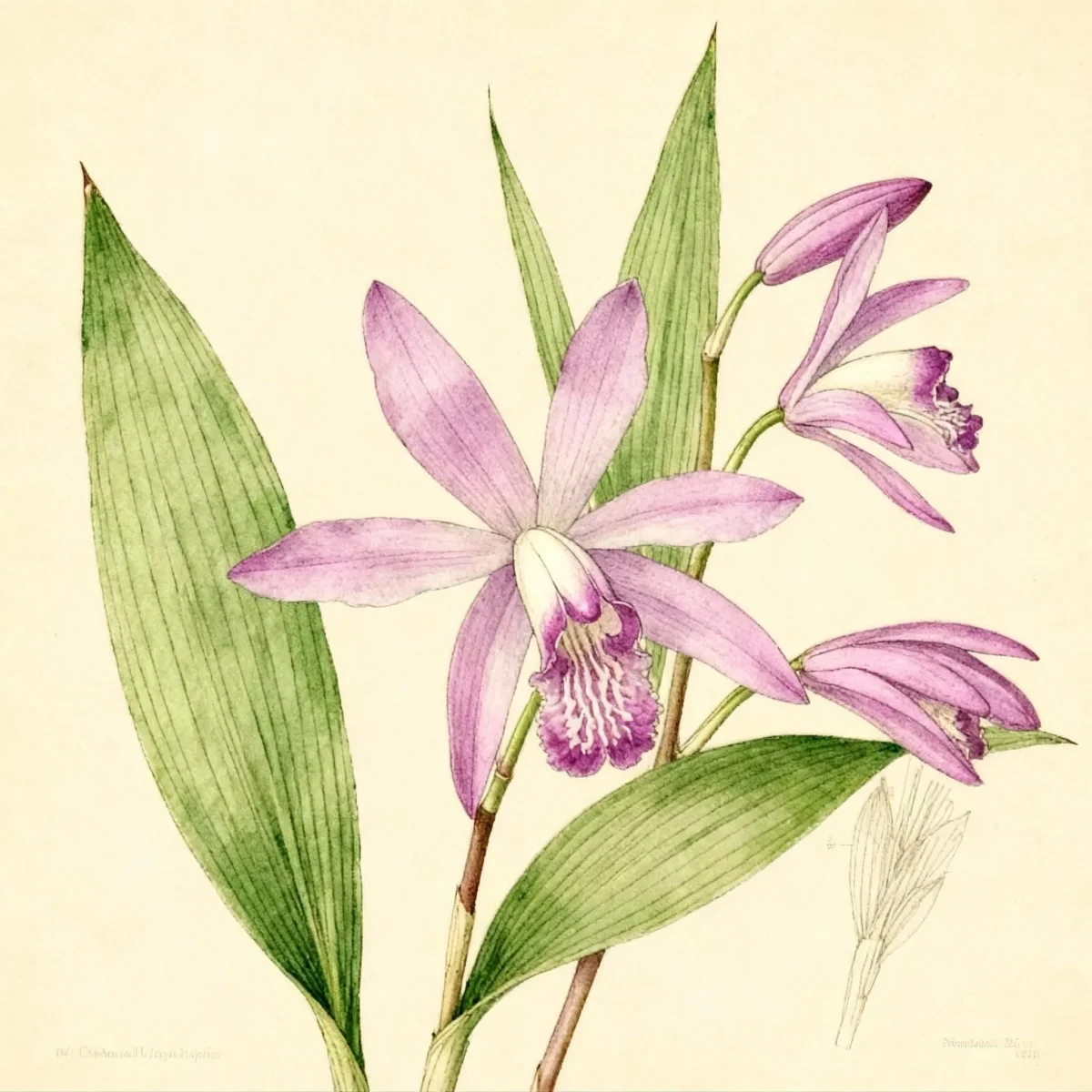
Chinese ground orchid (Bletilla striata 'Albostriata')
Bletilla striata 'Albostriata', the Chinese ground orchid, offers delicate purple blooms and pleated foliage, thriving best in moist, part-shade conditions.
Scroll down to discover growing tips, care requirements, companion plants, and more
Complete Plant Information
Overview
The Bletilla striata ‘Albostriata’, widely known as the Chinese ground orchid, provides an excellent opportunity for gardeners to cultivate a terrestrial orchid in temperate perennial settings. This variety is valued for its ability to bring exotic texture and reliable spring bloom color to shaded environments where many other flowering plants struggle. Its upright, pleated foliage remains attractive through the growing season, complementing the early flowering display.
As an herbaceous perennial, the Chinese ground orchid returns reliably each spring, emerging from underground corm-like pseudobulbs. It is a lower-growing specimen, typically reaching 1 to 1.5 feet tall, making it suitable for edging or close inspection in rock gardens. While the species often features pinkish-purple tones, this cultivar distinguishes itself with specific coloring, fitting beautifully into dappled woodland garden designs.
Successfully cultivating Bletilla striata ‘Albostriata’ relies on mimicking its native moist, humus-rich forest floor environment. Providing consistent moisture and protection from the harshest afternoon sun ensures robust growth and maximizes its potential to naturalize subtly over time through short rhizomes, establishing lovely colonies of these unique orchids.
Fast Facts
- Plant Family: Orchidaceae
- Plant Type: Herbaceous perennial
- Hardiness Zones: USDA Zones 5-9
- Size at Maturity:
- Height: 1-1.5 ft
- Spread: 0.5-0.75 ft
- Bloom Time: April to May
- Bloom Description: Purple
- Sun Exposure: Part shade
- Water Needs: Medium
- Maintenance Level: Medium
How to Grow
Planting the corm-like pseudobulbs of Bletilla striata ‘Albostriata’ is best done in the spring, ensuring they are set relatively deep, around 4 inches below the soil surface. Success hinges on location: choose spots receiving part shade, perhaps light morning sun or dappled light throughout the day, remembering that strong afternoon sun must be avoided, especially in hotter summer climates. The soil must be organically rich, well-drained, yet able to retain medium moisture.
Care requires consistency, especially regarding hydration. After the spring bloom concludes, maintain regular moisture for the remainder of the growing season to support the development of next year’s flower buds within the pseudobulbs. Fertilization is generally not intensive due to the richness of the preferred soil, but ensuring high organic matter content is key to sustained health season after season.
As foliage dies back in the winter, minimal cleanup is needed until early spring. For gardeners in the colder edge of its range, USDA Zone 5, applying a winter mulch is strongly advised to help protect the overwintering structures from freeze-thaw cycles. These tough orchids will happily naturalize via short rhizomes when growing conditions are optimal.
Landscape Uses
The delicate structure and reliable bloom of the Chinese ground orchid make it an exceptional accent plant in partial shade borders. They pair beautifully with hostas, ferns, or spring ephemerals that share similar moist, woodland-edge requirements. Consider planting Bletilla striata ‘Albostriata’ in drifts along shaded paths where their spring flowers can be easily admired up close before the deep summer foliage takes over.
For gardeners in regions colder than Zone 5, or those seeking absolute protection, these orchids excel as container specimens. Growing them in pots allows for easy winter relocation to a cool, dry basement or garage, ensuring their survival until spring planting allows them to return to their outdoor spots. In rock gardens, their vertical structure offers a pleasant contrast to low-growing, mounding alpines that tolerate similar light levels.
Standout Features
Flower Qualities
- Showy
Noteworthy Characteristics
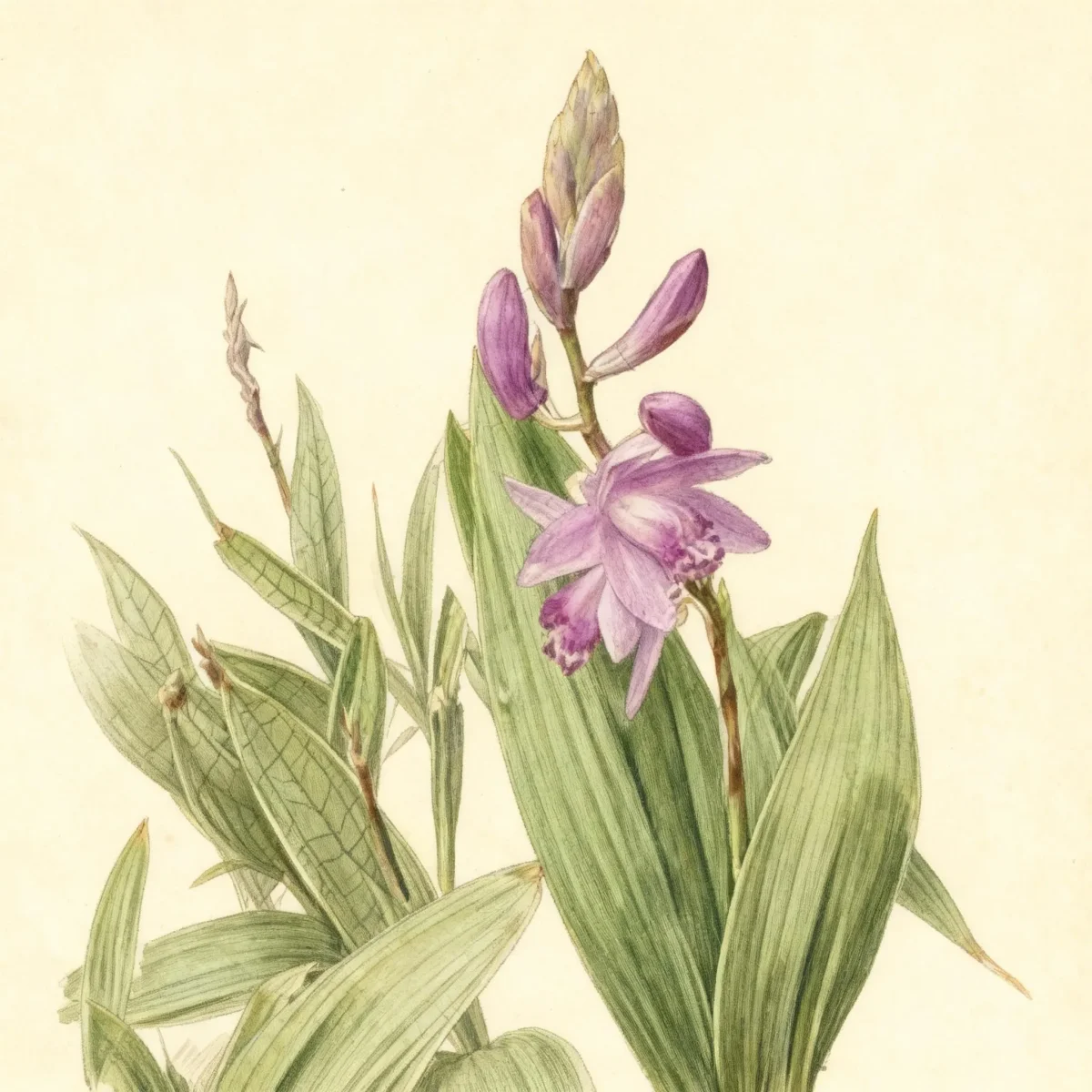
Bletilla striata, commonly called Chinese ground orchid, is a terrestrial orchid which produces small, cattleya-like, pinkish-purple flowers (to 1.5” long) in 3-7 flowered racemes atop naked scapes typically rising to 18” tall. Blooms mid to late spring. Each pseudobulb typically produces 3-5, linear, pleated, papery-textured, sword-shaped, pale green leaves (to 12” long). Foliage dies to the ground in winter. Genus name honors Luis Blet, a Spanish apothecary who had a botanic garden in Algeciras towards the end of the 18th century, while the specific epithet means striped; the ‘Albostriata’ cultivar is distinguished by its unusual white edging on the foliage.
Tolerances
- No serious insect or disease problems can be listed.
Potential Problems
While generally robust, the Chinese ground orchid can occasionally attract common garden pests. Slugs and snails are noted as occasional visitors, particularly favoring the tender new growth emerging in early spring. Protect emerging shoots by utilizing appropriate, targeted snail and slug control methods, such as baiting or copper barriers, especially when the plants are small or just establishing.
Lack of consistent moisture during the active growing season is a common management error that can weaken future performance. Conversely, poorly drained soil, which holds standing water, will quickly lead to the rot of the underground pseudobulbs, which is the primary way these orchids fail. Ensuring that rich soil still allows for rapid drainage is the best prevention against rot.
Frequently Asked Questions
What hardiness zones is Bletilla striata ‘Albostriata’ suitable for?
This plant performs best across USDA Hardiness Zones 5 through 9, though Zone 5 gardeners should ensure adequate winter mulch protection.
How large does Chinese ground orchid grow?
The mature size of the Chinese ground orchid is typically between 1 to 1.5 feet tall, with a spread ranging from 0.5 to 0.75 feet wide.
When does Bletilla striata ‘Albostriata’ bloom?
This terrestrial orchid typically produces its blooms in shades of purple during the mid to late spring, specifically from April to May.
What sun exposure does Chinese ground orchid need?
Bletilla striata ‘Albostriata’ requires part shade to thrive; direct, intense afternoon sun should be avoided to prevent leaf scorching.
Conclusion
The adaptability and unique structure offered by Bletilla striata ‘Albostriata’ make it a valuable addition for specialized shade gardening. Its reliability, relative pest resistance, and low, spreading habit ensure it becomes a treasured feature once established. Before planting, confirm your site offers rich, well-drained soil and protection from intense summer heat to ensure the best performance from your Chinese ground orchid.
Propagation Tips
Propagation of Bletilla striata ‘Albostriata’ primarily occurs naturally through the formation of short rhizomes, leading to slow self-propagation over time in ideal settings. This clumping method requires patience, but it is the least invasive way to increase your colony size. Wait until the foliage has completely died back in the fall or early spring before attempting to divide the clumps.
When dividing, carefully lift the entire clump and gently separate the pseudobulbs, ensuring each division retains several healthy roots and at least one viable, plump pseudobulb structure. Replant the divisions immediately at the recommended 4-inch depth in the prepared, rich, well-draining soil. Avoid division unless the plants appear overcrowded, as they prefer to remain undisturbed.
Companion Planting
Because the Chinese ground orchid requires moist, organically rich soil and part shade, companion plants should share these moderate cultural demands. Ferns, such as Japanese Painted Fern (Athyrium niponicum) or various hardy native varieties, provide excellent textural contrast while thriving in similar filtered light conditions. Hostas that prefer more shade and moisture also serve as excellent ground cover beneath the taller foliage of the orchid.
Consider pairing Bletilla striata ‘Albostriata’ with other woodland-edge perennials that bloom later in the season, ensuring continuous visual interest after the orchid finishes its spring show. Plants like Astilbe or Hellebores (Helleborus) offer different flower forms in late spring or early summer, maintaining the cool, shaded aesthetic established by the orchid. Always ensure companion plantings do not aggressively compete with the orchid for moisture or nutrients in the upper soil levels.