Alder-leaved serviceberry (Amelanchier alnifolia 'Regent')
Compact Amelanchier alnifolia 'Regent' offers white spring flowers and edible, blueberry-like fruit; a low-maintenance shrub for Zones 2-7.
Scroll down to discover growing tips, care requirements, companion plants, and more
Complete Plant Information
Overview
The Alder-leaved serviceberry, specifically the cultivar Amelanchier alnifolia ‘Regent’, is a highly valued, low-maintenance deciduous shrub perfectly suited for colder climates. This compact variety delivers significant aesthetic rewards beginning in early spring with striking clusters of white flowers that precede the foliage emergence. Gardeners appreciate the ornamental structure provided throughout the season, culminating in dark purplish-black edible berries.
Amelanchier alnifolia ‘Regent’ offers year-round interest, transforming from spring bloomers to summer fruit producers, and finally displaying attractive yellow fall color. As a stoloniferous plant, it naturally develops a multi-stemmed, dense structure, making it exceptional for informal hedges or mass plantings where its size (typically 4-6 feet tall) remains manageable. Its hardiness and adaptable nature ensure success for many gardeners seeking both beauty and function from their plantings.
Fast Facts
- Plant Family: Rosaceae
- Plant Type: Deciduous shrub
- Hardiness Zones: USDA Zones 2-7
- Size at Maturity:
- Height: 4-6 ft
- Spread: 4-6 ft
- Bloom Time: April
- Bloom Description: White
- Sun Exposure: Full sun to part shade
- Water Needs: Medium
- Maintenance Level: Low
How to Grow
Planting Amelanchier alnifolia ‘Regent’ is most successful when done in the early spring or fall, allowing the plant time to establish before seasonal extremes. This shrub thrives in average, medium, well-drained soil conditions, though it demonstrates tolerance across a somewhat wide range of soil types. Ensure the planting location receives at least partial sunlight to encourage the best flowering and fruiting performance.
Ongoing care for this Alder-leaved serviceberry is straightforward, requiring a medium level of water, particularly during the initial establishment period. Fertilization is rarely necessary if the soil quality is adequate. Be aware that root suckers are a common characteristic of this stoloniferous cultivar. If you desire the compact, shrubby growth habit of ‘Regent’, these suckers must be proactively removed as they emerge.
Pruning focuses primarily on maintaining shape and health rather than rigorous shaping. Remove any dead, damaged, or crossing branches during the dormant season. Since maintenance is generally low, focus seasonal cleanup on removing suckers and enjoying the fruit that ripens in June.
Landscape Uses
The compact nature of Amelanchier alnifolia ‘Regent’ makes it indispensable for mixed shrub borders where height control is crucial. Its early white flowers create a stunning bright contrast, especially effective when positioned against a dark or evergreen backdrop, enhancing the visual impact of the spring display. Consider using several plants to create an informal, naturalized screen or hedge along property lines.
Because the June harvest yields edible berries similar to blueberries, this serviceberry is excellent near kitchen gardens or casual gathering spaces where the fruit can be easily accessed. It also performs well in woodland garden settings or stabilized naturalized areas, especially near stream banks or ponds, as it adapts well to slightly moist conditions. The foliage offers lovely variable yellow tones in autumn, adding another layer of seasonal color.
Standout Features
Flower Qualities
- Showy
Fruit Qualities
- Showy
- Edible
Noteworthy Characteristics
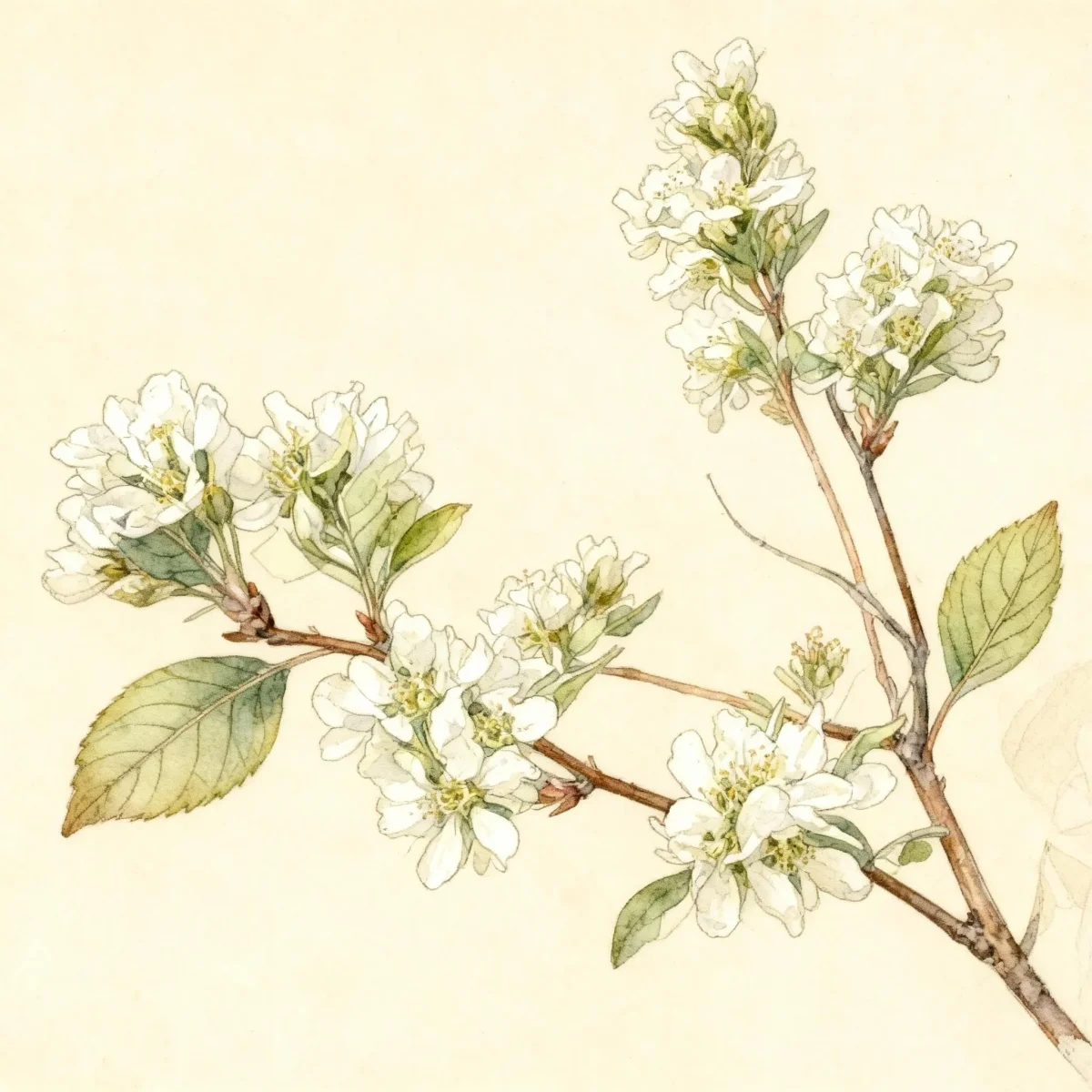
The specific cultivar Amelanchier alnifolia ‘Regent’ is treasured for forming a compact, early-flowering shrub, typically staying within the 4 to 6-foot height range. It produces showy, five-petaled white flowers in early spring before the leaves appear, followed by small, edible berries resembling blueberries in size, color, and taste, which are excellent for fresh eating or preserves. The oval, finely-toothed leaves turn beautiful shades of yellow in the fall, providing reliable seasonal transitions for the garden.
Tolerances
No specific resilience data was listed, but note its excellent hardiness based on USDA zone rating.
Potential Problems
Generally, this plant displays robust health and suffers no serious recurring problems. Gardeners should remain observant, however, as occasional maintenance issues might include fungal diseases such as rust, leaf spot, fire blight, and powdery mildew. Insect pests like sawflies, leaf miners, borers, and scale can also occasionally affect the foliage or wood. Proactive monitoring and appropriate, targeted treatments if necessary are the best defense against these minor issues.
Frequently Asked Questions
What hardiness zones is Alder-leaved serviceberry suitable for?
Amelanchier alnifolia ‘Regent’ is highly cold-tolerant, thriving across USDA Hardiness Zones 2 through 7.
How large does Alder-leaved serviceberry grow?
This specific cultivar is valued for its measured size, typically maturing between 4 to 6 feet in height and spreading to a similar width of 4 to 6 feet.
What sun exposure does Amelanchier alnifolia ‘Regent’ need?
This serviceberry cultivar performs best when situated in an area that receives full sun, though it tolerates light to partial shade conditions.
When does Alder-leaved serviceberry bloom?
The showy white flowers of Amelanchier alnifolia ‘Regent’ appear reliably in early spring, specifically during the month of April.
Conclusion
The compactness and four-season interest offered by the Amelanchier alnifolia ‘Regent’ make it an essential choice for gardeners needing reliable, low-effort performance. From its early white spring blossoms to its edible summer fruit, this Alder-leaved serviceberry delivers significant aesthetic and functional value. Before planting, confirm that your growing zone aligns within USDA Zones 2-7 to ensure this lovely shrub thrives.
Companion Planting
When situating Amelanchier alnifolia ‘Regent’, consider its fondness for well-drained soils and its need for sun to partial shade exposure. Excellent companions include shade-tolerant perennials that offer mid-to-late summer color, such as Hostas or Astilbes, especially if the serviceberry acts as a light screen. For a woodland influence that mimics its native preference, pairing it with ferns or woodland Phlox provides textural contrast without intense competition for resources.
Wildlife Benefits
The flowers of this serviceberry are crucial early-season food sources. Bees and other early pollinators readily visit the white blossoms in April, boosting local pollinator activity when few other sources are available. Furthermore, the small, dark berries are highly attractive to numerous bird species once they ripen in June, providing a nutritious food source before many other berry crops mature. Planting this species supports local biodiversity by offering sustenance across multiple trophic levels.