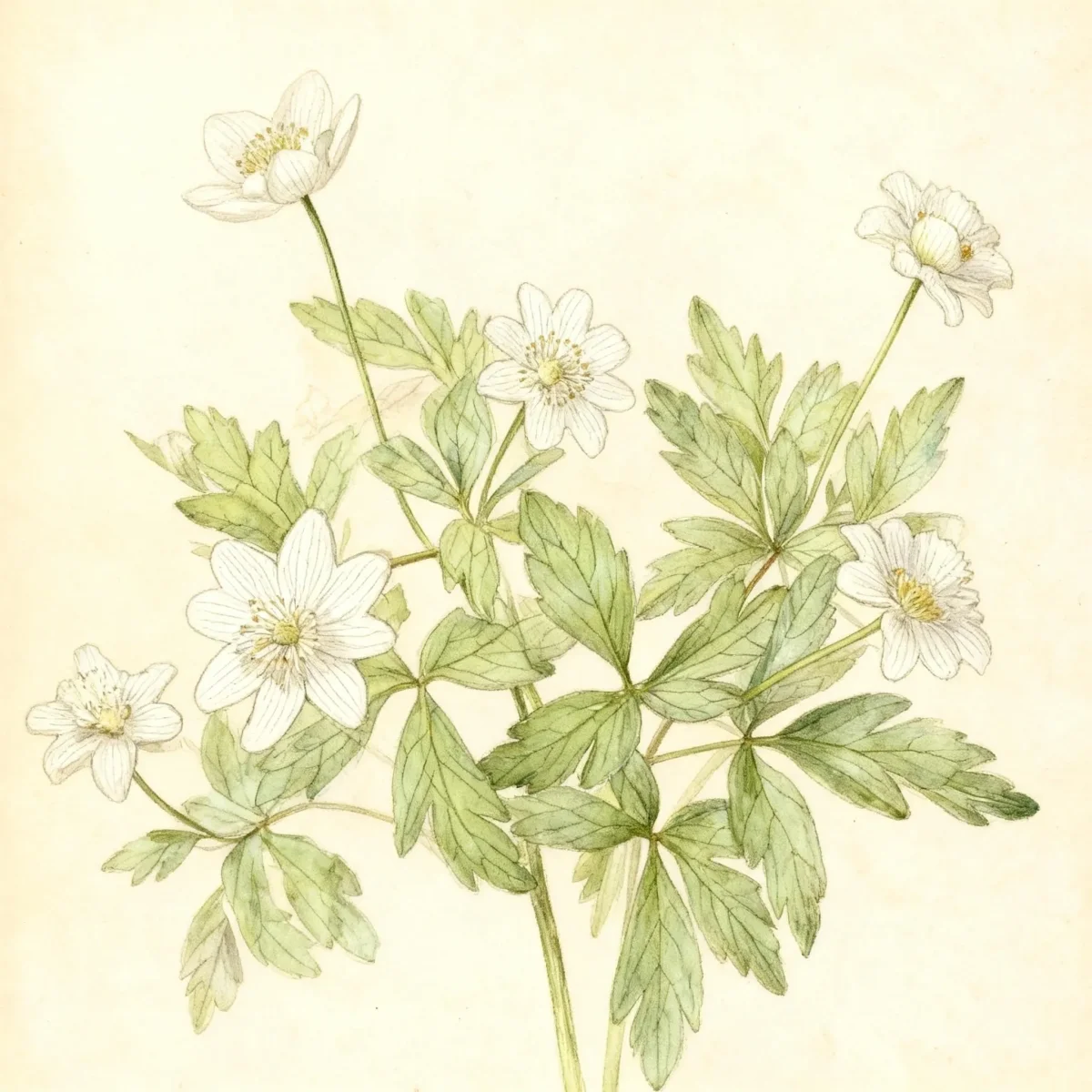
Wood anemone (Anemone nemorosa 'Lychette')
Graceful Anemone nemorosa 'Lychette' offers low-maintenance ground cover with charming spring white flowers perfect for shaded woodland gardens.
Scroll down to discover growing tips, care requirements, companion plants, and more
Complete Plant Information
Overview
The Anemone nemorosa ‘Lychette’, commonly known as Wood anemone, is a highly valued, low-growing perennial perfect for brightening dark, shaded areas of the garden. This cultivar stands out because its white flowers, featuring prominent yellow centers, are often larger than those found on the species plant, providing excellent spring visual appeal. It spreads gently via creeping rhizomes to create a beautiful, dense ground cover that mimics a natural woodland floor appearance.
This Wood anemone variety thrives where many other spring bloomers struggle, preferring the filtered light beneath deciduous trees and shrubs. Its ability to naturalize makes it a low-maintenance choice, establishing itself beautifully over time. Gardeners appreciate the Anemone nemorosa ‘Lychette’ for forming neat colonies before melting away gracefully as summer heat arrives.
As a native of Northern and Central Europe, this plant brings durable spring color to temperate gardens. Its adaptability lies in its preference for cool, moist soil conditions during its active growing season, delivering vibrant white blooms from April through May before entering summer dormancy.
Fast Facts
- Plant Family: Ranunculaceae
- Plant Type: Herbaceous perennial
- Hardiness Zones: USDA Zones 5-8
- Size at Maturity:
- Height: 0.5-1.5 ft
- Spread: 0.5-1.5 ft
- Bloom Time: April to May
- Bloom Description: White with yellow center stamens
- Sun Exposure: Part shade to full shade
- Water Needs: Medium
- Maintenance Level: Low
How to Grow
Planting Anemone nemorosa ‘Lychette’ is best done in late summer or early fall, allowing the rhizomes to settle before the ground freezes. Ensure the location provides humus-rich, fertile, and slightly acidic, well-drained loam. The ideal setting is part shade, deliberately avoiding intense, hot afternoon sun exposure which can scorch the foliage or prematurely induce dormancy.
Watering should be consistent; the Wood anemone requires medium moisture, particularly while the leaves are present in spring. When planting, set the rhizomes approximately 2 inches deep and space them 6 to 8 inches apart to encourage good colony formation. Incorporating leaf mold into the planting site is highly beneficial for soil structure and moisture retention.
Care throughout the growing season is minimal, justifying its low maintenance rating. As summer progresses and air temperatures climb, the plant naturally begins to go dormant, and the leaves will decline. Keeping the soil moist during this transition helps prolong the foliage slightly, though established plants developed enough root mass can tolerate short dry periods once fully dormant.
Propagate successful clumps in the late summer after the foliage has completely faded by carefully dividing the rhizomes. This simple propagation technique ensures you can expand your planting of Anemone nemorosa ‘Lychette’ year over year.
Landscape Uses
The primary cultural recommendation for this plant is to naturalize it. It excels when planted beneath trees and large shrubs, where it creates a beautiful, ephemeral carpet of white flowers in early spring. This makes the Wood anemone a perfect choice for historic or naturalistic woodland garden designs, softening the often bare understory layer before the overhead canopy fully fills in.
Use Anemone nemorosa ‘Lychette’ in woodland garden borders where it merges seamlessly with other spring ephemerals like daffodils or snowdrops. As the anemones go dormant in summer, companion plants that enjoy similar conditions but emerge later, such as hostas or ferns, will take over the visual interest, ensuring the area remains attractive all season long.
For a truly authentic woodland feel, allow the naturalized colonies to develop undisturbed. They perform best when left alone to spread, transforming standard shaded borders into enchanting, low-maintenance spring displays featuring these showy white blooms.
Standout Features
Flower Qualities
- Showy
Noteworthy Characteristics
The genus name, Anemone, is often derived from the Greek word anemos, meaning wind. This low-growing herbaceous perennial spreads slowly via branched, creeping rhizomes, forming an attractive ground cover in shaded areas. The flowers of Anemone nemorosa ‘Lychette’ are noteworthy for being larger than the species typical, displaying 5-8 petal-like white sepals surrounding a bright ring of yellow stamens.
Tolerances
- No serious insect or disease problems
Potential Problems
This resilient Wood anemone rarely suffers from significant insect infestations or major fungal diseases, making it an excellent choice for organic gardening where chemical controls are avoided. Its primary limiting factor is environmental—ensuring the soil does not become waterlogged during its active growth phase is the main cultural caveat. With proper soil drainage established, management issues are virtually non-existent for established plantings of Anemone nemorosa ‘Lychette’.
Frequently Asked Questions
What hardiness zones is Wood anemone suitable for?
The Anemone nemorosa ‘Lychette’ is reliably hardy across USDA Zones 5 through 8. Ensure your location falls within this range for the best long-term success.
How large does Anemone nemorosa ‘Lychette’ grow?
When mature, this perennial typically reaches a height between 0.5 to 1.5 feet tall, spreading to a similar width, usually forming colonies about 6-10 inches high overall.
When does Wood anemone bloom?
This charming perennial reliably blooms in the spring, specifically during April and May, presenting its characteristic white flowers with yellow center stamens.
What sun exposure does Wood anemone need?
The ideal condition for Anemone nemorosa ‘Lychette’ is part shade to full shade; direct, hot afternoon sun should always be avoided to prevent leaf scorch.
Conclusion
The Anemone nemorosa ‘Lychette’ offers superb, low-input elegance, blanketing shaded spaces with vibrant white color just as spring begins. Its easy care and naturalizing habit make it an essential cornerstone for woodland garden designs. Before planting, confirm your garden falls within USDA Zones 5-8 and prepare humus-rich soil to ensure a spectacular, low-maintenance show next spring.
Companion Planting
When selecting companions for the Wood anemone, focus on plants that share the same preference for part shade and medium moisture during the early spring. Good neighbors include woodland bulbs like Scilla (Squill) or early-flowering Hellebores, which share a similar timing. For summer interest after the Anemone nemorosa ‘Lychette’ has retreated into dormancy, pair it with late-emerging perennials such as Astilbe or Hosta varieties that prefer dappled sunlight.
Propagation and Division
The most effective way to propagate Anemone nemorosa ‘Lychette’ is through the division of its rhizomes, a straightforward process well-suited to its spreading nature. Wait until late summer, after the leaves have fully withered and the plant has entered its resting phase. Carefully dig up sections of the established mat, ensuring each division retains healthy root tissue. Plant the rhizomes immediately at a depth of about 2 inches, spacing them 6 to 8 inches apart to allow room for future lateral spread.