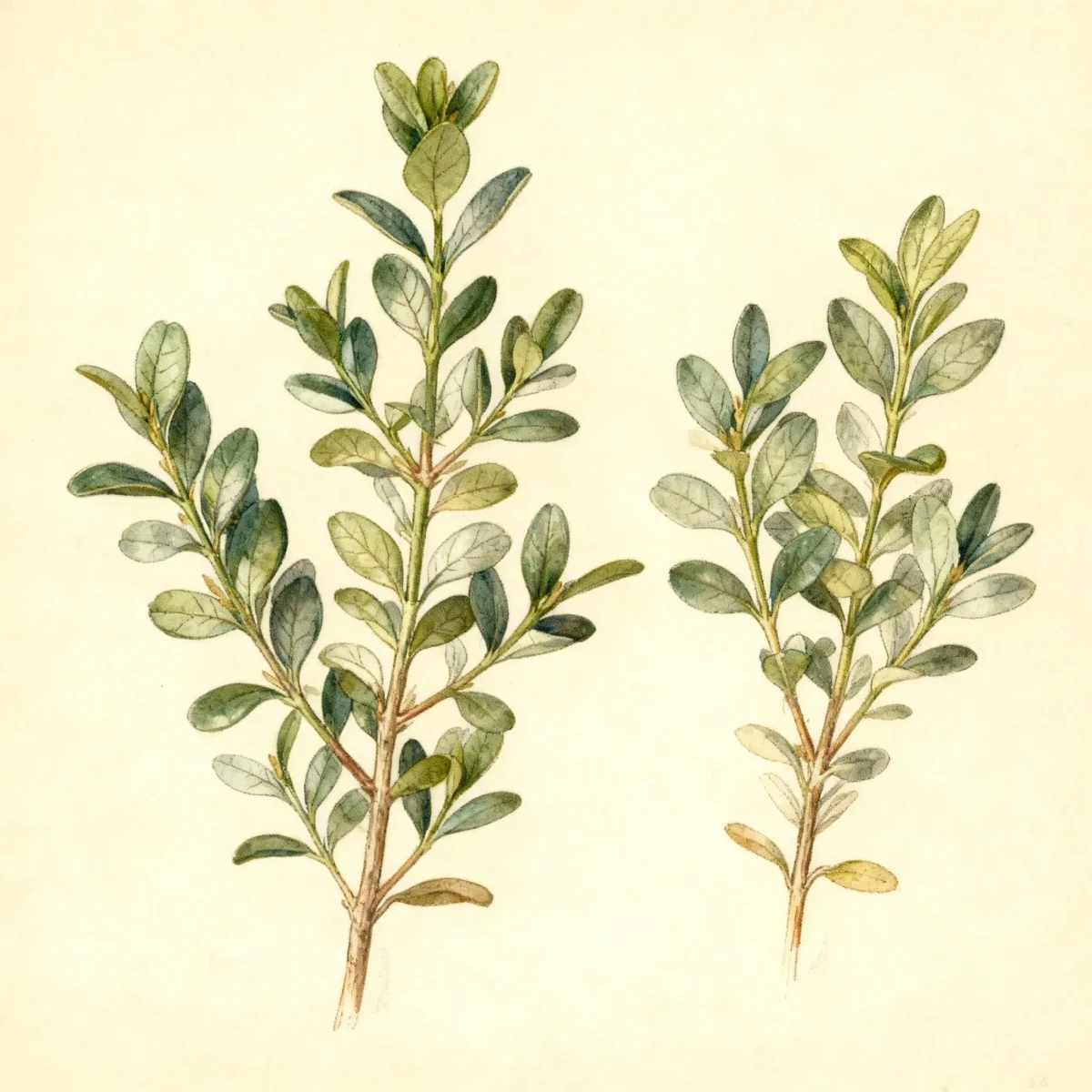
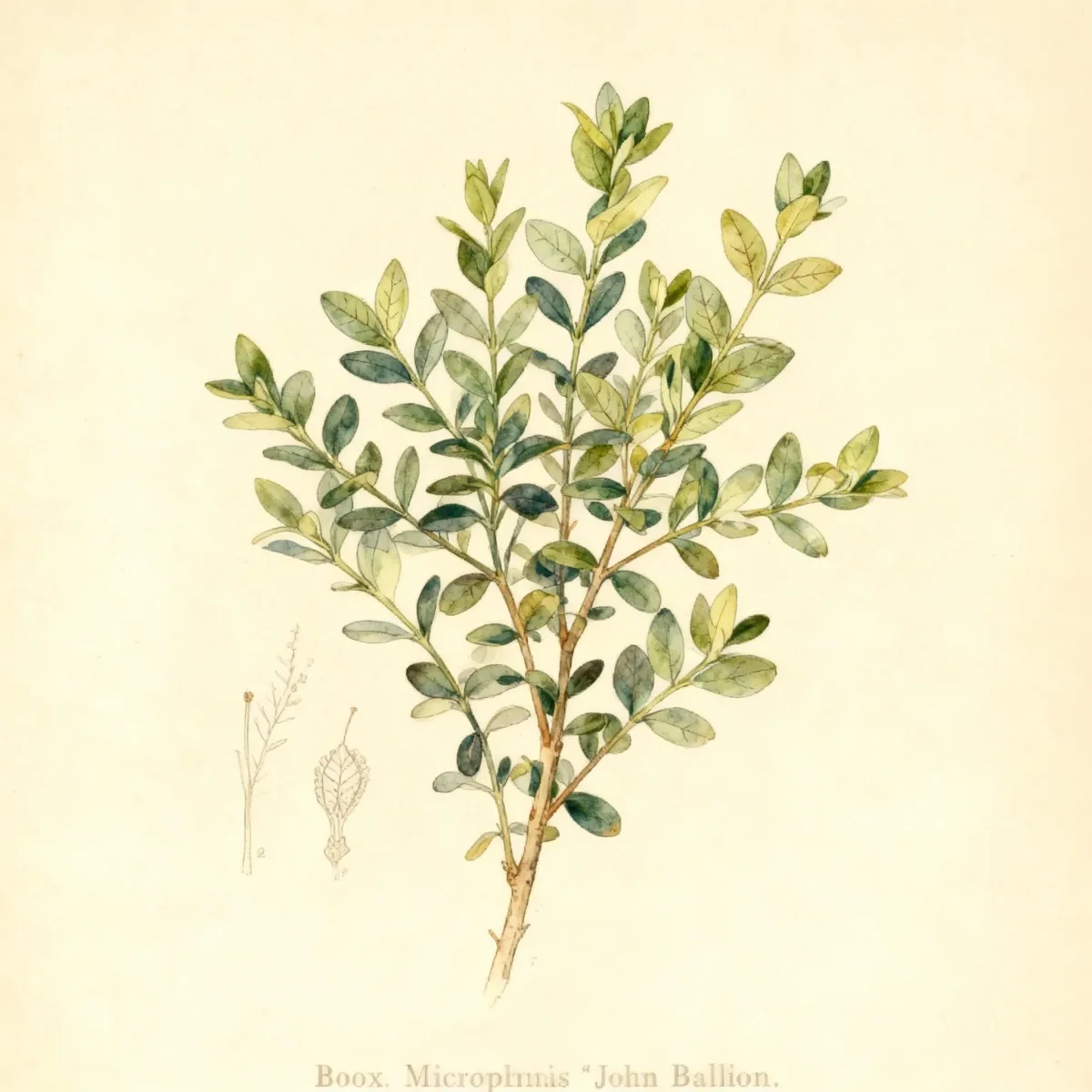
Boxwood (Buxus sempervirens 'Joy')
Buxus sempervirens 'Joy' Boxwood is a compact broadleaf evergreen perfect for hedges and structure in USDA Zones 5-8.
Scroll down to discover growing tips, care requirements, companion plants, and more
Complete Plant Information
Overview
The cultivar Buxus sempervirens ‘Joy’ offers gardeners a dense, compact alternative within the popular Boxwood genus. This broadleaf evergreen is highly valued for its reliable structure, maintaining a deep green presence year-round in USDA Zones 5 through 8. Its pyramidal to conical habit makes Buxus sempervirens ‘Joy’ particularly desirable where formal structure or a narrow screen is required without the aggressive spreading of some older Boxwood varieties.
This cultivar exhibits fast annual growth, potentially adding up to 5 inches per year, allowing hedges to fill in reasonably quickly. While typically maintained between 3 and 6 feet tall, its dense foliage and manageable size lend themselves well to precise shearing or allowing a more natural, albeit dense, form. Gardeners appreciate this Boxwood for its tough disposition, provided proper siting protects it from harsh winter elements.
A key advantage of cultivating the ‘Joy’ Boxwood is its noted resistance against common Boxwood pests, setting it slightly apart from susceptible relatives. Whether used as a vertical accent or massed for a formal edge, Buxus sempervirens ‘Joy’ provides superior low-maintenance evergreen screening for year-round garden interest.
Fast Facts
- Plant Family: Buxaceae
- Plant Type: Broadleaf evergreen
- Hardiness Zones: USDA Zones 5-8
- Size at Maturity:
- Height: 3-6 ft
- Spread: 3-5 ft
- Bloom Time: April to May
- Bloom Description: Greenish yellow
- Sun Exposure: Full sun to part shade
- Water Needs: Medium
- Maintenance Level: Medium
How to Grow
Planting Buxus sempervirens ‘Joy’ is best done in spring or early fall once the severe danger of frost has passed or before deep winter freezes set in. This Boxwood thrives in evenly moist, well-drained loams, such as a sand-clay mixture. Ensure the site provides full sun to partial shade; while it tolerates deep shade, vigor and foliage density will decrease significantly in lower light settings. Avoid cultivating deeply around the plant, as Boxwoods possess shallow roots that appreciate protection.
Consistent, medium watering is crucial, especially while establishing, though established plants can tolerate some dryness if sited correctly. The shallow root system benefits immensely from a yearly application of 1-2 inches of organic mulch, like compost or bark, to retain moisture and moderate soil temperature. Plants prefer soils that range from slightly acidic to slightly alkaline in pH.
Pruning and shearing should be performed judiciously. Never shear Buxus sempervirens ‘Joy’ immediately after the last spring frost, as this encourages tender new growth vulnerable to subsequent late frosts. Annually thin out the canopy to improve essential air circulation within the dense structure. Furthermore, site this Boxwood where it receives some protection from drying winter winds and intense afternoon winter sun, which can cause foliage bronzing or dehydration.
Landscape Uses
The compact, pyramidal form of Buxus sempervirens ‘Joy’ makes it exceptionally versatile in formal and contemporary landscapes. It excels when massed to create a narrow, formal hedge, providing a crisp visual line along walkways or property borders. Due to its robust nature and manageable size, it is an excellent choice for vertical specimens or accents in foundation plantings where taller, looser shrubs might overwhelm the architecture.
Consider incorporating this Boxwood into Mediterranean garden designs where its evergreen texture contrasts strongly against drought-tolerant perennials (once established). It also performs admirably as formal topiary elements, lending classic structure to garden rooms. For seasonal interest, pair the deep green foliage of this Boxwood in mixed borders with flowering shrubs that demand similar conditions, such as late-blooming peonies or spring bulbs that die back before the Boxwood fully leafs out. It is also highly suitable for large container plantings, though container care requires closer monitoring of water and nutrients.
Standout Features
Flower Qualities
- Insignificant
Noteworthy Characteristics
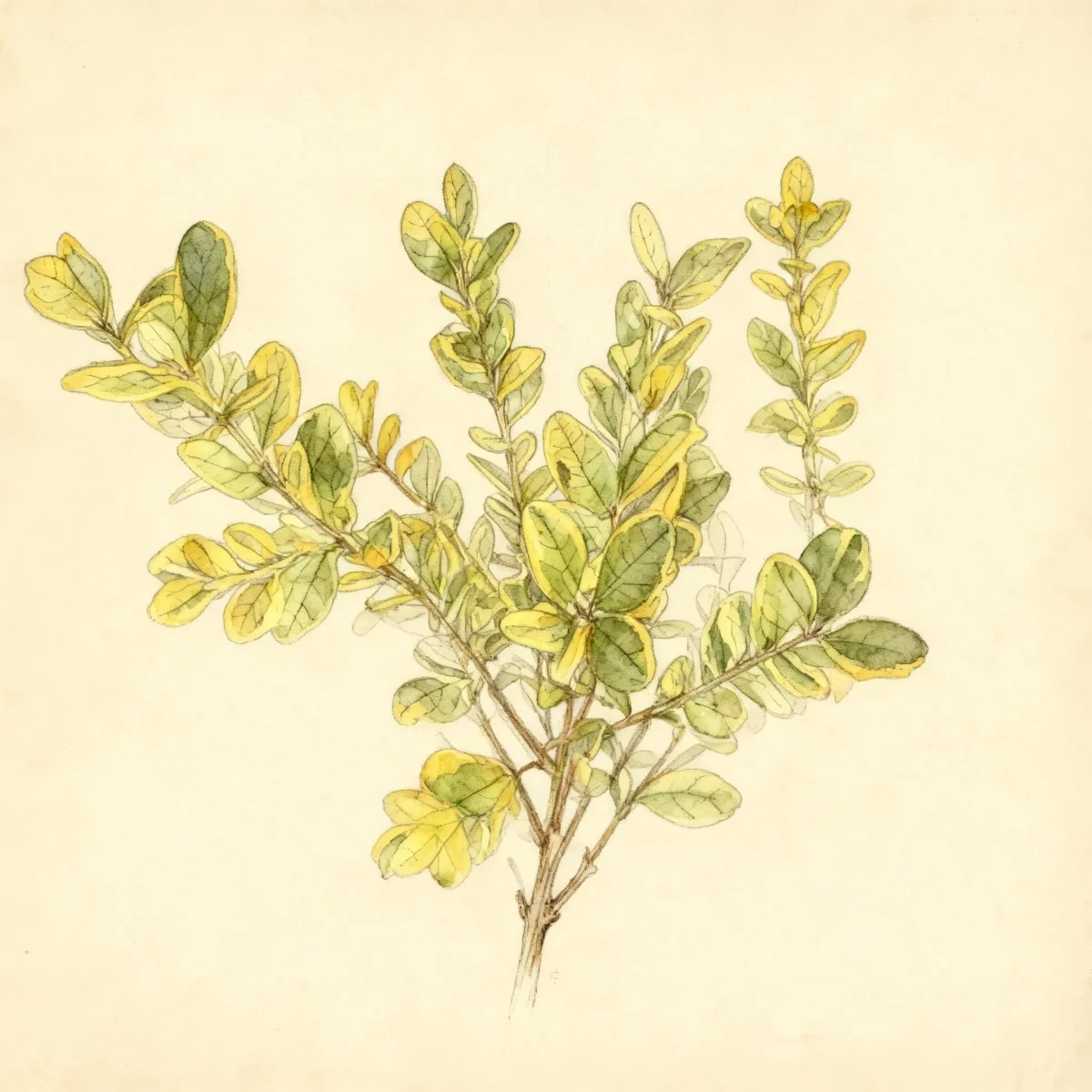
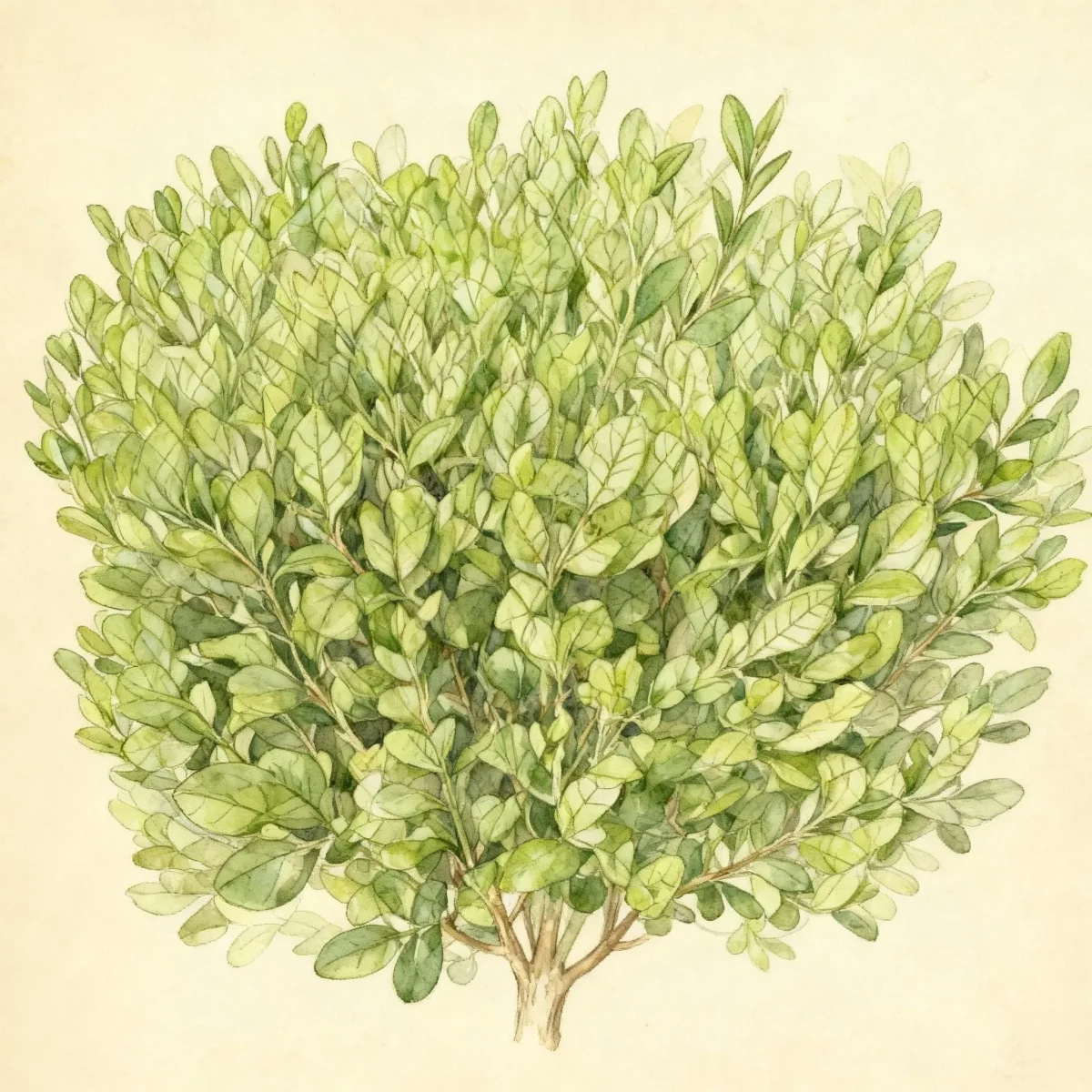
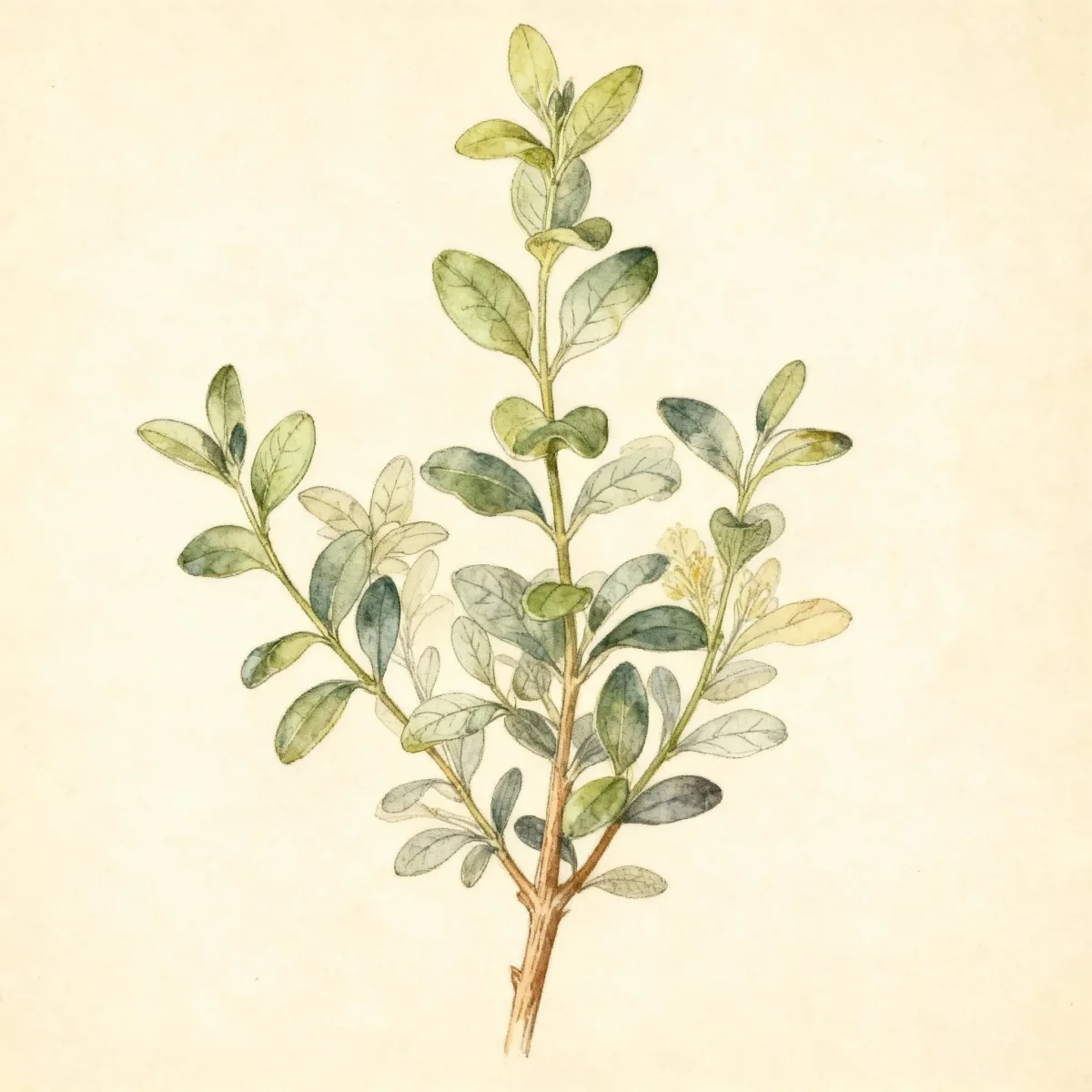
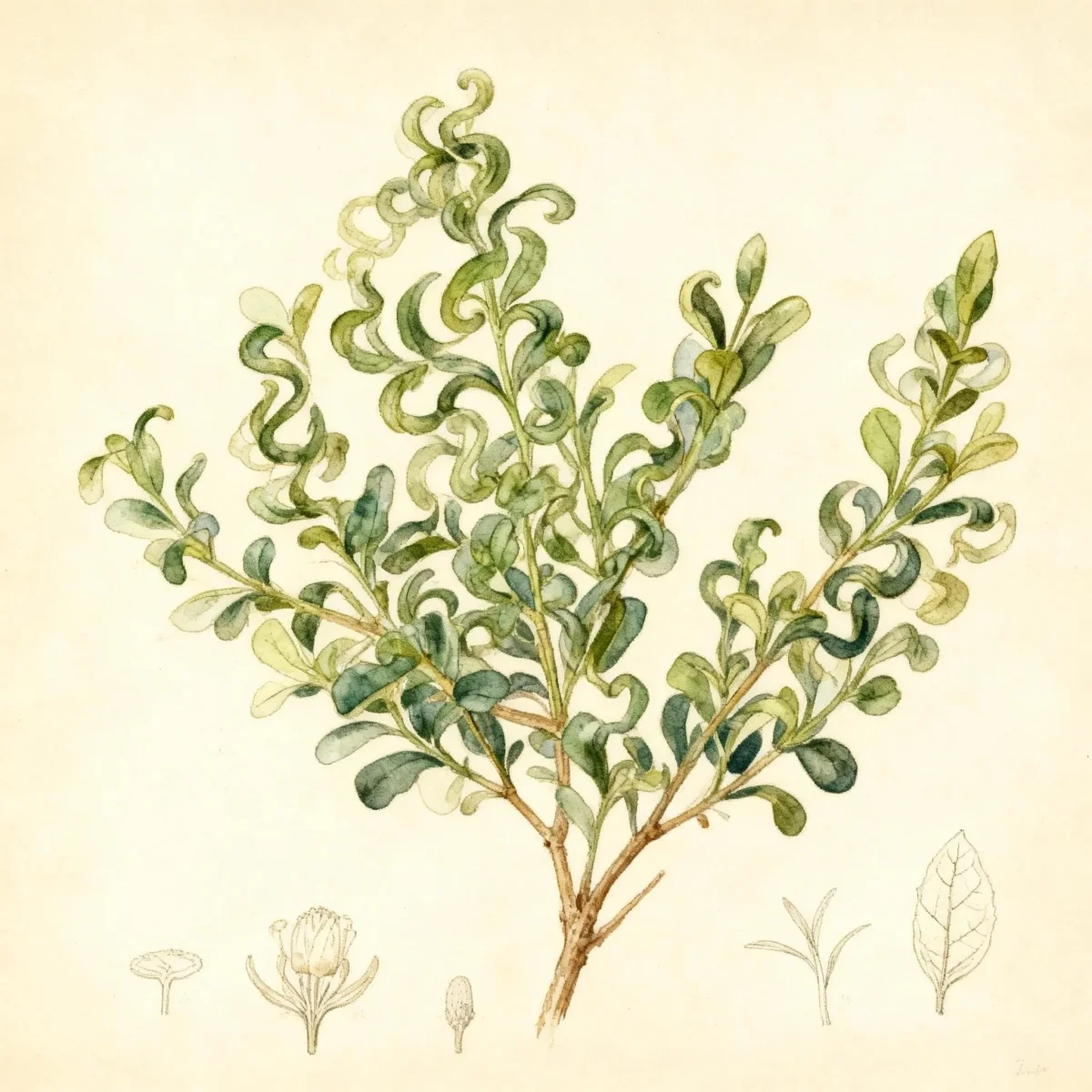
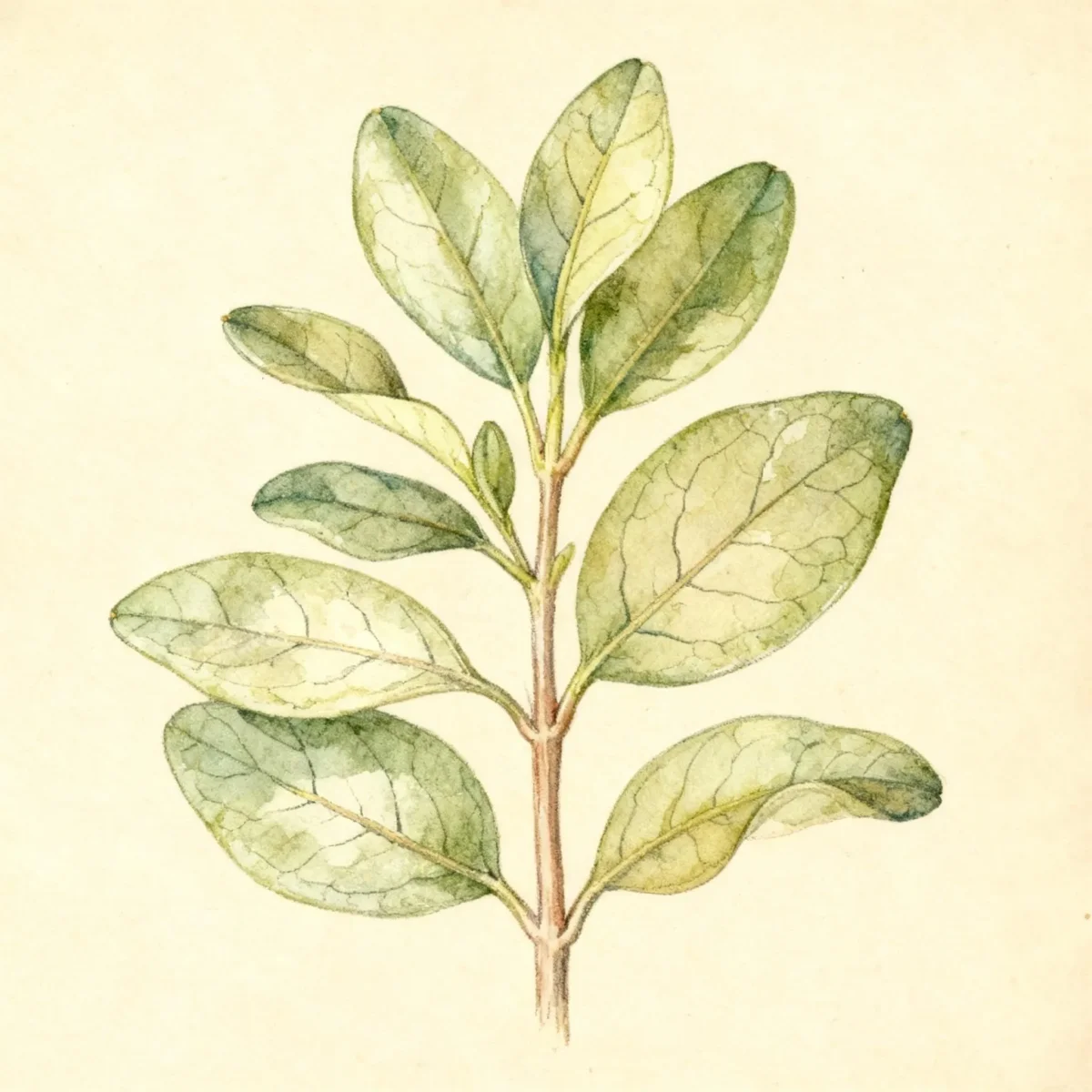
Buxus sempervirens ‘Joy’ develops into a dense, compact, pyramidal to conical evergreen shrub boasting an open habit and fast growth rate (up to 5” per year). It typically matures to 3–6 feet tall, though without pruning it may eventually reach 10 feet tall by 8 feet wide over many years. Its small, lanceolate leaves are medium green, offering a fine texture contrast to many other evergreens.
Tolerances
- Rabbit
- Deer
Potential Problems
While the ‘Joy’ cultivar shows good inherent resistance to the common Boxwood pests—leaf miner, psyllids, and mites—gardeners must still monitor for general issues common to Boxwood. Foliage bronzing is a significant aesthetic concern, usually occurring in harsh winters when the plant is exposed to intense sun and drying winter winds, leading to dehydration. Poorly drained soils pose a risk of root rot, so ensure your planting site has exceptional drainage.
Susceptibility remains for fungal diseases like boxwood blight, volutella blight, and leaf spot. To mitigate these risks, ensure excellent air circulation by properly thinning older branches annually and avoiding overhead watering late in the day. If nematodes are a known issue in your area, select planting sites carefully, as they can severely compromise plant health over time. Always inspect new plantings for signs of distress related to soil compaction or poor drainage.
Frequently Asked Questions
What hardiness zones is Boxwood suitable for?
Buxus sempervirens ‘Joy’ is generally suited for USDA Hardiness Zones 5 through 8, offering reliable evergreen performance across these regions.
How large does Buxus sempervirens ‘Joy’ grow?
This compact Boxwood typically matures to a height between 3 to 6 feet and a spread of 3 to 5 feet, though it can grow larger if left unpruned.
What sun exposure does Boxwood need?
Buxus sempervirens ‘Joy’ performs best when situated in full sun to part shade conditions, handling dappled light well, though full sun exposure increases the risk of winter bronzing.
When does Boxwood bloom?
This Boxwood variety flowers in the spring, typically from April to May, producing inconspicuous flowers described as greenish yellow.
Conclusion
The Buxus sempervirens ‘Joy’ excels as a resilient, low-growing evergreen cornerstone perfect for structure, screening, or formal hedging in the landscape. Its compact habit and resistance to several common insect pests make this Boxwood an excellent, reliable choice for gardeners seeking year-round green impact. Before planting, verify USDA Zone compatibility (5-8) and ensure your chosen location offers the balanced sun and well-drained soil this desirable shrub demands.
Companion Planting
Selecting appropriate companions is key to maintaining the health and aesthetic of your Boxwood plantings. Because Buxus sempervirens ‘Joy’ requires well-drained soil and protection from extreme site conditions, pairing it with other semi-shade tolerant, low-maintenance shrubs helps create a cohesive microclimate. Consider integrating spring-flowering bulbs like Scilla or Muscari that bloom early and then die back, allowing the Boxwood’s foliage to dominate the mid-to-late season.
For low borders that compliment the dense green texture, look towards shade-tolerant perennials such as Hellebores (Lenten Rose) or Epimedium, which offer different textures and, in Helleborus’s case, winter color. Avoid planting aggressive spreading perennials near the base, as this competition can interfere with the shallow root system of the Boxwood.
Design Ideas for Narrow Spaces
The upright, somewhat conical shape of Buxus sempervirens ‘Joy’ makes it ideal for constrained areas where height is desired but spread must be limited. In small courtyard gardens, plant this Boxwood in tall, rectangular containers flanking an entry point to establish formality without infringing on pathway space. For contemporary designs, mass several plants to create a minimalist green wall effect that requires minimal annual pruning to maintain a clean line.
Utilize its vertical habit perpendicular to foundation lines or property fences to subtly break up long, flat expanses of walling. When used as a hedge, the narrow footprint of Buxus sempervirens ‘Joy’ allows you to define outdoor “rooms” or borders where wider hedging materials would consume excessive yard space.