Ornamental onion (Allium thunbergii 'Ozawa')
Allium thunbergii 'Ozawa' is a compact, low-maintenance Ornamental onion offering deep red-violet blooms in autumn. Hardy zones 4-9.
Scroll down to discover growing tips, care requirements, companion plants, and more
Complete Plant Information
Overview
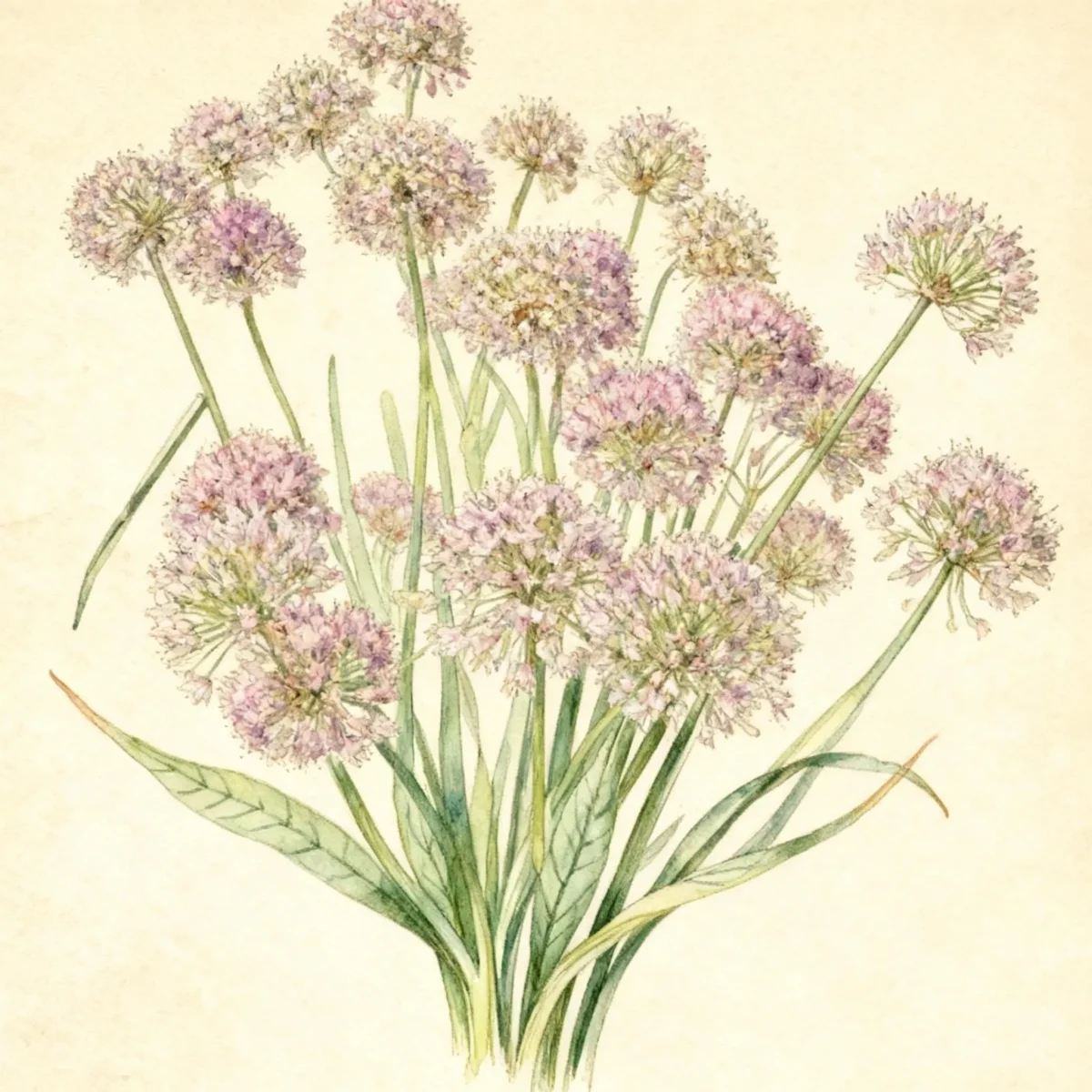
Allium thunbergii ‘Ozawa’, commonly known as the Ornamental onion, is highly valued by gardeners for providing much-needed color late in the season. This compact cultivar brings masses of rich, red-violet flowers atop slender stalks when most summer blooms have faded. It adds vertical interest without becoming overly tall, keeping a neat, manageable clump throughout its growing cycle.
As an herbaceous perennial, this Ornamental onion establishes well and requires relatively low maintenance once sited correctly. It performs best in full sun but tolerates partial shade, making it adaptable to various garden locations. The thin, grass-like foliage remains attractive until hard frost, offering texture throughout the season.
The reliability and late-season performance of Allium thunbergii ‘Ozawa’ make it an essential addition for extending the garden display. Its neat size and attractive globular flower heads ensure that this compact bulb is a star when planning fall color compositions.
Fast Facts
- Plant Family: Amaryllidaceae
- Plant Type: Herbaceous perennial
- Hardiness Zones: USDA Zones 4-9
- Size at Maturity:
- Height: 0.75-1 ft
- Spread: 0.5-0.75 ft
- Bloom Time: September to October
- Bloom Description: Red-violet
- Sun Exposure: Full sun to part shade
- Water Needs: Medium
- Maintenance Level: Low
How to Grow
The best time to plant Allium thunbergii ‘Ozawa’ bulbs is during the fall season, although early spring planting is also acceptable. Site these Ornamental onions where they will receive full sun for the most prolific blooms, though they tolerate partial shade. They thrive in average, well-drained soil with medium moisture levels. Proper drainage is critical to bulb health over winter.
Require minimum fuss once established. Water consistently throughout the growing season to maintain medium soil moisture, especially during dry spells, though established clumps show good drought tolerance. Fertilization is seldom needed if the soil is reasonably fertile; overly rich soil can promote excessive foliage growth at the expense of flowers.
Deadheading spent flower heads is generally not necessary, as spent seed heads can have some visual appeal. If flowering performance diminishes after several years, the bulb clumps should be dug up, divided, and replanted to rejuvenate the planting. Leaves should be allowed to die back naturally in the fall to nourish the bulb for the following year’s display of your Ornamental onion.
Landscape Uses
The compact nature of Allium thunbergii ‘Ozawa’ lends itself perfectly to edging and structured planting schemes. Grouping or massing these bulbs creates significant impact, especially when sited near the front of borders where their fall bloom can be easily appreciated. They are particularly effective when used in rock gardens, providing vertical color amidst lower-growing succulents and alpines.
Consider using this Ornamental onion alongside plants that offer strong summer structure but fade gracefully before autumn, such as late-blooming sedums or fall-flowering asters. The thin, grassy foliage of Allium thunbergii ‘Ozawa’ acts as a soft texture that contrasts nicely with broader-leaved perennials. Their reliable height (under 1 foot) means they will not obscure shorter companions.
Standout Features
Flower Qualities
- Showy
Noteworthy Characteristics
This bulbous, clump-forming Ornamental onion is a standout, typically growing more compactly than the species, reaching only 6–12 inches tall and wide. Its main feature is the fall bloom of vibrant purple to purple-pink flowers held in globular clusters atop thin scapes. Thin, grass-like, hollow green leaves remain attractive all season, turning a tawny orange color following frost.
Tolerances
- Deer
- Drought
Potential Problems
Allium thunbergii ‘Ozawa’ generally exhibits excellent resistance to serious insect or disease problems, which adds to its low-maintenance appeal. The main issue reported is a decrease in flowering vigor over time as the clumps naturally multiply and become overcrowded. To maintain robust blooming, gardener intervention is required. If the quantity or size of the flower heads lessens, the solution is simple: dig up the established tufts, carefully divide the bulbs, and replant them back into the garden bed or a new location in the fall or early spring.
Frequently Asked Questions
What hardiness zones is Ornamental onion suitable for?
Allium thunbergii ‘Ozawa’ is reliably hardy in USDA Zones 4 through 9.
How large does Allium thunbergii ‘Ozawa’ grow?
This compact cultivar typically reaches a height between 0.75 and 1 foot, with a spread ranging from 0.5 to 0.75 feet wide.
When does Ornamental onion bloom?
This attractive Ornamental onion provides color from September into October, displaying its red-violet flower clusters late in the season.
What sun exposure does Allium thunbergii ‘Ozawa’ need?
It performs best when situated in full sun but is adaptable enough to grow well in areas receiving part shade.
Conclusion
The value of Allium thunbergii ‘Ozawa’ lies firmly in its late-season performance and exceptionally easy care. This low-maintenance Ornamental onion reliably delivers compact, striking floral architecture to the autumn garden. Before planting, confirm that your garden falls within USDA Hardiness Zones 4 to 9, and plan to plant the bulbs in the fall for the best spring emergence.
Companion Planting
Selecting appropriate companions helps maximize the visual appeal of Allium thunbergii ‘Ozawa’ while supporting its cultural needs. Because this bulb requires well-drained soil and medium water, pair it with other drought-tolerant perennials that share a similar preference for full sun. Plants that look beautiful juxtaposed against the upright, deep violet globes include Russian Sage (Perovskia atriplicifolia) or low-growing creeping phlox, which can soften the edges of the bulb planting.
Consider placing this Ornamental onion near plants that offer substantial summer interest but fade before September. As the foliage of Allium thunbergii ‘Ozawa’ remains neat and grass-like, it integrates well with the upright structure of upright grasses or the contrasting foliage textures of certain ornamental sedges that fill the space during warmer months.
Propagation Tips
While Allium thunbergii ‘Ozawa’ bulbs are readily available, propagation through division is the standard method for maintaining vigorous clumps. This process should be performed when you notice flowering diminishing, typically every few years. Wait until late summer or early fall after the foliage has started to yellow but before the ground freezes solid, or divide in very early spring before active growth begins. Carefully lift the entire clump with a garden fork, gently tease the bulbs apart—or use a spade to segment the mass—and immediately replant the divisions at the appropriate depth, ensuring good drainage is maintained at the new site.