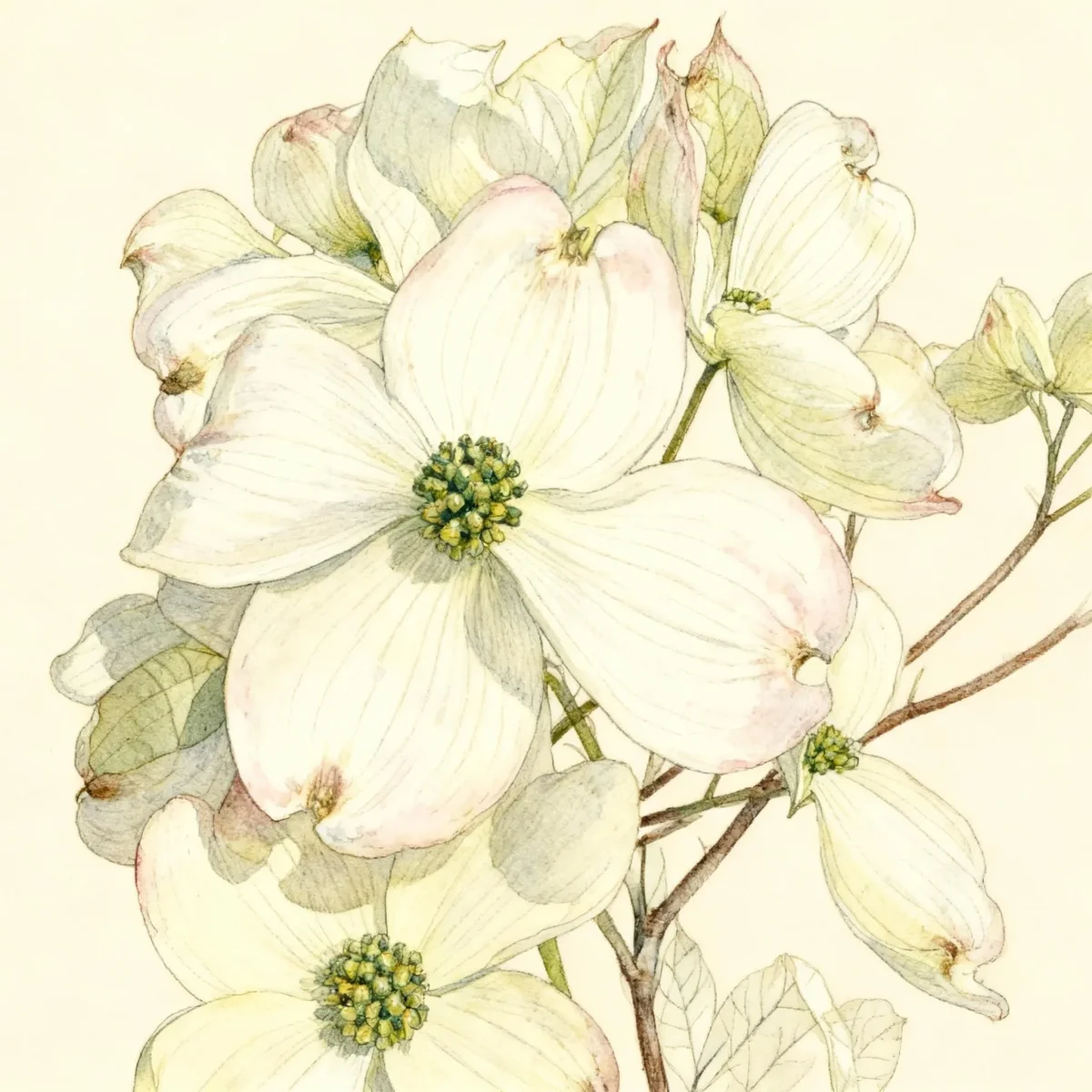
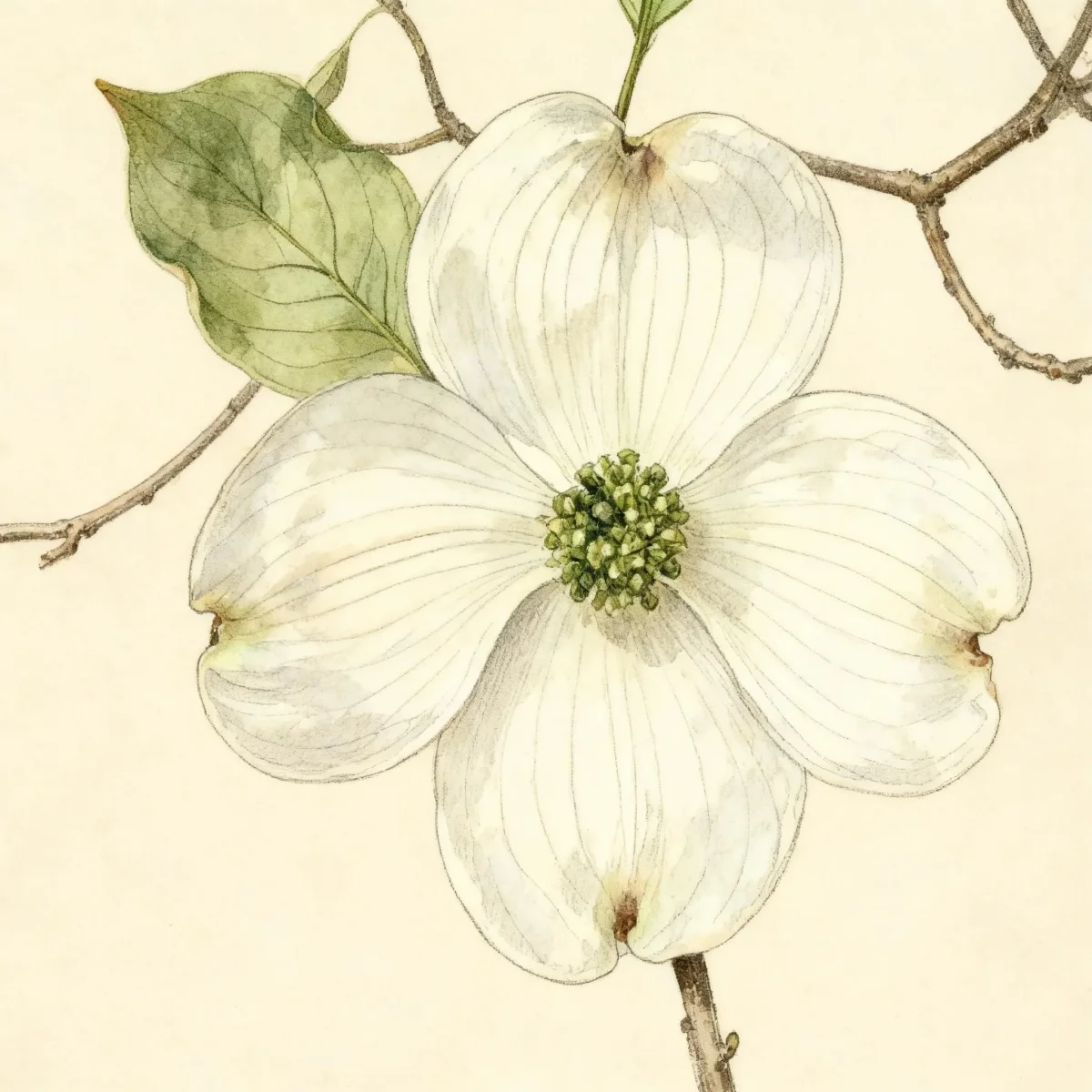
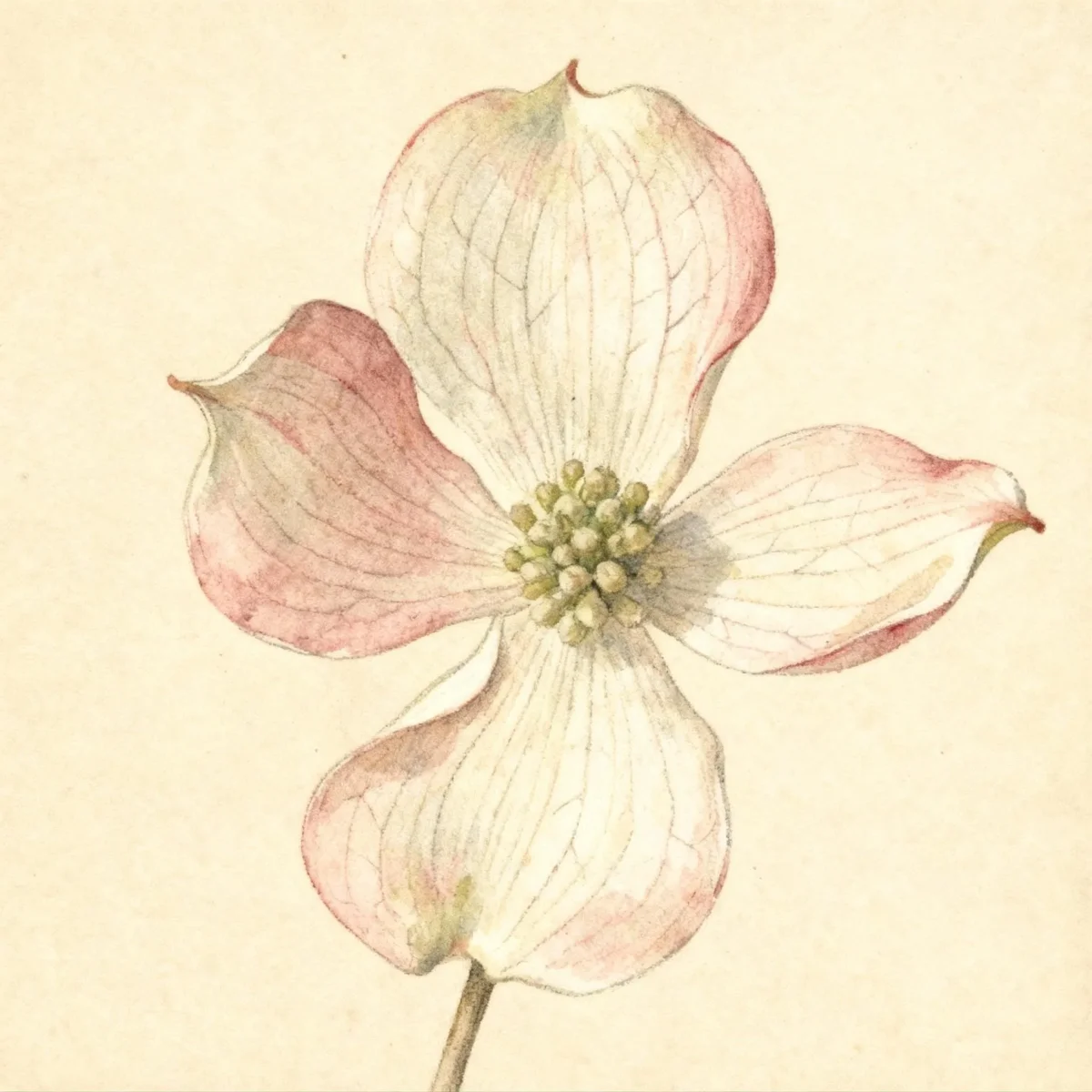
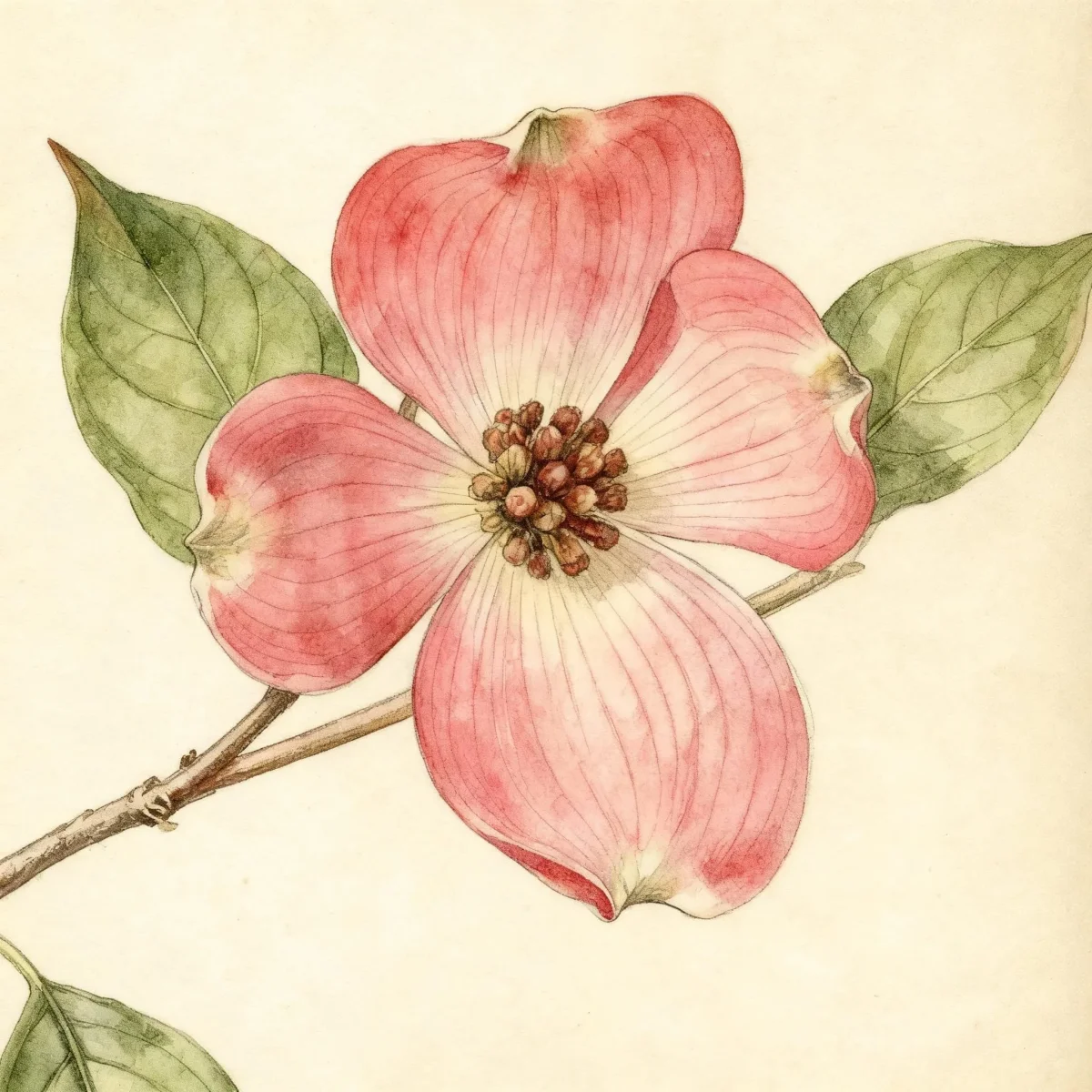
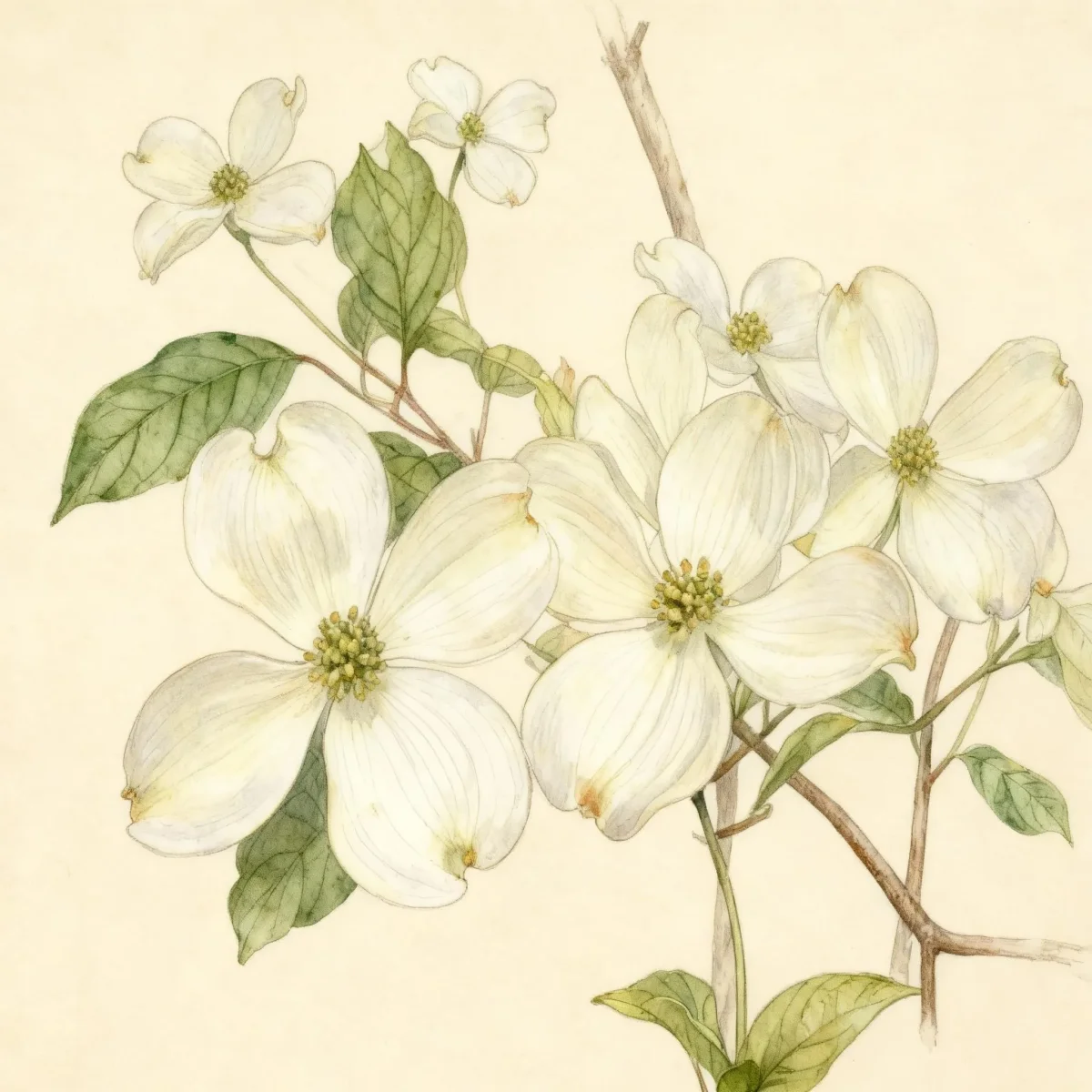
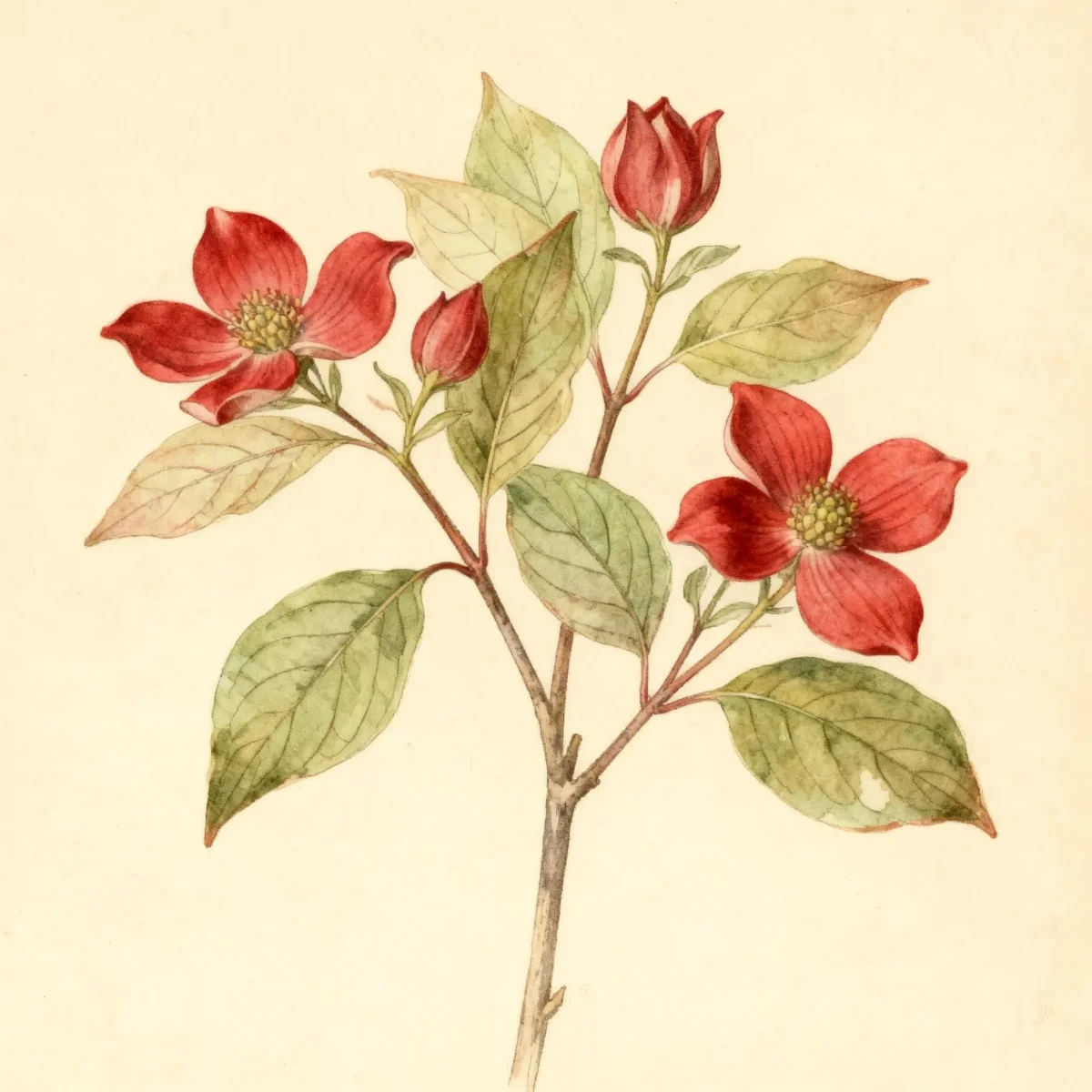
Flowering dogwood (Cornus florida 'Ozark Spring')
The Cornus florida 'Ozark Spring' flowering dogwood offers superior winter hardiness with showy white spring blooms and excellent bird appeal.
Scroll down to discover growing tips, care requirements, companion plants, and more
Complete Plant Information
Overview
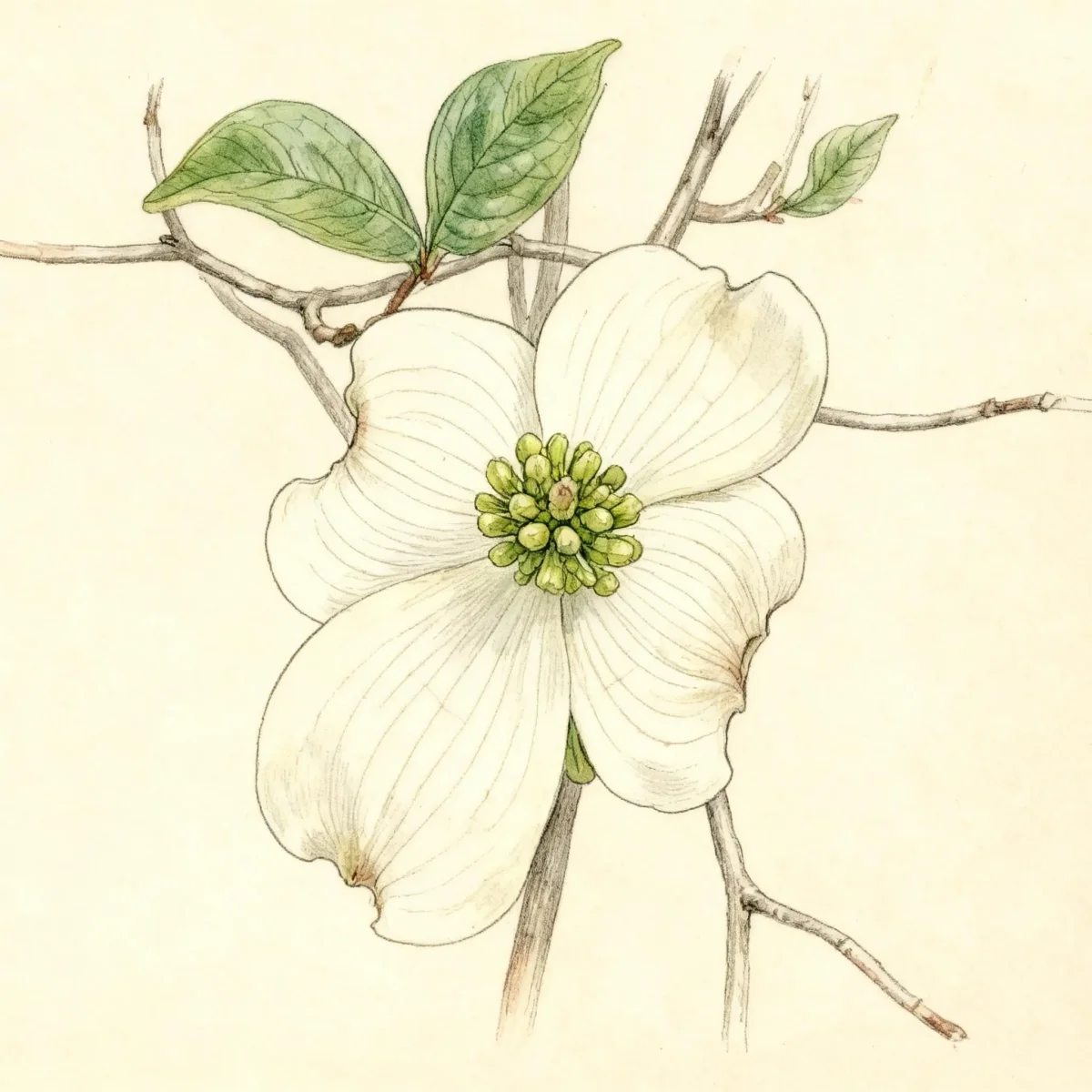
The Cornus florida ‘Ozark Spring’ is a highly desirable cultivar of the native Flowering dogwood, celebrated for its structural beauty and spectacular spring display. This cultivar is specifically noted for its superior winter hardiness, making it an excellent choice for colder regions within the typical dogwood range. Gardeners cherish the visual impact created by the four large, white, petal-like bracts that appear in early spring.
As a small deciduous tree, the Flowering dogwood fits perfectly even in smaller yards, maturing around 15 to 20 feet tall and wide with a pleasing, low-branching, flat-topped habit. Beyond its spring flowers, the oval, dark green leaves provide attractive red fall color, and the bright red fruits are highly attractive to songbirds. Planting Cornus florida ‘Ozark Spring’ ensures you capture the finest characteristics of this iconic American native.
Fast Facts
- Plant Family: Cornaceae
- Plant Type: Tree
- Hardiness Zones: USDA Zones 5-9
- Size at Maturity:
- Height: 15-20 ft
- Spread: 15-20 ft
- Bloom Time: April to May
- Bloom Description: White
- Sun Exposure: Full sun to part shade
- Water Needs: Medium
- Maintenance Level: Medium
How to Grow
Planting Cornus florida ‘Ozark Spring’ is best done in spring or fall when environmental stress is lower. Locate your Flowering dogwood where it receives full sun to light part shade; too much deep shade reduces flowering. This species thrives in average, medium moisture, well-drained soils that are organically rich and slightly acidic. Correct planting depth is crucial to avoid stressing the root system.
Ongoing care for this tree focuses on maintaining soil moisture and protecting the roots. Implement a 2-4 inch layer of mulch around the base, ensuring the mulch does not touch the trunk. This mulching helps keep roots cool and consistently moist, mirroring their preferred natural environment. While they require medium water, avoid consistent sogging, which can lead to root rot issues.
Stressed trees are more susceptible to disease, so proper site selection and consistent moisture management are the best preventative measures. Gardeners should avoid planting this specimen where Dogwood Anthracnose is currently known to be a serious problem until better treatments or resistant cultivars are available. Pruning should be minimal, focusing only on removing dead, damaged, or crossing branches during the dormant season.
Landscape Uses
The Cornus florida ‘Ozark Spring’ is best utilized where its multi-seasonal interest can be the focal point of the landscape. Its moderate size and graceful, layered branching habit make it an ideal specimen tree near patios, entryways, or centrally placed in residential lawns. Because it is a native flowering tree, it integrates beautifully into woodland garden settings where it can receive dappled sunlight.
Consider using it as a transitional planting between large shade trees higher up a slope or against a backdrop of dark green conifers, allowing the white spring blooms to truly pop. The attractive red fruits that follow also make it a superb selection for bird gardens, providing a late-season food source that wildlife readily consumes. Utilizing Cornus florida ‘Ozark Spring’ offers sophisticated color structure throughout the growing season.
Standout Features
Flower Qualities
- Showy
Fruit Qualities
- Showy
Noteworthy Characteristics
Cornus florida, commonly known as flowering dogwood, is a small deciduous tree that typically grows 15-30’ tall with a low-branching, broadly-pyramidal but somewhat flat-topped habit. The true flowers are insignificant clusters surrounded by four showy, white, petal-like bracts opening flat to appear as a large flower. The cultivar ‘Ozark Spring’ is genetically noted for its superior winter hardiness and typically matures to the smaller 15-20’ height range, performing very well across the Ozark region.
Tolerances
- Deer
- Clay Soil
- Black Walnut
Potential Problems
Flowering dogwood, when stressed, is susceptible to a rather large number of disease problems, the most serious of which is dogwood anthracnose. Although this anthracnose is not yet a serious problem in Missouri, it has caused considerable devastation in parts of the eastern U.S. Plants are also susceptible to powdery mildew, leaf spot, canker, root rot, and leaf and twig blight, all commonly associated with stress. Stressed trees also become vulnerable to boring insect pests, while scale and leaf miner are less severe threats. Maintaining ideal cultural conditions—especially consistent moisture and proper drainage—is the best defense against these opportunistic issues.
Frequently Asked Questions
What hardiness zones is Cornus florida ‘Ozark Spring’ suitable for?
This resilient cultivar is suitable for USDA Zones 5 through 9, offering better cold protection than some standard flowering dogwood types.
How large does Flowering dogwood grow?
The Cornus florida ‘Ozark Spring’ typically reaches a mature height between 15 and 20 feet, with a corresponding spread of 15 to 20 feet.
What sun exposure does Flowering dogwood need?
For the best performance and abundant blooms, plant this tree where it receives full sun to light part shade environments.
When does Cornus florida ‘Ozark Spring’ bloom?
This tree puts on its signature display in the spring, blooming between April and May with showy white bracts.
Conclusion
The Cornus florida ‘Ozark Spring’ delivers the elegance of the native Flowering dogwood combined with enhanced cold tolerance ideal for broader cultivation. Its medium size, layered structure, and impactful white spring flowers make it an indispensable specimen tree. Before purchasing, confirm that your local conditions align with its preference for medium moisture acidic soil and plan for protection from potential disease pressures.
Wildlife Benefits
This small tree provides critical support to local ecosystems, especially during key seasonal transitions. The bright red fruits, which mature in late summer and may persist into fall, are a favorite food source for many native bird species, though they are inedible for humans. While the true pollinator value of the tiny central flowers is subtle, the structural complexity of the large white bracts helps attract early spring insects to forage in the area.
Companion Planting
When designing the landscape around your Cornus florida ‘Ozark Spring’, choose companions that share its preference for organic soil and protection from intense afternoon heat. Plants that enjoy dappled shade or moist woodland edges pair wonderfully. Consider placing shade-tolerant woodland perennials like Hostas, Ferns, or Astilbe beneath the canopy for textural contrast throughout the summer months.