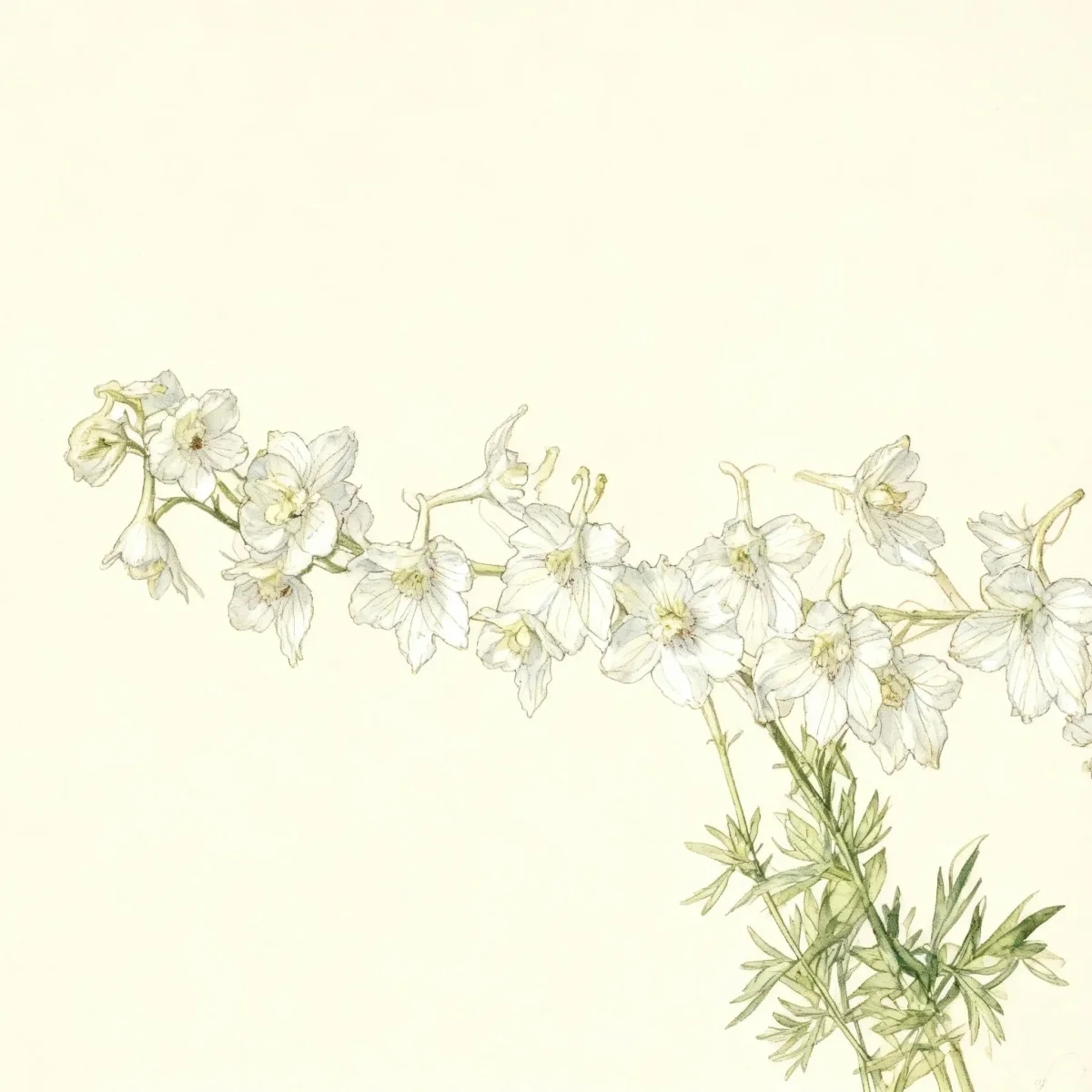
Clematis (Clematis recta 'Purpurea')
Explore Clematis recta 'Purpurea', a fragrant herbaceous perennial Clematis with attractive purple foliage valued for white blooms.
Scroll down to discover growing tips, care requirements, companion plants, and more
Complete Plant Information
Overview
Clematis recta ‘Purpurea’ offers a unique structure among garden Clematis, presenting itself as an upright, bushy perennial rather than a twining vine. Gardeners prize this cultivar, often called Leather Flower, for its dense display of small, incredibly fragrant white flowers that emerge in early summer. The distinctive appeal of Clematis recta ‘Purpurea’ is further enhanced by its foliage, which maintains an attractive purple coloration throughout the growing season.
This herbaceous perennial handles a wide range of climates, thriving in USDA Zones 3 through 9, making it a reliable addition to many garden environments. While the plant can be trained upward, it often looks best allowed to sprawl slightly, mingling with neighboring border plants. The resulting effect, especially when flowers give way to silvery seed heads, provides excellent texture and visual interest from late spring well into summer.
The robust nature of Clematis recta ‘Purpurea’ means it establishes easily, provided its specific cultural needs—particularly cool, evenly moist roots—are met. It delivers a great return on investment with its showy blooms and low susceptibility to severe pests or diseases, solidifying its place as a valuable, relatively medium-maintenance flowering perennial.
Fast Facts
- Plant Family: Ranunculaceae
- Plant Type: Herbaceous perennial
- Hardiness Zones: USDA Zones 3-9
- Size at Maturity:
- Height: 2-4 ft
- Spread: 2-4 ft
- Bloom Time: May to July
- Bloom Description: White
- Sun Exposure: Full sun
- Water Needs: Medium
- Maintenance Level: Medium
How to Grow
Establish Clematis recta ‘Purpurea’ in the spring or fall, ideally in a location receiving full sun, though some light afternoon shade can be tolerated in the hottest climates. This Clematis prefers fertile, well-drained soil with a medium moisture level. Crucially, ensure the roots are kept cool; this is best achieved by applying a generous layer of organic mulch around the base of the plant, shading the soil surface while maintaining uniform moisture.
Watering should be consistent, especially during dry spells, as this plant requires medium water input to perform optimally. While specific fertilization is often unnecessary in fertile soils, a light application of balanced, slow-release fertilizer in early spring can encourage vigorous growth. Pruning is straightforward for this herbaceous form; cut back the entire plant to just above the ground level in late winter or very early spring before new growth begins.
Special attention should be paid to its habit. While it can be trained upward onto a trellis or stake, allowing Clematis recta ‘Purpurea’ to lean naturally provides a softer, meadow-like look. Protecting the root zone from excessive heat while ensuring the foliage receives ample light is the secret to success with this excellent mid-sized Clematis.
Landscape Uses
Clematis recta ‘Purpurea’ excels where a less aggressive, more self-supporting structure is desired compared to traditional climbing varieties. It is perfectly suited for planting within the middle of mixed perennial borders, where it can be supported lightly by taller neighbors or allowed to softly drape over the edge. Allowing it to crawl along the ground is also highly effective in informal settings like wild gardens, meadows, or naturalized areas where its spreading habit is beneficial rather than problematic.
When planning companions, choose plants that appreciate similar sun exposure and moisture levels but which won’t overwhelm the 2-4 foot stature of the Clematis. Consider pairing the purple foliage and white starry blooms of this Clematis with dark foliage hostas (for the root shade), ornamental grasses for textural contrast, or late-flowering perennials that will take over the visual interest after the Clematis finishes blooming in July.
Because of its tendency to sprawl, use Clematis recta ‘Purpurea’ strategically near walkways where its rambling nature can be appreciated upfront, or where it can cascade over low retaining walls. Its tolerance to deer pressure and Black Walnut presence expands its utility in challenging landscape situations.
Standout Features
Flower Qualities
- Showy
- Fragrant
- Good Cut
Noteworthy Characteristics
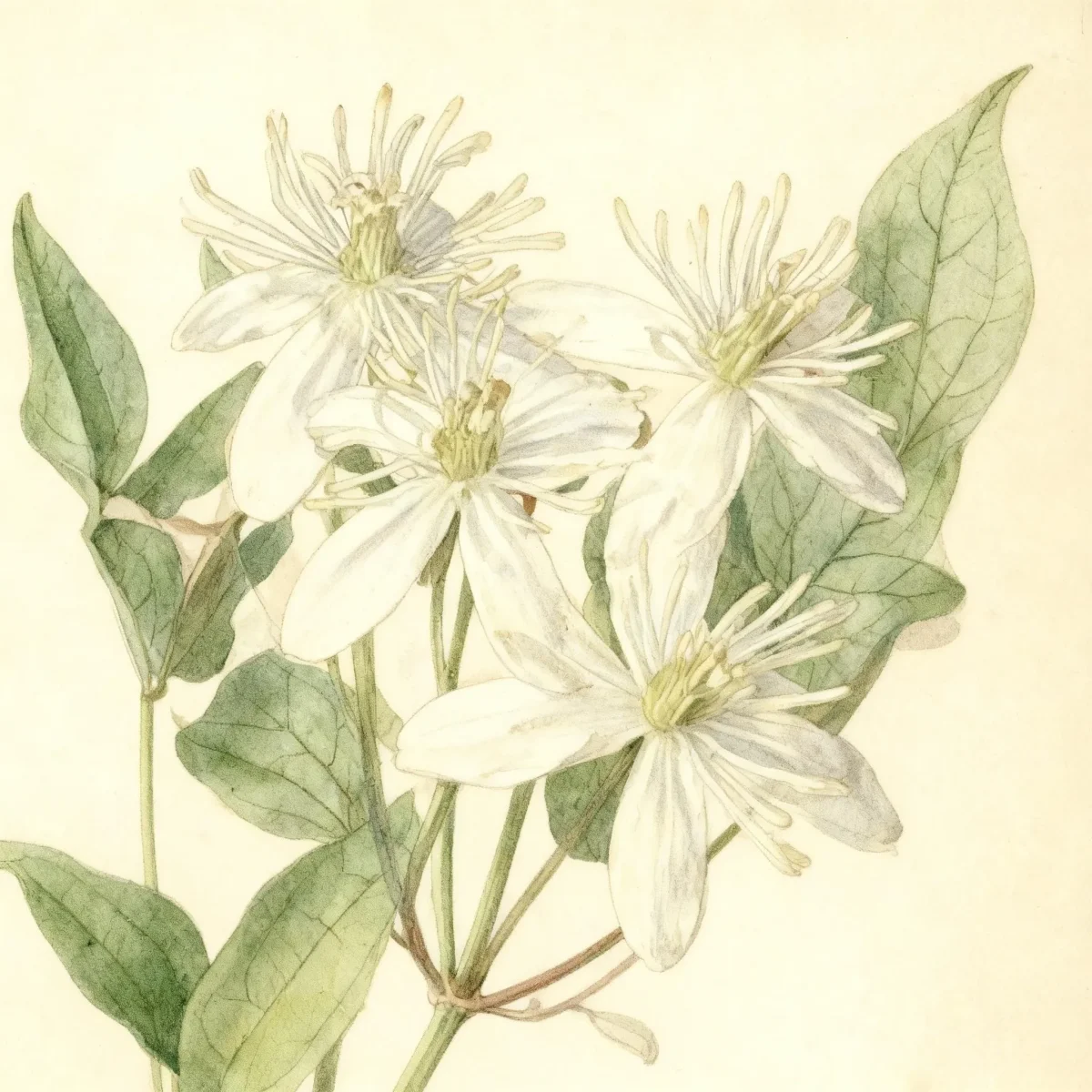
This ground clematis can be trained to climb, but is usually left alone to crawl along the ground as the common name suggests. It produces abundant masses of small (3/4” diameter), fragrant, white fringed flowers from late spring to early summer. These beautiful flowers are followed by attractive silvery seed heads, creating textural interest long after the bloom period ends. The foliage of this specific cultivar is notably an attractive purple hue.
Tolerances
- Deer
- Black Walnut
Potential Problems
Clematis recta ‘Purpurea’ is generally robust, reporting no serious insect or disease problems under standard cultivation. Its primary management consideration relates to structure: needs support if it is to be grown in an erect, more vine-like or shrubby form. If you desire a strictly upright presentation, install a simple teepee or short trellis at planting time, gently tying the stems as they grow; otherwise, accept its natural, rambling preference for ground cover or meadow display.
Frequently Asked Questions
What hardiness zones is Clematis recta ‘Purpurea’ suitable for?
This herbaceous perennial is quite resilient, thriving across USDA Zones 3 through 9.
How large does Clematis recta ‘Purpurea’ grow?
When mature, expect this Leather Flower variety to reach a height between 2 and 4 feet, with a similar spread of 2 to 4 feet.
When does Clematis recta ‘Purpurea’ bloom?
The abundant flowering period for this Clematis typically runs from May through July, displaying masses of small white flowers.
What sun exposure does Clematis recta ‘Purpurea’ need?
For the best flowering display on this tough Clematis cultivar, aim for location that receives full sun exposure throughout the day.
Conclusion
Clematis recta ‘Purpurea’ offers gardeners a highly versatile, fragrant, and deer-resistant option that defies the traditional vining habits of its cousins. With its striking purple foliage and summer cascade of white blooms, this Clematis brings texture and dependable performance to sunny borders and naturalized settings. Always ensure you check your local zone compatibility and plan for its medium water needs when placing this charming plant.
Companion Planting
Selecting appropriate companions helps manage the soil temperature around the roots of Clematis recta ‘Purpurea’. Since its culture demands cool, shaded roots, pair it with low-mounding perennials that will act as a natural mulch. Hostas, Coral Bells (Heuchera), or low-growing Geraniums perform wonderfully adjacent to this Clematis, shading the critical root zone while providing contrasting foliage textures.
Avoid planting assertive spreaders nearby, as they can compete aggressively for water and nutrients, potentially hindering the Clematis’s ability to thrive in its required medium moisture level. Sturdy, upright plants like Salvia or ornamental grasses at the back of the border will give the more sprawling Clematis recta ‘Purpurea’ something attractive to lean against if you choose to train it slightly upward.
Design Ideas
Consider using this Clematis in drifts rather than as a single specimen to maximize the impact of its fragrant flower cloud and dark foliage. In a cottage garden scheme, allow it to mingle with peonies or early-blooming roses; the upright stems of the Clematis will help stabilize the area as the roses begin to leaf out fully above it.
For a more modern, defined look, use 3-foot bamboo stakes or minimalist metal supports to encourage a clean, bushy silhouette. Place Clematis recta ‘Purpurea’ where evening light catches its blooms, maximizing appreciation for the fragrance emanating from the small, white flowers of this attractive perennial form of Clematis.