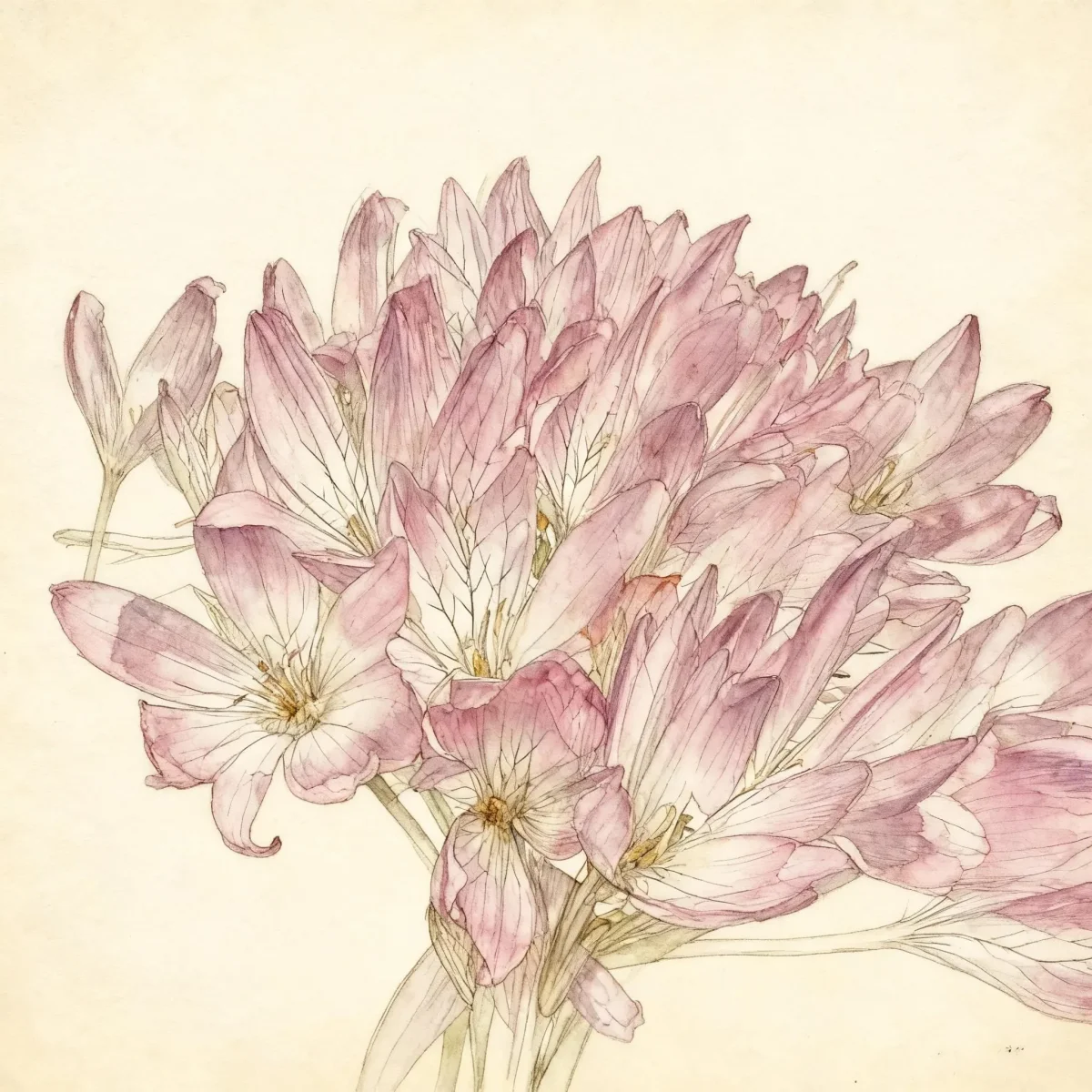
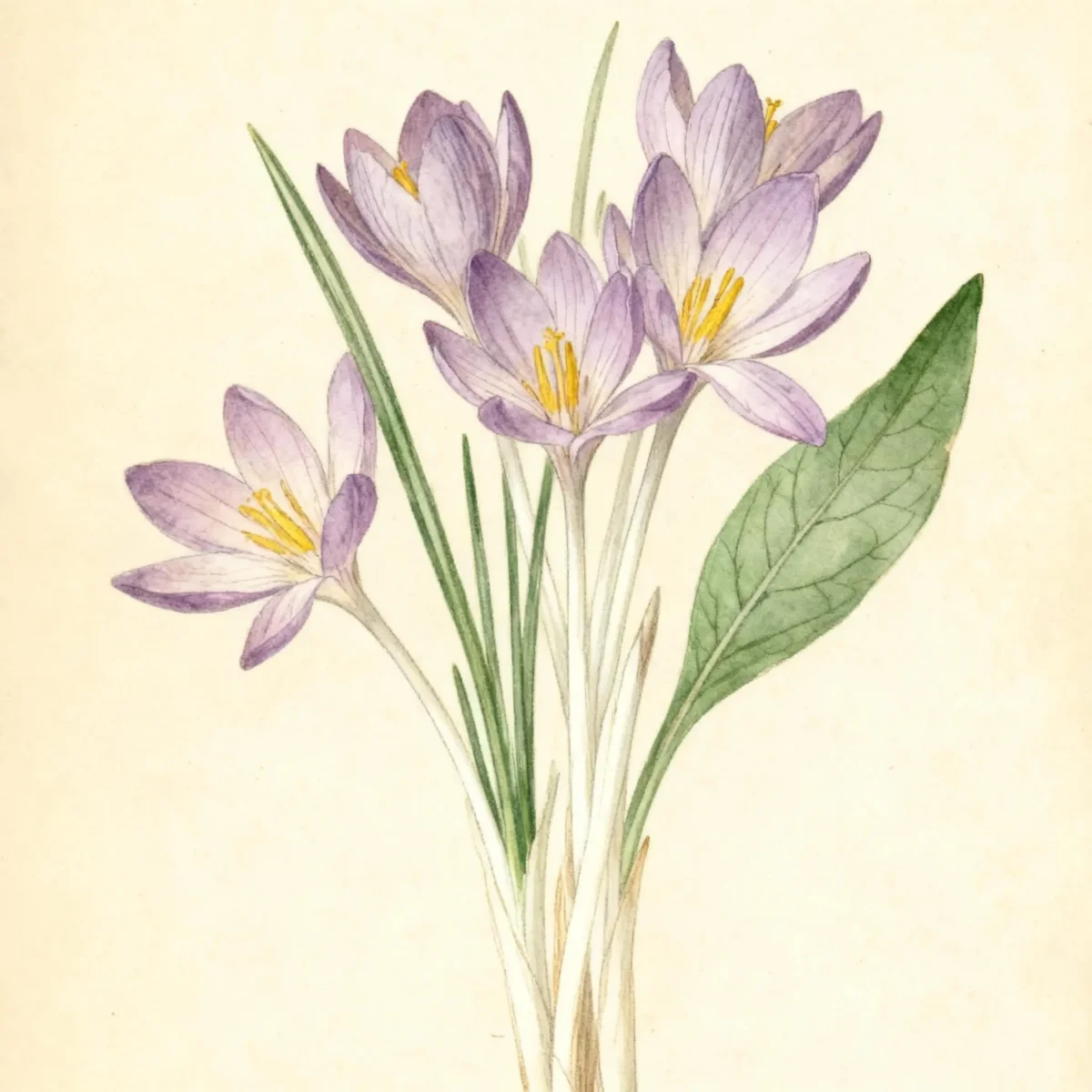
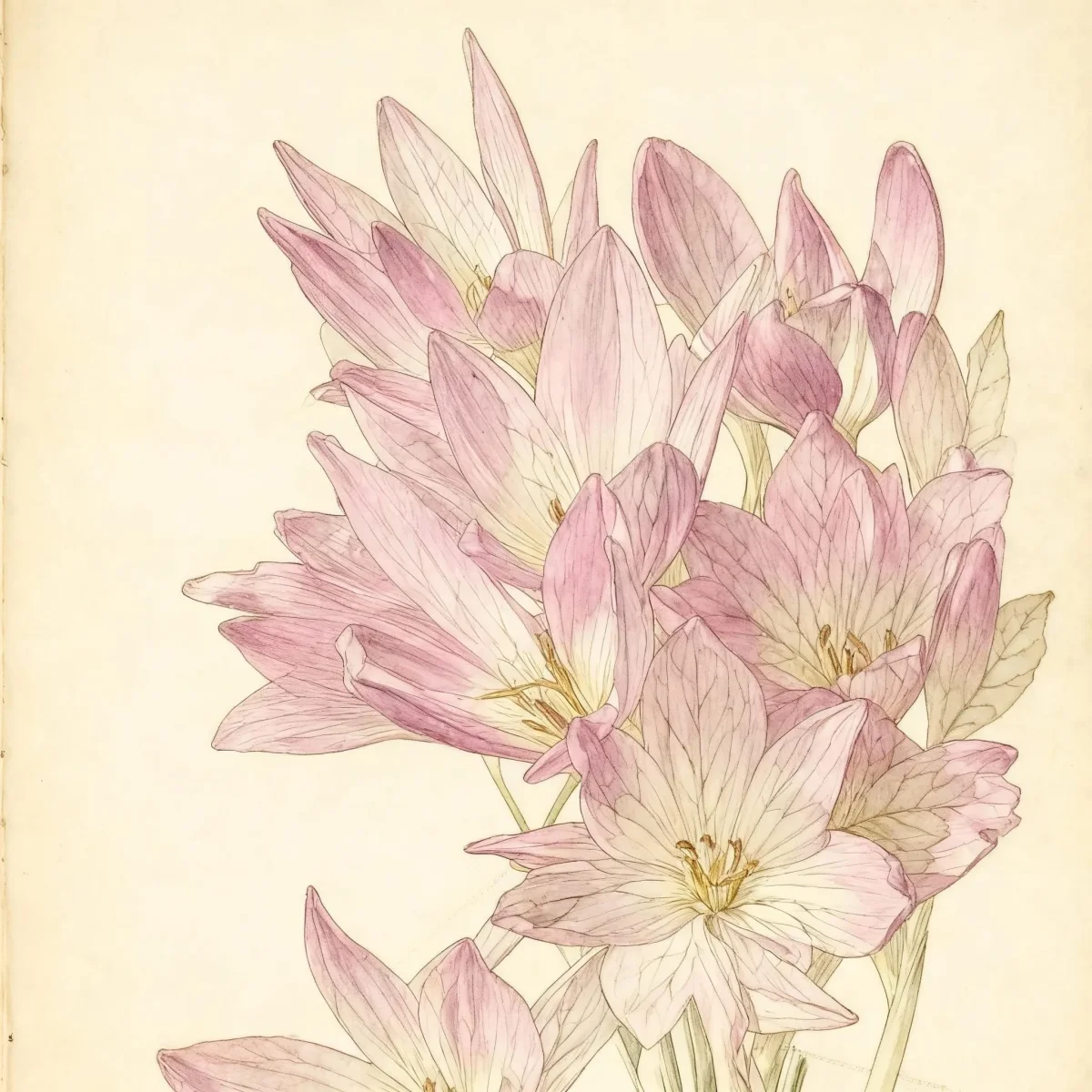
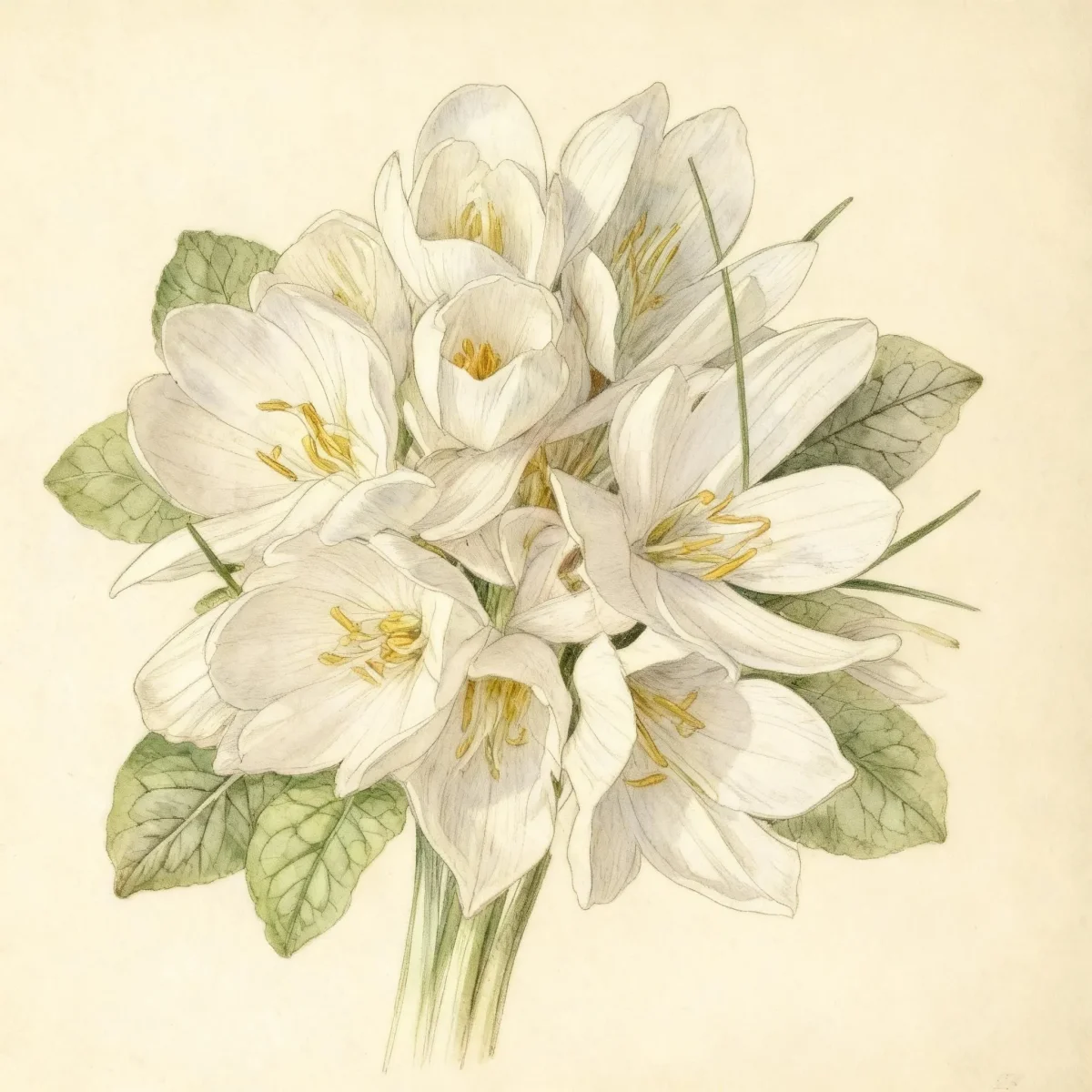
Autumn crocus (Colchicum 'Violet Queen')
Colchicum 'Violet Queen' is a low-maintenance Autumn crocus bulb offering purple fall blooms and spring foliage.
Scroll down to discover growing tips, care requirements, companion plants, and more
Complete Plant Information
Overview
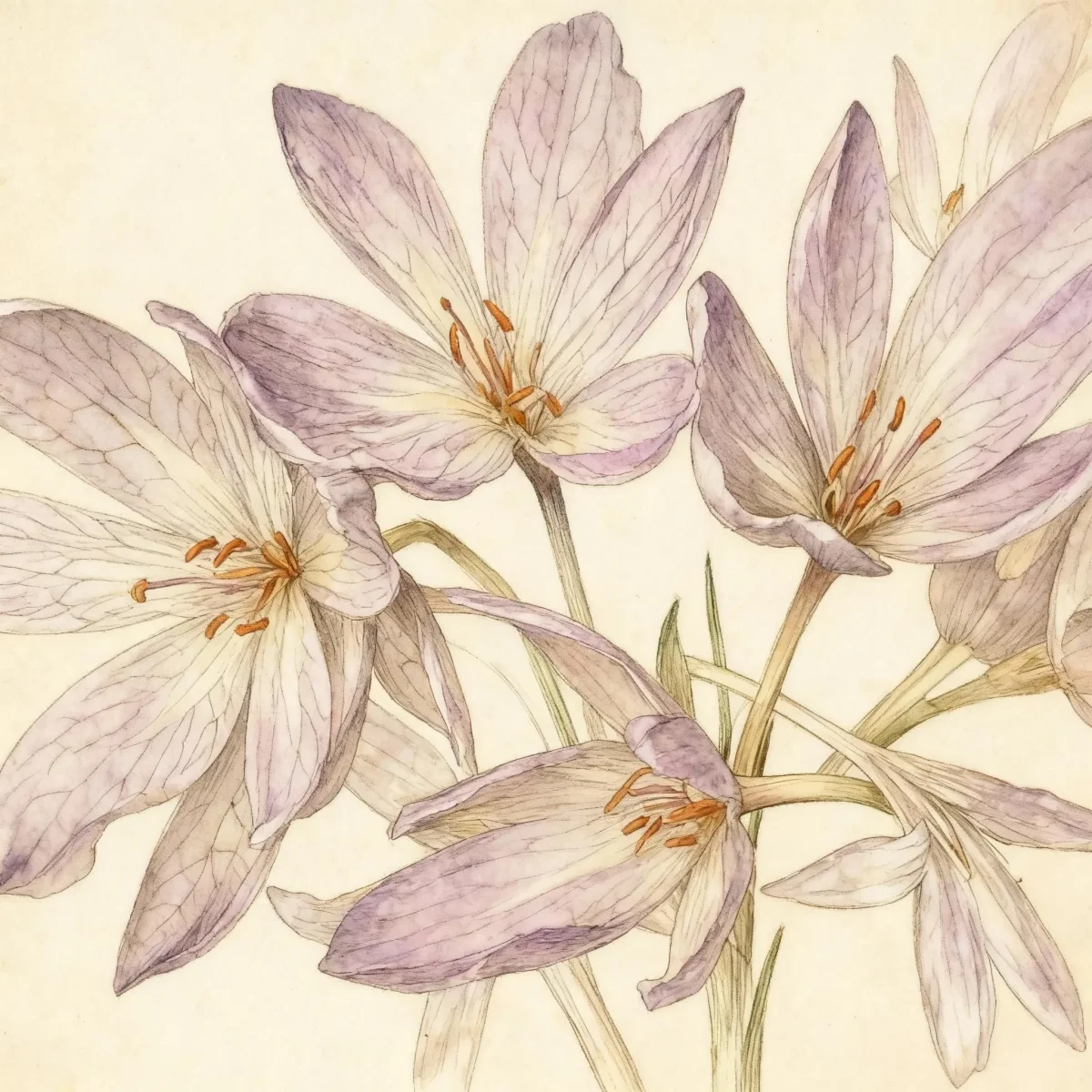
Colchicum ‘Violet Queen’ brightens the late season, providing beautiful color when most other garden plants are winding down. This selection, commonly known as Autumn crocus, is prized for its late floral show, with nodding, goblet-shaped purple flowers emerging directly from the ground without foliage—a phenomenon that gives rise to the nickname “naked ladies.” The distinctive bloom of Colchicum ‘Violet Queen’ features bright purple, often tessellated petals.
While the fall flowers are the main attraction, the plant develops unique foliage in the spring that must be accommodated in garden design. The basal leaves emerge, grow to about 14 inches long, and then gradually yellow and die back by summer as the plant enters dormancy ahead of its flowering period. This low-maintenance perennial is an excellent choice for creating late-season interest.
As a bulb (corm), the Autumn crocus naturalizes well over time, slowly forming increasingly dense colonies of color. Although closely related cultivars exist, the specific beauty of Colchicum ‘Violet Queen’ lies in its rich purple hue and its ability to deliver unexpected, vibrant color to the garden landscape in early fall.
Fast Facts
- Plant Family: Colchicaceae
- Plant Type: Bulb
- Hardiness Zones: USDA Zones 4-8
- Size at Maturity:
- Height: 0.5-0.75 ft
- Spread: 0.5-0.75 ft
- Bloom Time: September to October
- Bloom Description: Purple
- Sun Exposure: Full sun to part shade
- Water Needs: Dry
- Maintenance Level: Low
How to Grow
Planting Colchicum ‘Violet Queen’ corms is best done in August to ensure bloom the same calendar year. For successful establishment, plant corms approximately 3 inches deep and space them 6 inches apart. This bulb thrives in average, medium moisture, well-drained soils, performing best when placed in areas receiving full sun to light shade. Deep, humusy soils are particularly beneficial for long-term health.
Maintenance for this Autumn crocus is wonderfully low once established. Watering should be minimal; once mature, they tolerate dry conditions well. As the spring foliage yellows and dies by summer, resist the urge to cut it back prematurely, as this stage is vital for storing energy in the corm for the fall bloom. Allow the foliage to decline naturally.
If division becomes necessary, perform this task during the mid-summer dormant period when the plant is resting. Colchicum ‘Violet Queen’ will naturalize beautifully over time, offering an increasing display of color each autumn without repeated effort. Be mindful that division is rarely required frequently.
Landscape Uses
Using Colchicum ‘Violet Queen’ effectively involves leveraging its unique timing—flowering when most other perennials are winding down. They excel when planted generously in naturalistic settings such as meadows or lightly shaded woodlands where their foliage decline in summer will be less conspicuous. They also add unexpected pockets of color to rock gardens, borders, and along garden walks where their short stems are easily appreciated.
Because the spring foliage can look unsightly as it yellows, consider planting bulbs near low-growing ground covers. These companions can help mask the fading leaves during early summer while the Autumn crocus is dormant. These bulbs are also excellent planted near patios or along paths, providing surprise late-season color that draws the eye just before winter sets in.
Standout Features
Flower Qualities
- Showy
Noteworthy Characteristics
Colchicum is a genus of about 45 species of plants from alpine and subalpine meadows and hillsides in Europe, North Africa, West and Central Asia, North India and West China. Many are called autumn crocus because they bloom in fall but some species bloom in winter or spring. In late spring, each autumn crocus corm sends up a clump of basal foliage (4-6 lance-shaped, dark green leaves to 14” long). Foliage gradually yellows and dies by summer as the plants go dormant. Naked flower stems rise from the ground to 4-6” tall in late summer to early fall bearing goblet-shaped flowers (to 3” long). While the “crocus” common name is misleading—as Colchicum is in the colchicum family rather than the iris family—the ‘Violet Queen’ cultivar is highly sought after, featuring bright purple, checkered petals with distinctive orange anthers.
Tolerances
- Deer
Potential Problems
Colchicum ‘Violet Queen’ generally presents very few serious insect or disease issues, keeping maintenance wonderfully low. Gardeners should primarily watch for common early-season pests like slugs and snails that may target the emerging spring foliage. Occasionally, Botrytis blight can become a problem, particularly in humid or crowded conditions.
The most significant cultural risk is corm rot, which occurs if the planting site has persistently poorly-drained or waterlogged soils. Furthermore, the flower stems of this Autumn crocus are naturally weak and may require support from surrounding low plants, as they tend to flop over, especially after rain.
Crucially, all plant parts, especially the seeds and corms of Colchicum, are toxic to humans and pets if ingested. Extreme caution is advised; wear gloves when handling corms during division or planting to prevent potential skin irritation from the alkaloid colchicine.
Frequently Asked Questions
What hardiness zones is Autumn crocus suitable for?
Colchicum ‘Violet Queen’ is hardy in USDA Zones 4 through 8, making it suitable for a wide range of climates across North America.
When does Autumn crocus bloom?
This reliable bulb blooms late in the season, typically from September into October, putting on a welcome purple display just before frost.
How large does Colchicum ‘Violet Queen’ grow?
This variety reaches a modest height between 0.5 and 0.75 feet tall with an equal spread, remaining quite compact in the landscape.
What sun exposure does Autumn crocus need?
Colchicum ‘Violet Queen’ performs best when situated in locations receiving full sun to partial shade.
Conclusion
Colchicum ‘Violet Queen’ offers substantial aesthetic rewards for minimal effort, delivering unexpected bursts of purple color precisely when the garden needs a lift. Its unique life cycle, featuring fall flowers followed by spring foliage, secures its place as a fascinating perennial. Plan your August planting now to ensure you enjoy the spectacular blooms of this special Autumn crocus next fall.
Companion Planting
Selecting companions for Colchicum ‘Violet Queen’ requires strategic thought regarding its unusual foliage schedule. Since the leaves emerge in spring and fade by early summer, choose low-growing perennials or ground covers that can effectively camouflage the dying foliage. Hostas with smaller habits, low creeping sedums, or hardy perennial geraniums work well, as their mid to late-summer growth will obscure the bare patches left by the dormant corm.
Avoid planting these bulbs directly adjacent to spring-flowering bulbs like tulips or daffodils, as they occupy the same visual space but at different times. Instead, utilize the area around the Autumn crocus for late-emerging fall bloomers like Japanese anemones or asters, ensuring continuous interest after the Colchicum finishes flowering.
Seasonal Care Calendar
Spring care for your Autumn crocus should focus solely on protecting the basal foliage; do not cut it back until it has completely yellowed, which signals that the corms have fully recharged for the next blooming cycle. In early summer, as the foliage dies back, the plant enters dormancy and requires no attention unless establishing new plants.
Late summer, specifically August, is the critical time for planting or dividing the corms of Colchicum ‘Violet Queen’. Ensure planting depth is around 3 inches in well-draining spots. As autumn approaches, stand ready to enjoy the emerging flowers. In winter, the dormant corms are protected by the soil, benefiting from consistent ground cover or mulch if you are in the colder limits of its hardiness range.