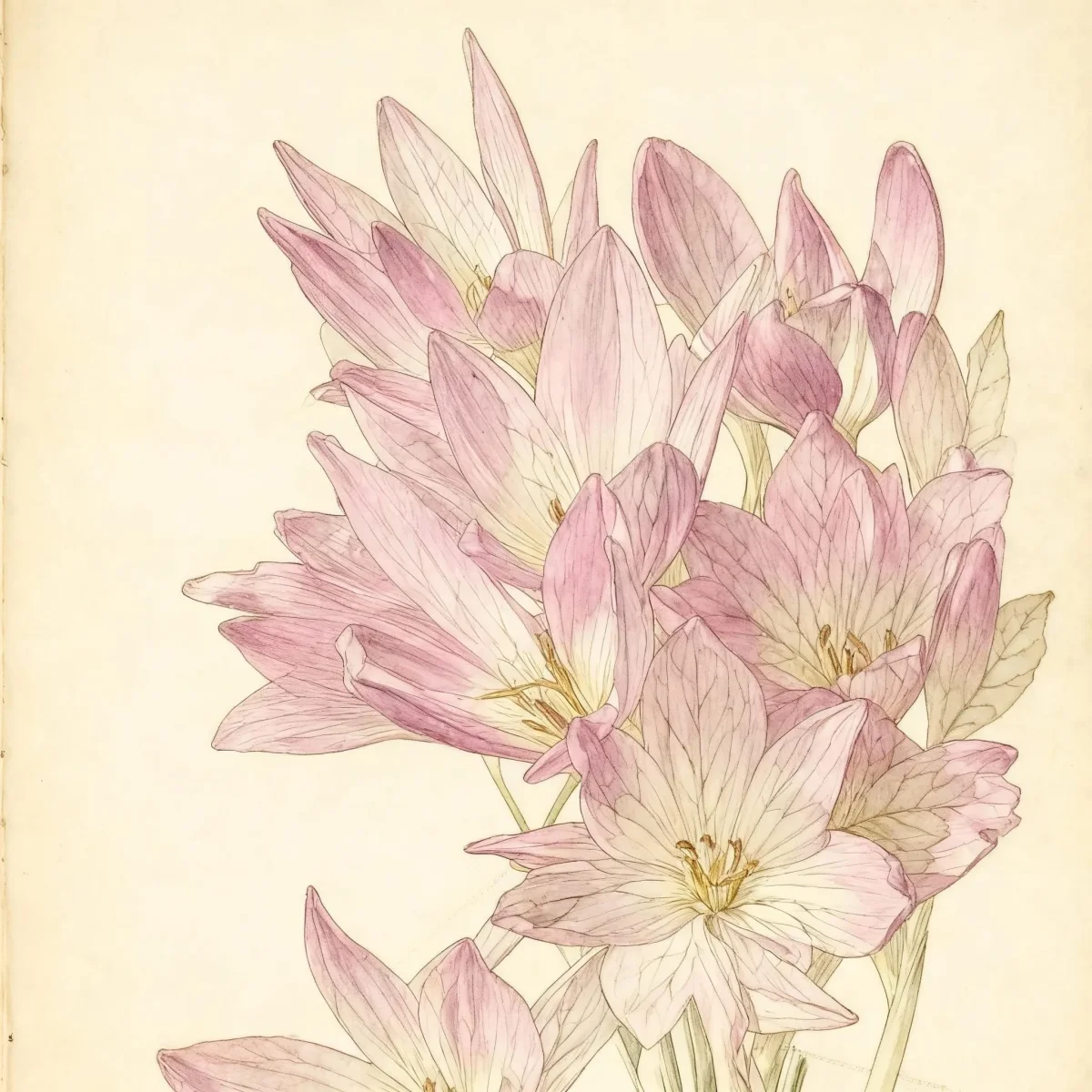
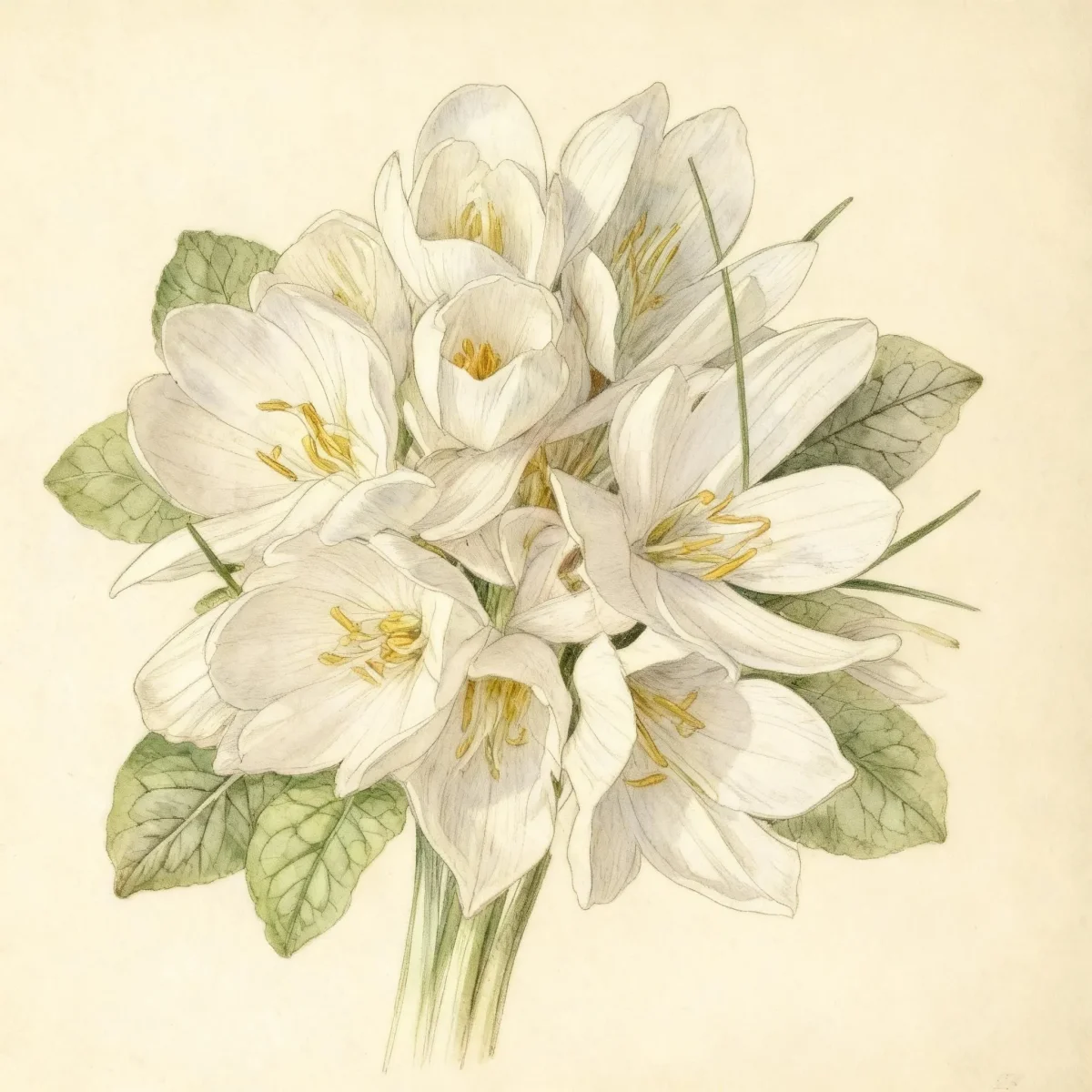
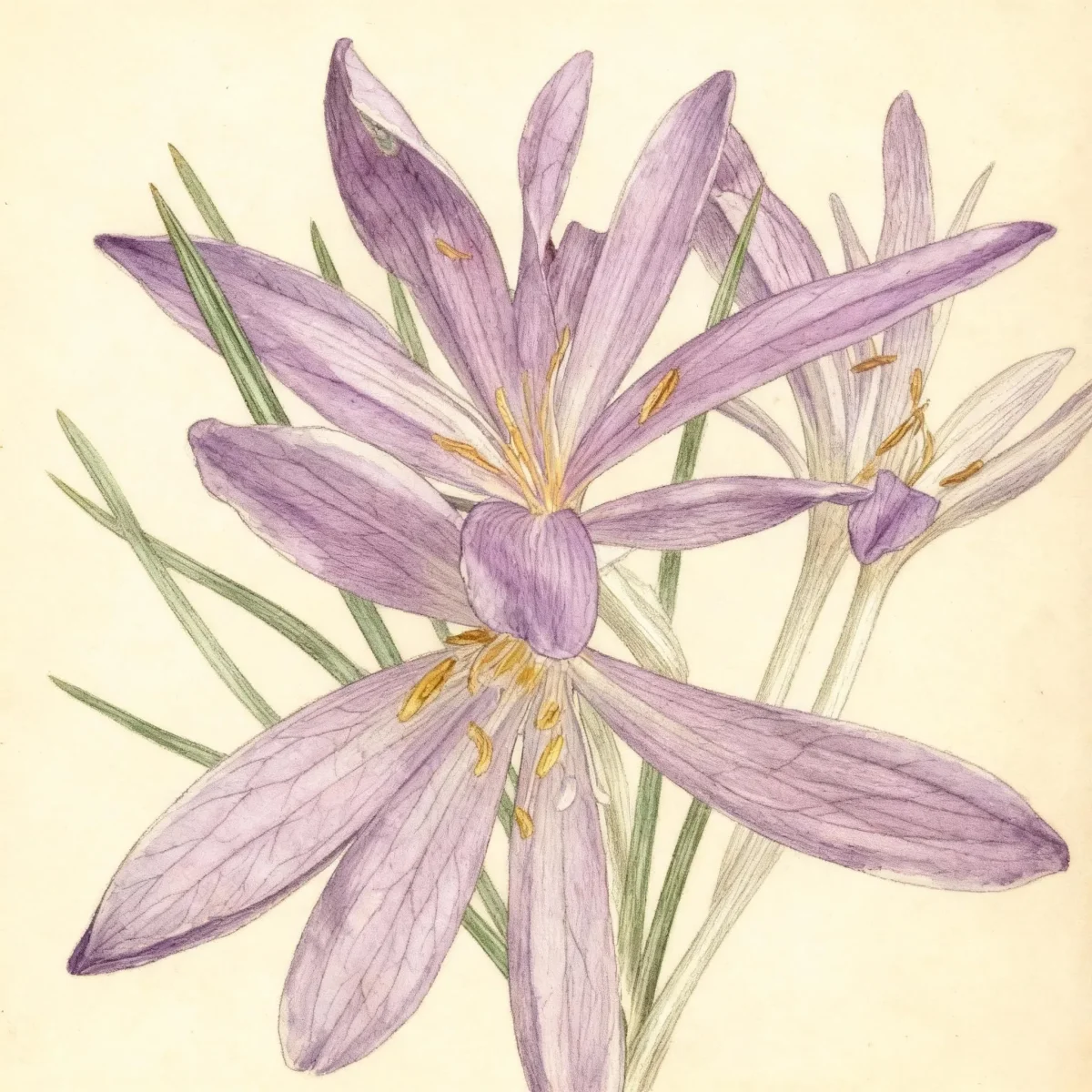
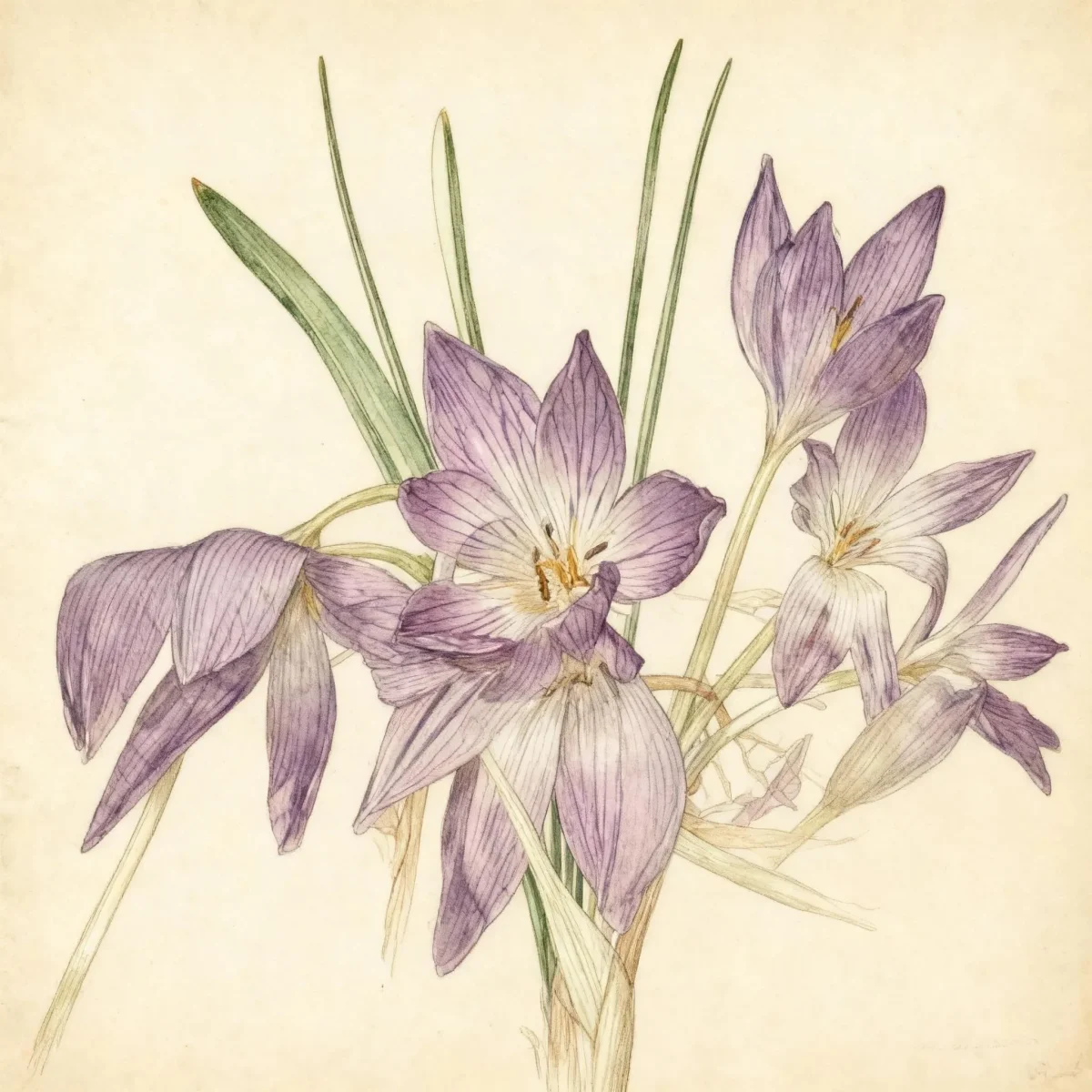
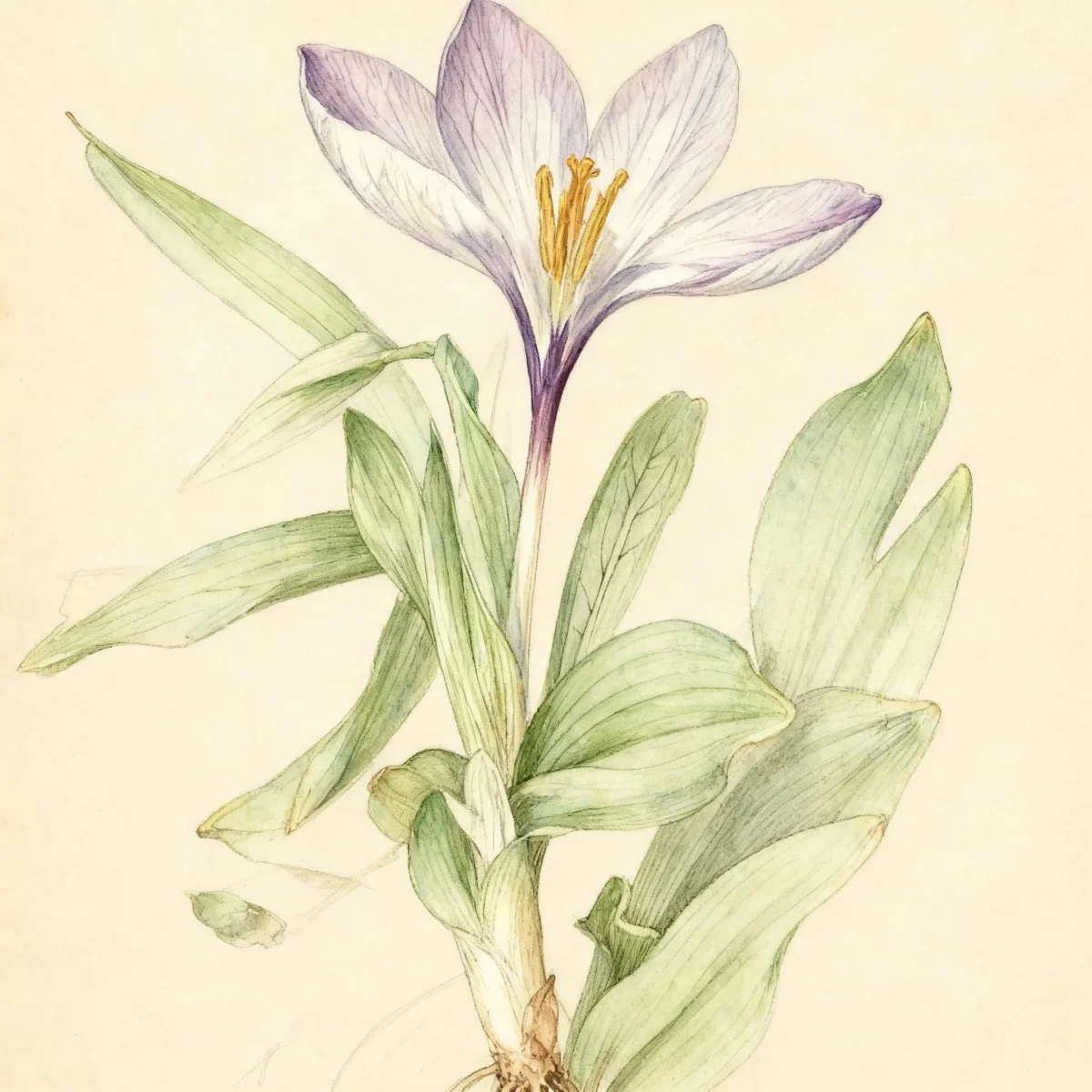
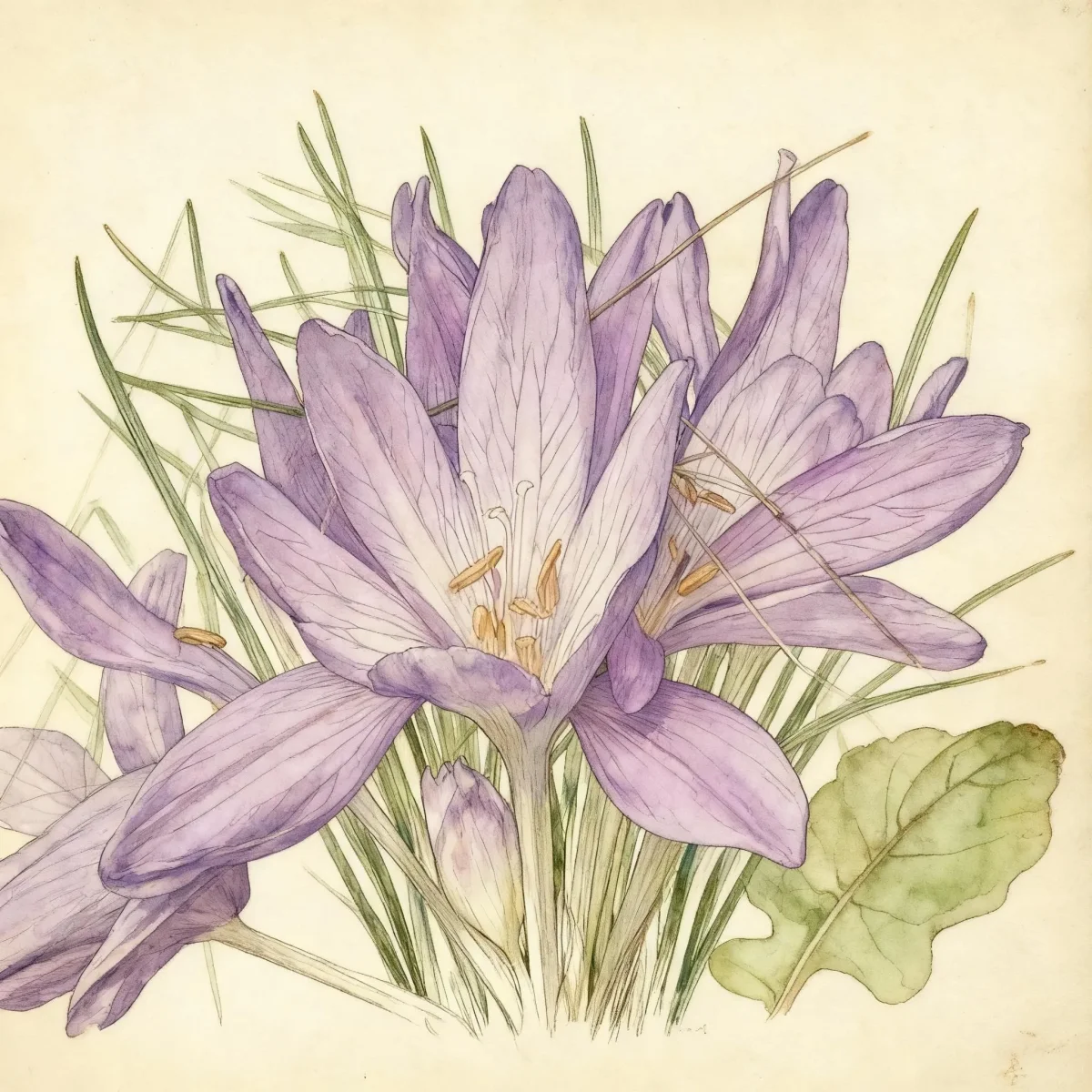
Autumn crocus (Colchicum cilicicum)
The striking Colchicum cilicicum, or Autumn crocus, offers rose-violet fall blooms before its foliage appears. Hardy in zones 4-8, this bulb needs medium care.
Scroll down to discover growing tips, care requirements, companion plants, and more
Complete Plant Information
Overview
The Autumn crocus, scientifically known as Colchicum cilicicum, provides a brilliant surprise for the late-season garden. These charming cormous perennials bloom robustly in the fall, often when most other spring and summer beauties have faded. Their appearance is highly valued for injecting late color just before winter sets in.
Colchicum cilicicum is native to regions including Turkey and is easily recognized by its “naked ladies” habit, where flowers emerge directly from the ground without accompanying foliage. While the ephemeral autumn flowers are gorgeous, be prepared for the somewhat unattractive, strap-like leaves that emerge in spring and gradually fade away by summer. Gardeners successfully utilize Colchicum cilicicum in naturalized settings to create drifts of unexpected seasonal color.
These bulbs thrive with medium attention and are adaptable to full sun or dappled shade conditions. Plant them where their unique bloom cycle can be appreciated, knowing that their foliage phase requires patience until summer dormancy. Proper installation of the corms ensures reliable returns of these late-season wonders annually.
Fast Facts
- Plant Family: Colchicaceae
- Plant Type: Bulb
- Native Range: Turkey, Syria, Lebanon
- Hardiness Zones: USDA Zones 4-8
- Size at Maturity:
- Height: 0.25-0.5 ft
- Spread: 0.25-0.5 ft
- Bloom Time: September to October
- Bloom Description: Rose violet
- Sun Exposure: Full sun to part shade
- Water Needs: Medium
- Maintenance Level: Medium
How to Grow
To achieve spectacular fall displays of the Autumn crocus, timing your planting is critical. Generally, plant the corms in August, approximately 2–3 inches deep and spaced 6 inches apart. Colchicum cilicicum prefers organically rich, medium-moisture, and well-drained soils. Ensure the chosen location receives full sun or light protective part shade.
Ongoing care for Colchicum cilicicum revolves around soil moisture and managing the foliage. Provide medium water, ensuring the soil does not become waterlogged, especially during active growth periods. These plants do not usually require supplemental fertilization if planted in rich organic soil. Resist the urge to cut back the foliage prematurely in late spring; allow the leaves to yellow and die back naturally before the plants enter summer dormancy.
If divisions become overcrowded, typically after several years, the best time to dig and divide the corms is during their mid-summer dormant period. This activity should be performed carefully to avoid disturbing nearby plantings. Be aware that weak flower stems can sometimes flop under the weight of heavy dew or rain.
Landscape Uses
The primary suggestion for Colchicum cilicicum is to naturalize large groups among lawns or in open, lightly wooded areas. Their bloom time makes them ideal for filling in gaps left by fading spring and summer perennials, offering vibrant color when the landscape otherwise quiets down. They look lovely planted in sweeping drifts along winding walkways or near patios where their emergence can be easily observed.
When choosing companions, select low-growing groundcovers that can subtly help support their potentially weak flower stems, minimizing flop. Avoid planting Autumn crocus where their unsightly yellowing spring foliage will dominate the view, as this aesthetic drawback is noted by many growers. They excel in woodland beds where the dappled light mimics their native habitat conditions.
The genus name relates to the ancient Black Sea region of Colchis, reflecting the plant’s historical association with lush environments. Utilizing Colchicum cilicicum offers gardeners a unique opportunity to extend the traditional flowering season into autumn with minimal springtime maintenance requirements.
Standout Features
Flower Qualities
- Showy
Noteworthy Characteristics
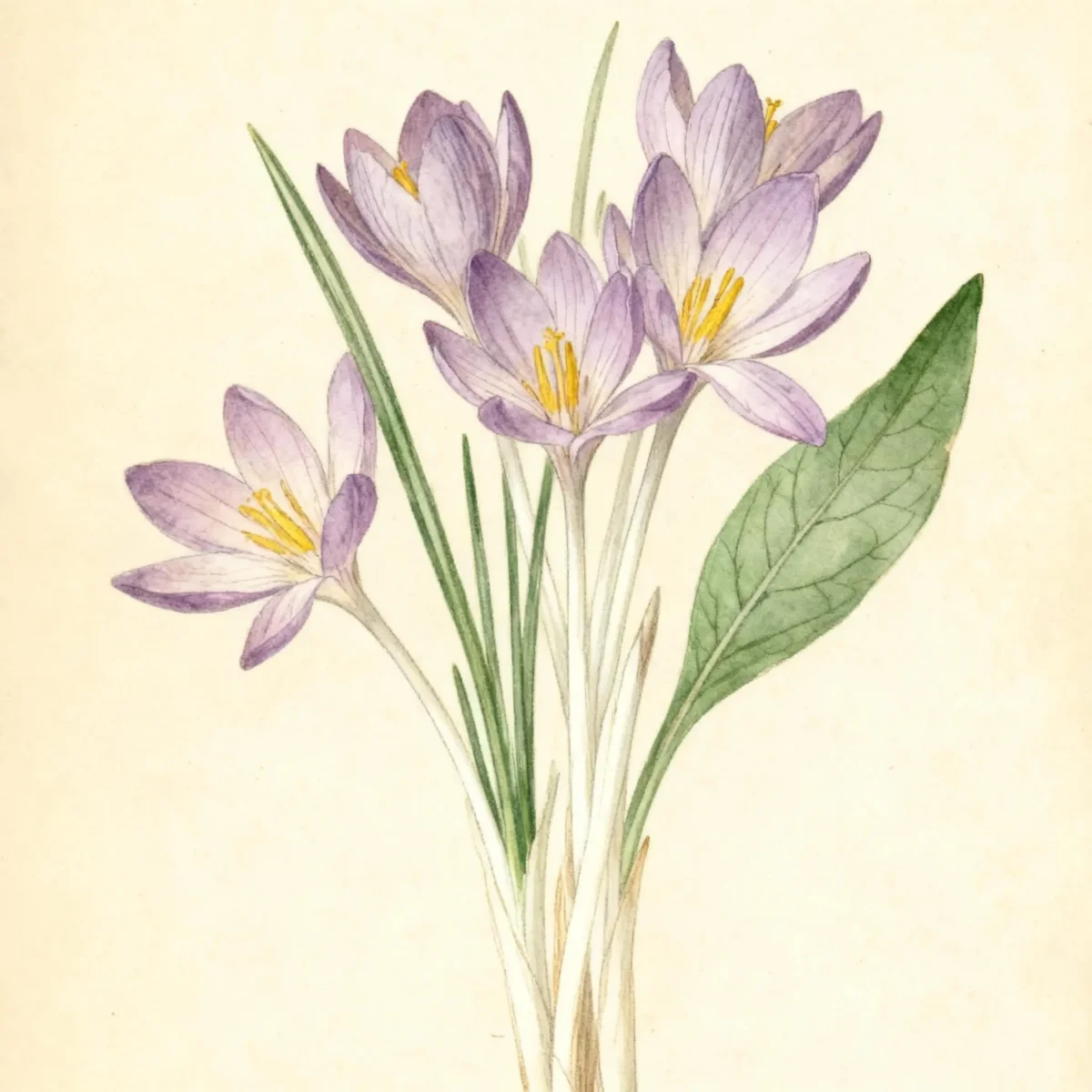
Colchicum cilicicum, commonly known as autumn crocus, is a cormous perennial that typically grows to 4-6” tall and is noted for its fall bloom of crocus-like, flowers. It is native to Turkey. Plants send up somewhat unattractive foliage (4-6 dark green elliptic to lanceolate basal leaves) in spring. Leaves gradually yellow and die by summer when the plants go dormant. Naked flower stems rise from the ground to 4-6” tall in early fall bearing funnel-shaped, rose-purple to rose-violet, star-shaped flowers. Flowers typically bloom September to October. Each corm will typically produce anywhere from 4 to 25 flowers. Autumn crocuses are in their own family, the Colchicum family, but some experts continue to assert they actually belong in the Lily family. By contrast, spring-blooming crocuses (genus Crocus), sometimes referred to as the true crocuses, are in the Iris family and are botanically unrelated to the autumn crocuses.Genus name come from the abundance of the plant in Colchis, the Black Sea region of Georgia, Caucasus.Specific epithet from Latin is in reference to the early Roman province of Cilicia which was located along the Mediterranean Coast of Asia Minor in a region which is now part of Turkey.
Tolerances
- Rabbit
- Deer
Potential Problems
Colchicum cilicicum generally exhibits few serious issues regarding insects or diseases, making it a relatively dependable fall bloomer. Gardeners should remain vigilant for common mollusks like slugs and snails, which can damage both flowers and emerging foliage. A persistent issue reported for this plant species is the tendency for flower stems to be disappointingly weak, leading to flopping, especially after heavy precipitation. Planting near shorter groundcovers can often mitigate this flopping tendency by offering physical support.
Frequently Asked Questions
What hardiness zones is Autumn crocus suitable for?
The Autumn crocus, Colchicum cilicicum, is suitable for USDA Hardiness Zones 4 through 8, offering broad adaptability across many regions.
How large does Autumn crocus grow?
This bulb typically reaches a height between 0.25 and 0.5 feet tall, with a similar spread of 0.25 to 0.5 feet at maturity.
When does Autumn crocus bloom?
Colchicum cilicicum provides its unique display from September through October, featuring rose violet flowers.
What sun exposure does Autumn crocus need?
This plant performs well in a range extending from full sun to receiving partial shade, offering flexibility in site selection.
Conclusion
The Colchicum cilicicum, or Autumn crocus, brings essential, late-season color back to the landscape precisely when it is most needed. Its unique growth habit and lovely rose-violet flowers make it a worthwhile addition despite the unattractive spring foliage cycle. Plan your planting installation for August to ensure you enjoy the magic of this unusual bulb in the coming fall season.
Companion Planting
When integrating Colchicum cilicicum into perennial borders or woodland settings, select companions that thrive during similar cultural conditions. Since these bulbs require medium moisture and well-drained soil, pair them with later-blooming woodland plants or ferns that appreciate similar soil profiles. Good partners include low-growing sedges or hardy Geraniums whose foliage will emerge and persist through summer, helping to mask the eventual decline of the Colchicum cilicicum leaves.
Consider planting late-summer blooming Hosta varieties or low ornamental grasses near your autumn crocus plantings. These companions can emerge strongly in the spring and summer, offering structure while the Colchicum cilicicum is dormant, and their eventual height difference prevents visual conflict when the crocus flowers appear nakedly in the fall. Strategic placement of these companions can provide necessary physical support against stem flopping.
Design Ideas for Fall Color
To maximize the visual impact of the Autumn crocus, focus on mass plantings rather than singular specimens. Planting dozens of Colchicum cilicicum corms together creates the dramatic effect described by its common moniker, “Naked Ladies.” Place these drifts where views are often enjoyed in early autumn, such as near the edge of a patio seating area or along a frequently used garden path.
Utilize the low height of Colchicum cilicicum (under 6 inches) to your advantage by tucking them into the foreground of slightly taller beds. Avoid planting them near strong upright spring bulbs, as the visual climax of one might clash unnecessarily with the other. The rose-violet hue blends well with muted greens and late-season golds.
Remember that because these flowers bloom on naked stems, they benefit from low backgrounds that allow the flowers to stand out clearly against the soil line. Dark mulch or rich, dark soil provides the perfect contrast for these fleeting, yet spectacular, seasonal flowers.