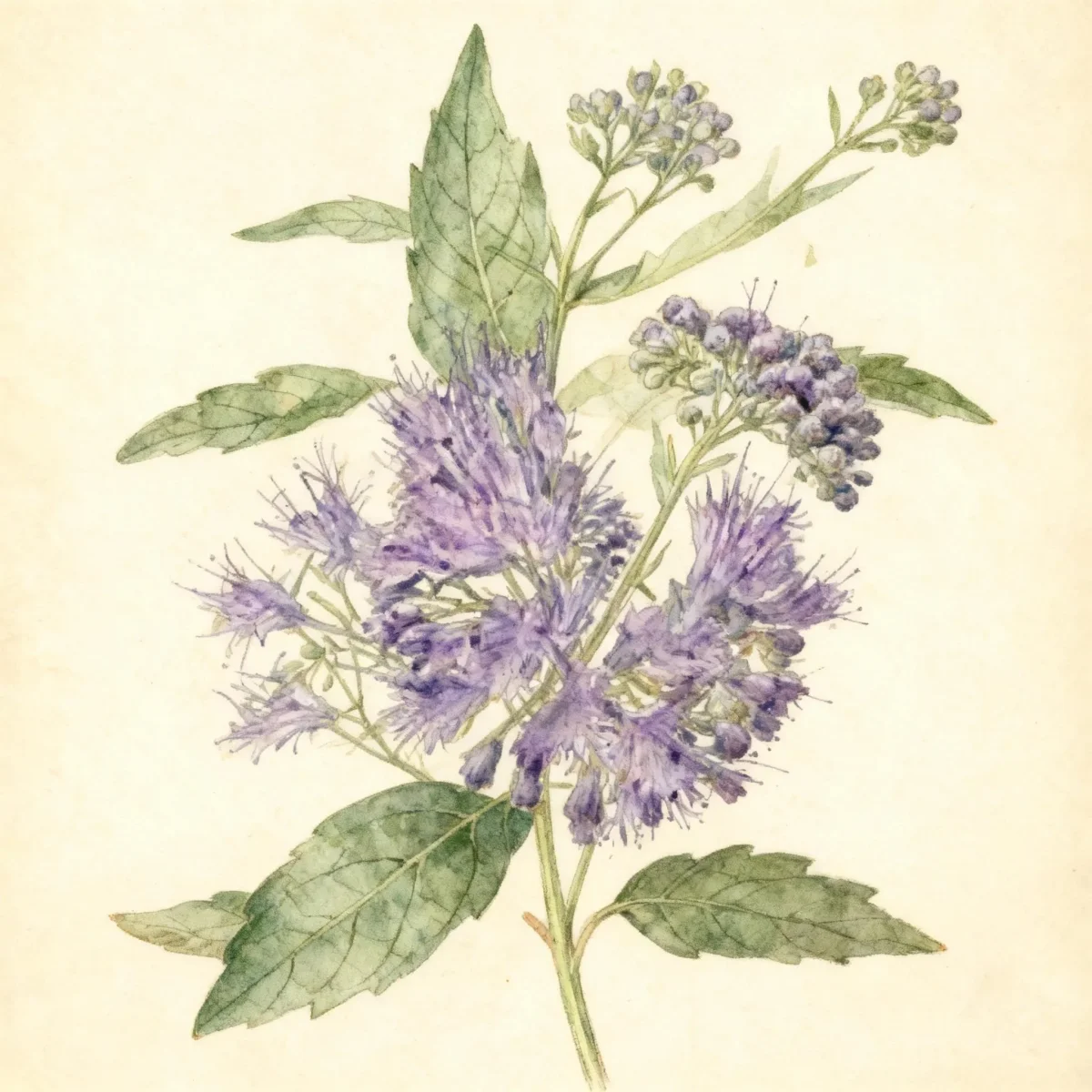
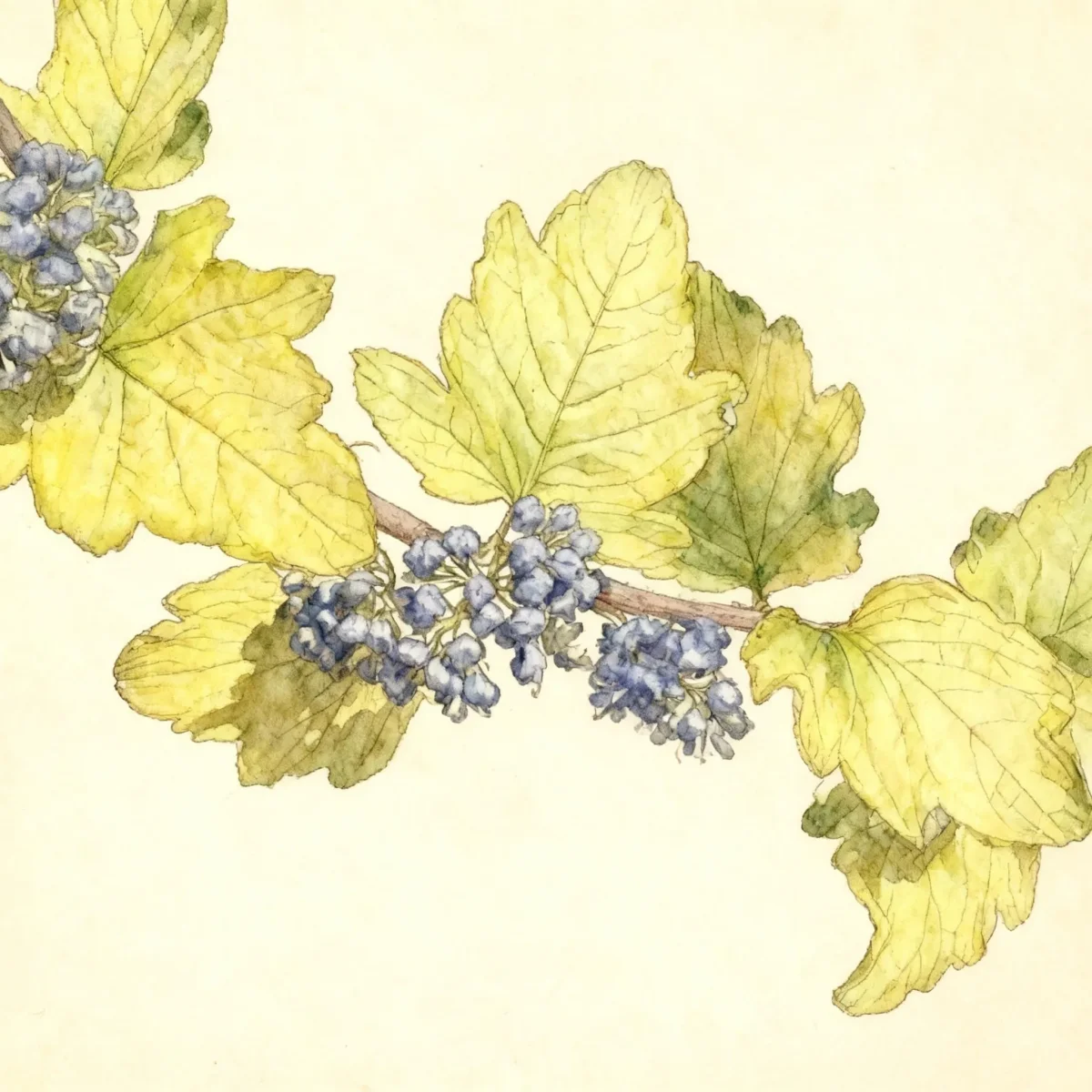
Bluebeard (Caryopteris × clandonensis 'Worcester Gold')
Caryopteris × clandonensis 'Worcester Gold' (Bluebeard) brightens late gardens with fragrant, golden foliage and sky-blue flowers. A low-maintenance gem for sunny borders.
Scroll down to discover growing tips, care requirements, companion plants, and more
Complete Plant Information
Overview
Caryopteris × clandonensis ‘Worcester Gold’ is a highly valued, low-mounded deciduous shrub celebrated for providing vibrant color when many other plantings are fading. Commonly known as Bluebeard, this variety offers the distinct advantage of golden foliage, contrasting beautifully with its profuse late-summer flower display. It is prized by gardeners for being relatively easy to manage while attracting essential pollinators like bees and butterflies.
This hybrid, discovered as a cross between two Asian species, combines reliability with excellent aesthetic qualities. The aromatic foliage of Bluebeard releases fragrance when brushed, and the dense covering of light lavender-blue flowers creates a misty effect in the landscape. Growing to a modest size, Caryopteris × clandonensis ‘Worcester Gold’ offers structure and mid-season interest with impressively low maintenance demands.
Its cultural success hinges on proper drainage and ample sunlight, making it an excellent choice for sunny perimeters where soil conditions are typically well-drained. Gardeners in colder zones appreciate its vigorous spring regrowth, even after significant winter dieback, ensuring reliable summer flowering on new wood.
Fast Facts
- Plant Family: Lamiaceae
- Plant Type: Deciduous shrub
- Hardiness Zones: USDA Zones 5-9
- Size at Maturity:
- Height: 2-2.5 ft
- Spread: 2-2.5 ft
- Bloom Time: July to September
- Bloom Description: Blue
- Sun Exposure: Full sun
- Water Needs: Medium
- Maintenance Level: Low
How to Grow
Plant Caryopteris × clandonensis ‘Worcester Gold’ in the spring or fall, positioning it where it receives full sun for the best golden foliage color and abundant blooms. This shrub thrives in average, medium-moisture, well-drained soils, generally preferring loose loams. Ensure the site is not prone to poor drainage, as Bluebeard is intolerant of wet, soggy conditions which can lead to crown rot.
Water needs are medium; the plant tolerates periods of drought once established, making it a reliable choice for sun-drenched locations. Fertilizer is rarely required; focus efforts on ensuring good soil structure rather than heavy feeding. The critical cultural note for Caryopteris × clandonensis ‘Worcester Gold’ involves annual pruning.
In colder regions (Zones 5 and 6), the top growth often dies back to the ground in winter, despite the roots surviving. In Zones 7 and warmer, stems may survive but still benefit from hard pruning. Plan to prune all stems back hard in early spring, cutting them down to just a few inches above the ground. This practice encourages the vigorous new growth required for profuse blooming, as Bluebeard flowers only on new wood, making timing irrelevant to the final flower count.
Landscape Uses
Bluebeard is exceptionally versatile in sunny landscape settings, making it a staple for late-season interest. It shines brightly in perennial borders, where its contrasting foliage and summer blooms follow early-season flowering perennials. Due to its tidy, mounding habit, Caryopteris × clandonensis ‘Worcester Gold’ works perfectly in shrub borders lining walkways or bordering foundations that receive full sun exposure.
For maximum visual impact, plant this shrub in large groups or mass plantings; the collective effect of the golden foliage and blue flowers is stunning. It also serves effectively as a low hedge, providing structure and seasonal color without becoming overly large or unruly. Place it where you can lightly brush against the foliage to enjoy the unique aromatic scent released by the leaves of this wonderful Bluebeard variety.
Standout Features
Flower Qualities
- Showy
- Fragrant
- Good Cut
Noteworthy Characteristics
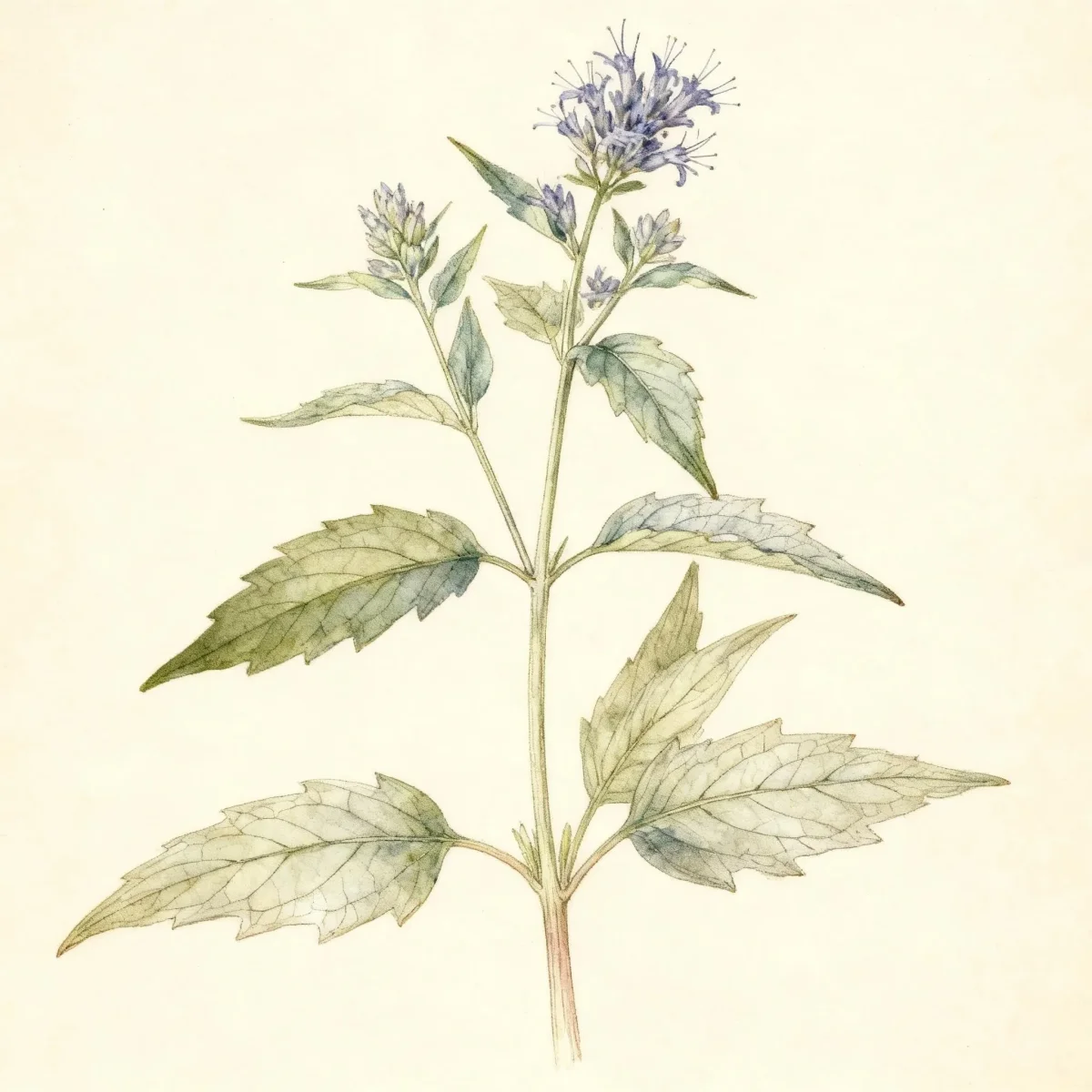
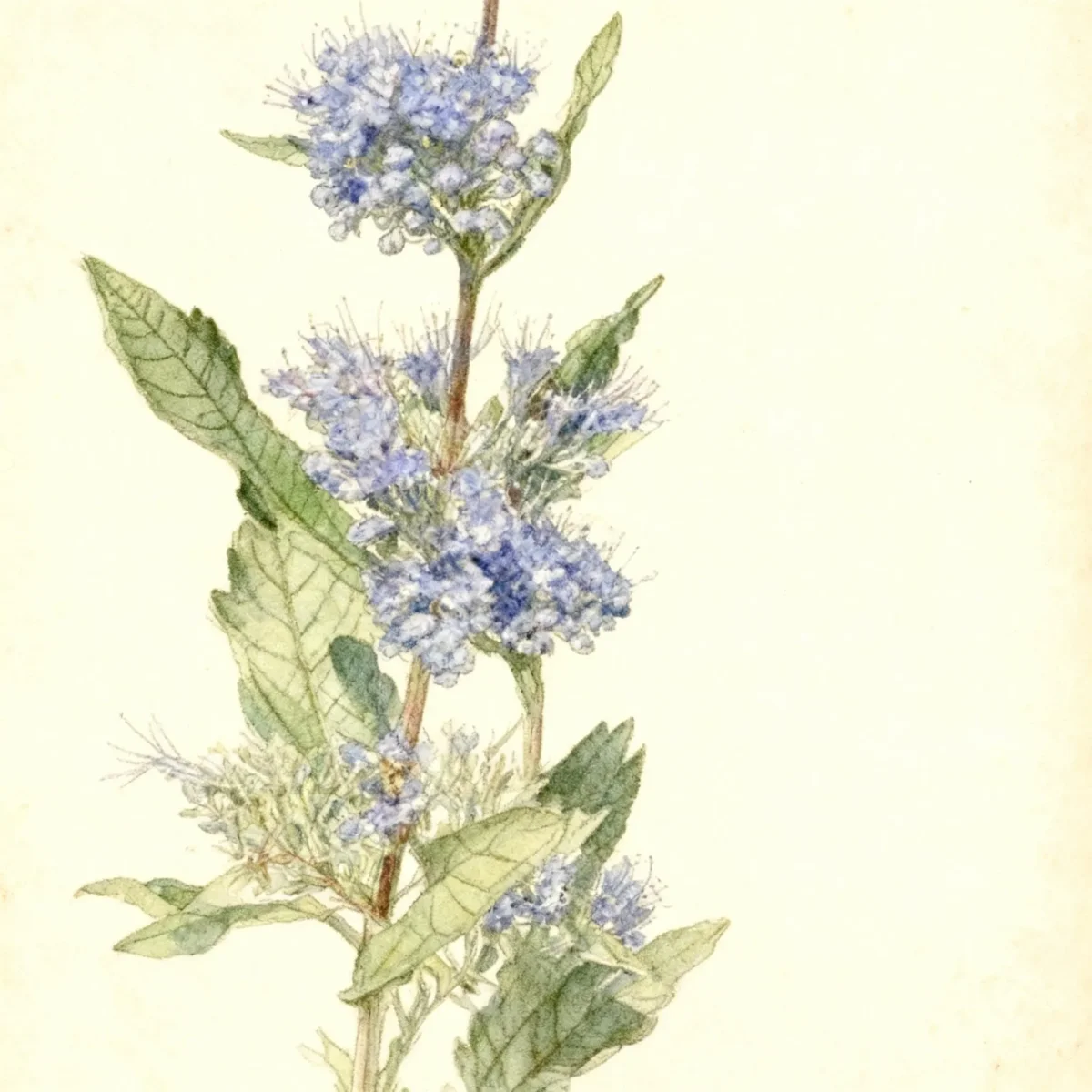
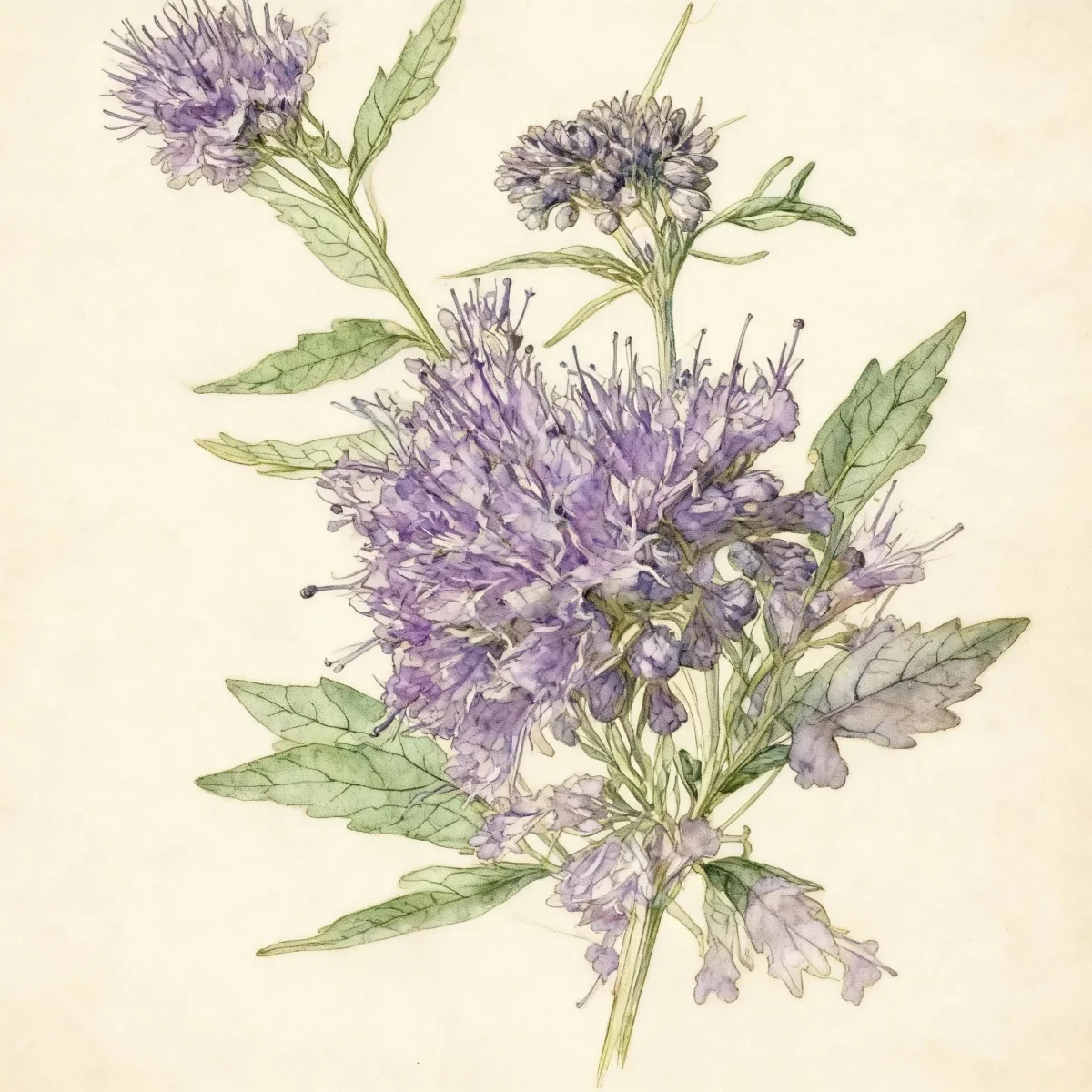
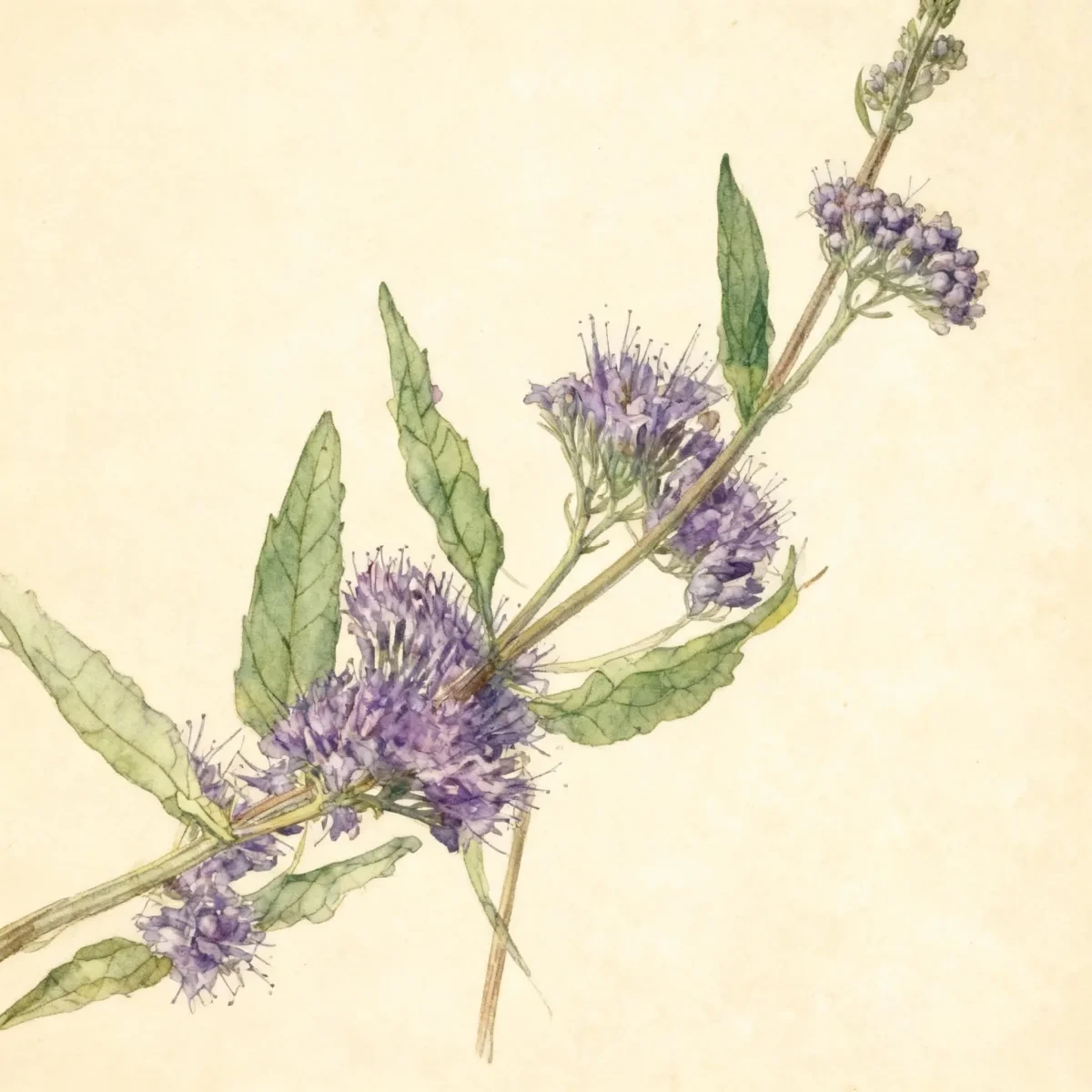
Caryopteris × clandonensis, commonly called bluebeard, blue spirea or blue mist, is a low-mounded, deciduous shrub that is valued for its aromatic foliage and late summer flowers which are said to resemble clouds of blue smoke or mist. This hybrid was discovered in cultivation as an accidental cross between C. Incana and C. Mongholica. Clandonensis hybrids typically produce about 18-30” of growth per year, so total shrub height (usually from 2-3’) depends in large part upon the extent of winter dieback and/or the annual spring pruning. Flowers are very attractive to butterflies, bees and other beneficial insects. Foliage is aromatic when brushed with a hand.Genus name comes from Greek karyon meaning “nut” and pteron meaning “wing” in reference to the winged fruits found on this shrub.‘Worchester Gold’ features golden, ovate to lance-shaped leaves (to 1.5” long) and a profuse, shrub-covering bloom of fragrant, light lavender-blue flowers in terminal and axillary clusters (cymes) from late summer into fall.
Tolerances
- Drought
Potential Problems
This shrub generally exhibits no serious insect or disease problems when sited correctly. The primary threat comes from cultural errors, specifically poor soil management. Crowns of Caryopteris × clandonensis ‘Worcester Gold’ may rot if planted in wet, poorly-drained soils, so amending heavy clay to ensure quick drainage is paramount for long-term health.
Avoid planting Bluebeard in locations that retain standing water, especially over winter, as this dramatically increases the risk of root and crown failure. Proper location selection combined with required aggressive spring pruning minimizes risk for this low-maintenance performer.
Frequently Asked Questions
What hardiness zones is Bluebeard suitable for?
Caryopteris × clandonensis ‘Worcester Gold’ is generally hardy in USDA Zones 5 through 9, though top growth may die back in the colder end of that range.
How large does Caryopteris × clandonensis ‘Worcester Gold’ grow?
This shrub typically matures to a height between 2 and 2.5 feet, with an equal spread of 2 to 2.5 feet when fully established.
What sun exposure does Bluebeard need?
For optimal golden leaf color and maximum bloom production on Caryopteris × clandonensis ‘Worcester Gold’, it requires full sun exposure throughout the day.
When does Bluebeard bloom?
Bluebeard provides valuable late-season color, typically blooming profusely from July through September with clear blue flowers.
Conclusion
The striking foliage and late-season blue flowers make Caryopteris × clandonensis ‘Worcester Gold’ an indispensable feature in the late summer garden. This low-maintenance Bluebeard offers fragrance, pollinator appeal, and manageable size, providing excellent textural contrast. Always verify your local hardiness zone and ensure excellent soil drainage before planting to guarantee vigorous growth and reliable flowering results.
Wildlife Benefits
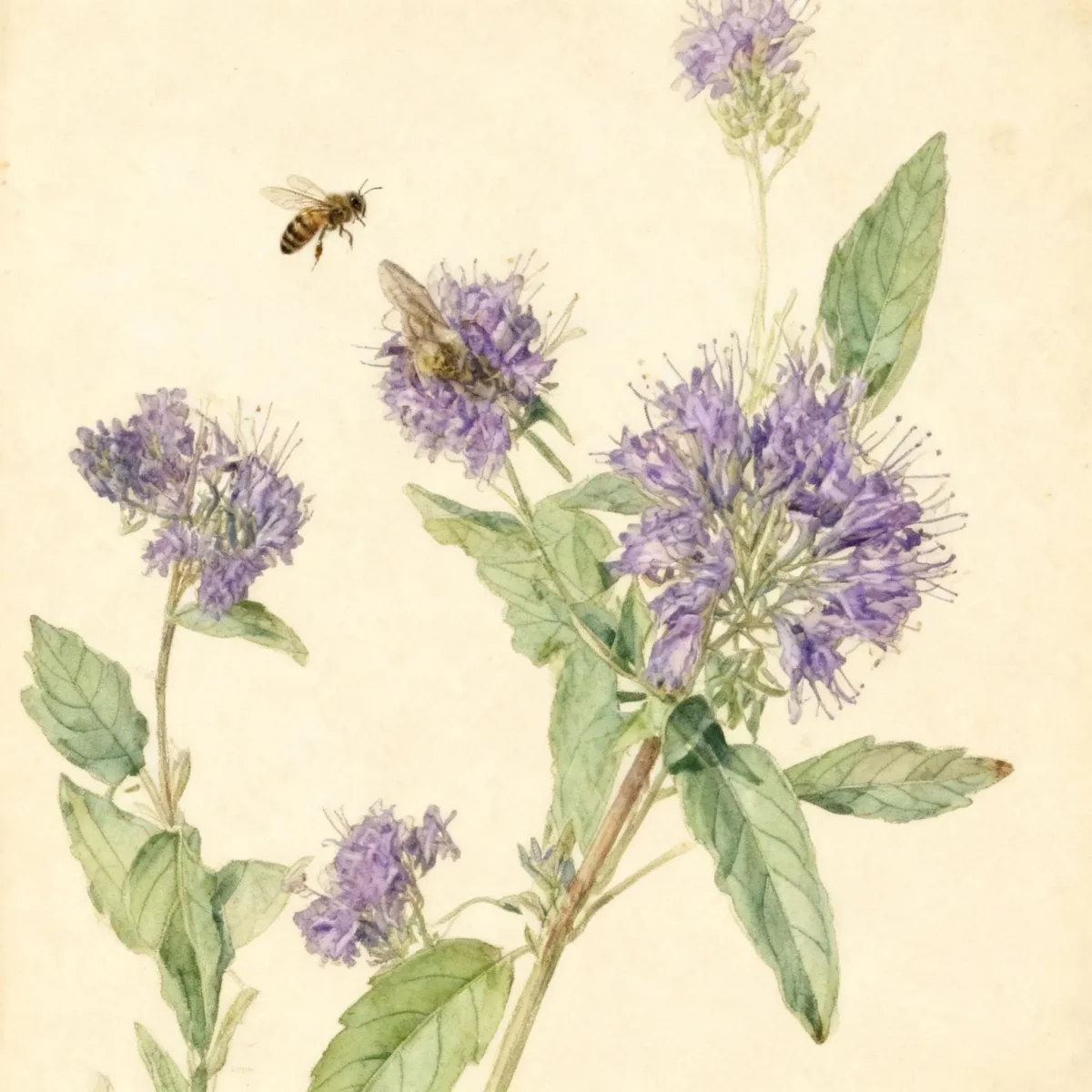
The flowers of the Bluebeard are exceptionally attractive to a wide array of beneficial insects, particularly butterflies and bees. Because it blooms in late summer and early fall, it serves as a crucial late-season nectar source when many other woody shrubs have finished flowering. Mass planting Caryopteris × clandonensis ‘Worcester Gold’ maximizes its appeal to pollinators, effectively turning a section of the garden into a vital feeding station.
Companion Planting Recommendations
To best complement the cultural needs of Caryopteris × clandonensis ‘Worcester Gold’, pair it with other sun-loving perennials that also prefer well-drained soil. Plants that bloom in early summer or offer different textures, such as Russian Sage (Perovskia atriplicifolia) or certain ornamental grasses, create excellent seasonal transitions around the Bluebeard. Since this shrub is pruned hard in spring, select companions that either emerge late or benefit from an open space during the early growing season.