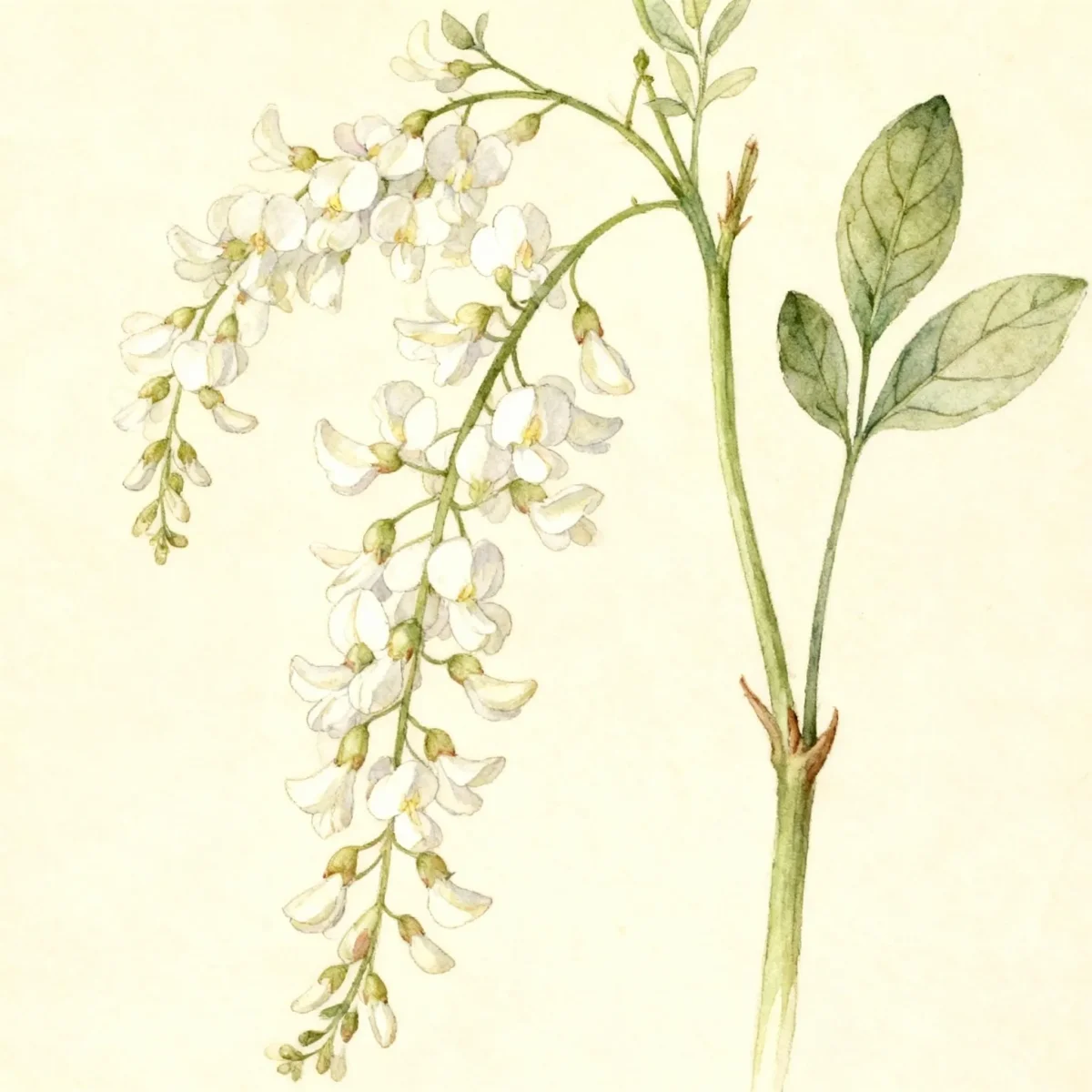
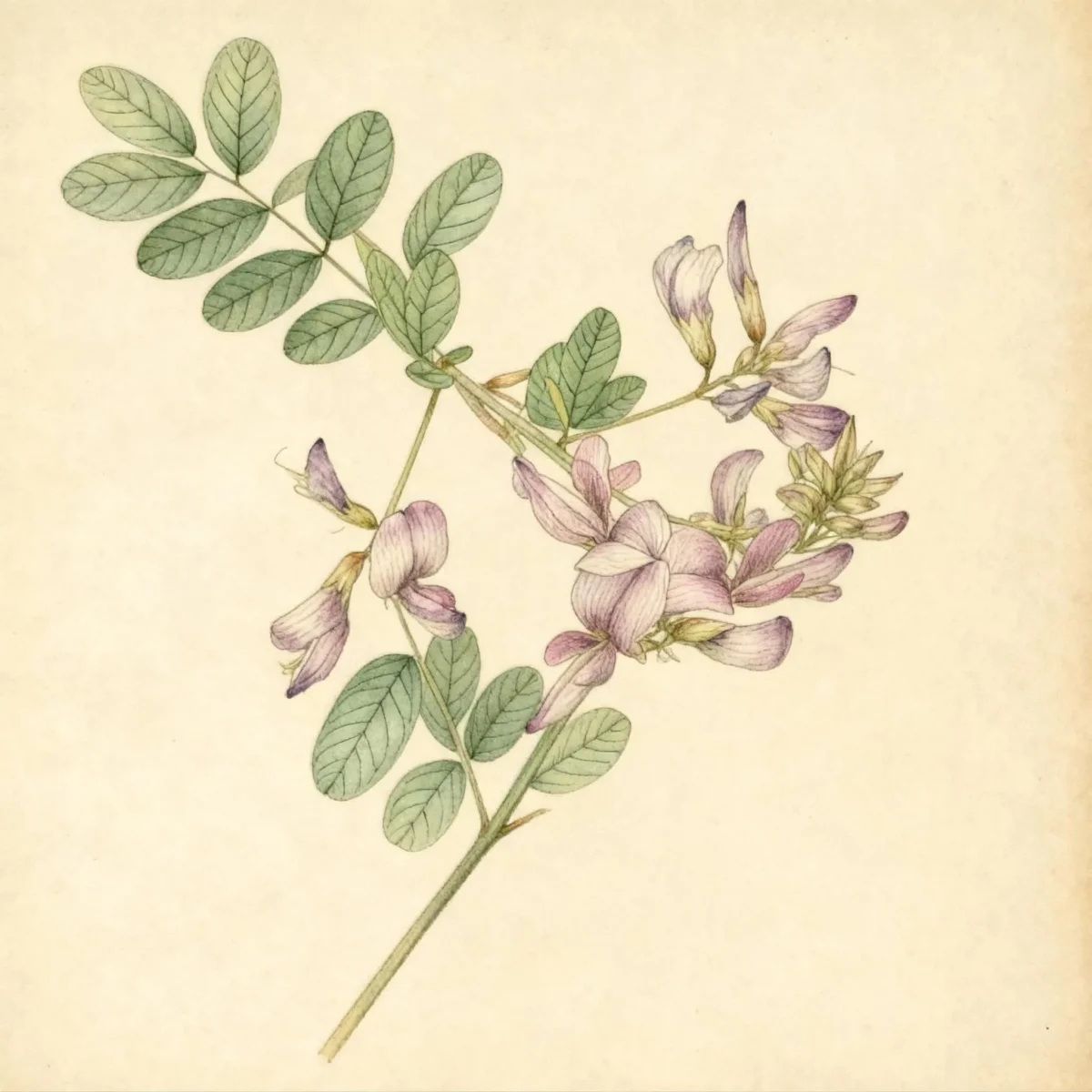
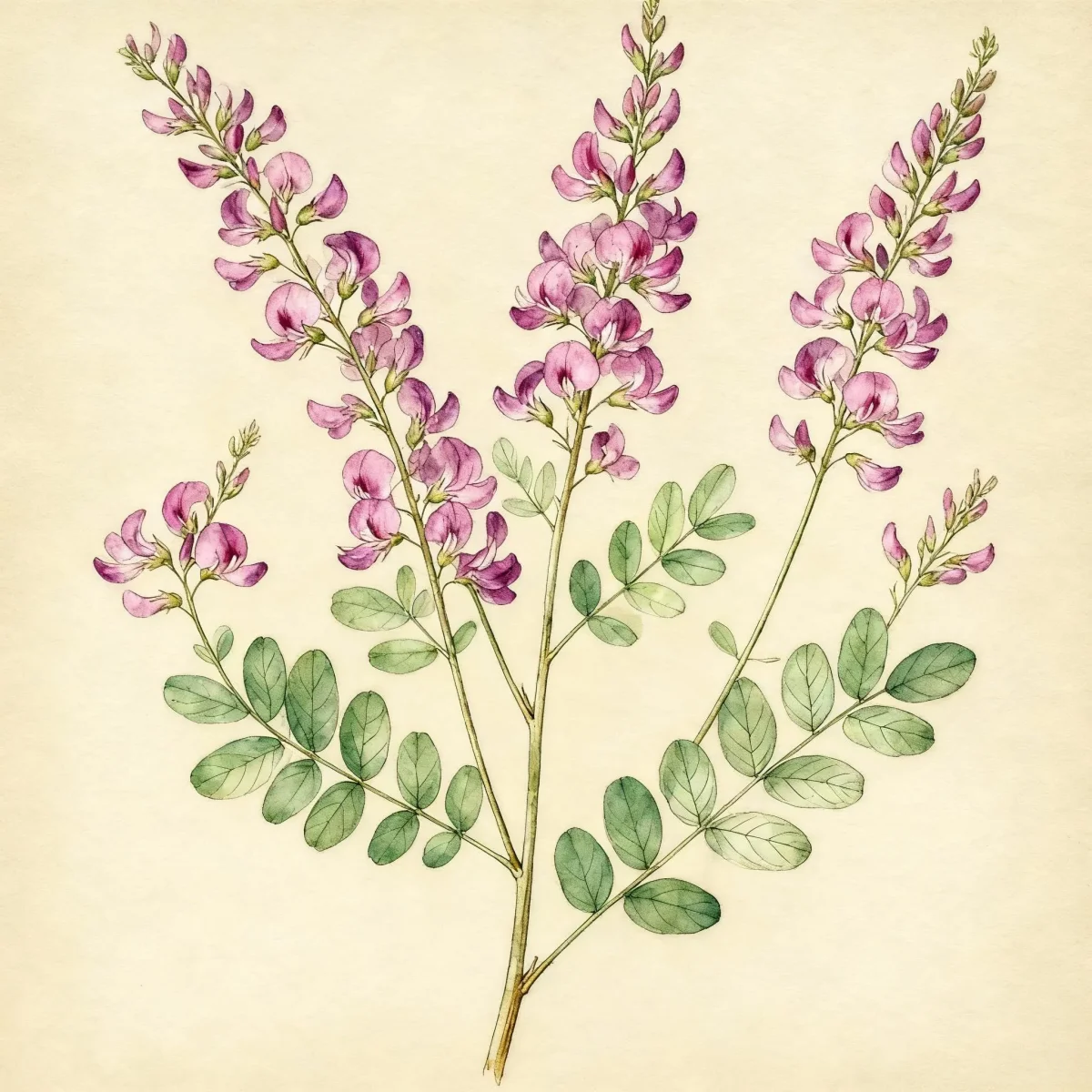
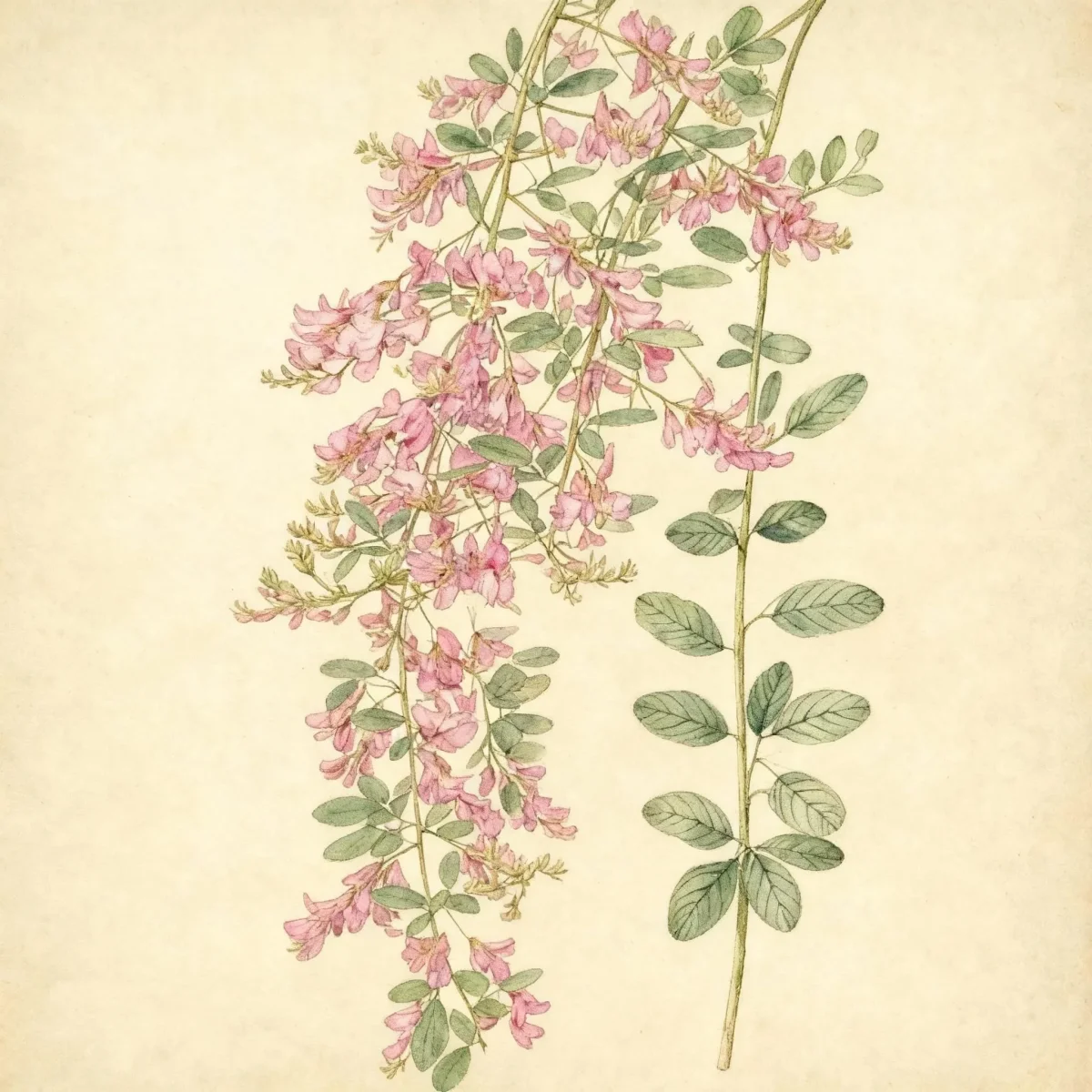
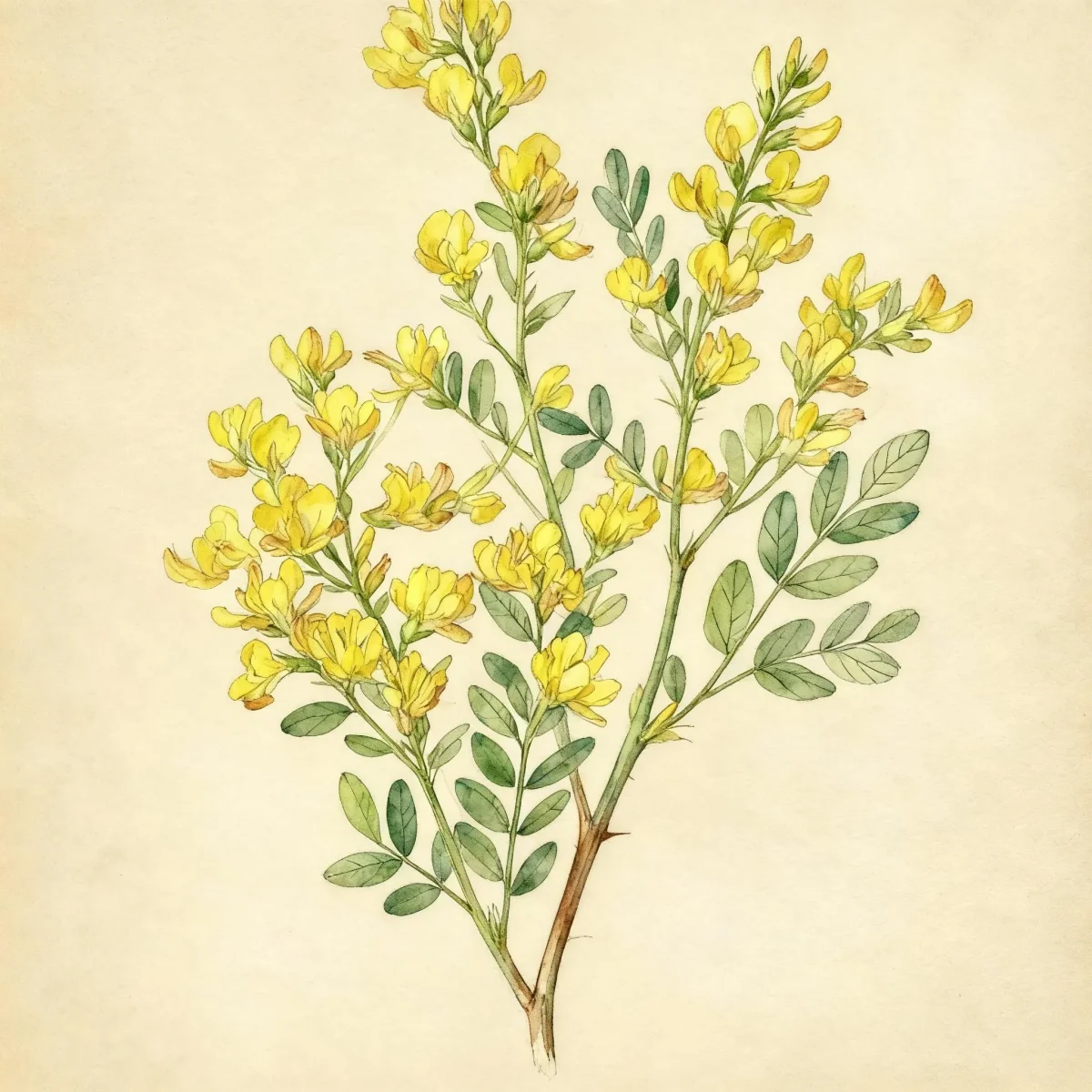
Bush clover (Lespedeza thunbergii 'Gibraltar')
Lespedeza thunbergii 'Gibraltar' offers spectacular late-season color with arching habit. This robust Bush clover thrives in zones 4-8.
Scroll down to discover growing tips, care requirements, companion plants, and more
Complete Plant Information
Overview
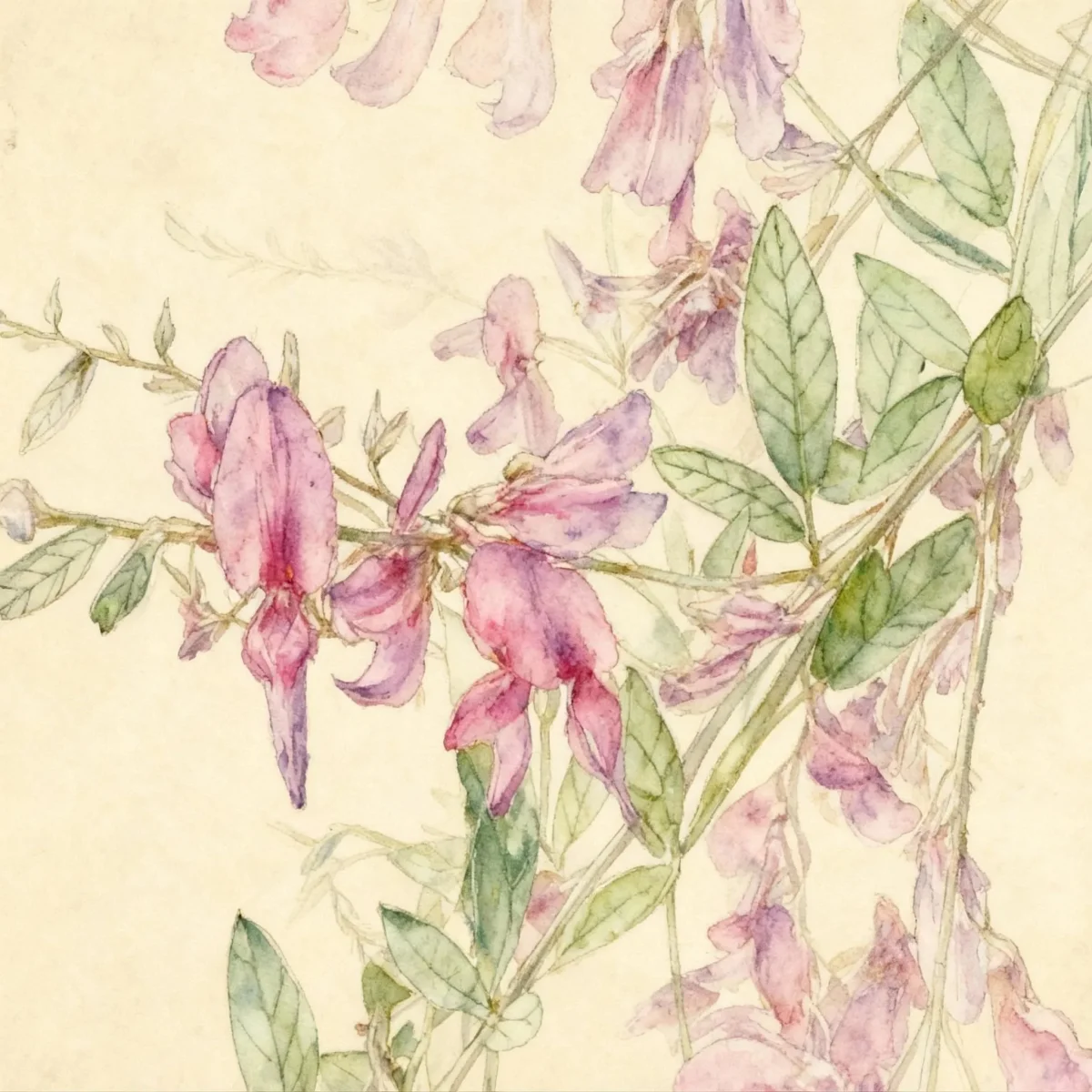
Lespedeza thunbergii ‘Gibraltar’, universally known as Bush clover, is a standout deciduous shrub celebrated for its dramatic late-summer floral display. Its gracefully arching, fountain-like habit creates a stunning visual effect as stems cascade outward, often nearly touching the ground when laden with blooms. This plant provides essential late-season interest when many other shrubs have finished flowering, bringing vibrant color to the autumn landscape.
This semi-woody shrub responds vigorously to pruning, establishing rapid annual growth reaching 4 to 5 feet tall and spreading widely. Although the woody roots are quite hardy, the top growth often dies back to the ground in northern winters, necessitating a hard prune in early spring. The reward for this minimal care is a spectacular presentation of rosy-purple, pea-like flowers that signal the transition into fall.
The overall structure and performance of Lespedeza thunbergii ‘Gibraltar’ make it an invaluable performer in challenging sites. It tolerates poor soils and drought once established, while its vigorous root system offers functional benefits like erosion control on slopes. Incorporating this striking Bush clover ensures your garden has reliable, colorful structure late into the growing season.
Fast Facts
- Plant Family: Fabaceae
- Plant Type: Deciduous shrub
- Hardiness Zones: USDA Zones 4-8
- Size at Maturity:
- Height: 4-5 ft
- Spread: 4-10 ft
- Bloom Time: August to September
- Bloom Description: Rosy purple
- Sun Exposure: Full sun to part shade
- Water Needs: Medium
- Maintenance Level: Medium
How to Grow
Plant the Bush clover in spring or fall in locations receiving full sun for the best flowering performance, although it tolerates partial shade. Soil should be average, well-drained, and of medium moisture; however, be aware that good drainage is absolutely essential for root health. Lespedeza thunbergii ‘Gibraltar’ is remarkably adaptable, even performing well in infertile, sandy soils and offering established drought tolerance.
Water consistently through the first season to help establish the root system. Once mature, the need for supplemental irrigation drops to medium levels, especially if sited appropriately. Avoid over-fertilization, as this encourages lush, weak vegetative growth at the expense of abundant blooms.
The most critical cultural technique for this plant is pruning. Since this spectacular display occurs entirely on new growth produced in the current season, prune the stems back hard in late winter or very early spring, often cutting the entire shrub down to the ground. Some gardeners wait until new growth is visible before cutting back the old, dead stems.
In colder reaches of its hardiness range (Zone 6 and below), the top growth will certainly die back annually. While the plant will regrow from the hardy root crown, gardeners must embrace the practice of cutting it back completely each spring to ensure the fountain-like cascade of flowers appears later that summer.
Landscape Uses
This plant excels as a late-season focal point in sunny landscape areas, making it an excellent fall-blooming specimen. Its spectacular cascading habit lends itself perfectly to tumbling over retaining walls or softening the edge of raised beds where stems can drape naturally. Consider using Lespedeza thunbergii ‘Gibraltar’ within shrub borders, providing height and mass that transitions beautifully into autumn color palettes.
The fountain-like size and presence of Bush clover mean it pairs wonderfully with shorter, mid-season perennials, allowing them to bloom first before the massive floral performance of the Lespedeza begins. Plant it alongside structural evergreens that provide winter interest, offering a strong backdrop for the dying-back stems. It is also an ideal addition to cottage gardens where informal, flowing shapes are desired.
For functional landscaping, the vigorous growth habit of this shrub makes it effective for planting on slopes to aid in stabilizing the soil and controlling erosion. Allow it space, as the spread can reach 10 feet, ensuring the graceful arching stems have room to develop without crowding neighboring plants.
Standout Features
Flower Qualities
- Showy
Noteworthy Characteristics
Lespedeza thunbergii, commonly called bush clover, is a deciduous, semi-woody shrub with an arching, fountain-like habit. When cut to the ground in late winter to early spring, it responds by producing rapid annual growth to 3- 6’ tall and as wide during the following growing season. In full bloom, the flower-laden stems arch downward with a fountain-like grace, often to the point of nearly lying on the ground.
Tolerances
- Drought
- Erosion
Potential Problems
This cultivar is known for being remarkably free of serious pest or disease issues, which contributes significantly to its ease of maintenance. Gardeners rarely struggle with damaging insect infestations or widespread fungal outbreaks affecting productive growth. Focus management efforts primarily on cultural care, particularly ensuring excellent soil drainage, which prevents root stress that might otherwise invite opportunistic issues.
Frequently Asked Questions
What hardiness zones is Bush clover suitable for?
Lespedeza thunbergii ‘Gibraltar’ establishes well in USDA Hardiness Zones 4 through 8. Ensure your location falls within this range for the best chance of root survival through winter.
How large does Bush clover grow?
This deciduous shrub typically reaches a height between 4 and 5 feet, maintaining a substantial spread ranging from 4 to 10 feet wide at maturity.
What sun exposure does Lespedeza thunbergii ‘Gibraltar’ need?
For the most prolific and beautiful bloom display, plant this shrub in full sun. It will tolerate partial shade, though the density of the rosy-purple flowers may be reduced.
When does Bush clover bloom?
The impressive blooming period for Lespedeza thunbergii ‘Gibraltar’ occurs from August into September, presenting its rosy-purple flowers late in the season.
Conclusion
The striking, cascading blooms of Lespedeza thunbergii ‘Gibraltar’ make it an indispensable plant for solving late-summer landscape challenges. Its adaptability to various soil types and its drought tolerance, combined with its spectacular aesthetic return, justify its medium maintenance requirements. Before planting, confirm your site falls within USDA Zones 4-8 and plan for that essential late-winter pruning to unlock the full potential of this remarkable Bush clover.
Companion Planting
Choosing companions that appreciate similar sun and soil conditions will enhance the overall garden composition surrounding your Bush clover. Group Lespedeza thunbergii ‘Gibraltar’ with late-blooming perennials that offer contrasting textures or colors, such as Russian Sage (Perovskia atriplicifolia), tall ornamental grasses like Miscanthus, or sturdy coneflowers (Echinacea). Since the shrub enters dormancy and is cut back in early spring, ensure companions provide earlier season visual interest to fill the void.
When selecting companions, consider bloom timing. Plants that peak in mid-summer will frame the structure beautifully before the shrub’s major performance occurs. This strategic placement ensures continuous visual appeal in borders where your Bush clover resides, creating a dynamic, multi-season display.
Design Ideas: The Fountain Effect
The defining characteristic of this shrub is its massive, arching habit, which designers often utilize to create a “fountain effect” at the middle or back of a border. To maximize this visual impact, allow the long canes of Lespedeza thunbergii ‘Gibraltar’ the space to drape naturally, perhaps near the corner of a path or at the edge of a retaining wall where the flowers can spill over organically. This allows the full, weeping structure to be appreciated without compaction from nearby rigid plants.
Avoid placing very formal or strictly upright plants immediately next to the Bush clover canopy, as this contrast can diminish the shrub’s signature graceful movement. Instead, use low, mounding groundcovers nearby that support the base or utilize the shrub as a dramatic backdrop to showcase shorter, mounding chartreuse or silver-leaved perennials that remain low while the Lespedeza is actively growing. Keep the area around the base relatively open to allow the stems room to spread laterally.