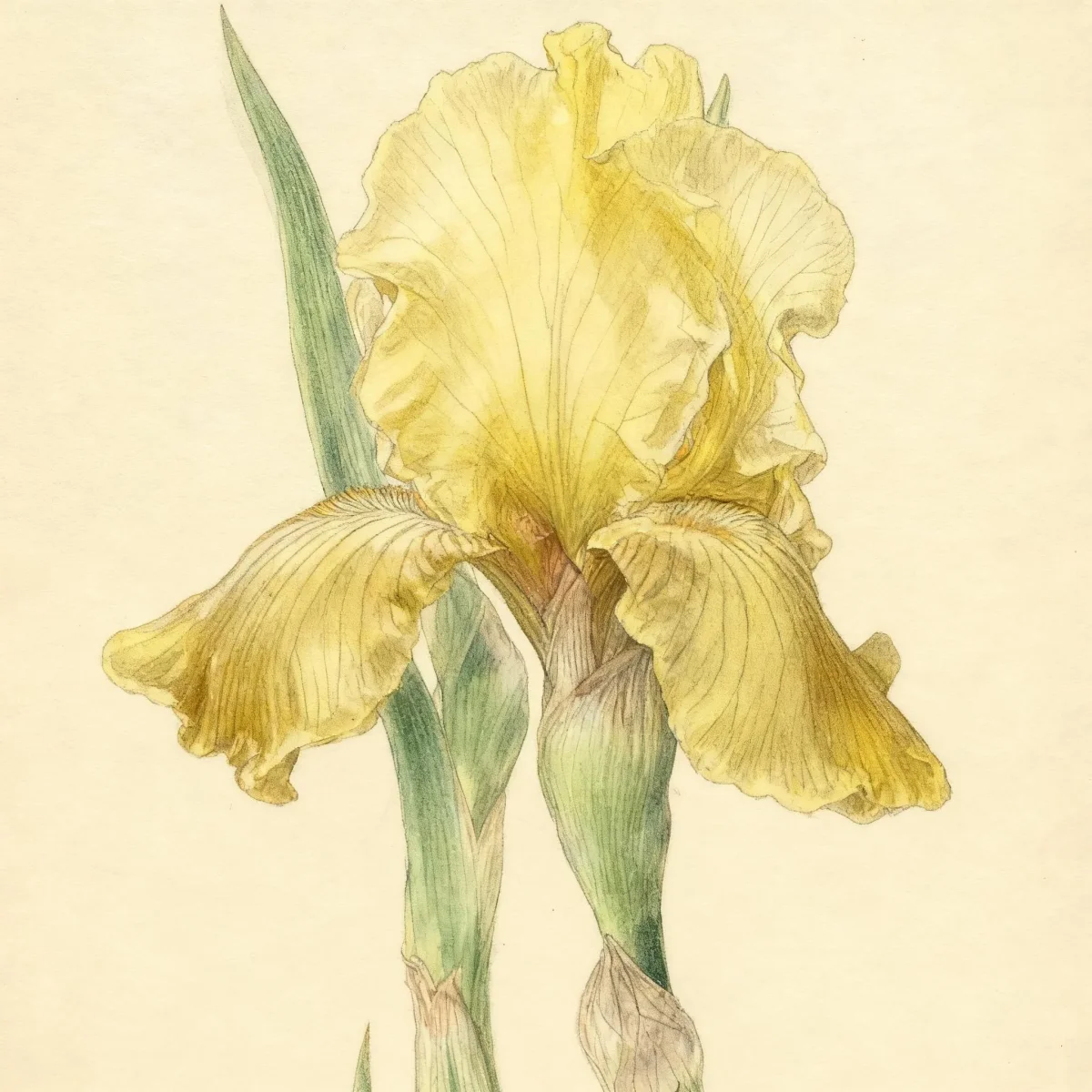
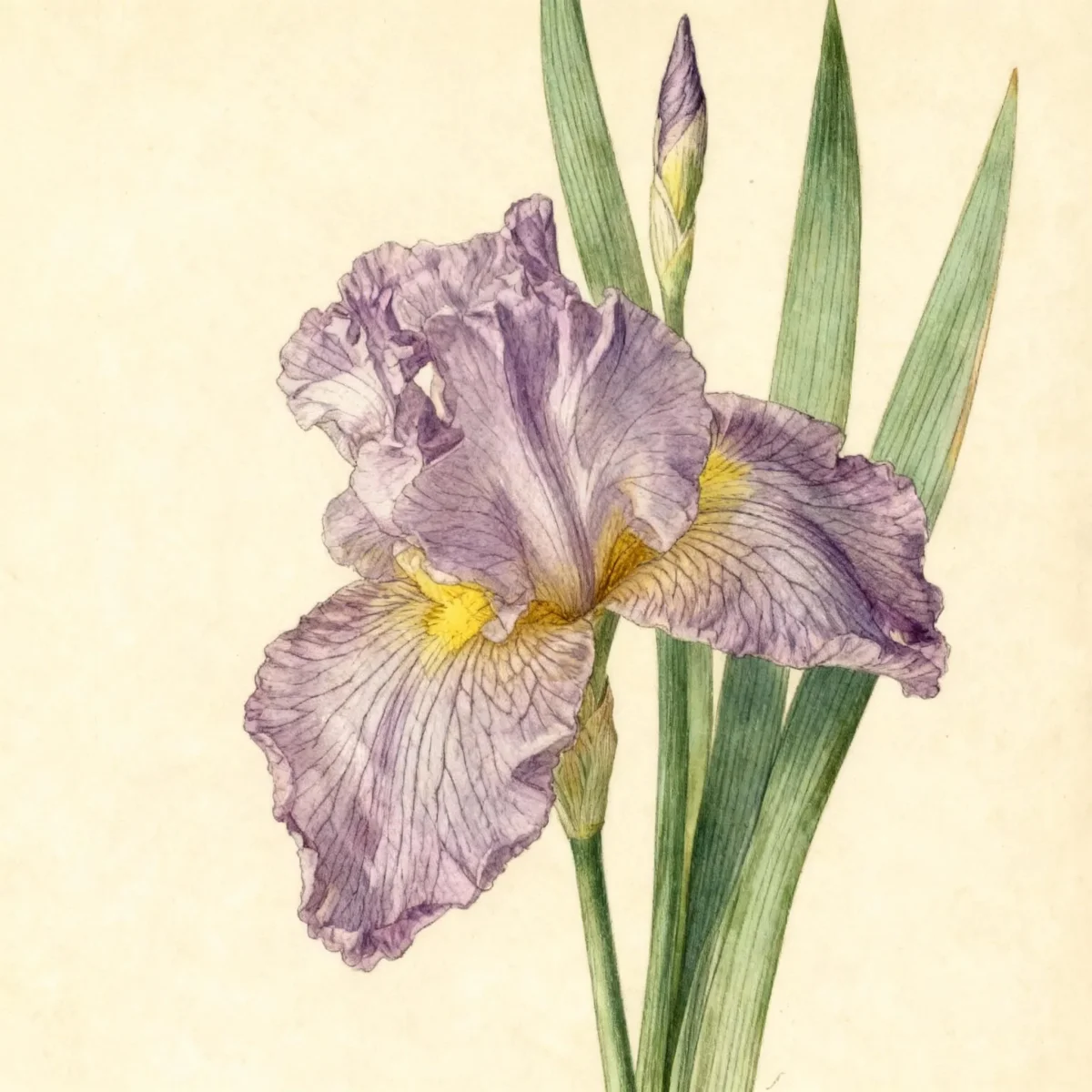
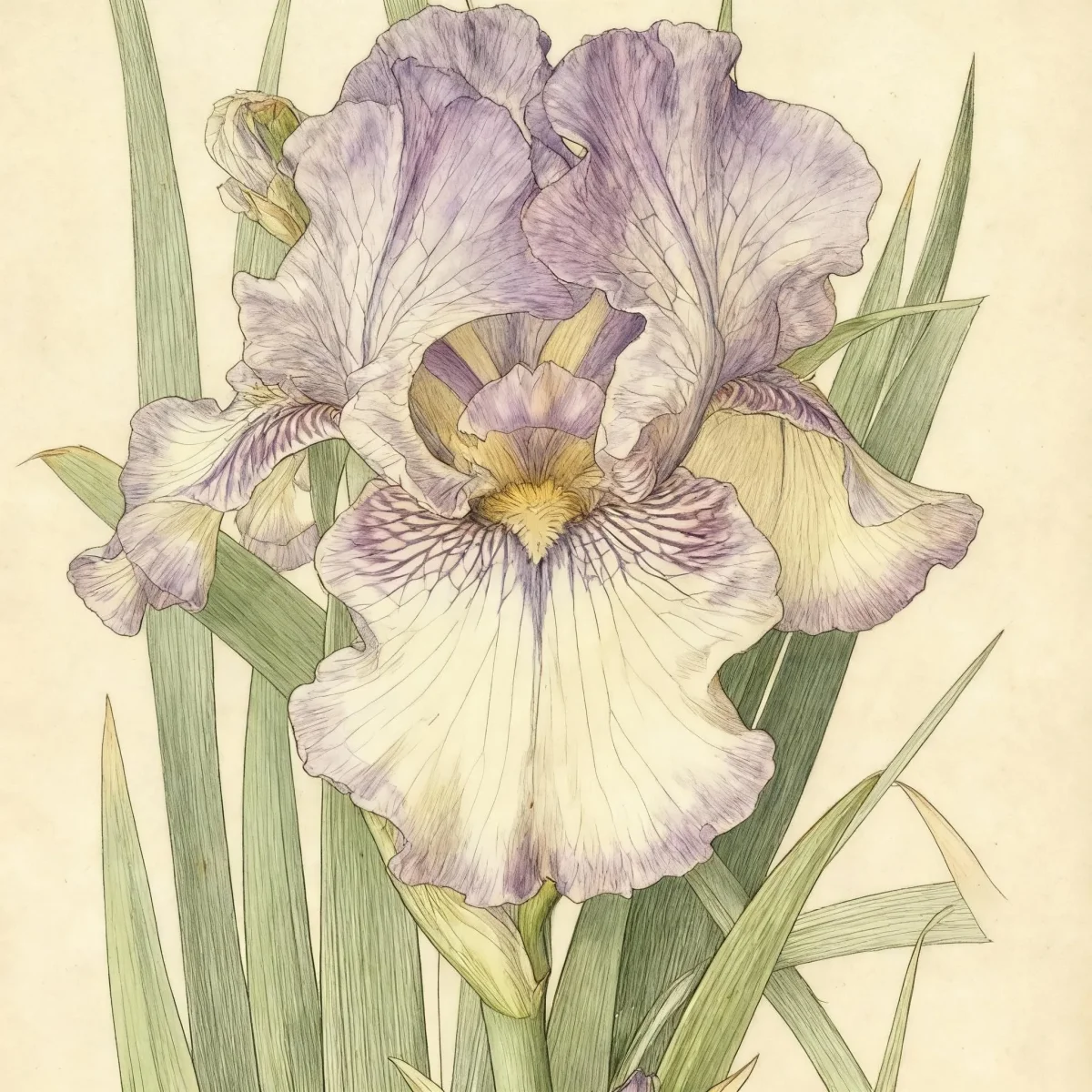
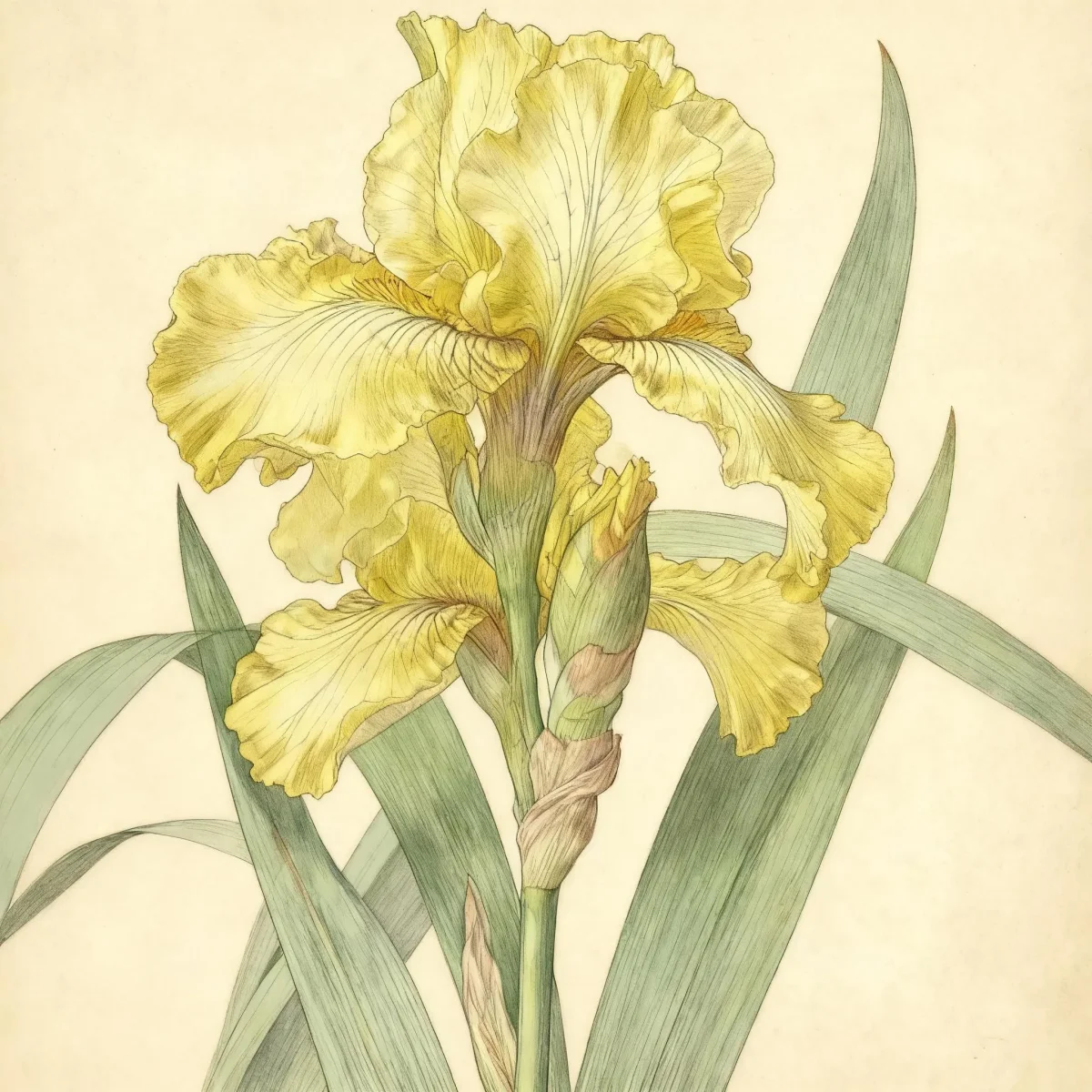
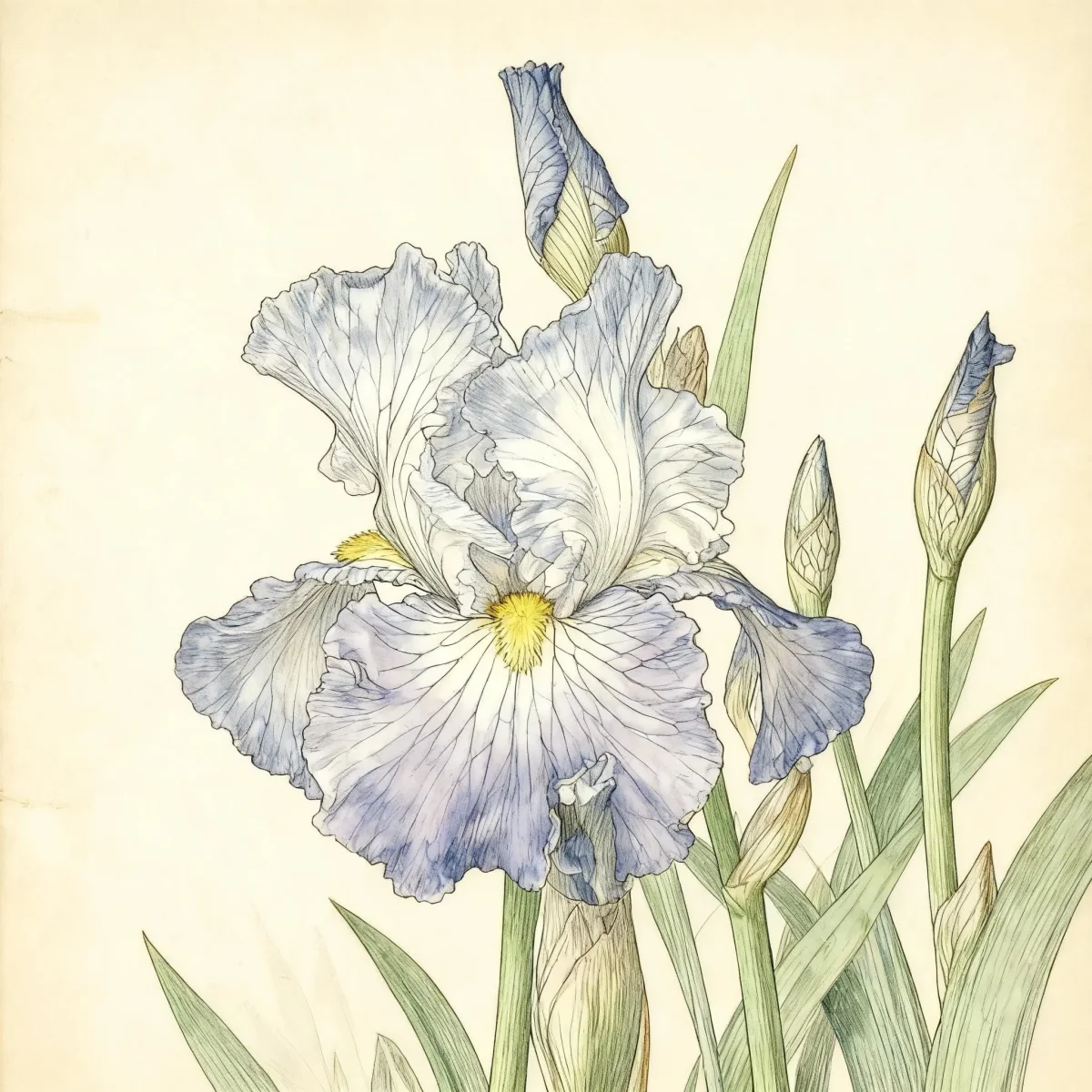
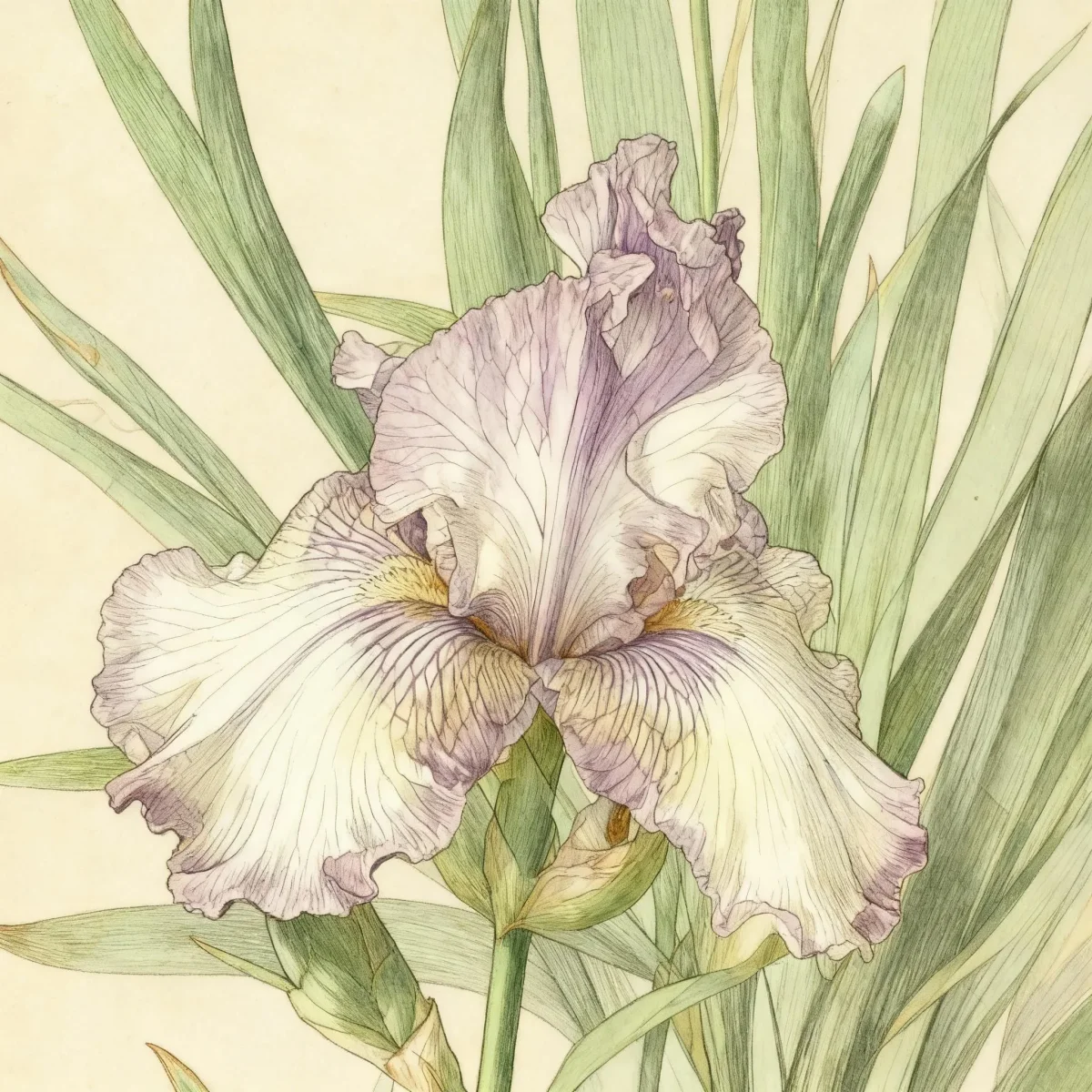
Tall bearded reblooming iris (Iris 'St. Petersburg')
Iris 'St. Petersburg' is a stunning Tall bearded reblooming iris featuring showy, fragrant violet-white flowers and drought tolerance.
Scroll down to discover growing tips, care requirements, companion plants, and more
Complete Plant Information
Overview
Iris ‘St. Petersburg’ provides exceptional garden value as a Tall bearded reblooming iris, offering the gardener the potential for multiple flushes of bloom throughout the season, extending color interest past the initial spring burst. This hybrid stands tall, typically reaching around 38 inches, displaying showy, ruffled flowers described as silvery violet-white with pale violet beards. As an herbaceous perennial, Iris ‘St. Petersburg’ forms attractive clumps of erect, sword-shaped foliage that remains visually appealing even when not in flower.
Culturally, this rhizomatous iris thrives in conditions mirroring its native preference for excellent drainage, making proper soil preparation crucial for success. While it demands medium moisture during its active growth cycles, it exhibits pleasant drought tolerance once fully established, offering reliability in sunny garden locations. Gardeners seeking reliable reblooming color should prioritize full sun exposure for the best performance from their Tall bearded reblooming iris.
The elegance of Iris ‘St. Petersburg’ makes it a standout specimen, whether used as a focal point in perennial borders or massed for impactful displays. Its reliable coloring and strong stature ensure it integrates well with other late-spring and summer-blooming perennials. Successful cultivation hinges on ensuring the rhizomes are not crowded and receive adequate air circulation.
Fast Facts
- Plant Family: Iridaceae
- Plant Type: Herbaceous perennial
- Hardiness Zones: USDA Zones 3-10
- Size at Maturity:
- Height: 2.5-3 ft
- Spread: 1-2 ft
- Bloom Time: May
- Bloom Description: Violet-white
- Sun Exposure: Full sun
- Water Needs: Medium
- Maintenance Level: Medium
How to Grow
For optimal performance, plant the rhizomes of Iris ‘St. Petersburg’ in locations receiving full sun, though some afternoon shade is tolerated in the hottest climates. Growth requires average moisture, but the absolute key to preventing rot is excellent drainage; if using heavy clay or high-rainfall areas, plant the rhizomes on slopes or in raised beds. Planting depth is critical: place each rhizome shallowly over a small mound of soil, ensuring one-third of the rhizome remains exposed above the soil line, with roots spread horizontally below.
Planting time varies by region, generally ranging from late July through October. Space rhizomes approximately 12 to 20 inches apart to avoid overcrowding, which can inhibit future flowering. After the initial spring bloom, the Tall bearded reblooming iris requires specific attention to encourage rebloom; fertilize in early spring and again in early July.
Watering should remain consistent from spring until the rebloom period is successfully completed in late summer or fall. Keep weed competition minimal so the iris can utilize available resources effectively. If clumps become overly tight or performance declines after several years, lift, divide, and replant the rhizomes in late summer (August).
Landscape Uses
Tall bearded reblooming iris excels when given space to showcase its height and rich flower color. Iris ‘St. Petersburg’ is highly recommended for mass planting or grouping within traditional perennial beds where its vertical accent can break up lower, mounding forms. The upright habit also lends itself beautifully to the middle or back rows of mixed borders, providing structure against softer annuals and shorter perennials.
Due to their requirements for excellent drainage and full sun, these irises perform reliably near foundations where soil tends to be drier, or as an elegant edging along walkways, provided they are kept consistently divided. When choosing companions, select plants that do not aggressively spread foliage over the rhizomes during the summer dormancy period, such as coneflowers or salvia, allowing the sword-like leaves of the iris to remain clean and visible.
Standout Features
Flower Qualities
- Showy
- Fragrant
Noteworthy Characteristics
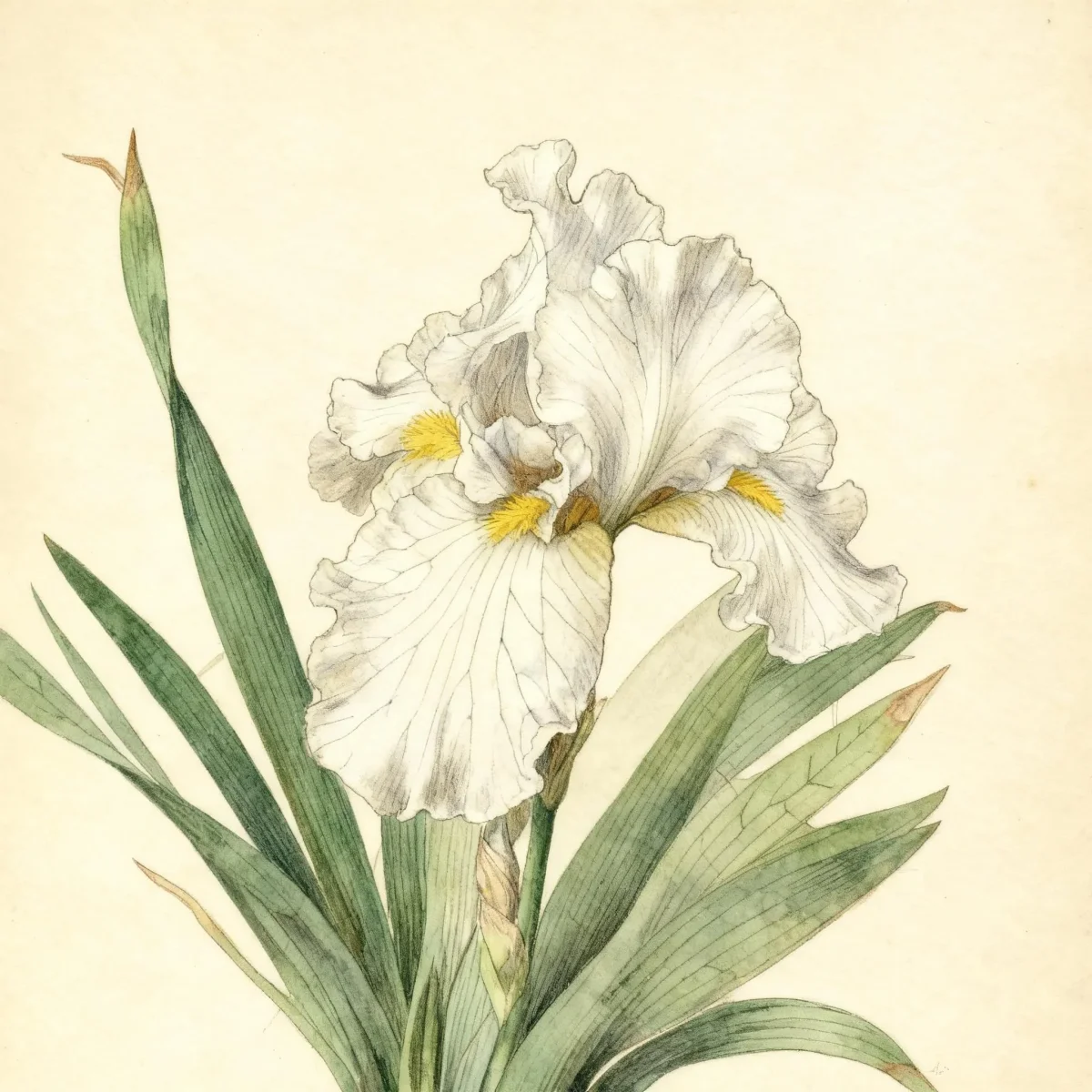
Tall Bearded Iris is typically identified by its substantial height (often above 38 inches), carrying flowers boasting upright standards and pendant falls, all marked by a visible, fuzzy beard at the fall’s throat. Specifically, Iris ‘St. Petersburg’ is known cultivar that exhibits silvery violet-white standards and falls with a pale violet beard, offering reliable reblooming potential contingent upon local climate and proper care. These rhizomatous plants are valued for forming increasing clumps over time, providing consistent, bold color displays.
Tolerances
- Deer
- Drought
Potential Problems
Gardeners must manage several potential issues common to the genus, including fungal and bacterial diseases like leaf spot, rhizome rot, and bacterial soft rot; viruses, such as mosaic, can also strike. Pest control requires monitoring for slugs, snails, aphids, and particularly iris borers, which can cause significant structural damage. The most effective management strategy is proactive sanitation: remove and destroy all diseased or infested foliage and debris annually in the fall after the first frost.
Failure to achieve expected flowering or sparse bloom is usually cultural rather than pathological. Inspect planting depth—rhizomes must not be buried too deep to flower. Furthermore, check the light level, as planting in too much shade hinders bloom production, and over-fertilization is a noted cause of vegetative growth without accompanying flowers. Overcrowding also necessitates annual division for sustained vigor.
Frequently Asked Questions
What hardiness zones is Tall bearded reblooming iris suitable for?
Iris ‘St. Petersburg’ is hardy across a wide range, suitable for USDA Zones 3-10.
How large does Tall bearded reblooming iris grow?
This variety typically reaches a height between 2.5 and 3 feet, spreading to about 1 to 2 feet wide.
What sun exposure does Iris ‘St. Petersburg’ need?
Iris ‘St. Petersburg’ requires full sun exposure for the best performance, though tolerance exists for some light afternoon shade.
When does Tall bearded reblooming iris bloom?
This iris typically blooms in May, though as a rebloomer, it may offer sporadic additional flowers later in the season, depending on local conditions.
Conclusion
The inclusion of Iris ‘St. Petersburg’ in your garden offers elegant, ruffled blooms and the exciting possibility of seasonal rebloom, marking it as a superior Tall bearded reblooming iris selection for the dedicated gardener. Its deer and drought tolerance adds practical resilience to sunny borders. Review your local climate and ensure you provide sharp drainage before planting rhizomes from late summer through early fall.
Companion Planting
When selecting companions for Iris ‘St. Petersburg’, focus on plants that share the love for full sun and appreciate similar soil drainage, while keeping lower profiles to avoid shading the iris foliage or rhizomes. Early-season bloomers that fade as the iris hits its stride, like certain narcissi, allow for continuous interest while leaving the mid-summer plot open for the iris clumps. Consider complementing the late spring bloom of the violet-white flowers with warmer tones such as yellow or orange daylilies (Hemerocallis) planted slightly behind them.
Good partners include ornamental grasses which offer texture contrast without heavy shade, or herbaceous plants like Russian Sage (Perovskia atriplicifolia) or certain varieties of Coreopsis, whose fine texture contrasts beautifully with the iris’s sword-like leaves. Ensure ground covers are avoided directly around the crown to maintain air circulation and prevent moisture buildup near the rhizomes.
Propagation Tips
The primary method for perpetuating Iris ‘St. Petersburg’ is rhizome division, which is best performed in late summer (August) after the initial flowering cycle has completed and the foliage begins to mature. Use a clean spade or garden fork to carefully lift the entire clump, taking care not to severely damage the thick, fleshy rhizomes. Separate the new fans, ensuring each division retains a healthy section of the rhizome and adequate roots attached to the growing tip.
When replanting, follow the specific guidelines for bearded irises: create a small mound of soil and plant the division so that the upper third of the rhizome is exposed to the sun and air. This practice is vital not only for successful rooting but also as a primary defense against the fungal and bacterial rots that plague this group of perennials. Discard any old, unattractive, or damaged sections of the parent clump.