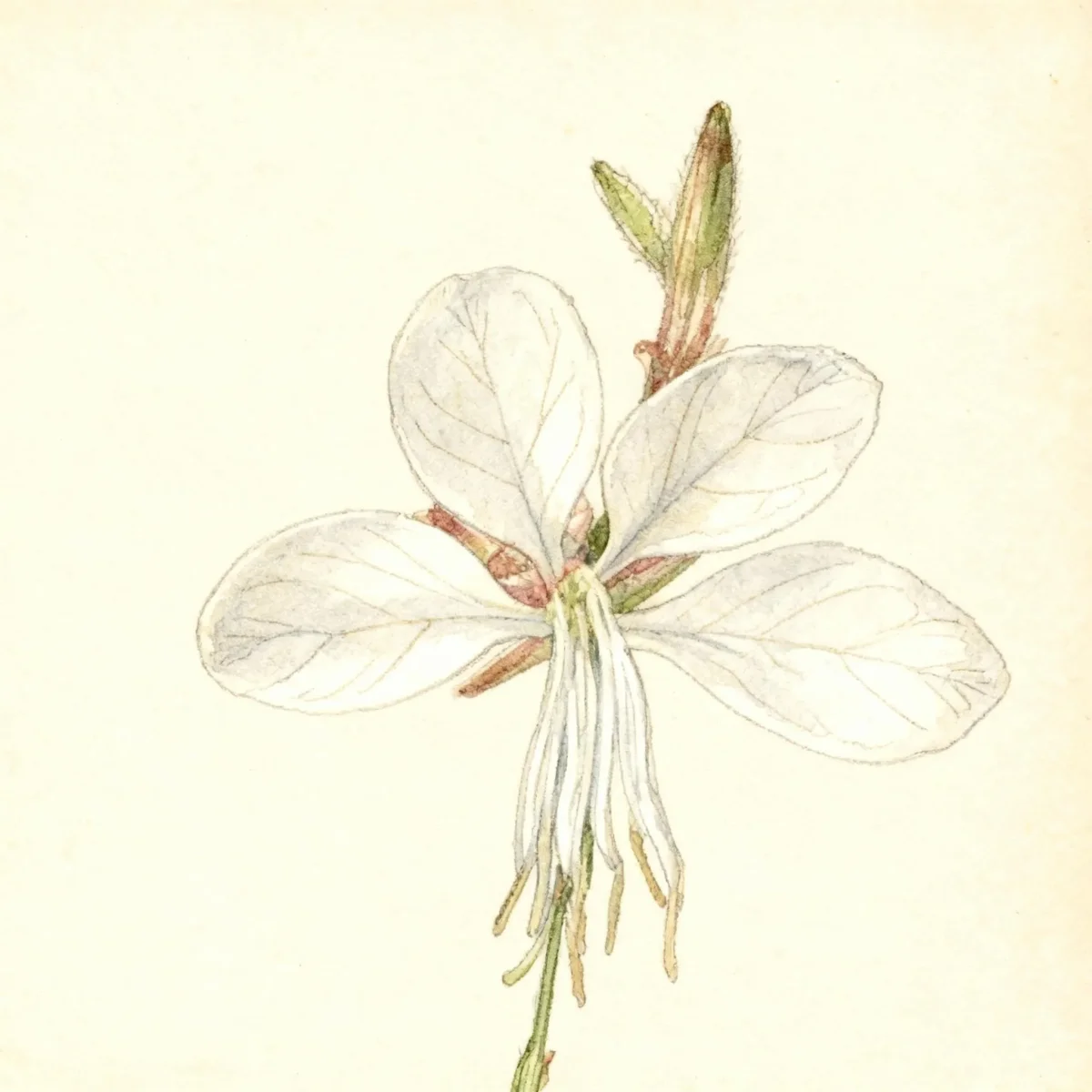
Gaura (Gaura lindheimeri 'Whirling Butterflies')
Gaura lindheimeri 'Whirling Butterflies' offers long, airy white blooms from May to September. This hardy perennial thrives in full sun.
Scroll down to discover growing tips, care requirements, companion plants, and more
Complete Plant Information
Overview
Gaura lindheimeri ‘Whirling Butterflies’ is celebrated for its cloud of delicate, dancing white flowers that hover above the foliage throughout the summer months. This cultivar of Gaura, native to Texas and Louisiana, brings superb, airy movement to the garden, justifying the genus name derived from the Greek word meaning “superb.” Gardeners value this herbaceous perennial for its low-maintenance nature and its exceptionally long bloom window from late spring well into autumn.
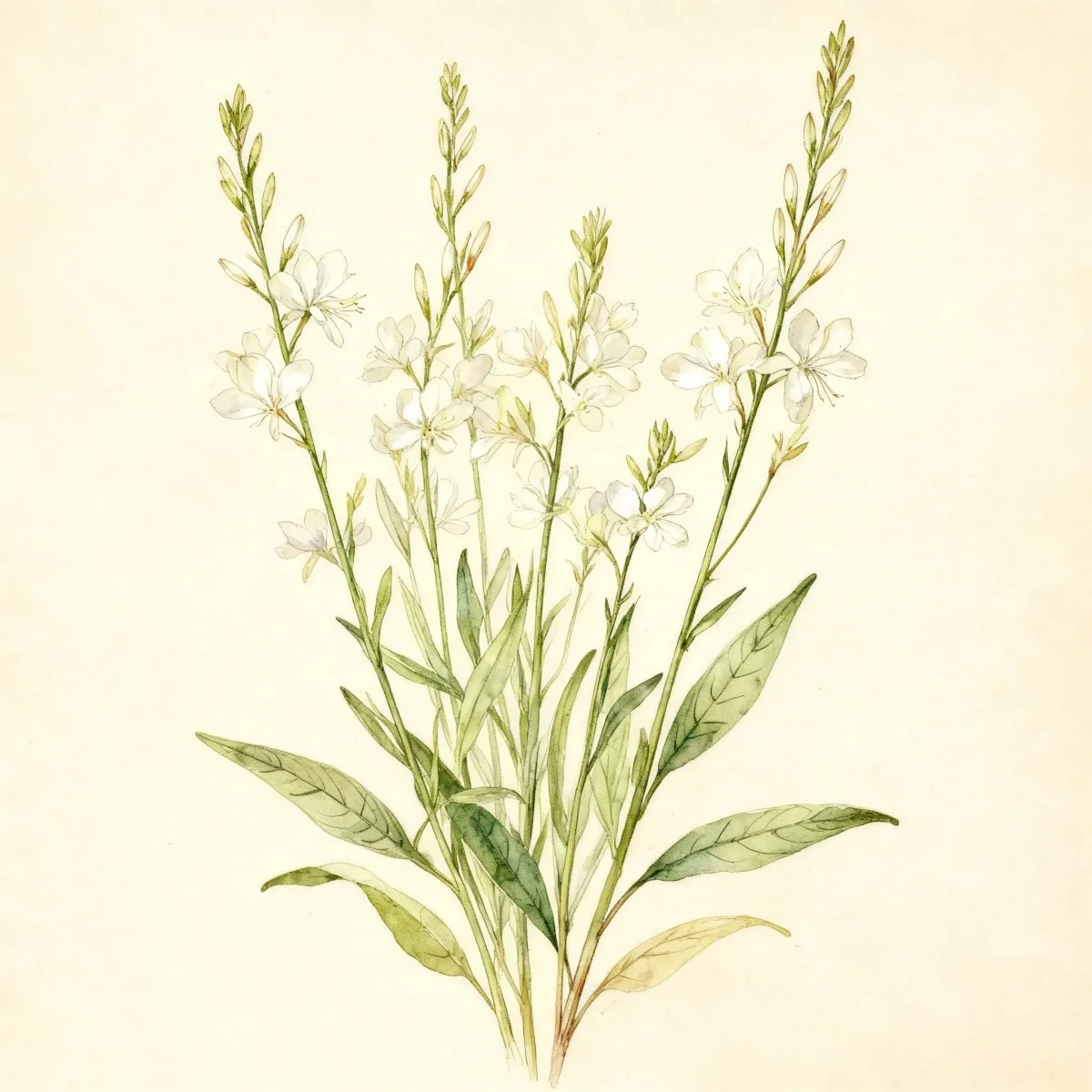
Providing reliable vertical accent without bulk, Gaura lindheimeri ‘Whirling Butterflies’ reaches heights between two and three feet, creating visual lightness. Its arching stems and small, snow-white flowers that open against darker pink buds offer continuous visual interest. This plant tolerates heat and humidity well, making it a resilient choice for sunny, drier spots where other perennials might struggle.
The cultivar differs favorably from the straight species by being more compact and producing brighter white, more floriferous blooms. Planting masses of Gaura allows the characteristic “butterfly” motion to create a truly dynamic display, perfect for informal borders or naturalized settings. Ensure proper drainage is supplied so this tough perennial thrives across multiple seasons.
Fast Facts
- Plant Family: Onagraceae
- Plant Type: Herbaceous perennial
- Hardiness Zones: USDA Zones 5-9
- Size at Maturity:
- Height: 2-3 ft
- Spread: 2-3 ft
- Bloom Time: May to September
- Bloom Description: White
- Sun Exposure: Full sun
- Water Needs: Medium
- Maintenance Level: Medium
How to Grow
For optimal performance, plant Gaura lindheimeri ‘Whirling Butterflies’ in the spring after the danger of frost has passed. This plant strongly prefers sandy, loamy, and critically, well-drained soils; good drainage is essential to prevent root rot issues common in heavy ground. Full sun exposure is necessary to maintain compact habit and maximize its extensive bloom season.
Care is generally straightforward once established. Water moderately, allowing the soil to dry slightly between irrigation sessions, as this is a relatively drought-tolerant, taprooted plant. Minimal fertilization is recommended; excessive nitrogen can encourage weak, leggy stems, causing the thin flower stems to flop, especially if planted alone.
To manage plant structure, remove spent flower spikes occasionally to encourage continuous blooming, although the cultivar is sterile and less prone to unwanted reseeding. If stems do become too open or floppy, perennial supports or planting in dense groups can help provide necessary bracing. In late spring, you may cut back plants by half to control overall size, a helpful technique for keeping this Gaura tidy in smaller spaces.
Landscape Uses
Gaura lindheimeri ‘Whirling Butterflies’ excels in designs that require vertical accents with a soft, airy texture. It is highly effective when situated in sunny borders, where its white blooms contrast beautifully with bolder perennials or deeper foliage colors. Plant it toward the middle or back of the border, as its height is sufficient to rise above shorter edging plants but remains airy enough not to create a solid wall of color.
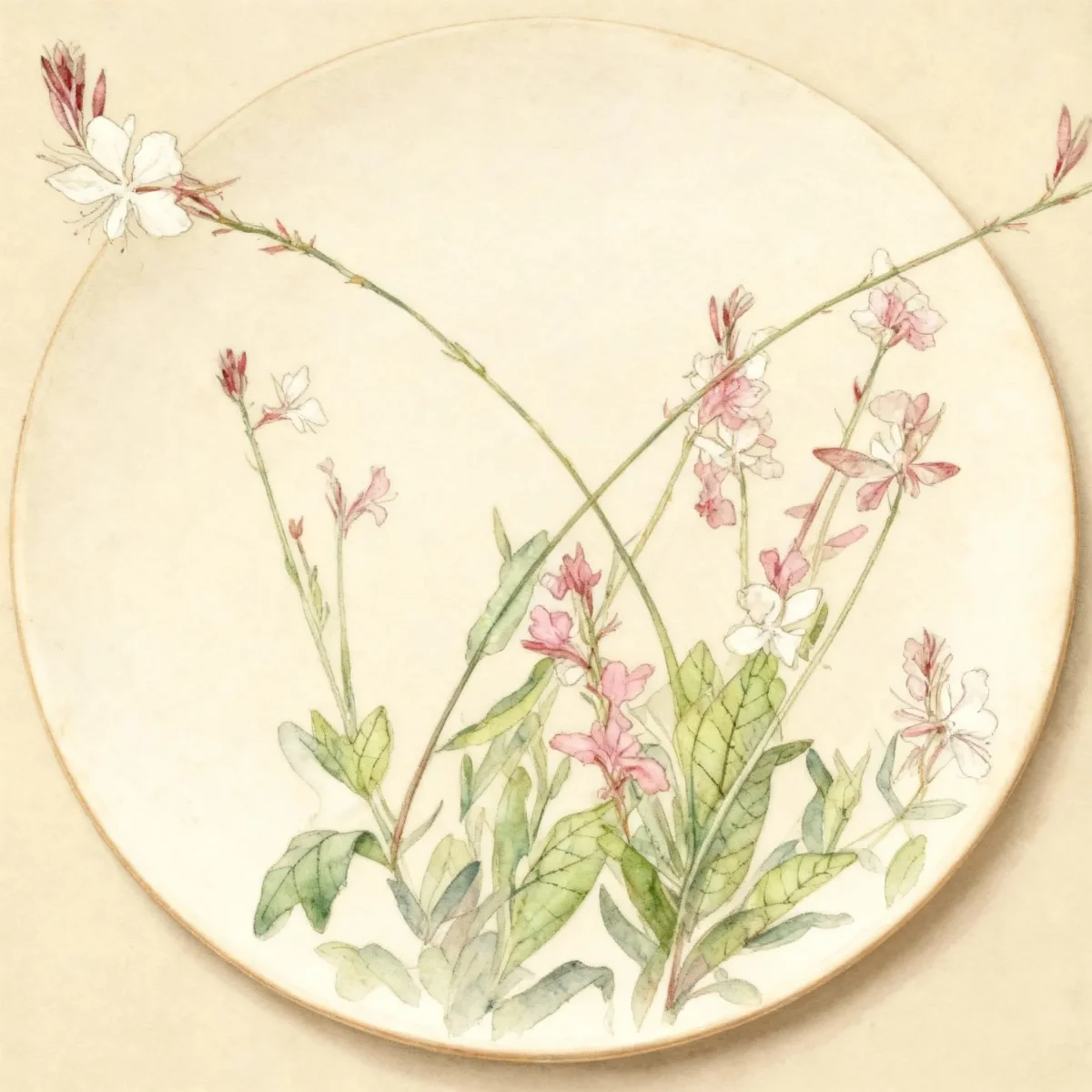
For a naturalistic effect, incorporate Gaura into wild gardens or prairie-style plantings alongside ornamental grasses and other drought-tolerant meadow species. Its ability to handle heat and humidity makes it a fantastic anchor in hot, exposed locations. When used in mass plantings, the collective movement in the breeze truly captures the ephemeral quality suggested by the cultivar name.
Standout Features
Flower Qualities
- Showy
Noteworthy Characteristics
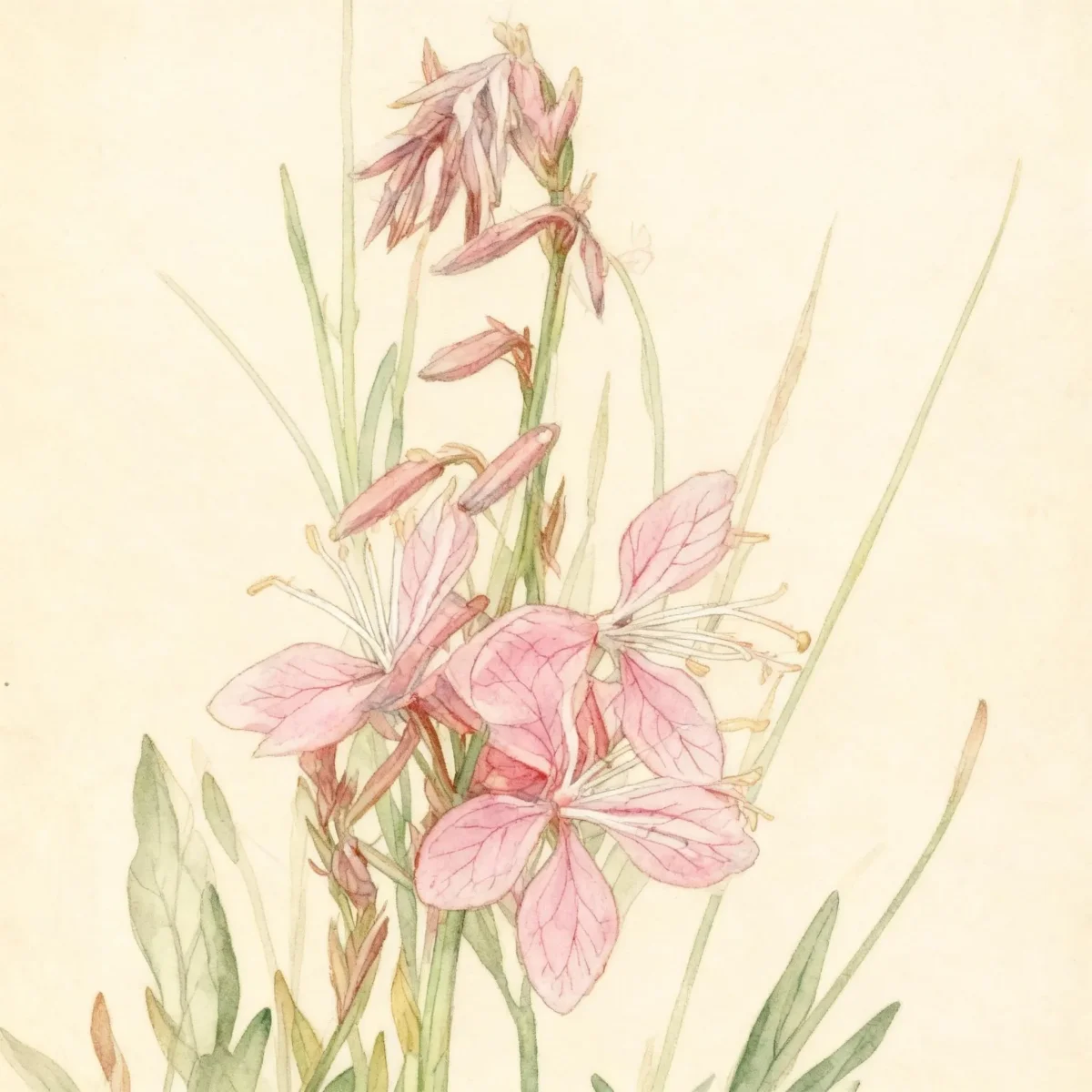
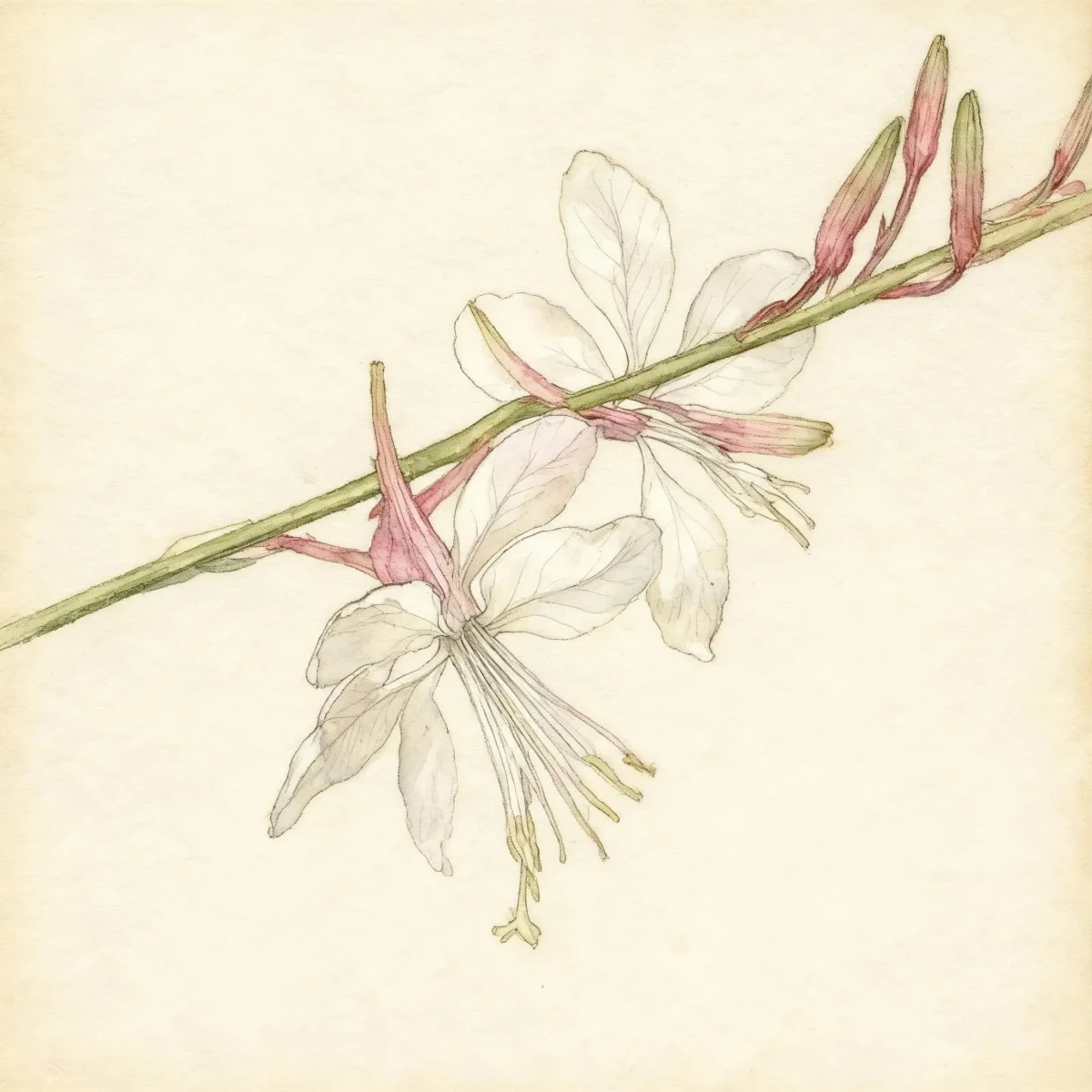
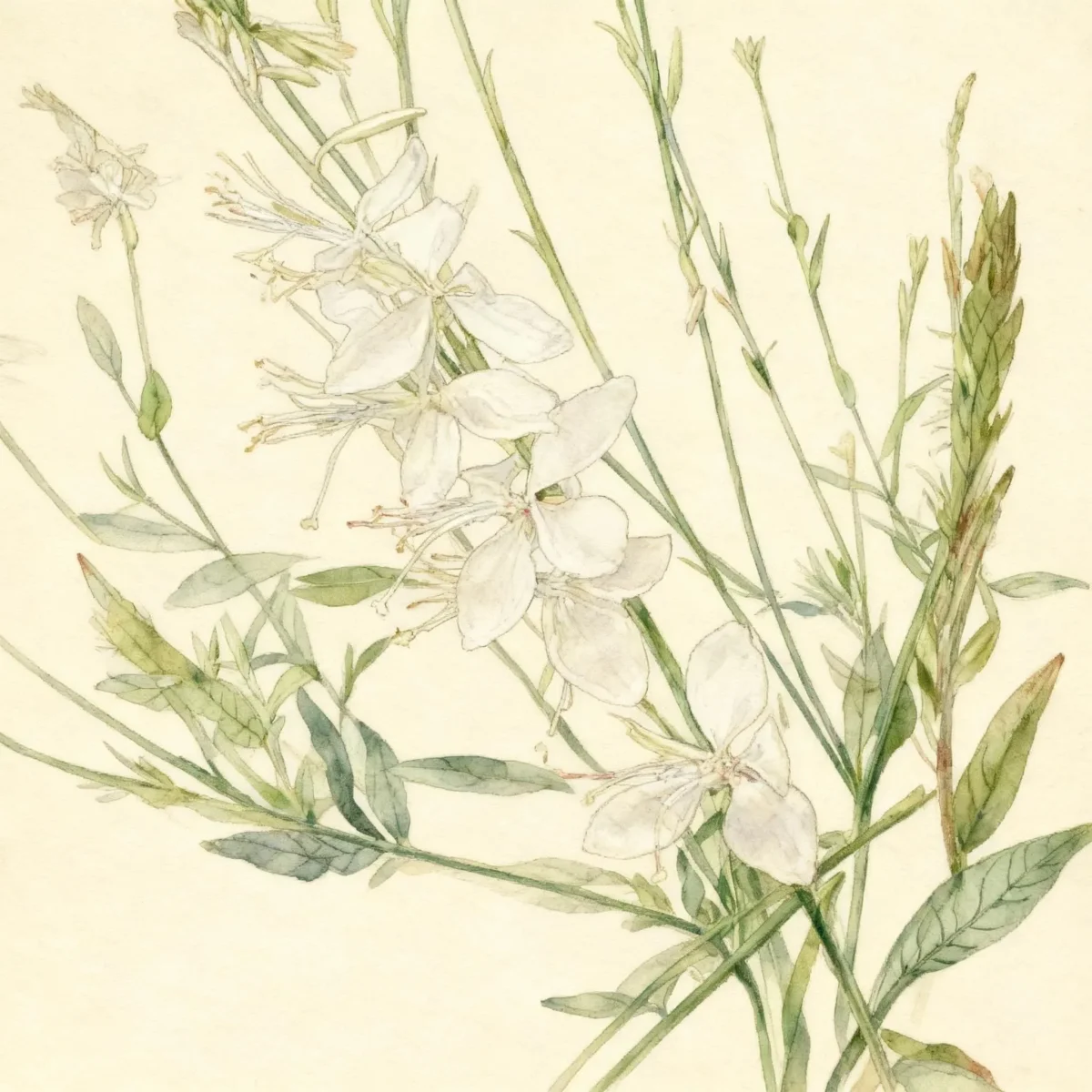
Gaura lindheimeri, commonly called gaura, is a herbaceous clump-forming perennial that is native to Texas and Louisiana. The cultivar ‘Whirling Butterflies’ stands out with arching red stems, pink flower buds, and 4-petaled snow white flowers (1” diameter) displayed in long, terminal, wand-like panicles above the foliage. Flowers open only a few at a time, dancing in the wind like butterflies, typically reaching 2-3’ tall and differing from the species by being more compact and floriferous.
Tolerances
Potential Problems
Be vigilant regarding soil conditions, as root rot is a significant risk if the soil retains too much moisture or suffers from poor drainage. Fungal issues like rust and powdery mildew can occasionally develop, often signaling high humidity or poor air circulation. Watch for sap-feeding insects such as aphids, whitefly, and flea beetles; address infestations early with insecticidal soap or horticultural oil. Taller structural support from adjacent plants may be necessary if the plant is grown in overly rich soil.
Frequently Asked Questions
What hardiness zones is Gaura lindheimeri ‘Whirling Butterflies’ suitable for?
This reliable herbaceous perennial is suitable for USDA Hardiness Zones 5 through 9, offering a broad planting range across many climates.
How large does Gaura grow?
Gaura lindheimeri ‘Whirling Butterflies’ typically matures to a height of 2 to 3 feet, with a corresponding spread of 2 to 3 feet.
What sun exposure does Gaura need?
This plant requires full sun exposure to maintain its best habits and achieve its longest bloom period throughout the season.
When does Gaura bloom?
You can expect continuous white blooms from this fine perennial from May all the way through September.
Conclusion
Gaura lindheimeri ‘Whirling Butterflies’ is an outstanding choice for gardeners seeking long-lasting, low-maintenance beauty that thrives in the heat. Its delicate yet durable structure ensures movement and light in the perennial border. Before planting, confirm your site provides the full sun and excellent drainage required for this spectacular Gaura cultivar to flourish.
Companion Planting
When designing a border around Gaura lindheimeri ‘Whirling Butterflies’, select companions that share its love for heat, sun, and lean soil conditions. Plants such as Russian Sage (Perovskia atriplicifolia) or Coneflowers (Echinacea species) provide contrasting textures and colors while sharing similar drought tolerance once established. Avoid rich, heavy soils, which can cause the Gaura to become floppy, so pair it with other Mediterranean or prairie-style plants.
Seasonal Care Calendar
For spring preparation, assess the plant health; if stems look weak, cut the overall height back by about one-half to encourage stronger new growth, remembering that this cultivar blooms on new stems. Summer care focuses primarily on observation; remove faded flower spikes to tidy the appearance, though deadheading is technically optional due to its sterile nature. During the fall, leave the dried stems standing, as they offer winter interest and protection, cutting them back only when preparing the garden beds for new growth the following spring.