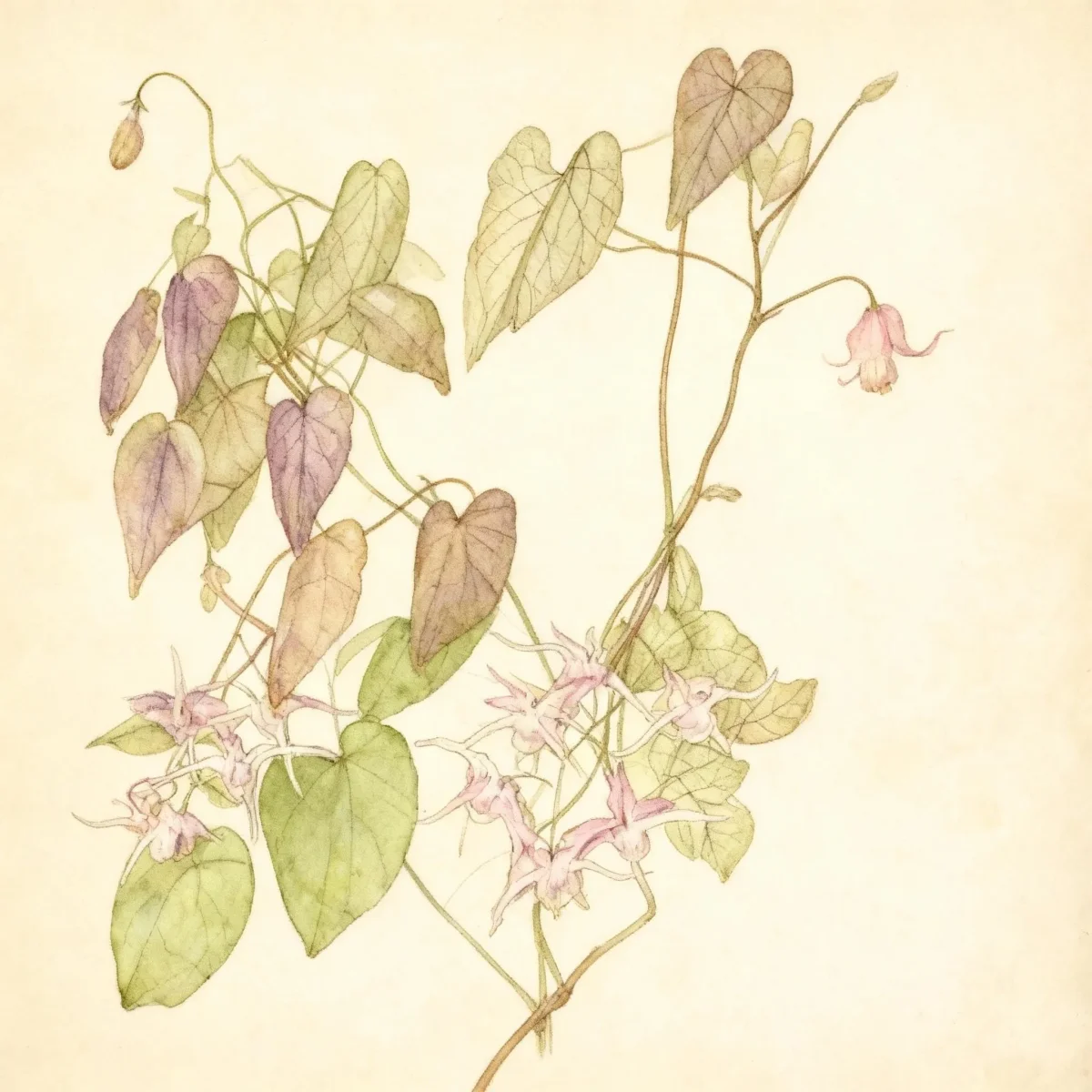
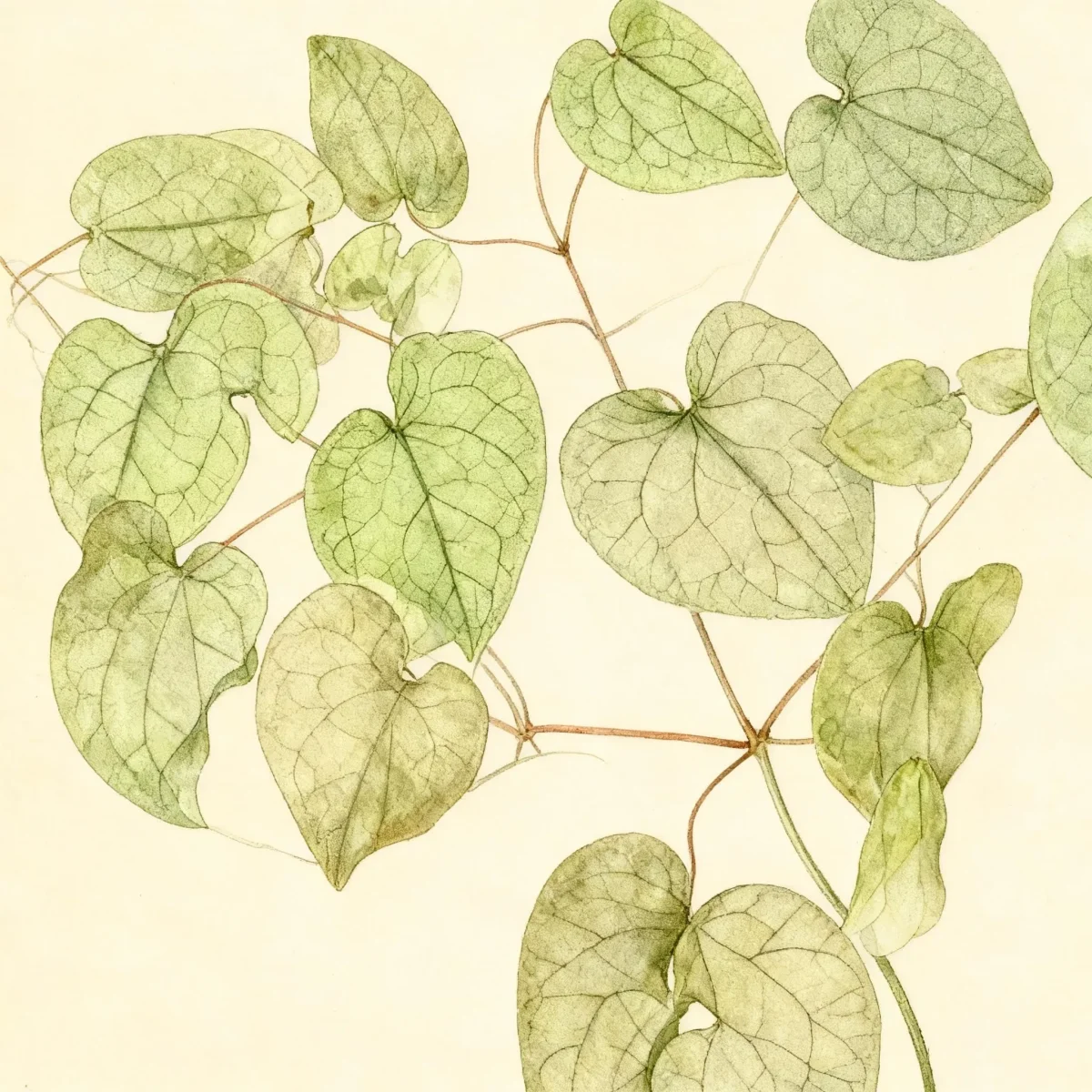
Bishop's hat (Epimedium × cantabrigiense)
Epimedium × cantabrigiense, Bishop's hat, is a resilient, low-maintenance perennial perfect for dry, shady landscapes.
Scroll down to discover growing tips, care requirements, companion plants, and more
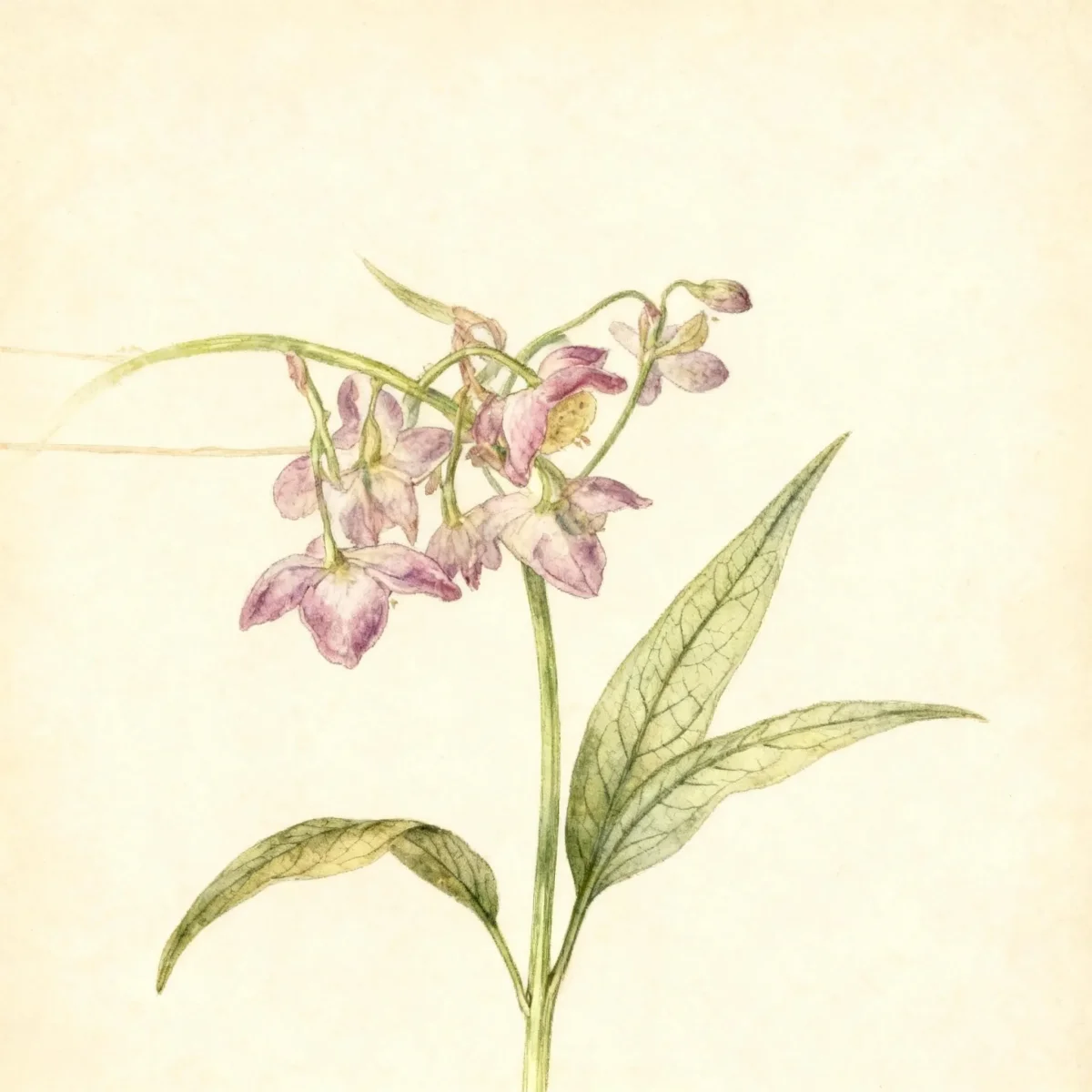
Complete Plant Information
Overview
Epimedium × cantabrigiense, commonly known as Bishop’s hat, is an invaluable, rhizomatous perennial highly prized for its resilience in difficult, shaded environments. This popular garden hybrid forms dense, attractive mounds of glossy, compound foliage that transitions beautifully through the seasons, starting copper-tinted in spring and finishing bronze in the fall. When planted for groundcover, Epimedium × cantabrigiense provides excellent coverage, suppressing weeds while offering delicate yellow flowers tinged with pink in early to mid-spring. Its ability to thrive in dry, established shade makes Bishop’s hat a near-perfect, low-maintenance solution for woodland borders and under mature trees.
Fast Facts
- Plant Family: Berberidaceae
- Plant Type: Herbaceous perennial
- Native Range: Garden origin
- Hardiness Zones: USDA Zones 4-9
- Size at Maturity:
- Height: 1-2 ft
- Spread: 2-3 ft
- Bloom Time: April to May
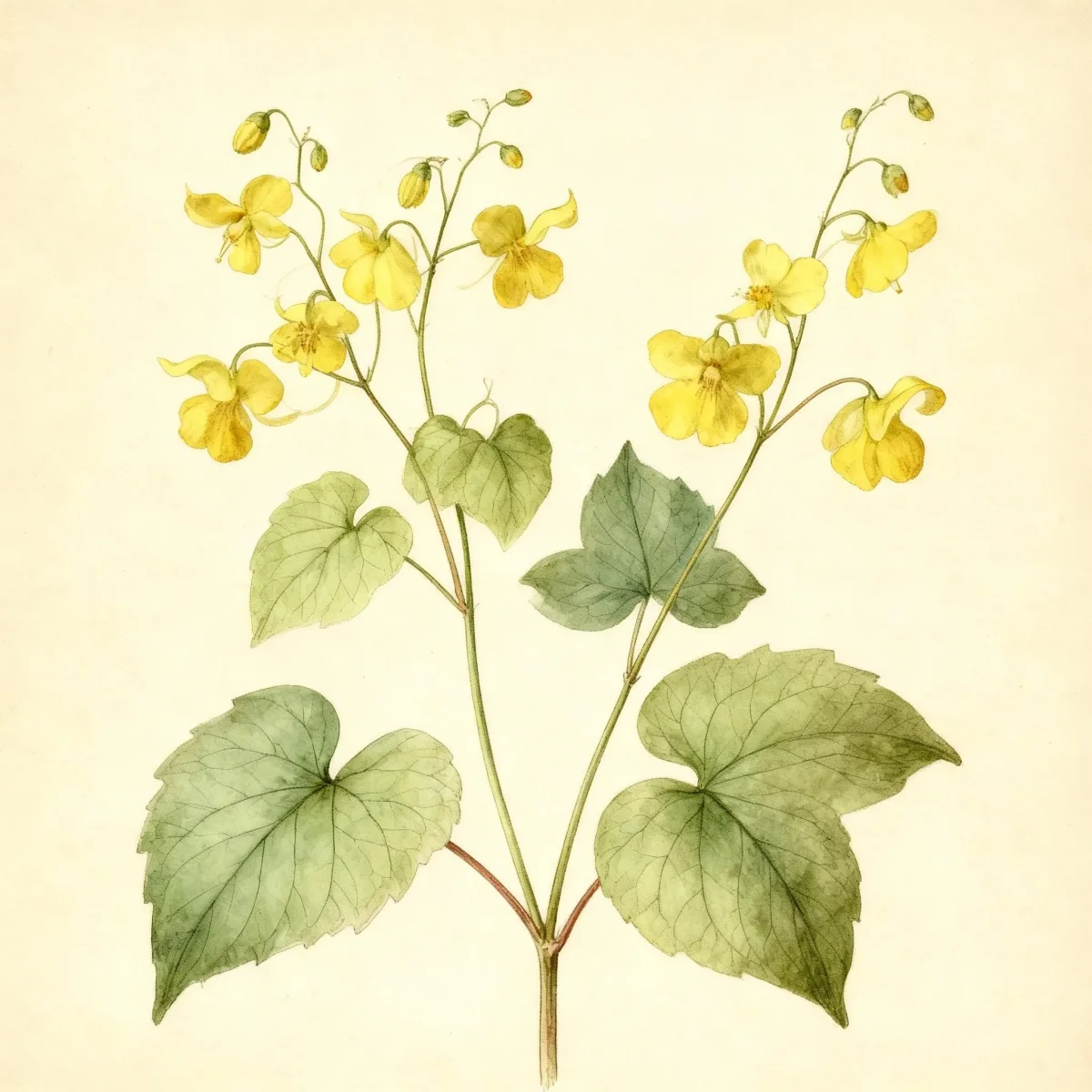
- Bloom Description: Yellow with pink tinge
- Sun Exposure: Part shade to full shade
- Water Needs: Dry to medium
- Maintenance Level: Low
How to Grow
The best time to establish Bishop’s hat is typically in spring or fall when conditions are cooler and moisture is more readily available. Epimedium × cantabrigiense thrives in average, well-drained soils, though it prefers moisture-retentive and organically rich loams when possible. Ensure planting sites are prepared to receive part shade to full shade. When using this plant as a ground cover, space starter plants approximately 12 inches apart to encourage rapid coverage as they spread.
Care for established clumps is minimal. This species tolerates significant drought once its root system is developed, fitting perfectly into locations specified as dry shade. While supplemental watering is rarely needed during summer, consistent medium moisture will ensure robust leaf coverage. Fertilizer is generally unnecessary, as excessive richness can sometimes encourage too much leaf growth at the expense of spring blooms.
Pruning is generally light. Because the foliage is evergreen to semi-evergreen, a tidy-up can be performed annually. Gardeners in regions like the St. Louis area find that cutting back all the foliage in early spring before new growth emerges keeps the plant looking its sharpest and makes the fine early flowers more visible.
Landscape Uses
The primary strength of Epimedium × cantabrigiense lies in its function as a superb, durable ground cover for shady areas. It is particularly recommended for tough spots, establishing well even in dry shade where many other perennials fail. Mass plantings of Bishop’s hat create a cohesive, textural tapestry in woodland gardens or naturalized areas, linking the base of larger trees cleanly.
Beyond mass planting, this perennial works effectively along border fronts, softening the edges of foundations, or integrating into partly shaded rock gardens. The sturdy, spreading habit of Epimedium × cantabrigiense also makes it useful as a natural edging material along winding paths and walkways, providing consistent structure year-round.
Standout Features
Flower Qualities
- Showy
Noteworthy Characteristics
Epimedium × cantabrigiense is a handsome hybrid cross originating from E. Alpinum and E. Pubigerum, first identified in 1950 in Cambridge, England. This rhizomatous perennial develops dense, spreading mounds defined by glossy, compound leaves that offer seasonal color shifts from copper to bronze. Rising above the attractive foliage during April and May, delicate, spurless yellow flowers with subtle pink tinges present a lovely spring display before the plant settles into its role as a reliable shade groundcover.
Tolerances
- Rabbit
- Deer
- Drought
- Heavy Shade
- Erosion
- Dry Soil
- Shallow-Rocky Soil
Potential Problems
Potential issues are usually minor, focusing mainly on pests and disease pressure. Gardeners should watch for sporadic outbreaks of aphids on new growth, which can usually be managed with a strong spray of water or insecticidal soap if necessary. The most significant concern for members of the Epimedium genus is the potential spread of mosaic virus, which manifests in mottled or distorted foliage; infected plants should be removed promptly to prevent transmission.
Frequently Asked Questions
What hardiness zones is Bishop’s hat suitable for?
Epimedium × cantabrigiense, or Bishop’s hat, is hardy and adaptable across USDA Zones 4 through 9, offering reliable performance across a wide climatic range.
How large does Epimedium × cantabrigiense grow?
This perennial typically reaches a mature height between 1 and 2 feet, spreading to cover an area between 2 and 3 feet wide, forming a dense architectural clump.
What sun exposure does Bishop’s hat need?
The optimal placement for Epimedium × cantabrigiense is in areas receiving part shade to full shade, thriving where direct afternoon sun is limited.
When does Bishop’s hat bloom?
This variety flowers reliably in the spring, usually throughout April and May, showcasing its charming yellow flowers with a slight pink tinge.
Conclusion
Bishop’s hat (Epimedium × cantabrigiense) offers gardeners an exceptional combination of beauty and resilience, excelling where challenging dry shade persists. Its low maintenance demands, year-round foliage interest, and early spring blooms make it a foundational plant for shaded landscapes. Assess your garden’s dimmer corners and plan to incorporate Epimedium × cantabrigiense this coming planting season to take advantage of its drought tolerance and superb ground-covering ability.
Companion Planting
Given the preference of Epimedium × cantabrigiense for dry to medium moisture and heavy shade, successful companion plants should share these cultural needs. Consider pairing it with hardy shade lovers such as Hosta varieties known for tolerance to drier conditions, or contrasting ferns like Japanese Painted Ferns (Athyrium niponicum) for textural variety. For evergreen structure beneath deciduous trees, low-growing evergreens like Pachysandra terminalis or selected Ajuga reptans (Bugleweed) make excellent partners that will not compete aggressively with the Bishop’s hat roots.
Propagation Tips
Epimedium × cantabrigiense spreads slowly via underground rhizomes, making division the simplest and most reliable method for propagation. The best time to divide these clumps is in early spring just as new growth is starting, or in early fall. Carefully dig up sections of the clump, ensuring each division retains several healthy roots and growing buds. Planting these divisions immediately into the prepared soil at the same depth they were growing previously helps ensure a quick re-establishment. Mature clumps can tolerate minor root disturbance, making this a low-stress task for established plants.