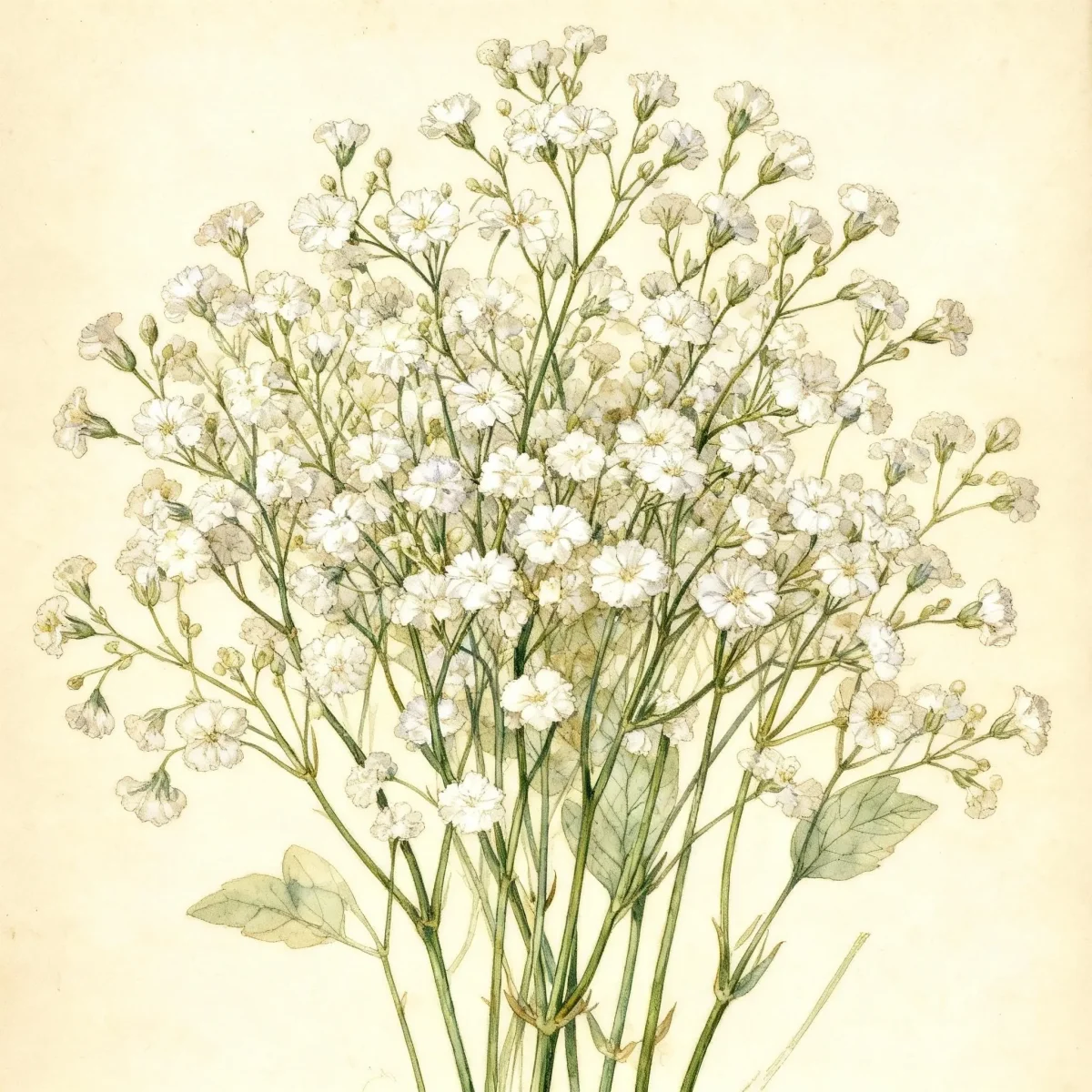
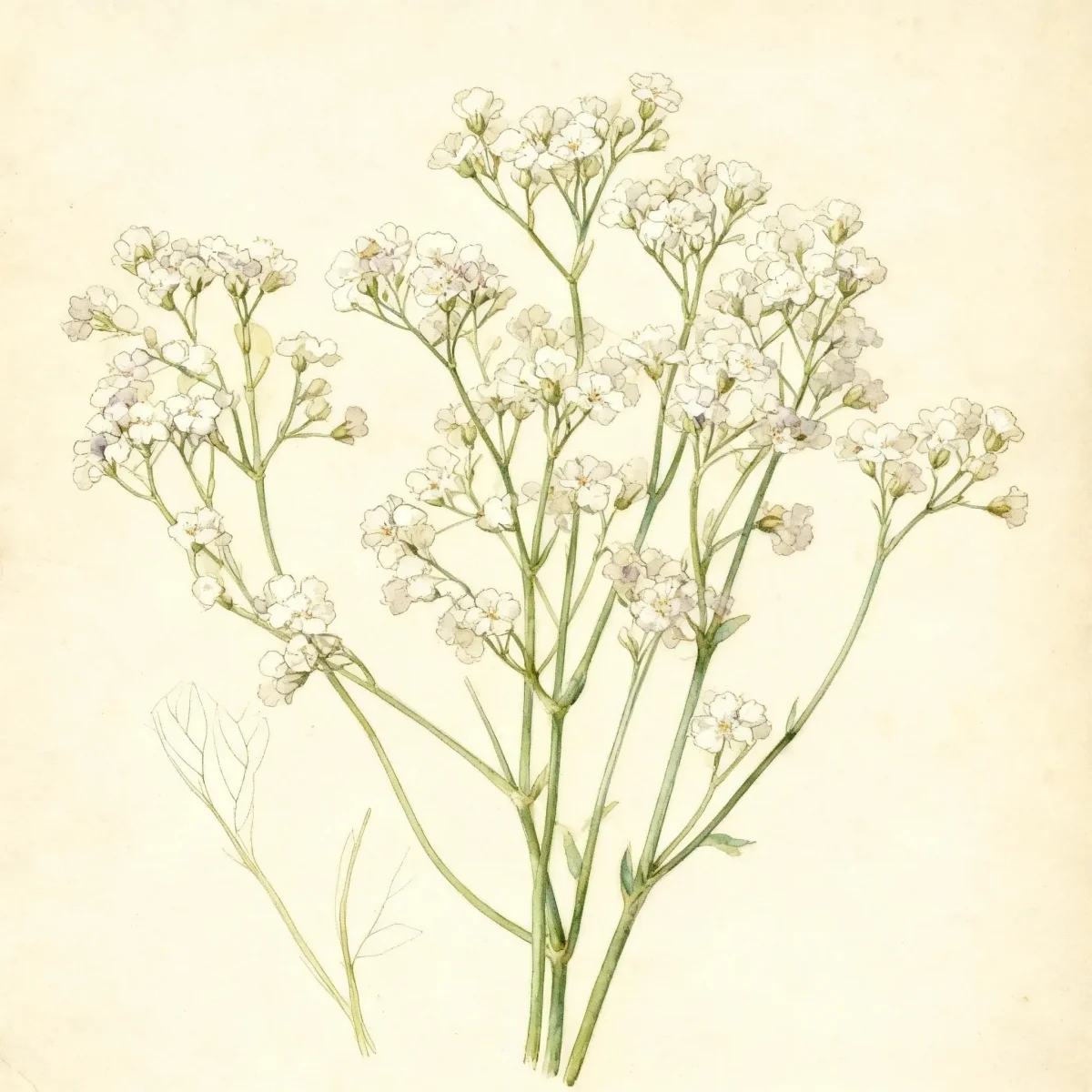
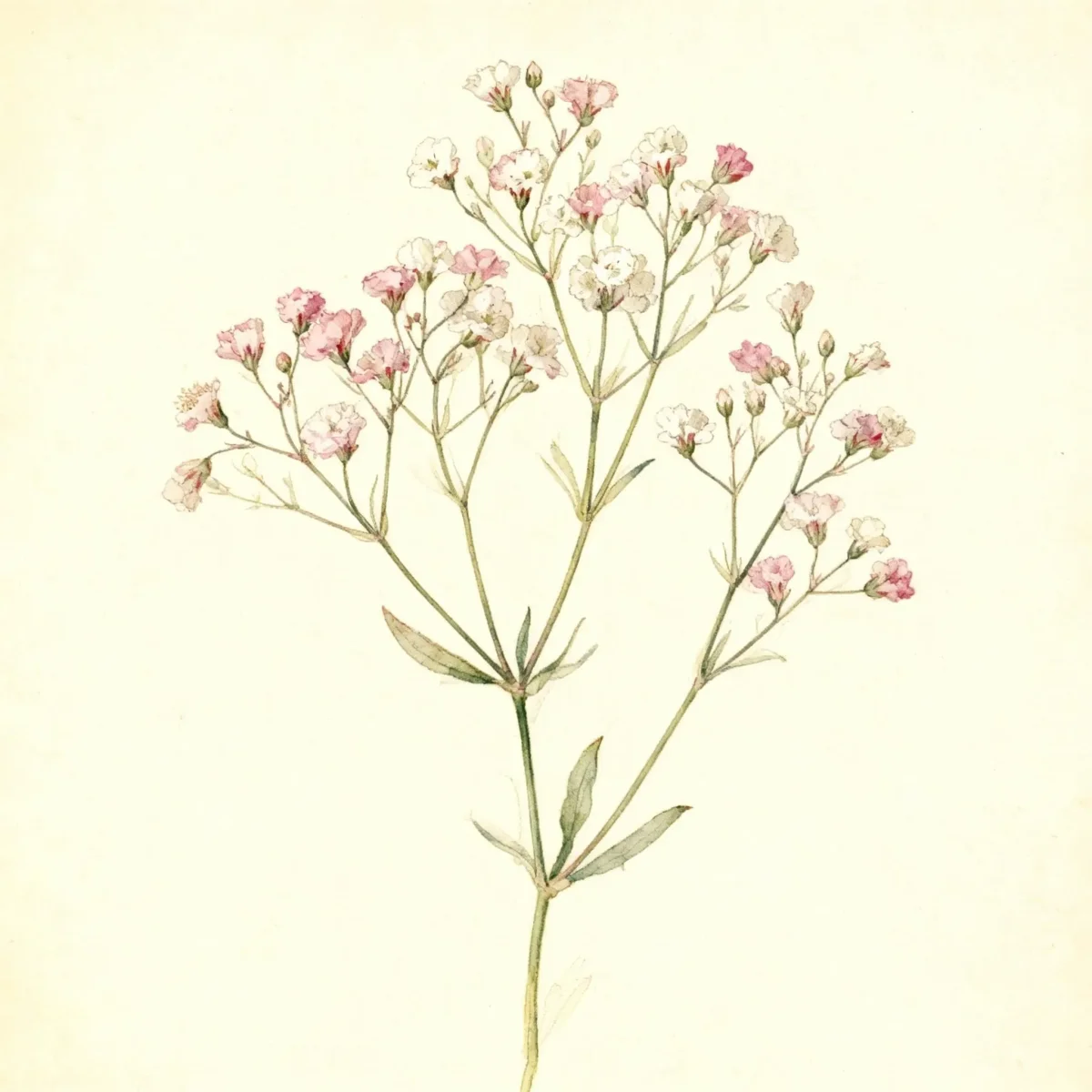
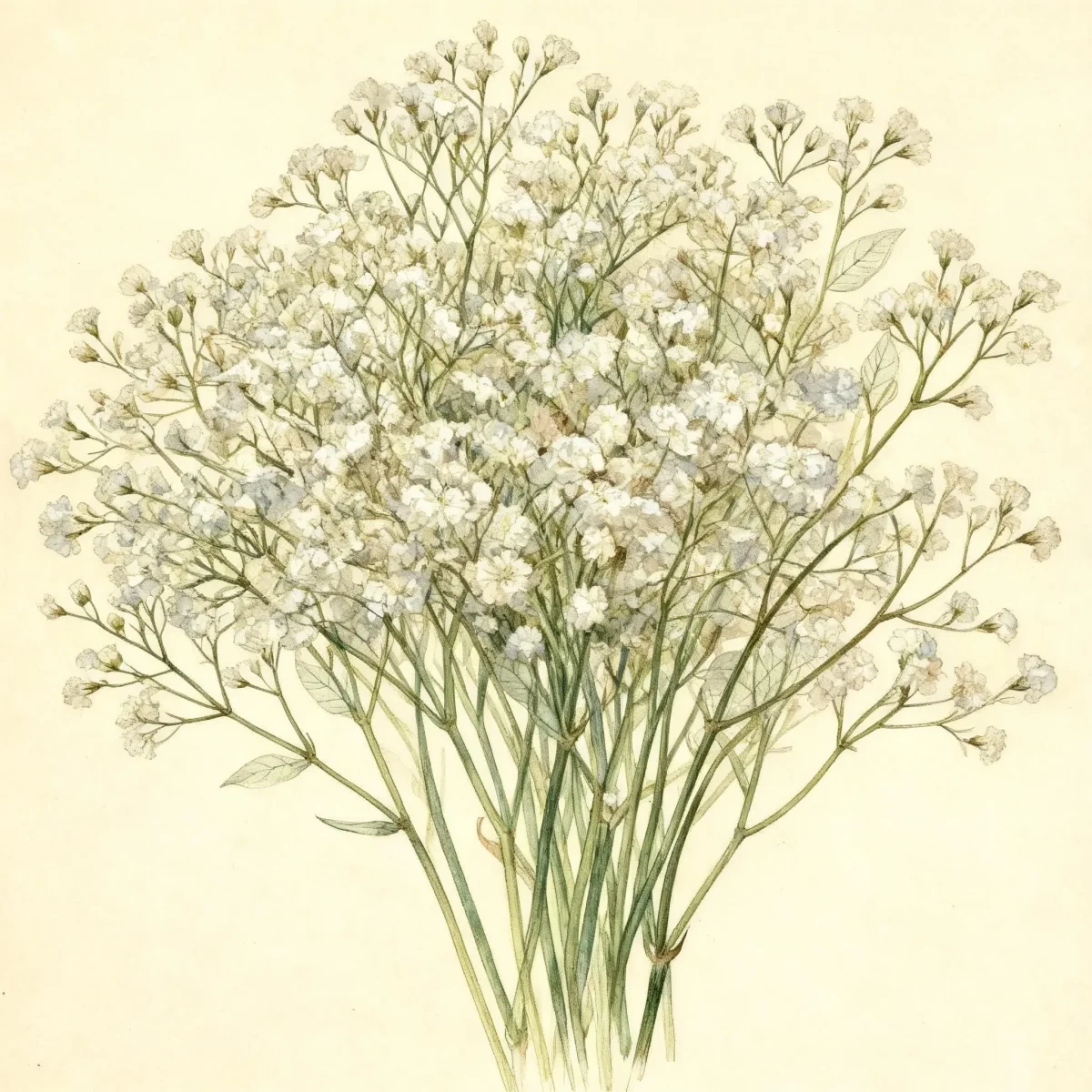
Baby's breath (Gypsophila paniculata 'Bristol Fairy')
Gypsophila paniculata 'Bristol Fairy' (Baby's breath) offers airy, double white summer blooms ideal for cutting. A medium-maintenance perennial for sunny, dry spots.
Scroll down to discover growing tips, care requirements, companion plants, and more
Complete Plant Information
Overview
Gypsophila paniculata ‘Bristol Fairy’, commonly known as Baby’s breath, is prized by gardeners and floral designers alike for its voluminous cloud of tiny, pure white flowers that cover the plant from summer into fall. This cultivar boasts semi-double blooms, lending it a slightly fuller appearance than the straight species, while maintaining the classic airy texture that defines Baby’s breath compositions. Mature plants form elegant, mounding shapes, providing soft contrast against bolder foliage plants in the border.
As a herbaceous perennial, Gypsophila paniculata ‘Bristol Fairy’ requires full sun and well-drained conditions to thrive. Its cultural requirements favor soils that are on the drier side and slightly alkaline, reflecting its native meadow origins. Successfully growing this plant hinges on respecting its dislike for wet feet and avoiding root disturbance once it establishes its crucial taproot structure.
The aesthetic value of Baby’s breath lies in its versatility. It excels as a subtle textural element in perennial borders, yet its primary fame comes from its use as a filler in fresh and dried floral arrangements. Incorporating Gypsophila paniculata ‘Bristol Fairy’ brings lightness and brightness to any sunny garden bed where proper drainage is assured.
Fast Facts
- Plant Family: Caryophyllaceae
- Plant Type: Herbaceous perennial
- Hardiness Zones: USDA Zones 3-9
- Size at Maturity:
- Height: 2-3 ft
- Spread: 2-3 ft
- Bloom Time: April to August
- Bloom Description: White
- Sun Exposure: Full sun
- Water Needs: Dry
- Maintenance Level: Medium
How to Grow
To ensure success with Gypsophila paniculata ‘Bristol Fairy’, select a planting site that receives full sun throughout the day. The most critical requirement is excellent soil drainage; this plant absolutely cannot tolerate soggy or waterlogged conditions, which can lead to winter rot. When preparing the soil, test the pH; true Baby’s breath prefers slightly alkaline conditions (pH 7.3-7.5). If your soil is acidic, incorporate lime generously to reach a neutral to moderately alkaline range (7.0-8.0).
Established plants require minimal supplemental watering due to their tolerance for dry conditions and drought once established. Fertilization is generally unnecessary, especially in soils already on the alkaline side. The primary care task involves pruning after the main bloom flush in summer. Cutting back or shearing the stems promotes a fresh flush of smaller blooms, extending the season of color for your Gypsophila paniculata ‘Bristol Fairy’.
Avoid transplanting or disturbing the mature root system of Baby’s breath whenever possible, as established plants do not handle root disturbance well. In late fall or early spring, ensure old stems are trimmed down to encourage vigorous new growth. Because these plants may struggle surviving winter in persistently wet, poorly drained soils, ensuring winter dryness is key to their longevity in colder zones.
Landscape Uses
Gypsophila paniculata ‘Bristol Fairy’ functions brilliantly as a dynamic textural element within the traditional perennial border. Its fine, white spray contrasts beautifully against plants with dark foliage or bold, solid flower forms, such as dark-leafed peonies or deep purple Salvias. This mounding plant is perfect used as a summer filler, strategically placed to mask the fading foliage of early spring bulbs or summer perennials that are finishing their season.
The airy sprays of Baby’s breath flowers are indispensable in creating informal European-style cottage gardens. They pair well with taller vertical elements like ornamental grasses or spiking flowers like Veronica, softening their hard lines. While the plant itself thrives in open, sunny borders, its cut stems are frequently used in bouquets to add volume and lightness.
Standout Features
Flower Qualities
- Showy
- Good Cut
- Good Dried
Noteworthy Characteristics
Gypsophila paniculata, commonly called baby’s breath, is a herbaceous, taprooted perennial native to meadow steppes and woodland margins in Eurasia, thriving on calcareous or sandy soils. The cultivar ‘Bristol Fairy’ is recognized for its dense, mounding habit and profusion of long-lasting, double white flowers (about 1/4” wide) held on wiry stems throughout summer. The genus name itself speaks to its preferred habitat, combining Greek words for gypsum and friendship, referencing the calcium-rich soils it favors.
Tolerances
- Drought
- Dry Soil
Potential Problems
Plants labeled as Baby’s breath may occasionally show susceptibility to fungal issues like botrytis or viral infections such as aster yellows. To mitigate fungal risk, ensure the superior drainage mentioned in the cultural requirements, as damp foliage invites problems. Because the stems can become top-heavy when completely covered in blooms, some gardeners find that staking or providing support prevents the plant from flopping over by mid-summer. Gardeners must also be aware that Gypsophila paniculata has escaped cultivation in various regions globally, so check local invasive species lists before planting. Deer generally find this plant unappetizing, offering a degree of pest resistance.
Frequently Asked Questions
What hardiness zones is Baby’s breath suitable for?
This perennial is quite hardy, thriving in USDA Zones 3 through 9, provided it has full sun and excellent drainage.
How large does Gypsophila paniculata ‘Bristol Fairy’ grow?
Gypsophila paniculata ‘Bristol Fairy’ typically reaches a height and spread between 2 and 3 feet, forming a rounded, airy mound.
What sun exposure does Gypsophila paniculata ‘Bristol Fairy’ need?
This plant requires full sun exposure to produce dense flower coverage and maintain a sturdy, upright habit.
When does Baby’s breath bloom?
Baby’s breath exhibits its primary blooming period from April through August, showcasing masses of distinctive white flowers.
Conclusion
The enduring popularity of Gypsophila paniculata ‘Bristol Fairy’ rests on its ability to provide unparalleled airy texture and exceptional value as a long-lasting cut flower in true white. This reliable, medium-maintenance perennial thrives when given its preferred full sun and dry, well-drained, slightly alkaline soil conditions. Before planting, confirm that your intended location aligns with USDA Zones 3-9 and plan for ample sunlight to best showcase the magnificent cloud of Baby’s breath.
Companion Planting
Selecting appropriate companions helps maximize the visual appeal and cultural synchronization of your garden beds. Since Gypsophila paniculata ‘Bristol Fairy’ requires dry soil and full sun, pair it with other drought-tolerant companions that share similar light needs. Good choices include lavender (Lavandula), most varieties of Salvia, Coneflowers (Echinacea), and Yarrow (Achillea). These partners will absorb summer moisture without overburdening the soil, ensuring the Baby’s breath remains healthy through July and August.
Design Ideas for Airy Texture
Utilizing Gypsophila paniculata ‘Bristol Fairy’ effectively in landscape design often involves placing it where its delicate nature can soften harder architectural elements or dense plantings. Planting it in drifts near the edge of a pathway allows its misty blooms to spill slightly over the edge, blurring the line between the hardscape and the soft planting area. When used near structural evergreens or dark green hedges, the pure white flowers of this Baby’s breath cultivar create a high-contrast, luminous focal point, especially effective in evening light.