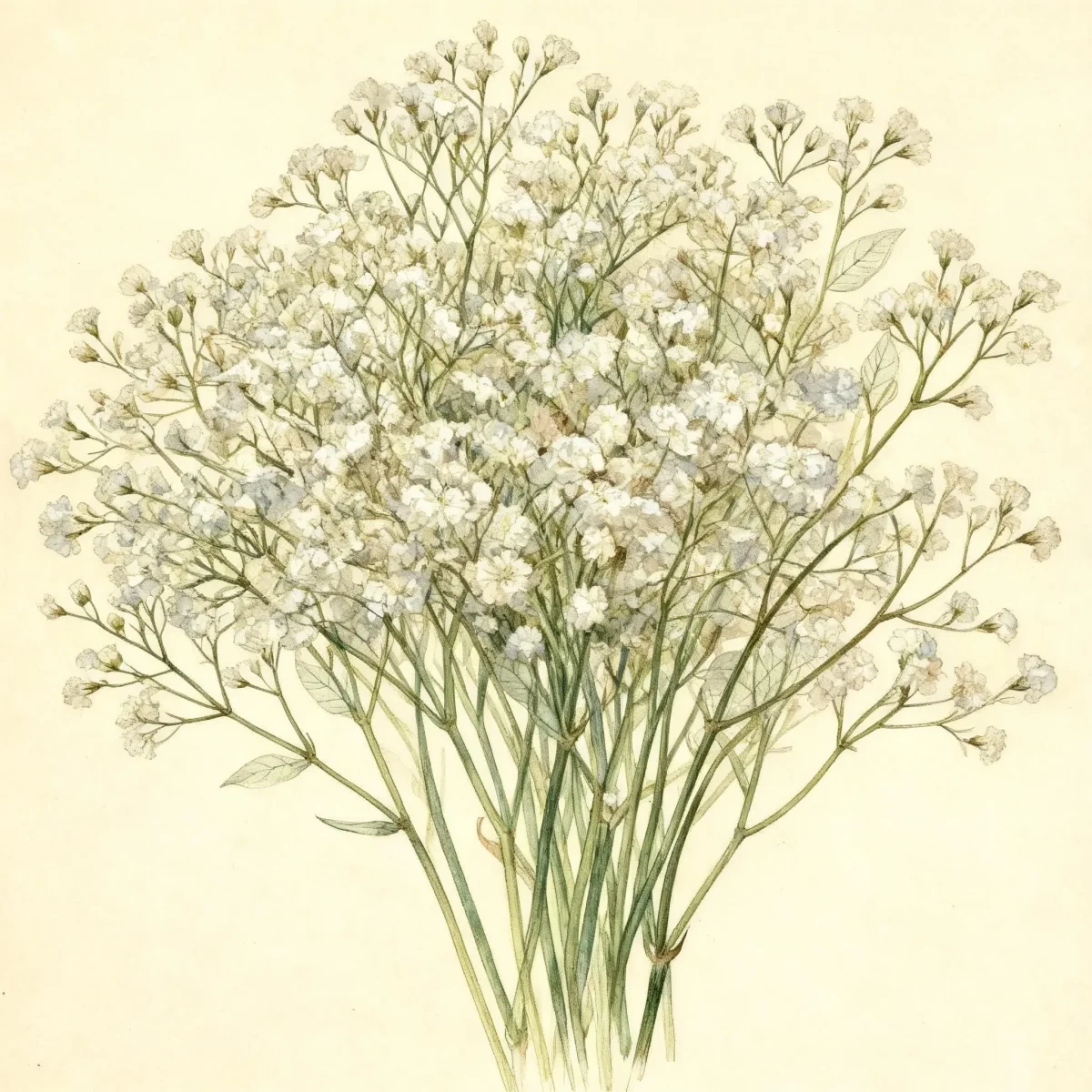
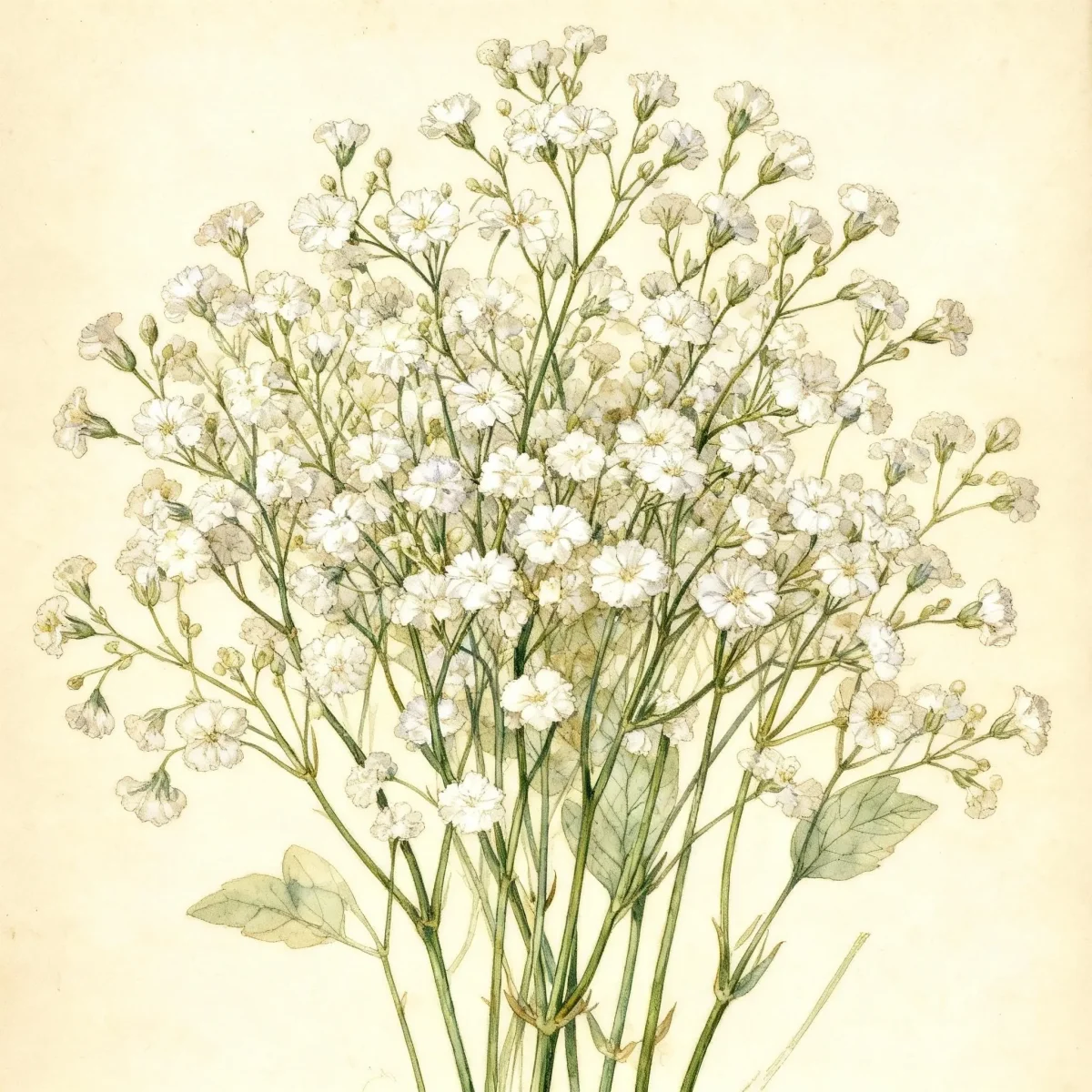
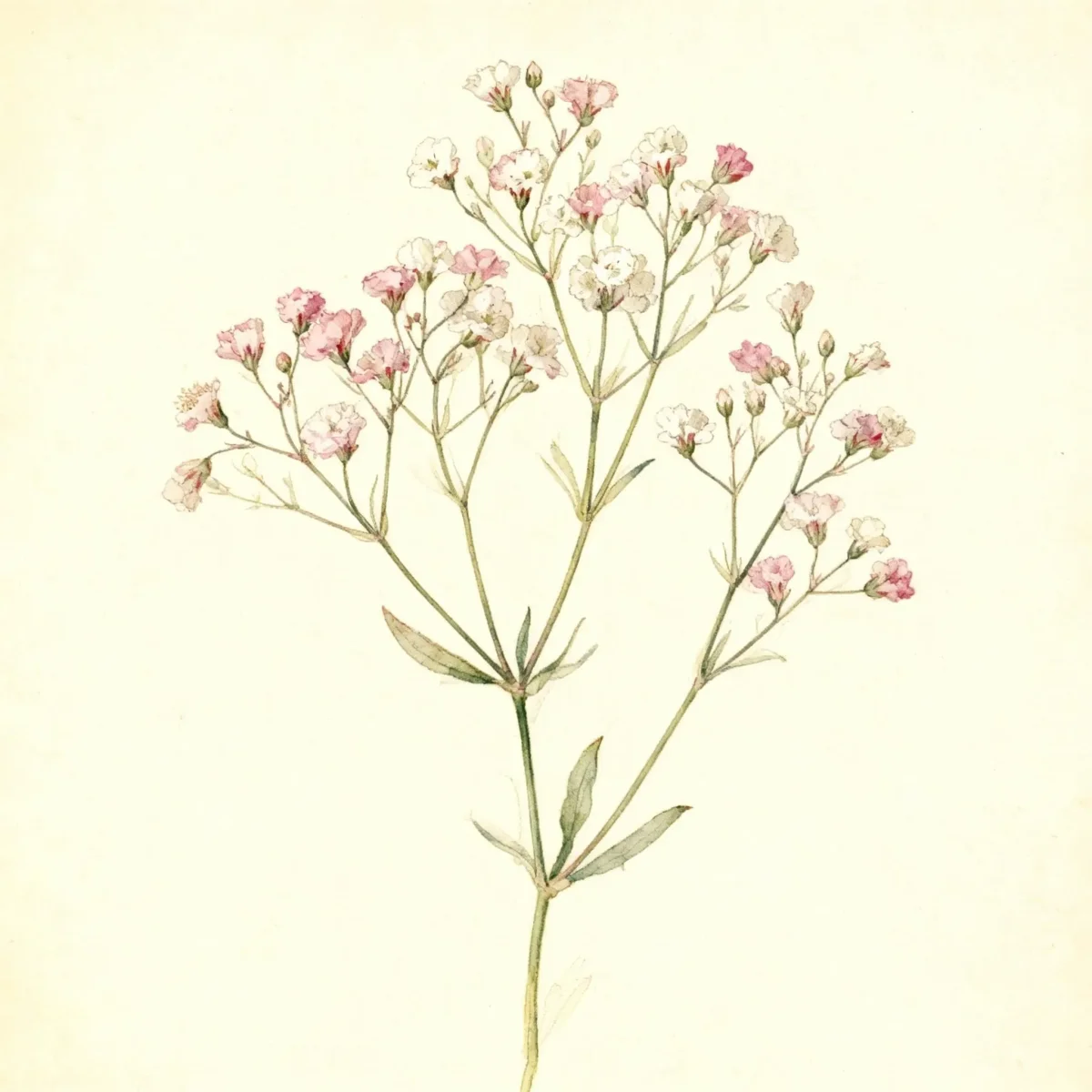
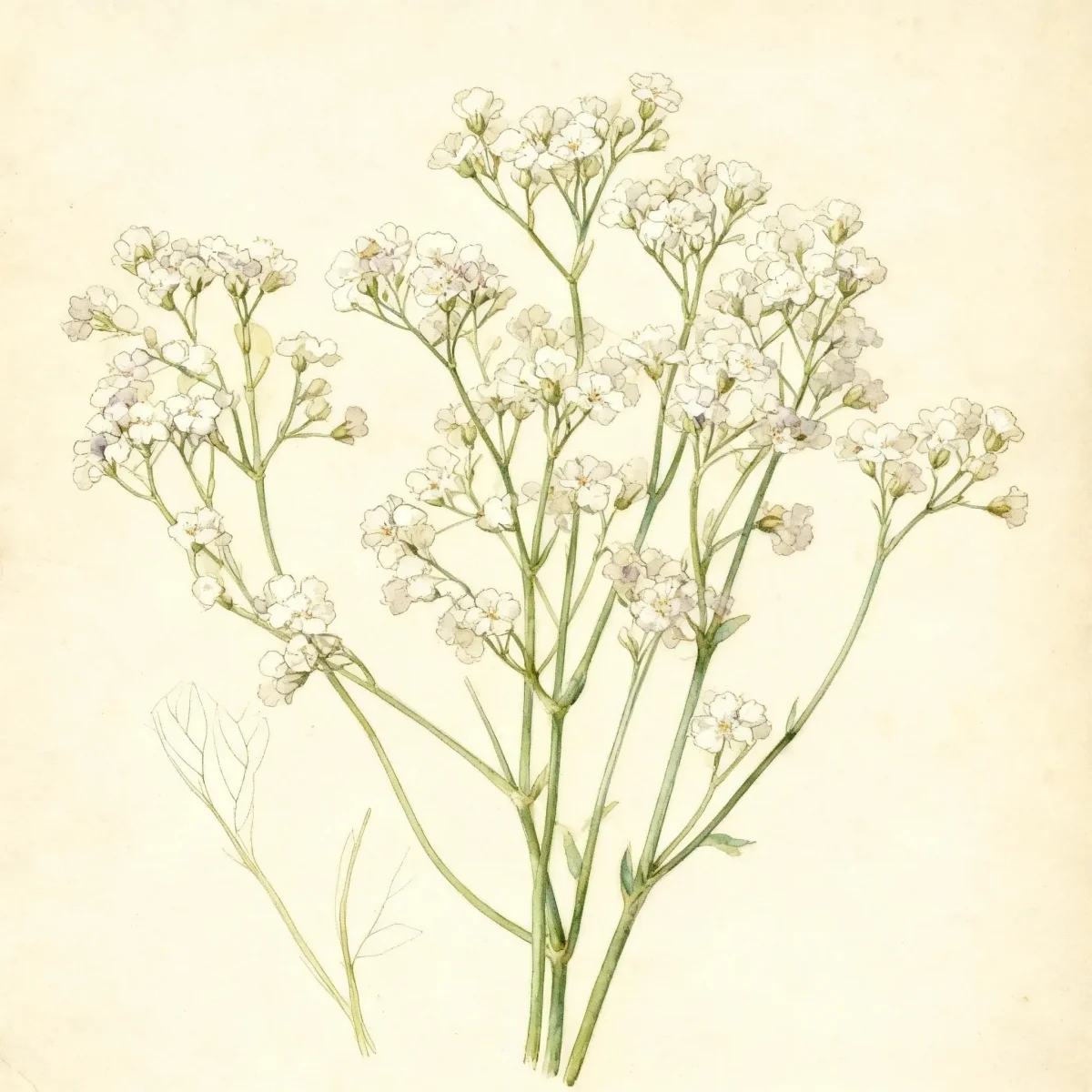
Baby's breath (Gypsophila paniculata 'Compacta Plena')
Grow perfect, airy clouds with Gypsophila paniculata 'Compacta Plena' (Baby's breath). This herbaceous perennial boasts double white flowers, excellent drought tolerance, and suits full sun gardens.
Scroll down to discover growing tips, care requirements, companion plants, and more
Complete Plant Information
Overview
Gypsophila paniculata ‘Compacta Plena’, commonly known as Baby’s breath, is prized by florists and gardeners alike for its incredibly light, airy texture that contrasts beautifully with bolder blooms. This cultivar offers dense branching, forming a perfect mound sprinkled with numerous small, double white flowers throughout the season. As a durable herbaceous perennial, it thrives in sunny, drier conditions where other plants might struggle.
The robust nature of the species, combined with the compact habit of ‘Compacta Plena’, makes it an excellent low-maintenance addition to sunny perennial borders. Its long vase life ensures that the beauty provided by plants like Gypsophila paniculata ‘Compacta Plena’ isn’t limited to the garden space alone.
This variety is especially valuable for filling gaps between emerging spring bulbs or providing a soft haze against structured plantings. Whether dried for winter everlasting displays or used fresh, Baby’s breath fulfills its role beautifully.
Fast Facts
- Plant Family: Caryophyllaceae
- Plant Type: Herbaceous perennial
- Hardiness Zones: USDA Zones 3-9
- Size at Maturity:
- Height: 1-1.5 ft
- Spread: 1-1.5 ft
- Bloom Time: April to August
- Bloom Description: White
- Sun Exposure: Full sun
- Water Needs: Dry
- Maintenance Level: Medium
How to Grow
To ensure success with Gypsophila paniculata ‘Compacta Plena’, plant it in the spring or fall in locations receiving full sun throughout the day. The key to establishment is excellent drainage; this plant absolutely cannot tolerate wet feet, especially over winter. It naturally prefers slightly alkaline soils (pH 7.3-7.5), so if your native soil is acidic, amend it generously with lime to raise the pH into the acceptable 7.0-8.0 range before planting.
Watering should be minimal once established, as this Baby’s breath exhibits high drought tolerance. Avoid overhead watering if possible, focusing moisture at the base only during prolonged dry spells. Fertilization is generally unnecessary, as rich soil can encourage leggy, weak growth.
Maintenance for Gypsophila paniculata ‘Compacta Plena’ is straightforward but crucial for reblooming. After the primary flush of flowers subsides, shear back or cut the stems to encourage a secondary burst of blooms later in the season. Be extremely cautious around the root zone; this perennial develops a taproot early on and strongly resents root disturbance or transplanting once it has settled in its location.
Landscape Uses
Baby’s breath is exceptionally versatile, providing unparalleled airy texture wherever it is placed. It serves as a beautiful contrast to the strong forms of plants like coreopsis or salvia in the perennial border, softening hard lines. Because the foliage can thin out as the season progresses, consider planting Gypsophila paniculata ‘Compacta Plena’ as a summer filler, positioned to mask the dying foliage of early spring bloomers.
Its most famous application remains in cut flower production. Sprays of the delicate white bloom are integral components in bouquets, arrangements, and wedding décor, offering that classic, cloud-like filler effect. For dried arrangements, the stems cure beautifully, retaining their structure and color for months.
The mounding habit of the ‘Compacta Plena’ cultivar makes it useful near the edge of a border where a low, softening element is desired without obscuring shorter neighbors. Its preference for dry, sunny spots also makes it suitable for xeriscaped areas or rock gardens where moisture retention is low.
Standout Features
Flower Qualities
- Showy
- Good Cut
- Good Dried
Noteworthy Characteristics
Gypsophila paniculata, commonly called baby’s breath, is a herbaceous, taprooted perennial native to meadow steppes, woodland margins, and other open habitats on calcareous or sandy soils in Eurasia. ‘Compacta Plena’ is a compact, diffusely branched, mound-forming cultivar that only grows 15-18” tall, featuring numerous, long-lasting, double white flowers in open, airy panicles on wiry, jointed stems during summer. The genus name references the plant’s affinity for gypsum (calcareous soils), although soil alkalinity must be actively managed using liming agents rather than gypsum to adjust pH levels properly.
Tolerances
- Drought
- Dry Soil
Potential Problems
While tough, Gypsophila paniculata ‘Compacta Plena’ does face a few potential issues. Be vigilant for signs of fungal diseases like botrytis, especially in damp, humid weather, and watch for aster yellows transmitted by leafhoppers. Due to its preference for dry soil, it is generally avoided by deer.
The biggest cultural pitfall involves soil moisture and drainage; wet, poorly drained soils are fatal during winter dormancy. Furthermore, if you are planting in regions where this species has naturalized, check local horticultural guidelines regarding its invasive potential outside of your immediate garden area. For this specific compact cultivar, staking is usually unnecessary, offering more structural reliability than taller Baby’s breath types.
Frequently Asked Questions
What hardiness zones is Baby’s breath suitable for?
Gypsophila paniculata ‘Compacta Plena’ is robustly cold-hardy, thriving in USDA Zones 3 through 9.
How large does Baby’s breath grow?
This compact cultivar typically reaches a height and spread between 1 and 1.5 feet tall and wide, making it manageable for foreground planting.
What sun exposure does Baby’s breath need?
This plant requires full sun exposure to flower abundantly and maintain its compact, desired shape.
When does Baby’s breath bloom?
You can anticipate white blooms on Gypsophila paniculata ‘Compacta Plena’ from April all the way through August, offering a long season of interest.
Conclusion
For dependable, wispy texture in the hottest, driest parts of your sunny border, few perennials perform as reliably as Gypsophila paniculata ‘Compacta Plena’. Its double white flowers are ideal for cutting and drying, ensuring its ethereal beauty lasts beyond the growing season. Before planting, confirm your soil is fully drained and consider adding lime if necessary to ensure your Baby’s breath establishment is both happy and enduring.
Companion Planting
When designing a border around your Gypsophila paniculata ‘Compacta Plena’, select companions that mirror its cultural needs: full sun and dry to average soil tolerance. Plants like Lavender (Lavandula spp.), Sedum, Yarrow (Achillea), and certain Russian Sages (Perovskia) thrive under similar conditions and offer wonderfully contrasting textures and colors against the fine white haze of the Baby’s breath. Avoid heavy feeders or moisture-loving plants, as cultural mismatch is the quickest way to compromise the health of this taprooted perennial.
Seasonal Care Calendar
Spring care should focus on cutting back any old, dead stems from the previous year once new growth appears. If your soil pH is low, this is the ideal time to incorporate lime to prepare for the growing season as the plant establishes its preferred slightly alkaline environment. Summer maintenance involves monitoring for deadheading; shearing faded flowers back after the initial massive bloom will revitalize the Gypsy with a fresh set of basal shoots for later flowering. During late summer or early fall, ensure any dried stems intended for cutting are harvested before they become brittle.