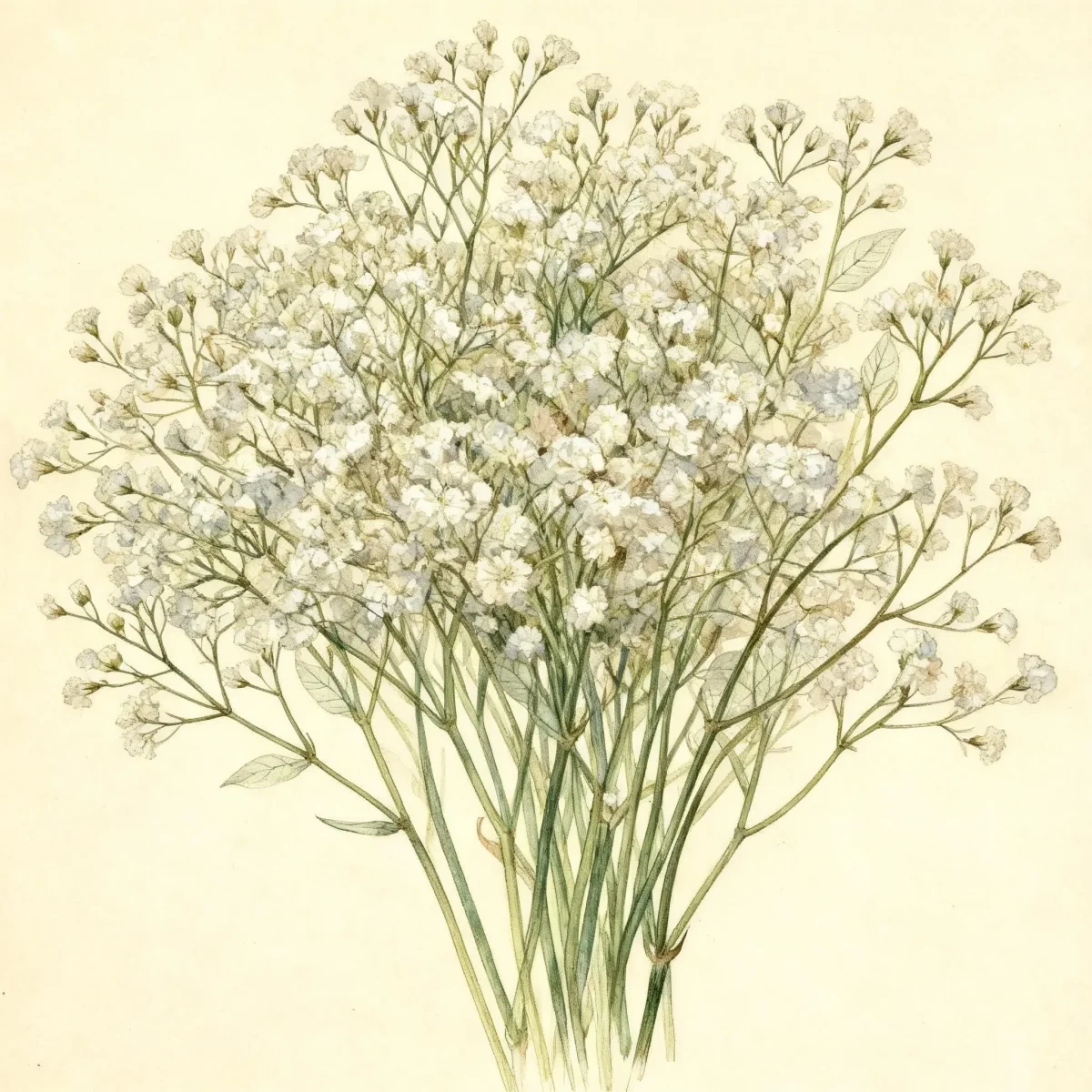
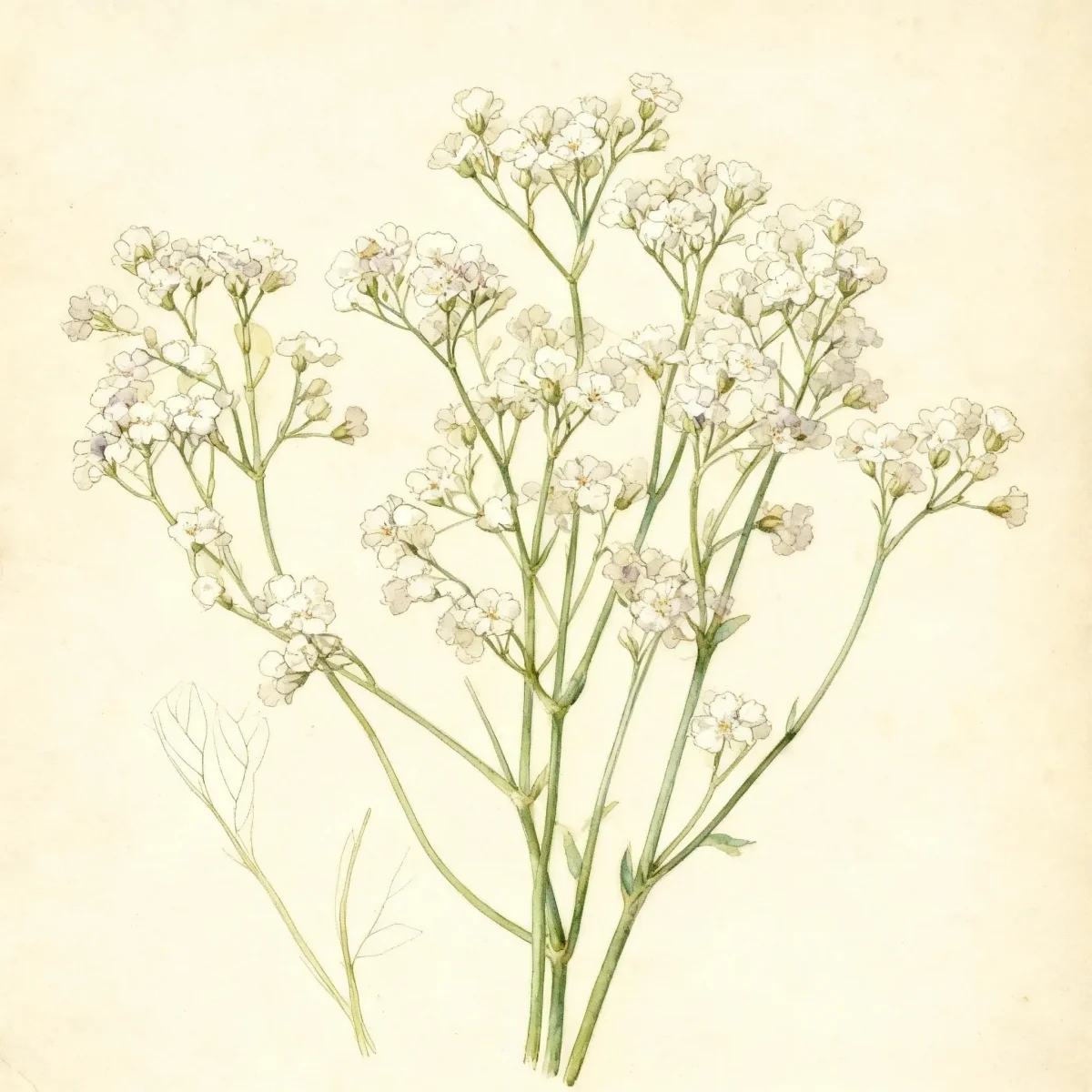
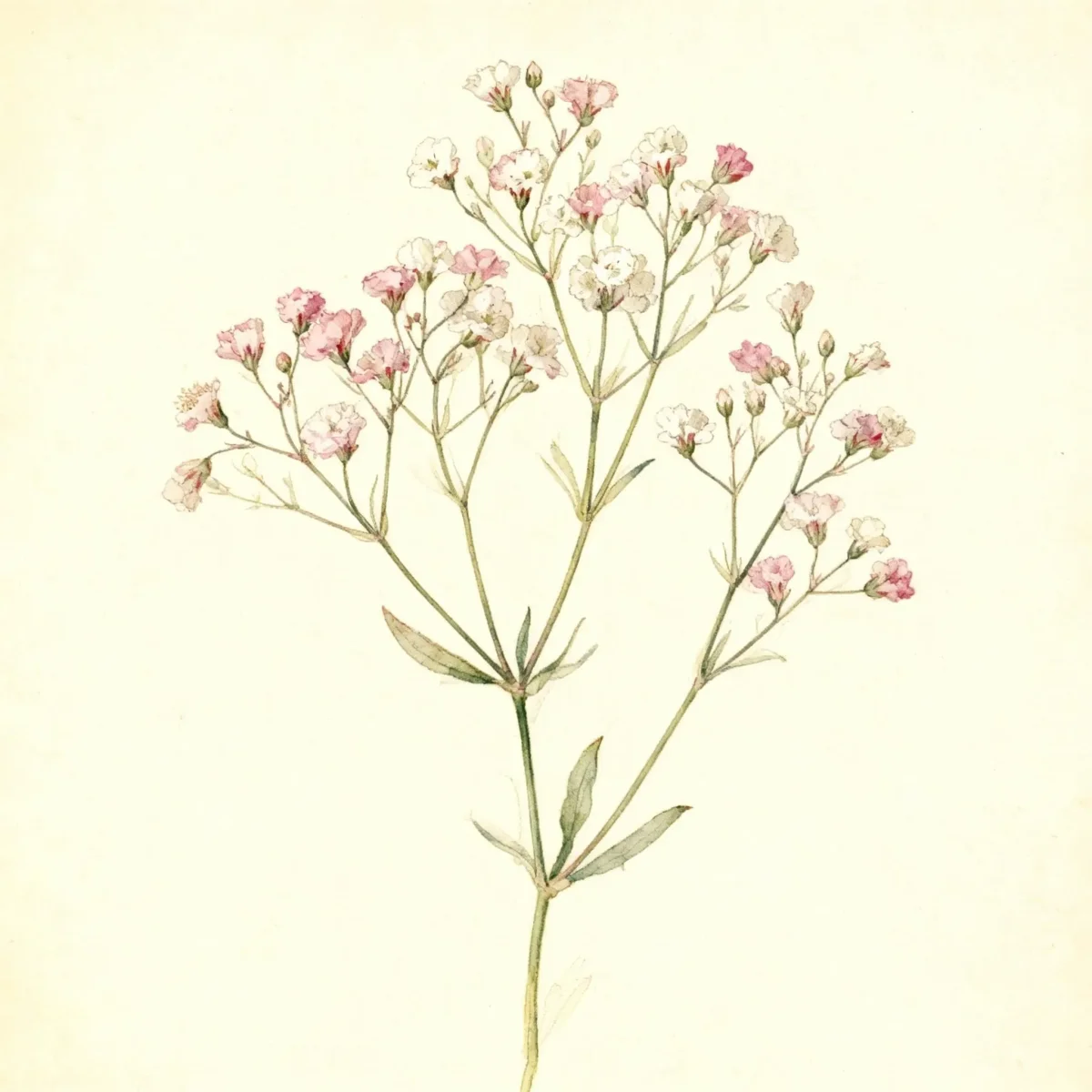
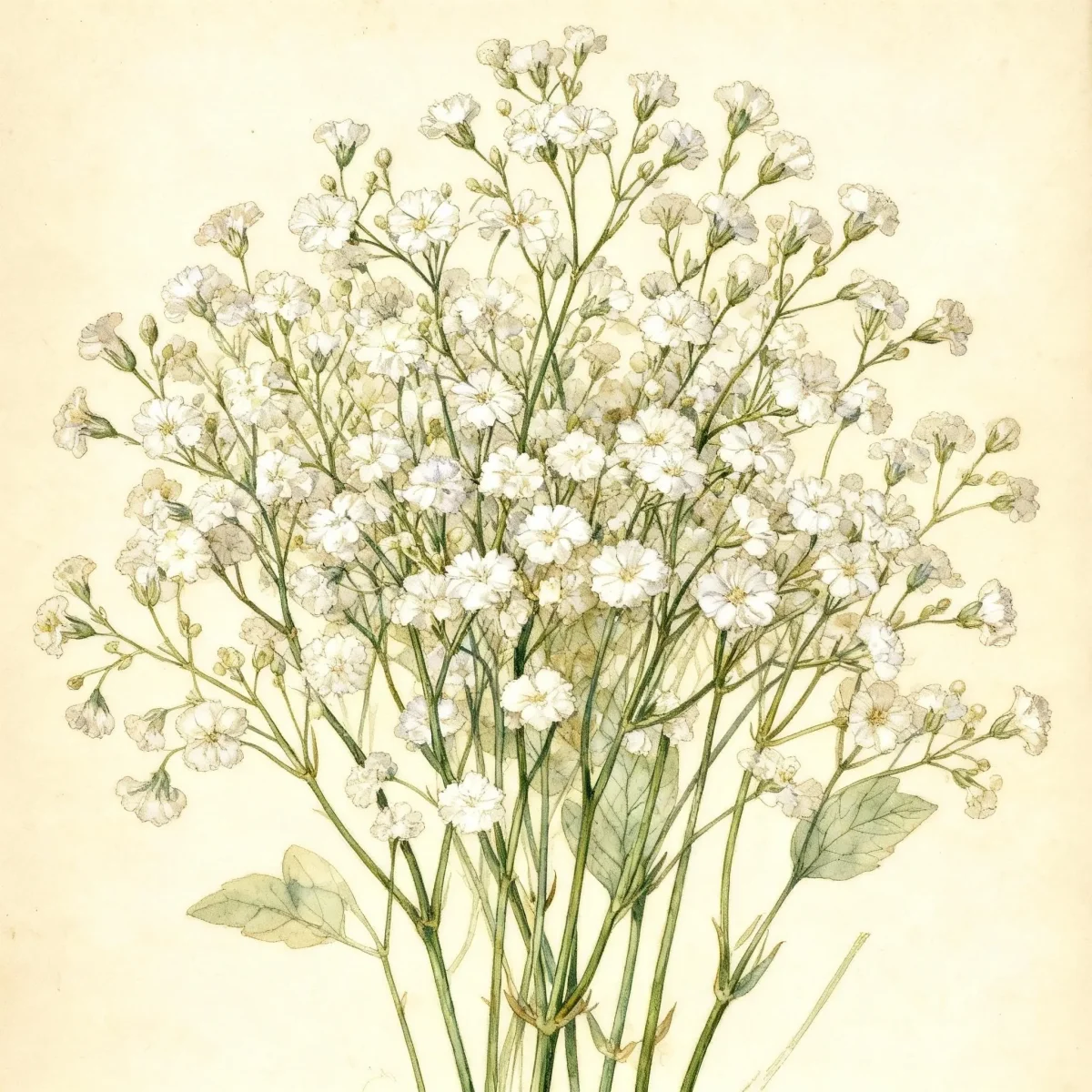
Baby's breath (Gypsophila paniculata 'Perfekta')
Gypsophila paniculata 'Perfekta' (Baby's breath) offers airy, double white blooms in summer. Hardy in Zones 3-9, treat this perennial as a stunning filler.
Scroll down to discover growing tips, care requirements, companion plants, and more
Complete Plant Information
Overview
Gypsophila paniculata ‘Perfekta’, commonly known as Baby’s breath, brings unparalleled airy texture to the summer garden. This cultivar is highly sought after for its dense branching and abundant proliferation of showy, double white flowers, providing a delicate cloud-like effect. Mature plants achieve a height and spread of nearly 3 feet, establishing themselves as excellent background or mid-border accents.
As a herbaceous perennial, successful cultivation of Gypsophila paniculata ‘Perfekta’ relies heavily on favorable soil conditions and ample sunlight. The Greek origin of its genus name references its affinity for calcareous or gypsum-rich soils, emphasizing the need for excellent drainage. Gardeners value this plant not only for its beauty in the landscape but also for its utility, as sprays of baby’s breath flowers are standard components in fresh and dried floral arrangements.
Established Gypsophila paniculata ‘Perfekta’ plants are notably drought-tolerant once their deep taproot is established. Providing them with their preferred alkaline environment in a full sun location will ensure vigorous growth and abundant blooms throughout the summer season. Remember that while it is a garden staple, gardeners should be mindful of its invasive potential in certain regions.
Fast Facts
- Plant Family: Caryophyllaceae
- Plant Type: Herbaceous perennial
- Hardiness Zones: USDA Zones 3-9
- Size at Maturity:
- Height: 2.5-3 ft
- Spread: 2.5-3 ft
- Bloom Time: June
- Bloom Description: White (double)
- Sun Exposure: Full sun
- Water Needs: Dry
- Maintenance Level: Medium
How to Grow
Plant Gypsophila paniculata ‘Perfekta’ in average, somewhat dry, well-drained soils during the spring or fall. Location selection is critical; this plant thrives in full sun where it receives maximum light exposure. Culturally, this baby’s breath species strongly prefers slightly alkaline soils, ideally pH 7.3-7.5, but it tolerates a range from neutral up to moderately alkaline (pH 7.0-8.0). Gardeners in acidic regions must amend the soil with lime to raise the pH appropriately before planting.
Once planted, maintain a dry soil environment; wet, poorly drained soils are detrimental and often result in winter mortality. Due to its sensitive taproot system, avoid disturbing the soil or attempting to transplant established specimens, as they rarely recover well from root disturbance. Watering should be minimal, focusing only on establishing new plantings or during extreme drought periods.
Fertilizing is generally unnecessary, especially if the soil pH has been correctly adjusted. After the initial flush of summer blooming subsides, cut back or shear the plant lightly to encourage further flowering activity. This careful pruning promotes a neater appearance and potentially extends the bloom window for your Gypsophila paniculata ‘Perfekta’.
Landscape Uses
The ethereal nature of Gypsophila paniculata ‘Perfekta’ makes it a superb textural element within the perennial border. Its airy, multi-stemmed habit creates excellent contrast when placed against plants with bolder foliage or more solid flower forms, such as peonies or irises. It functions wonderfully as a summer filler, effectively masking the fading foliage of earlier spring bloomers that have gone dormant.
Beyond the perennial garden, this baby’s breath is indispensable in floral design. Sprays of the long-lasting, double white blooms are frequently used as a classic filler in bouquets, adding lightness and volume to both fresh-cut arrangements and dried crafts. Consider mass planting groupings of Gypsophila paniculata ‘Perfekta’ near the edge of a path where their delicate appearance can be easily appreciated up close.
Standout Features
Flower Qualities
- Showy
- Good Cut
- Good Dried
Noteworthy Characteristics
Gypsophila paniculata, commonly called baby’s breath, is a herbaceous, taprooted perennial native to meadow steppes and woodland margins in Eurasia. Mature plants typically reach 2-3 feet tall with a similar spread, forming a densely branched, rounded shape covered in loose, highly branched panicles of small white flowers during summer. The specific epithet refers to the flowers being arranged in panicles, and the ‘Perfekta’ cultivar is recognized for its diffusely branched habit and double white flowers, which are twice as large as those found on ‘Bristol Fairy’.
Tolerances
- Drought
- Dry Soil
Potential Problems
Be aware that this plant exhibits some susceptibility to fungal issues like botrytis and may contract aster yellows disease. The medium maintenance requirement often includes staking or providing structural support for the wiry stems once the plant is covered in blooms. Furthermore, it is important to check local horticultural recommendations, as Gypsophila paniculata has escaped cultivation and is considered invasive in several global regions, including parts of the United States. Deer generally avoid browsing this perennial.
Frequently Asked Questions
What hardiness zones is Baby’s breath suitable for?
Gypsophila paniculata ‘Perfekta’ is reliably hardy across USDA Zones 3 through 9.
How large does Baby’s breath grow?
This perennial typically reaches a mature height and spread between 2.5 and 3 feet.
What sun exposure does Gypsophila paniculata ‘Perfekta’ need?
This plant requires a full sun location to perform its best and maintain its desired upright, airy structure.
When does Baby’s breath bloom?
The primary bloom time for this variety is around June, featuring showy, double white flowers.
Conclusion
Gypsophila paniculata ‘Perfekta’ remains a cornerstone perennial, valued for its reliable summer performance, exceptional cut flower quality, and airy texture. Integrating this baby’s breath into your garden provides essential contrast and timeless elegance against denser plantings. Before planting, ensure your site offers the necessary full sun and, crucially, excellent drainage compatible with its dry soil preference.
Companion Planting
When selecting partners for Gypsophila paniculata ‘Perfekta’, focus on plants that share its love for full sun and well-drained, slightly alkaline conditions. Consider planting it near classic summer bloomers like Salvia nemorosa or Shasta Daisies (Leucanthemum × superbum), whose sturdier stems and more solid blooms will beautifully juxtapose the delicate clouds of baby’s breath. Plants that require rich, moist soil should be avoided, as they will create fatal competition at the roots for this drought-tolerant native.
Design Ideas
For dramatic effect, use Gypsophila paniculata ‘Perfekta’ as a haze layer planted just in front of taller shrubs or structural evergreens. This planting strategy allows the white flowers to catch the late afternoon light, emphasizing their airy quality. In formal designs, repeated groupings of this baby’s breath can serve as a light, continuous border element, contrasting nicely with structured boxwoods or sheared hedges, while respecting its need for good air circulation to prevent fungal issues.