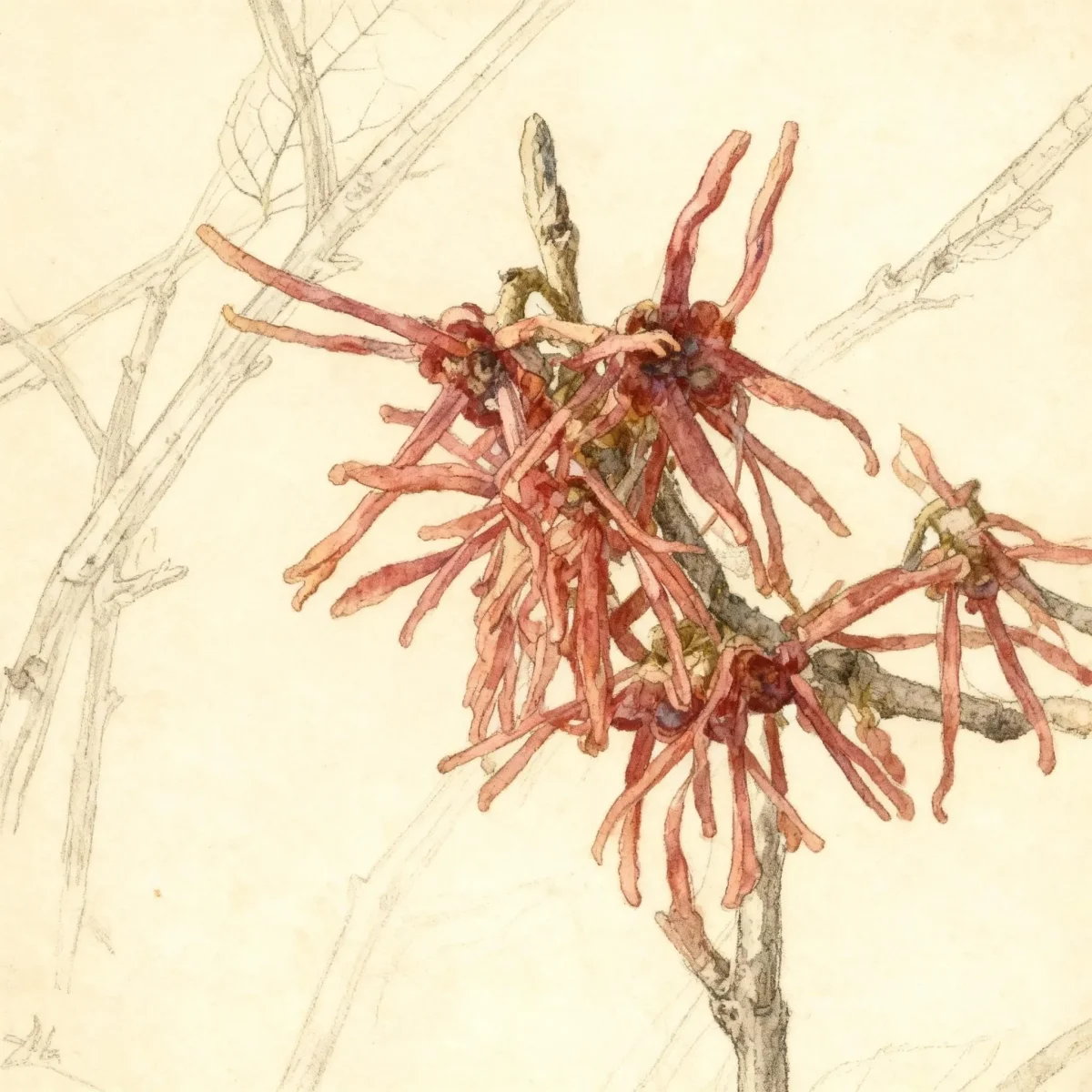
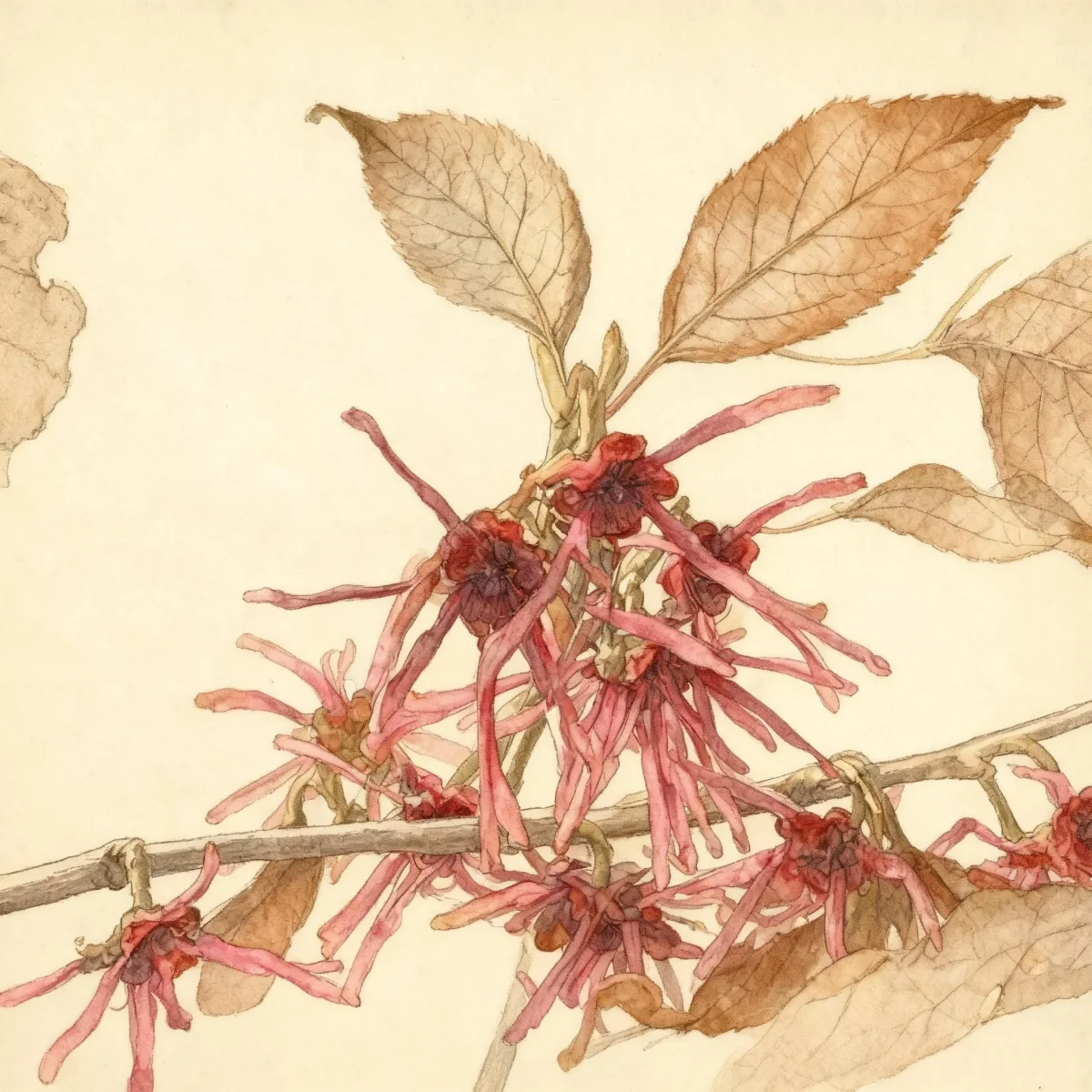
Ozark witch hazel (Hamamelis vernalis 'Carnea')
Hamamelis vernalis 'Carnea' offers vital winter color with fragrant red blooms. The Ozark witch hazel is low maintenance and deer tolerant.
Scroll down to discover growing tips, care requirements, companion plants, and more
Complete Plant Information
Overview
The Hamamelis vernalis ‘Carnea’, commonly known as Ozark witch hazel, is a spectacular choice for gardeners seeking winter interest. This cultivar is prized for its striking, fragrant blooms that appear long before spring foliage emerges, often from January through March. Its value lies in injecting color and scent into the dormant winter landscape when few other shrubs are active.
As a deciduous shrub native to the Ozark Plateau, this plant offers robust performance with low maintenance requirements. It eventually matures into a substantial specimen, typically reaching 6 to 10 feet tall and spreading wider than it stretches vertically, forming an excellent naturalized colony or screen over time.
Beyond its winter flowers, the Ozark witch hazel provides golden yellow fall color and demonstrates excellent resilience, tolerating deer, erosion, and challenging clay soils when drainage is adequate. Planting Hamamelis vernalis ‘Carnea’ ensures reliable performance and seasonal beauty for almost any suitable northern garden.
Fast Facts
- Plant Family: Hamamelidaceae
- Plant Type: Deciduous shrub
- Hardiness Zones: USDA Zones 4-8
- Size at Maturity:
- Height: 6-10 ft
- Spread: 8-15 ft
- Bloom Time: January to March
- Bloom Description: Red
- Sun Exposure: Full sun to part shade
- Water Needs: Medium
- Maintenance Level: Low
How to Grow
Begin planting your Ozark witch hazel in spring or fall when the soil temperatures are moderate, avoiding the heat of mid-summer. This shrub thrives best in full sun, which promotes the heaviest flowering display, though it tolerates part shade. Ensure the location permits its mature spread, as it can reach 15 feet wide. It prefers moist, acidic, and organically rich soils, though it shows tolerance for clay if drainage remains good to prevent root saturation.
Consistent moisture is crucial for overall health; established plants require medium watering, but leaf scorch can occur during summer drought periods, making supplemental watering during dry spells essential. Fertilizing is rarely necessary if the native soil is organically rich. Pruning should be done immediately after the spring flowering period ends, strictly to control size or shape, as pruning later can remove next year’s flower buds.
A significant cultural note for Hamamelis vernalis ‘Carnea’ is its tendency to spread by root suckers. Gardeners should promptly remove any suckers arising from below the graft union if the shrub was grafted, or simply control those rising from native roots to manage colonial spread according to design preference.
Landscape Uses
The Hamamelis vernalis ‘Carnea’ excels as a superior winter-flowering specimen, acting as an architectural focal point due to its early bloom time. Its moderate size (up to 10 feet tall and 15 feet wide) makes it perfectly suited for inclusion in shrub borders where its winter flowers can contrast nicely with evergreen backdrops. For larger properties, utilizing several plants together creates an effective, naturalized screen or tall hedge capable of slowing erosion on slopes.
Consider planting Ozark witch hazel in woodland gardens, where it can mimic its native habitat near stream banks, or incorporate it into rain gardens, given its preference for consistently moist soil conditions. When used as a specimen, pair it with late-blooming deciduous shrubs or contrasting evergreen groundcovers that will not obscure the shrub while it is leafless but flowering.
Standout Features
Flower Qualities
- Showy
- Fragrant
Fruit Qualities
- Showy
Noteworthy Characteristics
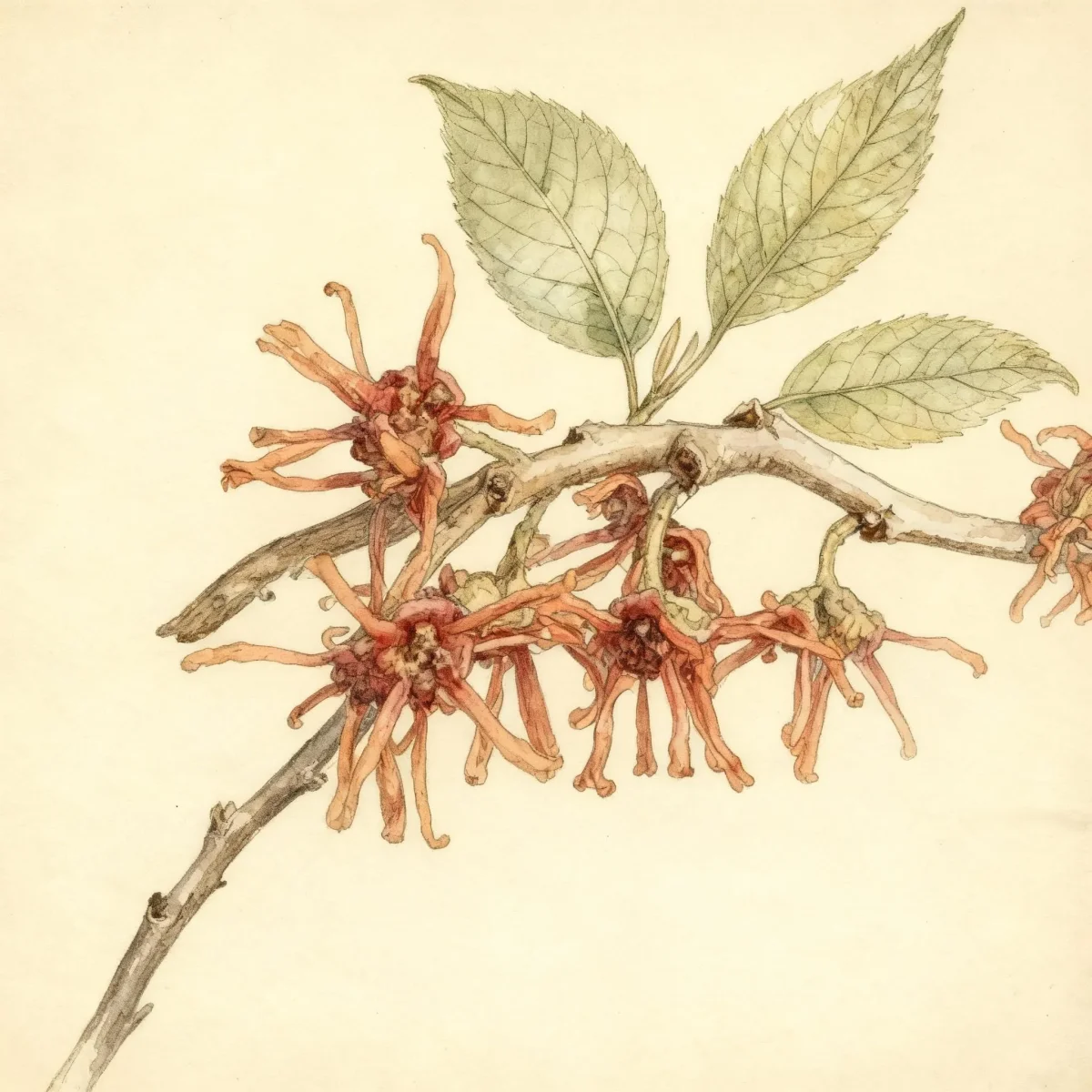
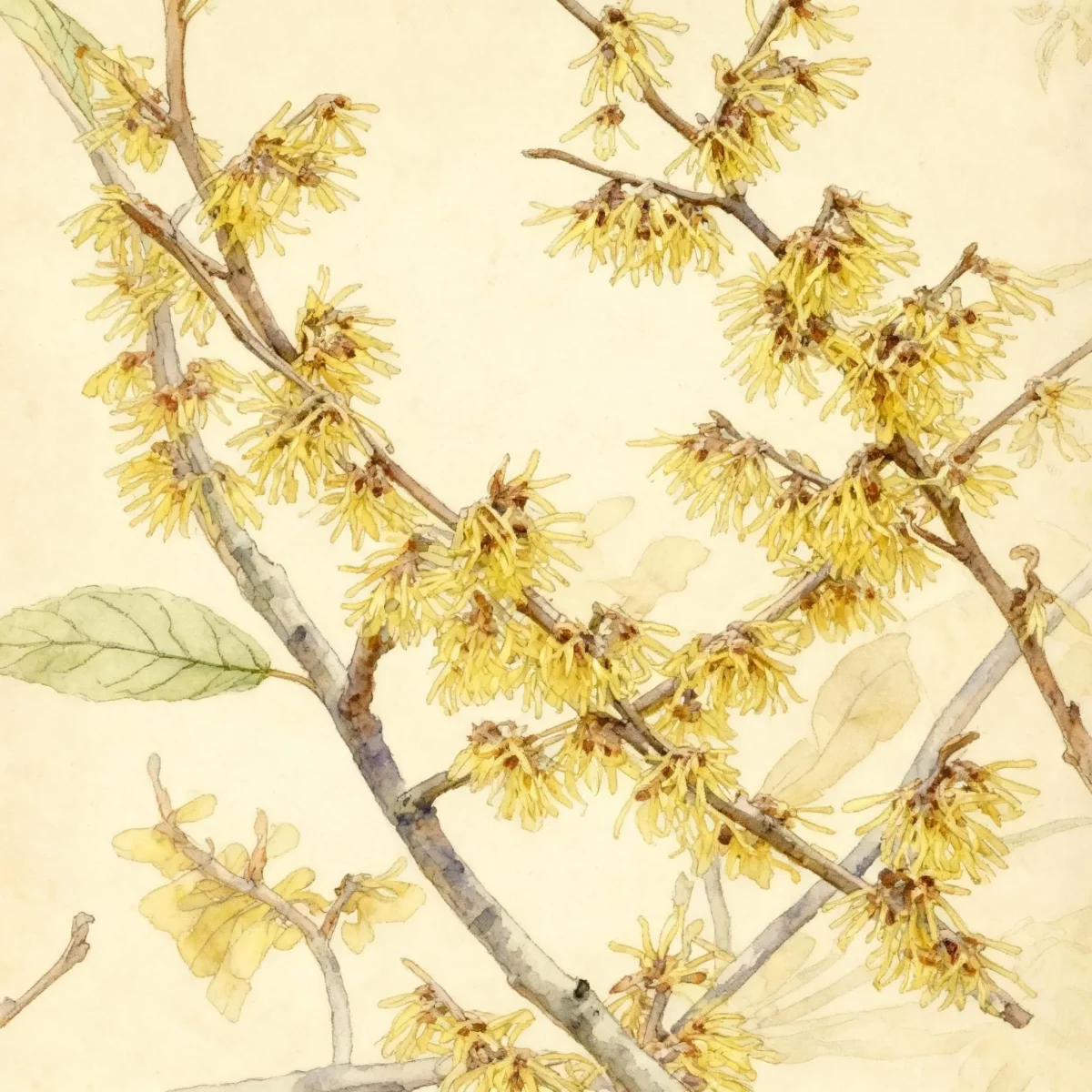
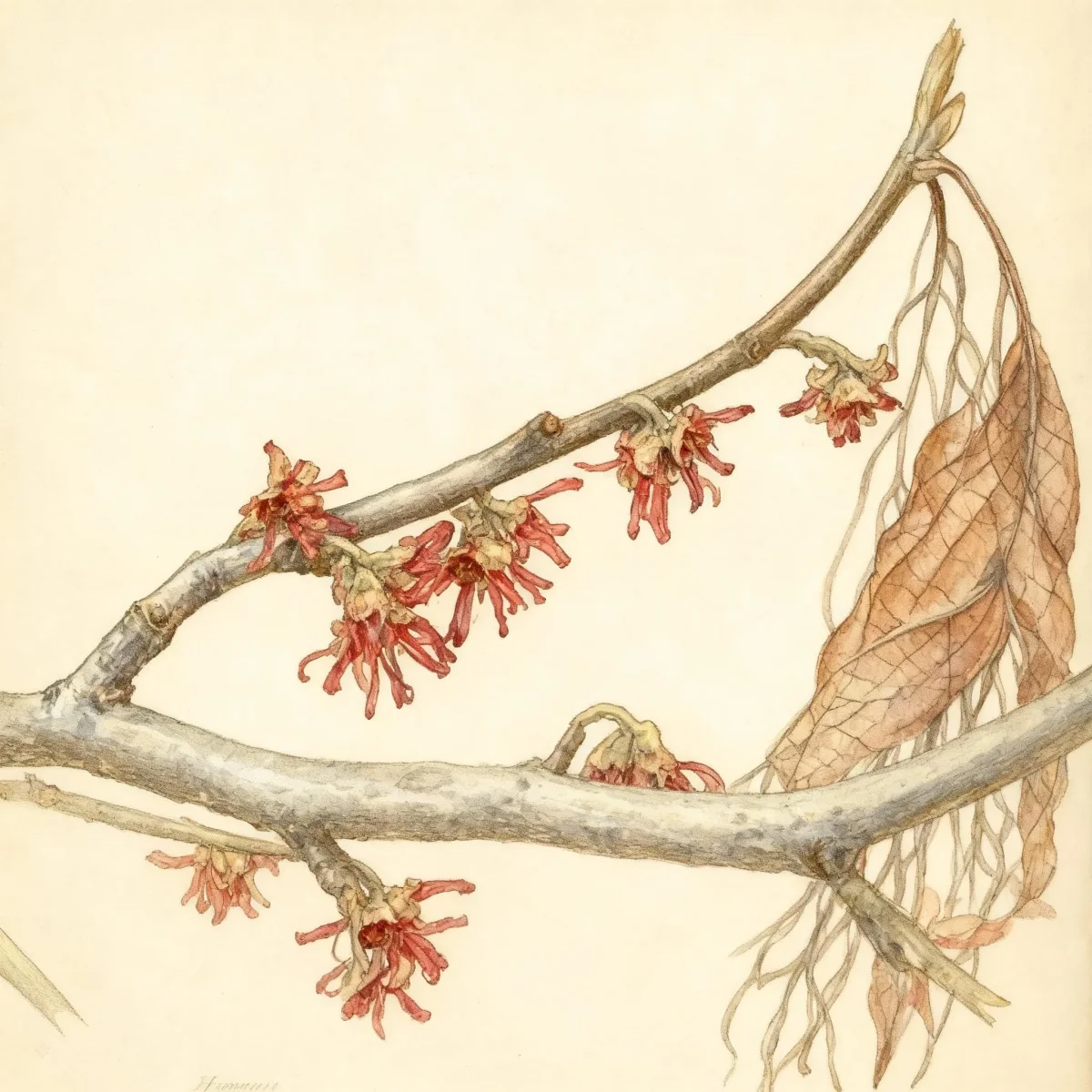
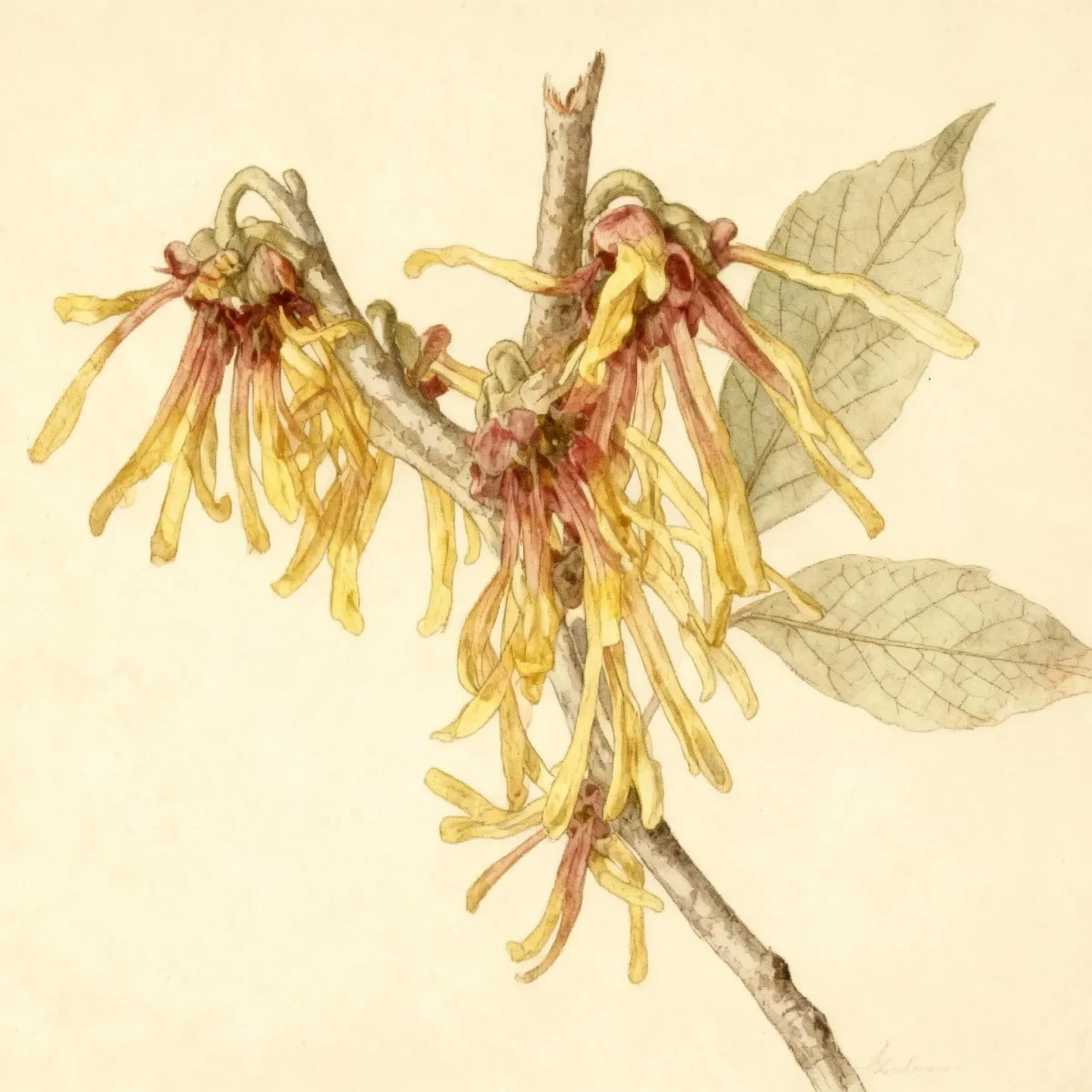
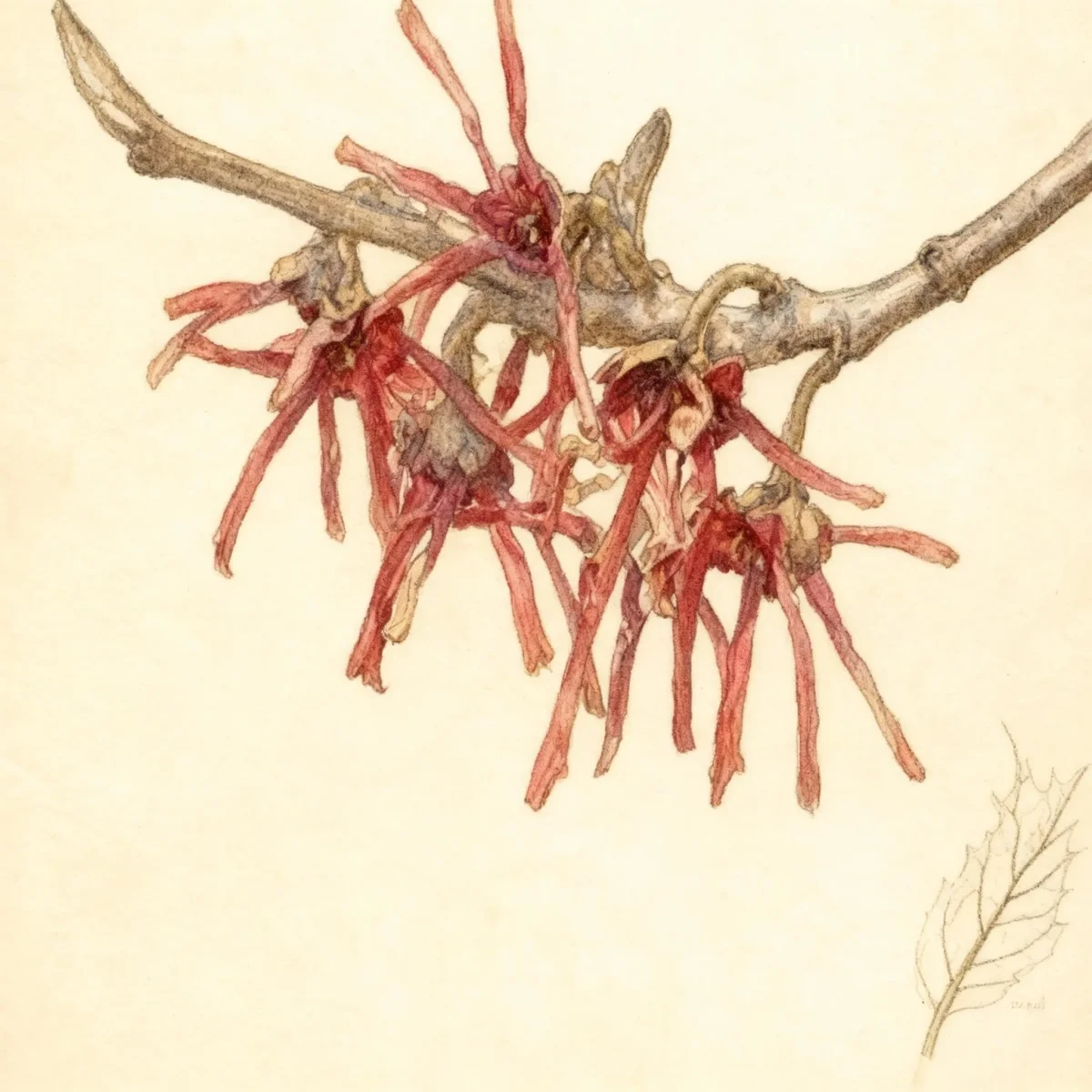
Flowers of the Ozark witch hazel appear in axillary clusters in mid to late winter, prior to leaf emergence. Each flower features four narrow, ribbon-like, curled petals that are characteristically red at the base, transitioning to a copper orange at the tips on this ‘Carnea’ form. The genus name cleverly references the simultaneous presence of fruit and flowers, though the capsules that follow are not overly showy, contrasting with the vibrant winter display.
Tolerances
- Deer
- Erosion
- Clay Soil
Potential Problems
While generally robust, gardeners should monitor Hamamelis vernalis ‘Carnea’ for occasional pest activity. Caterpillars and Japanese beetles may chew tatters into the leaves during the growing season. Pest issues like gall aphids, scale, leafroller, and leafminer can also appear, though they rarely become severe enough to warrant chemical intervention.
Disease pressure is generally low, focusing mainly on powdery mildew or occasional leaf spots and rots, usually exacerbated by poor air circulation or overly wet conditions. Maintaining the recommended medium watering schedule and ensuring good air movement when planting in masses helps mitigate most insect and disease risks associated with this low-maintenance shrub.
Frequently Asked Questions
What hardiness zones is Ozark witch hazel suitable for?
This exceptional winter bloomer, Hamamelis vernalis ‘Carnea’, is suitable for USDA Hardiness Zones 4 through 8.
How large does Ozark witch hazel grow?
The typical mature size for this deciduous shrub ranges from 6 to 10 feet in height, with a spread often reaching 8 to 15 feet wide.
When does Hamamelis vernalis ‘Carnea’ bloom?
This variety is celebrated for its early bloom time, generally occurring from January into March, displaying noticeable red flowers when the landscape is otherwise bare.
What sun exposure does Ozark witch hazel need?
For the best flowering performance, Hamamelis vernalis ‘Carnea’ needs full sun, although it will successfully grow in partial shade conditions.
Conclusion
The Hamamelis vernalis ‘Carnea’ remains a premier choice for adding essential, fragrant, red color during the coldest months of the year. Its low maintenance profile and impressive tolerance for deer and clay soils make the Ozark witch hazel highly practical. Before planting, confirm your location falls within USDA Zones 4-8 and prepare the soil to be consistently moist for the best winter display.
Companion Planting
When designing a winter garden featuring Hamamelis vernalis ‘Carnea’, select companions that offer contrasting color or texture during the dormant season. Since this witch hazel prefers medium moisture and full sun—and spreads by suckers—avoid very shallow-rooted perennials that compete aggressively at the root zone. Evergreens such as Daphne mezereum (if soil is appropriate) or early-flowering shrubs like Winter Jasmine (Jasminum nudiflorum) provide excellent color counterpoints nearby.
Consider utilizing early spring bulbs like snowdrops or crocus planted beneath the canopy; these will emerge and provide low visual interest right at the base of the shrub just as the witch hazel is finishing its bloom cycle. Ensure any companion choices also tolerate the medium water needs associated with this plant.
Seasonal Care Calendar
Late Winter (During Bloom): Monitor moisture levels closely. If dry spells occur during flowering, provide supplemental water to prevent blossom desiccation, even though the plant is dormant. Avoid any pruning during this time.
Spring (Post-Bloom): This is the prime time for corrective pruning to manage shape or size, cutting back immediately after the red flowers fade. Watch for emerging foliage which often has attractive bronze tints before settling into dark green.
Summer: Focus exclusively on consistent watering, especially during heatwaves, to avoid summer drought stress that leads to scorched leaves. If suckers are unwanted, treat them now by cutting them back to ground level.
Fall: The Ozark witch hazel develops attractive golden yellow fall color. Perform a final, light watering session before the ground freezes to store moisture for winter survival.