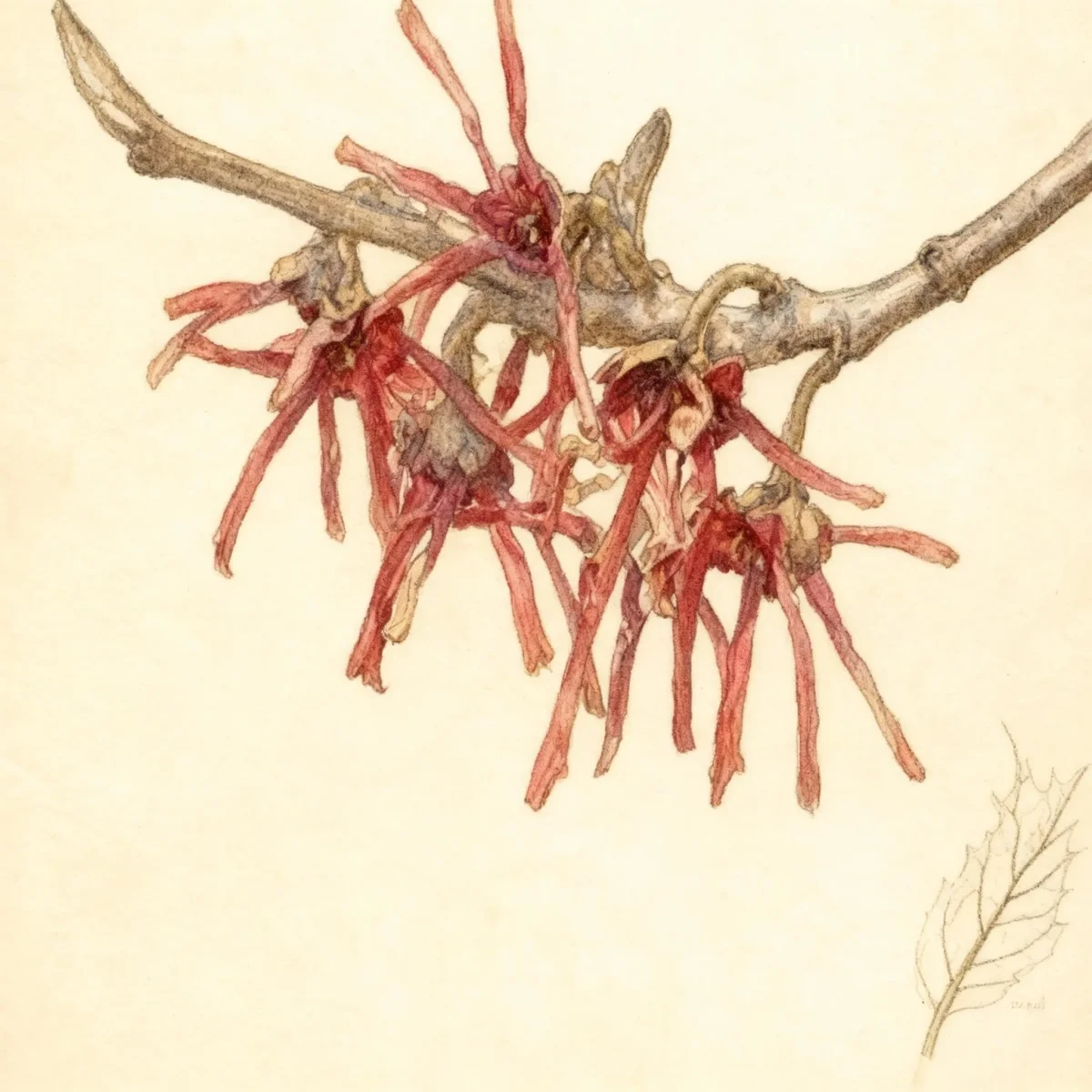
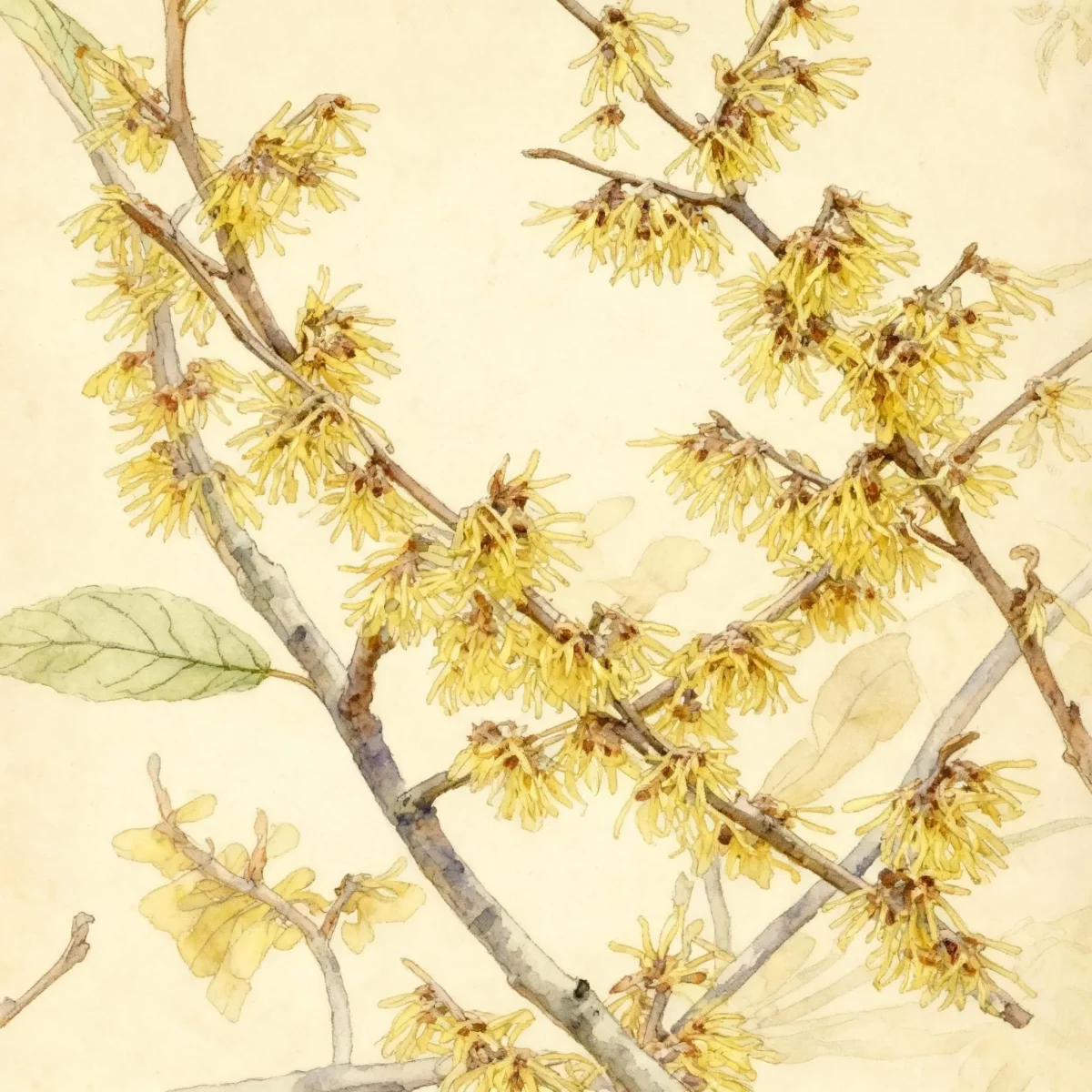
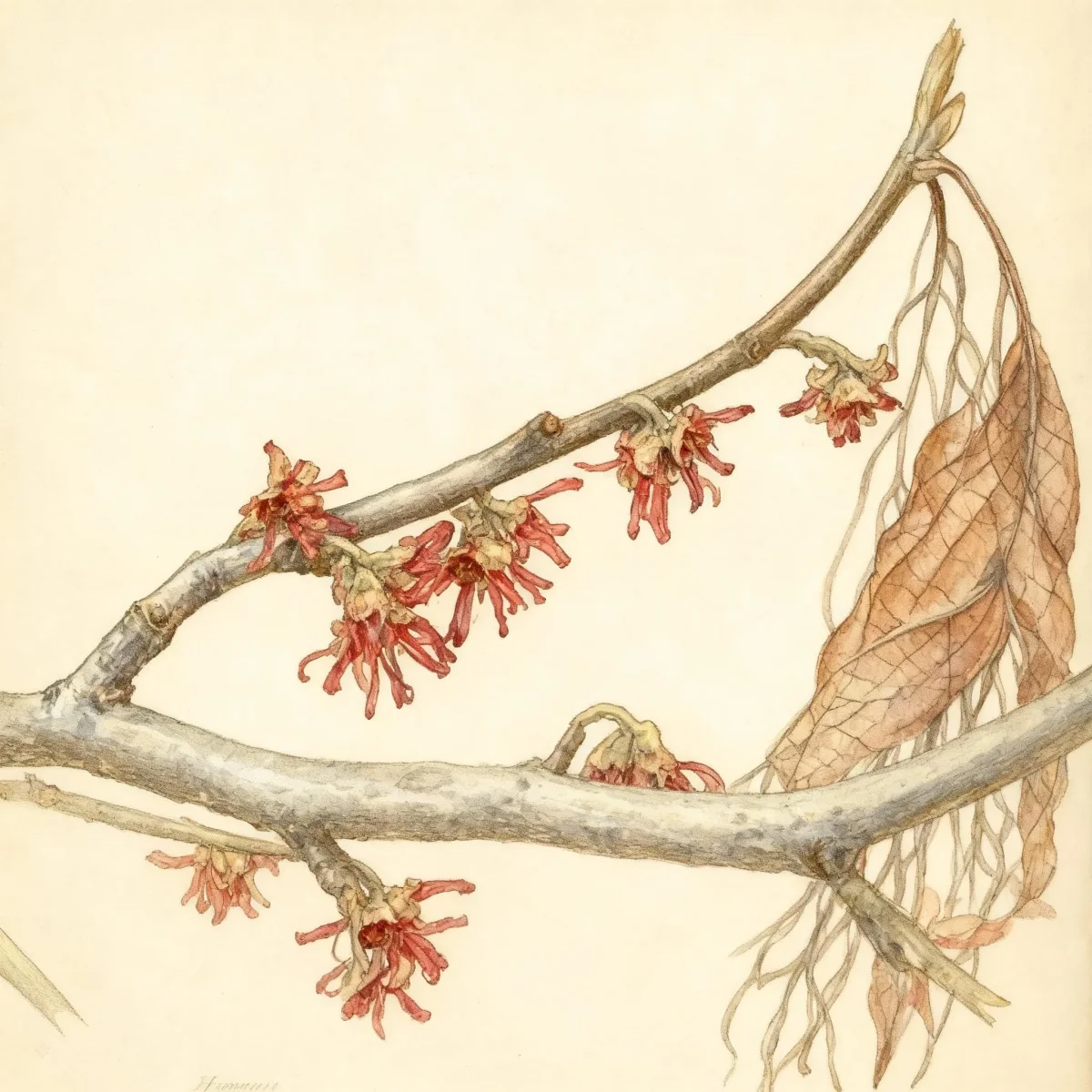
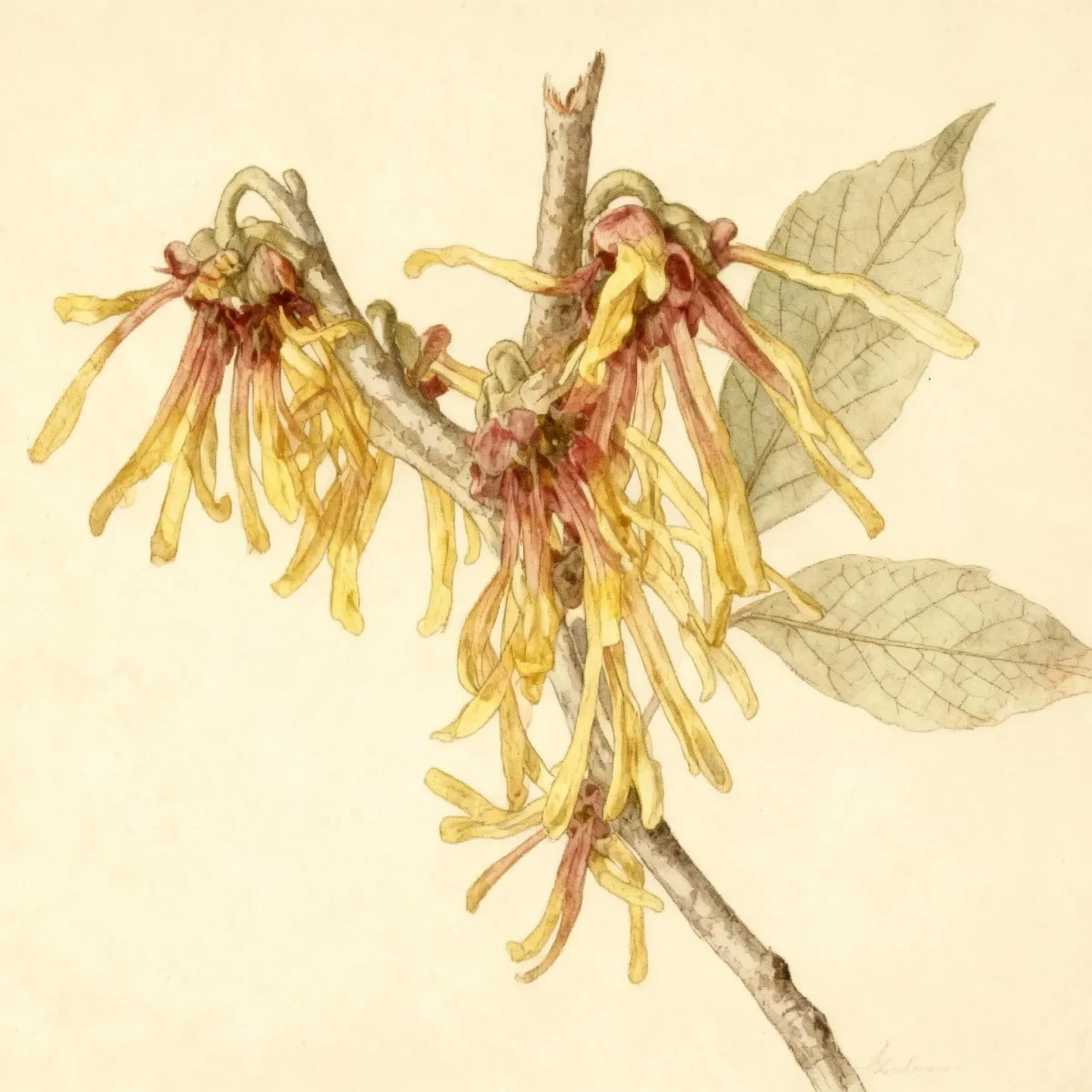
Ozark witch hazel (Hamamelis vernalis 'Christmas Cheer')
Hamamelis vernalis 'Christmas Cheer' (Ozark witch hazel) offers brilliant winter fragrance and color, ideal for adding interest in cold months.
Scroll down to discover growing tips, care requirements, companion plants, and more
Complete Plant Information
Overview
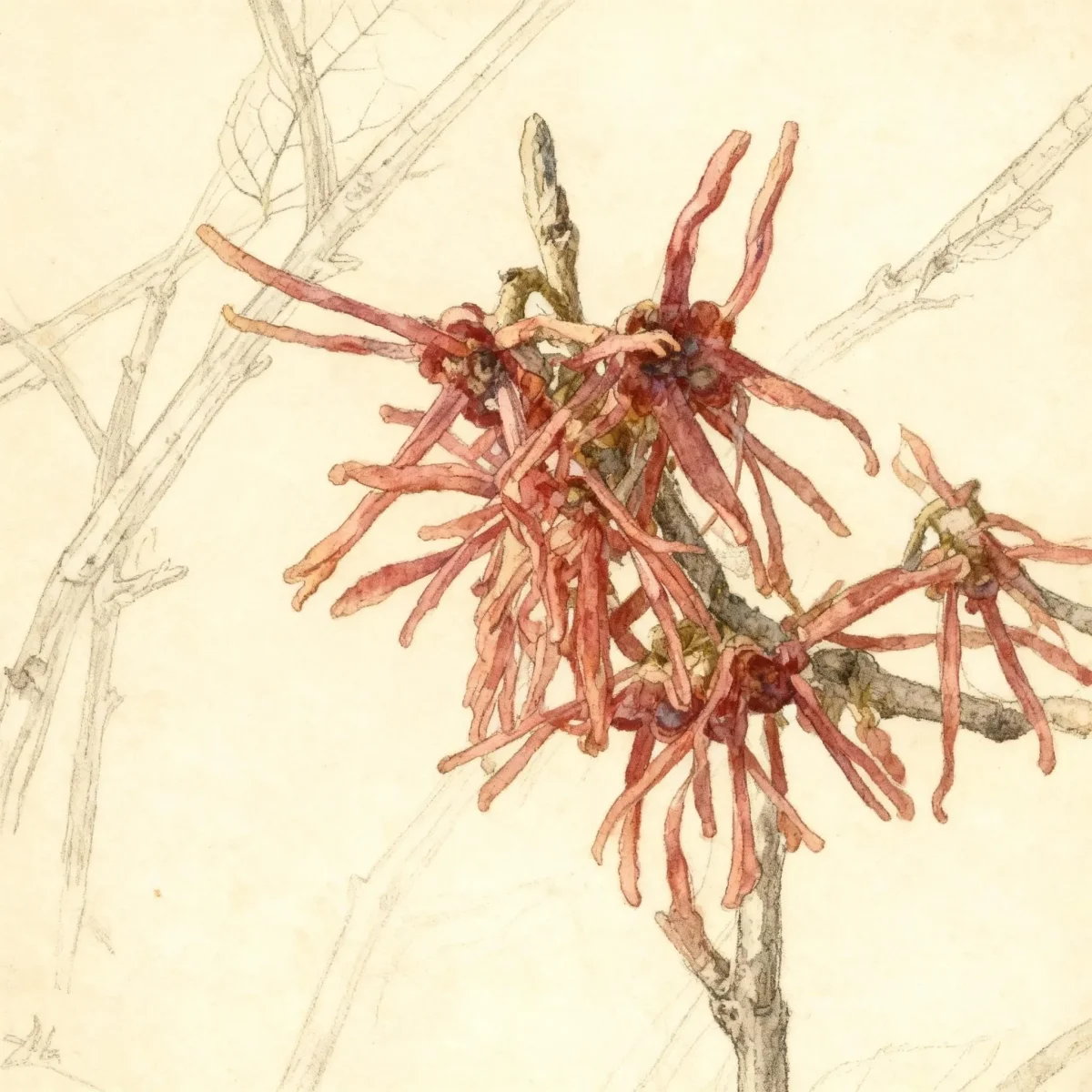
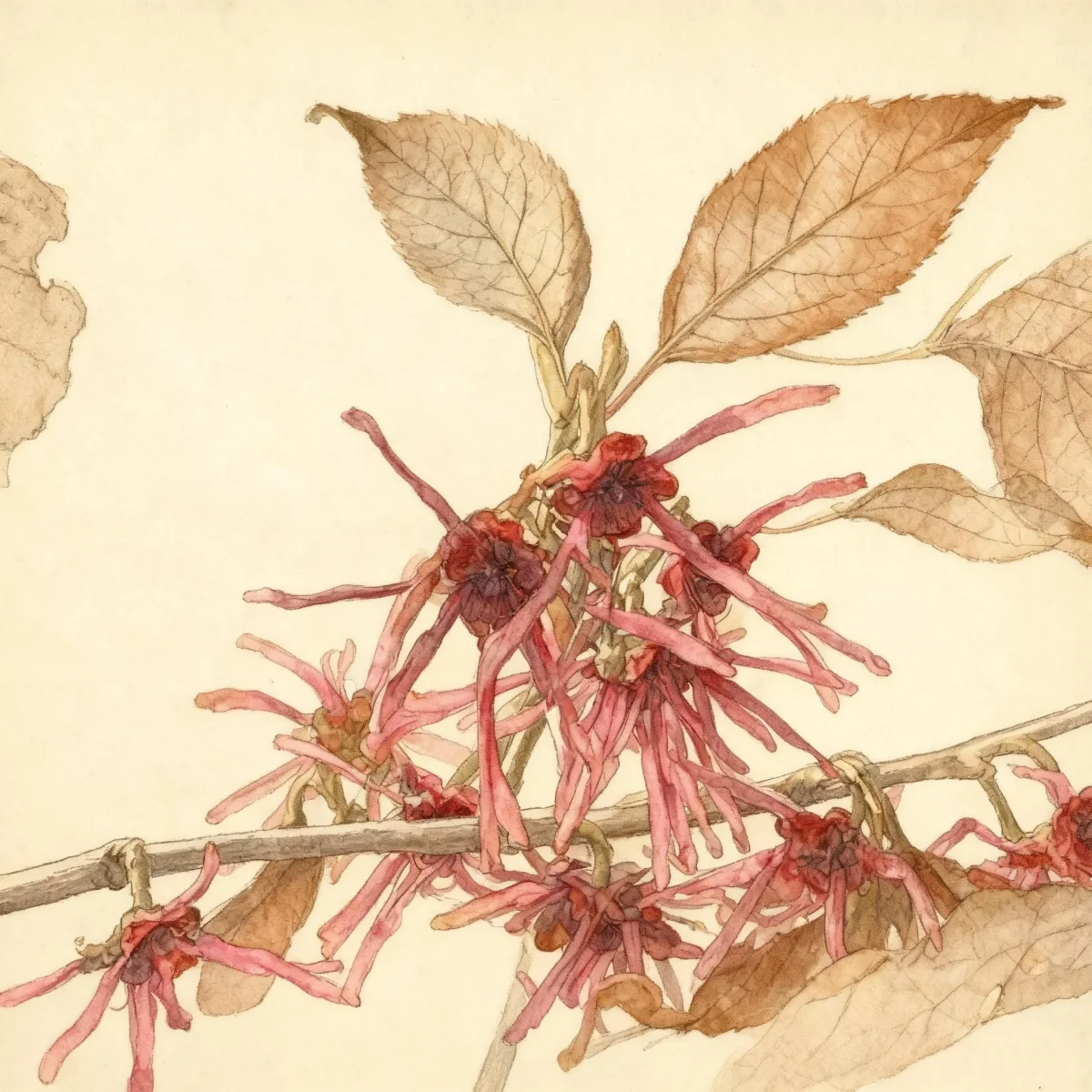
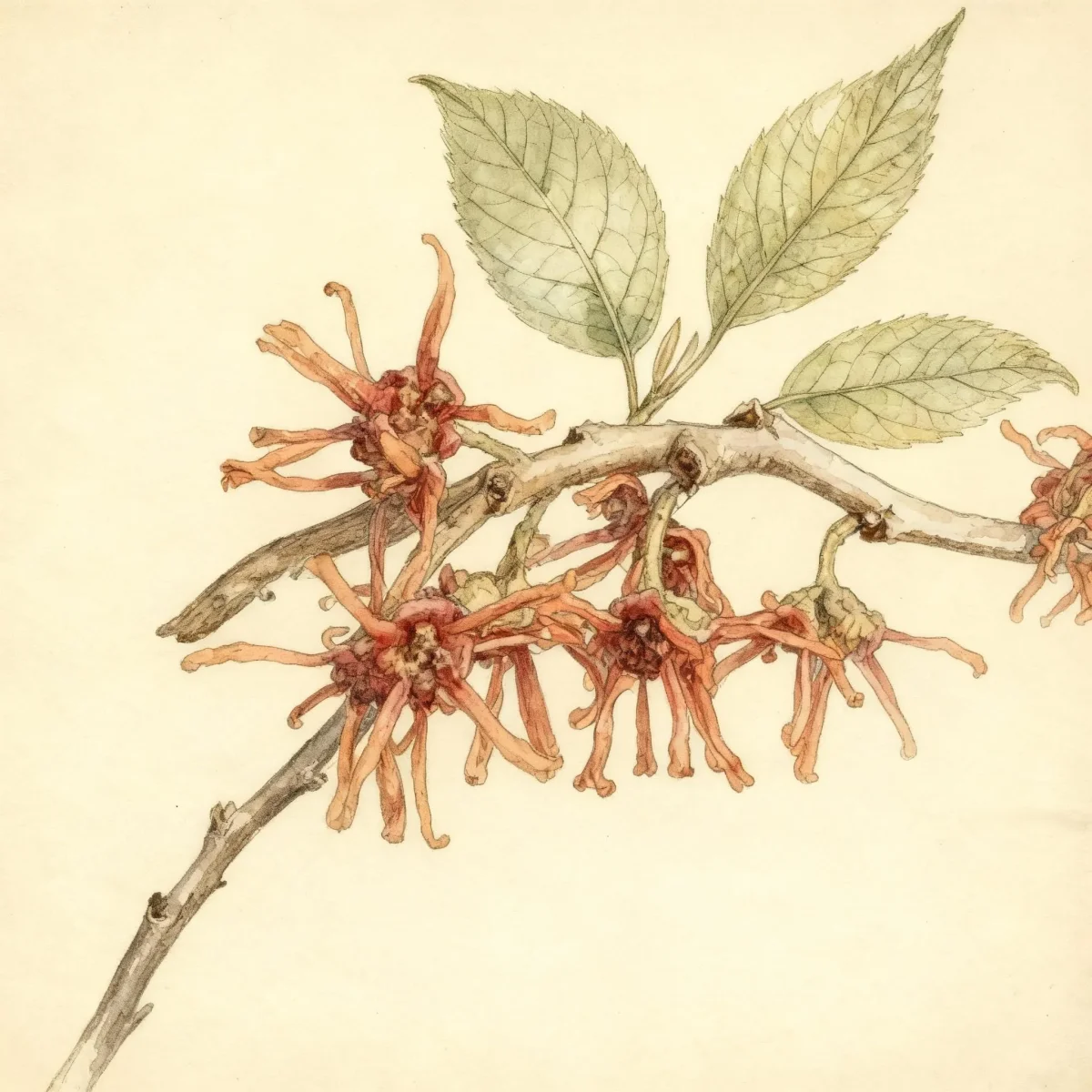
The Ozark witch hazel, particularly the cultivar Hamamelis vernalis ‘Christmas Cheer’, is a superstar for winter interest in the garden. This deciduous shrub is valued primarily for its incredibly early bloom time, often starting as early as Christmas, providing welcome color and fragrance when the landscape is otherwise dormant. Its winter flowers feature narrow, ribbon-like petals that display rich yellow and red tones, making Hamamelis vernalis ‘Christmas Cheer’ a magnificent specimen.
Native to the Ozark Plateau, this hardy shrub fits well into a variety of landscape settings, spreading via suckers to form natural colonies over time. While its golden fall color is attractive, its primary draw is its performance during the coldest months, differentiating it from later-blooming witch hazels. Growing Hamamelis vernalis ‘Christmas Cheer’ offers low maintenance coupled with high visual reward.
Gardeners seeking reliable winter color should strongly consider the Ozark witch hazel. It provides textural interest even when leafless, and its ability to handle slightly challenging conditions, such as clay soils, enhances its practicality for diverse sites.
Fast Facts
- Plant Family: Hamamelidaceae
- Plant Type: Deciduous shrub
- Hardiness Zones: USDA Zones 4-8
- Size at Maturity:
- Height: 6-10 ft
- Spread: 8-12 ft
- Bloom Time: January to March
- Bloom Description: Yellow
- Sun Exposure: Full sun to part shade
- Water Needs: Medium
- Maintenance Level: Low
How to Grow
Planting the Ozark witch hazel is best accomplished in spring or fall when conditions are cooler, ensuring the root system establishes before summer heat. Ideal placement involves full sun to achieve the best flowering display, though it tolerates partial shade. It thrives in average, medium-moisture, well-drained soils, preferring those that are acidic and organically rich.
Consistent moisture is crucial, especially during summer periods; drought can lead to leaf scorch on this Hamamelis vernalis ‘Christmas Cheer’. While the shrub shows some tolerance for clay, drainage must remain adequate to prevent root issues. Fertilizing is rarely necessary if the soil is organically rich.
Pruning should be performed immediately after flowering concludes in the spring to shape the shrub or manage size. A critical maintenance note is the prompt removal of root suckers, especially those arising below the graft union, to maintain the plant’s desired form and prevent unwanted colonial spread.
Landscape Uses
The superior winter flowering of Hamamelis vernalis ‘Christmas Cheer’ makes it an excellent focal point when most plants are dormant. It functions beautifully as a specimen plant, drawing the eye toward its early blooms. Furthermore, it is well-suited for use in shrub borders where its structure provides backbone throughout the year.
Consider integrating the Ozark witch hazel into woodland gardens or mass plantings where its natural tendency to form colonies is embraced. Because it can grow into a screen or tall hedge, it offers privacy benefits later in the growing season after its winter floral show concludes. Its ability to tolerate erosion also makes it suitable for stabilizing slopes.
Standout Features
Flower Qualities
- Showy
- Fragrant
Noteworthy Characteristics
Hamamelis vernalis, commonly called Ozark witch hazel, is native to the Ozark Plateau extending from southern Missouri through northwestern Arkansas to eastern Oklahoma. Flowers appear in mid to late winter prior to foliage emergence, displaying colors from pale yellow to dark reddish purple, each having four narrow, ribbon-like petals. The cultivar ‘Christmas Cheer’ is specifically noted for its earlier bloom, which can occur as early as Christmas time, featuring intensely fragrant yellow and red flowers.
Tolerances
- Deer
- Erosion
- Clay Soil
Potential Problems
While generally low maintenance, the Ozark witch hazel can occasionally face minor pest issues. Caterpillars and Japanese beetles might chew foliage during the active growing season. Gardeners should also inspect for signs of gall aphids, scale insects, leafrollers, and leafminers, though these infestations are rarely severe enough to warrant chemical treatment.
Potential disease issues include powdery mildew and occasional leaf spots or rots. Inspecting the shrub regularly and ensuring good air circulation around the dense branching structure can help mitigate fungal issues. Maintaining consistent moisture, particularly during dry summers, prevents stress that might invite secondary problems for your Hamamelis vernalis ‘Christmas Cheer’.
Frequently Asked Questions
What hardiness zones is Ozark witch hazel suitable for?
Hamamelis vernalis ‘Christmas Cheer’ is hardy in USDA Zones 4 through 8, offering reliable winter performance across a wide range of climates.
How large does Hamamelis vernalis ‘Christmas Cheer’ grow?
This deciduous shrub typically matures to a height between 6 and 10 feet, with a complementary spread ranging from 8 to 12 feet wide.
What sun exposure does Ozark witch hazel need?
For the absolute best flowering, plant this variety where it receives full sun, although it tolerates partial shade conditions well.
When does Hamamelis vernalis ‘Christmas Cheer’ bloom?
This cultivar is prized for its very early display, blooming from January through March, featuring distinctly yellow flowers.
Conclusion
The Hamamelis vernalis ‘Christmas Cheer’ provides invaluable color, structure, and fragrance during the typically bleak winter landscape. As a largely low-maintenance shrub that handles clay soil and some wildlife pressure, the Ozark witch hazel is a highly practical, rewarding addition to nearly any garden design. Check your local USDA hardiness zone compatibility and plan your planting location thoughtfully to maximize its stunning early bloom.
Companion Planting
When planning the area around your Hamamelis vernalis ‘Christmas Cheer’, select plants that offer contrast or fill the gaps when the witch hazel is dormant. Early spring ephemerals like snowdrops (Galanthus) or winter aconite (Eranthis hyemalis) provide color concurrently with its flowering. Consider evergreens, such as dwarf conifers or broadleaf evergreens like boxwood, positioned behind the shrub to provide a dark, solid backdrop that makes the yellow winter flowers pop.
Since the Ozark witch hazel prefers moist, acidic soil, companion choices should share these preferences. Rhododendrons and Azaleas placed nearby will benefit from similar soil composition and moisture levels, creating a cohesive woodland planting scheme that looks excellent year-round. Ensure companion plants do not aggressively compete for the medium moisture this shrub requires.
Seasonal Care Calendar
For optimal performance of your Hamamelis vernalis ‘Christmas Cheer’, focus care around specific seasonal needs. During the active growing season (late spring through summer), monitor soil moisture closely, particularly during mid-summer droughts, to prevent leaf scorch. Address any root suckers that emerge throughout the summer by cutting them off at the ground level.
Late winter is when anticipation is highest; this is when you enjoy the unique blooms. Immediately following flowering, typically in early spring before leaf-out, is the correct time for any structural pruning needed to define shape or remove crossing branches. Avoid pruning later in the year as this removes next year’s flower buds.
As autumn approaches, notice the golden transformation of the foliage, which adds final seasonal interest before leaf drop. Winter preparation for this hardy shrub is minimal, thanks to its high tolerance for cold zones 4-8, requiring no special winter protection unless planted in an extremely exposed site.