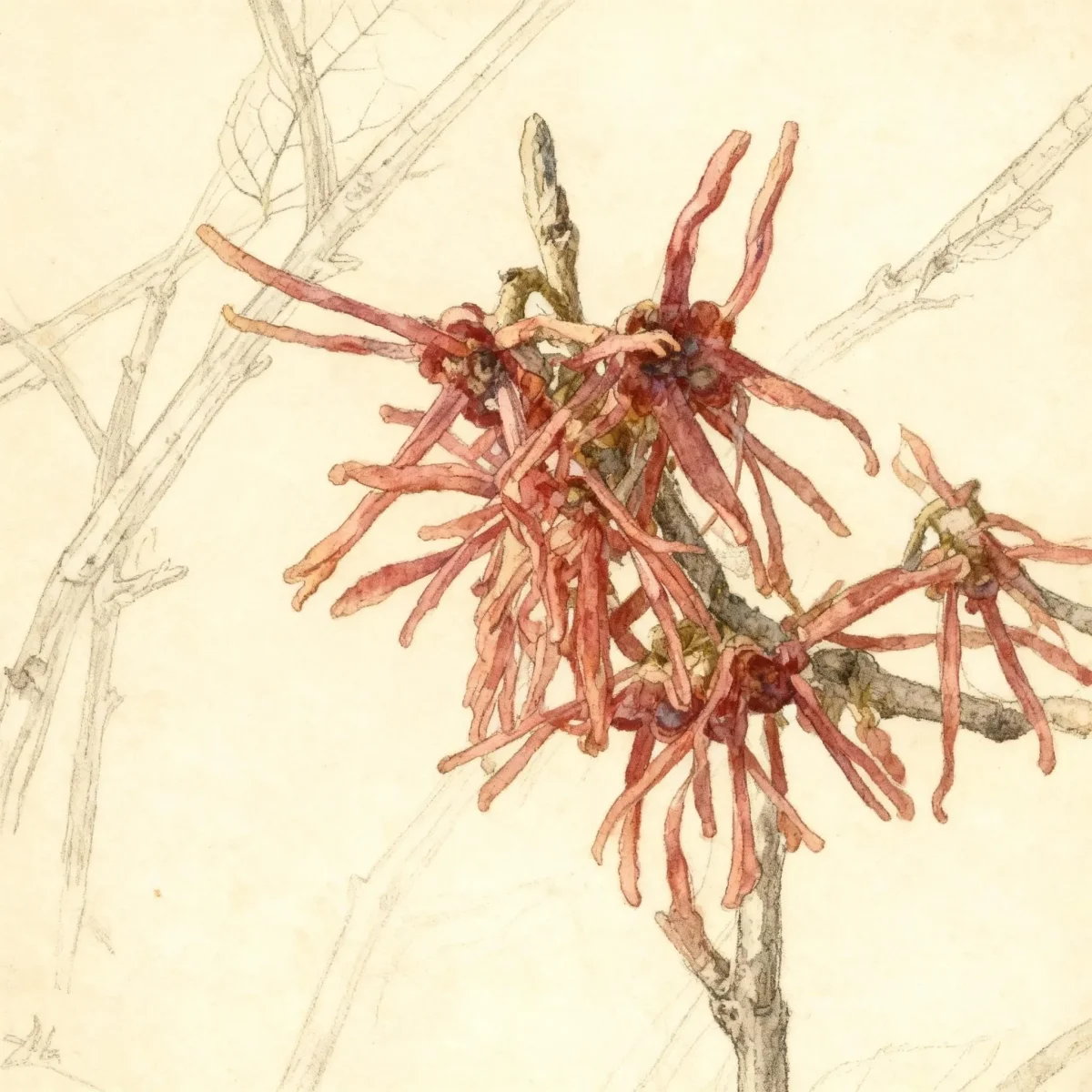
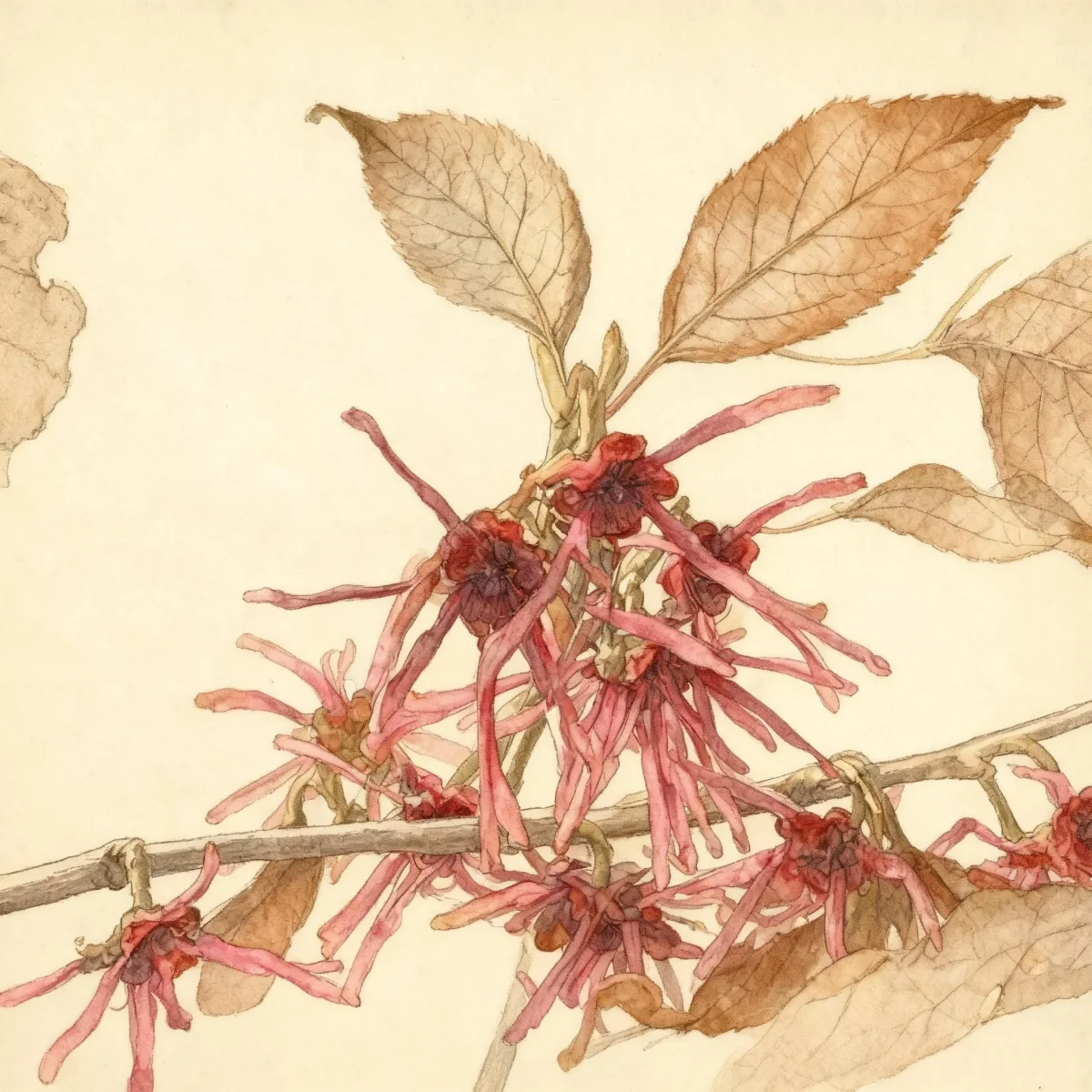
Ozark witch hazel (Hamamelis vernalis 'Lombart's Weeping')
Discover Hamamelis vernalis 'Lombart's Weeping', a low-maintenance Ozark witch hazel featuring fragrant winter blooms.
Scroll down to discover growing tips, care requirements, companion plants, and more
Complete Plant Information
Overview
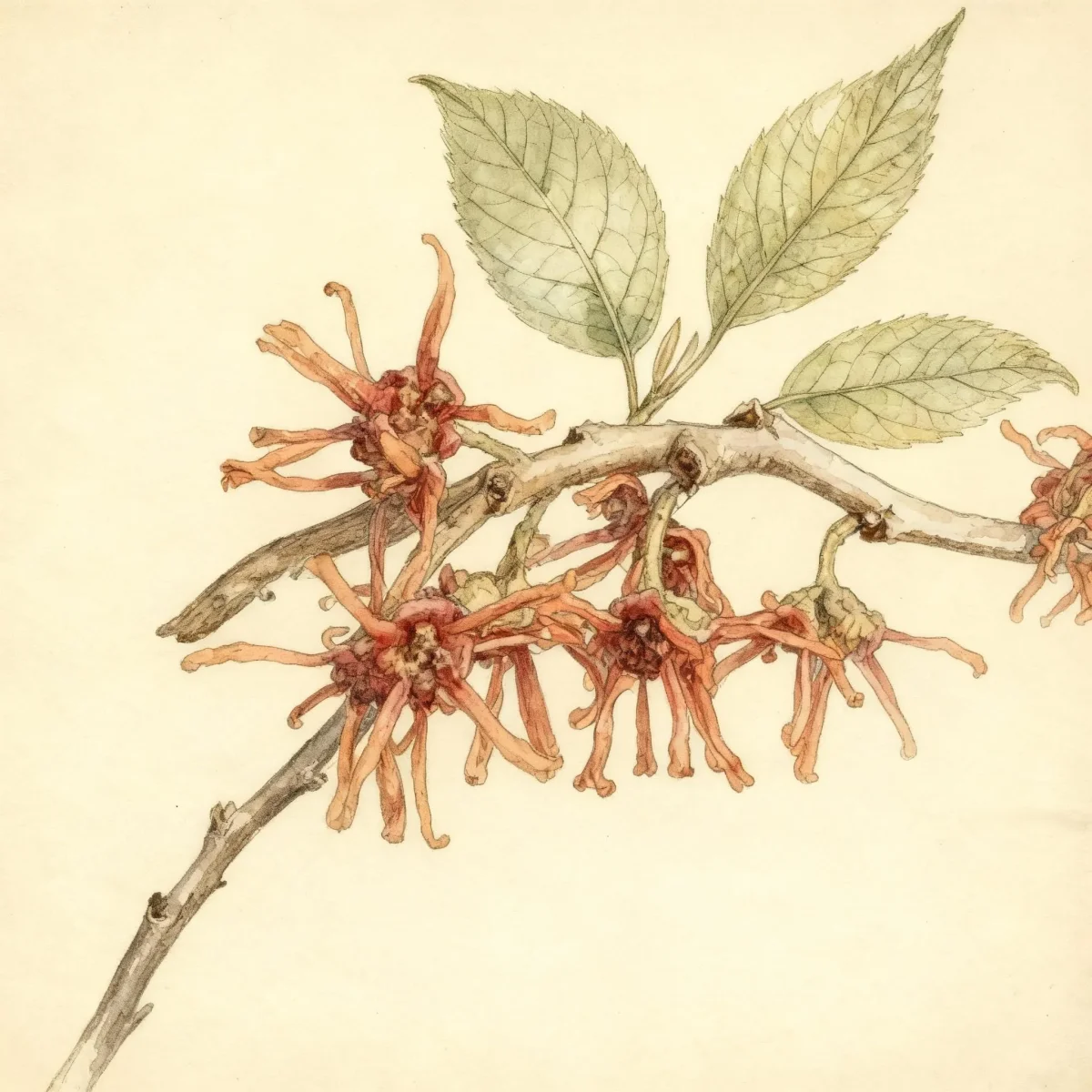
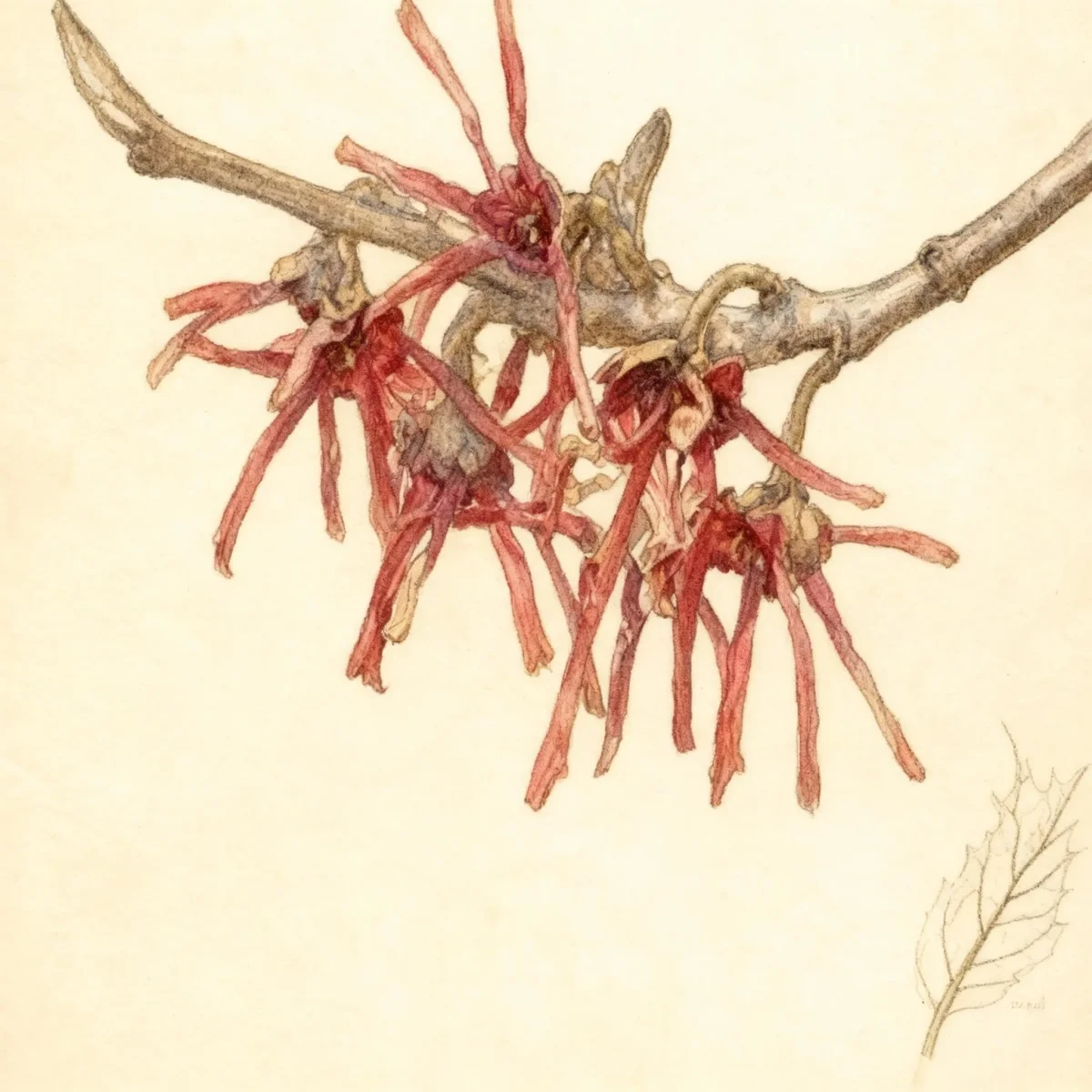
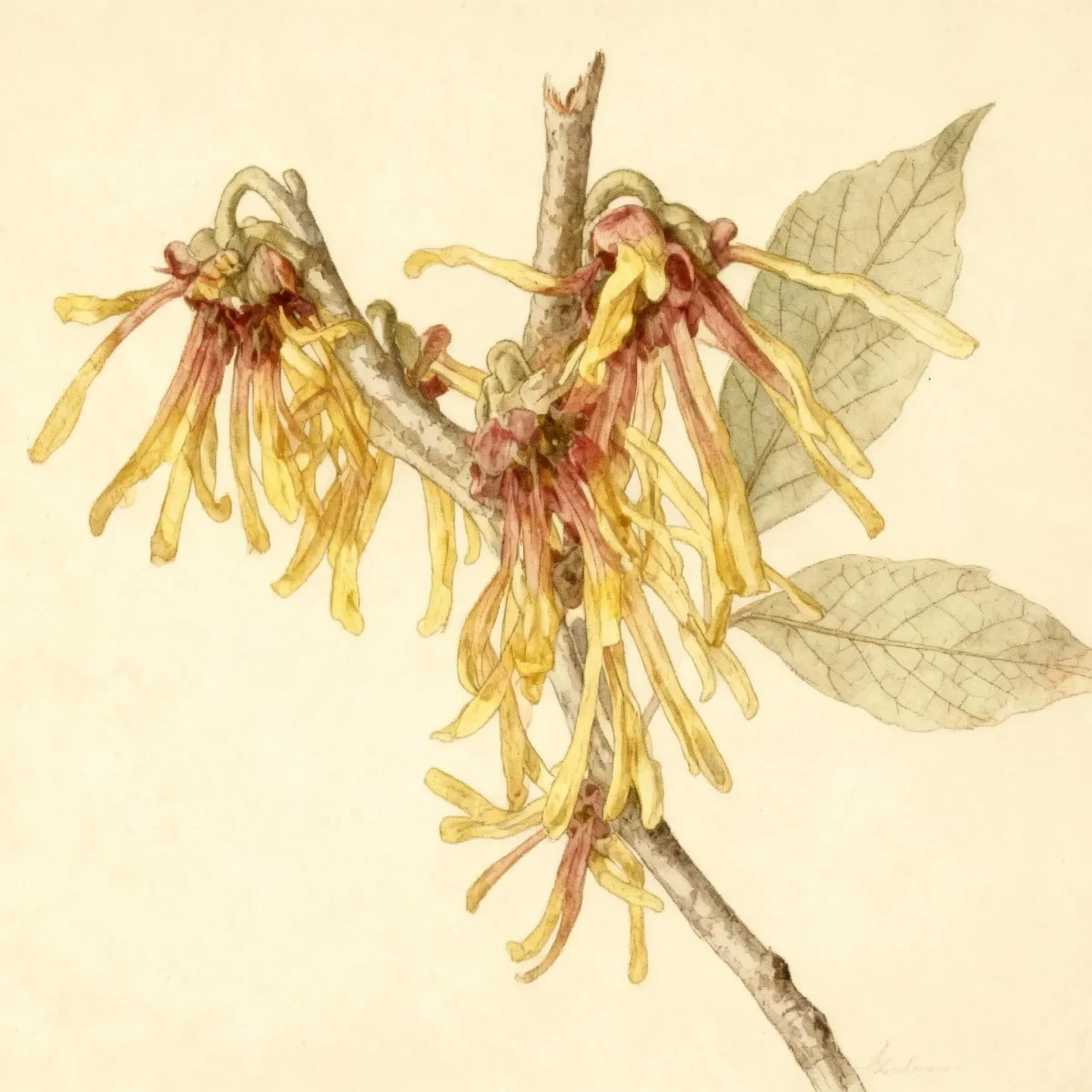
Hamamelis vernalis ‘Lombart’s Weeping’ offers exceptional winter interest, providing color and fragrance when most of the garden is dormant. This variety of Ozark witch hazel is valued for its gracefully pendulous habit, forming a spreading mound that draws attention during the bleakest months. The shrub’s early bloom time, often peaking between January and March, features striking orange-red, ribbon-like flowers that release a pleasant fragrance.
Native to the Ozark Plateau, this particular cultivar, Hamamelis vernalis ‘Lombart’s Weeping’, ensures reliable performance in cooler climates while appreciating consistent moisture. Beyond its winter display, it offers attractive green foliage that turns golden yellow in the fall before dropping, providing multi-season texture to the landscape.
For gardeners seeking low-maintenance yet high-impact specimens, the Ozark witch hazel provides a solution, tolerating clay soils and deer pressure while serving as a superior focal point. Its unique structure makes Hamamelis vernalis ‘Lombart’s Weeping’ a prized addition to winter gardens or woodland borders.
Fast Facts
- Plant Family: Hamamelidaceae
- Plant Type: Deciduous shrub
- Hardiness Zones: USDA Zones 4-8
- Size at Maturity:
- Height: 4-5 ft
- Spread: 7-10 ft
- Bloom Time: January to March
- Bloom Description: Orange-red
- Sun Exposure: Full sun to part shade
- Water Needs: Medium
- Maintenance Level: Low
How to Grow
Planting should ideally occur in fall or early spring when temperatures are moderate, allowing the root system to establish before summer heat arrives. Locate Ozark witch hazel in a site receiving full sun for the best flowering potential, though it tolerates partial shade. It thrives in average, medium-moisture, well-drained soils, but prefers those that are acidic and rich in organic matter.
Maintain consistent moisture, especially during dry spells, as this shrub dislikes drought and prolonged summer dryness can lead to leaf scorch symptoms. While Hamamelis vernalis ‘Lombart’s Weeping’ shows tolerance for clay soils, ensured drainage is paramount to prevent root issues. Fertilization is rarely necessary if planted in rich soil; focus instead on applying a thick layer of mulch to retain cool, even soil moisture.
Pruning should be kept minimal as this weeping form develops a natural shape. If shaping or size reduction is required, prune immediately after the flowers fade in spring before new leaf growth fully emerges. Be vigilant about removing any root suckers that arise, especially those originating below the graft union, to maintain the integrity of the desired ‘Lombart’s Weeping’ cultivar.
Landscape Uses
The superior winter-flowering nature of Hamamelis vernalis ‘Lombart’s Weeping’ makes it invaluable for scene-setting during the dormant season. Its pendulous branches and early spicy fragrance mean it performs exceptionally well as a specimen plant where its winter architecture can be fully appreciated.
Consider placing this Ozark witch hazel in shrub borders or woodland gardens where its golden fall color and winter display contrast nicely with evergreen structure. It functions effectively as a natural screen or can be utilized as a tall hedge, provided you manage the root suckers appropriately. Because it is tolerant of light shade and moist conditions, it is perfectly suited for planting near water features or in a designated rain garden setting.
Standout Features
Flower Qualities
- Showy
- Fragrant
Noteworthy Characteristics
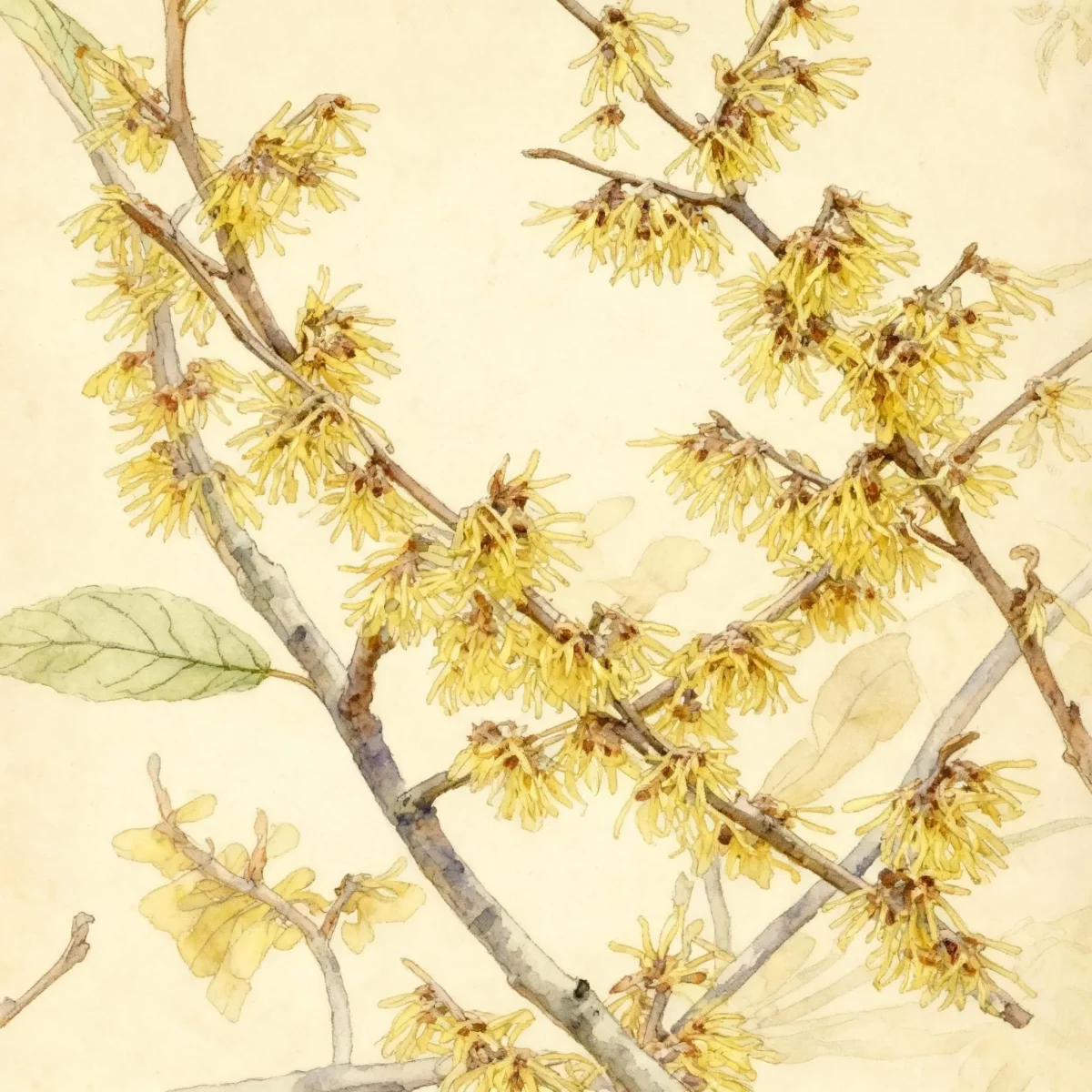
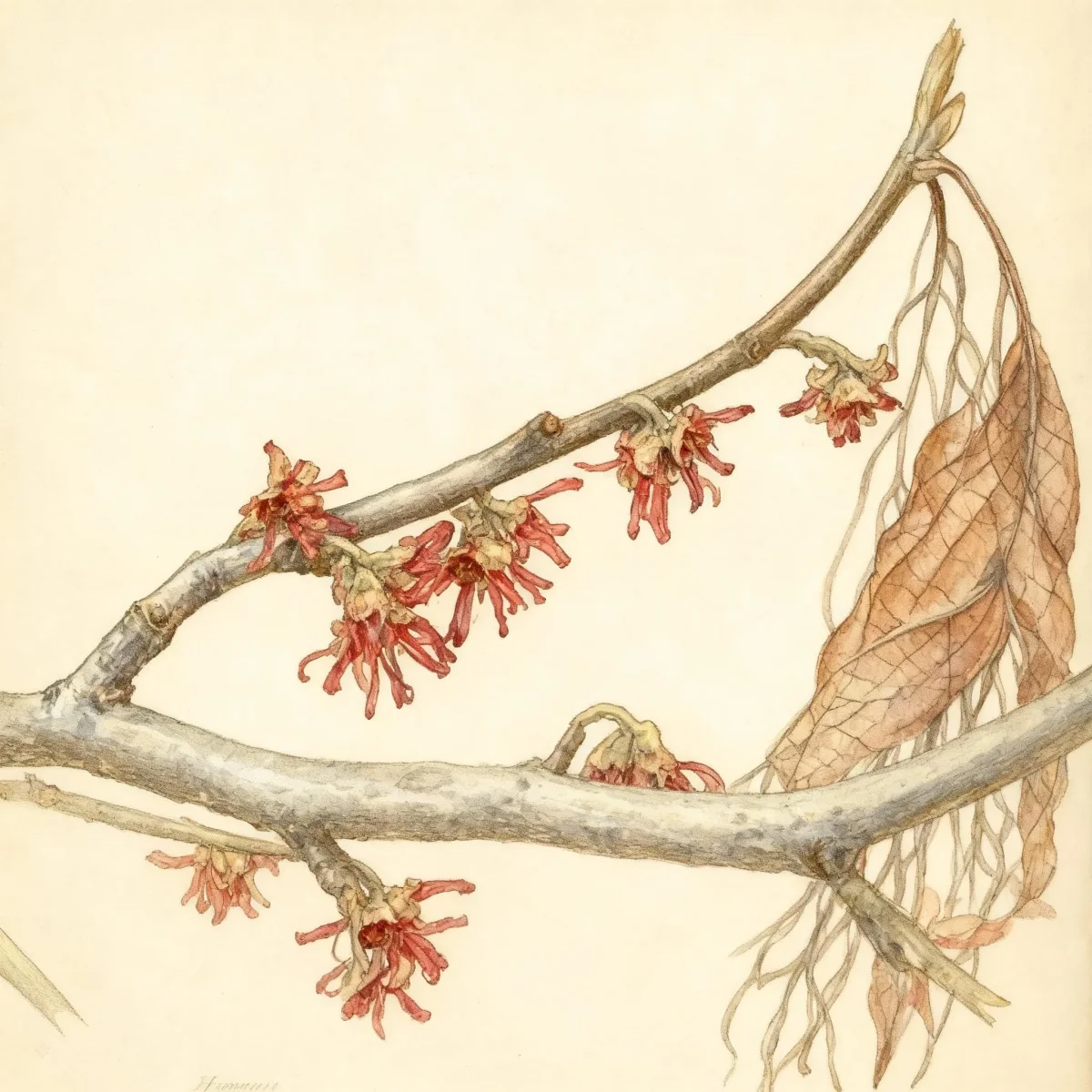
Flowers emerge in axillary clusters in mid to late winter, appearing before the foliage. Each flower possesses four narrow, ribbon-like petals that transition from red at the base to copper orange at the tip, providing an orange-red display. The cultivar ‘Lombart’s Weeping’ is characterized by its pendulous mound shape, growing up to 5 feet tall but spreading significantly wider, up to 10 feet, complemented by golden yellow fall foliage.
Tolerances
- Deer
- Erosion
- Clay Soil
Potential Problems
Insect and disease issues for Ozark witch hazel are generally minor and rarely necessitate chemical intervention. Gardeners should inspect foliage for cosmetic damage caused by caterpillars or Japanese beetles feeding on the leaves during the growing season. Occasional pest concerns may include monitoring for scale, gall aphids, leafrollers, and leafminers.
Fungal issues like powdery mildew or minor leaf spots can occasionally appear, particularly if air circulation is poor or humidity is constantly high. Cultural care is the best preventative measure; ensure proper spacing and avoid overhead watering late in the day to reduce disease pressure. If the shrub is stressed by drought, it becomes more susceptible to these minor issues.
Frequently Asked Questions
What hardiness zones is Ozark witch hazel suitable for?
Hamamelis vernalis ‘Lombart’s Weeping’ is hardy and reliably grown in USDA Zones 4 through 8.
How large does Hamamelis vernalis ‘Lombart’s Weeping’ grow?
This weeping cultivar typically reaches a mature height between 4 and 5 feet, but it spreads outward to a substantial width of 7 to 10 feet, forming a broad mound.
When does Ozark witch hazel bloom?
The bloom time for this species is quite early, generally occurring from January straight through to March, offering bright, fragrant color against the stark winter landscape.
What sun exposure does Hamamelis vernalis ‘Lombart’s Weeping’ need?
For the most abundant and showy flowers, full sun exposure is recommended, although this shrub adapts well to locations receiving part shade.
Conclusion
The Ozark witch hazel, specifically the excellent cultivar Hamamelis vernalis ‘Lombart’s Weeping’, provides essential structure, fragrance, and color to the winter garden with minimal effort required from the gardener. Its versatility in handling various soil types and deer pressure makes it a reliable choice across multiple USDA Hardiness Zones. Plan your planting during cool periods and ensure it receives adequate moisture to fully benefit from this long-blooming, low-maintenance beauty.
Companion Planting
When integrating Hamamelis vernalis ‘Lombart’s Weeping’ into a woodland edge or border, select companions that offer structure in late spring and summer after the witch hazel finishes flowering. Plants that appreciate similar moist, acidic soil conditions are ideal partners. Consider underplanting with shade-tolerant ferns or hostas, though be mindful of their mature heights so as not to obscure the shrub’s winter blooms.
For areas receiving full winter sun, broadleaf evergreens like Rhododendrons or mountain laurel provide excellent seasonal contrast, maintaining green color adjacent to the shrub’s bare, weeping branches. When situated near a rain garden, consider moisture-loving perennials like Astilbe or Ligularia, ensuring they do not outcompete the slower-growing witch hazel establishing itself.
Seasonal Care Calendar
Spring is the critical time for pruning; conduct any shaping of Hamamelis vernalis ‘Lombart’s Weeping’ right after the flowers drop but before the leaves fully develop. Continue monitoring water needs through summer, ensuring consistent deep watering to prevent leaf scorch during heatwaves. Fall is when the shrub highlights its golden-yellow color, providing welcome relief as summer gardens fade.
Winter care focuses primarily on appreciation, as this is the active blooming season for the Ozark witch hazel. Ensure the root zone maintains a protective layer of mulch, which helps moderate soil temperature fluctuations and conserves moisture, protecting the shallow roots essential for early spring vigor. Be aware of potential root suckering during any time of year and remove unwanted growth promptly.