Daylily (Hemerocallis 'Joan Senior')
Hemerocallis 'Joan Senior' is a reliable Daylily producing near-white 6" blooms; low maintenance and excellent for borders.
Scroll down to discover growing tips, care requirements, companion plants, and more
Complete Plant Information
Overview
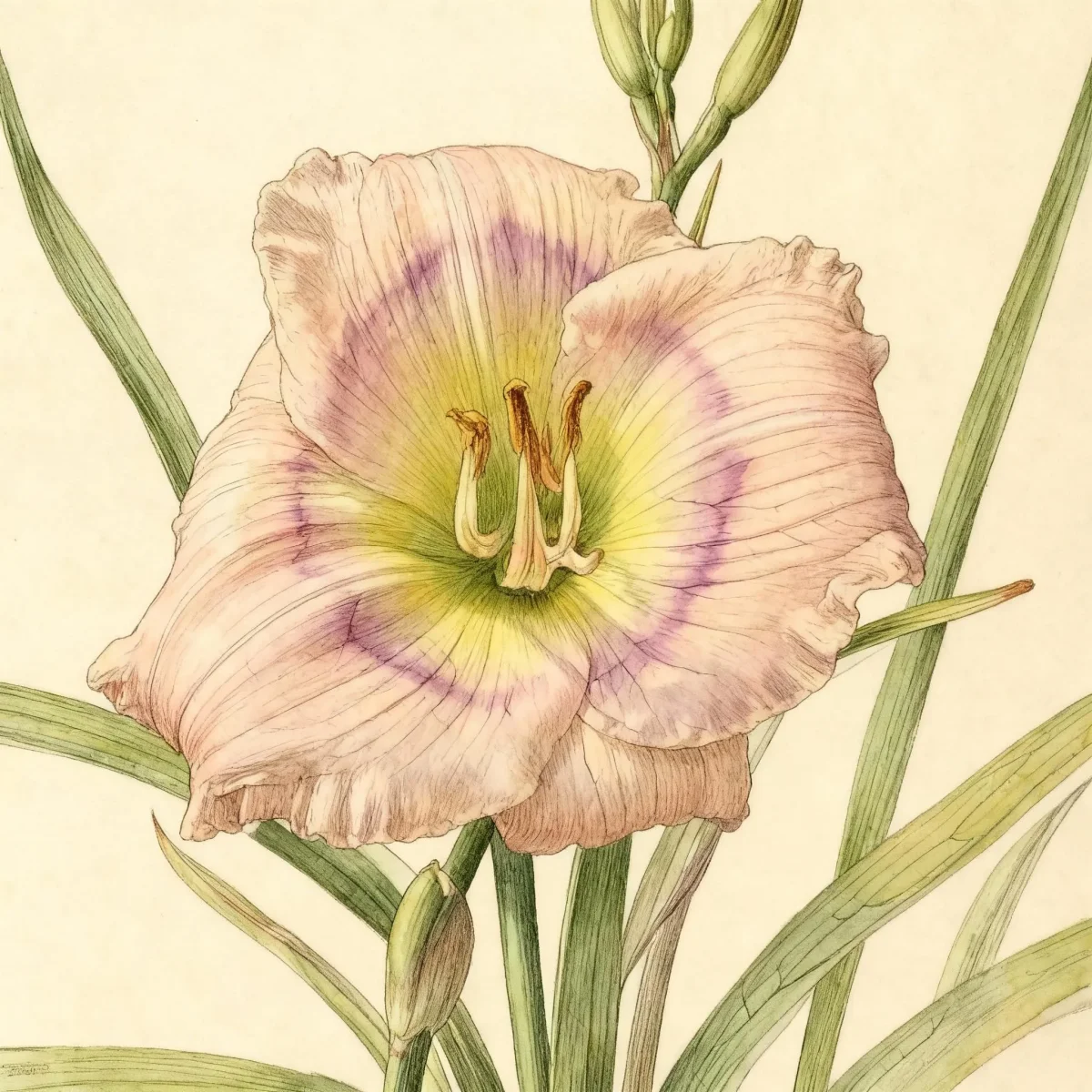
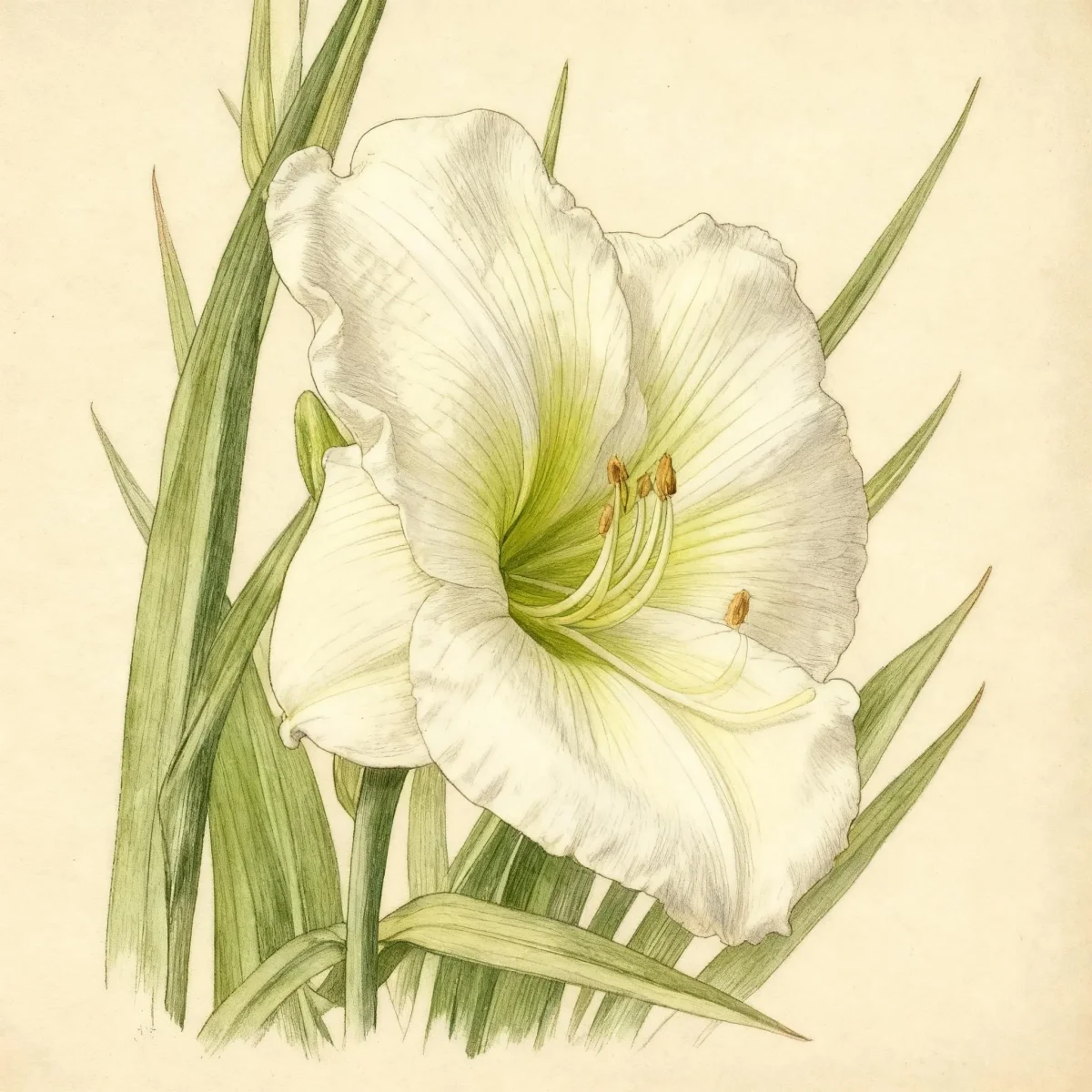
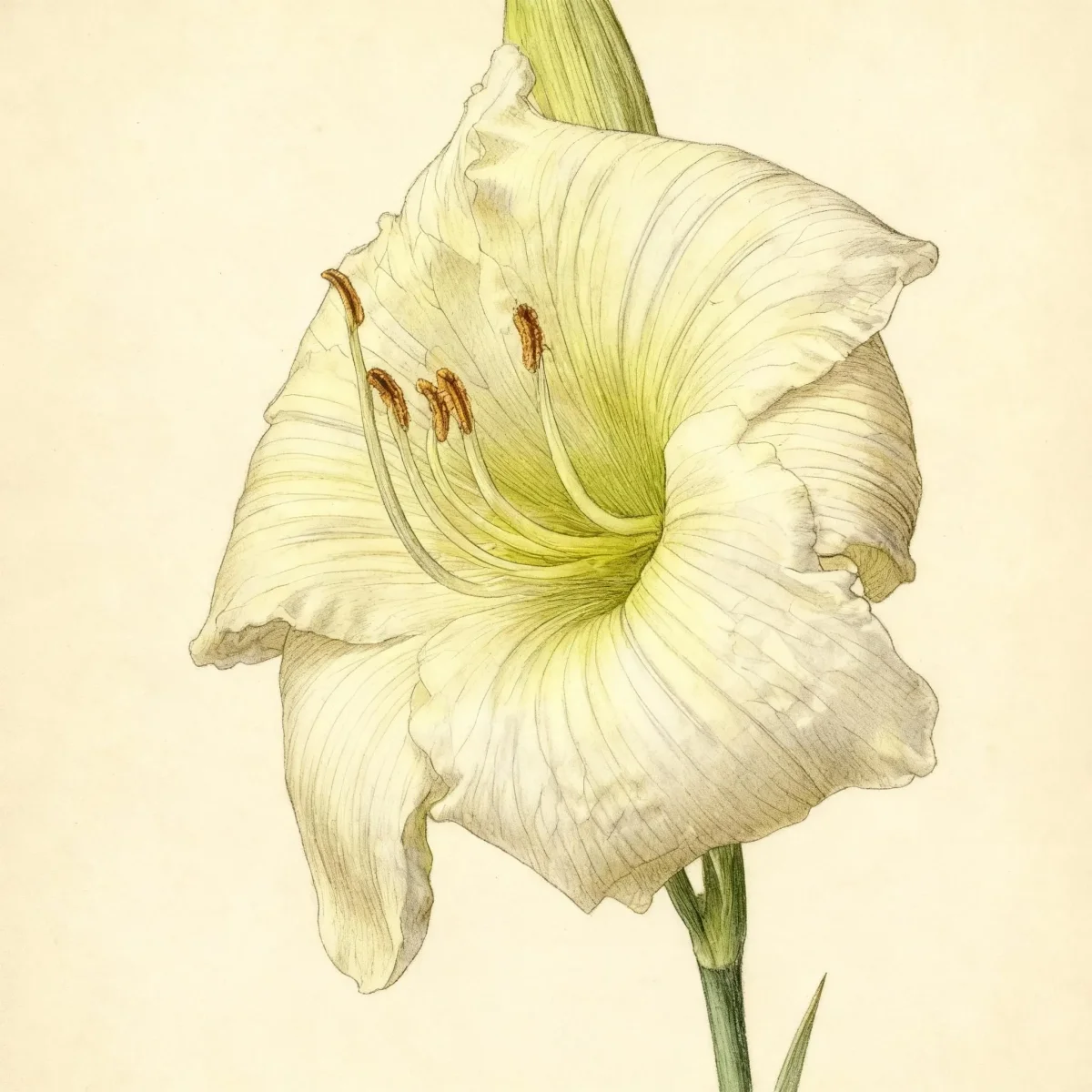
Hemerocallis ‘Joan Senior’ is an esteemed herbaceous perennial, widely recognized and cherished as a Daylily. This cultivar produces striking, near-white flowers measuring approximately 6 inches across, each featuring a distinct lime-green throat that adds subtle complexity to the Summer garden display. As a highly adaptable plant, the Daylily thrives across a wide range of conditions, requiring minimal intervention once established, making it a favorite for both novice and experienced gardeners.
This variety provides reliable performance across USDA Zones 3 through 9, offering robust color and texture from late spring into mid-summer. The graceful, arching foliage forms dense clumps that effectively suppress weeds while providing an attractive green backdrop for the fleeting, yet abundant, blooms of the Hemerocallis ‘Joan Senior’.
Gardeners value the easygoing nature of this Daylily; it tolerates heat and humidity well, provided consistent moisture is maintained during extreme dry spells. Its low maintenance profile, combined with its multi-award-winning genetics, guarantees substantial visual rewards with relatively little effort.
Fast Facts
- Plant Family: Asphodelaceae
- Plant Type: Herbaceous perennial
- Hardiness Zones: USDA Zones 3-9
- Size at Maturity:
- Height: 1.5-2 ft
- Spread: 1.5-2 ft
- Bloom Time: May to July
- Bloom Description: White with green throat
- Sun Exposure: Full sun to part shade
- Water Needs: Medium
- Maintenance Level: Low
How to Grow
The best time to establish new Hemerocallis ‘Joan Senior’ plants is during spring or fall, allowing the fibrous roots to settle before extreme summer heat or winter cold sets in. This Daylily performs best in deep, fertile loams but adapts well to average, well-drained soils, requiring medium moisture. Ensure the planting site receives adequate light, ranging from full sun to part shade, to maximize flower production.
Ongoing cultural care for the Daylily is straightforward. Deadhead spent flowers daily for a tidier appearance, and promptly remove the entire flower scape once all blooms have finished to direct the plant’s energy back into root and foliage development. While tolerant of summer heat, plants will present more attractive foliage if given deep supplemental watering during prolonged dry periods.
Daylilies generally require division every three to four years to maintain vigor and flowering density; plan this division for either fall or early spring, with spring being preferable in colder winter climates. Remember that hybrid daylilies like Hemerocallis ‘Joan Senior’ will not breed true from seed, so division is the standard method for propagation.
Landscape Uses
The upright, clump-forming habit of the Daylily makes it exceptionally versatile in landscape design. Hemerocallis ‘Joan Senior’ is frequently utilized as an elegant edging plant along walkways or driveways, providing a consistent, structured border that remains tidy throughout the growing season. They also excel when planted in mass groupings to cover large areas, creating sweeping drifts of texture punctuated by the near-white flowers.
For perennial borders, Daylilies serve as excellent middle-layer contributors, providing height (1.5 to 2 feet) without overpowering shorter foreground plants. Because they are celebrated for being easy-to-grow herbaceous perennials, combine them successfully with shade-tolerant groundcovers or spring-blooming bulbs that finish before the Daylily fully leafs out. This strategy ensures continuous visual interest in the bed.
While robust in mass settings, even single specimens of Hemerocallis ‘Joan Senior’ offer significant appeal near patios or entrances where their subtle coloring can be appreciated up close. If your landscape includes areas prone to minor soil disturbance, their rooting structure helps combat erosion effectively.
Standout Features
Flower Qualities
- Showy
Noteworthy Characteristics
Hemerocallis is a genus of herbaceous perennials commonly known as daylilies, originating in Asia and central Europe, with modern garden stock comprised almost entirely of hybrids developed by intensive cross-breeding. Each individual flower, typically funnel or bell-shaped, lasts only one day, but they are produced in such abundance on successive scapes that the plant remains in flower over a long season. ‘Joan Senior’ is particularly valued for its 6-inch diameter, near-white blooms accented by vibrant lime-green throats, offering clean, classic beauty favored by the American Hemerocallis Society.
Tolerances
- Rabbit
- Erosion
- Air Pollution
Potential Problems
Daylilies are inherently adaptable; they are simple to cultivate and rarely suffer significant damage from pests or diseases, which contributes to their low maintenance rating. Occasionally, common sucking insects such as spider mites, aphids, or thrips might appear, usually under high heat or stress; these can usually be managed with periodic sprays of insecticidal soap. The most significant localized issue can be Daylily rust, which requires specific fungicide treatments if it becomes persistent in humid climates.
The main cultural challenge usually involves over-crowding; if the clump becomes too dense due to lack of division every 3-4 years, flowering capacity diminishes significantly. Ensure foliage is healthy enough to photosynthesize efficiently, as robust foliage is the key to vibrant blooms in the following season for your Hemerocallis ‘Joan Senior’.
Frequently Asked Questions
What hardiness zones is Daylily suitable for?
Hemerocallis ‘Joan Senior’ is suitable for a wide range of climates, thriving in USDA Zones 3 through 9.
How large does Daylily grow?
This Daylily typically reaches a mature height between 1.5 and 2 feet tall, with a similar spread of 1.5 to 2 feet.
When does Daylily bloom?
The blooming period for Hemerocallis ‘Joan Senior’ spans from May to July, featuring near-white flowers with striking green throats.
What sun exposure does Daylily need?
For optimal performance, plant this Daylily in locations receiving full sun to part shade.
Conclusion
Hemerocallis ‘Joan Senior’ stands out as an incredibly valuable perennial due to its reliable blooming window, relatively small size, and exceptional hardiness, making it a cornerstone plant for mixed borders. This superb Daylily offers sophisticated white coloration without demanding high levels of intervention from the gardener. Before planting, confirm that your site offers medium moisture and well-drained soil, and enjoy the low-maintenance beauty this cultivar reliably provides.
Companion Planting
Selecting appropriate neighbors for your Daylily ensures that the entire planting area remains attractive even when the blooms of Hemerocallis ‘Joan Senior’ are past their peak. Since Daylilies thrive in similar conditions—full sun to part shade and medium moisture—they pair beautifully with plants that offer contrasting foliage texture. Consider planting them alongside ornamental grasses, which offer a fine, airy contrast to the Daylily’s broad, linear leaves.
Other excellent companions include plants that can handle the summer heat and help hide the foliage as it matures or declines later in the season. Hostas, which prefer slightly more shade, can work well near the edges of a Daylily grouping. For reliable summer color that shares the sun needs, look to Coneflowers (Echinacea) or Shasta Daisies, which harmonize well with the 1.5 to 2-foot height of the Hemerocallis ‘Joan Senior’.
Propagation Tips
The primary and most effective method for multiplying Hemerocallis ‘Joan Senior’ is through the division of mature clumps. Mature clumps benefit significantly from being divided every three to four years to maintain robust flowering performance and prevent overcrowding, which can lead to reduced bloom count or thinner foliage. Division should occur either in the fall or early spring, though early spring division is often favored in areas with very cold winters.
To divide, carefully dig up the entire clump using a sharp spade, ensuring you lift the root ball intact. Use a sharp knife or shovel to section the crown into smaller pieces, ensuring each new division has a healthy mass of roots attached to at least one live crown (the growing point). Replant the divisions immediately into prepared soil at the same depth they were growing previously.
If dividing in the fall, ensure divisions have several weeks to establish before the ground freezes hard. Conversely, new divisions planted in spring will have the entire growing season to develop a strong root system, preparing them well for their first full summer bloom cycle.