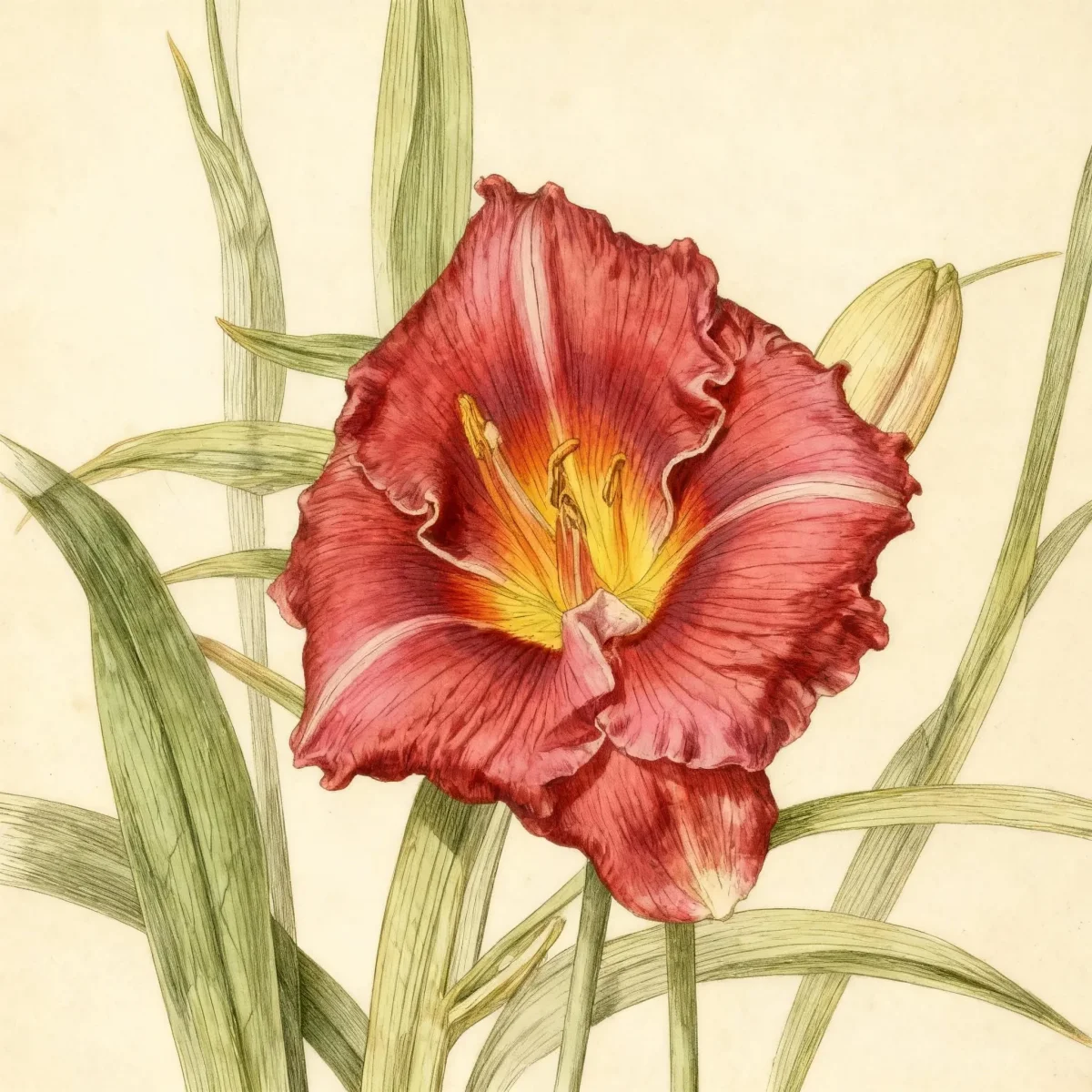
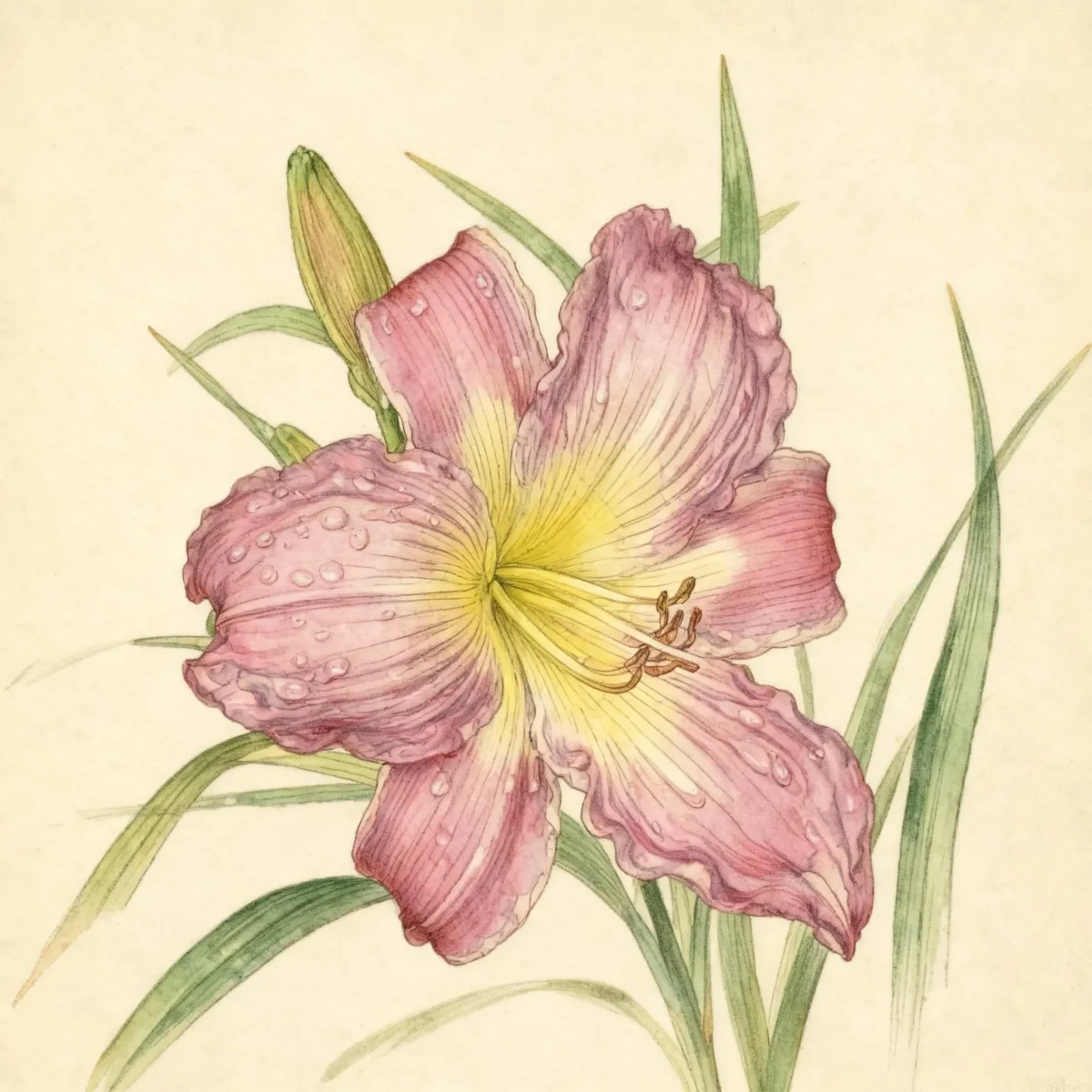
Daylily (Hemerocallis 'Lady Eva')
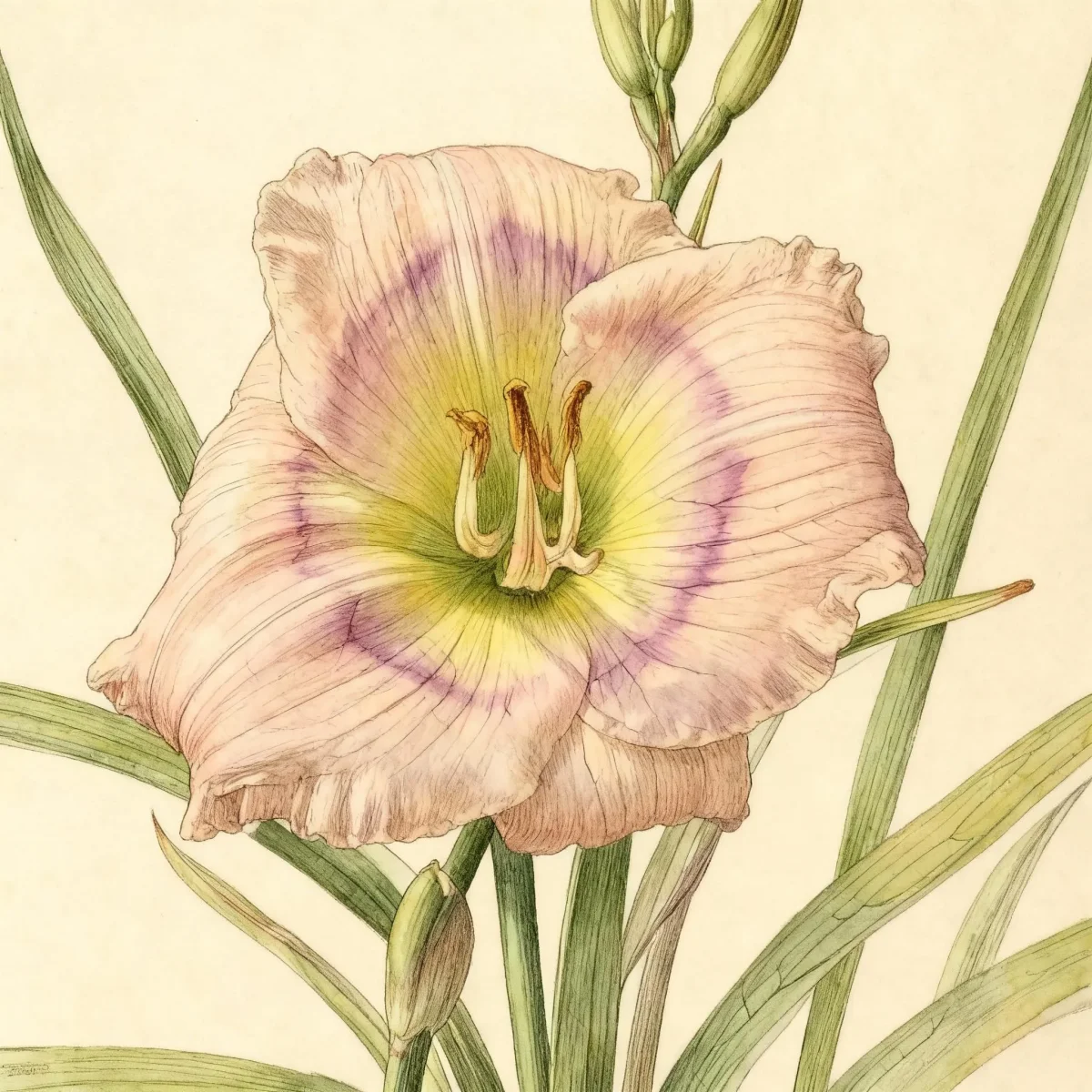
Hemerocallis 'Lady Eva' Daylily delivers striking violet blooms from June to August, prized for its low maintenance and vibrant color display.
Scroll down to discover growing tips, care requirements, companion plants, and more
Complete Plant Information
Overview
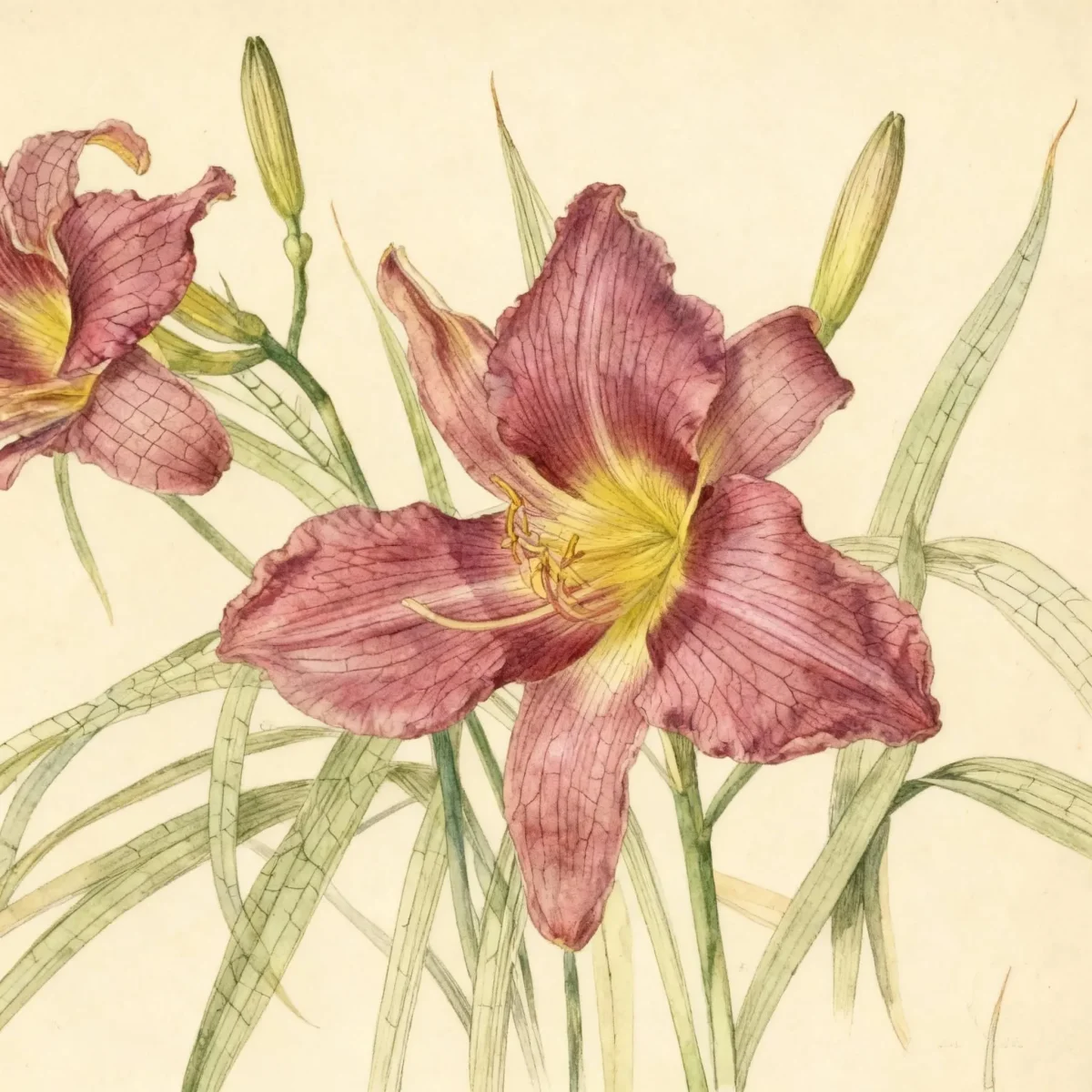
The Hemerocallis ‘Lady Eva’ Daylily is a highly valued addition to the perennial garden, renowned for its dramatic, yet easy-to-care-for nature. This reliable herbaceous perennial provides abundant color over several months, distinguishing itself with 6-inch diameter, violet flowers accented by deep purple eyezones and bright yellow throats. As a popular Daylily hybrid, ‘Lady Eva’ offers significant visual impact without demanding constant attention from the gardener.
Growing robustly between 1.5 and 2.5 feet tall, this cultivar quickly forms dense clumps of attractive, arching foliage that helps suppress weeds. Its exceptional adaptability means it thrives across a wide range of conditions, making the Hemerocallis ‘Lady Eva’ a foundational choice for both novice and experienced gardeners looking for consistent, low-maintenance perennial performance.
Fast Facts
- Plant Family: Asphodelaceae
- Plant Type: Herbaceous perennial
- Hardiness Zones: USDA Zones 4-9
- Size at Maturity:
- Height: 1.5-2.5 ft
- Spread: 1.5-2 ft
- Bloom Time: June to August
- Bloom Description: Violet with dark purple eyezones and yellow throats
- Sun Exposure: Full sun to part shade
- Water Needs: Medium
- Maintenance Level: Low
How to Grow
Planting Hemerocallis ‘Lady Eva’ should occur in spring or fall when temperatures are moderate, ensuring the fibrous root system establishes well before extreme heat or cold. Choose a site receiving full sun to partial shade, as light strongly influences bloom quantity. These Daylilies perform best in deep, fertile loams with medium moisture, although they tolerate many average, well-drained soils.
Maintain medium moisture levels, especially during dry spells, as deep watering keeps the foliage looking attractive through summer heat and humidity. Maintenance is generally low; deadhead spent flowers daily for neatness, and remove the entire scape once blooming concludes. Because hybrid daylilies do not breed true from seed, propagation is best achieved through division.
Dividing large clumps of Hemerocallis ‘Lady Eva’ every 3 to 4 years revitalizes the plant and ensures peak performance. Perform division in spring (preferred in colder areas) or fall. In zones where winter dormancy is required, ensure the plants experience a sufficient cold period to promote strong new blooms the following year.
Landscape Uses
This versatile Daylily excels in numerous landscape applications due to its tidy clumping habit and extended bloom duration. Hemerocallis ‘Lady Eva’ is an excellent choice for forming neat borders along walkways or driveways where the repeating color display can be easily appreciated. They achieve mass impact when planted densely over large areas, creating rivers of color throughout the summer months.
Because they are relatively robust, these perennials are also effective for stabilization on gentle slopes or areas prone to erosion, utilizing their fibrous roots to hold soil structure. While this specific cultivar is not described as dwarf, they integrate well into mixed perennial beds, pairing nicely with lower-growing annuals or later-blooming perennials that can fill the gap after the Daylily scapes fade.
Standout Features
Flower Qualities
- Showy
Noteworthy Characteristics
The genus Hemerocallis lends its name from Greek words meaning ‘day’ and ‘beauty,’ reflecting that each flower lasts only a single day. Fortunately, the Hemerocallis ‘Lady Eva’ produces flowers in such succession that the plant remains attractive throughout its long bloom period. This cultivar features ruffled petals on its large, 6-inch blooms, and its arching foliage forms a visually pleasing clump up to 24 inches wide, with flower scapes rising significantly above.
Tolerances
- Rabbit
- Erosion
- Air Pollution
Potential Problems
Daylilies are renowned for being extremely adaptable and are generally pest-free, requiring minimal intervention from the gardener. Occasionally, infestations of mites, aphids, or thrips may occur, usually managed with strong sprays of water or insecticidal soap if necessary. Daylily rust can become a concern in specific humid climates, requiring the removal of infected foliage promptly. Notably, rabbits tend to avoid this genus entirely, providing a practical benefit in areas where they cause damage to other plants.
Frequently Asked Questions
What hardiness zones is Daylily suitable for?
Hemerocallis ‘Lady Eva’ is suited for planting in USDA Hardiness Zones 4 through 9, offering broad adaptability across many North American climates.
How large does Hemerocallis ‘Lady Eva’ grow?
Mature plants typically reach a height between 1.5 and 2.5 feet, with a spread ranging from 1.5 to 2 feet, forming a substantial green clump.
When does Daylily bloom?
This cultivar provides continuous color from June through August, featuring its violet blooms with prominent dark purple eyezones.
What sun exposure does Hemerocallis ‘Lady Eva’ need?
For the most prolific blooming, the Daylily requires full sun exposure, though it tolerates light afternoon shade or part shade conditions.
Conclusion
The Hemerocallis ‘Lady Eva’ is a dependable, low-effort centerpiece for summer perennial displays, celebrated for its rich violet blooms and hardiness across Zones 4 through 9. By ensuring well-drained conditions and practicing simple deadheading throughout its long June-to-August season, you guarantee a spectacular return on investment. Before planting, confirm your local hardiness zone compatibility and plan your planting for fall or early spring division.
Companion Planting
Effective companion planting for Hemerocallis ‘Lady Eva’ involves selecting partners that thrive under similar conditions—full sun to part shade with medium water needs—and that offer textural contrast. Consider planting shorter, mounding perennials like Catmint (Nepeta) or ornamental grasses that fill the space at the base of the Daylily clump. Plants with contrasting foliage, such as Hostas (in shadier spots) or silver-leaved plants like Lamb’s Ears, can beautifully set off the bright, clear violet of the Daylily flowers.
Design Ideas
Incorporating Hemerocallis ‘Lady Eva’ into formal designs is easy due to its consistent size and disciplined clumping habit. Use them to line sweeping curves in a cottage garden scheme, allowing their arching foliage to soften hard lines. For modern landscapes, mass plantings of groups of five or more create strong color blocks that read well from a distance, providing essential mid-season structure when spring bulbs are finished and summer annuals are just starting.