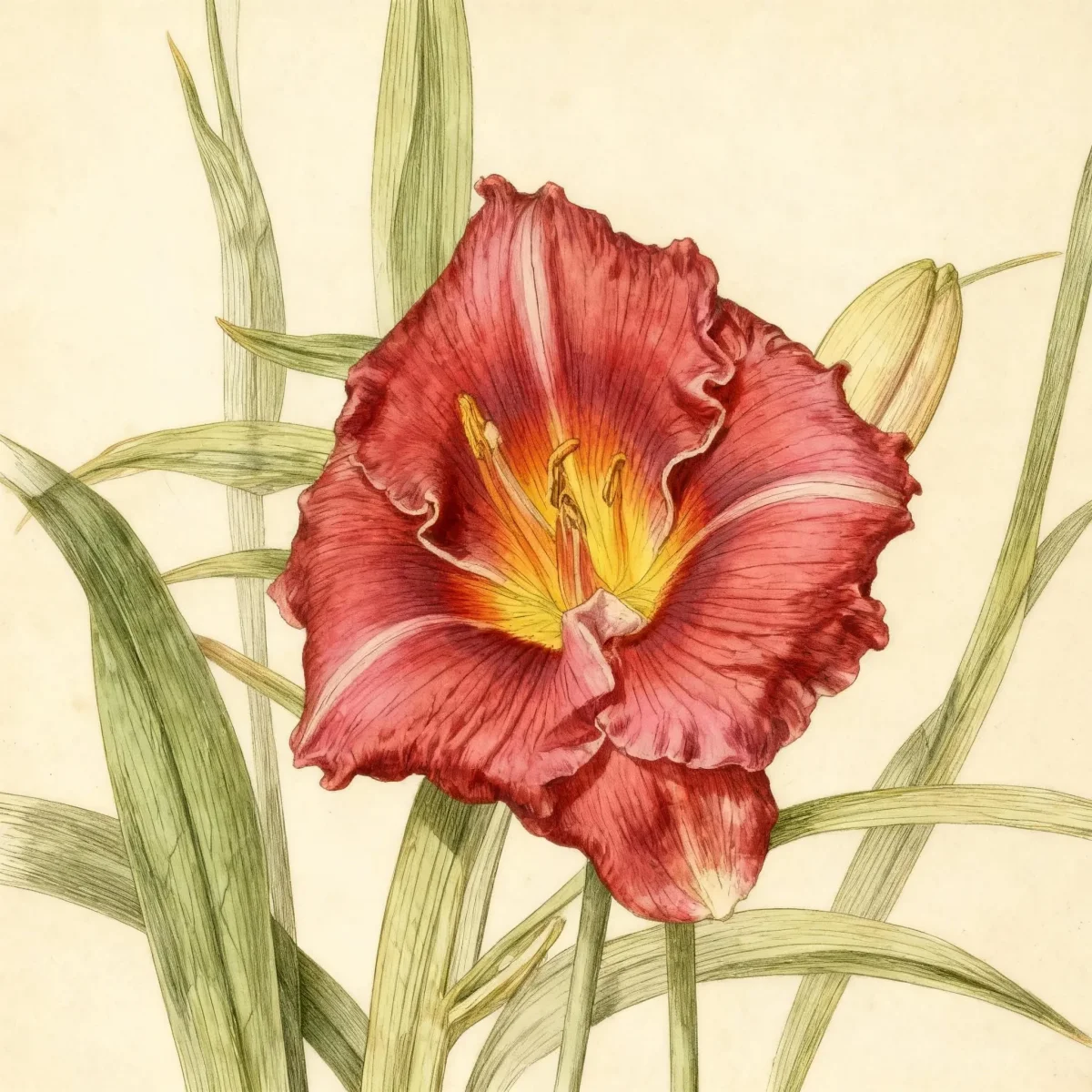
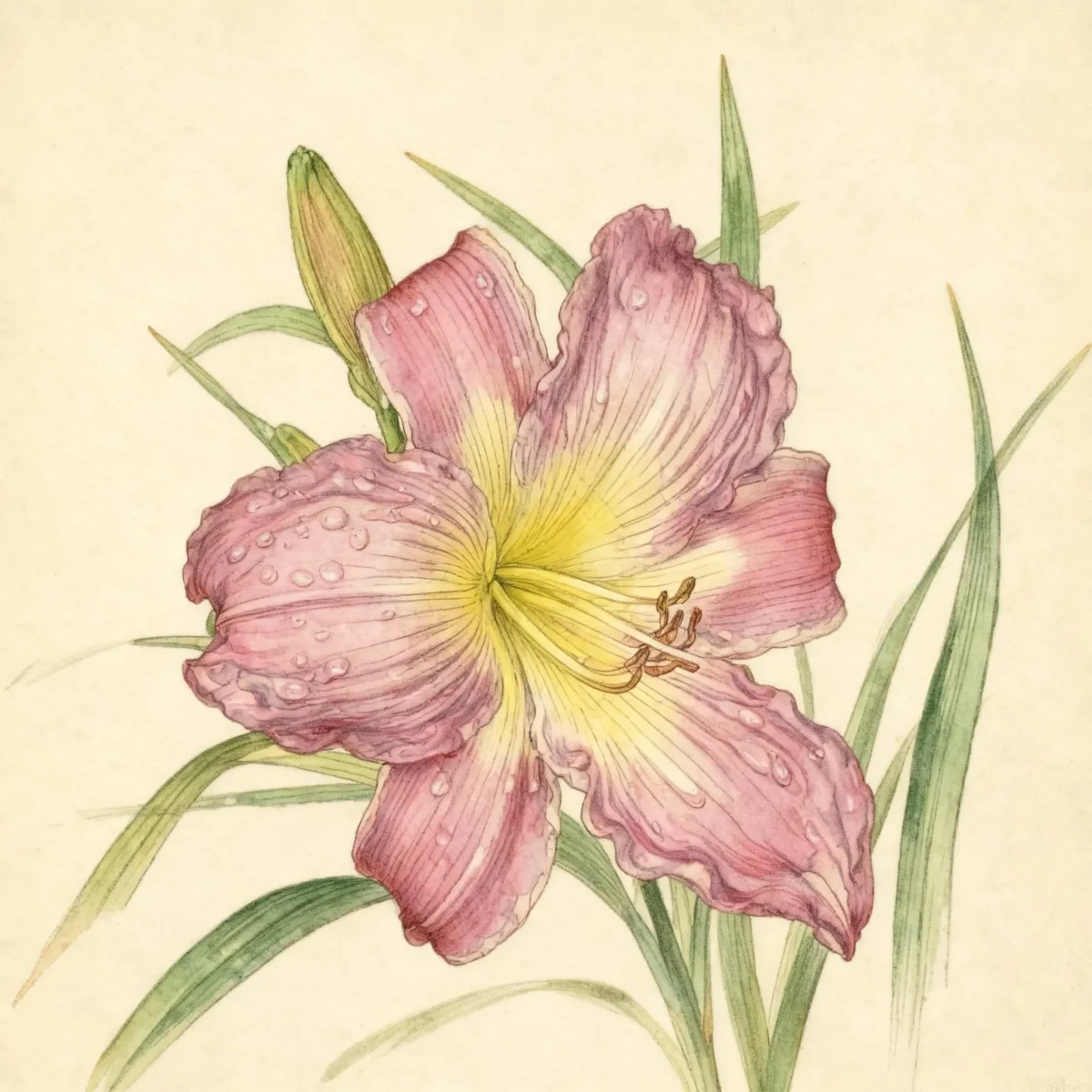
Daylily (Hemerocallis 'Marshmallow Cloud')
Hemerocallis 'Marshmallow Cloud' is a low-maintenance Daylily offering near white blooms in summer for USDA Zones 3-9.
Scroll down to discover growing tips, care requirements, companion plants, and more

Complete Plant Information
Overview
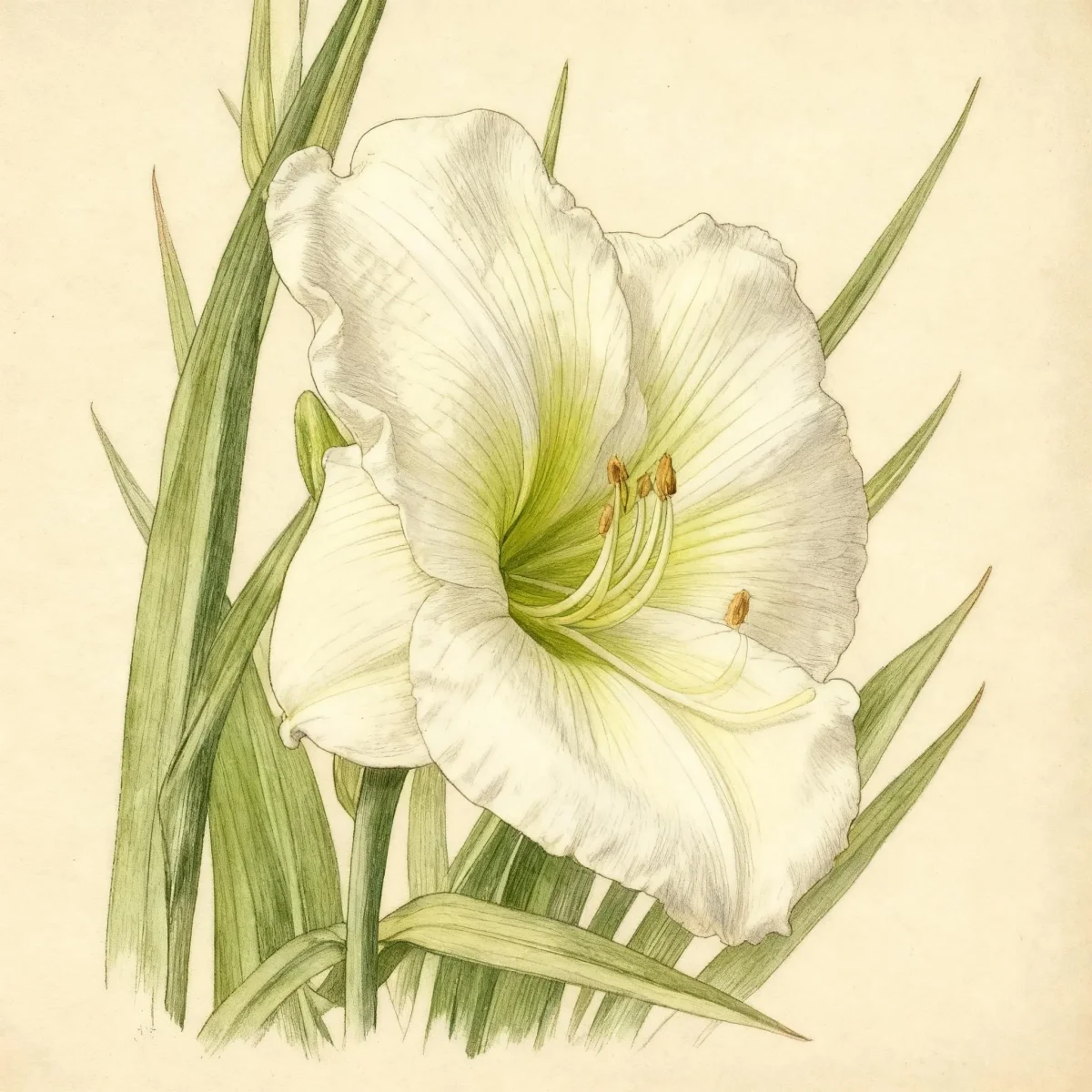
Hemerocallis ‘Marshmallow Cloud’ is a highly valued Daylily cultivar, prized for its near white flowers contrasted by a soft green throat. As an herbaceous perennial, it provides reliable summer color and structure within the garden landscape with minimal fuss from the gardener. This plant belongs to the vast and adaptable Daylily genus, which offers more than 60,000 registered cultivars known for their robust nature and succession of blooms.
This specific diploid cultivar exhibits 5.5-inch diameter flowers emerging on elegant scapes that typically reach 28 inches tall above its arching, linear foliage. Its exceptional hardiness, spanning Zones 3 through 9, makes Hemerocallis ‘Marshmallow Cloud’ a versatile choice for diverse climates across North America. Gardeners appreciate the Daylily for its long blooming period and overall tolerance to common garden stresses.
With its low maintenance requirements, Hemerocallis ‘Marshmallow Cloud’ is an excellent foundational planting, perfect for gardeners seeking impactful color without constant attention. Ensure it receives adequate moisture during dry spells to keep the attractive, grass-like foliage looking its best throughout the season.
Fast Facts
- Plant Family: Asphodelaceae
- Plant Type: Herbaceous perennial
- Hardiness Zones: USDA Zones 3-9
- Size at Maturity:
- Height: 2-2.5 ft
- Spread: 1.5-2 ft
- Bloom Time: June to July
- Bloom Description: Near white with green throat
- Sun Exposure: Full sun to part shade
- Water Needs: Medium
- Maintenance Level: Low
How to Grow
Planting Daylilies like Hemerocallis ‘Marshmallow Cloud’ should ideally occur in spring or fall, allowing the fibrous roots to establish before intense seasonal weather. They perform best in average, medium moisture, well-drained soils. While they adapt to many conditions, Daylilies flourish when given deep, fertile loams, particularly when situated to receive the recommended full sun to part shade exposure.
Ongoing care for this low-maintenance perennial is simple. Deadhead spent flowers daily if neatness is desired, and remove the entire scape once blooming has finished. Though tolerant of heat and humidity, deep watering during extended dry spells is beneficial to maintain vibrant foliage appearance. Avoid excessive fertilization unless soil fertility is extremely poor.
For optimal flowering performance, especially in colder regions, remember that winter dormant daylilies require a necessary cold period of winter dormancy. If you reside in the upper limits of its range (Zone 9), be aware that standard dormant types might struggle, and you may investigate semi-evergreen or evergreen types if available.
Division is an important cultural practice; plan to divide clumps every 3–4 years, preferably in spring in climates with severe winters, or in fall otherwise. Never try to propagate named daylily hybrids from seed, as they will almost certainly not come true to type.
Landscape Uses
The versatility of the Daylily makes Hemerocallis ‘Marshmallow Cloud’ an essential component in diverse landscape designs. Its upright, clumping habit makes it perfect for defining the front edge of mixed perennial borders, providing a foundational line of color that is easy to maintain. They excel when massed over large areas, creating drifts of near white that brighten the summer garden.
Due to their drought resistance once established and moderate size (2 to 2.5 feet tall), these plants also function effectively as informal edging along paths or driveways. Although the species name mentions dwarf cultivars are excellent for rock gardens, this particular cultivar offers reliable mid-height structure. Consider pairing the pale, near white blooms of Hemerocallis ‘Marshmallow Cloud’ with deep purple or blue companions like Salvia or Russian Sage to accentuate the light coloring of the flower.
Standout Features
Flower Qualities
- Showy
Noteworthy Characteristics
Hemerocallis is a genus of herbaceous perennials commonly recognized as daylilies, predominantly native to Asia and central Europe, though modern garden plants are almost exclusively hybrids. Each individual flower lasts only one day—hence the common name—but the plant produces blooms in succession over a long period. Hemerocallis ‘Marshmallow Cloud’ is specifically a diploid cultivar featuring 5.5-inch, near white flowers with striking green throats nestled above arching, blade-like foliage.
Tolerances
- Rabbit
- Erosion
- Air Pollution
Potential Problems
Daylilies are renowned for being extremely adaptable and generally pest-free perennials. The primary concern often relates to minor pest outbreaks; occasionally, mites, aphids, or thrips may appear. Mites are more likely when plants are stressed by drought, so consistent, deep watering during dry periods helps prevent infestations.
Fungal issues, specifically Daylily rust, can become problematic in areas with high humidity or poor air circulation. Ensure plantings are adequately spaced to allow air movement around the foliage. If rust appears, promptly remove and destroy infected leaves to prevent spread. Rabbits, surprisingly, tend to avoid munching on the foliage of daylilies.
Frequently Asked Questions
What hardiness zones is Daylily suitable for?
Hemerocallis ‘Marshmallow Cloud’ is hardy and adaptable, thriving across USDA Zones 3 through 9.
How large does the Daylily grow?
This cultivar typically reaches a mature height between 2 and 2.5 feet, with a spread spanning 1.5 to 2 feet.
What sun exposure does Hemerocallis ‘Marshmallow Cloud’ need?
For the best performance and bloom count, this Daylily requires full sun exposure, though it will tolerate partial shade.
When does Daylily bloom?
Hemerocallis ‘Marshmallow Cloud’ blooms in mid-season, specifically from June to July, displaying its near white with green throat flowers.
Conclusion
Hemerocallis ‘Marshmallow Cloud’ is an exceptionally resilient and beautiful Daylily that offers reliable, low-maintenance performance across a wide range of climates. Its near white summer blooms provide a soft, elegant contrast in any planting scheme. If you seek sturdy foundational perennials that demand little attention, verify your garden hardiness zone compatibility and plan to plant this exceptional cultivar this coming spring or fall.
Companion Planting
Selecting appropriate neighbors for your Daylilies enhances the overall garden aesthetic and health. Daylilies prefer moist, well-drained soil and full sun; companions should share these general needs. Plants that bloom earlier or later than Hemerocallis ‘Marshmallow Cloud’ help ensure season-long interest, masking the foliage as the Daylily finishes its mid-summer run.
Excellent companions include ornamental grasses, which share the upright, linear foliage structure but provide textural contrast. Many late-season bloomers, such as Russian Sage (Perovskia atriplicifolia), or bold, contrasting colors like dark purple Coneflowers (Echinacea purpurea), look stunning against the light tones of the ‘Marshmallow Cloud’ flowers. Avoid planting aggressive groundcovers that might choke out the Daylily crowns over time.
Seasonal Care Calendar
Spring preparation should involve removing any remaining old, dead foliage that may have persisted over winter, cleaning up the planting area. This is the optimal time for dividing overcrowding clumps to refresh vigor every few years. As summer approaches, focus on consistent deep watering during dry spells to support bloom production and foliage health.
During the peak bloom period in June and July, deadheading spent blooms daily keeps the plant looking tidy and encourages continuous flower production. Once blooming ceases, the focus shifts entirely to foliage maintenance; if the leaves look ragged late in the season, you can cut them back to maintain a cleaner appearance, especially in evergreen varieties. Winter preparation in cold zones simply involves ensuring the crown is mulched lightly, although dormant daylilies are usually very cold-hardy.