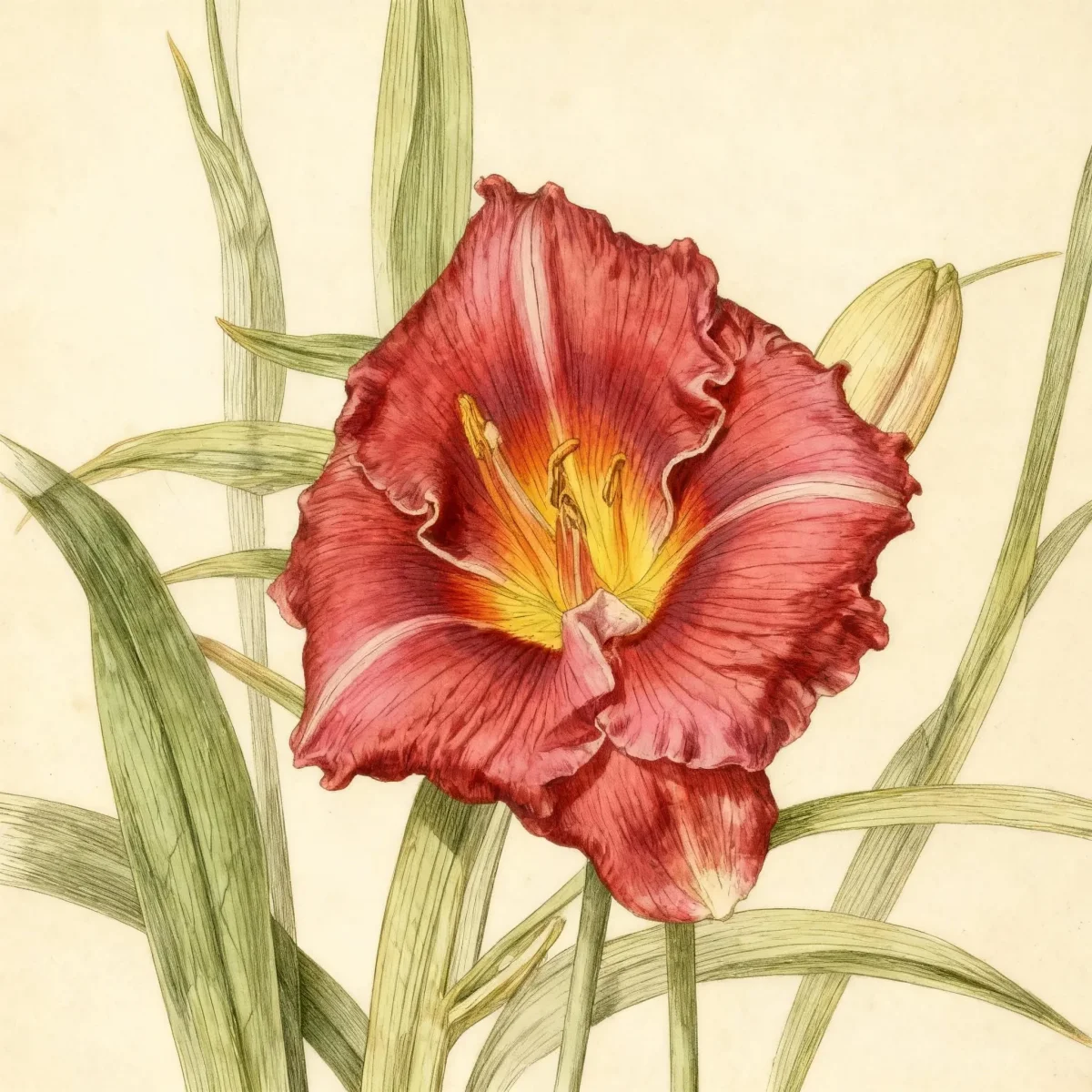
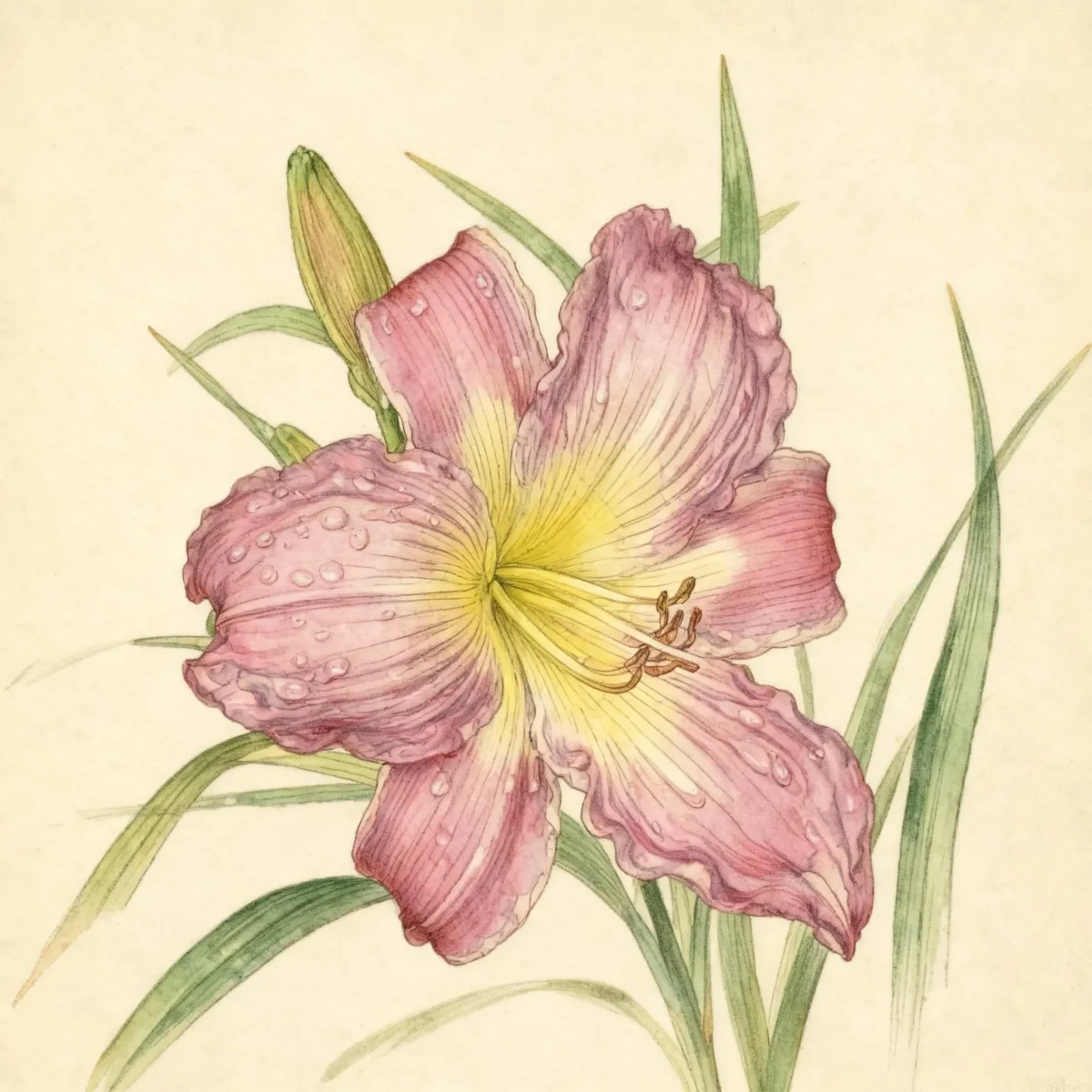
Daylily (Hemerocallis 'Miss Tinkerbell')
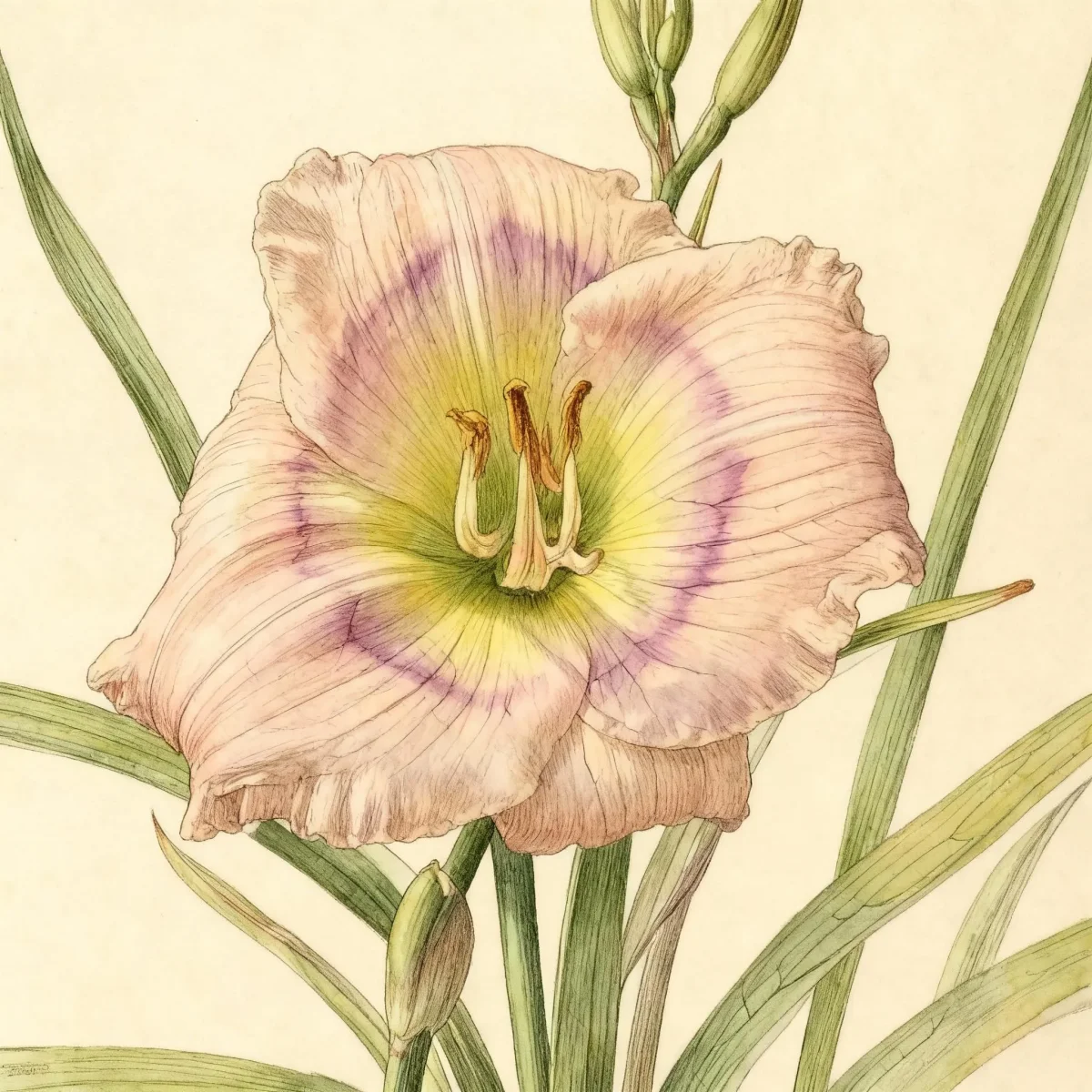
Hemerocallis 'Miss Tinkerbell' Daylily is a low-maintenance perennial featuring pink flowers with rose-pink eyes from June to August.
Scroll down to discover growing tips, care requirements, companion plants, and more
Complete Plant Information
Overview
Hemerocallis ‘Miss Tinkerbell’ is a highly valued herbaceous perennial, celebrated among gardeners for its reliable performance and delightful coloration through the summer months. This specific Daylily cultivar offers charming 3 3/4-inch diameter flowers displaying soft pink blooms accented by darker rose-pink eyes, making it an excellent addition to mixed plantings. As a low-maintenance variety, it thrives across a wide range of conditions, provided it receives adequate care regarding drainage and moisture.
The foliage of Hemerocallis ‘Miss Tinkerbell’ forms an attractive clump of arching, bluish-green blades reaching about 14 inches tall, with the flower scapes rising slightly higher. This plant is intrinsically linked to the genus Hemerocallis, commonly known as the Daylily, where hybridizers have developed thousands of stable, vibrant cultivars. Successful cultivation of this Daylily relies on proper placement to ensure it receives sufficient light while enjoying its extended bloom period from June through August.
Gardeners appreciate the Daylily genus for its resilience, and ‘Miss Tinkerbell’ continues this trend, requiring minimal intervention once established. Its resistance to common issues like rabbits and air pollution adds to its functional value in diverse landscapes. Incorporating Hemerocallis ‘Miss Tinkerbell’ is a straightforward way to introduce reliable summer color with elegant flower tones.
Fast Facts
- Plant Family: Asphodelaceae
- Plant Type: Herbaceous perennial
- Hardiness Zones: USDA Zones 4-9
- Size at Maturity:
- Height: 1-1.5 ft
- Spread: 1-2 ft
- Bloom Time: June to August
- Bloom Description: Pink with rose-pink eye
- Sun Exposure: Full sun to part shade
- Water Needs: Medium
- Maintenance Level: Low
How to Grow
Planting Hemerocallis ‘Miss Tinkerbell’ is best accomplished in spring or fall in average, well-drained soils. While Daylilies are highly adaptable, they perform best when situated where they receive full sun to partial shade, preferring deep, fertile loams for optimal health. Ensure the crown of the plant is not buried too deeply, generally planting them level with the surrounding soil surface.
Ongoing care is straightforward for this low-maintenance Daylily. Keep the soil consistently moist, especially during dry spells, as deep watering helps keep the foliage attractive through summer heat and humidity. Deadhead spent blooms daily for a neat appearance, and remove the entire flower scape once blooming has entirely finished. Note that hybrid daylilies will not reliably come true from seed, so propagation is usually done via division.
For sustained vigor, plan to divide mature clumps every 3 to 4 years, ideally in the spring in colder regions or the fall elsewhere. Deadheading ensures the plant dedicates energy to root development rather than seed production. Since this cultivar is winter dormant, it requires that cold period to put on its best display, making it less suitable for the warmest extremes of its range (Zones 9 and above).
Landscape Uses
Daylilies, including the popular Hemerocallis ‘Miss Tinkerbell’, are indispensable for robust landscape design due to their texture, resilience, and long bloom time. These easy-to-grow herbaceous perennials excel when planted in defined borders, providing a structured, low-growing layer that doesn’t overpower neighboring plants. Their linear foliage offers excellent contrast against plants with finer or broader leaves.
Mass planting is highly effective, allowing these daylilies to cover large areas uniformly, which is particularly useful for erosion control along gentle slopes, leveraging their fibrous root systems. For edging pathways or defining garden beds, the tidy clump-forming habit of ‘Miss Tinkerbell’ creates soft, continuous lines. Although this specific cultivar is not designated as dwarf, Daylilies, in general, suit rock gardens well, though this 1 to 1.5-foot variety functions better toward the front or middle of perennial borders.
Standout Features
Flower Qualities
- Showy
Noteworthy Characteristics
The genus Hemerocallis is derived from Greek words meaning ‘day’ and ‘beauty,’ as each flower typically lasts only one day, though flowers are produced so prolifically they remain decorative for a long season. Hemerocallis ‘Miss Tinkerbell’ is a repeat bloomer that flowers in mid-season on scapes rising above its distinctive grassy, bluish-green foliage clump. Modern daylilies are overwhelmingly complex hybrids developed to feature wide-ranging colors and forms beyond what the few straight species offer.
Tolerances
- Rabbit
- Erosion
- Air Pollution
Potential Problems
Daylilies are known for being extremely adaptable and are generally pest-free perennials, making them a staple choice for gardeners. Occasionally, pests like aphids, mites, or thrips may be observed but rarely cause serious harm. In certain humid climates, Daylily rust can become a concern; planting in well-drained soil and ensuring good air circulation helps mitigate fungal issues. Rabbits typically avoid chewing on the foliage of this Daylily species.
Frequently Asked Questions
What hardiness zones is Daylily (Hemerocallis ‘Miss Tinkerbell’) suitable for?
Hemerocallis ‘Miss Tinkerbell’ is suitable for USDA Hardiness Zones 4 through 9.
How large does Daylily (Hemerocallis ‘Miss Tinkerbell’) grow?
This cultivar typically reaches a height between 1 and 1.5 feet and spreads to cover an area of 1 to 2 feet wide.
What sun exposure does Daylily (Hemerocallis ‘Miss Tinkerbell’) need?
This Daylily prefers full sun to part shade conditions for the best overall performance.
When does Daylily (Hemerocallis ‘Miss Tinkerbell’) bloom?
Hemerocallis ‘Miss Tinkerbell’ blooms from June into August, showcasing pink flowers with a contrasting rose-pink eye.
Conclusion
The Hemerocallis ‘Miss Tinkerbell’ Daylily offers exceptional value through its low maintenance requirements, reliability across multiple hardiness zones, and beautiful mid-season pink blooms. For gardeners seeking dependable, colorful perennials that offer textural contrast, this cultivar is an outstanding choice. Check your local climate to ensure you are within Zones 4-9, and plan your planting or division for the coming spring or fall to enjoy this Daylily next season.
Companion Planting
Choosing companions that share the sun and water requirements of Hemerocallis ‘Miss Tinkerbell’ ensures a unified planting scheme. Good partners are often those that offer different foliage textures or bloom times, helping to keep the border interesting after the Daylily finishes. Consider pairing this pink cultivar with silver-leaved plants like Lamb’s Ears (Stachys byzantina) or integrating it next to bold-textured plants such as ornamental grasses that complement the linear foliage.
Plants that bloom in early spring or late summer will extend the garden’s color display throughout the season while the Daylily is in peak performance. Coneflowers (Echinacea) and Shasta Daisies (Leucanthemum) share similar cultural needs—full sun and medium water—and their coarse, upright habits pair visually well with the arching blades of the Daylily foliage.
Seasonal Care Calendar
Spring care centers on cleaning up any remaining winter debris and applying a balanced, slow-release fertilizer if soils are poor, though Daylilies seldom require heavy feeding. This is also the ideal time for dividing overcrowded clumps of Hemerocallis ‘Miss Tinkerbell’ in colder climates. Throughout the summer, focus on regular watering during dry periods to keep the foliage lush and the spent flowers promptly deadheaded.
As autumn approaches, reduce fertilization and allow the foliage to naturally die back; for winter-dormant types, cutting back the old foliage after it yellows is optional but ensures a cleaner look before snow. Winter protection is typically minimal in Zones 4-9, as these plants are robust, though a light layer of mulch can benefit newly planted specimens or those on the cold edge of Zone 4.