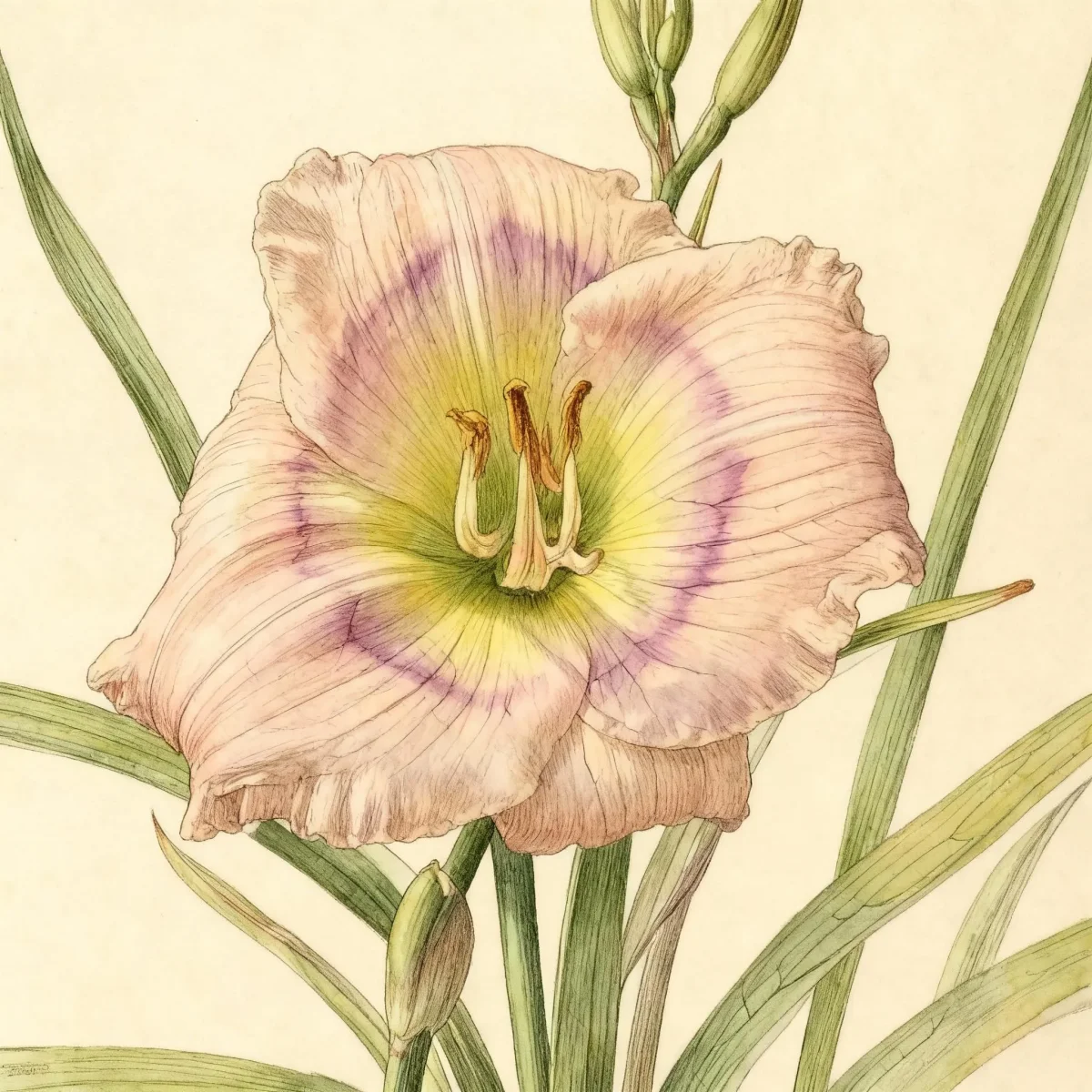
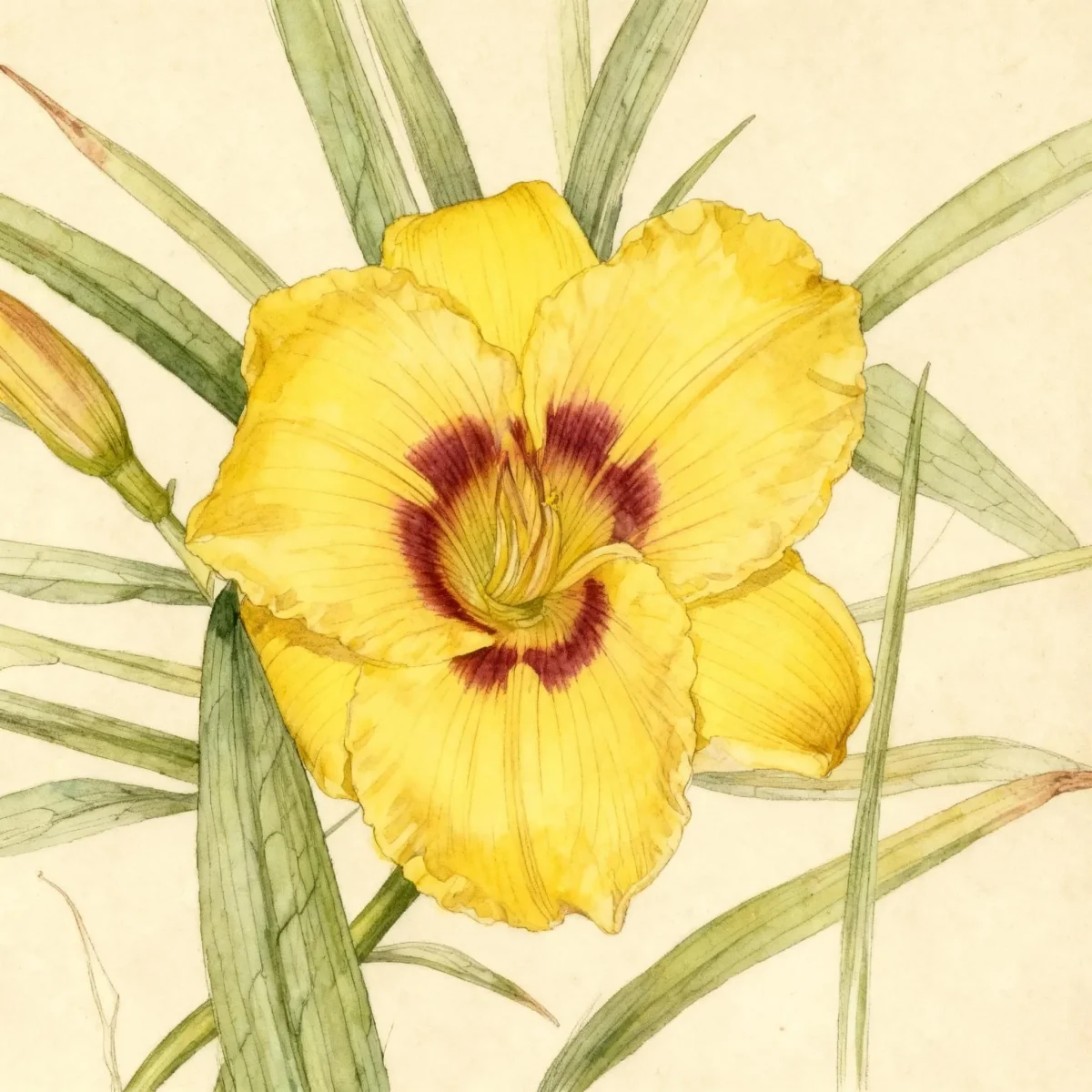
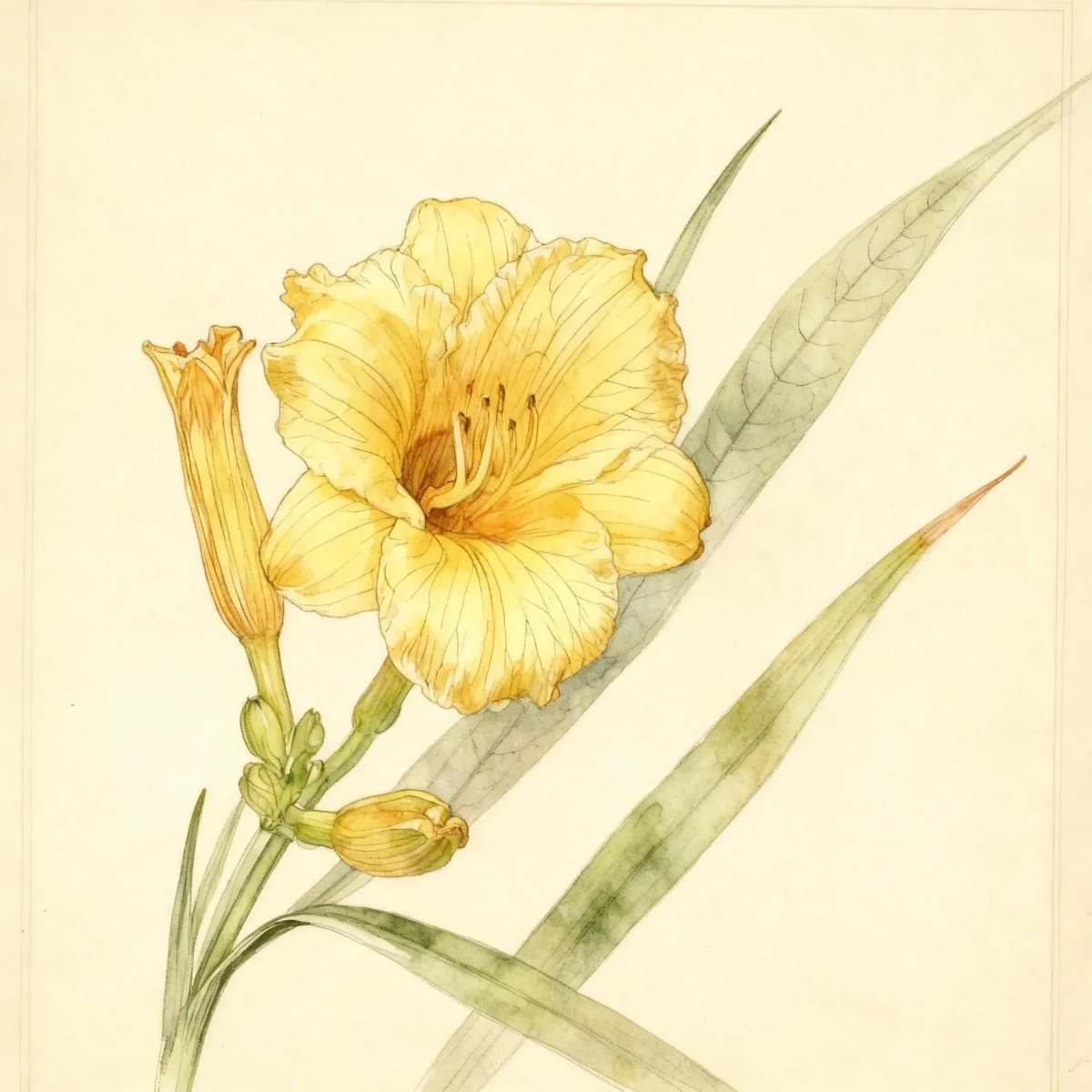
Daylily (Hemerocallis 'Pardon Me')
Hemerocallis 'Pardon Me' Daylily offers stunning, fragrant cranberry-red blooms. Low maintenance and adaptable for zones 3-9.
Scroll down to discover growing tips, care requirements, companion plants, and more

Complete Plant Information
Overview
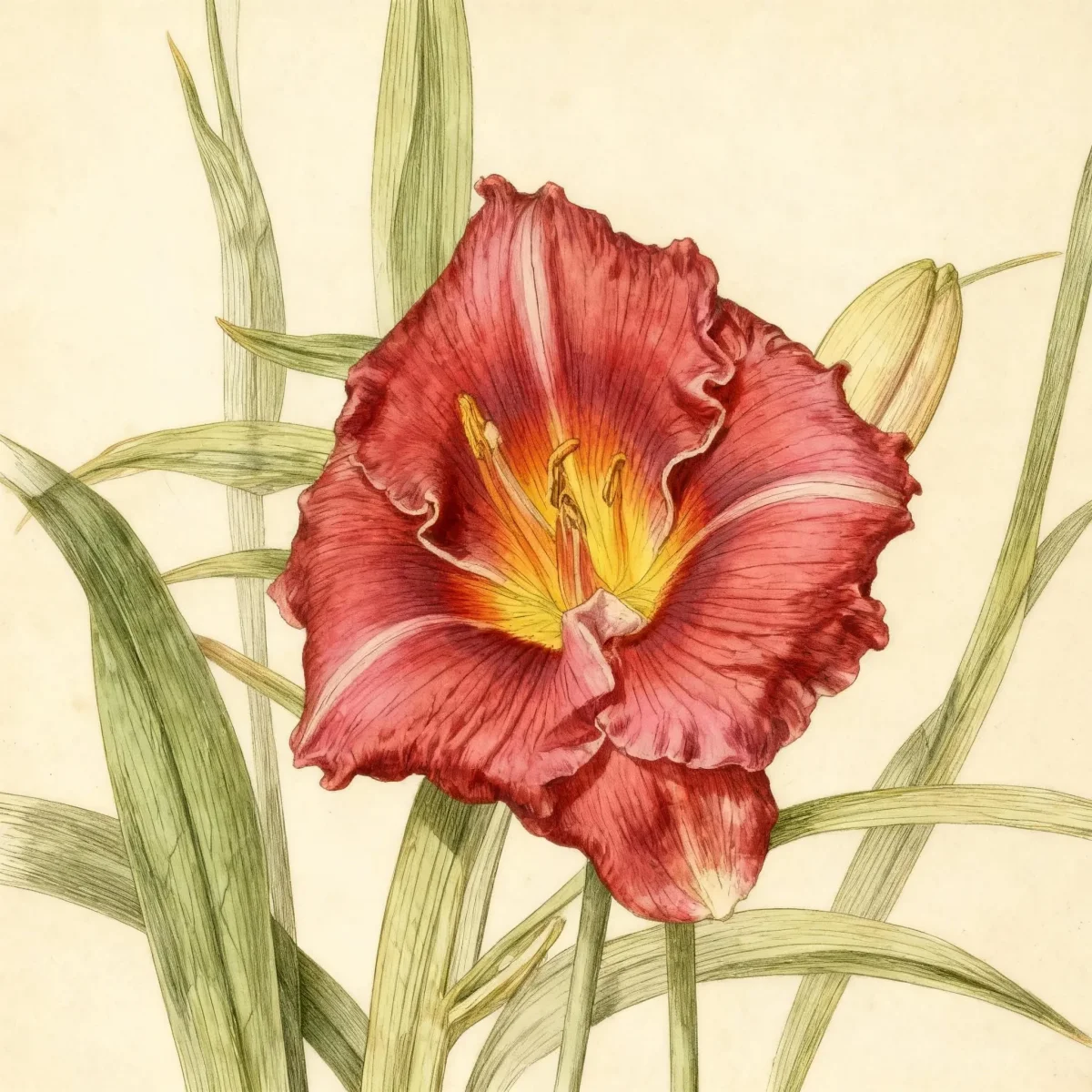
Hemerocallis ‘Pardon Me’ is a highly valued Daylily cultivar celebrated for its vibrant, intensely colored blooms and pleasant fragrance. This particular selection presents striking cranberry-red flowers contrasted beautifully by a yellow-green throat, making it a showy focal point in any garden setting. As a vigorous herbaceous perennial, it offers reliable performance with relatively low demands on the gardener.
This Daylily thrives across a wide range of conditions, specifically suited for USDA Hardiness Zones 3 through 9. It matures into a compact clump, generally reaching 1 to 1.5 feet in height and spread, suitable for smaller beds and borders where larger specimens might overwhelm the space. The success of Hemerocallis ‘Pardon Me’ stems from its adaptability and its long blooming window, providing deep color from early summer extending into late August.
Gardeners appreciate this Daylily not just for its aesthetic appeal, but also for its practical resilience. It tolerates diverse cultural situations, handles heat well, and possesses noted resistance to common pests like rabbits. Integrating Hemerocallis ‘Pardon Me’ ensures reliable texture and a splash of rich color throughout the prime gardening season.
Fast Facts
- Plant Family: Asphodelaceae
- Plant Type: Herbaceous perennial
- Hardiness Zones: USDA Zones 3-9
- Size at Maturity:
- Height: 1-1.5 ft
- Spread: 1-1.5 ft
- Bloom Time: June to August
- Bloom Description: Cranberry red self with yellow-green throat
- Sun Exposure: Full sun to part shade
- Water Needs: Medium
- Maintenance Level: Low
How to Grow
Daylilies like Hemerocallis ‘Pardon Me’ are easily established. Plant them in average, medium moisture, well-drained soils. While they tolerate many soil types, they perform best when situated in deep, fertile loams. Ensure they receive full sun to partial shade; while they tolerate some shade, maximizing blooms requires ample direct light.
Routine care keeps the Daylily foliage looking its best throughout the heat of summer. Deadhead spent flowers daily for a neat appearance, and remove the entire flower scape once blooming has finished for the season. Although generally tolerant of summer humidity, appreciate deep supplemental watering during extended dry spells to prevent foliage crisping.
For optimal health and renewed vigor every few years, plan to divide your Daylily clumps every 3 to 4 years, ideally in spring in colder climates. Be aware that this plant is a winter-dormant type; it requires a cold period of winter dormancy for the best display, meaning it is not recommended for the warmest areas of Zone 9 and above. Hybrid daylilies, including this variety, will not reproduce true to type if grown from seed.
Landscape Uses
This Daylily cultivar excels as an easy-to-grow solution for various landscape applications. Its manageable stature, typically reaching 1 to 1.5 feet tall, makes it perfect for use in defining borders where its rich, cranberry-red color can provide contrast against softer greens or blues. Hemerocallis ‘Pardon Me’ is also effective when planted as edging along walkways or massed over large areas to create a bold sweep of consistent summer color.
Due to its appealing texture and clump-forming nature, this Daylily integrates well into mixed perennial beds. Consider pairing it with plants that have opposing foliage textures, such as ornamental grasses or plants finishing their spring bloom cycle. While the description notes dwarf cultivars are excellent in rock gardens, the 12–24 inch height range of ‘Pardon Me’ makes it a solid mid-border anchor.
Standout Features
Flower Qualities
- Showy
- Fragrant
Noteworthy Characteristics
Hemerocallis is a genus of herbaceous perennials commonly known as daylilies, native to Asia and Europe, though modern plants are almost entirely hybrids refined by decades of hybridization efforts. Each individual flower lasts only one day—hence the common name—but the plant produces flowers sequentially over a long season. ‘Pardon Me’ specifically is recognized as a vigorous cultivar featuring 3-inch diameter bright red flowers highlighted by yellow-green throats, often providing repeat blooming into the autumn.
Tolerances
- Rabbit
- Erosion
- Air Pollution
Potential Problems
Daylilies are famously adaptable and rarely suffer from significant health issues, making them genuinely easy to grow. Occasionally, minor pests like spider mites, aphids, or thrips may appear, usually manageable through simple observation or minor intervention. In some regions, Daylily rust can become problematic, requiring appropriate fungicide application if the disease pressures are high in your specific microclimate. Importantly, rabbits typically avoid eating the foliage of the Daylily, offering a distinct advantage in areas with active wildlife.
Frequently Asked Questions
What hardiness zones is Daylily (Hemerocallis ‘Pardon Me’) suitable for?
Hemerocallis ‘Pardon Me’ is suitable for cultivation in USDA Hardiness Zones 3 through 9.
How large does Daylily (Hemerocallis ‘Pardon Me’) grow?
This cultivar typically reaches a height between 1 and 1.5 feet, with a spread ranging from 1 to 1.5 feet.
When does Daylily (Hemerocallis ‘Pardon Me’) bloom?
The primary bloom time is from June to August, featuring cranberry red self flowers with a yellow-green throat, with a possibility of repeat blooming in autumn.
What sun exposure does Daylily (Hemerocallis ‘Pardon Me’) need?
This Daylily performs best when situated in full sun to part shade exposures.
Conclusion
Hemerocallis ‘Pardon Me’ is a phenomenal backbone perennial, delivering intense, fragrant, cranberry-red blooms over an extended summer period with very low maintenance requirements. This Daylily demonstrates excellent adaptability across various soil types and offers valuable tolerance against common garden nuisances. Before planting, confirm your garden falls within USDA Zones 3-9 and ensure adequate sun exposure for the best performance of your new Hemerocallis ‘Pardon Me’ specimens.
Companion Planting
Selecting appropriate neighbors is key to maximizing the visual appeal of your Daylily planting. Because Daylilies bloom primarily in mid-summer, pair Hemerocallis ‘Pardon Me’ with late spring bloomers to ensure continuous color in the border. Consider spreading groundcovers to shade the base of the Daylily clump, helping to keep the crowns cool and retain soil moisture for medium water needs.
Good companions include plants that enjoy similar sun and moisture conditions but offer differing textures. Nepeta (Catmint) provides soft, silvery-purple contrast right below the strap-like leaves of the Daylily. Alternatively, pairing this intense red with silvery foliage like Lamb’s Ears or contrasting foliage colors, such as the dark purple leaves of a Heuchera, can make the cranberry red of ‘Pardon Me’ truly pop.
Design Ideas for Red Daylilies
The rich cranberry-red color of Hemerocallis ‘Pardon Me’ allows it to function both as an accent color and a transition hue in cottage or traditional garden designs. Use it in groupings of odd numbers (threes or fives) in the middle layer of a border, where its height (1 to 1.5 feet) supports taller background plants. Its repeating, uniform bloom time across the season ensures reliability.
For a modern contrast, plant drifts of ‘Pardon Me’ against structural, modern plantings like upright evergreens or boldly linear grasses. The flower’s saturated color provides excellent visual weight, preventing the design from looking washed out during the peak heat of summer. Since it tolerates erosion, consider using it on gentle slopes where its fibrous root structure offers modest soil stabilization benefits.