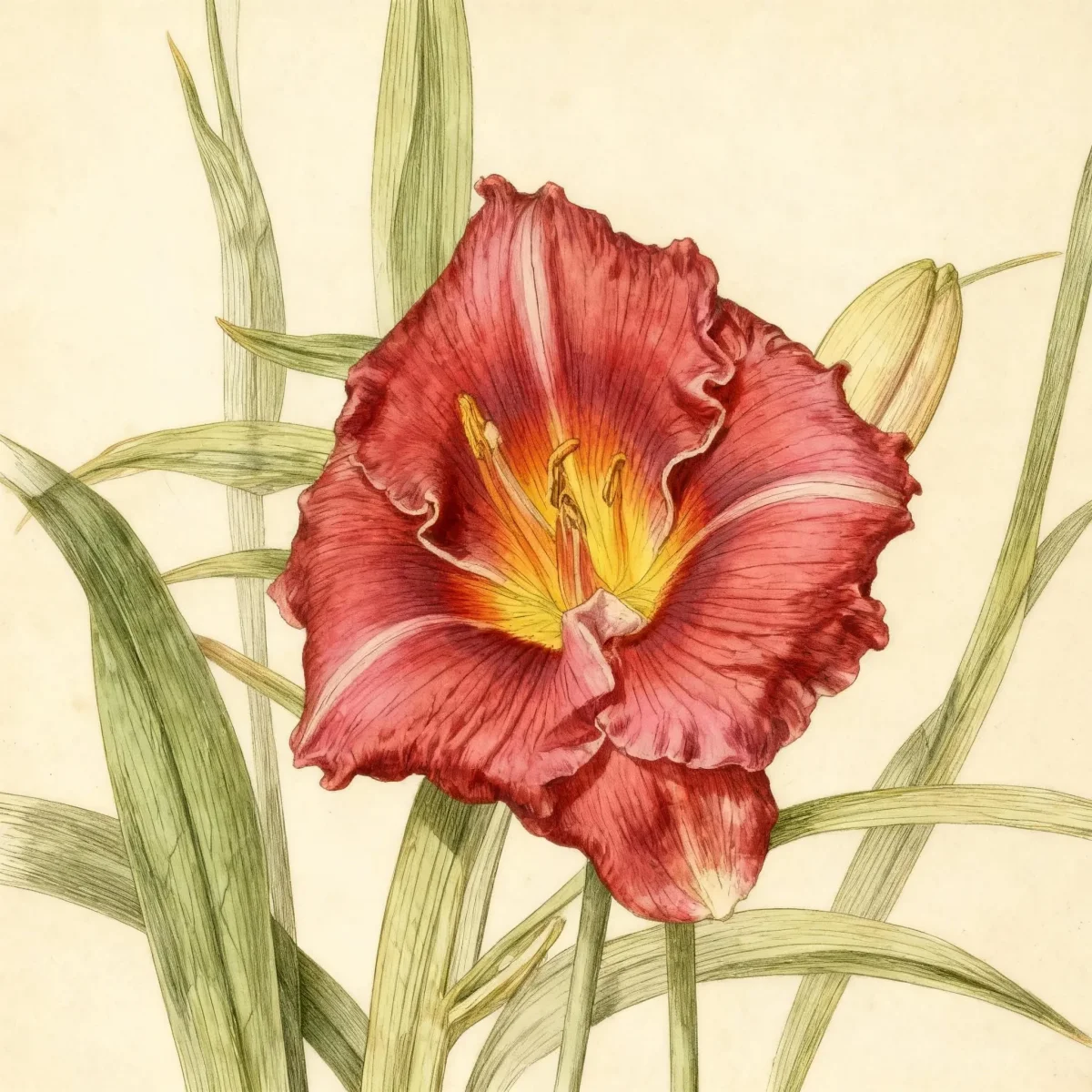
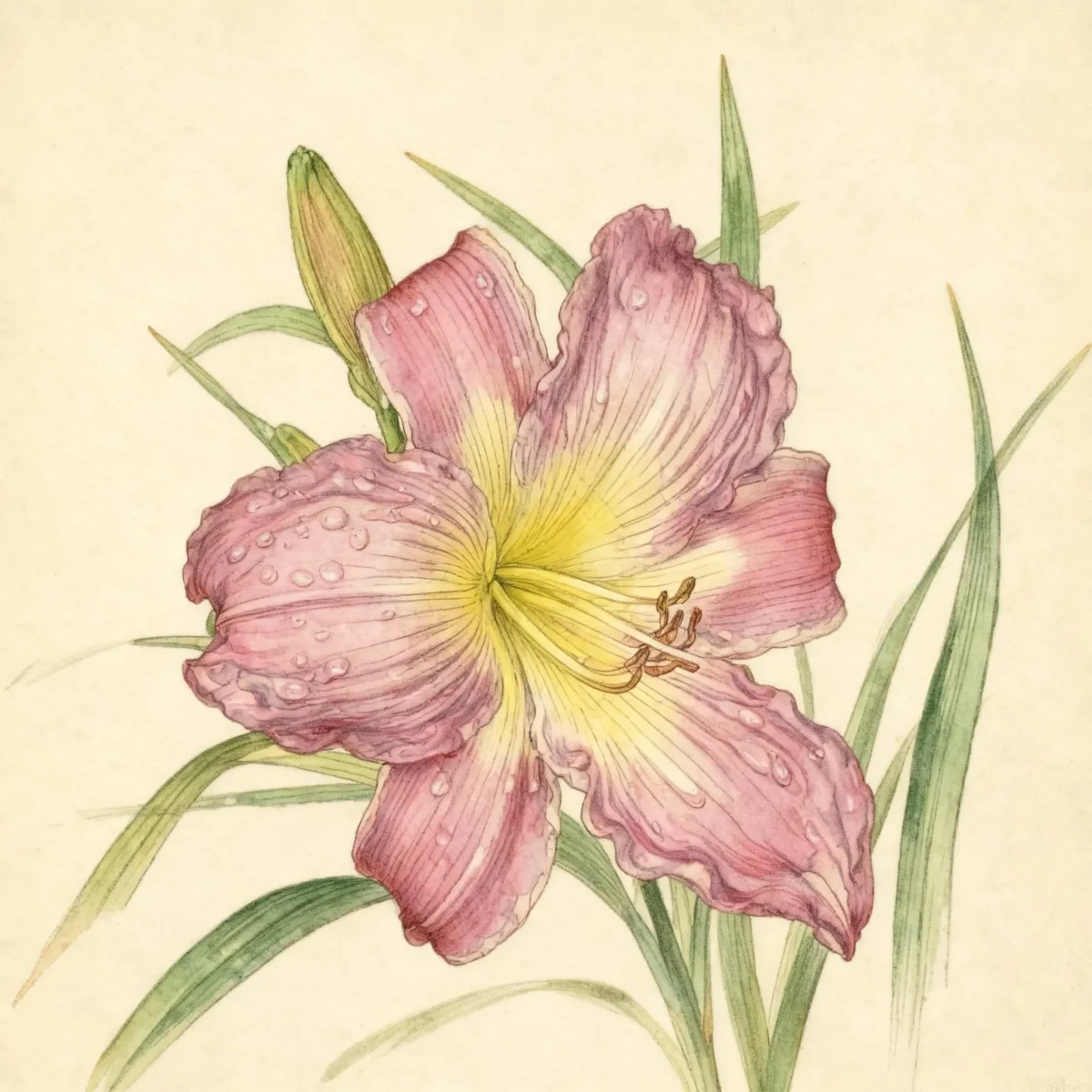
Daylily (Hemerocallis 'Pawn of Prophecy')
Hemerocallis 'Pawn of Prophecy' is a low-maintenance Daylily flaunting pale grape lavender flowers perfect for borders.
Scroll down to discover growing tips, care requirements, companion plants, and more
Complete Plant Information
Overview
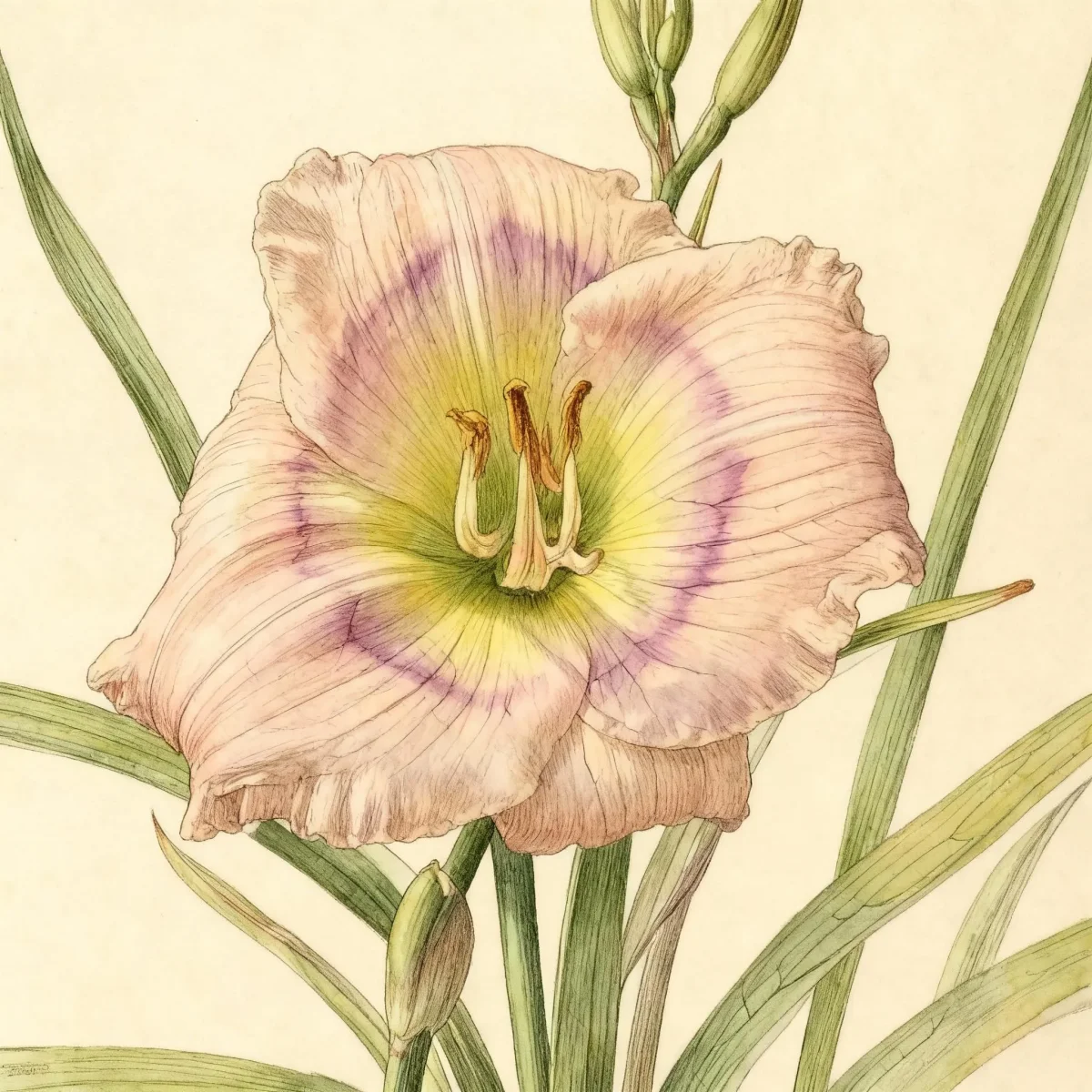
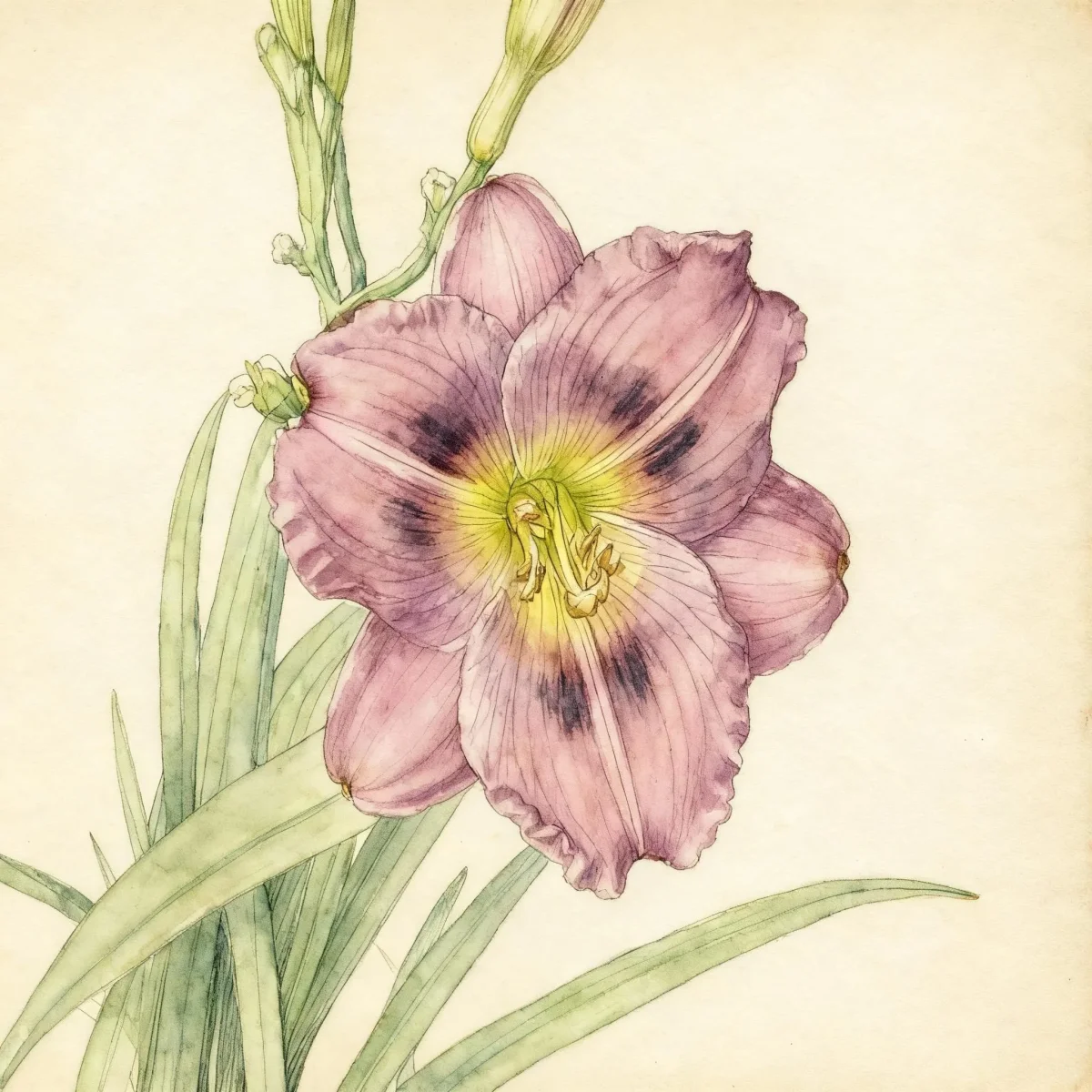
Hemerocallis ‘Pawn of Prophecy’ is a spectacular cultivar belonging to the genus commonly known as Daylily. This specific variety offers a unique aesthetic with its miniature, pale grape lavender blooms contrasted by dark black-purple eyezones, making it a distinctive choice even among the numerous hybrid daylilies available today. As a semi-evergreen, diploid daylily, plants thrive due to their reliable performance and ease of cultivation across a wide range of climates.
This Daylily hybrid is valued for its tough constitution and low maintenance demands, thriving in average, well-drained soils. It reaches a modest height of 1.5 to 2 feet, making the structure of Hemerocallis ‘Pawn of Prophecy’ ideal for defining edges or adding mid-level texture without overwhelming garden spaces. Its persistent flowering from June into July provides reliable seasonal color.
Gardeners appreciate daylilies for their adaptability to heat and humidity, provided they receive adequate moisture during dry spells. While each individual flower of the Daylily lasts only a day, prolific blooming ensures the plant remains attractive throughout its main season, offering beauty with minimal fuss.
Fast Facts
- Plant Family: Asphodelaceae
- Plant Type: Herbaceous perennial
- Hardiness Zones: USDA Zones 3-8
- Size at Maturity:
- Height: 1.5-2 ft
- Spread: 1.5-2 ft
- Bloom Time: June to July
- Bloom Description: Pale grape lavender with dark eyezone and green throat
- Sun Exposure: Full sun to part shade
- Water Needs: Medium
- Maintenance Level: Low
How to Grow
Planting Hemerocallis ‘Pawn of Prophecy’ performs best when established in spring, although fall planting is acceptable outside of very cold winter zones. Daylilies prefer well-drained soils, ideally deep, fertile loams, though they tolerate a wide range of soil conditions. Ensure the crown of the plant is buried just beneath the soil surface, typically about one inch deep, when setting them into the garden bed.
Ongoing care for this Daylily is minimal. Keep the soil consistently medium in moisture; while tolerant of humidity, the plants appreciate deep watering during peak summer heat to maintain attractive foliage. Deadhead spent flowers daily for a tidy appearance, and once blooming concludes for the season, remove the entire spent scape.
For optimal performance and vigor, plan to divide established clumps of Hemerocallis ‘Pawn of Prophecy’ every three to four years, best conducted in spring in colder regions like the St. Louis area, or in the fall otherwise. Because this is a hybrid selection, remember that seeds will not propagate true to type; division is necessary to retain the ‘Pawn of Prophecy’ characteristics.
Landscape Uses
Hemerocallis ‘Pawn of Prophecy’ works exceptionally well as an easy-to-grow herbaceous perennial massed throughout landscape borders. Its manageable height (1.5 to 2 feet) makes it an excellent choice for edging pathways or softening the front of perennial beds where taller specimens might block the view. Because the foliage is linear and blade-like, it provides excellent vertical contrast against rounded shrubs or fine-textured grasses.
Dwarf daylily cultivars, like this variety, are particularly effective when featured in rock gardens or used as reliable anchor plants in mixed perennial groupings. They tolerate mass planting over large areas, creating sweeps of color punctuated by the unique lavender blooms of Hemerocallis ‘Pawn of Prophecy’. Consider pairing them with plants that have contrasting foliage colors, such as dark-leafed Heucheras, to make the bright flower throats pop.
Standout Features
Flower Qualities
- Showy
Noteworthy Characteristics
Hemerocallis is a genus of about 15 species of herbaceous perennials commonly known as daylilies, native primarily to Asia and central Europe. Hybridizers have developed over 60,000 cultivars, focusing on color, shape, and pattern; each flower typically lasts but one day, hence the common name. Hemerocallis ‘Pawn of Prophecy’ specifically features miniature (to 2.5”), pale grape lavender flowers with striking dark eyezones and yellow-green throats, blooming mid to late season on scapes rising to 15-18” tall.
Tolerances
- Rabbit
- Erosion
- Air Pollution
Potential Problems
Daylilies are renowned for being adaptable and generally pest-free perennials, which adds to the low maintenance appeal of Hemerocallis ‘Pawn of Prophecy’. Watch occasionally for minor issues such as mites, aphids, or thrips, which can usually be managed with insecticidal soap if populations become problematic. Daylily rust can be a concern in humid or specific geographical areas; prevention involves ensuring good air circulation around the clumps and promptly removing any infected foliage. Thankfully, rabbits tend to avoid consuming the foliage of the Daylily.
Frequently Asked Questions
What hardiness zones is Daylily suitable for?
Hemerocallis ‘Pawn of Prophecy’ is perfectly suited for planting across USDA Hardiness Zones 3 through 8.
How large does Hemerocallis ‘Pawn of Prophecy’ grow?
This Daylily typically matures to a height between 1.5 and 2 feet tall, spreading between 1.5 and 2 feet wide.
When does Daylily bloom?
The bloom time for Hemerocallis ‘Pawn of Prophecy’ is reliably set from June into July, exhibiting pale grape lavender flowers with dark eyezones and green throats.
What sun exposure does Daylily need?
This cultivar performs well across a range from full sun conditions through partial shade, offering flexibility in garden placement.
Conclusion
Hemerocallis ‘Pawn of Prophecy’ brings reliability, hardiness, and a uniquely colored bloom to any perennial garden scheme. The ease of care combined with attractive, semi-evergreen foliage ensures this Daylily remains a low-input, high-reward plant. Before planting, ensure your garden falls within USDA Zones 3 to 8 for the best long-term success with this beautiful cultivar.
Companion Planting Strategies
Daylilies thrive when paired with plants that appreciate similar moisture and light levels but offer complementary textures. Consider planting Dracaena (Sedge) or Ornamental Grasses nearby; their finer, upright blades contrast beautifully with the broader, arching leaves of the Daylily foliage. For season-long interest stemming from different bloom times, pair Hemerocallis ‘Pawn of Prophecy’ with early blooming spring bulbs like Daffodils, whose foliage will die back before the Daylily reaches its peak summer display.
Seasonal Care Calendar for Daylilies
Spring is the time for cleanup; remove any winter-damaged or dead foliage from your Daylily clumps as new growth emerges. This is also the preferred time in cold zones to divide overcrowded plants to ensure robust blooms from Hemerocallis ‘Pawn of Prophecy’ this season. Summer maintenance focuses primarily on consistent watering during droughts and diligent deadheading to encourage further flower production. In the fall, particularly in colder zones, wait until the foliage has browned significantly before cutting back the dead material, allowing the plant to properly store energy for winter dormancy.