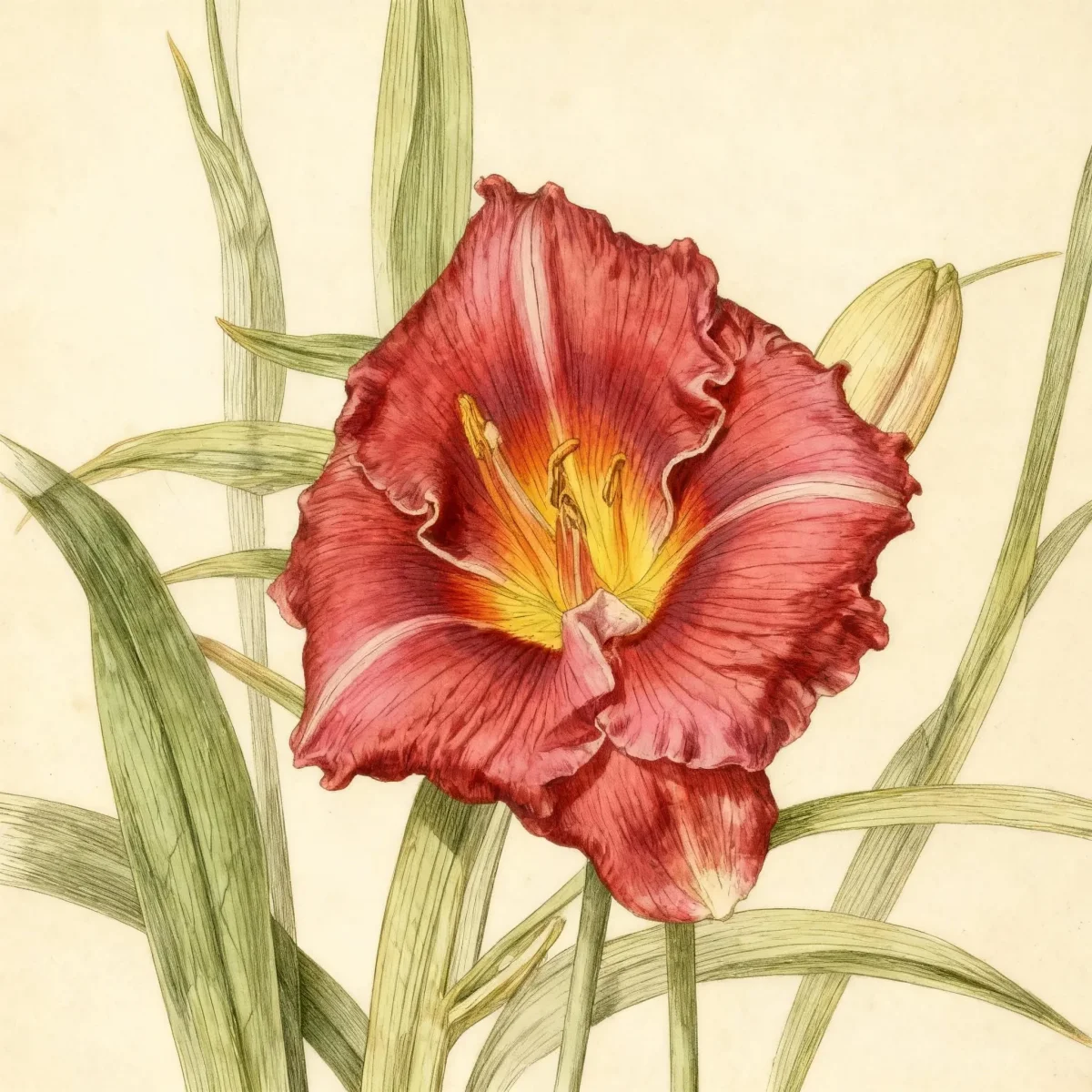
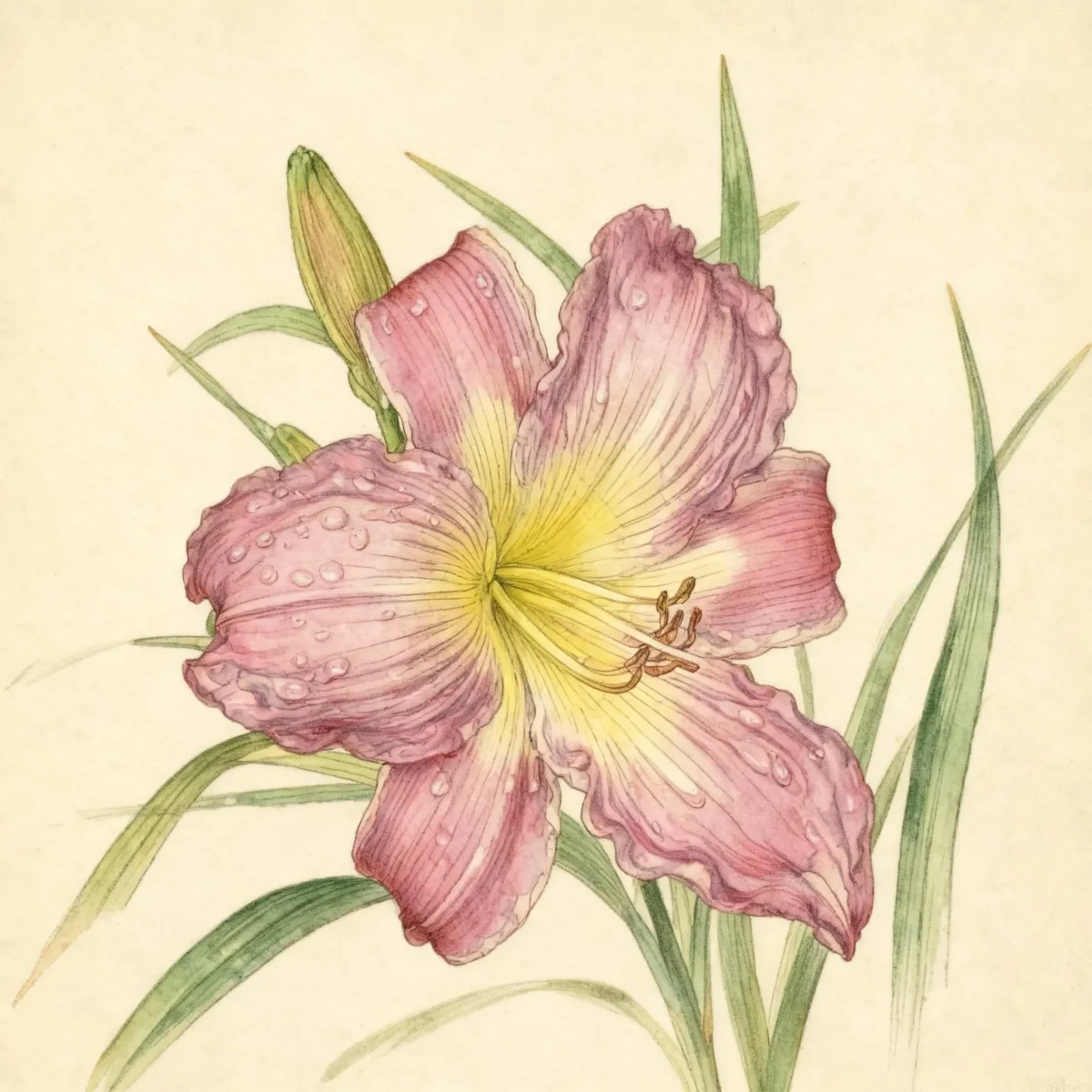
Daylily (Hemerocallis 'Pink Goodie')
Hemerocallis 'Pink Goodie' is a low-maintenance Daylily prized for its pink flowers with rose halos. Hardy zones 3-9.
Scroll down to discover growing tips, care requirements, companion plants, and more
Complete Plant Information
Overview
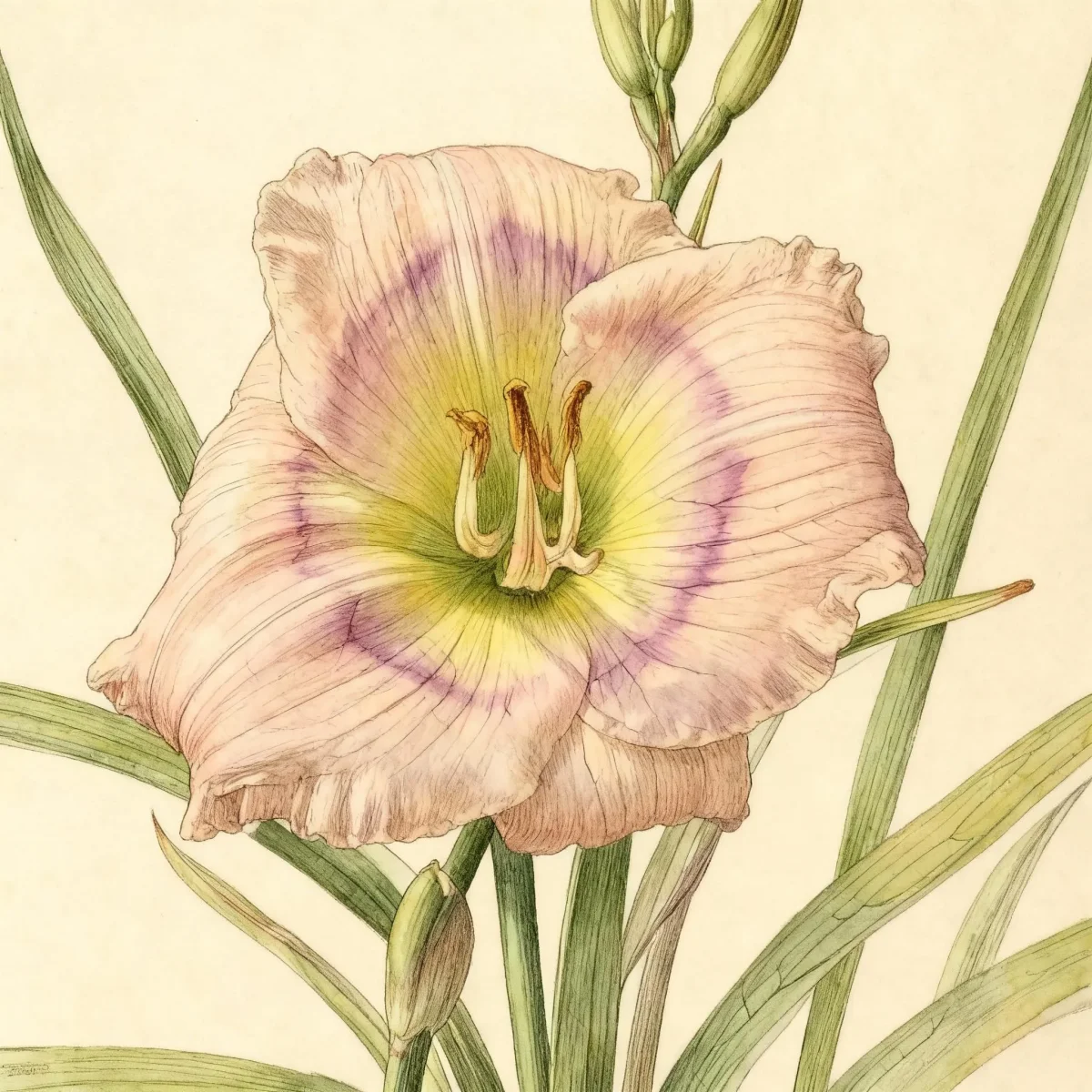
Hemerocallis ‘Pink Goodie’ is a delightful diploid cultivar that brings cheerful color to the mid-season garden. As a Daylily variety, it inherits the genus’s strong constitution, making it highly rewarding for gardeners who seek beauty without excessive labor. This specific cultivar is valued for its visually striking 4-inch blooms featuring soft pink petals contrasted by a distinctive rose halo and a cream-green throat.
This herbaceous perennial exhibits a low maintenance profile, thriving in a wide variety of conditions once established. Daylilies are incredibly adaptable, tolerating both sun and partial shade, while offering reliable performance across USDA Hardiness Zones 3 through 9. Hemerocallis ‘Pink Goodie’ provides excellent textural interest with its clumping, arching, blade-like foliage even when not in bloom.
Gardeners appreciate the succession of blooms that daylilies provide over several weeks, making plants like Hemerocallis ‘Pink Goodie’ essential for continuous summer color. Beyond aesthetics, these plants possess functional benefits, demonstrating good tolerance to environmental stresses like air pollution and erosion, adding stability to the landscape.
Fast Facts
- Plant Family: Asphodelaceae
- Plant Type: Herbaceous perennial
- Hardiness Zones: USDA Zones 3-9
- Size at Maturity:
- Height: 1-1.5 ft
- Spread: 1-1.5 ft
- Bloom Time: June to July
- Bloom Description: Pink with rose halo and cream-green throat
- Sun Exposure: Full sun to part shade
- Water Needs: Medium
- Maintenance Level: Low
How to Grow
Planting this Daylily is straightforward; aim for average, well-drained soils, although Daylilies perform best in deep, fertile loams. Full sun exposure encourages the most flowering, but Hemerocallis ‘Pink Goodie’ will happily develop in part shade as well. Plant new divisions either in the spring or fall, ensuring the crown is buried no more than an inch below the soil line.
Care for established plants is straightforward and requires a medium water schedule. While tolerant of summer heat and humidity, provide a deep watering during extended dry spells to keep the foliage lush and attractive. Deadhead spent flowers daily if neatness is desired, and remove the entire flower scape once the bloom cycle is complete.
For optimal performance and to prevent overcrowding, divide clumps of daylilies every three to four years, ideally in the spring, especially in very cold winter climates. Remember that hybrid daylilies, including this cultivar, will not reliably grow true to type if grown from seed. Since this is a winter-dormant type, ensure the plant receives a cold period for the best annual display.
Landscape Uses
Daylilies excel as easy-to-grow herbaceous perennials perfect for foundational plantings. Hemerocallis ‘Pink Goodie’ works beautifully when utilized in mass plantings to cover large areas, creating a restful blanket of foliage punctuated by pink summer interest. Their moderate size (1 to 1.5 feet tall) makes them ideal candidates for borders or as edging along walkways where a neat, tidy look is desired.
The clumping habit of this Daylily prevents aggressive spreading, making it an excellent addition to mixed borders alongside slower-growing perennials that benefit from defined structure. Consider pairing the soft pink tones of ‘Pink Goodie’ with contrasting blues or deep purples from salvias or ornamental grasses to enhance their visual impact throughout the bloom season.
Due to its manageable, smaller stature, this variety is also well-suited for rock gardens or the front of perennial beds where its foliage can anchor taller specimens in the background. Groupings of three or five Hemerocallis ‘Pink Goodie’ planted closely together will quickly form a substantial, colorful presence.
Standout Features
Flower Qualities
- Showy
Noteworthy Characteristics
The genus Hemerocallis provides landscape flexibility through its vast array of hybrid forms, though Hemerocallis ‘Pink Goodie’ showcases a classic diploid structure. The genus name perfectly reflects the ephemeral beauty, deriving from Greek words for ‘day’ (hemera) and ‘beauty’ (kallos), as each flower lasts but a single day. This specific cultivar produces vivid 4-inch flowers that perform reliably mid-season, rising above sword-shaped foliage.
Tolerances
- Rabbit
- Erosion
- Air Pollution
Potential Problems
Daylilies are celebrated for their exceptional adaptability and resistance to most common garden pests, making Hemerocallis ‘Pink Goodie’ a reliable choice. While generally pest-free, watch for occasional infestations of mites, aphids, or thrips, which can usually be managed with insecticidal soap or careful pruning of affected foliage.
The most significant potential issue can be Daylily rust, a fungal disease, which may become problematic in certain humid regions; good air circulation and diligent sanitation help limit its spread. As a bonus, rabbits rarely bother this plant, and its fibrous root system provides excellent soil stabilization against erosion.
Frequently Asked Questions
What hardiness zones is Daylily suitable for?
Hemerocallis ‘Pink Goodie’ is suitable for USDA Zones 3 through 9, offering resilience even in colder northern gardens.
How large does Daylily grow?
This Daylily typically reaches a mature height between 1 and 1.5 feet, with a spread of 1 to 1.5 feet, maintaining a tidy clump size suitable for front-of-border planting.
When does Hemerocallis ‘Pink Goodie’ bloom?
Blooms generally appear from June into July, displaying lovely pink flowers accented by a rose halo and a cream-green throat.
What sun exposure does Daylily need?
This variety thrives best in full sun but adapts well to growing successfully in part shade conditions.
Conclusion
Hemerocallis ‘Pink Goodie’ stands out as an exceptionally hardy and low-maintenance Daylily, delivering consistent summer color with its signature pink and rose-haloed flowers. Its adaptation across multiple hardiness zones and tolerance to common stressors makes this cultivar a trusted workhorse in any perennial collection. Before planting, confirm your local USDA zone compatibility and prepare well-drained soil to ensure your new Hemerocallis ‘Pink Goodie’ establishes quickly for many seasons of enjoyment.
Companion Planting
Selecting appropriate companions enhances the landscape appeal of your Daylilies. Since Daylilies prefer being well-drained and need regular care during dry spells, pair Hemerocallis ‘Pink Goodie’ with plants that share similar medium water needs, such as Coneflowers (Echinacea) or Russian Sage (Perovskia). Avoid very aggressive spreaders that might compete directly with the Daylily’s rootspace or shade out the necessary sun exposure.
When designing borders, utilize contrasting foliage textures. The fine, linear blades of the Daylily contrast beautifully with the broader leaves of Hostas or the airy texture of ornamental grasses. Planting shorter, ground-covering materials around the base can also help keep the soil cool and conserve moisture around the roots of your Daylily clump.
Seasonal Care Calendar
Spring cleanup is crucial for dormant daylilies; cut back any dead, brown foliage from the previous season before new growth emerges. This practice helps prevent overwintering pests and improves air circulation around the base of the plant. As new scapes begin to form, a balanced, slow-release fertilizer application can support abundant flowering.
Mid-summer maintenance focuses primarily on deadheading spent flowers daily until the main flush of blooms subsides in July. If summer heat is extreme, ensure deep, periodic watering to prevent the foliage from looking scorched or crispy, keeping your Hemerocallis ‘Pink Goodie’ looking attractive through late summer dormancy preparation.
In the fall, after the foliage has died back, you can trim the dead leaves down to the crown but avoid heavy pruning or division late in the season, as this can stress the plant before winter dormancy sets in. In very cold areas, mulch lightly after the ground freezes to protect the crowns over winter.