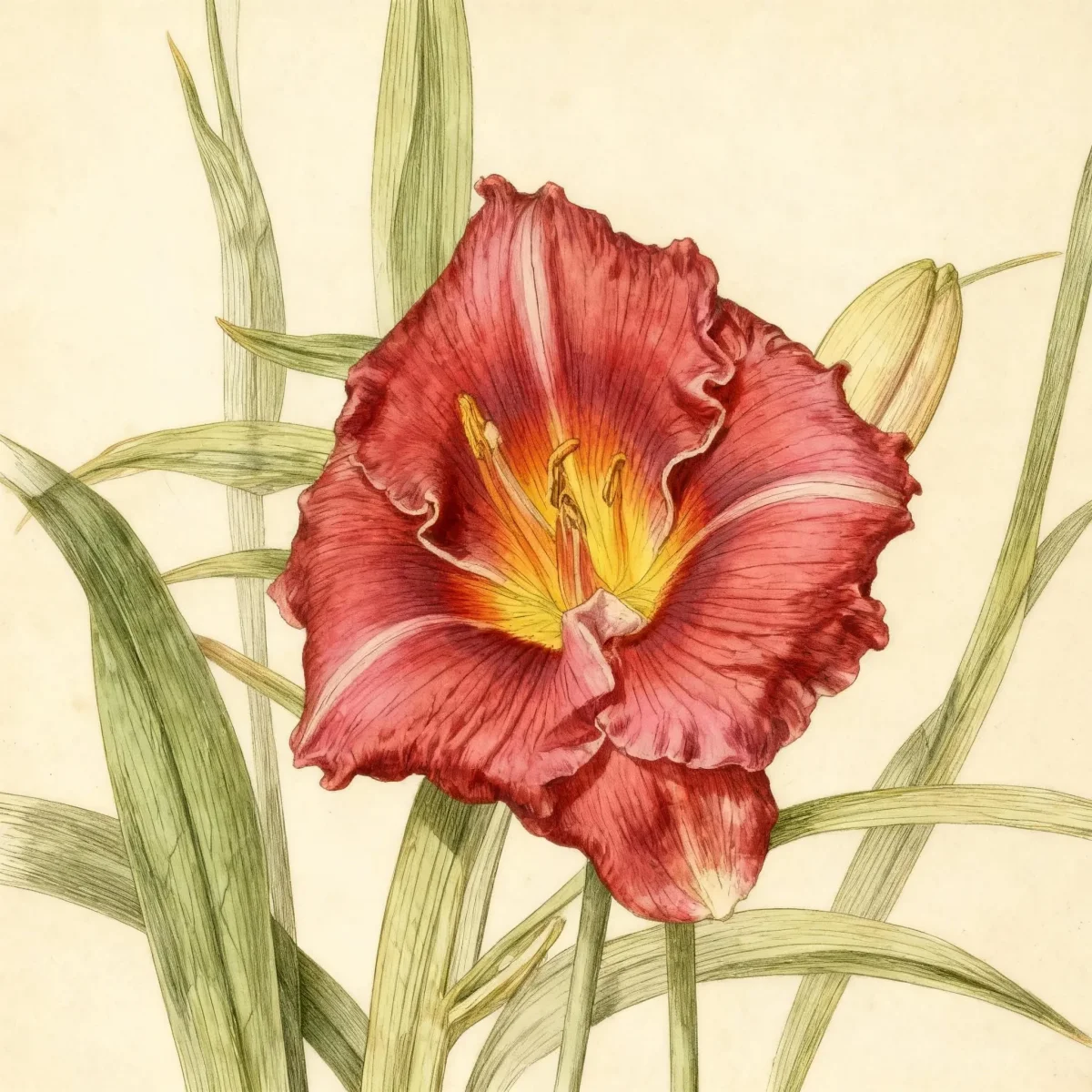
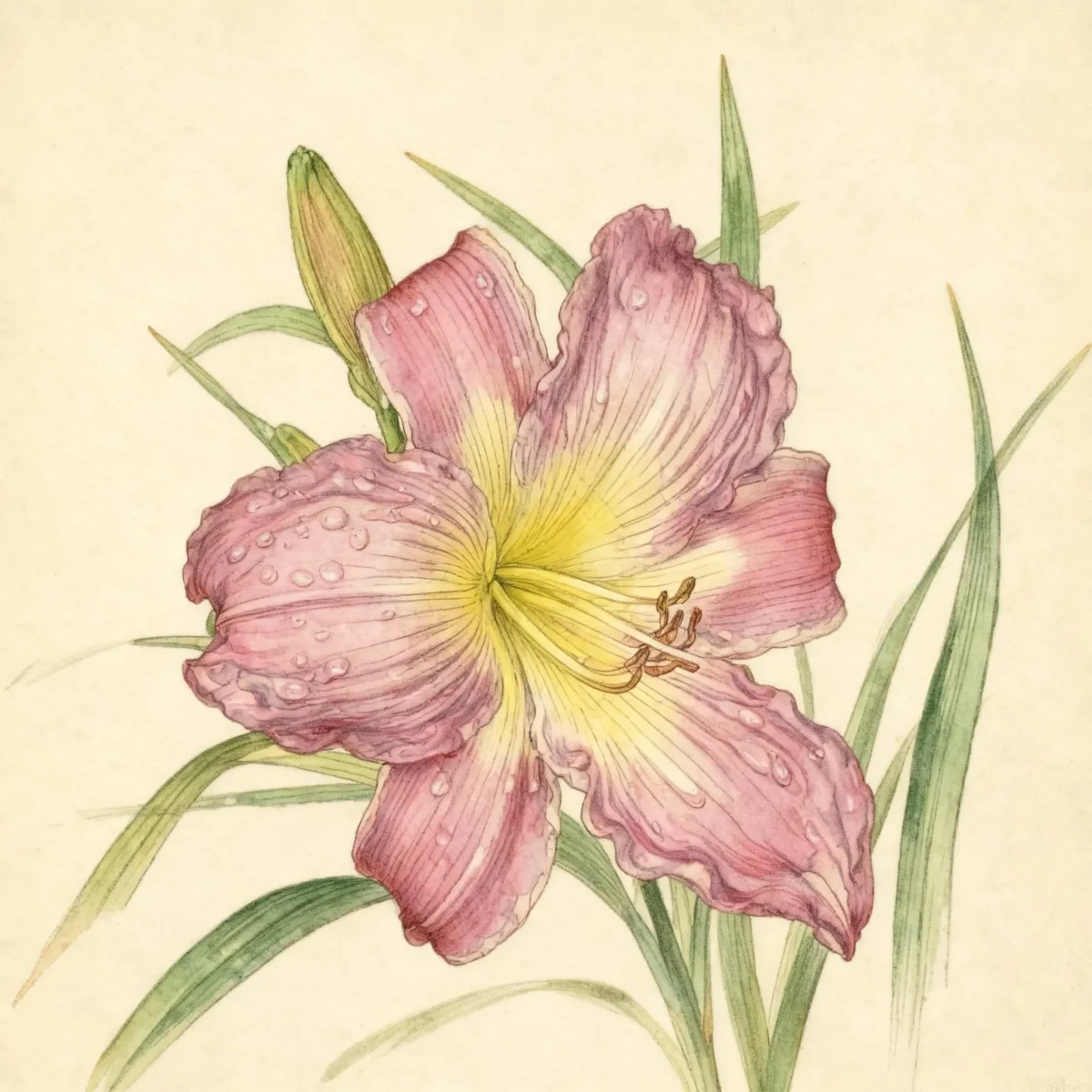
Daylily (Hemerocallis 'Prince of Venice')
Hemerocallis 'Prince of Venice' is a low-maintenance Daylily showcasing mauve-wine flowers from June to July.
Scroll down to discover growing tips, care requirements, companion plants, and more
Complete Plant Information
Overview
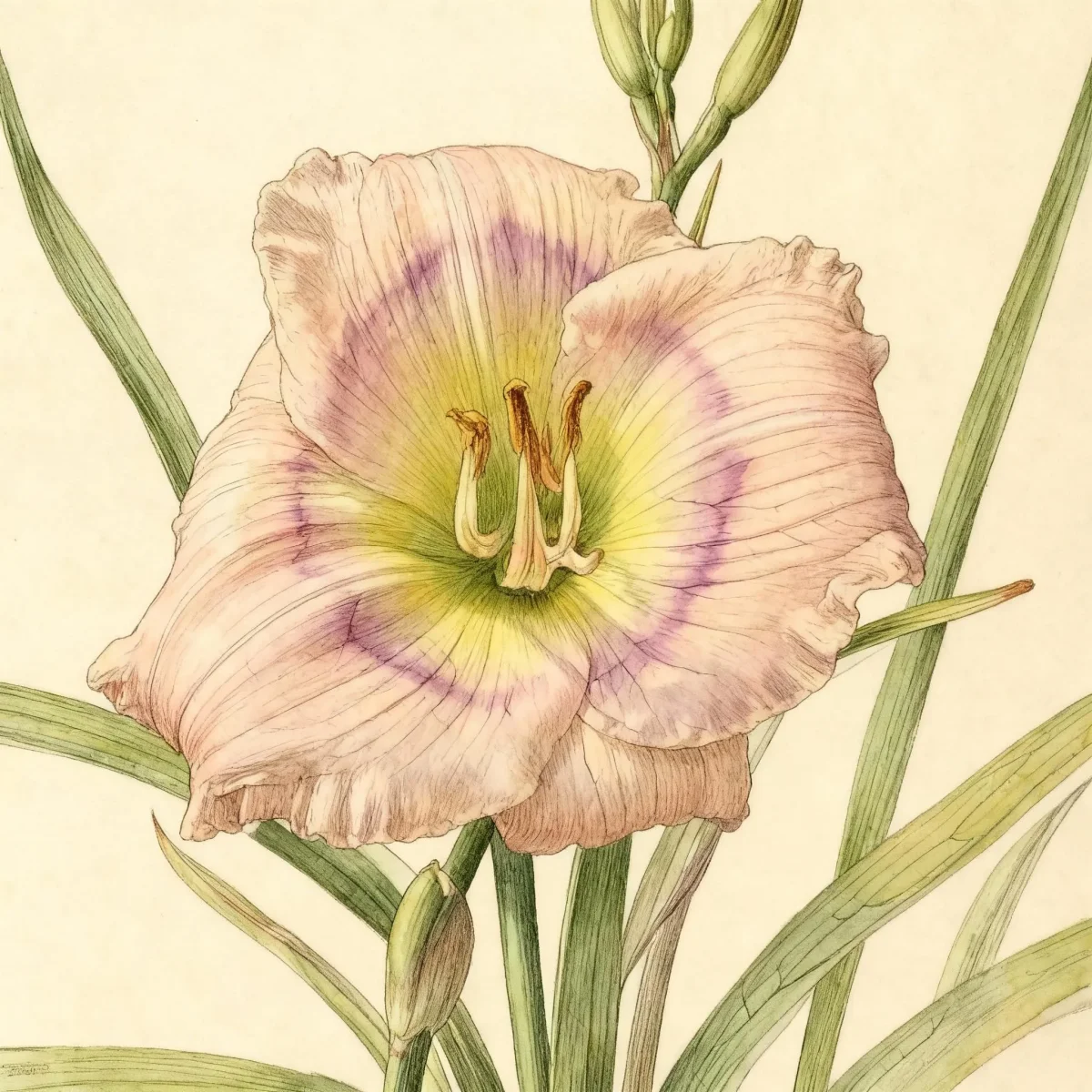
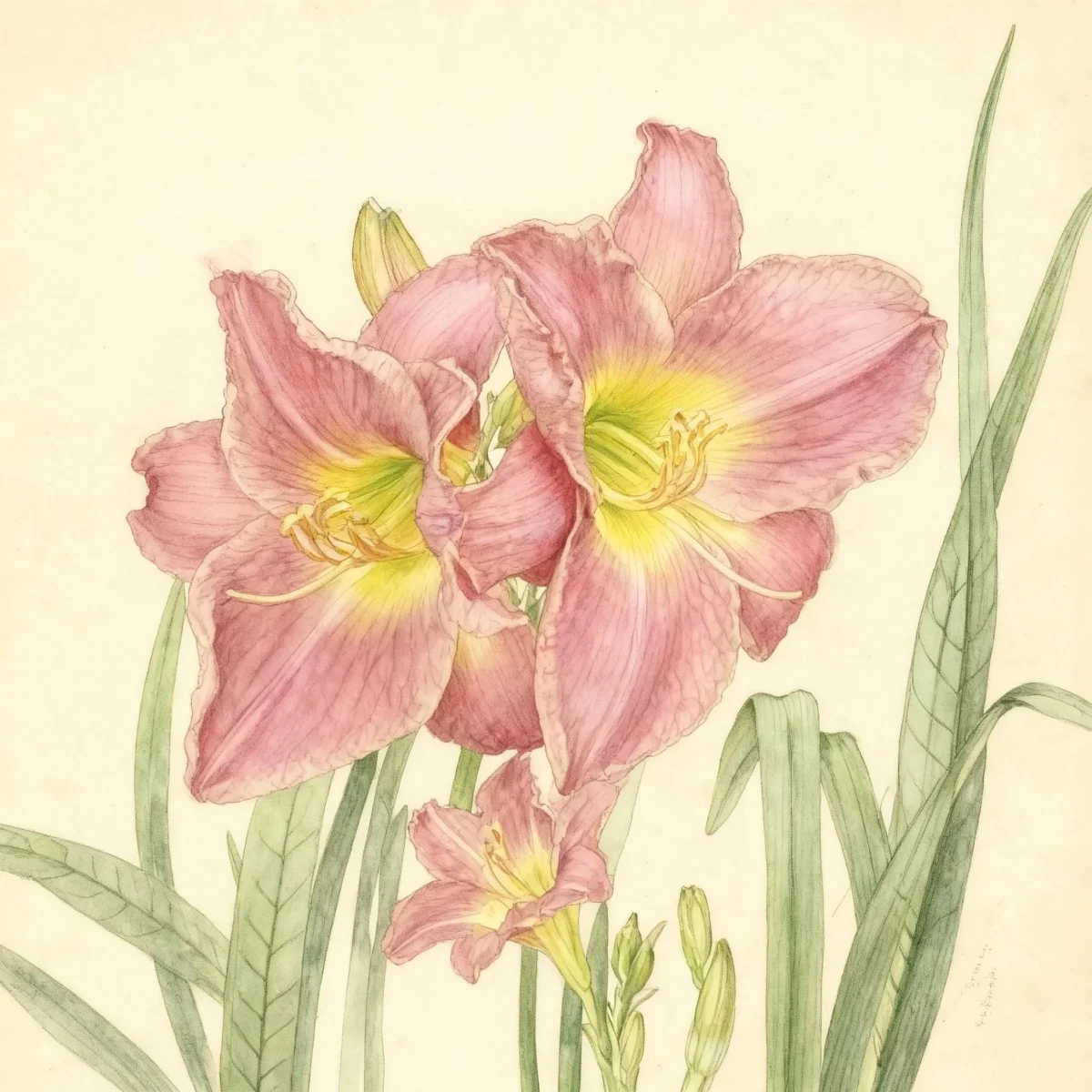
Hemerocallis ‘Prince of Venice’ is a striking herbaceous perennial valued by gardeners for its dependable color display and exceptional hardiness. This specific Daylily cultivar produces 5-inch diameter blossoms, described as a rich mauve-wine blend accented by a bright lemon-lime throat, offering significant ornamental appeal during the early to mid-summer season. As a robust hybrid, it thrives across a wide temperature range, fitting comfortably into USDA Zones 3 through 9.
The appeal of the Daylily genus is rooted in its adaptability and low-maintenance profile, traits certainly embodied by Hemerocallis ‘Prince of Venice’. It forms nice clumps of arching, blade-like foliage that provide structure even when not in bloom. Gardeners benefit from its tolerance to heat and humidity, making it a reliable performer in diverse summer gardens.
While individual flowers only last a day, the succession of blooms ensures a long season of interest. Hemerocallis ‘Prince of Venice’ provides excellent color impact when planted in masses or used as a border element, easily integrating into established perennial landscapes due to its manageable size of 2 to 2.5 feet tall.
Fast Facts
- Plant Family: Asphodelaceae
- Plant Type: Herbaceous perennial
- Hardiness Zones: USDA Zones 3-9
- Size at Maturity:
- Height: 2-2.5 ft
- Spread: 1.5-2 ft
- Bloom Time: June to July
- Bloom Description: Mauve-wine blend with lemon-lime throat
- Sun Exposure: Full sun to part shade
- Water Needs: Medium
- Maintenance Level: Low
How to Grow
Planting Hemerocallis ‘Prince of Venice’ is best accomplished in the spring or fall, ensuring the soil is average, medium moisture, and well-drained. While Daylilies adapt to many soil types, they flourish most when planted in deep, fertile loams where their fibrous roots can establish well. Position the crown of the plant just at or slightly below the soil line to prevent rot or frost heave.
Ongoing care for this Daylily is minimally demanding. Deadhead spent blossoms daily for the neatest appearance, and once the entire flower stalk (scape) has finished blooming, remove it at the base. Although tolerant of summer heat, provide deep watering during extended dry spells, as consistent moisture helps keep the foliage attractive, which is especially important for evergreen types in warmer zones.
Division is recommended every three to four years, timing this in early spring in colder regions or in the fall where winters are mild. Remember that hybrid daylilies like ‘Prince of Venice’ will not reliably come true from seed, so division is essential for preserving your cultivar. Winter dormant types require a cold period, making them less suitable for the warmest reaches of Zone 9.
Landscape Uses
The foundational nature and manageable height of the Daylily make it a versatile staple in landscape design. Hemerocallis ‘Prince of Venice’ excels when used for building robust borders along pathways or defining transitions between lawn and garden beds. Their clumping habit allows them to be effective when massed over large areas to create sweeping swaths of color, complementing the mauve-wine tones with contrasting greens or blues.
Due to their relatively low environmental demands, they serve excellently as reliable filler plants. They are ideal for softening the edges of shrub borders or introducing color into mixed perennial groupings. Although this cultivar is not explicitly listed as dwarf, its 2-foot stature allows it to integrate well into front-of-border plantings where taller varieties might overwhelm shorter neighbors.
The tolerance of Hemerocallis ‘Prince of Venice’ to mild pollutants also makes it a practical choice for urban gardens or areas near roadways, adding beauty without requiring fussy attention. This robust Daylily contributes reliable mid-season structure wherever low maintenance is a priority.
Standout Features
Flower Qualities
- Showy
Noteworthy Characteristics
Hemerocallis is a genus derived from Greek words meaning ‘day beauty,’ perfectly describing the ephemeral nature of its flowers, which typically last only one day but are produced in great succession. Cultivars like ‘Prince of Venice’ represent the decades of hybridization work, offering specific colors and robust growth habits, such as the 5-inch mauve-wine flowers noted for this diploid variety. Each plant features dense basal foliage providing texture throughout the growing season.
Tolerances
- Rabbit
- Erosion
- Air Pollution
Potential Problems
Daylilies are famously adaptable and generally resist pests, offering gardeners an easy-to-grow perennial. Major problems are rare; however, watch for occasional infestations of mites, aphids, or thrips, which can usually be managed by blasting them off with a strong jet of water or through targeted, minimal pesticide use if necessary. Daylily rust can become problematic in humid climates, requiring good air circulation and fungicide treatment if established.
Rabbits, surprisingly, tend to avoid eating Daylilies, a significant advantage in areas where deer and rabbits browse new foliage. The key to a healthy Daylily planting is vigilance regarding drainage; standing water is the quickest way to destroy the fibrous root system and encourage rot.
Frequently Asked Questions
What hardiness zones is Daylily suitable for?
Hemerocallis ‘Prince of Venice’ is suitable for USDA Zones 3 through 9, offering excellent adaptability across many regions.
How large does Daylily grow?
This Daylily typically reaches a mature height between 2 and 2.5 feet tall with a spread of 1.5 to 2 feet wide.
When does Daylily bloom?
The blooms on Hemerocallis ‘Prince of Venice’ typically appear from June to July, featuring a distinctive mauve-wine blend with a lemon-lime throat.
What sun exposure does Daylily need?
This cultivar performs best when situated in locations receiving full sun to partial shade, needing at least six hours of direct sun for the most prolific blooming.
Conclusion
Hemerocallis ‘Prince of Venice’ provides undeniable value to the garden through its vibrant, consistent mid-season color and low demands for weeding or watering once established. This dependable Daylily thrives across multiple hardiness zones, making it a reliable choice for border definition or mass planting. Before planting, confirm your location falls within USDA Zones 3-9 to ensure the best performance from this stunning Hemerocallis cultivar.
Propagation Tips
Since hybrid daylilies like Hemerocallis ‘Prince of Venice’ do not come true from seed, division is the standard propagation method. This process should ideally be done in early spring before active growth begins, or in the fall if you are in a mild winter climate (zones 7 and above). To divide, lift the entire clump using a digging fork, gently tease the sections apart—aiming for new fans with connected root systems—and replant immediately at the correct crown depth.
Proper division every 3-4 years is crucial for maintaining vigor. If the clump becomes overcrowded, blooming diminishes, and the plant struggles to compete for water and nutrients. Healthy divisions help ensure future generations of this beautiful perennial display the rich mauve-wine coloration true to type.
Companion Planting
Due to their requirement for full sun and medium moisture, Daylilies pair beautifully with numerous perennials that share similar cultural needs. Consider planting them alongside plants that offer textural contrast, such as ornamental grasses whose fine, upright foliage contrasts nicely with the arching leaves of the Daylily. Liatris (Blazing Star) or Russian Sage offer strong vertical accents that complement the mounding habit of Hemerocallis ‘Prince of Venice’.
For complementary color palettes, use silver-leafed or blue-flowering plants near the base of the Daylily clump. Lamb’s Ears or Catmint provide excellent low-growing groundcover that helps suppress weeds near the crown while keeping the soil cooler during hot summer months.