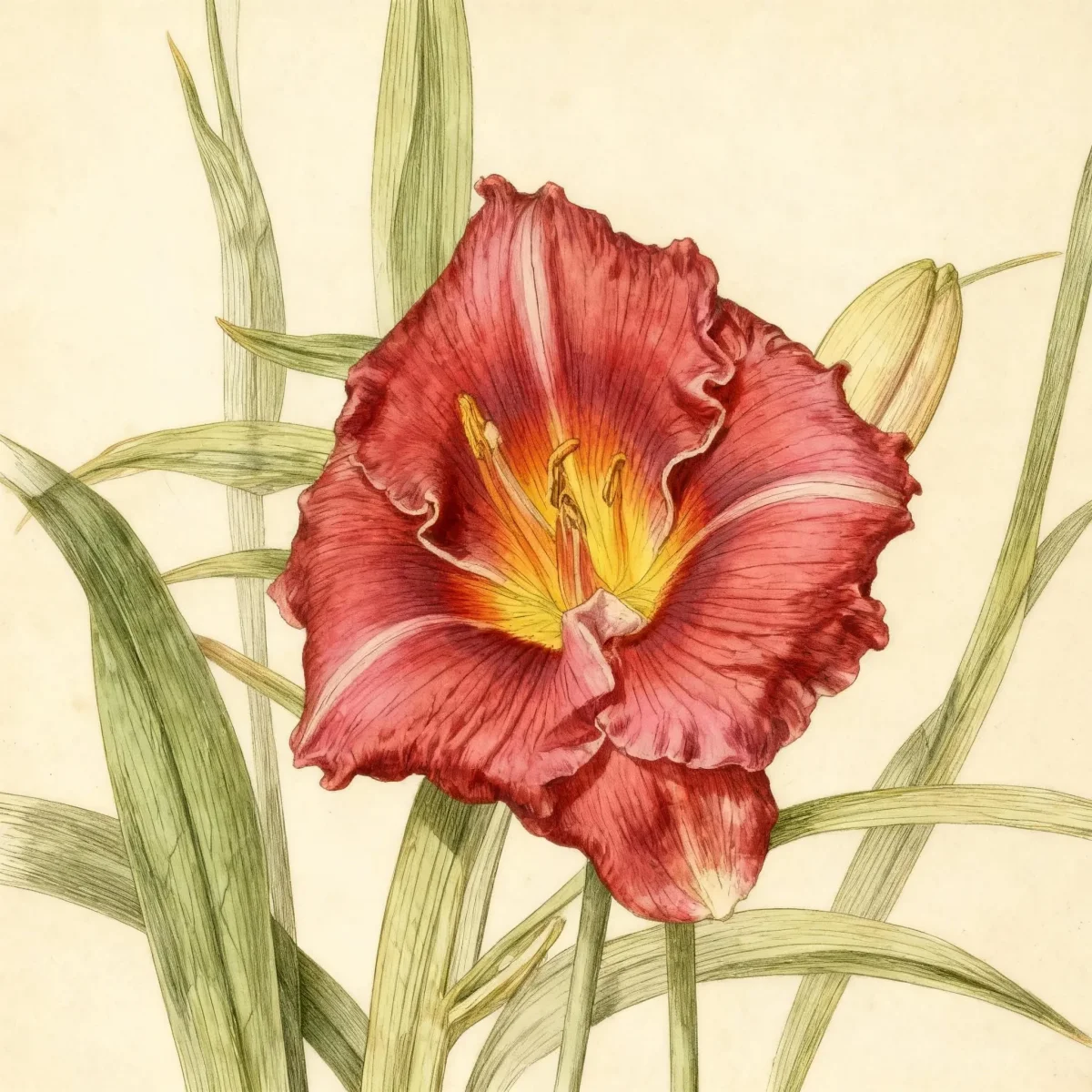
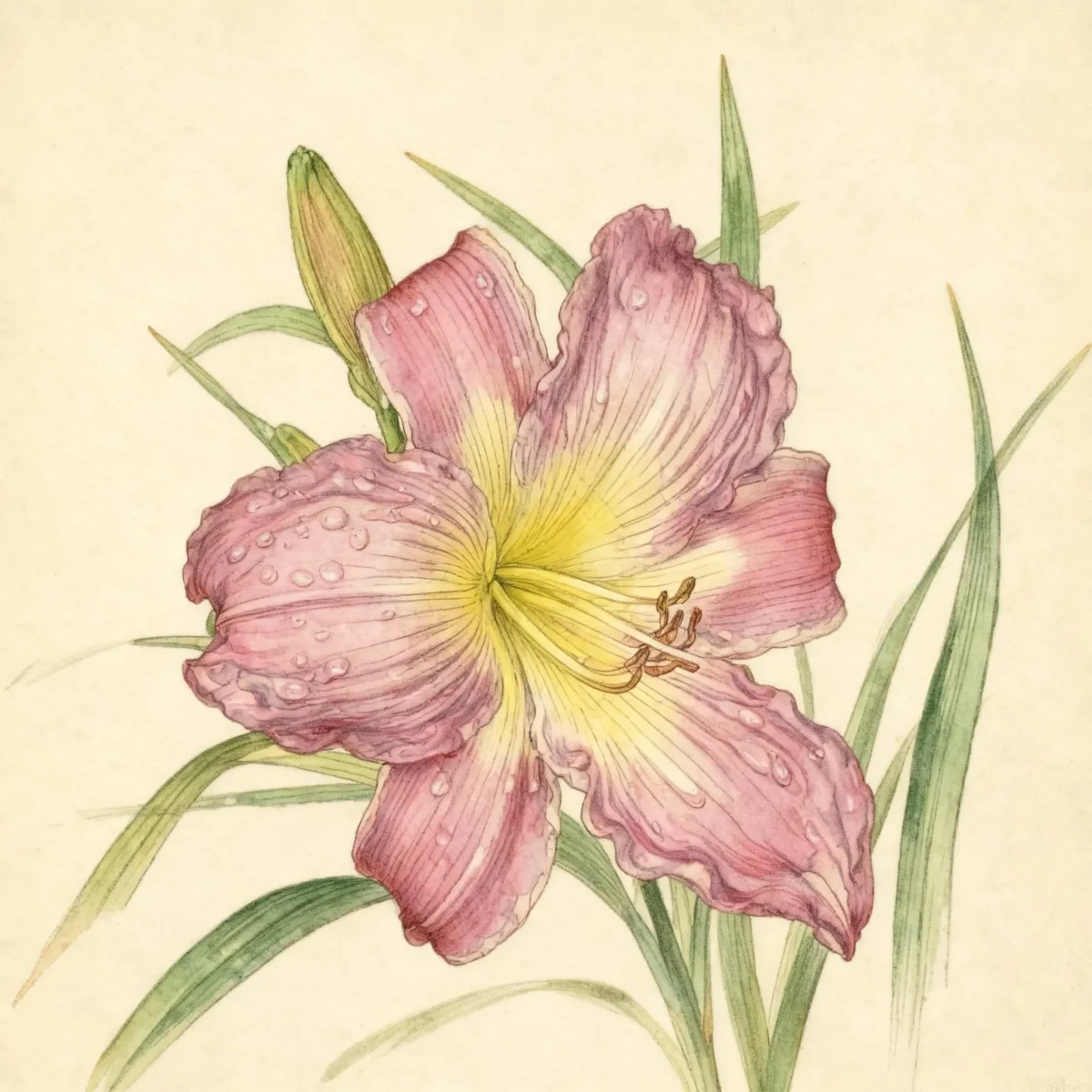
Daylily (Hemerocallis 'Bookmark')
Hemerocallis 'Bookmark' is a low-maintenance Daylily offering unique pink beige blooms in mid-summer, perfect for easy perennial borders.
Scroll down to discover growing tips, care requirements, companion plants, and more
Complete Plant Information
Overview
Hemerocallis ‘Bookmark’ brings reliable, mid-season color to the garden as a highly valued cultivar of the common Daylily. This herbaceous perennial is celebrated for its ease of care and adaptability, thriving across diverse climates from cold winters up to Zone 9. Gardeners appreciate the distinct pink beige flowers that provide a sophisticated contrast when in bloom during early to mid-summer.
As a flowering perennial, the Daylily ensures long-lasting visual impact, as old blooms are quickly replaced by successive new ones throughout the bloom period. Hemerocallis ‘Bookmark’ features an attractive clump of arching, linear foliage that remains neat, contributing textural interest even when not flowering. Its low maintenance profile makes it an excellent choice for borders or mass plantings where reliable performance is key.
This tetraploid Daylily cultivar shows great resilience against common garden stresses, including tolerance for urban air quality and some pests like rabbits, enhancing its practical appeal. For optimal performance, ensure the clump receives consistent moisture and adequate sunlight, securing its place as a garden workhorse.
Fast Facts
- Plant Family: Asphodelaceae
- Plant Type: Herbaceous perennial
- Hardiness Zones: USDA Zones 3-9
- Size at Maturity:
- Height: 1.5-2 ft
- Spread: 1.5-2 ft
- Bloom Time: June to July
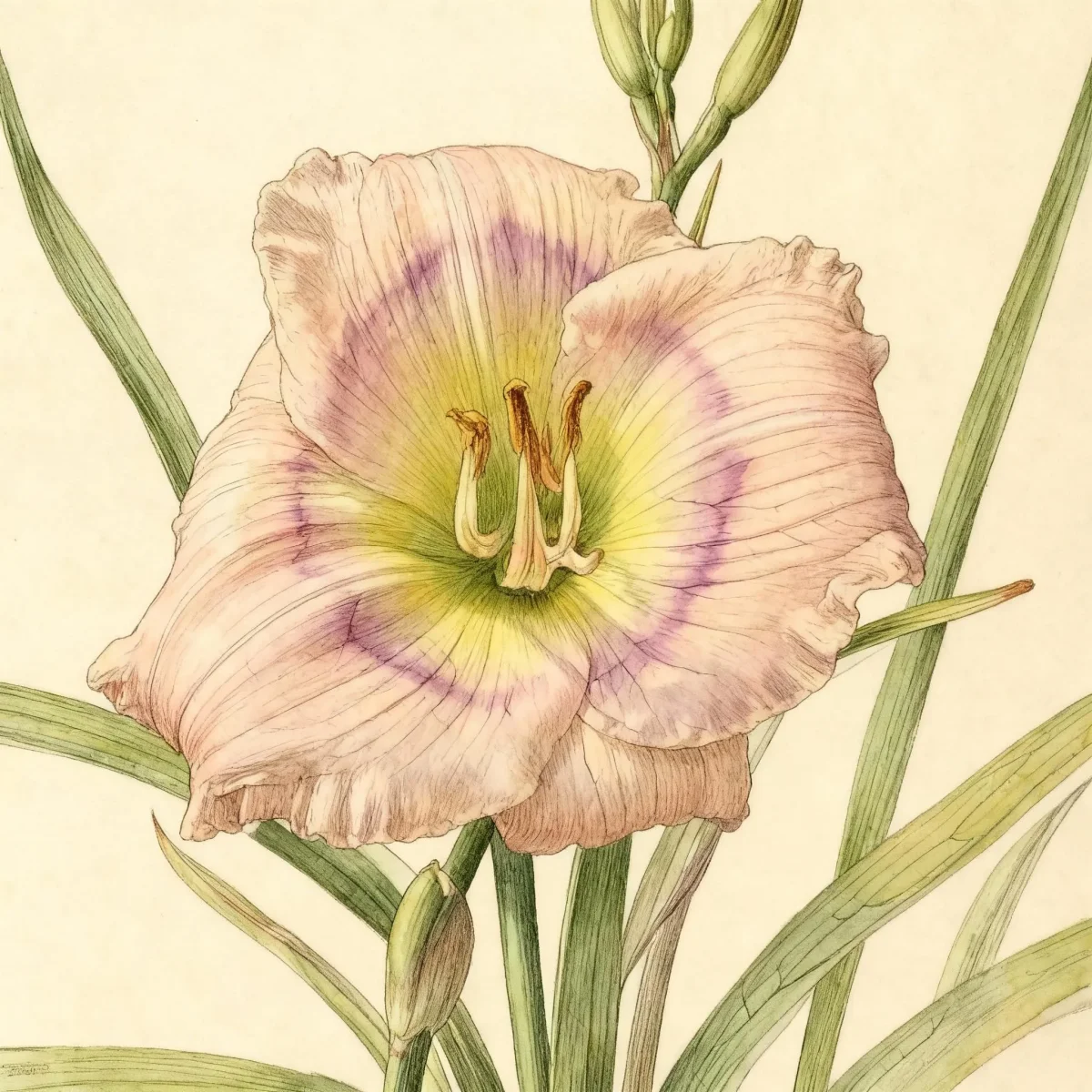
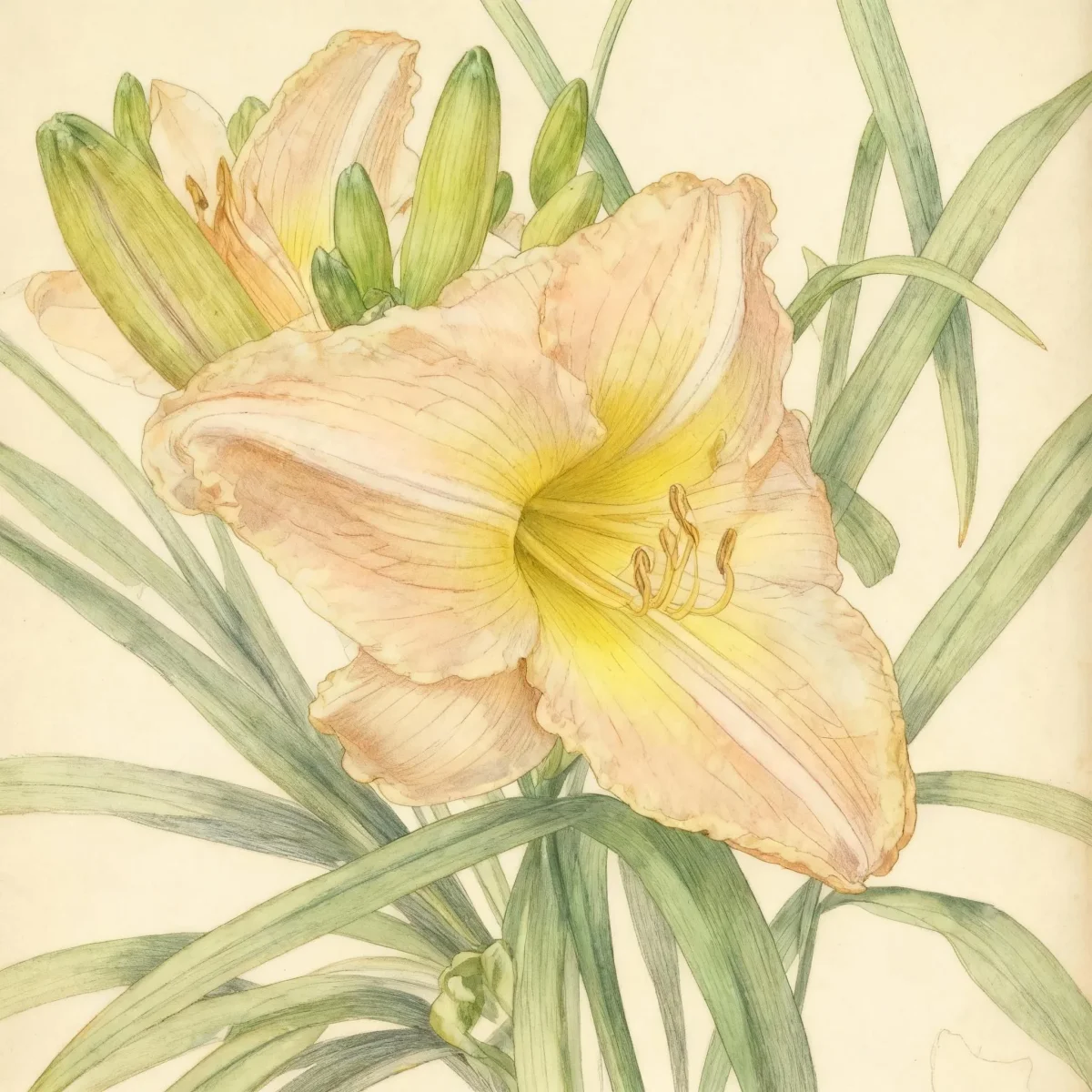
- Bloom Description: Pink beige with yellow-green throat
- Sun Exposure: Full sun to part shade
- Water Needs: Medium
- Maintenance Level: Low
How to Grow
Hemerocallis ‘Bookmark’ establishes best when planted in the spring or fall, aiming for an average, well-drained soil medium. While daylilies adapt to many soil types, they perform optimally in deep, fertile loams that retain consistent moisture. Ensure the planting site receives adequate sun, ranging from full sun exposure for best flowering or light afternoon protection under part shade.
Routine maintenance for this Daylily is minimal. Deadhead faded flowers on Hemerocallis ‘Bookmark’ daily to maintain neatness, and remove the entire flower stalk (scape) once blooming ceases. While generally tolerant of heat, deep watering during prolonged dry spells keeps the foliage looking fresh and prevents stress.
Dividing the clumps is necessary for peak performance, typically every three to four years, done either in the fall or early spring, depending on your local climate; spring division is often preferred in severe winter regions. Remember that hybrid daylilies, including ‘Bookmark,’ will not breed true from seed, so division is the method for propagating this exact cultivar.
Landscape Uses
Daylilies excel as foundational, easy-to-grow perennial choices suitable for a wide variety of garden designs. Hemerocallis ‘Bookmark’ works beautifully when planted en masse to cover large areas, instantly creating swathes of texture and color that require minimal upkeep. Their consistent clump-forming habit makes them inherently useful for defining edges along pathways or driveways.
The 1.5 to 2-foot height profile of ‘Bookmark’ positions it perfectly in the middle ground of perennial borders, allowing shorter groundcovers in the front and taller structural plants behind. Since they are adaptable to most soils, they pair well with many other low-maintenance perennials that share similar sun and water needs, such as ornamental grasses or sturdy Salvias. Dwarf cultivars are useful for rock gardens, though this specific variety fits standard border edging needs perfectly.
Standout Features
Flower Qualities
- Showy
Noteworthy Characteristics
Hemerocallis is a genus of about 15 species of herbaceous perennials commonly known as daylilies. Hybridizers have expended considerable effort over the years creating new daylilies featuring flowers with new colors, color combinations, shapes and patterns. ‘Bookmark’ is a tetraploid cultivar which features 5” diameter, pink beige flowers with yellow green throats that appear on naked stems rising to 24” tall above the foliage.
Tolerances
- Rabbit
- Erosion
- Air Pollution
Potential Problems
Daylilies are renowned as extremely adaptable perennials that are largely pest-free and straightforward to cultivate. Watch for occasional infestations of mites, aphids, or thrips, which can usually be managed with targeted, low-impact treatments. Daylily rust, a fungal issue, can become problematic in certain humid environments, requiring vigilant monitoring of foliage health. Fortunately, rabbits generally avoid chewing on Hemerocallis foliage.
Frequently Asked Questions
What hardiness zones is Daylily suitable for?
Hemerocallis ‘Bookmark’ is hardy across USDA Zones 3 through 9, providing excellent flexibility for many gardeners.
How large does Daylily grow?
This Daylily typically reaches a mature height between 1.5 and 2 feet, with a spread of 1.5 to 2 feet.
What sun exposure does Hemerocallis ‘Bookmark’ need?
Hemerocallis ‘Bookmark’ performs best when sited in locations receiving full sun to light part shade throughout the day.
When does Daylily bloom?
The bloom period for this cultivar is generally June to July, featuring distinctive pink beige flowers with a yellow-green throat.
Conclusion
Hemerocallis ‘Bookmark’ is an indispensable perennial due to its low maintenance needs and dependable summer color display. This particular Daylily cultivar provides the classic resilience gardeners expect from Hemerocallis, wrapped in a unique flower tone. Check your local hardiness zone suitability and plan to incorporate this robust plant into your next edging project this spring for season-long satisfaction.
Companion Planting
Many plants thrive alongside Daylilies because they enjoy similar growing conditions (medium water, high sun tolerance). Consider pairing Hemerocallis ‘Bookmark’ with plants that either offer contrast in texture or bloom time. Coneflowers (Echinacea) and Ornamental Grasses are excellent companions, as they share the need for sun and don’t compete heavily for root space. The arching foliage of the Daylily provides a soft skirt around upright bloomers, creating a layered, visually appealing border.
Seasonal Care Calendar
For optimal display of your Hemerocallis ‘Bookmark’, integrating seasonal tasks is helpful. In early spring, clean up any remaining dead foliage from the previous year and apply a balanced, slow-release fertilizer if your soil is poor. Summer is focused on deadheading spent blooms daily to encourage repeat flowering and providing necessary supplemental watering during dry spells. In the fall, especially after the foliage dies back on dormant types, cut back the dead leaves close to the crown to prevent winter moisture accumulation and pest hiding spots.