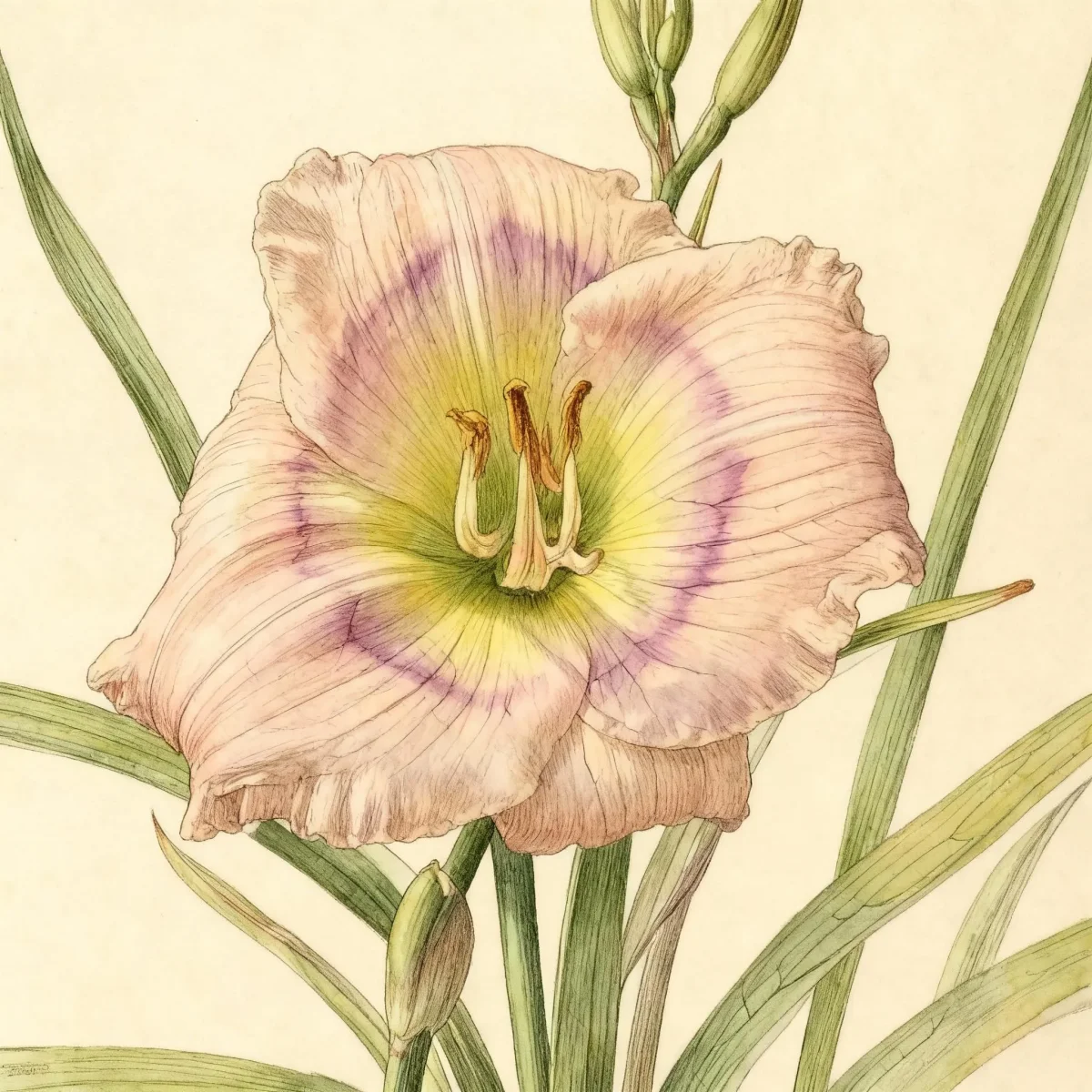
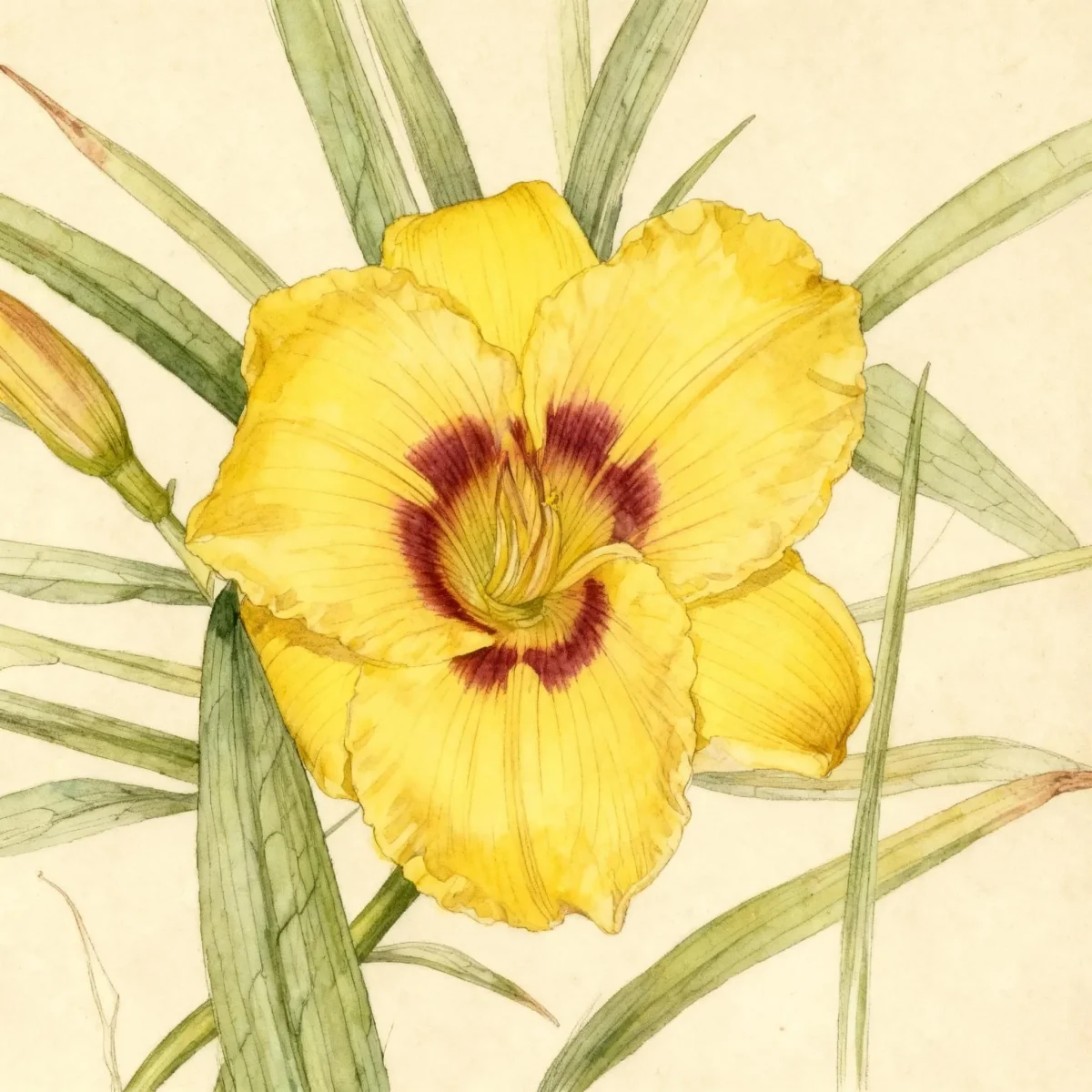
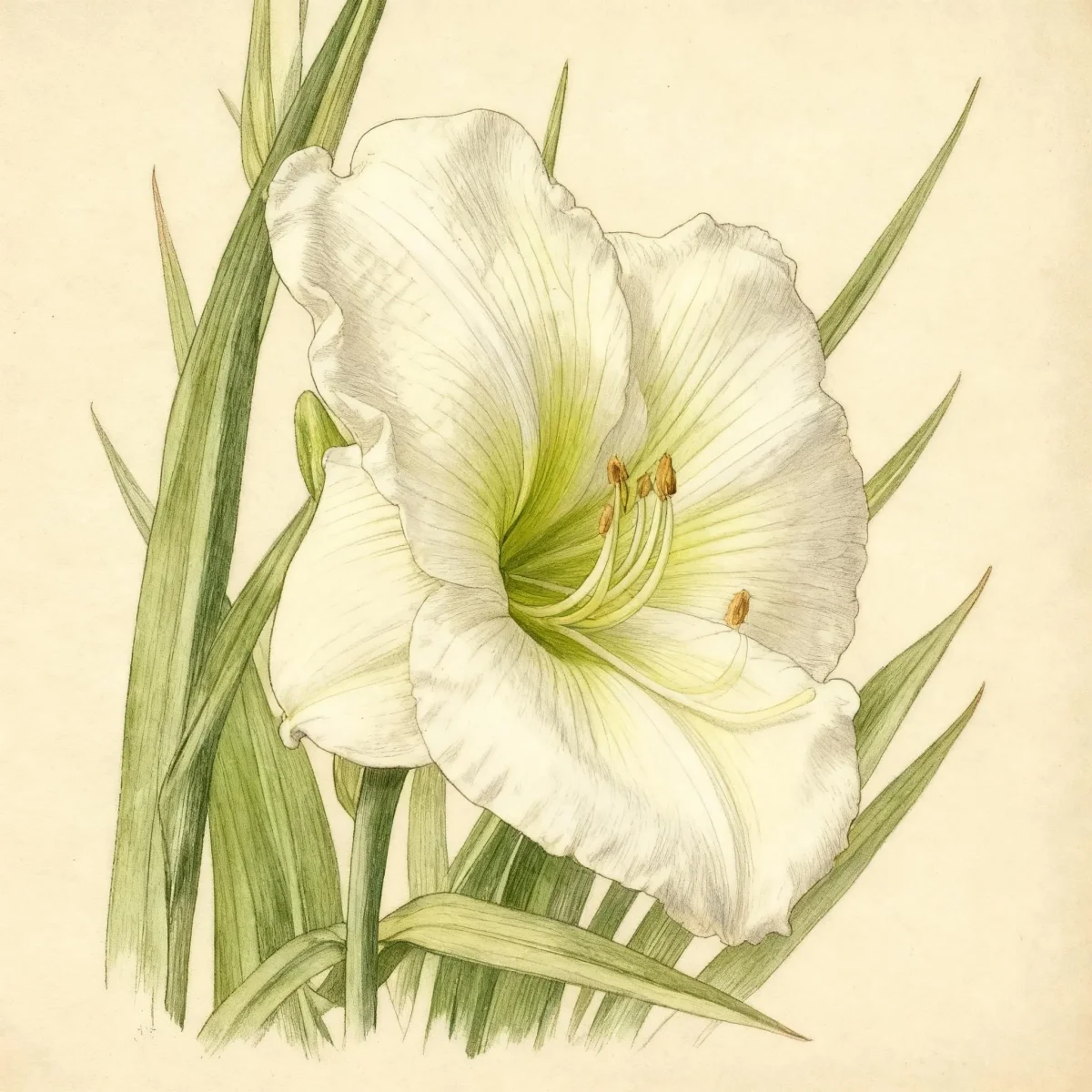
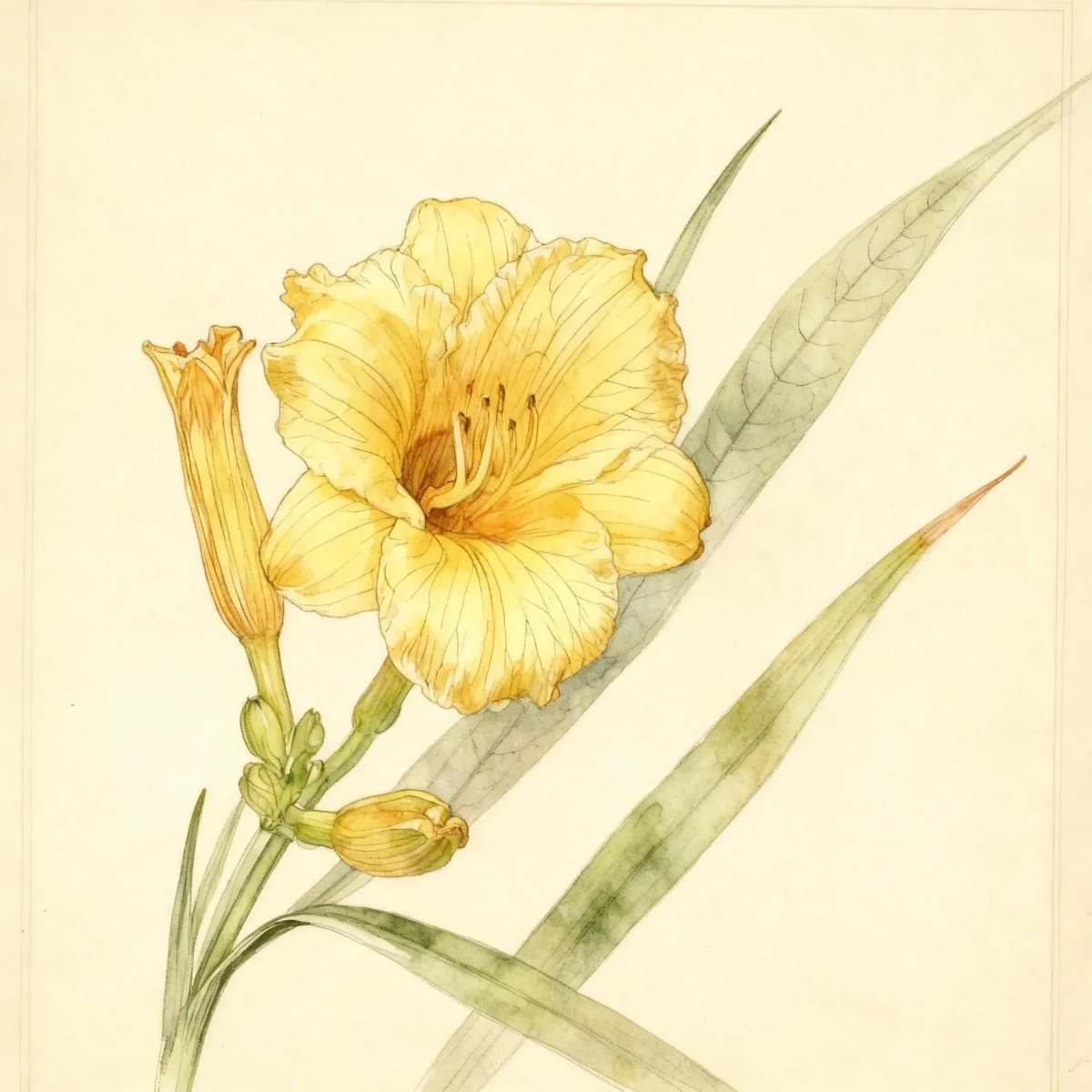
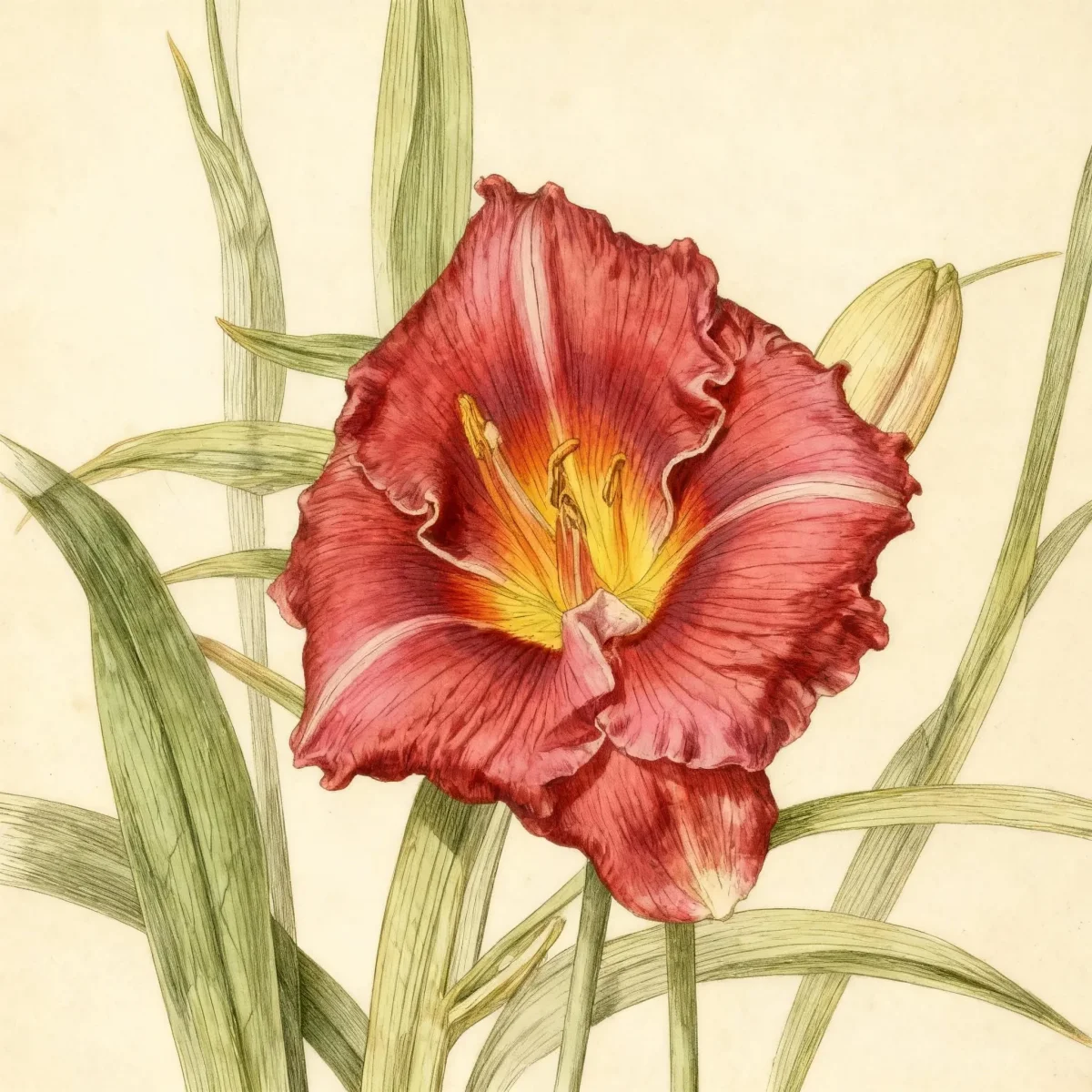
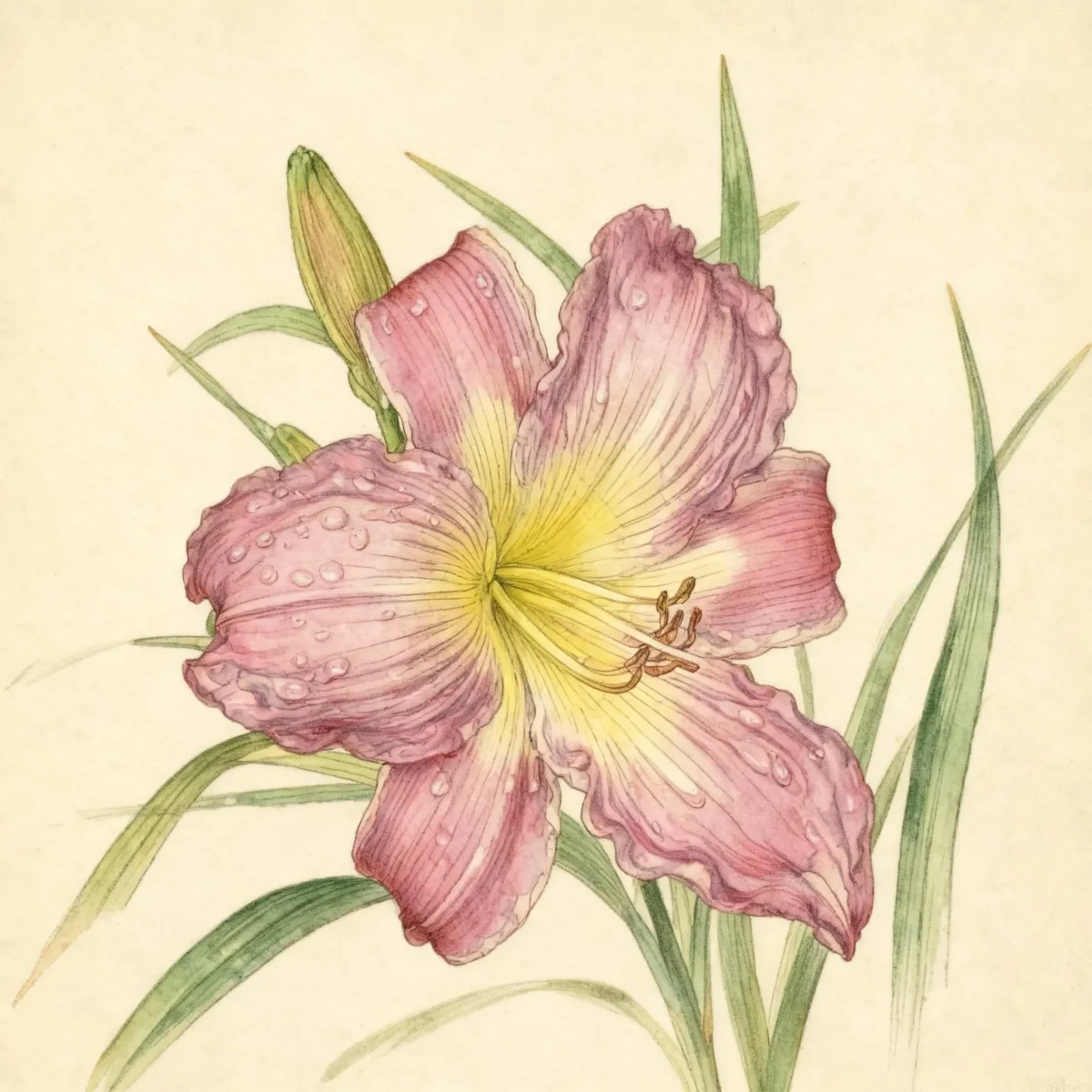
Daylily (Hemerocallis 'Brookwood Ojo Poco')
Hemerocallis 'Brookwood Ojo Poco' is a low-maintenance Daylily offering apricot blooms with striking red eyes. Ideal for Zones 3-9.
Scroll down to discover growing tips, care requirements, companion plants, and more
Complete Plant Information
Overview
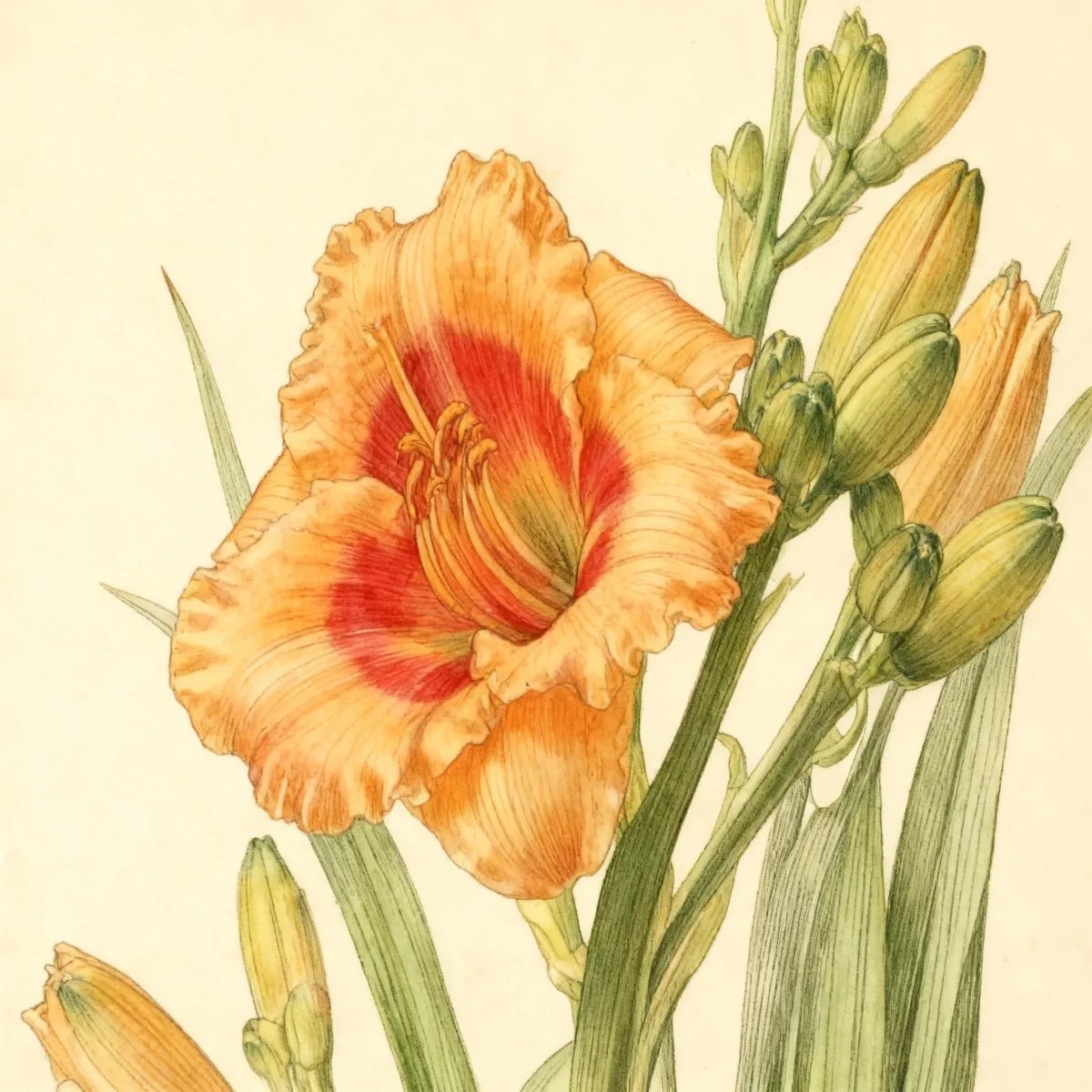
Hemerocallis ‘Brookwood Ojo Poco’ is a spectacular example of modern hybridizing, offering rich color set against reliable, low-maintenance perennial structure. This Daylily variety stands out with its distinct apricot petals highlighted by vibrant red eye zones and cool green throats, providing excellent visual impact from early to mid-summer. As an herbaceous perennial, it establishes easily and returns reliably year after year, making it a foundational plant for gardeners seeking bold color without demanding constant attention.
The adaptation of this Daylily cultivar allows it to thrive across a broad range of climates, specifically USDA Zones 3 through 9. While it appreciates fertile soils, the general resilience of the Daylily genus ensures that Hemerocallis ‘Brookwood Ojo Poco’ performs well even in average garden conditions, provided it receives medium moisture. Its compact size, reaching up to 1.5 feet tall and wide, makes it manageable for borders or grouping.
Gardeners value this plant not only for the beauty of its individual, ephemeral blossoms—each lasting a day but produced continuously—but also for its hardiness and adaptability. From managing soil erosion to tolerating urban air pollution stressors, the Daylily hybrid ‘Brookwood Ojo Poco’ proves itself a versatile and rewarding addition to almost any outdoor setting.
Fast Facts
- Plant Family: Asphodelaceae
- Plant Type: Herbaceous perennial
- Hardiness Zones: USDA Zones 3-9
- Size at Maturity:
- Height: 1-1.5 ft
- Spread: 1-1.5 ft
- Bloom Time: June to July
- Bloom Description: Apricot with red eye zones and green throats
- Sun Exposure: Full sun to part shade
- Water Needs: Medium
- Maintenance Level: Low
How to Grow
Planting should ideally occur in spring or fall when temperatures are moderate, allowing the fibrous roots of the Daylily to establish before facing extreme heat or cold. While these plants tolerate average soils, they reach their full potential in deep, fertile, medium-moist, well-drained loams. Ensure the crown of the Daylily is planted just at or slightly above the soil line; burying the crown can inhibit blooming.
Ongoing maintenance for Hemerocallis ‘Brookwood Ojo Poco’ is refreshingly minimal. Deadhead spent flowers daily to maintain neatness and improve appearance, automatically removing the visual clutter of fading blooms. Once the entire flower scape has finished blooming, remove the entire stalk to tidy the plant. Although tolerant of heat, consistent deep watering during severe dry spells will keep the foliage looking lush and green.
For continued vigorous performance, plan to divide overcrowded clumps of Hemerocallis ‘Brookwood Ojo Poco’ every three to four years, preferably in spring in colder climates or fall if winters are milder. It is important to remember that planting seeds from this hybrid will not produce offspring that match the parent; propagation should be done via division. As a winter-dormant type, it requires that necessary cold period to fuel its spring performance, making it less ideal for the warmest fringe of Zone 9.
Landscape Uses
The manageable size and vibrant coloration of Hemerocallis ‘Brookwood Ojo Poco’ make it an invaluable perennial for creating defined structure in the garden. Its upright, linear foliage provides excellent vertical texture, contrasting well with mounding or fine-textured companion plants. These Daylilies are perfect for defining the front edge of perennial borders or stepping stones where their mid-sized habit won’t obstruct views of taller plants behind them.
For mass plantings, establishing clumps of this Daylily provides stunning visual continuity when they are blooming in June and July. They are also excellent candidates for filling large areas where you need durable, low-maintenance coverage, as they are effective at controlling light soil erosion on gentle slopes. Consider planting them near walkways where you can easily observe the detail of the apricot blooms and red eye zones up close.
This Daylily cultivar integrates seamlessly with traditional cottage garden designs or more modern structure-focused landscapes. Pair them with lower-growing groundcovers that can utilize the space beneath the foliage, or use them as low edging against shrubs. Their tolerance for varying conditions, including air pollution, extends their usefulness into commercial or roadside plantings where tougher plants are necessary.
Standout Features
Flower Qualities
- Showy
Noteworthy Characteristics
Hemerocallis is a genus renowned for introducing color into summer gardens, developed through intensive hybridization resulting in over 60,000 registered cultivars. The common name Daylily reflects that each magnificent flower typically lasts only a single day, yet plants produce flowers successively over a long season. Specifically, ‘Brookwood Ojo Poco’ is recognized as a diploid rebloomer, offering continuous interest through its funnel-shaped, apricot flowers complete with distinctive red eyes and green throats rising on tall scapes.
Tolerances
- Rabbit
- Erosion
- Air Pollution
Potential Problems
Daylilies are remarkably adaptable and rank among the easiest perennials to maintain, often remaining pest-free. When issues do arise, they usually involve minor cosmetic damage rather than systemic threats. Occasionally, you might notice sap-sucking insects like mites, aphids, or thrips, which can generally be washed off with a strong spray of water or treated with insecticidal soap if populations become high.
A more serious, though geographically dependent, concern is Daylily rust, a fungal disease that causes yellow or orange pustules on the foliage. If rust is prevalent in your gardening region, selecting rust-resistant Daylily cultivars or ensuring excellent air circulation around your plants is critical for prevention. Fortunately, rabbits tend to leave the foliage of established Daylily plants alone.
Frequently Asked Questions
What hardiness zones is Daylily (Hemerocallis ‘Brookwood Ojo Poco’) suitable for?
This Daylily is hardy and adaptable across USDA growing Zones 3 through 9, provided it receives the necessary winter dormancy period.
How large does Hemerocallis ‘Brookwood Ojo Poco’ grow?
Mature plants typically reach a height between 1 and 1.5 feet tall, with a similar spread between 1 and 1.5 feet wide, forming neat, manageable clumps.
When does Daylily bloom?
Hemerocallis ‘Brookwood Ojo Poco’ generally blooms from June through July, featuring its signature apricot flowers with red eye zones and green throats, and is registered as a rebloomer.
What sun exposure does Hemerocallis ‘Brookwood Ojo Poco’ need?
For the best performance and most abundant flowering, these Daylilies prefer a location that receives full sun, though they tolerate conditions ranging down to partial shade.
Conclusion
Hemerocallis ‘Brookwood Ojo Poco’ delivers significant ornamental impact with very low required input, standing as a resilient and colorful cornerstone for summer garden design. Its attractive apricot, red-eyed blooms ensure visual interest throughout the season in zones 3-9. Evaluate your landscape’s sun exposure and moisture levels now to determine the perfect spot to plant your own clump of this fantastic Daylily hybrid.
Companion Planting
Selecting companions that share the cultural needs of Hemerocallis ‘Brookwood Ojo Poco’ is key to creating a cohesive border. Since this Daylily prefers medium moisture and full sun to part shade, pair it with plants that also thrive under these conditions. Excellent partners include Catmint (Nepeta), Coreopsis, and Hardy Geraniums, which offer contrasting textures and extended bloom times without competing aggressively for nutrients.
Avoid planting it too closely with aggressive spreaders that might choke out the Daylily foliage, especially in the spring before the basal leaves fully emerge. Its medium height works well in front of structural shrubs like Dwarf Spirea or upright ornamental grasses, which can help mask the foliage as the Daylily begins to fade later in summer.
Propagation Tips
The primary and most successful method for increasing your stock of Hemerocallis ‘Brookwood Ojo Poco’ is division. Because Daylilies are fibrous-rooted, healthy fans of foliage can be dug up entirely (ideally during spring or fall when active growth slows) and carefully separated using a sharp spade or knife. Ensure each new division retains several robust fans of leaves and corresponding roots for successful reestablishment.
If you acquire a new division, planting it correctly is crucial for future blooms. Avoid planting the crown too deep, as this often leads to reduced flowering, a common mistake when dividing. Remember that seeds collected from Daylily hybrids like this one will not faithfully replicate the parent plant’s desirable traits; division is the only method to ensure you maintain the specific coloration and reblooming habit of ‘Brookwood Ojo Poco’.