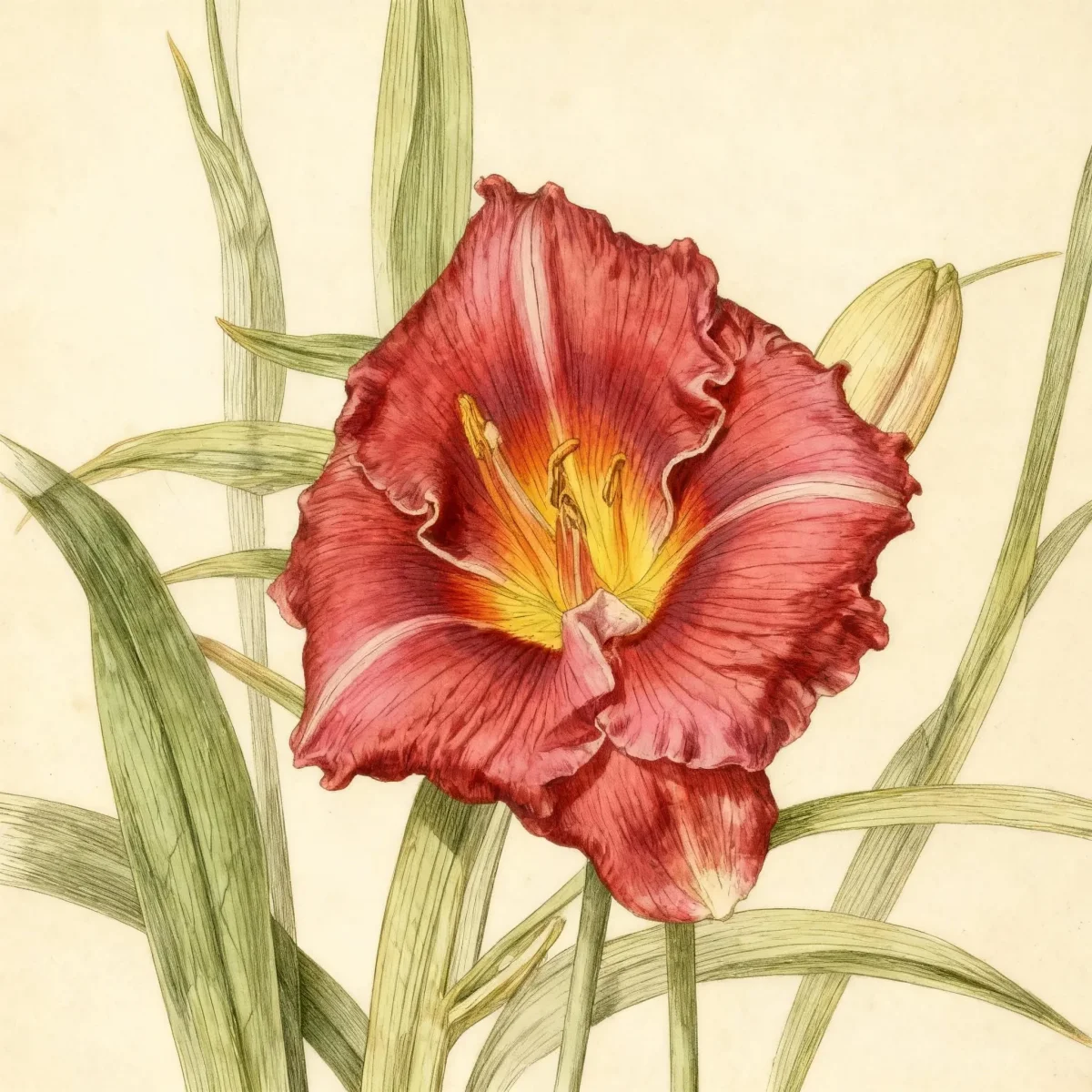
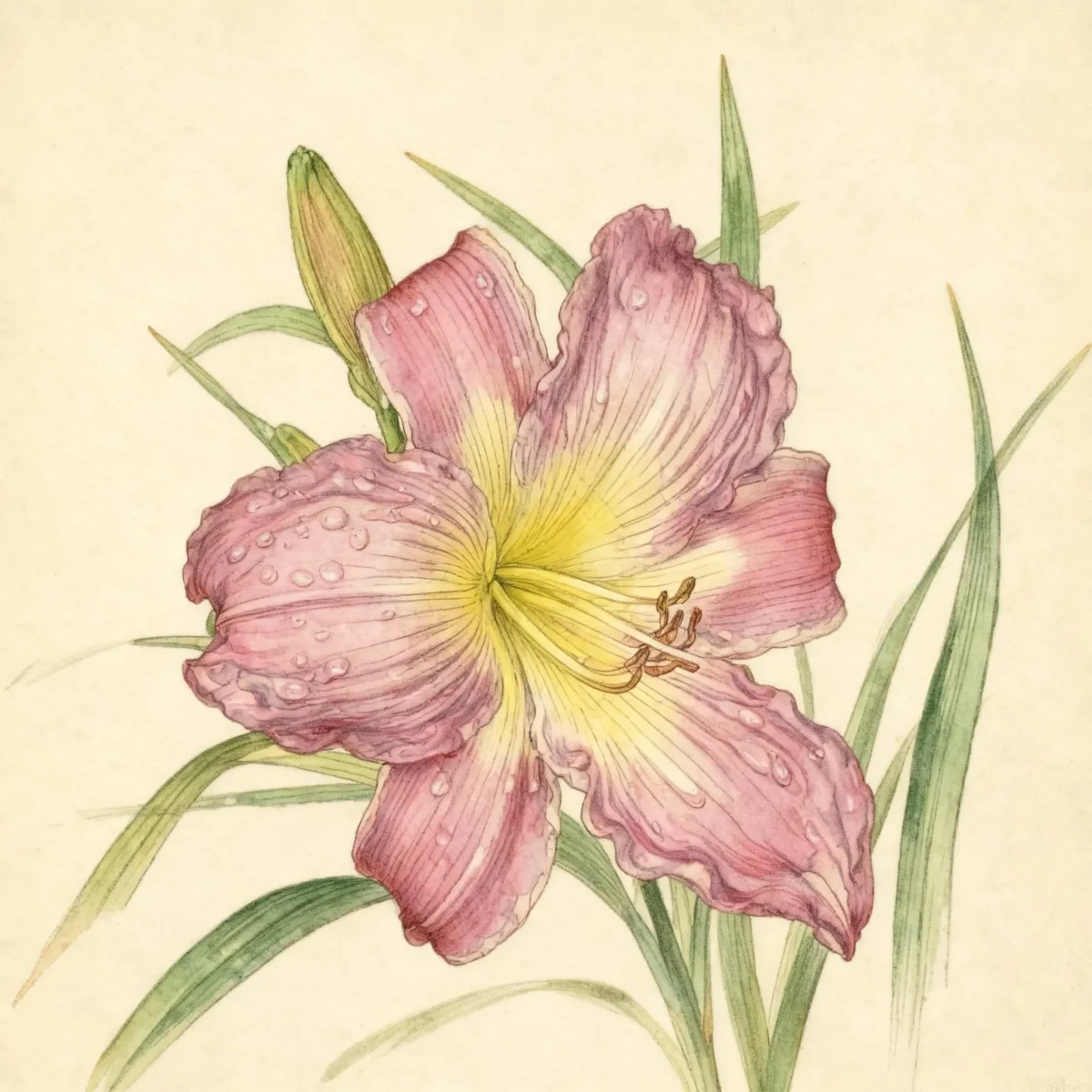
Daylily (Hemerocallis 'Curly Rosy Posey')
Hemerocallis 'Curly Rosy Posey' Daylily offers showy, spider-form pink blooms. Hardy zones 3-9, low maintenance perennial.
Scroll down to discover growing tips, care requirements, companion plants, and more

Complete Plant Information
Overview
The Hemerocallis ‘Curly Rosy Posey’ Daylily is a standout herbaceous perennial prized for its unique flower form and attractive coloration. This specific cultivar presents showy, spider-form blooms, making the Daylily a vibrant addition to any garden space from early summer through mid-season. As a low-maintenance plant, Hemerocallis ‘Curly Rosy Posey’ thrives across a wide range of conditions, providing reliable seasonal beauty.
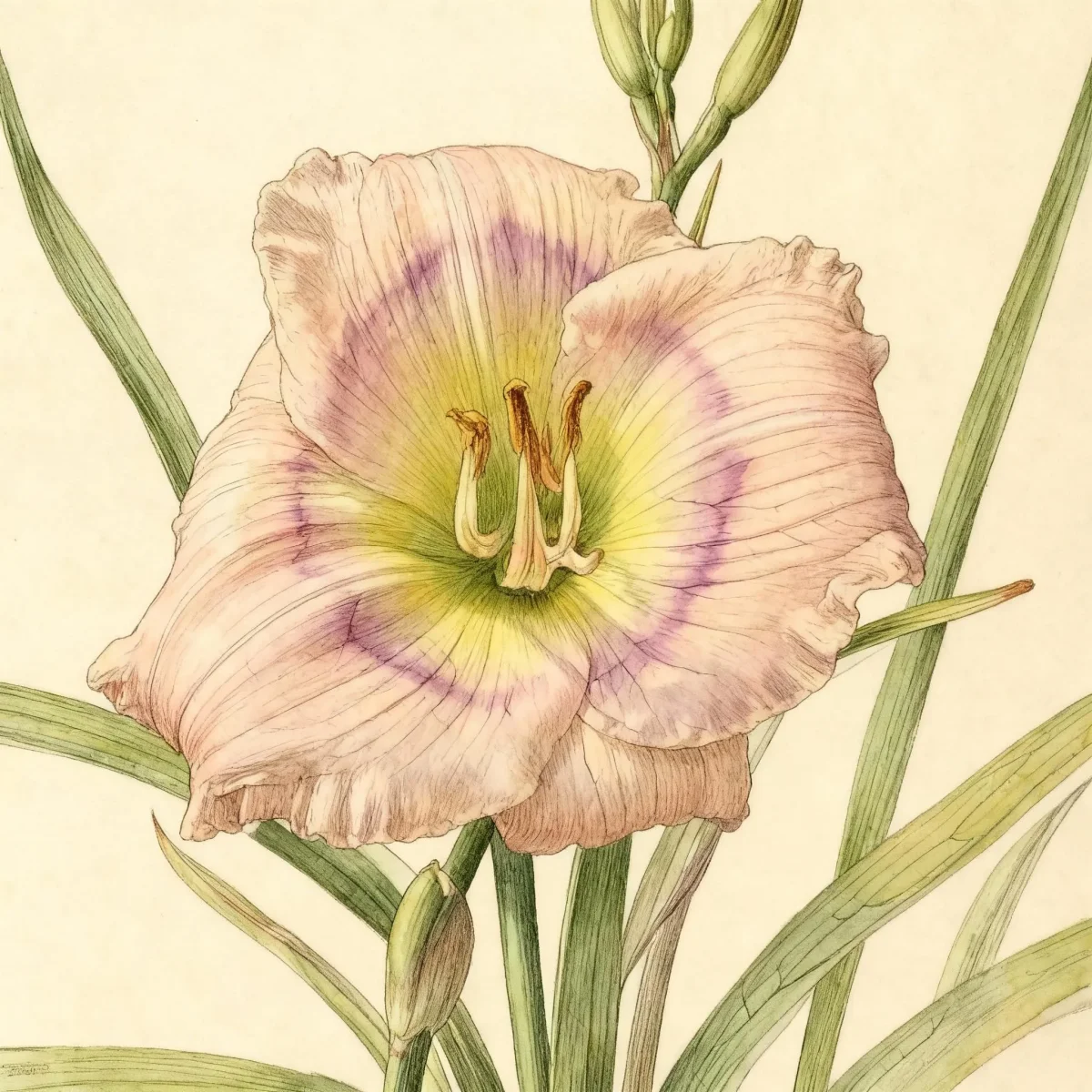
This vigorous cultivar matures to a manageable height of 2 to 2.5 feet, perfect for defining borders or filling beds with its arching, linear green foliage. The prolific flowering habit ensures that even though individual blooms last only a day, the plant remains attractive across its long blooming period. Gardeners value the Daylily for its adaptability and the stunning contrast of its pink flowers against the rose eye zones and chartreuse throat.
Originating from Asian species, modern Daylilies like this one have been heavily hybridized, resulting in exceptional resilience and diverse aesthetics. Hemerocallis ‘Curly Rosy Posey’ provides significant visual impact with minimal intervention, cementing the Daylily’s status as a staple in classic and contemporary landscapes alike.
Fast Facts
- Plant Family: Asphodelaceae
- Plant Type: Herbaceous perennial
- Hardiness Zones: USDA Zones 3-9
- Size at Maturity:
- Height: 2-2.5 ft
- Spread: 2-2.5 ft
- Bloom Time: June to July
- Bloom Description: Pink with rose eye zones and chartreuse throat
- Sun Exposure: Full sun to part shade
- Water Needs: Medium
- Maintenance Level: Low
How to Grow
Daylilies, including the desirable Hemerocallis ‘Curly Rosy Posey’, are remarkably adaptable and thrive when planted in average, medium moisture, well-drained soils. For the most abundant flowering, ensure the location receives full sun, though they tolerate part shade well. While they perform best in deep, fertile loams, they adapt to a wide variety of soil types as long as drainage is adequate.
Maintenance for this Daylily is generally low. Deadhead spent flowers daily to maintain neatness and remove the entire flower stalk (scape) after its bloom cycle is complete. Although tolerant of both summer heat and humidity, plants will appreciate deep watering during extended dry spells to keep the linear foliage looking its best. Remember that hybrid daylilies will not reliably produce true-to-type progeny from seed.
To maintain vigor and excellent blooming performance for your Hemerocallis ‘Curly Rosy Posey’, division every 3 to 4 years is recommended. Perform division in either the fall or early spring, with spring being the preferred time in colder northern climates. Since this cultivar is typically winter dormant, it requires a necessary cold period for the best display, meaning it is generally not recommended for Zones 9 and above where evergreen varieties may be preferable.
Landscape Uses
The ease of cultivation and robust nature of the Daylily make Hemerocallis ‘Curly Rosy Posey’ an invaluable workhorse in garden design. These herbaceous perennials function beautifully planted along borders where their arching foliage provides texture even when not in bloom. They are also excellent for edging walkways or mass plantings to create expansive sweeps of color throughout the summer landscape.
For larger areas, simply plant groupings of Daylilies en masse for a dramatic, low-care impact. Although this specific cultivar is not noted as dwarf, Daylilies generally integrate well into mixed perennial borders, pairing nicely with plants that have contrasting foliage textures, such as ornamental grasses or broad-leaved hostas. Their adaptability allows them to thrive where turf struggles, making them useful for stabilizing slopes due to their fibrous root systems.
Standout Features
Flower Qualities
- Showy
Noteworthy Characteristics
Hemerocallis is a genus commonly known as daylilies, featuring funnel-shaped to bell-shaped flowers that bloom in succession over a long period. Hemerocallis ‘Curly Rosy Posey’ is specifically a diploid cultivar recognized for its spider form, which features flowers up to 9.5 inches across with darker rose eyes contrasting the throat. The genus name reflects the short lifespan of individual blossoms, translating from Greek words meaning “day” and “beauty.”
Tolerances
- Rabbit
- Erosion
- Air Pollution
Potential Problems
Daylilies are known for being extremely adaptable and relatively pest-free perennials, which contributes to the low maintenance requirement of Hemerocallis ‘Curly Rosy Posey’. Occasionally, growers might notice minor infestations of mites, aphids, or thrips, which can usually be managed with standard horticultural oils or insecticidal soaps if necessary. A more significant potential issue, depending on your region, is Daylily rust, a fungal disease requiring vigilant monitoring and management. Rabbits generally find this plant unpalatable.
Frequently Asked Questions
What hardiness zones is Daylily suitable for?
Hemerocallis ‘Curly Rosy Posey’ is suitable for USDA Hardiness Zones 3 through 9, offering great flexibility for many gardeners.
How large does Hemerocallis ‘Curly Rosy Posey’ grow?
This Daylily cultivar typically reaches a height between 2 and 2.5 feet and spreads to a width of 2 to 2.5 feet at maturity.
What sun exposure does Daylily need?
For optimal performance, plant your Daylily in full sun, though it tolerates conditions down to part shade surprisingly well.
When does Hemerocallis ‘Curly Rosy Posey’ bloom?
This plant blooms during the primary season from June to July, showcasing beautiful pink flowers with rose eye zones and a chartreuse throat.
Conclusion
The Hemerocallis ‘Curly Rosy Posey’ Daylily provides outstanding perennial structure and striking, unique blossoms despite being easy to grow and requiring low maintenance. Its hardiness across Zones 3-9 and tolerance for varied conditions make it a predictable performer for borders and mass plantings. Ensure you check your local zone compatibility before planting this gorgeous Daylily this season.
Companion Planting
Selecting companions that share similar sun and water requirements will ensure the health and beauty of your planting scheme alongside the Daylily. Plants that benefit from medium moisture and full sun to part shade integration well. Consider pairing Hemerocallis ‘Curly Rosy Posey’ with structural plants like ornamental grasses (e.g., Calamagrostis ‘Karl Foerster’) to contrast its arching foliage. Low-growing groundcovers that don’t aggressively compete for surface moisture, such as Creeping Thyme or hardy Geraniums, also work well near the base.
Propagation Tips
The primary reliable method for increasing your stock of Hemerocallis ‘Curly Rosy Posey’ is through division, as hybrid seeds will not faithfully reproduce the parent plant’s traits. Division should be performed when the plant is dormant or semi-dormant, typically in spring or fall, but spring divisions establish faster in cold climates. Dig up the entire clump, gently separate the fans while ensuring each new division has several healthy roots attached, and replant immediately into prepared, well-drained soil.