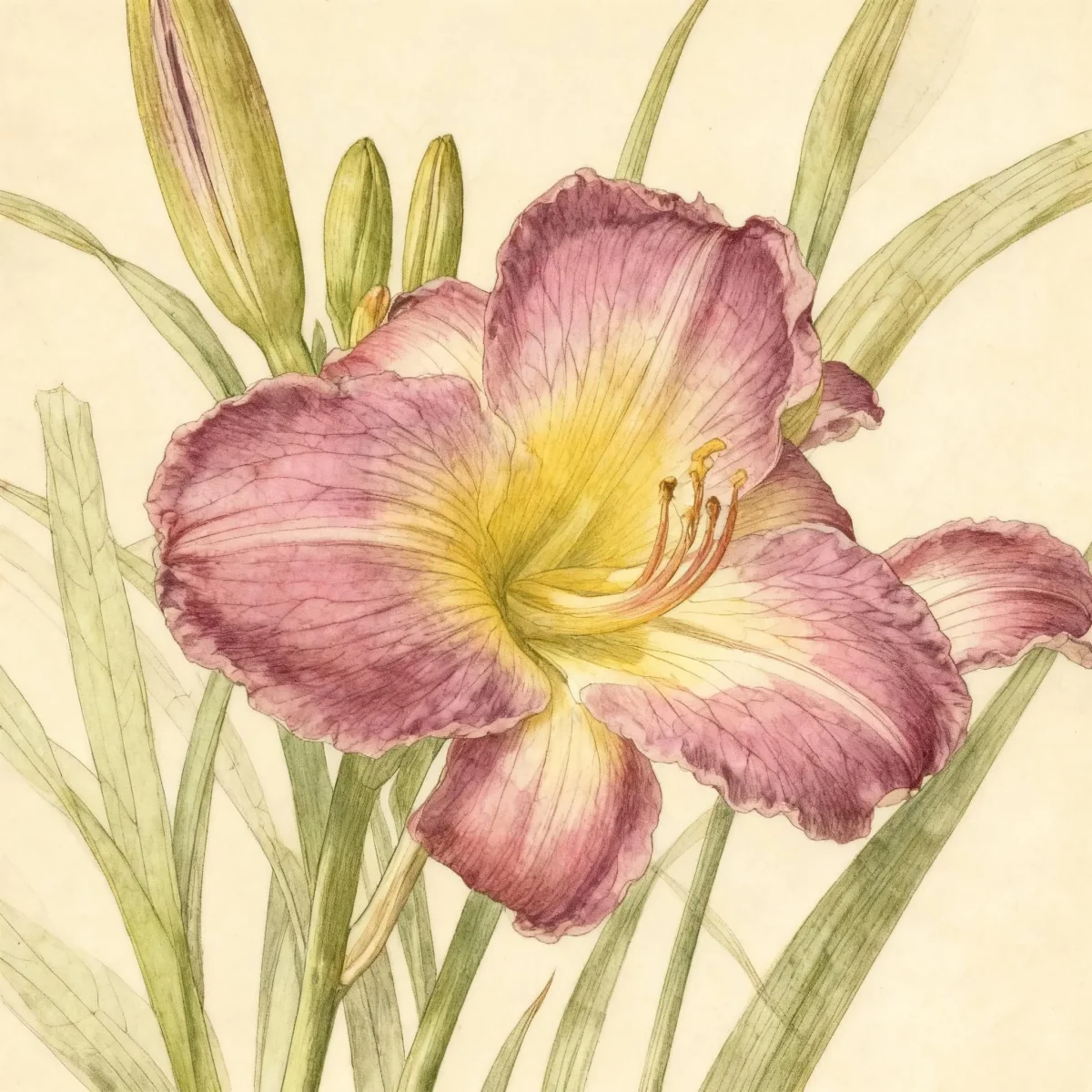
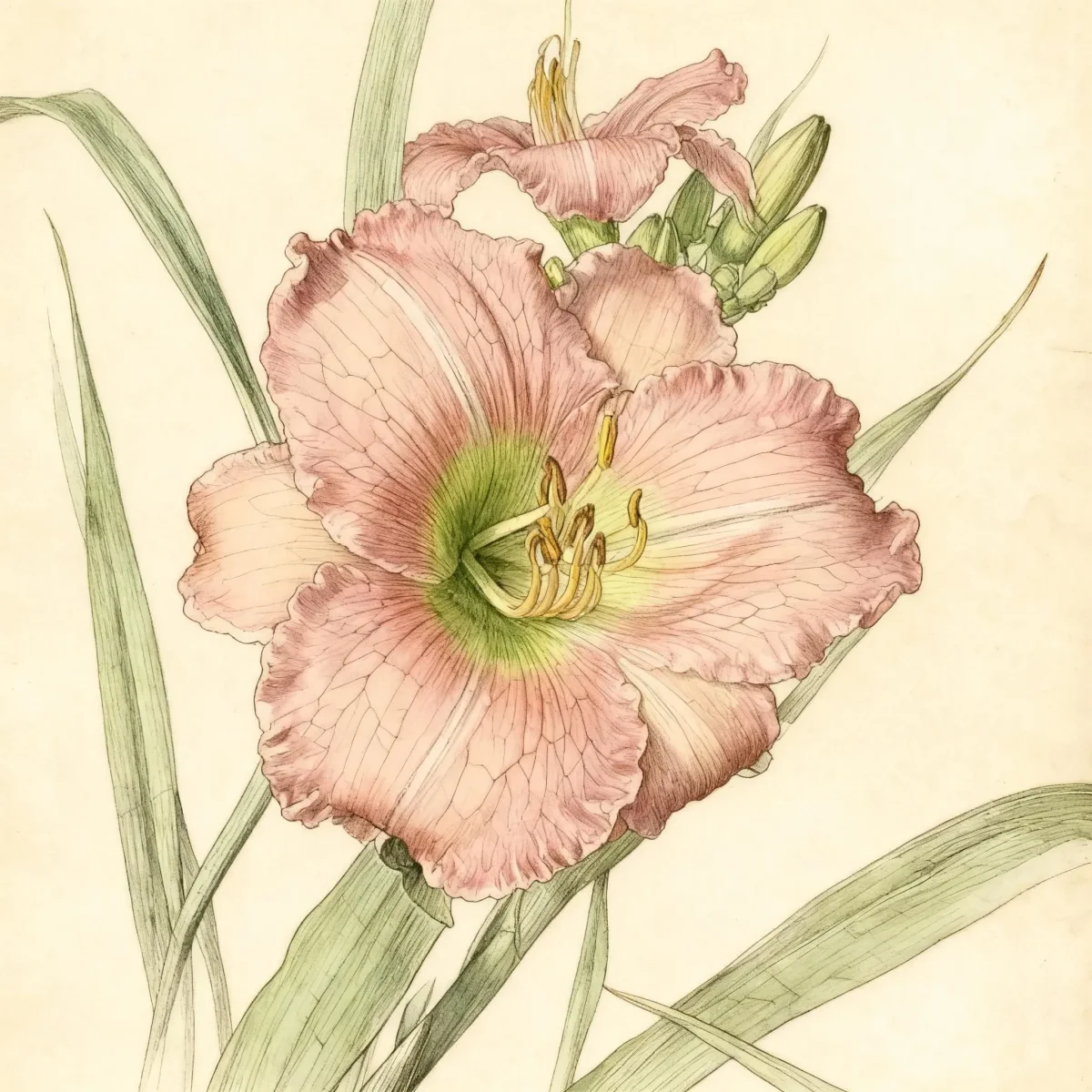
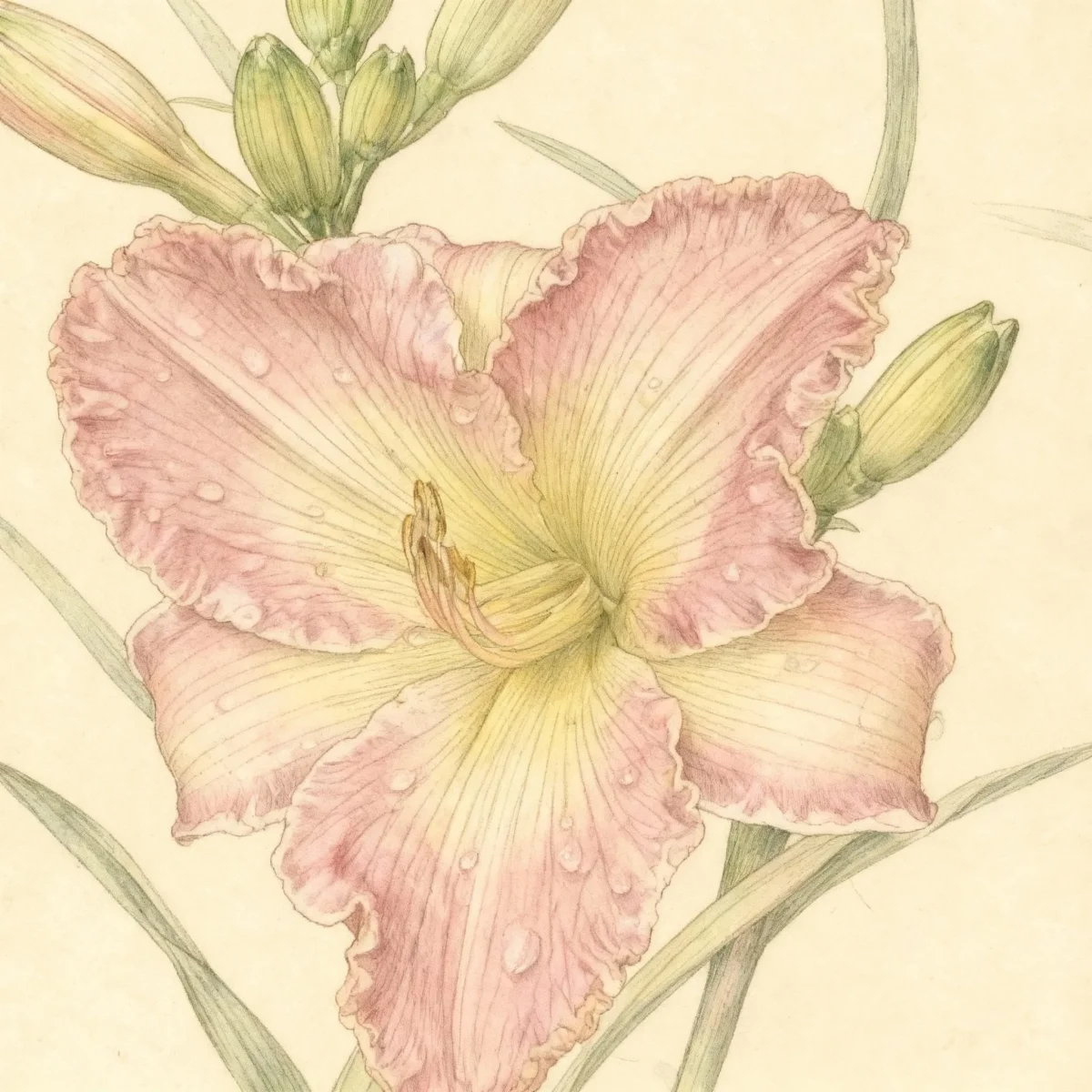
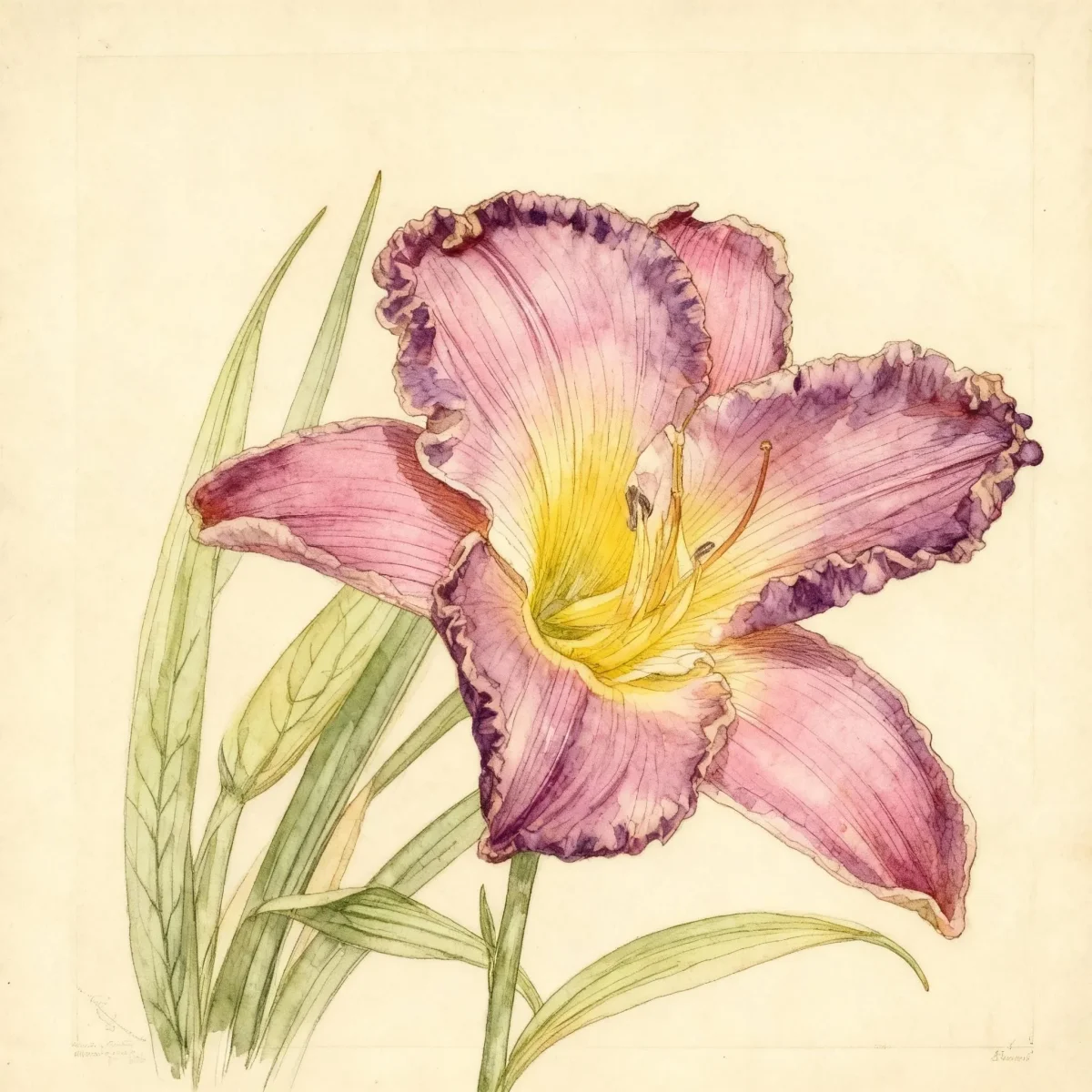
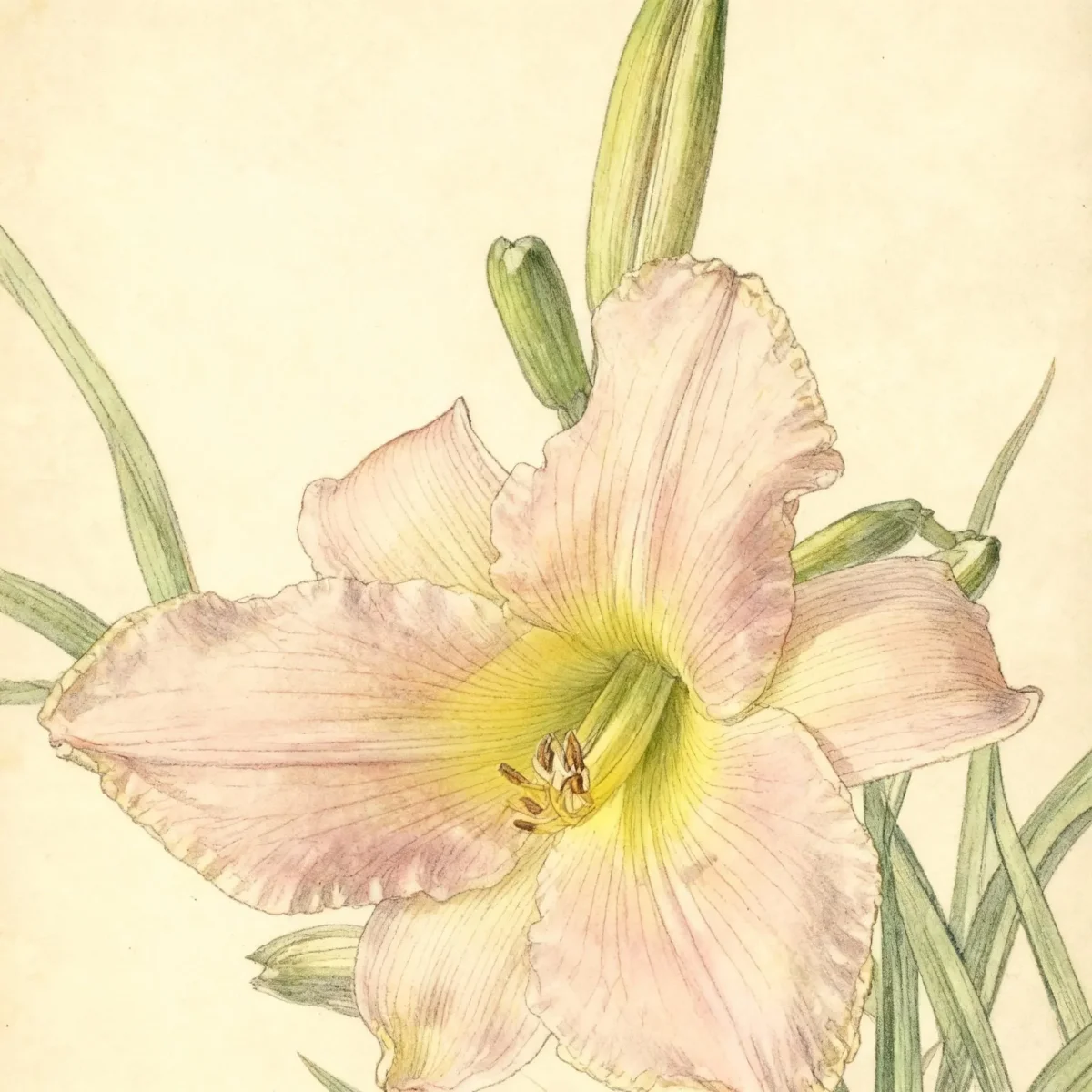
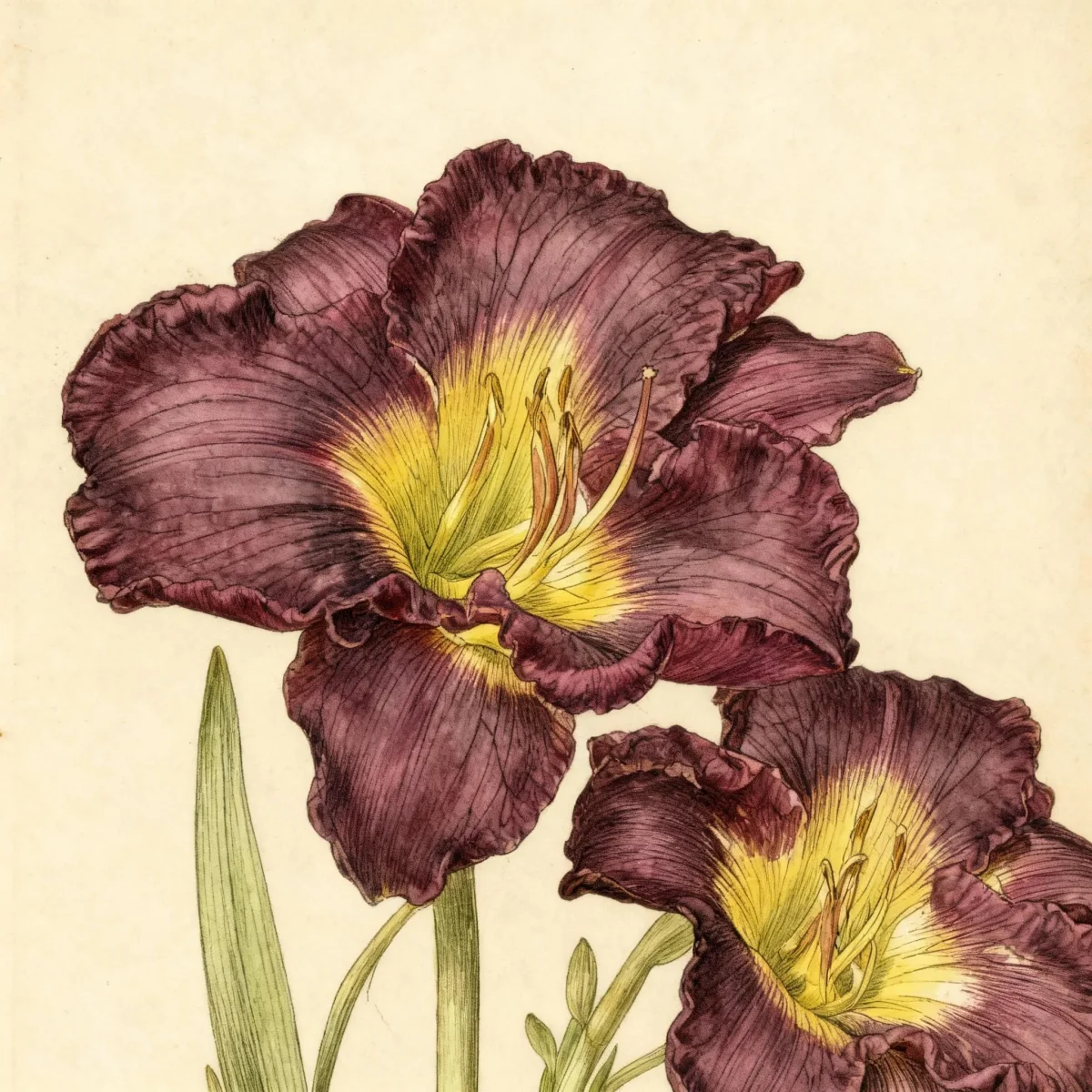
Tetraploid daylily (Hemerocallis 'Evening Enchantment')
Hemerocallis 'Evening Enchantment' is a low-maintenance Tetraploid daylily boasting deep purple blooms from May to July.
Scroll down to discover growing tips, care requirements, companion plants, and more
Complete Plant Information
Overview
Hemerocallis ‘Evening Enchantment’ is a stunning Tetraploid daylily valued for its rich, saturated coloration and robust garden performance. This cultivar produces striking deep purple flowers accented by a contrasting green throat, ensuring visual impact throughout its long blooming window. As an herbaceous perennial, it offers reliable seasonal structure with minimal long-term effort required from the gardener.
This established hybrid daylily thrives across a broad range of climates, suited for zones 3 through 9, indicating excellent cold hardiness alongside tolerance for summer heat. The relatively compact stature, reaching only up to 2.5 feet tall, makes the Tetraploid daylily a versatile choice for various garden settings where low maintenance is a priority.
Gardeners appreciate Hemerocallis ‘Evening Enchantment’ for its dependable reblooming nature and its ability to integrate well into mixed borders or mass plantings. Its foliage remains attractive, providing green texture even when not in bloom, solidifying its value as an easy-to-grow foundation perennial.
Fast Facts
- Plant Family: Asphodelaceae
- Plant Type: Herbaceous perennial
- Hardiness Zones: USDA Zones 3-9
- Size at Maturity:
- Height: 2-2.5 ft
- Spread: 1.5-2 ft
- Bloom Time: May to July
- Bloom Description: Deep purple with green throat
- Sun Exposure: Full sun to part shade
- Water Needs: Medium
- Maintenance Level: Low
How to Grow
Planting Hemerocallis ‘Evening Enchantment’ is best accomplished in spring or fall, ensuring the plant establishes before extreme heat or prolonged freezes. These daylilies perform well in average, medium moisture, well-drained soils, although they prefer deep, fertile loams for optimal vigor. Ensure they receive full sun to part shade; while they tolerate shade, more hours of direct sun often correlate to better blooming.
Maintenance for this low-level Tetraploid daylily is straightforward. Deadhead spent flowers daily for neatness, removing the individual blosssom only, and remove the entire flower scape once blooming has completed for the season. Though tolerant of heat and humidity, provide deep watering during dry spells to keep the arching foliage looking fresh.
Division is recommended every three to four years, optimally in the spring, particularly in colder regions like the St. Louis area, to maintain vigor and prevent overcrowding. Note that ‘Evening Enchantment’ is winter dormant, requiring a cold period to perform best; it is not ideal for the warmest parts of Zone 9 where sustained winter warmth prevents dormancy.
Landscape Uses
Hemerocallis ‘Evening Enchantment’ is celebrated as an easy-to-grow herbaceous perennial perfect for creating instant impact in the garden. Its manageable height makes it superb for use in borders, defining the edges of walkways, or mass plantings across large areas to showcase the deep purple flowers consistently from May through July.
These resilient plants work exceptionally well when planted in drifts to maximize the visual effect of successive blooms. While the description notes dwarf cultivars suit rock gardens, the standard size of Hemerocallis ‘Evening Enchantment’ integrates beautifully alongside mid-height shrubs or contrasting fine-textured ornamental grasses.
Consider pairing this deep-colored daylily with plants that offer contrasting foliage colors, such as silver-leafed herbs or bright chartreuse hostas, to make the rich purple petals pop. Their durable nature ensures they remain attractive even when flowering has ceased for the season.
Standout Features
Flower Qualities
- Showy
Noteworthy Characteristics
Hemerocallis is a genus of about 15 species of herbaceous perennials commonly known as daylilies, native primarily to Asia and central Europe. Hybridizers have developed thousands of cultivars, resulting in plants like Hemerocallis ‘Evening Enchantment’ that feature specific colors and patterns; this particular Tetraploid daylily showcases deep purple flowers up to 5 inches across with characteristic green throats. Each flower lasts only one day, but new blooms are produced in succession on naked scapes, extending the overall flowering season, and this cultivar is registered as a rebloomer.
Tolerances
- Rabbit
- Erosion
- Air Pollution
Potential Problems
Daylilies, including the popular Tetraploid daylily variety, are inherently adaptable and generally pest-free, contributing to their low maintenance appeal. Occasional pests such as mites, aphids, or thrips might appear, usually causing only minor aesthetic damage. In certain locales, daylily rust fungus can pose a threat, which may require preventative treatment for susceptible plants. Rabbits, notably, tend to ignore the foliage of these sturdy perennials.
Frequently Asked Questions
What hardiness zones is Hemerocallis ‘Evening Enchantment’ suitable for?
Hemerocallis ‘Evening Enchantment’ is suitable for USDA Hardiness Zones 3 through 9, offering excellent cold tolerance for northern gardeners.
How large does Tetraploid daylily grow?
This cultivar typically reaches a height between 2 and 2.5 feet, with a spread ranging from 1.5 to 2 feet at maturity.
What sun exposure does Hemerocallis ‘Evening Enchantment’ need?
This plant performs best with full sun exposure but will also adapt well to partial shade conditions.
When does Hemerocallis ‘Evening Enchantment’ bloom?
This variety blooms reliably from May to July, displaying its deep purple flowers with green throats over successive days.
Conclusion
Hemerocallis ‘Evening Enchantment’ offers gardeners a superb combination of dramatic color, dependable growth, and exceptional resilience. As a low-maintenance Tetraploid daylily, it provides consistent beauty in the summer garden without demanding constant attention. Verify your climate falls within USDA Zones 3-9 and plan your planting during cooler spring or fall weather for establishment success.
Companion Planting
Daylilies are highly adaptable, making companion selection straightforward based on cultural needs rather than strict compatibility. Plant Hemerocallis ‘Evening Enchantment’ alongside lower-growing plants whose foliage remains attractive after the bloom period ends, such as ornamental grasses or edging perennials like Lamb’s Ears (Stachys byzantina) for texture contrast. Due to their medium water needs, pair them with other robust perennials that enjoy similar moisture levels, such as Irises or certain varieties of Sedum, ensuring they do not compete heavily for root space in established clumps.
Propagation Tips
The primary method of propagation for established daylilies like Hemerocallis ‘Evening Enchantment’ is division of the crown. This process is essential every few years to rejuvenate older clumps and prevent diminished flowering, ideally performed in the spring before new growth fully emerges. Carefully dig up the entire clump, gently separate the fans (the clusters of leaves) ensuring each new division has adequate root mass and at least two leafless eyes attached, and immediately replant them at the same depth in their new location. Note that hybrid daylilies will not reliably breed true from seed harvested from these flowers.