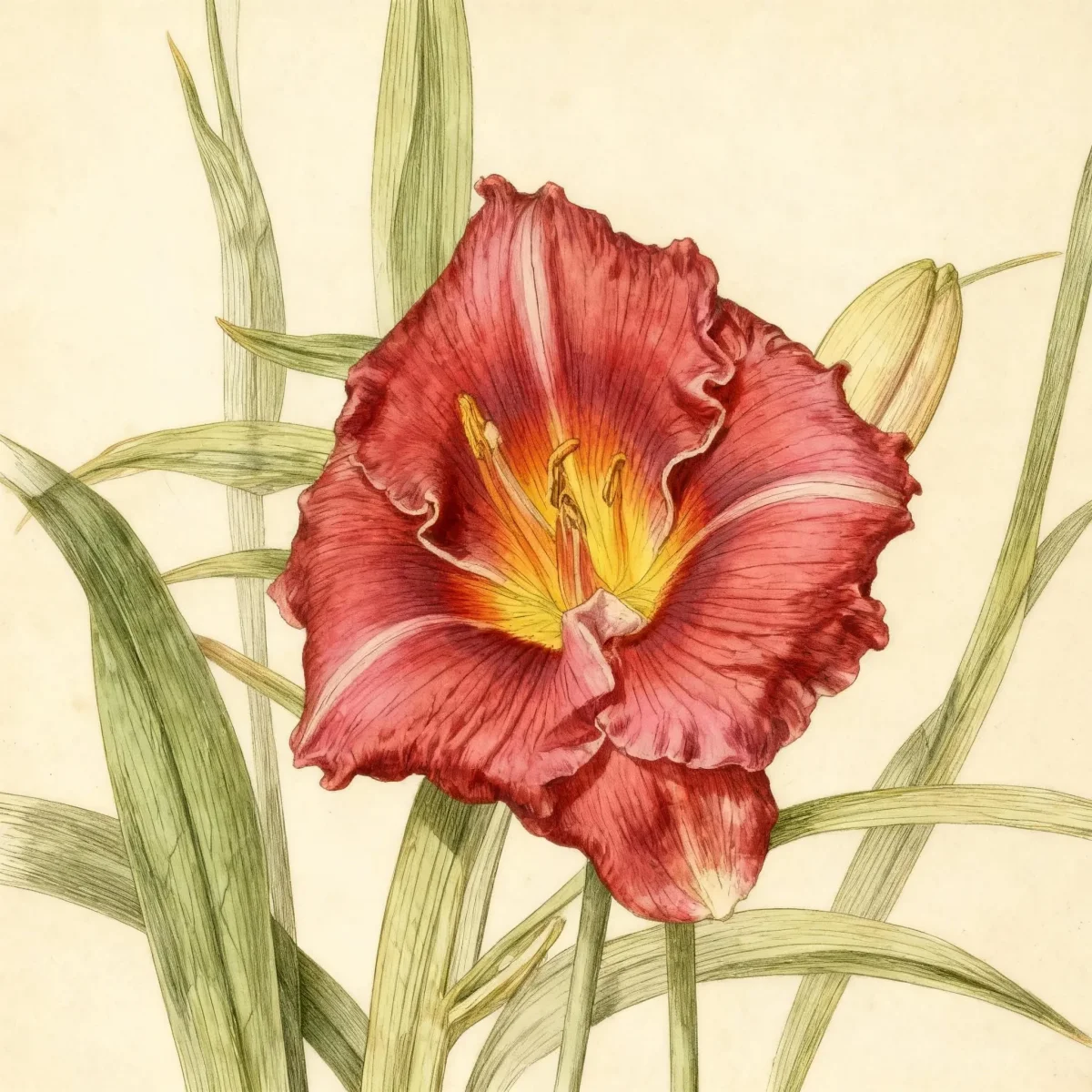
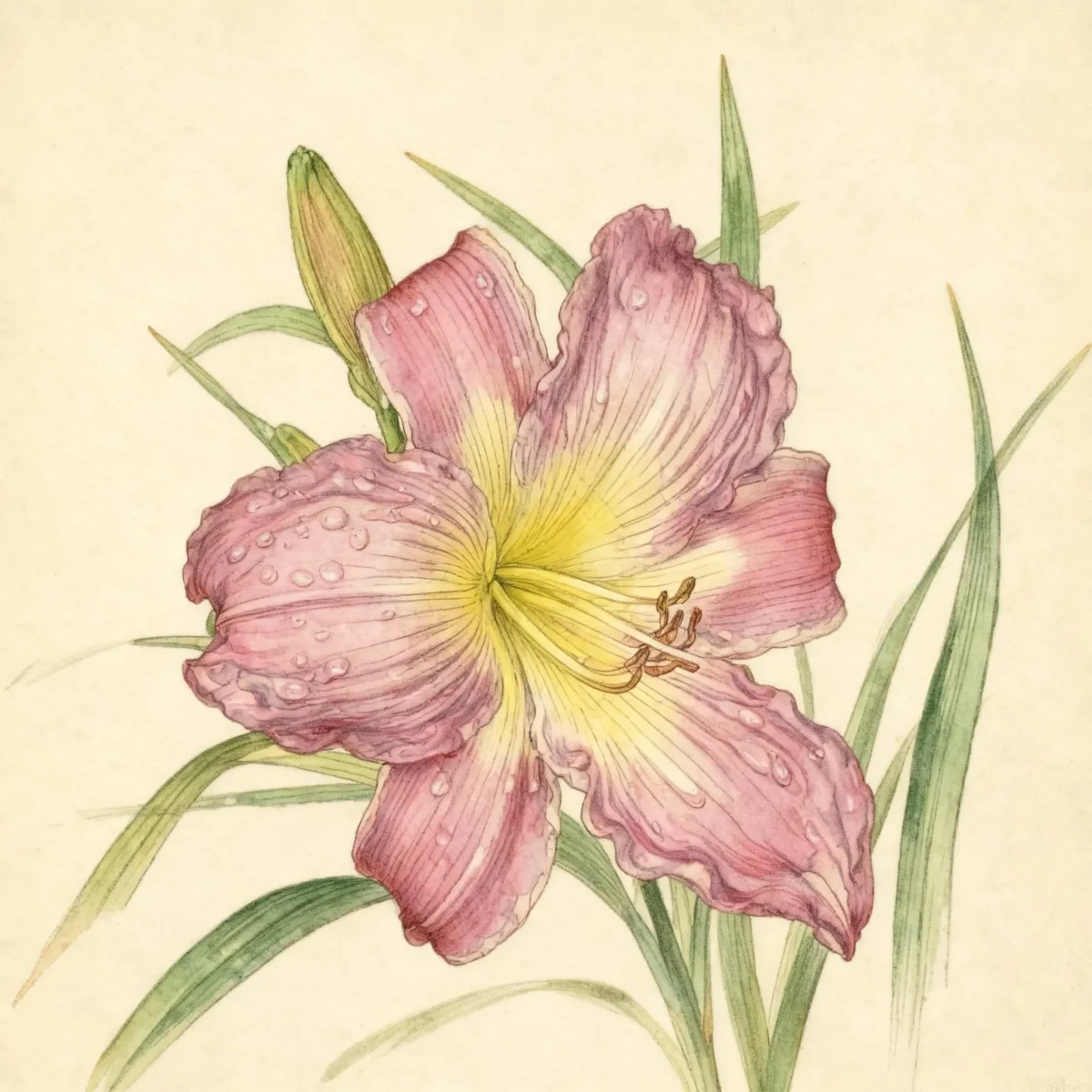
Daylily (Hemerocallis 'Fairy Tale Pink')
Hemerocallis 'Fairy Tale Pink' is a low-maintenance Daylily featuring showy pink blooms from June to July.
Scroll down to discover growing tips, care requirements, companion plants, and more
Complete Plant Information
Overview
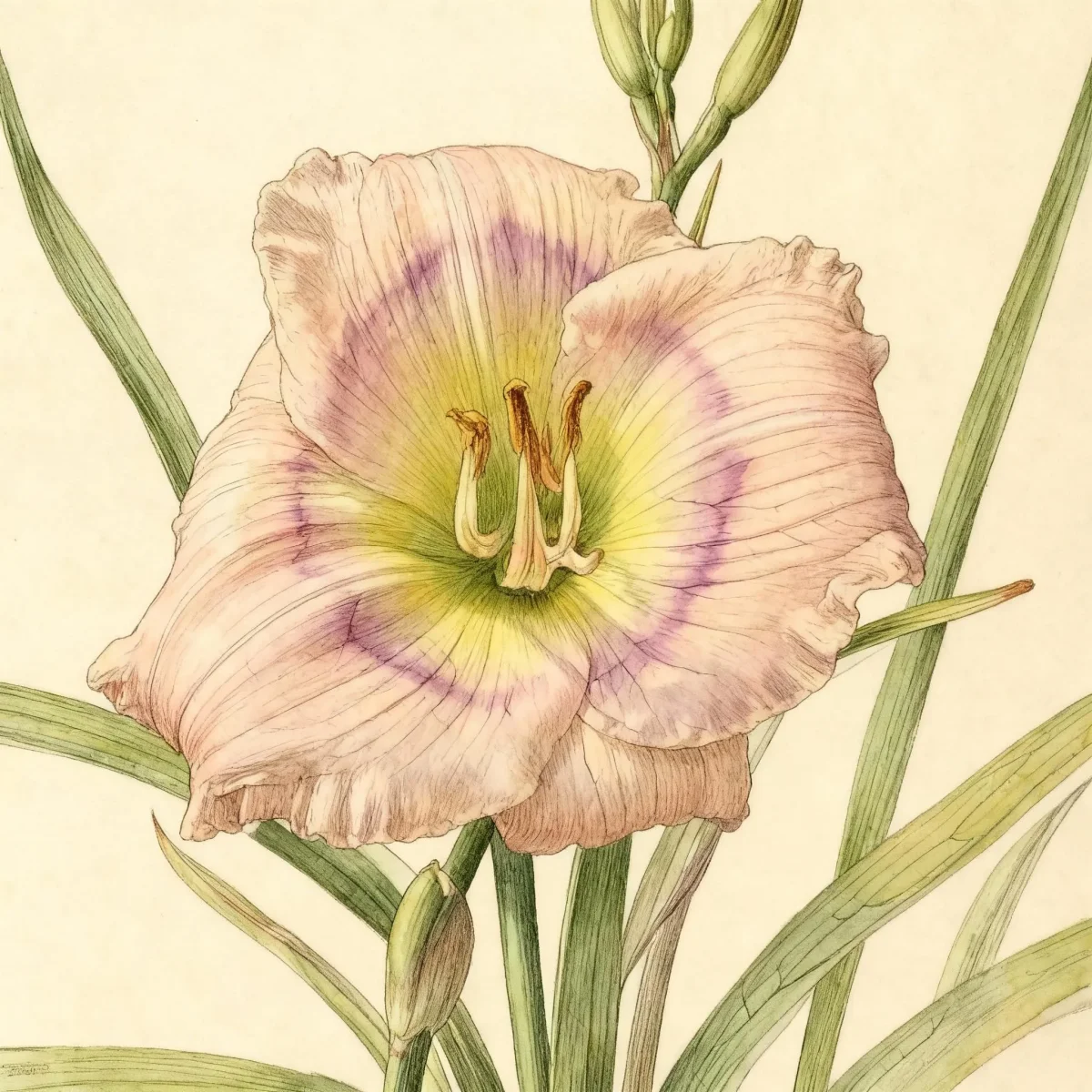
Hemerocallis ‘Fairy Tale Pink’ is a highly desirable cultivar among Daylily enthusiasts, celebrated for its reliable summer performance and attractive coloration. This herbaceous perennial adds cheerful, ruffled, pale pink flowers with distinct green throats to the garden landscape from early to mid-summer. As a modern hybrid, this Daylily offers vigorous growth and robust features that make it a staple for gardeners seeking low-input color.
The plant reaches a manageable height of 1.5 to 2 feet, fitting comfortably into mixed borders or mass plantings. Hemerocallis ‘Fairy Tale Pink’ is exceptionally adaptable, thriving in conditions ranging from full sun to partial shade, making placement planning quite flexible. Its resilience against humidity and heat, combined with its low maintenance requirements, solidify its position as an excellent choice for both novice and experienced perennial gardeners.
Gardeners prize the Daylily genus for its long flowering season, achieved through successive blooming, and the ease of upkeep associated with cultivars like ‘Fairy Tale Pink.’ While individual blooms last only a day, the continuous production ensures a steady display of color, enhancing borders and acting as excellent landscape anchors.
Fast Facts
- Plant Family: Asphodelaceae
- Plant Type: Herbaceous perennial
- Hardiness Zones: USDA Zones 3-9
- Size at Maturity:
- Height: 1.5-2 ft
- Spread: 1.5-2 ft
- Bloom Time: June to July
- Bloom Description: Pink with a green throat
- Sun Exposure: Full sun to part shade
- Water Needs: Medium
- Maintenance Level: Low
How to Grow
Planting should occur when the soil is workable, generally spring or fall, ensuring the crowns are set just at or slightly below the soil line. While Daylilies perform well in various soils, they perform best in deep, fertile loams that maintain medium moisture. Good drainage is critical, even though this Daylily cultivar appreciates consistent water.
Routine care for Hemerocallis ‘Fairy Tale Pink’ involves simple deadheading—removing faded flowers daily keeps the clump looking tidy and encourages further blooming. Once the flower scapes finish their production cycle, they should be removed entirely. Although tolerant of heat, ensure deep watering during extended dry spells to maintain attractive foliage quality throughout the summer.
Maintenance is generally low, but long-term health requires periodic attention. To ensure vigorous flowering and prevent overcrowding, plan to divide clumps of Daylilies every 3 to 4 years. Division is best executed in the spring, especially in colder regions, though fall division is also acceptable for established specimens.
Be aware that daylilies sold commercially are almost exclusively hybrids; therefore, saving seed from ‘Fairy Tale Pink’ will not yield plants identical to the parent. For winter dormant types, providing a cold winter dormancy period is necessary for optimal performance in zones outside the warmest ranges (Zones 9 and above).
Landscape Uses
Daylilies are indispensable workhorses for perennial plantings, and Hemerocallis ‘Fairy Tale Pink’ excels in traditional landscape roles. These easy-to-grow herbaceous perennials are superb for defining borders, providing a neat, grassy texture when not in bloom, and offering consistent mid-season color. Their clumping habit makes them ideal for edging pathways or defining the front of a mixed perennial bed.
For dramatic effect, plant in large groups or masses over expansive areas; the repetition of the pink blooms creates a strong visual impact throughout June and July. While the foliage remains linear and grass-like, they pair well visually with plants that offer contrasting textures, such as hostas, ornamental grasses, or late-summer bloomers like coneflowers or black-eyed Susans, which will take over once the Daylily cycle winds down. Dwarf cultivars are noted for their suitability in rock gardens, offering color tucked between stones.
Standout Features
Flower Qualities
- Showy
Noteworthy Characteristics
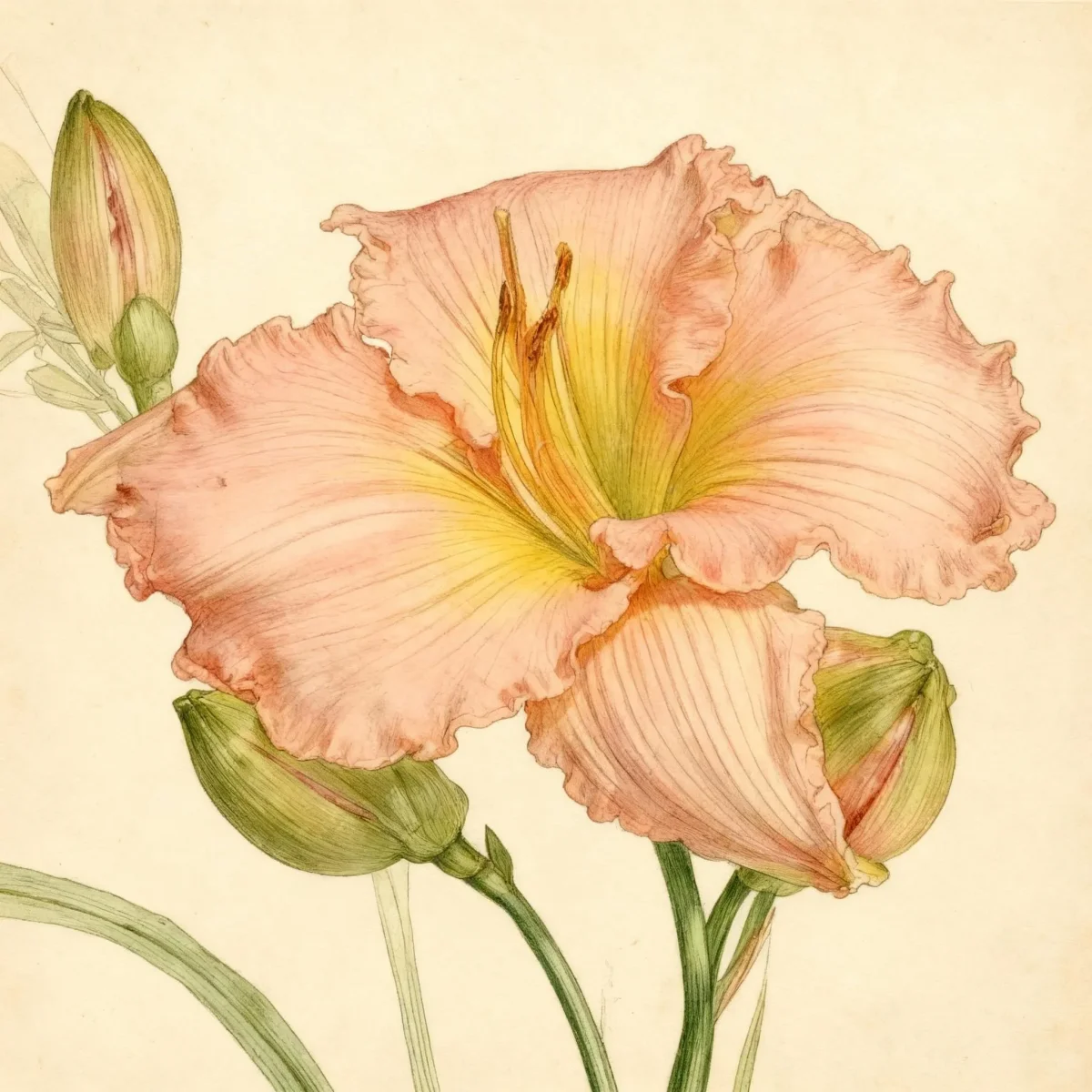
Hemerocallis is a genus of about 15 species of herbaceous perennials commonly known as daylilies, native to Asia and central Europe. Hybridizers have created thousands of cultivars, resulting in diverse colors and forms, though each individual bloom lasts only one day. ‘Fairy Tale Pink’ specifically offers 5.5” diameter, ruffled, pale pink flowers with attractive green throats, and this cultivar is recognized as a repeat bloomer, often earning AHS recognition.
Tolerances
- Rabbit
- Erosion
- Air Pollution
Potential Problems
Daylilies are remarkably adaptable and usually pest-free, making them a low-stress addition to the garden. Occasionally, pests like mites, thrips, or aphids may appear, usually when the plant is stressed. In certain humid regions, the fungal disease Daylily rust can become a concern, requiring preventative fungicide treatment if it has been an issue previously. Rabbits generally dislike the foliage and tend to avoid grazing on this plant.
Frequently Asked Questions
What hardiness zones is Daylily suitable for?
Hemerocallis ‘Fairy Tale Pink’ is reliably hardy across USDA Zones 3 through 9.
How large does Daylily grow?
This cultivar typically reaches a mature height between 1.5 and 2 feet tall, with a similar spread of 1.5 to 2 feet.
When does Daylily bloom?
The main blooming period for Hemerocallis ‘Fairy Tale Pink’ is from June to July, featuring pink flowers with a green throat.
What sun exposure does Daylily need?
This Daylily performs best with full sun exposure but tolerates partial shade very well.
Conclusion
Hemerocallis ‘Fairy Tale Pink’ brings reliable, low-maintenance beauty to nearly any sunny or partially shaded spot in the garden borders. Its signature pale pink, ruffled flowers make this Daylily an enduring favorite for summer color impact. Before planting, confirm your local growing conditions fall within USDA Zones 3-9 and prepare well-drained soil to ensure the best performance from your new clump of Hemerocallis ‘Fairy Tale Pink’.
Companion Planting
When integrating Hemerocallis ‘Fairy Tale Pink’ into layered garden designs, select companions that complement its mid-season bloom time and grassy foliage texture. Plants that fill in during the late summer and fall, after the pink Daylilies fade, are excellent choices. Consider pairing them with sturdier, later bloomers like Sedum ‘Autumn Joy’ or ornamental grasses such as Miscanthus varieties that offer vertical contrast to the Daylily’s arching blades.
The medium water needs and full sun tolerance overlap nicely with many classic cottage garden staples. Planting companions like Shasta Daisies (Leucanthemum) or Salvia varieties will create a scene where color remains dense for many weeks. Since Daylilies appreciate fertile soil, ensure your companion plants share similar soil fertility and drainage requirements.
Propagation Tips
The primary method for propagating Hemerocallis ‘Fairy Tale Pink’ is through division, not by seed, as hybrid daylilies do not breed true from seed. Division should be performed every 3 to 4 years to maximize vigor and flower production. Wait until either spring or fall—spring division is often preferred in extremely cold winter areas to give the plant maximum time to reestablish before the deep freeze.
To divide, carefully dig up the entire clump using a spading fork, being careful of the thick, fleshy roots. Use a sharp spade or even your hands to gently pull apart sections, ensuring each new division has a healthy cluster of fans (foliage) and corresponding roots. Replant immediately at the correct depth, ensuring the growing crown is just at the soil surface, and water well.