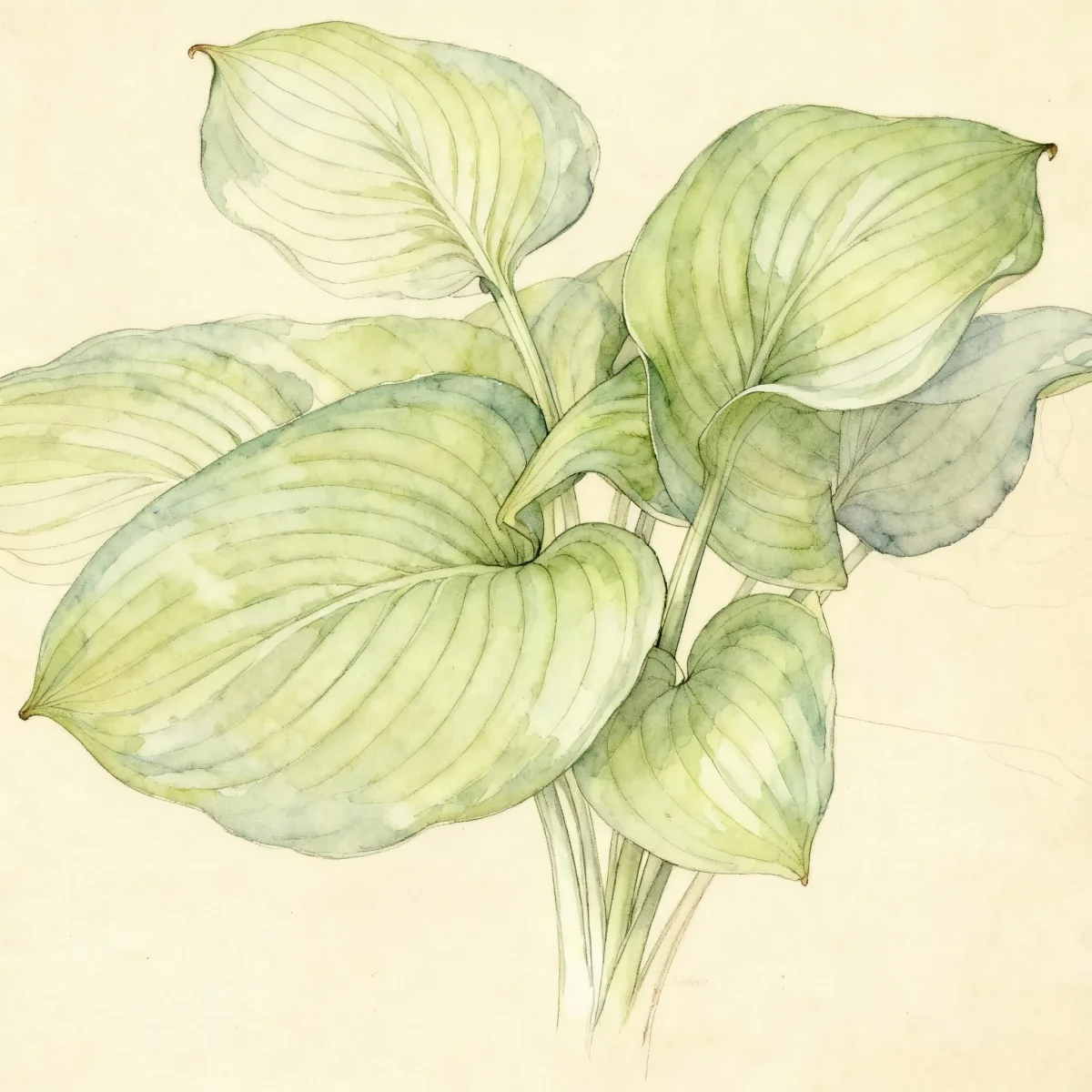
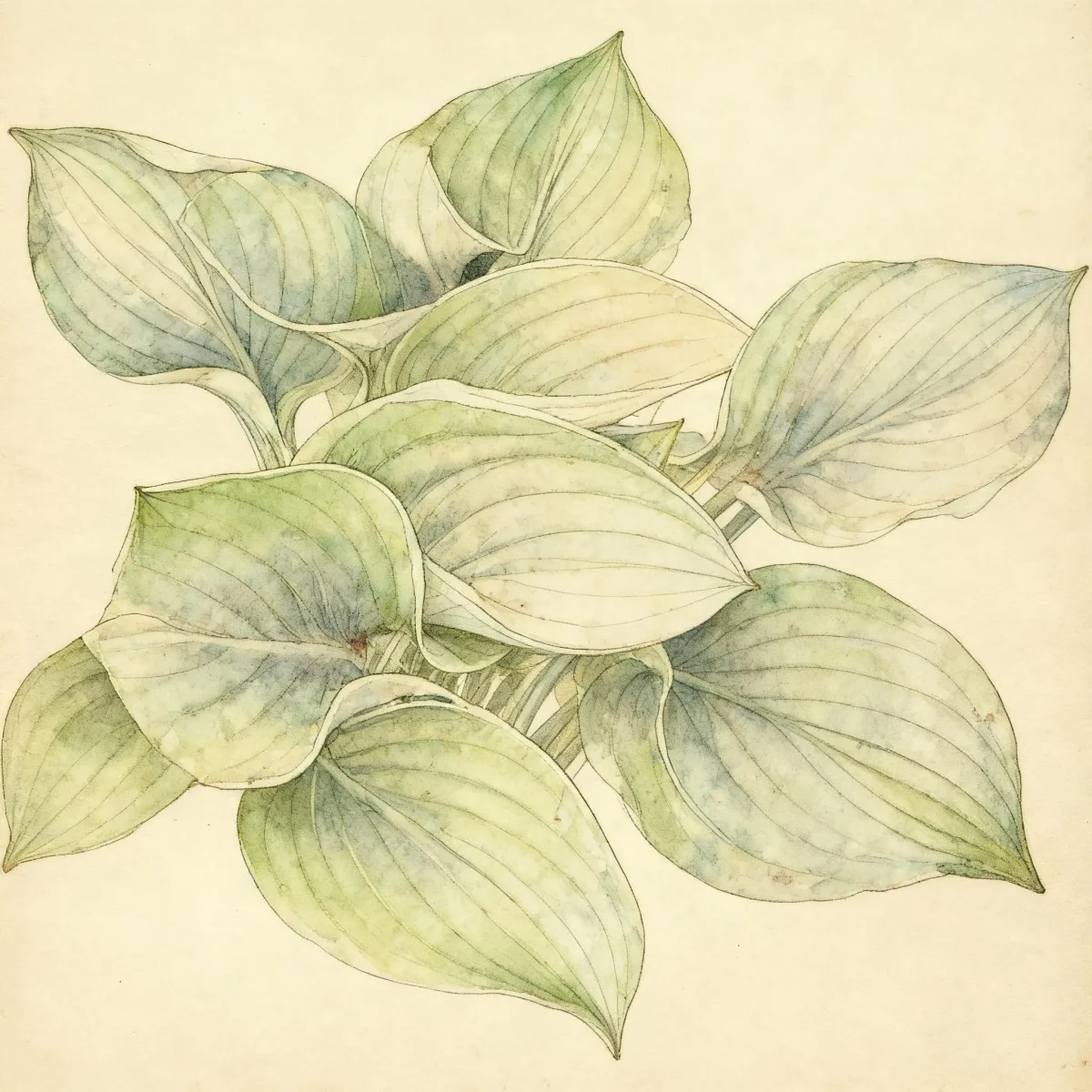
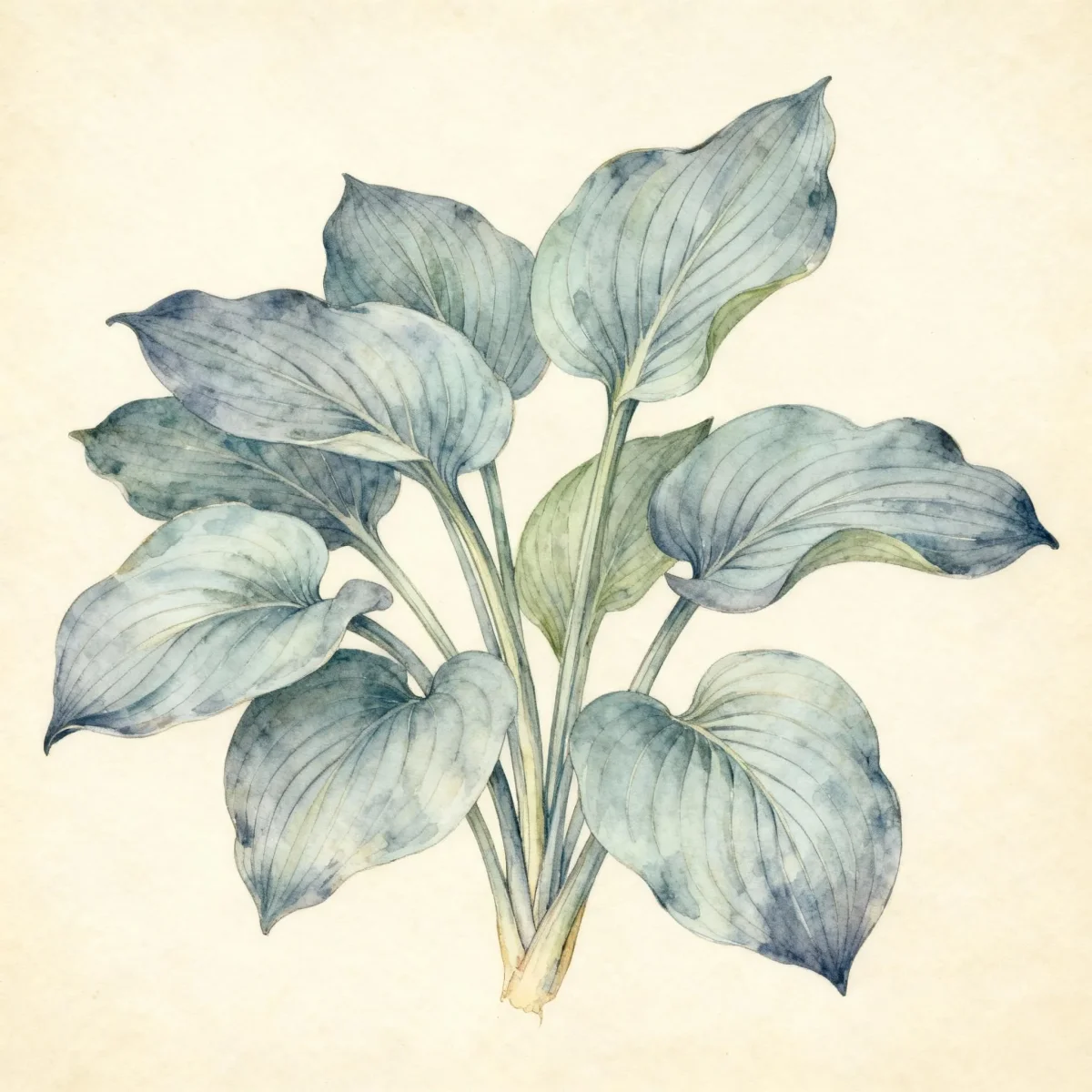
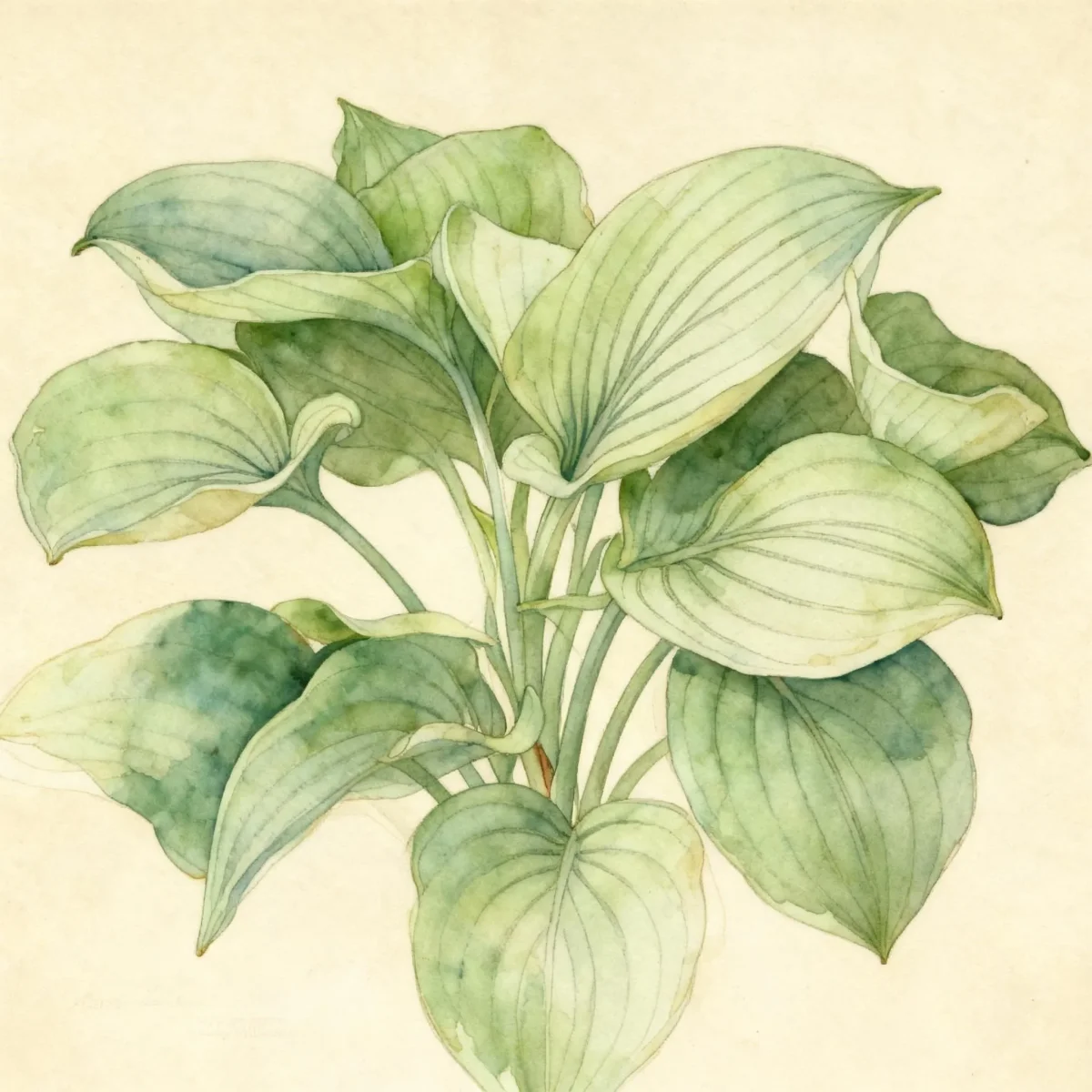
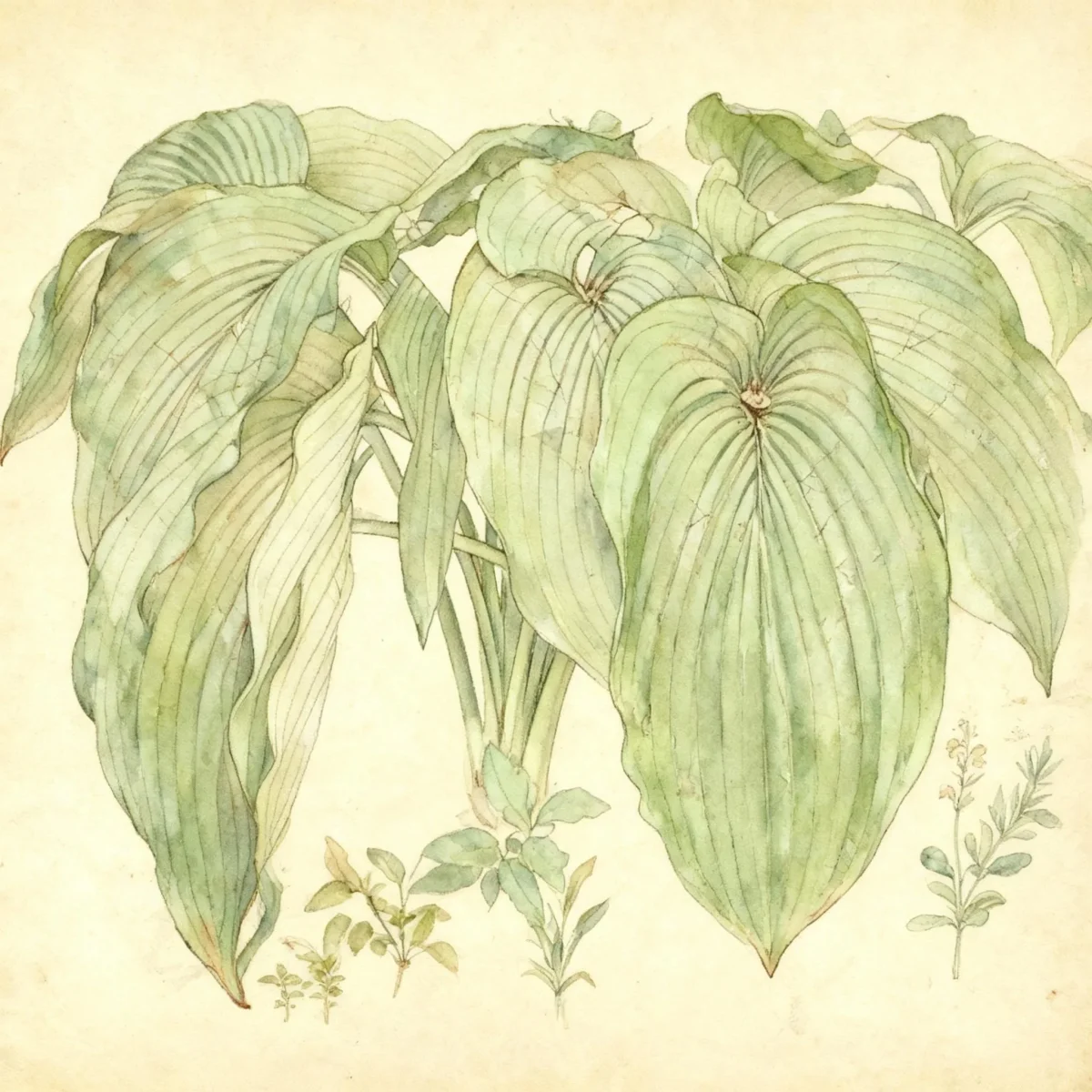
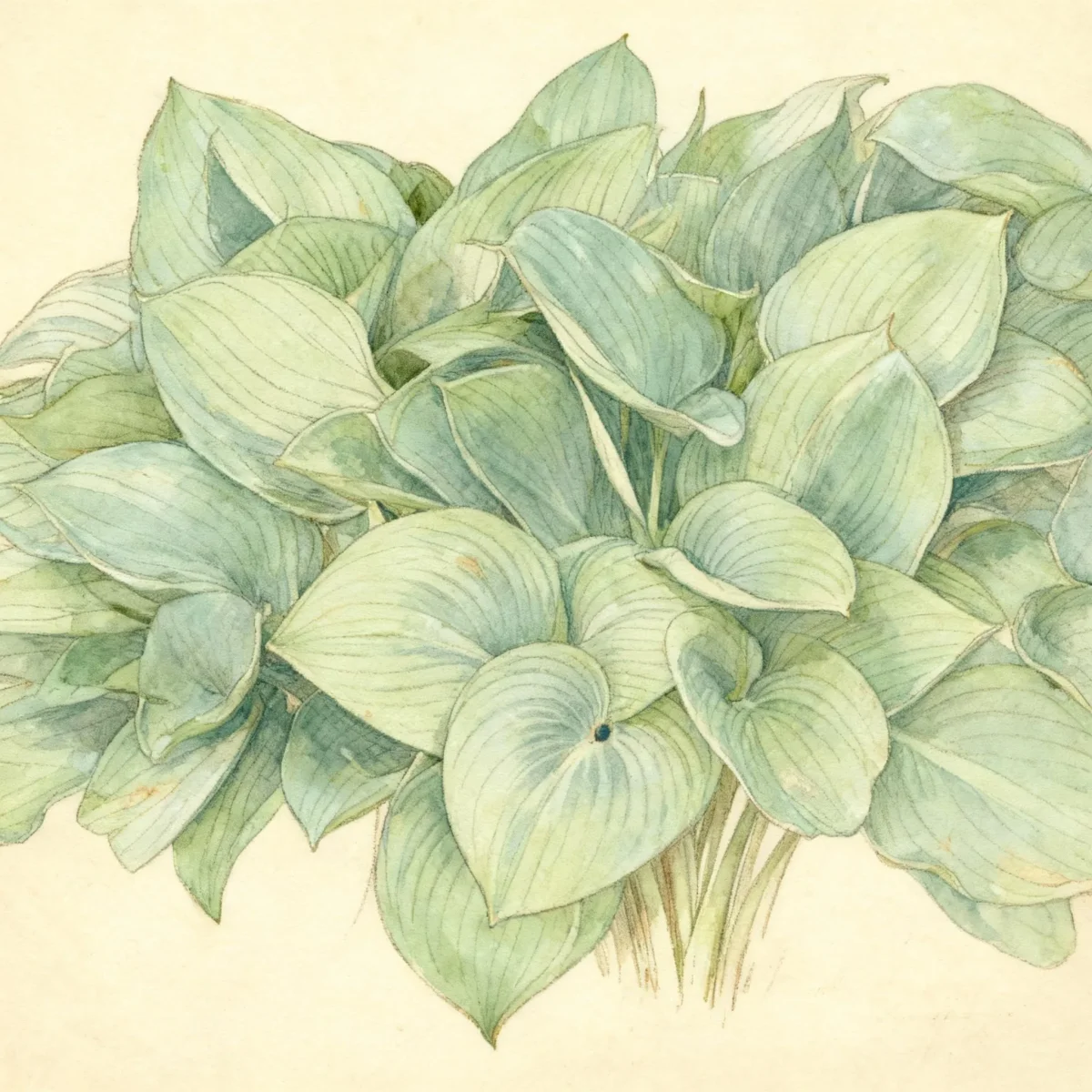
Hosta (Hosta 'Haku Chu Han')
Hosta 'Haku Chu Han' offers striking variegated foliage and deep purple summer blooms. A low-maintenance perennial for shady gardens.
Scroll down to discover growing tips, care requirements, companion plants, and more
Complete Plant Information
Overview
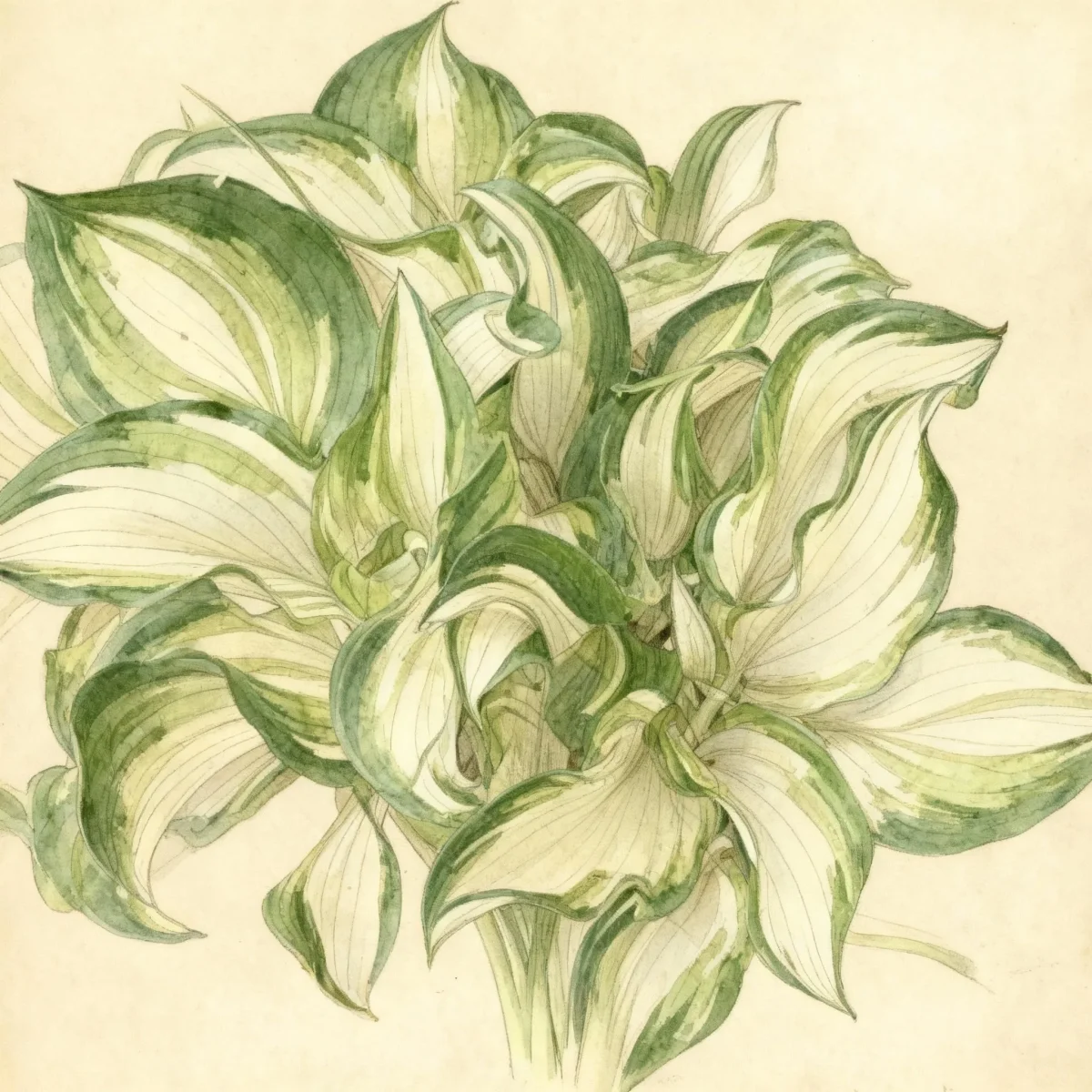
Hosta ‘Haku Chu Han’ is prized as a beautiful, small-mounding herbaceous perennial, primarily celebrated for its uniquely variegated foliage. This cultivar showcases prominently-veined, narrow elliptic leaves emerging with brilliant white centers contrasted by green margins, making it a dynamic addition to any shaded landscape. As part of the robust Hosta genus, this plant fulfills the desire for low-maintenance, highly ornamental ground cover.
This plant thrives under challenging conditions, tolerating deep shade where few other ornamentals succeed. It forms a neat clump, reaching modest mature dimensions suitable for borders or smaller garden beds. Gardeners rely on the dependable seasonal performance of Hosta ‘Haku Chu Han’ to provide continuous textural interest from spring emergence through its late-summer, deep purple bloom display.
The overall benefit of including Hosta in perennial groupings lies in their adaptability and foliage excellence. Hosta ‘Haku Chu Han’ is especially valuable for brightening the dark corners of a woodland garden while resisting many issues common to sun-loving perennials. Its low maintenance profile ensures enjoyment without intensive intervention once established.
Fast Facts
- Plant Family: Asparagaceae
- Plant Type: Herbaceous perennial
- Hardiness Zones: USDA Zones 3-8
- Size at Maturity:
- Height: 0.5-1.5 ft
- Spread: 1-1.5 ft
- Bloom Time: July to August
- Bloom Description: Deep purple
- Sun Exposure: Part shade to full shade
- Water Needs: Medium
- Maintenance Level: Low
How to Grow
Planting Hosta ‘Haku Chu Han’ is best done in spring or autumn in well-drained soils rich in organic matter. Success hinges on placement; ensure the location offers part shade, ideally receiving protective morning sun or dappled conditions throughout the day. While established plants show some drought tolerance, particularly those cultivars with thicker leaves, consistent moisture is crucial for achieving the best growth and leaf quality.
Proper watering is key to maintaining the crisp variegation of Hosta. Water deeply and apply moisture directly to the soil beneath the leaves to keep the foliage dry, minimizing the risk of fungal issues. Though maintenance is generally low, divide clumps as needed, preferably in early spring before the leaves unfurl, or in the autumn.
Protecting this Hosta from wind is recommended, as strong gusts can shred or damage the leaves. Because this plant is valued for its appearance, always position it where its striking form is visible but shielded from harsh weather events like hail storms.
Landscape Uses
Hostas dominate the shade garden landscape, and Hosta ‘Haku Chu Han’ excels in these roles due to its compact size and bright foliage. They are exceptionally effective when massed or planted in large groups, creating a cooling, textural carpet under the canopy of larger trees or taller shrubs. This Hosta variety works wonderfully as an edging plant along shady pathways or as a strong foreground element in woodland borders.
The narrow, pointed leaves contrast beautifully with plants that have rounder foliage or bolder colors. Consider pairing Hosta ‘Haku Chu Han’ with ferns, bleeding hearts, or astilbes, which share similar cultural needs concerning moisture and filtered light. Its ability to fill shady ground makes it an excellent background anchor for smaller, shade-tolerant flowering annuals or perennials.
Flower Qualities
- Showy
Noteworthy Characteristics
Hosta is a diverse genus of shade-loving perennials famous for their ornamental leaves, which form dense basal mounds. Hosta ‘Haku Chu Han,’ specifically a small sport, features narrow, variegated leaves—white centers with green edges—that provide exceptional visual contrast. It produces tall scapes topped with deep purple, funnel-shaped flowers in late summer, standing above the foliage mound.
Tolerances
- Heavy Shade
- Black Walnut
Potential Problems
The primary threats to Hosta foliage, including Hosta ‘Haku Chu Han’, come from mollusks. Slugs and snails are highly attracted to the leaves, causing characteristic jagged holes that can quickly degrade the appearance of the plant. Management should focus on proactive defense using baits or physical barriers applied in spring and throughout the growing season.
Be vigilant for foliar nematodes, which cause interveinal browning on the leaves, and address potential fungal issues like leaf spots or crown rot by ensuring excellent soil drainage and avoiding overhead watering. Healthy cultural care is the best defense, though gardeners must also remove any infected plants immediately if viral issues like HVX are suspected to prevent spread within the Hosta collection. Deer and rabbits also find this foliage highly palatable, often consuming leaves voraciously if garden protection is not in place.
Frequently Asked Questions
What hardiness zones is Hosta ‘Haku Chu Han’ suitable for?
Hosta ‘Haku Chu Han’ is reliably hardy across USDA Zones 3 through 8.
How large does Hosta grow?
This specific cultivar typically grows to a height between 0.5 and 1.5 feet, spreading to a width of 1 to 1.5 feet, forming a dense mound.
What sun exposure does Hosta need?
Hosta generally requires part shade to full shade conditions to perform optimally and maintain leaf color integrity.
When does Hosta ‘Haku Chu Han’ bloom?
This Hosta displays its deep purple, funnel-shaped flowers atop scapes emerging between July and August.
Conclusion
Hosta ‘Haku Chu Han’ is an essential choice for gardeners seeking low-maintenance beauty in shaded environments, thanks to its distinctive variegated leaves and tolerance for deep shade. By ensuring consistent moisture and appropriate placement away from wind, you can maximize the ornamental impact of this excellent Hosta cultivar. Always check your local USDA zone to confirm suitability before planning your installation this spring or fall.
Companion Planting in Shade
When designing a woodland or shade garden featuring Hosta ‘Haku Chu Han’, look to plants that offer different foliage textures or bloom times. Ferns, such as Japanese Painted Ferns or various groundcovers, pair well as they thrive in similar moist, humus-rich soils, offering feathery contrasts to the Hosta’s broad leaves. Columbine (Aquilegia) or Bleeding Heart (Dicentra spectabilis) provide early spring color that complements the slow emergence of the Hosta foliage.
Consider grouping Hosta varieties that have different leaf habits; mixing the narrow leaves of ‘Haku Chu Han’ with broader, blue-leaved types creates dynamic visual tension. Since Hosta prefers its feet moist, select companions like certain groundcover sedges or Tiarella (Foamflower) which also appreciate consistent moisture but offer different heights or colors, enhancing the depth of your shady borders.
Seasonal Care Calendar
Early spring is the ideal time for cleanup and division for Hosta ‘Haku Chu Han’. Remove any lingering dead foliage from the previous season and lightly refresh the soil surface with compost before the new shoots (eyes) break the ground. This is the easiest time to split overcrowded clumps to maintain vigor.
As summer progresses, focus primarily on watering, especially during dry spells, ensuring water targets the soil base rather than wetting the foliage excessively which can encourage disease. Keep an eye out for pests like slugs during warm, damp periods. In autumn, while the foliage will naturally die back, avoid heavy mulching directly over the crown this late in the season to reduce the chance of rot over winter.