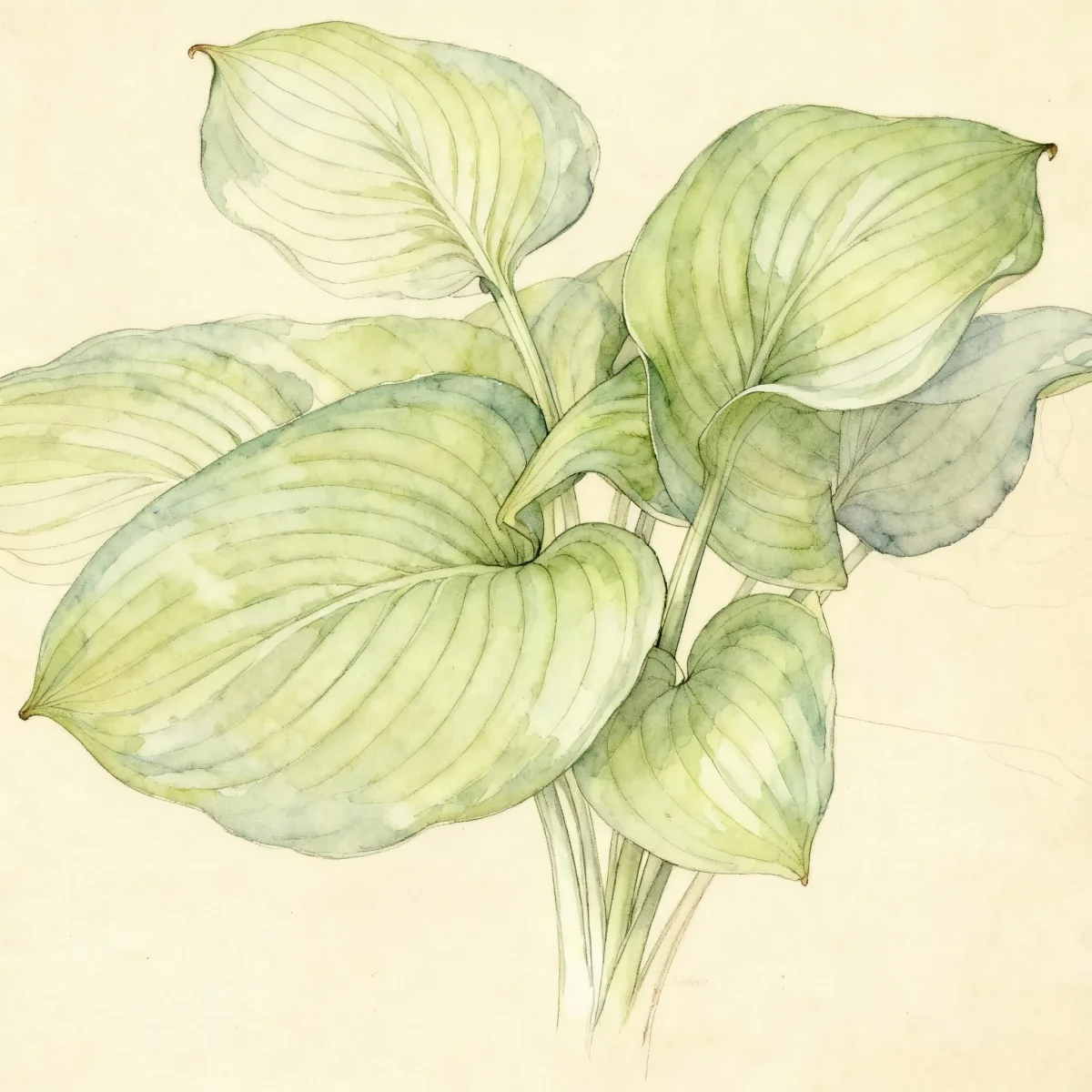
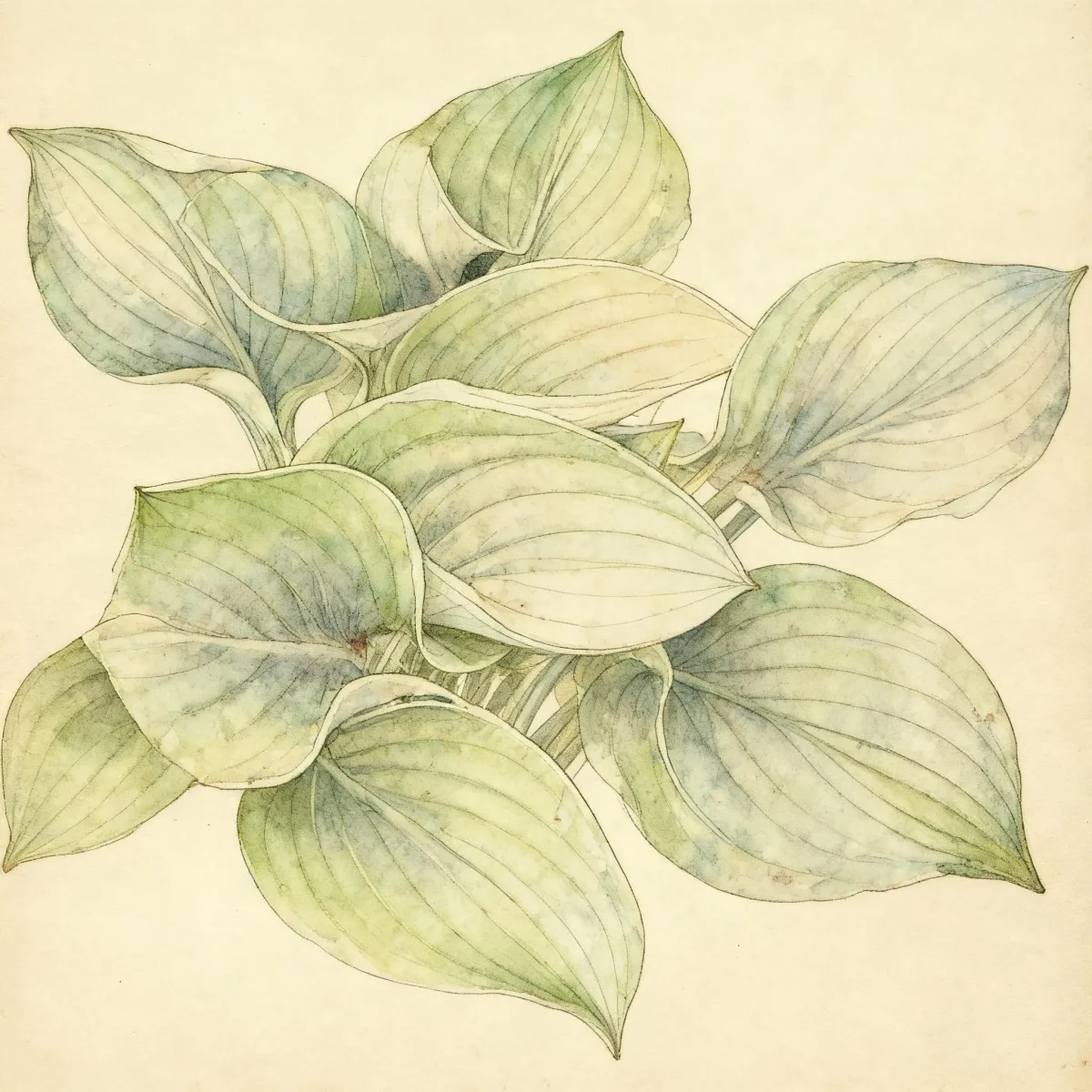
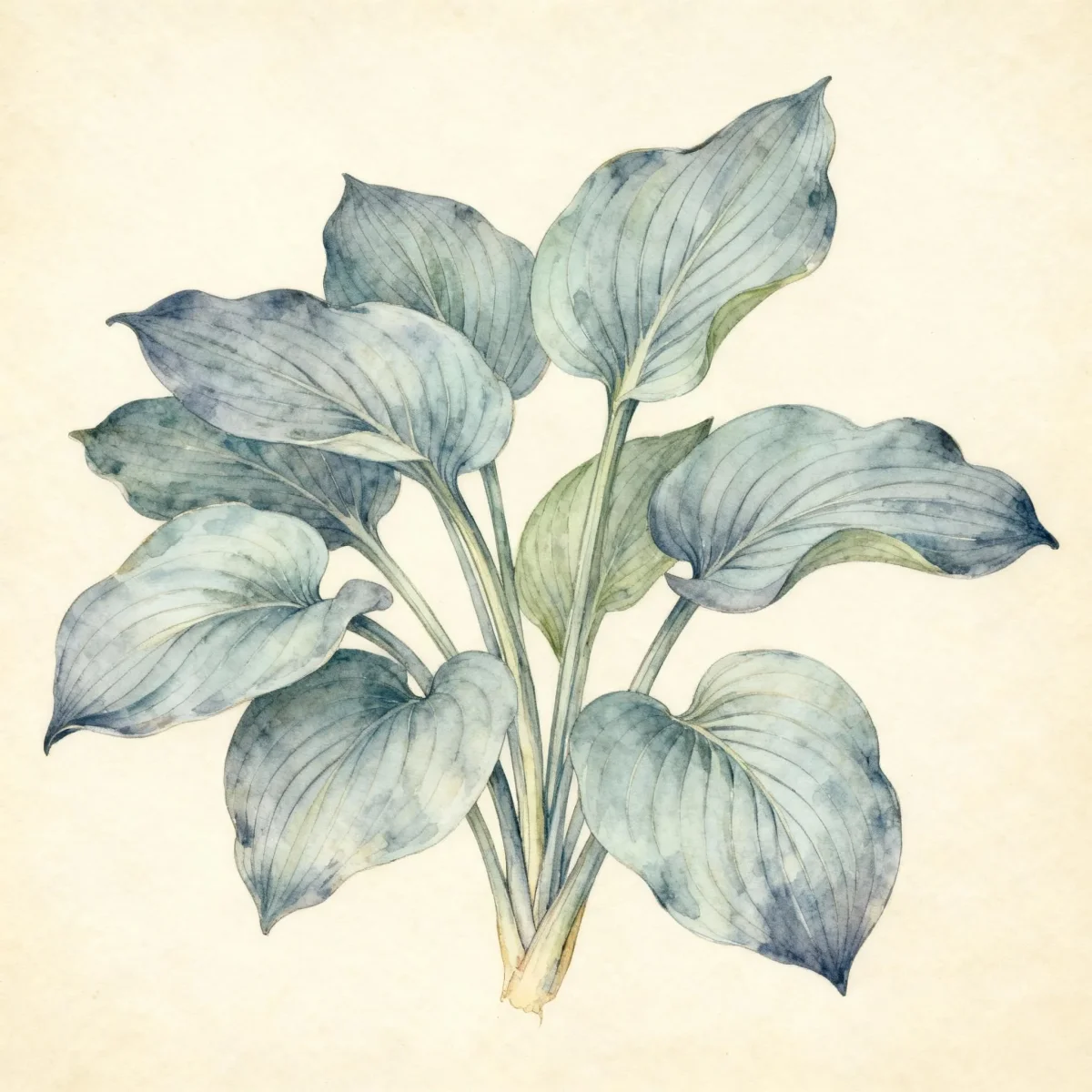
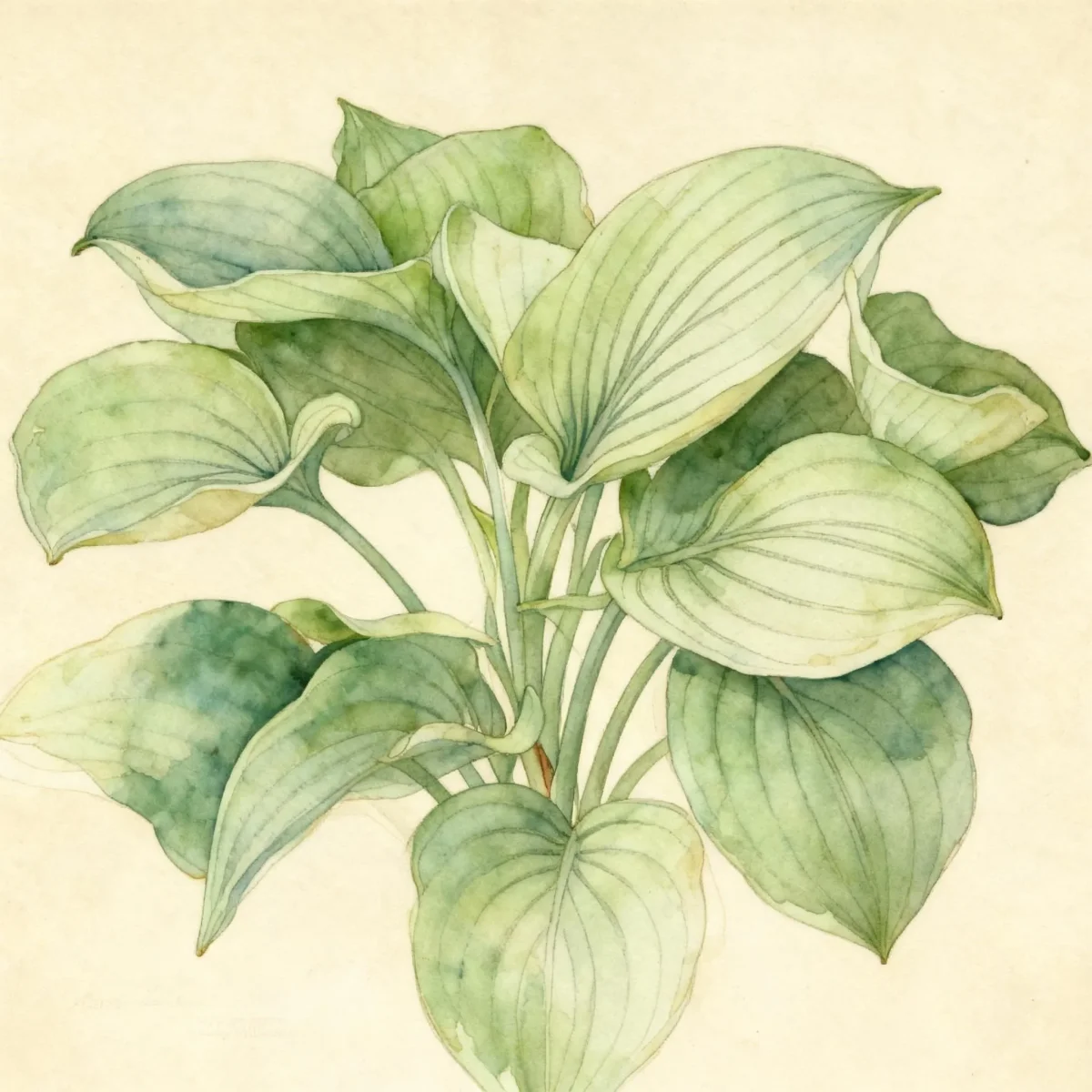
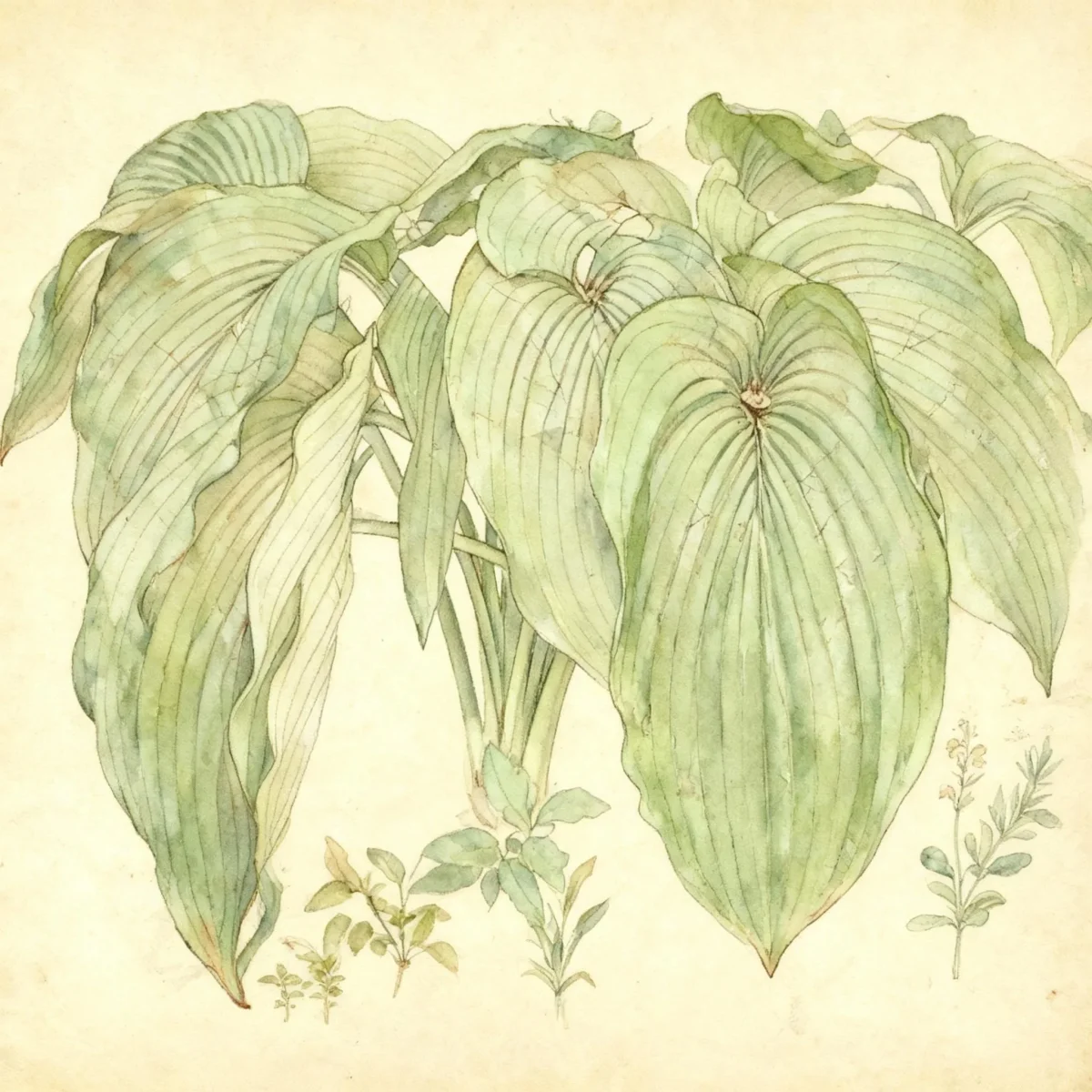
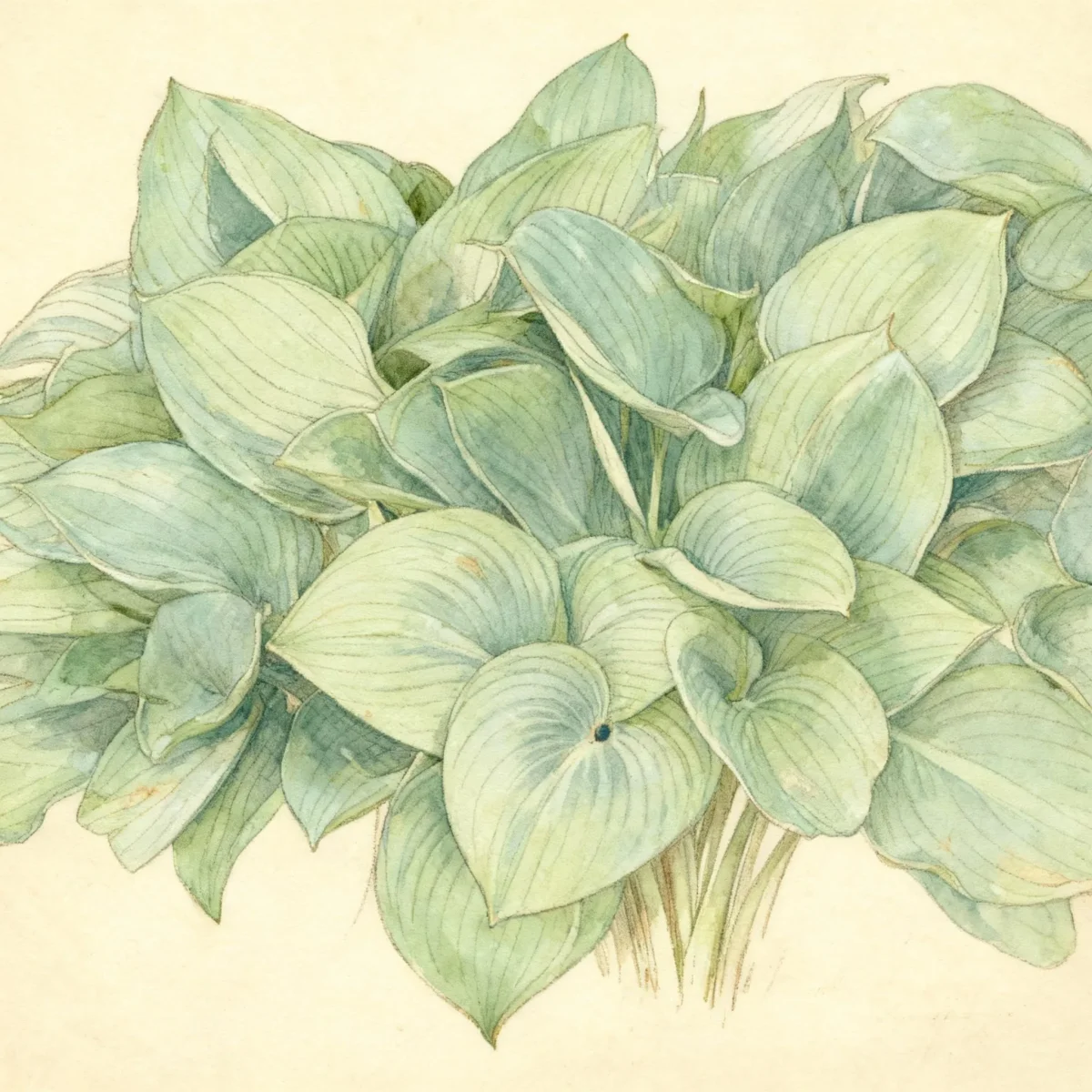
Hosta (Hosta 'Leather Sheen')
Hosta 'Leather Sheen' is a low-maintenance perennial valued for its glossy, dark green, strap-like foliage. Thrives in deep shade.
Scroll down to discover growing tips, care requirements, companion plants, and more
Complete Plant Information
Overview
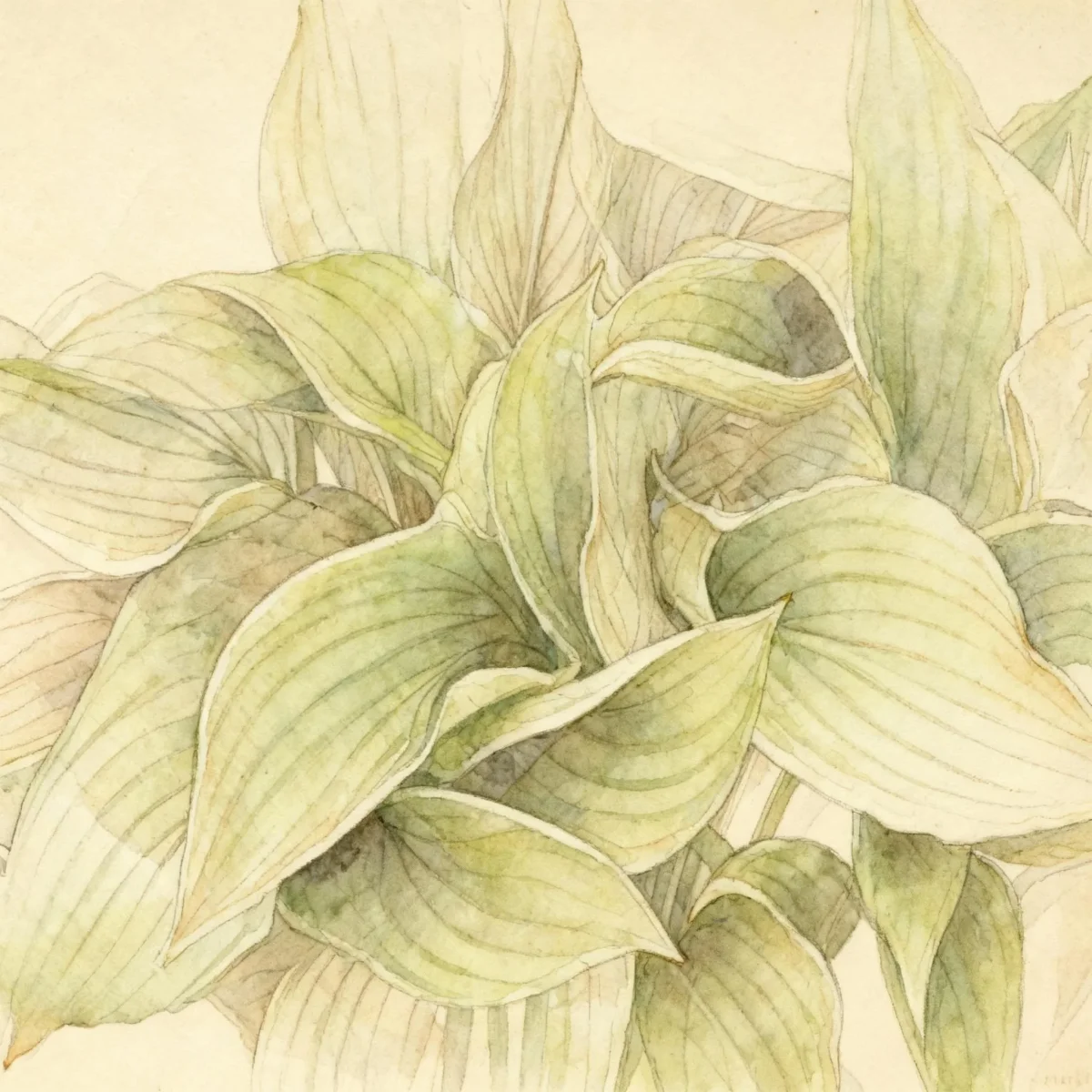
Hosta ‘Leather Sheen’ is a highly dependable and attractive selection prized primarily for its superior foliage texture and color in deep shade conditions. This herbaceous perennial forms a dense mound featuring flat, ovate leaves that possess a distinct, glossy, dark green surface, offering contrast in dimly lit garden spaces. As a classic Hosta variety, it delivers substantial ornamental value with minimal effort, making it a favorite for mass plantings and borders throughout the growing season.
This cultivar typically reaches heights between one and one-and-a-half feet with a spread of two to two-and-a-half feet, forming a robust clump suitable for defining edges or filling woodland garden gaps. While it produces appealing lavender, bell-shaped flowers in mid-summer, the true strength of the Hosta ‘Leather Sheen’ lies in its durable, weed-suppressing leaves. It is recognized as a low-maintenance anchor plant for nearly any shady location, provided soil moisture remains adequate.
Gardeners seeking reliable texture and color beneath a dense tree canopy or on the north side of structures will find Hosta ‘Leather Sheen’ invaluable. Its tolerance for challenging conditions, including heavy shade and Black Walnut root competition, speaks to its hardiness and versatility within the Hosta genus.
Fast Facts
- Plant Family: Asparagaceae
- Plant Type: Herbaceous perennial
- Hardiness Zones: USDA Zones 3-8
- Size at Maturity:
- Height: 1-1.5 ft
- Spread: 2-2.5 ft
- Bloom Time: June to July
- Bloom Description: Lavender
- Sun Exposure: Part shade to full shade
- Water Needs: Medium
- Maintenance Level: Low
How to Grow
To ensure the best display of Hosta ‘Leather Sheen’, plant it in spring or autumn in locations receiving part shade to full shade. The ideal environment demands organically rich, well-drained soil that maintains even moisture levels. While established Hosta plants show some drought tolerance, especially those with thicker leaves, consistent moisture is crucial for achieving the full size and premium quality this cultivar offers.
Watering should prioritize applying moisture directly to the soil beneath the foliage, helping to keep the leaves dry and minimize potential fungal issues. As a generally low-maintenance perennial, fertilizing is rarely necessary if the soil is rich; however, deep, consistent watering during dry spells remains the most important care task. Pruning is minimal, usually involving the removal of any damaged leaves or cleaning up the plant base in early spring.
Division of Hosta clumps is usually easiest and best performed in the early spring before new leaves unfurl, although autumn division is also acceptable. It is vital to site your Hosta ‘Leather Sheen’ in areas well-protected from strong winds, which can physically tear the leaves. The dense foliage naturally assists in crowding out many common garden weeds.
Landscape Uses
Hostas are the undisputed foundation plants for any successful shade garden, and Hosta ‘Leather Sheen’ excels in this role due to its dark, glossy foliage. They are exceptionally effective when grouped or massed to create a unified, textured carpet beneath mature trees or against shaded walls.
This variety serves wonderfully as an edging plant along shady borders, providing a clean, dark baseline that contrasts well with finer-textured, lighter-colored groundcovers or ferns. Consider pairing Hosta ‘Leather Sheen’ with plants that appreciate similar moist, cool conditions, such as Astilbe, Bleeding Hearts, or various woodland sedges. Its substantial foliage acts as an excellent background element, allowing the brighter colors of shade-tolerant flowering annuals to truly pop.
The dense habit of this Hosta variety also makes it a practical choice where you need to suppress weed growth naturally in broad, perpetually shaded areas.
Standout Features
Flower Qualities
- Showy
- Good Cut
Noteworthy Characteristics
Hosta is a genus cherished globally for its ornamental foliage rather than its flowers, featuring rhizomatous, clump-forming herbaceous perennials native primarily to Japan, Korea, and China. Hosta ‘Leather Sheen’ specifically showcases a mound of flat, ovate, glossy, dark green leaves, topped by racemes of bell-shaped, lavender flowers borne on tall scapes. This dependable perennial requires little care and contributes excellent color, contrast, and texture to deep shade landscapes, effectively crowding out undergrowth.
Tolerances
- Heavy Shade
- Black Walnut
Potential Problems
The primary concern for Hosta enthusiasts involves leaf damage caused by slugs and snails, which are highly attracted to the lush foliage and can rapidly chew unsightly, jagged holes. Active management is necessary to prevent this aesthetic damage from overwhelming the plant mass. Inspect the soil surface and undersides of leaves regularly, applying baits or traps as needed on a consistent schedule.
Foliar nematodes can cause interveinal browning, while less frequent issues include leaf spots or crown rot if drainage is excessively poor. Furthermore, gardeners must be mindful of larger garden visitors, as deer and rabbits frequently eat Hosta leaves, sometimes voraciously. Immediately destroy any infected material exhibiting signs of viruses like HVX, and protect plants from severe hail storms.
Frequently Asked Questions
What hardiness zones is Hosta ‘Leather Sheen’ suitable for?
Hosta ‘Leather Sheen’ is a robust perennial suitable for USDA Hardiness Zones 3 through 8, offering reliable cold tolerance.
How large does Hosta ‘Leather Sheen’ grow?
This Hosta typically matures to a height of 1 to 1.5 feet and spreads between 2 and 2.5 feet wide, forming a substantial mound.
What sun exposure does Hosta ‘Leather Sheen’ need?
Hosta ‘Leather Sheen’ thrives best in environments ranging from part shade to full shade. For best foliage color and substance, aim for protection from intense afternoon sun.
When does Hosta ‘Leather Sheen’ bloom?
This variety blooms during the early summer season, specifically from June to July, producing attractive lavender, bell-shaped flowers.
Conclusion
Hosta ‘Leather Sheen’ remains one of the most dependable perennials for adding essential texture and deep color to shaded landscapes. Its glossy foliage and low maintenance requirements make the Hosta genus indispensable for gardeners battling dark corners. Before planting, confirm that your garden site falls within USDA Zones 3-8 and plan for consistent soil moisture to maximize the beauty of this Hosta.
Companion Planting
Selecting the right partners is key to maximizing the visual appeal of Hosta ‘Leather Sheen’. Because it excels in moisture while demanding shade, pair it with other woodland stalwarts that share similar cultural needs. Ferns, with their airy, delicate fronds, provide a beautiful textural counterpoint to the broader, glossy leaves of the Hosta.
Consider using plants like Japanese Forest Grass (Hakonechloa macra) for cascading movement, or spring bulbs that emerge and bloom before the Hosta fully leafs out. By planting early bloomers alongside, you ensure continuous visual interest from early spring right through to the late-season performance of Hosta ‘Leather Sheen’.
Design Ideas for Shady Borders
The consistent performance and deep green color of Hosta ‘Leather Sheen’ make it an excellent structural element in formal or informal shade borders. Use a mass planting of this Hosta to create a solid, dark green ribbon that anchors the middle layer of the border, situated behind lower-growing groundcovers like Lamium or Tiarella Foamflower.
For a dramatic effect, incorporate plants with bright white or silvery foliage nearby; the contrast between the dark, polished leaves of the Hosta ‘Leather Sheen’ and silver Lamb’s Ears or white Astilbe flowers helps illuminate darker areas of the garden. Due to its moderate size, this Hosta also functions perfectly as an accent specimen in drifts of larger shade trees where formal structure is desired.