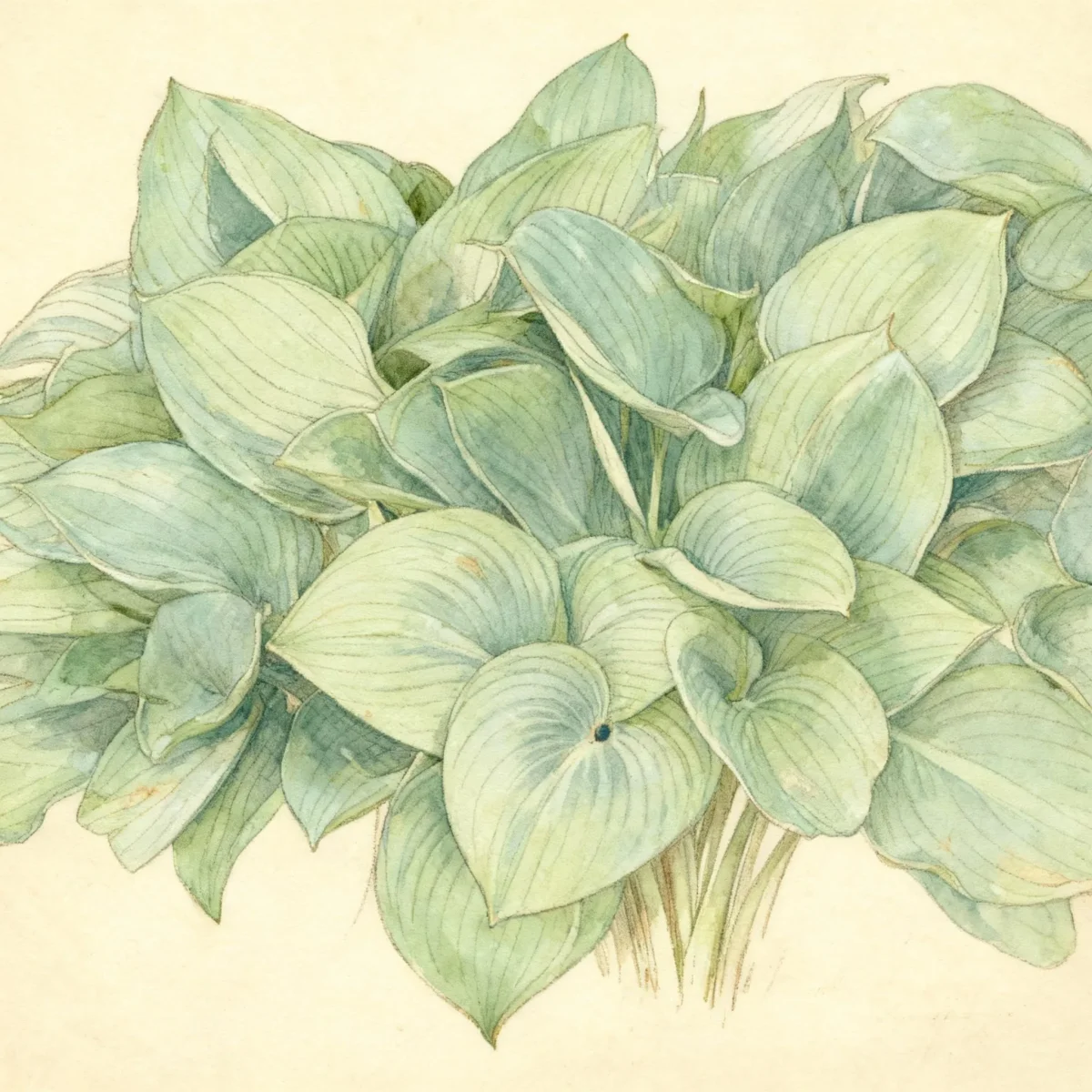
Hosta (Hosta 'Ruffles')
Hosta 'Ruffles' is a clump-forming perennial prized for its heavily textured, medium-green foliage, ideal for shade gardens.
Scroll down to discover growing tips, care requirements, companion plants, and more
Complete Plant Information
Overview
Hosta ‘Ruffles’ brings sculptural texture and dependable foliage color to the darkest corners of the landscape. As a member of the highly diverse Hosta genus, this variety excels primarily through its ornamental leaves, forming a neat mound that remains attractive throughout the growing season. Gardeners rely on Hosta for its low-maintenance requirements and ability to thrive where many other flowering plants struggle.
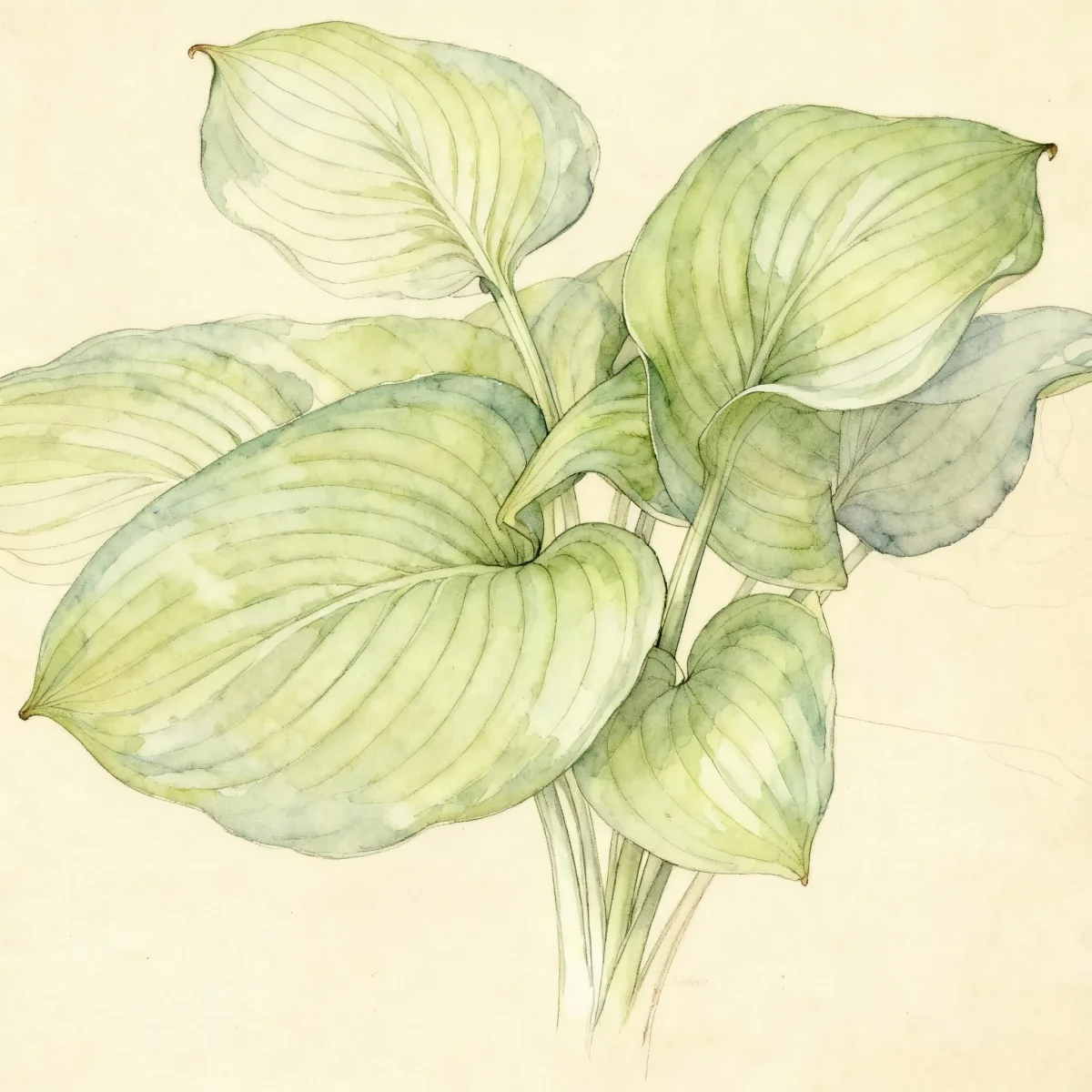
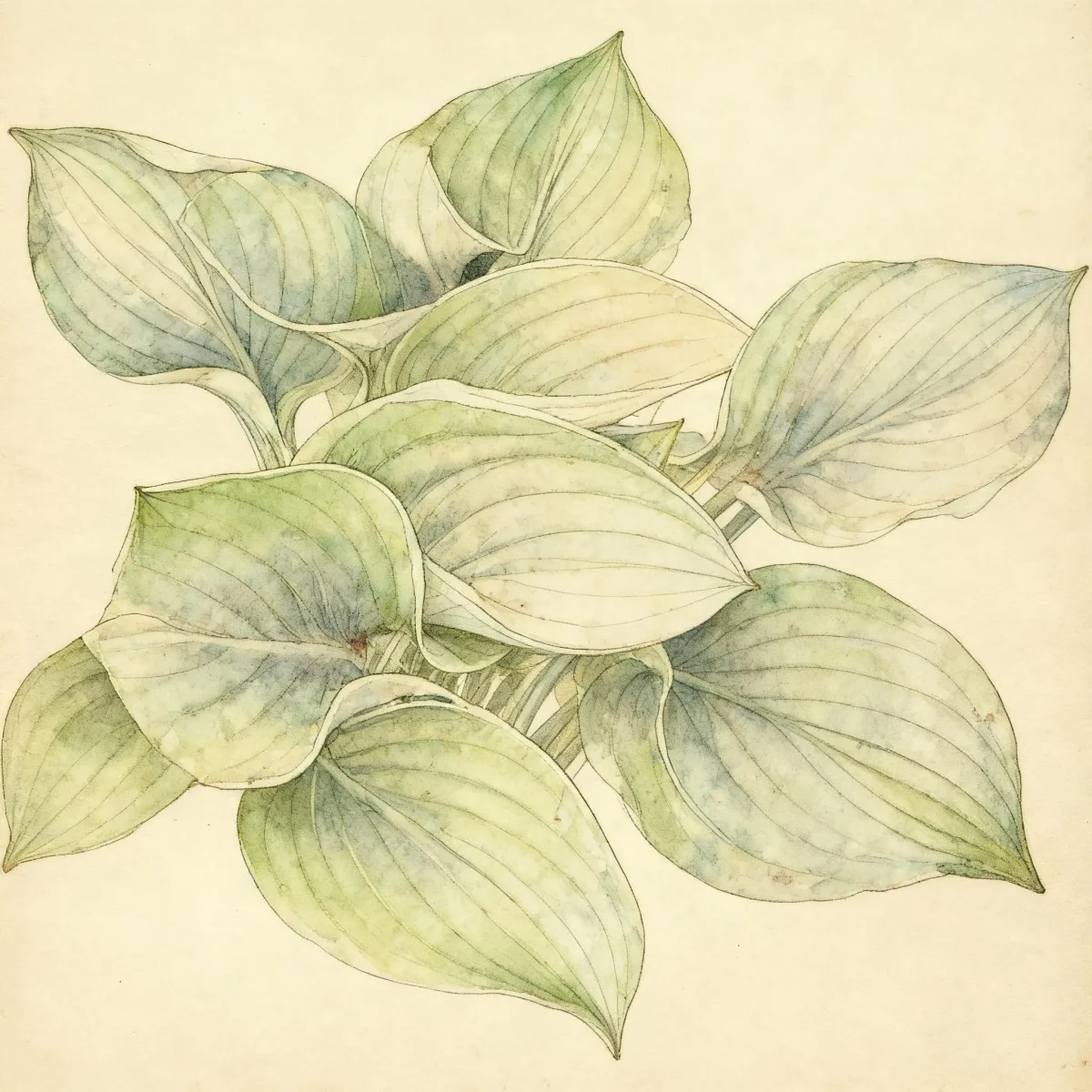
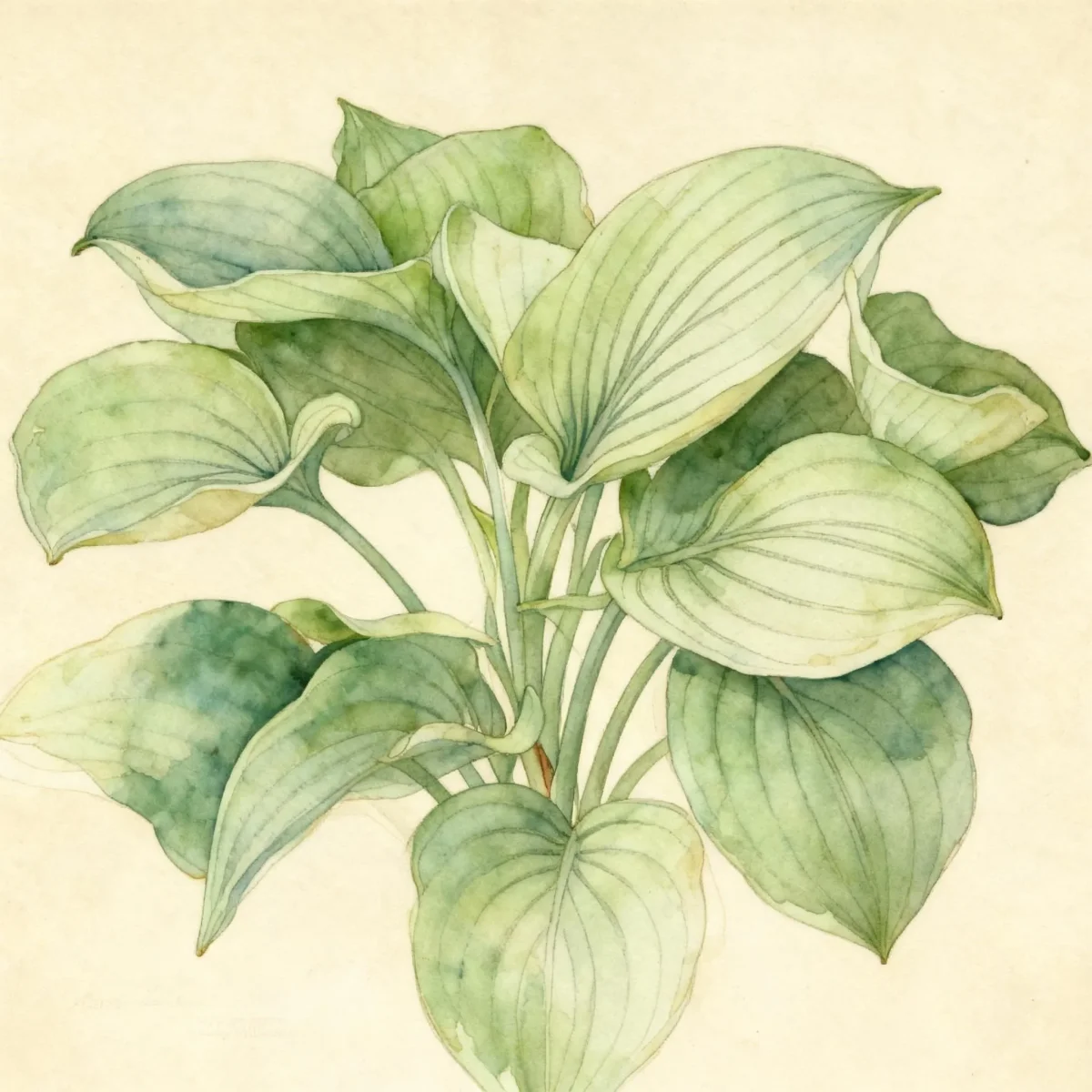
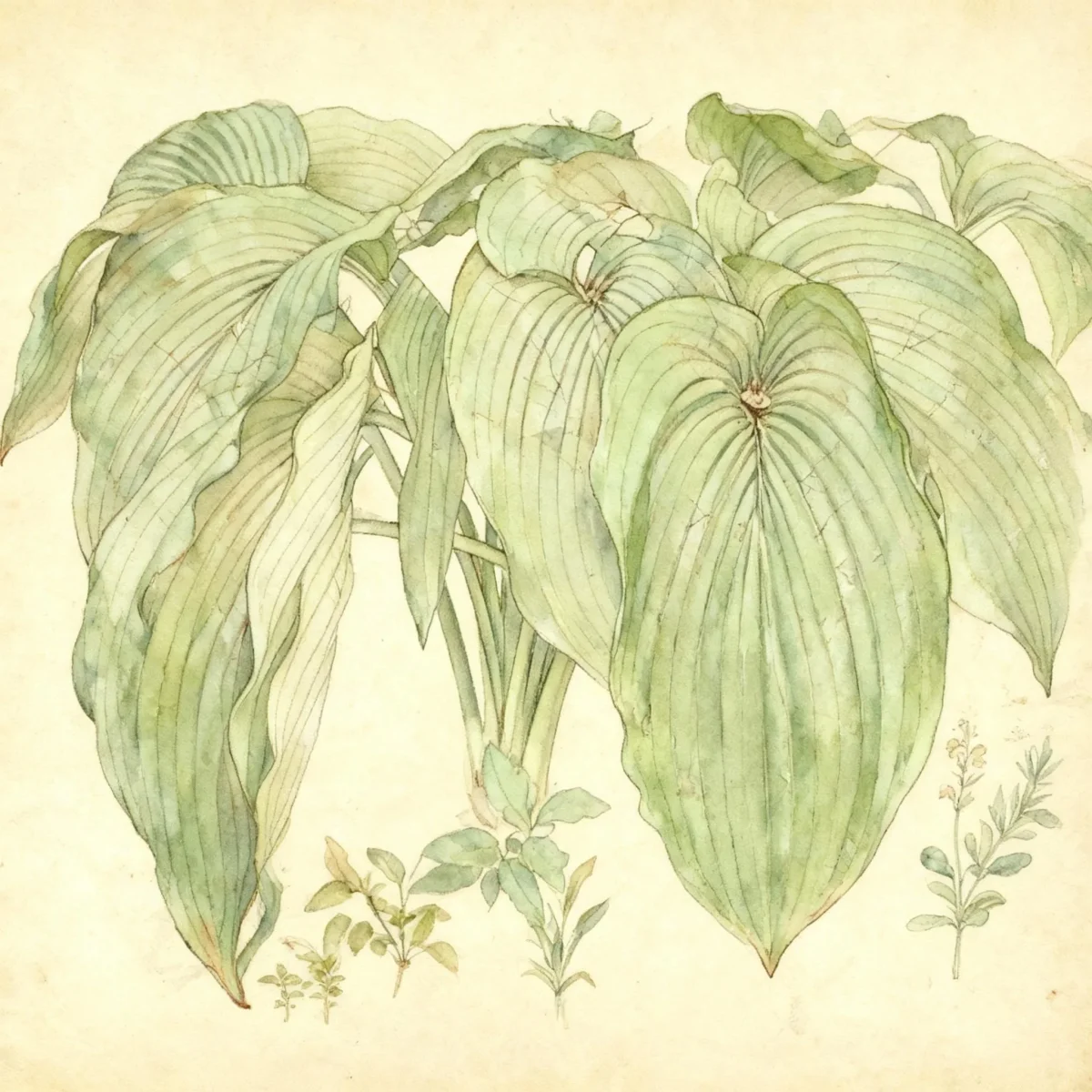
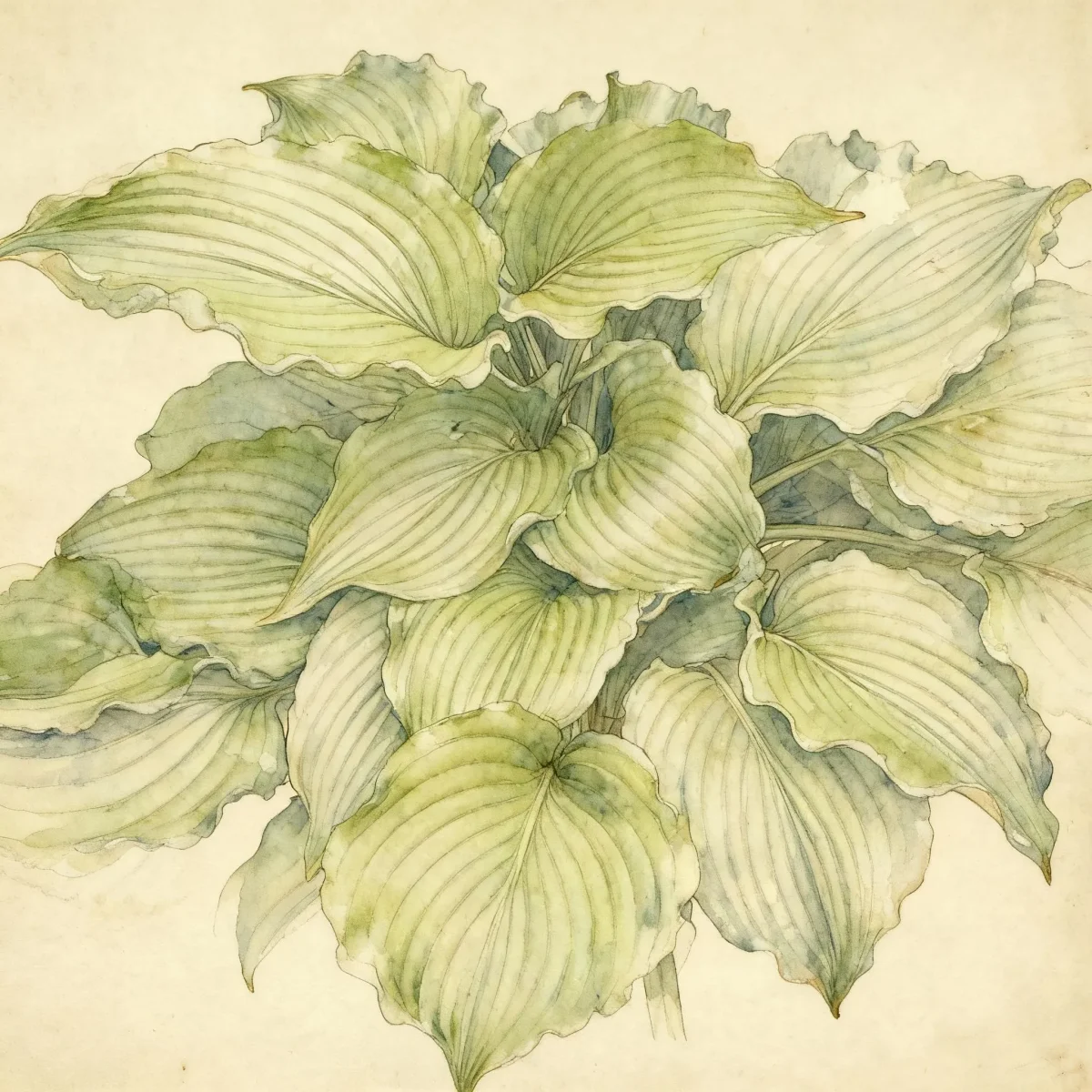
This particular cultivar is noted for its substantial, cupped leaves which feature pronounced veining, giving it a distinct, ruffled appearance. Hosta ‘Ruffles’ typically matures into a medium-sized clump, offering strong structure for borders or woodland settings. The pale lavender to white blooms that appear briefly in mid-summer offer a subtle counterpoint to the robust foliage display.
Cultivating Hosta ‘Ruffles’ successfully centers on providing consistent moisture and protection from the harshest afternoon sun. Its hardiness across USDA Zones 3 through 8 makes it a reliable choice across wide geographic areas, solidifying the Hosta’s reputation as a foundational shade perennial.
Fast Facts
- Plant Family: Asparagaceae
- Plant Type: Herbaceous perennial
- Hardiness Zones: USDA Zones 3-8
- Size at Maturity:
- Height: 2-4 ft
- Spread: 2-3 ft
- Bloom Time: June to July
- Bloom Description: Pale lavender to white
- Sun Exposure: Part shade to full shade
- Water Needs: Medium
- Maintenance Level: Low
How to Grow
Hosta thrive when planted in slightly acidic to neutral soil that is rich in organic matter and drains well. The best time for initially planting Hosta ‘Ruffles’ is early spring or autumn, ensuring the plant has time to establish its crown before extreme temperatures arrive. Locate specimens where they receive part shade, ideally benefiting from gentle morning sun or dappled light filtered through trees.
Care for established specimens is straightforward, classifying Hosta ‘Ruffles’ as low-maintenance. Consistent moisture is crucial; soils should never be allowed to dry out completely, as this affects the full size and quality of the foliage. When watering, aim directly at the soil beneath the leaves to keep foliage dry, which helps prevent potential fungal issues.
Division offers a simple means of propagation and rejuvenation, typically done in early spring before the new shoots fully unfurl, or in the autumn. Protect your plants by positioning them away from strong winds that can cause physical damage to the leaves. While established Hosta show some tolerance for dry shade, achieving optimal performance requires regular supplemental watering in those drier spots.
Landscape Uses
Hostas are the undisputed mainstay of shade gardens, where their diverse foliage provides essential texture and color contrast. While Hosta ‘Ruffles’ does produce attractive, pale flowers, it is overwhelmingly grown for the ornamental excellence of its veined, mounding leaves, which define the space beneath deciduous trees or along shaded pathways.
These perennials look very effective when grouped or massed together, creating a substantial, unified sea of green texture. Hosta ‘Ruffles’ works exceptionally well as a strong background plant in deep shade borders or integrated within woodland garden schemes where dappled light mimics its native habitat. Pair them with plants that enjoy similar moist, shady conditions, like ferns or bleeding hearts, to build a cohesive planting scheme.
Standout Features
Flower Qualities
- Showy
Noteworthy Characteristics
Hosta is a genus of about 70 species of shade-loving, rhizomatous, clump-forming, herbaceous perennials which are native to open woodlands, woodland margins and glades in Japan, Korea, China and eastern Russia. ‘Ruffles’ is a medium hosta (may be H. Montana hybrid) that typically grows in a mound to 22” tall spreading to 35” wide, featuring cupped, rounded, medium green leaves (to 10” long and 8” wide) with noticeable veins. Bell-shaped, pale lavender to white flowers bloom in early to mid-summer (June-July) on scapes rising above the foliage mound.
Tolerances
- Heavy Shade
- Black Walnut
Potential Problems
The primary threat to Hosta foliage, including Hosta ‘Ruffles’, comes from slugs and snails, which readily chew jagged holes in the leaves, causing rapid aesthetic damage. It is essential to monitor for these pests and employ control measures promptly to prevent widespread defoliation. Less common issues include foliar nematodes causing interveinal browning, and potential but infrequent problems like leaf spots or crown rot.
Management strategies involve cultural practices and physical barriers. Keeping the area free of debris reduces hiding places for slugs. Furthermore, plants infected with viruses like Hosta Virus X (HVX) should be destroyed immediately to prevent spread. Be aware that deer and rabbits frequently graze on Hosta leaves, often voraciously, so protection may be necessary in vulnerable locations.
Frequently Asked Questions
What hardiness zones is Hosta suitable for?
Hosta ‘Ruffles’ is hardy across a wide range, thriving in USDA Zones 3-8.
How large does Hosta ‘Ruffles’ grow?
This cultivar typically reaches a height between 2 and 4 feet and spreads to a width of 2 to 3 feet at maturity.
What sun exposure does Hosta ‘Ruffles’ need?
This plant performs best in part shade to full shade conditions, favoring protection from the intense afternoon sun.
When does Hosta ‘Ruffles’ bloom?
It produces its pale lavender to white flowers primarily in the summer months, specifically from June to July.
Conclusion
Hosta ‘Ruffles’ is an invaluable, low-maintenance groundwork plant celebrated for its substantial, textured, medium-green foliage, making it perfect for defining shaded garden areas. By ensuring consistent soil moisture and planting in appropriate light, you can maximize the ornamental display of your Hosta. Check your local zone compatibility before planning your planting layout to ensure success with Hosta ‘Ruffles’ this season.
Companion Planting
Selecting good neighbors further enhances the appeal of Hosta in shady borders. Consider planting Hosta ‘Ruffles’ near moisture-loving perennials that offer contrasting leaf shapes or summer color, such as Astilbe, which prefers similar moist, rich soil. Another excellent pairing is with various types of woodland ferns; the fine, airy texture of the fern foils the bold, cupped texture of the Hosta leaves beautifully.
This grouping strategy is particularly effective in creating that immersive, naturalistic woodland garden feel. Since Hosta are primarily valued for their foliage, use early-blooming bulbs like Daffodils or Snowdrops whose flowers provide welcome spring interest before the Hosta mounds fully emerge.
Seasonal Care Calendar
Spring preparation should focus on division if the clumps of Hosta ‘Ruffles’ have become overcrowded. Clean up any lingering winter debris around the crown early in the season, ensuring fresh, organically rich soil amendments are lightly worked into the top layer. As the season warms, maintain medium water levels, especially if the area is prone to drying out.
Summer is the time to monitor for pests, most notably slugs and snails, applying deterrents or baits as soon as new growth appears. Deadhead the spent flower scapes after blooming concludes in July if you prefer a tidier appearance, though leaving them standing can offer brief vertical accents. Avoid heavy fertilization during peak summer heat.
As autumn approaches, the leaves will naturally begin to senesce. Allow the foliage to slowly die back; this allows carbohydrates to be drawn back into the crown for winter storage, which benefits the health of your Hosta next year. Cut the dead foliage back completely just before the ground freezes hard or in very early spring.