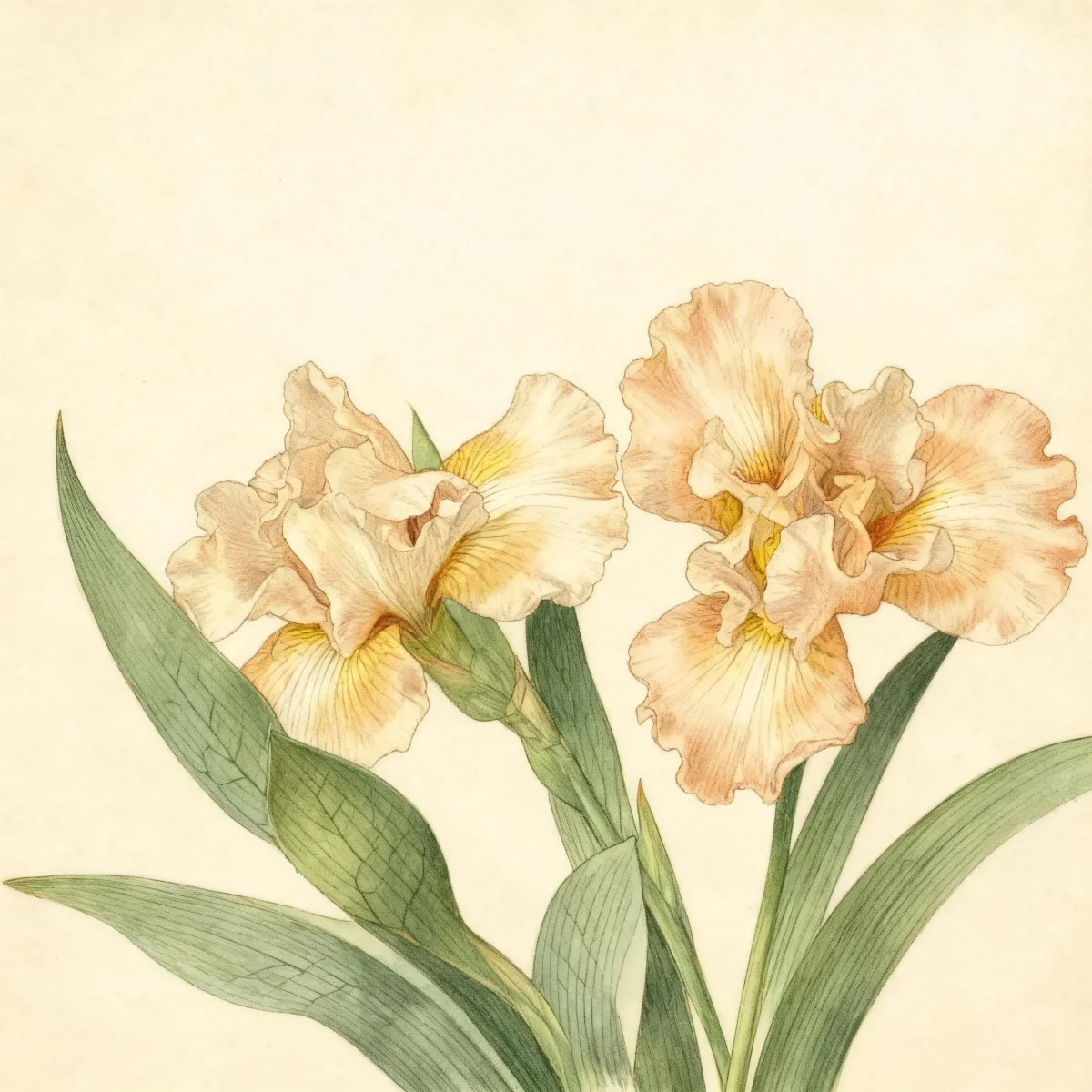
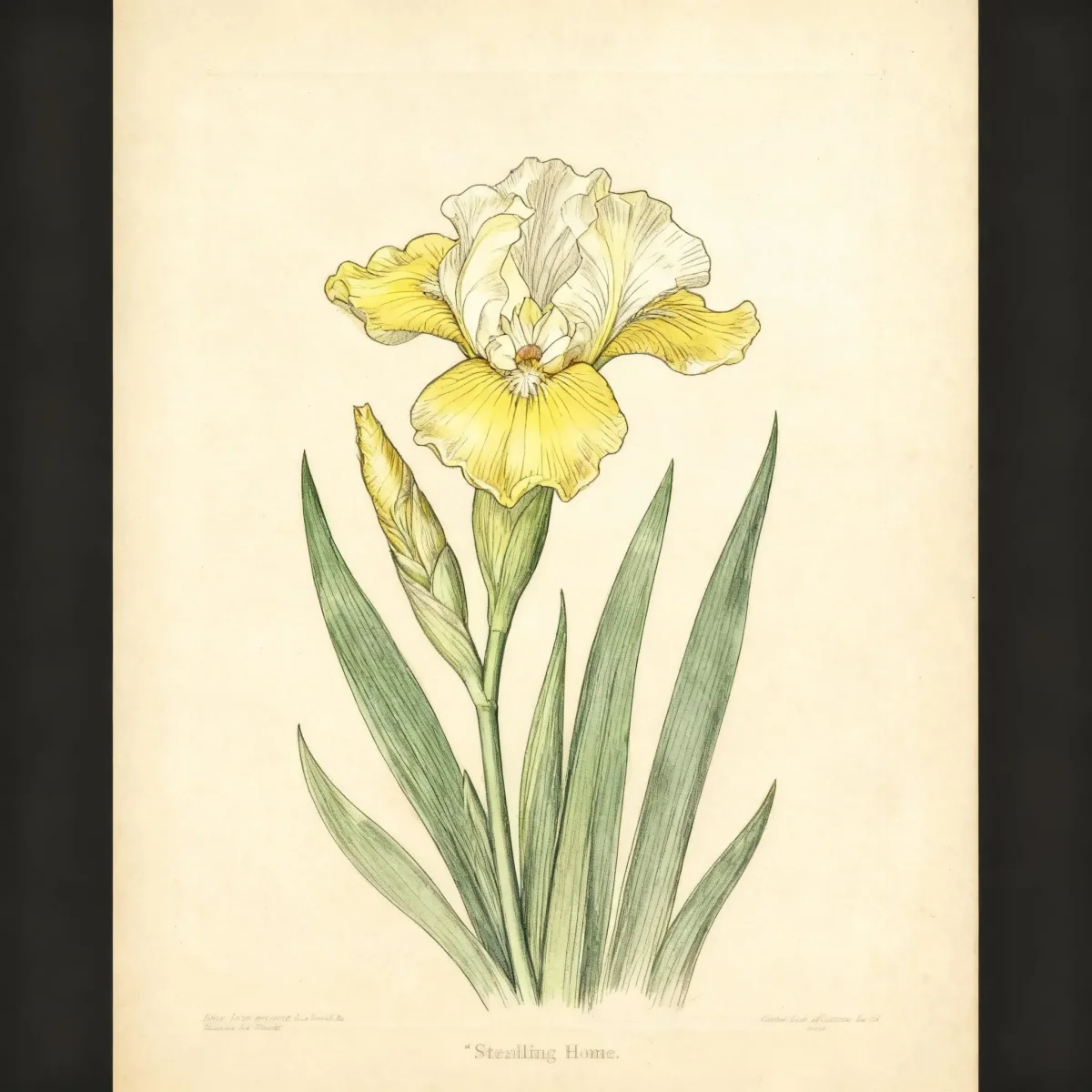
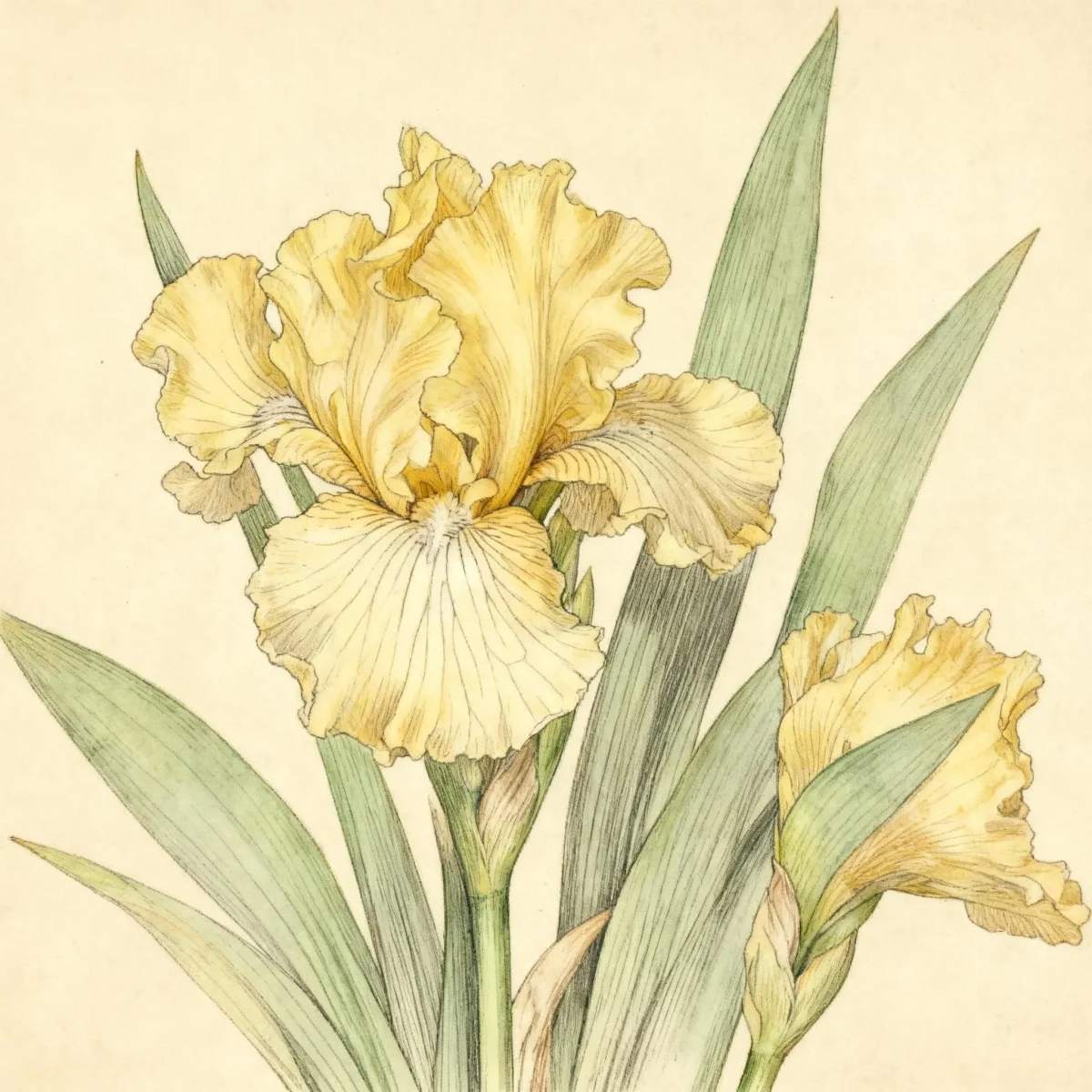
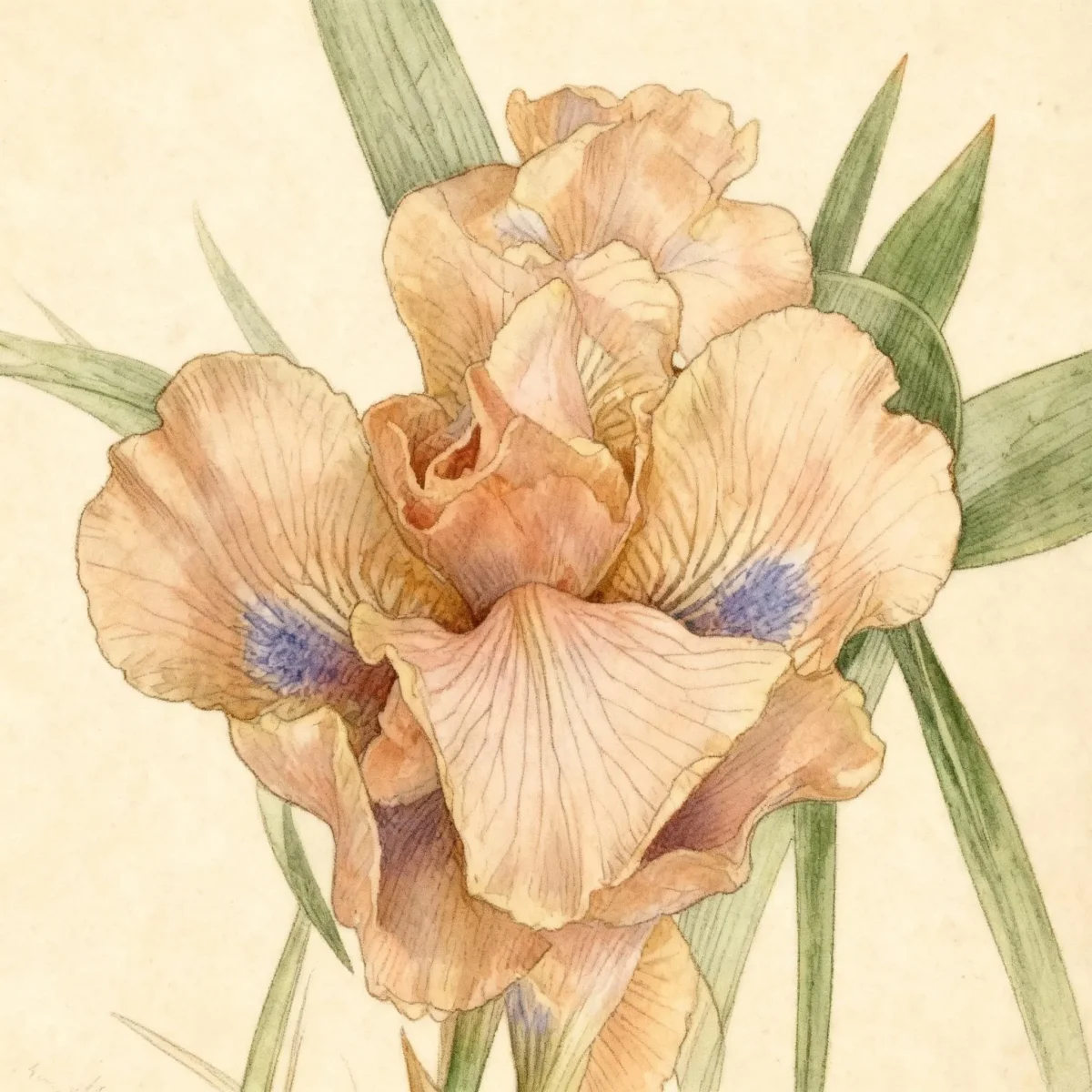
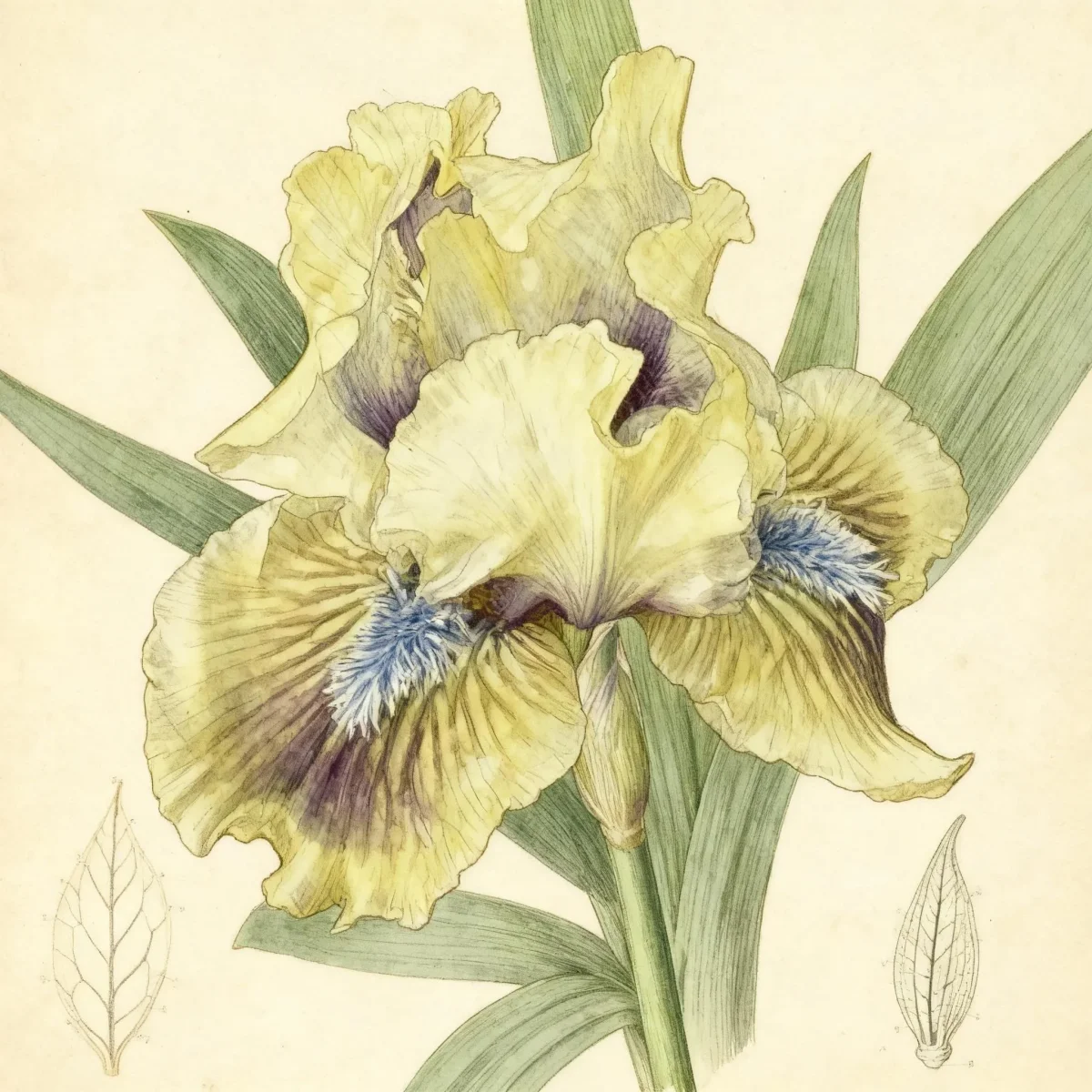
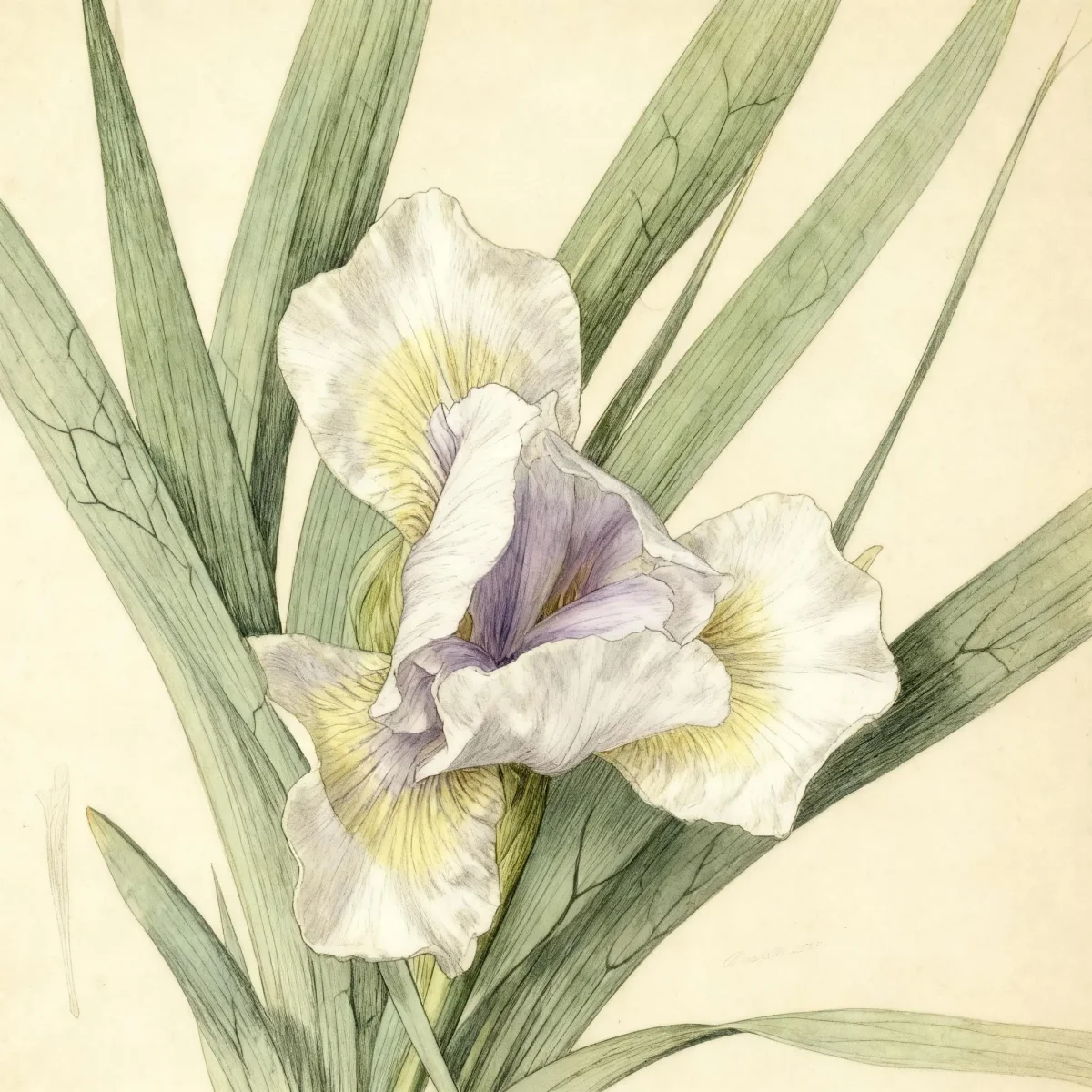
Standard dwarf bearded iris (Iris 'Sun Doll')
Iris 'Sun Doll' is a colorful Standard dwarf bearded iris, offering bright yellow blooms in established, low-maintenance gardens.
Scroll down to discover growing tips, care requirements, companion plants, and more
Complete Plant Information
Overview
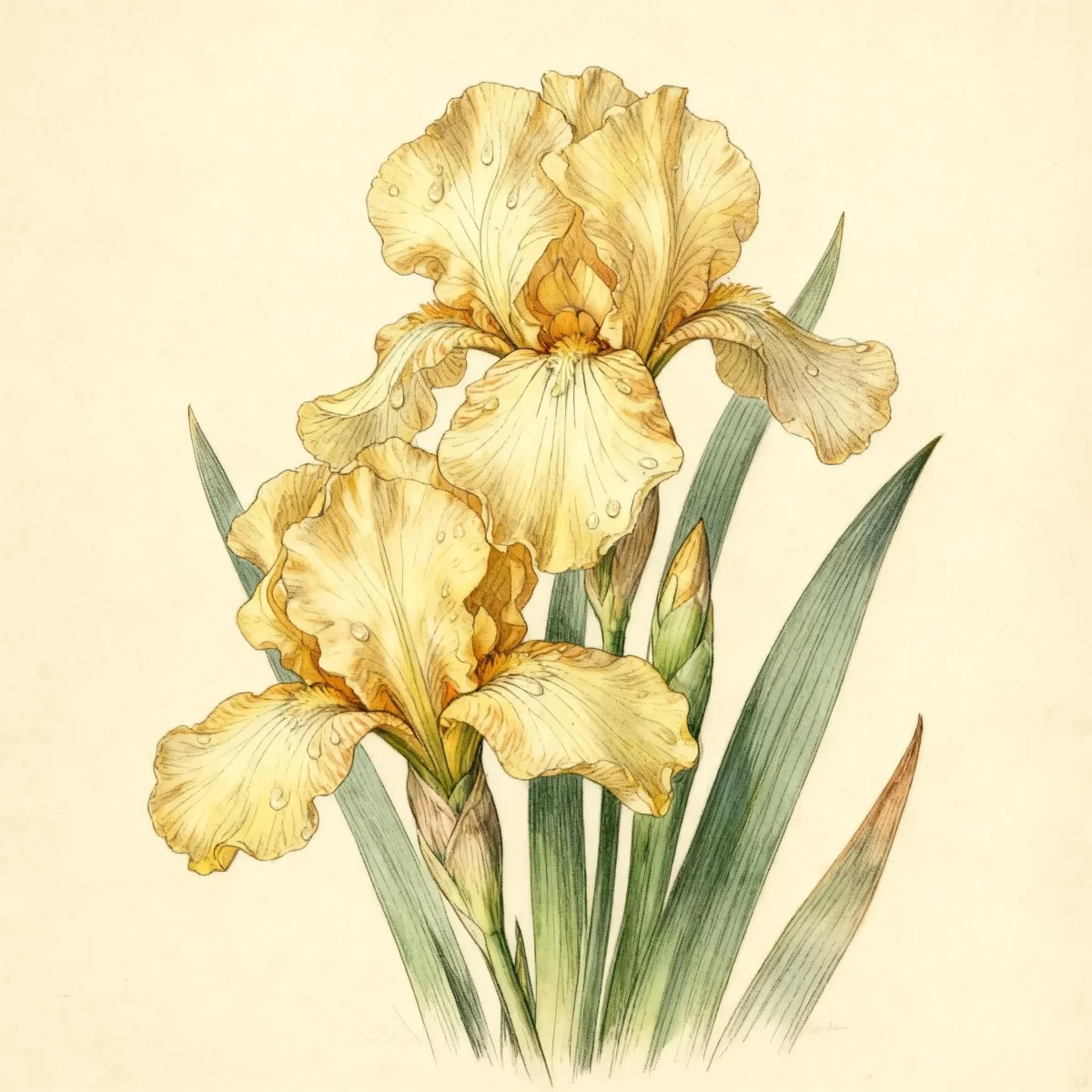
The Iris ‘Sun Doll’ is a charming variety of Standard dwarf bearded iris, valued for its compact size and brilliant yellow coloration that brightens the spring garden. As a rhizomatous perennial, it establishes reliable clumps relatively quickly, providing structure long after the flowers have faded. Gardeners appreciate this cultivar for its dependable performance across a wide range of climates, thriving where sun exposure is plentiful throughout the day.
This specific standard dwarf bearded iris reaches a modest height, making it perfect for softening the edges of paths or integrating into mixed borders without overpowering neighboring plants. While it prefers medium moisture during its active growth period, established Iris ‘Sun Doll’ exhibits welcome drought tolerance, reducing watering demands once fully acclimated to its location. Its primary offering is the iconic bearded flower form, presented here in radiant yellow hues.
Cultivating Iris ‘Sun Doll’ successfully involves ensuring exceptional drainage, as these rhizomes are susceptible to rot in overly saturated soil conditions. By paying attention to planting depth and location—especially in areas prone to heavy rain—gardeners can safeguard this lovely perennial for many seasons of reliable springtime color.
Fast Facts
- Plant Family: Iridaceae
- Plant Type: Herbaceous perennial
- Hardiness Zones: USDA Zones 3-8
- Size at Maturity:
- Height: 0.5-1 ft
- Spread: 0.5-1 ft
- Bloom Time: May
- Bloom Description: Yellow
- Sun Exposure: Full sun
- Water Needs: Medium
- Maintenance Level: Medium
How to Grow
Planting rhizomes of Iris ‘Sun Doll’ should occur between late July and October, depending on your region’s winter severity; aim for late July to early September in cold climates, or September to October where winters are mild. Site selection is crucial: ensure full sun exposure for the best performance, though some afternoon shade is tolerated in intense heat. The soil must be well-drained; if you have clay or heavy soil, plant the rhizomes on slopes or in raised beds, positioning the leafy end uphill to prevent rhizome rot. Space plantings 12 to 20 inches apart.
When planting, create a small mound of soil and position the rhizome so that one-third of it sits exposed above the soil line, with roots spread horizontally beneath it for support. Adequate moisture is needed from spring until six weeks after blooming concludes, though established plants can handle some drought. Keep the bed meticulously weeded, as competition can suppress growth, and remember that Iris ‘Sun Doll’ may need division every few years if clumps become overcrowded, best performed in late summer (August).
Good garden hygiene is essential for discouraging common iris ailments. Promptly remove dead foliage and debris, and avoid overhead watering late in the day, which can promote fungal issues like leaf spot. Correct cultural practices are the best defense against pests like slugs and the more serious iris borer.
Landscape Uses
The compact nature of Iris ‘Sun Doll’ makes it an ideal candidate for defining the front edge of perennial borders, where its bright yellow flowers can create an immediate focal point. Grouping or massing these standard dwarf bearded iris varieties enhances their visual impact, transforming sunny pathways or walkways into cheerful avenues in the spring. They also perform admirably when used to edge garden beds or tucked into rock garden crevices, utilizing their low stature to their advantage.
For a classic cottage garden look, intersperse Iris ‘Sun Doll’ with spring-blooming bulbs like daffodils or tulips, setting up a tiered display where the iris catches the light as the bulbs begin to fade. They are also excellent choices for container gardening, provided the potting mix offers superior drainage to mimic their preferred native soil conditions and protect the rhizomes from sitting in water.
Standout Features
Flower Qualities
- Showy
Noteworthy Characteristics
Standard Dwarf Bearded Iris is a rhizomatous iris whose numerous hybrid cultivars grow to 8-16” tall. The genus name honors the Greek goddess of the rainbow. Iris ‘Sun Doll’ is a standard dwarf bearded iris that typically grows to 10” tall, featuring yellow standards and falls highlighted by a darker yellow beard. This variety was hybridized by Bennett Jones and registered in 1985.
Tolerances
- Deer
- Drought
Potential Problems
Gardeners should remain vigilant against several potential diseases that commonly affect iris, including leaf spot, root rot, bacterial soft rot, crown rot, iris rust, and mosaic viruses. Proactive cultural care, especially ensuring excellent soil drainage, is the most critical preventative measure against these rot issues. For pests, monitor for slugs, snails, aphids, thrips, and the destructive iris borer, which can tunnel through stalks and rhizomes. If borers are present in your area, integrating timely pest monitoring or preventative treatments is highly recommended.
Frequently Asked Questions
What hardiness zones is Standard dwarf bearded iris suitable for?
Iris ‘Sun Doll’ is reliably hardy across USDA Zones 3 through 8.
How large does Iris ‘Sun Doll’ grow?
This standard dwarf bearded iris typically achieves a height between 0.5 and 1 foot, with a similar spread of 0.5 to 1 foot mature spread.
What sun exposure does Iris ‘Sun Doll’ need?
For optimal flowering and health, Iris ‘Sun Doll’ requires full sun exposure in the garden environment.
When does Iris ‘Sun Doll’ bloom?
This variety produces its distinct yellow flowers during the month of May.
Conclusion
The Iris ‘Sun Doll’ brings reliable, cheerful yellow color to the early season landscape, performing beautifully as a low-growing border accent or rock garden feature. Its resilience to drought and resistance to deer browsing make this standard dwarf bearded iris a highly practical selection for many home gardens. Before planting, confirm that your soil offers the exceptional drainage required to protect the rhizomes, ensuring years of enjoyment from your Iris ‘Sun Doll’.
Companion Planting
Companion choices for Iris ‘Sun Doll’ should complement its midspring bloom time and shared cultural needs, primarily full sun and sharp drainage. Early spring ephemeral bloomers like Crocus or certain Muscari (grape hyacinth) make excellent foreground partners, adding texture before the iris foliage fully develops. Later-season perennials such as Echinacea (Coneflower) or Sedum varieties can be positioned slightly behind the iris, ensuring continuous interest once the bearded iris finishes its show. Avoid planting near moisture-loving plants, as this can encourage the humidity that promotes fungal issues in the iris clump.
Propagation Tips
Like most bearded irises, the primary method for propagating Iris ‘Sun Doll’ is division of the rhizomes. This process is ideally done in late summer, around August, after the plant has finished blooming and the foliage begins to mature. Carefully lift the clump using a garden fork to avoid damaging the fleshy rhizomes, gently shake off excess soil, and separate the fans (leaf structures) attached to healthy sections of the rhizome. Ensure each new division has at least one firm rhizome section and several healthy leaves attached. Allow these divisions to dry briefly in a shaded, airy spot before replanting them using the correct shallow planting depth mentioned in the culture guide.