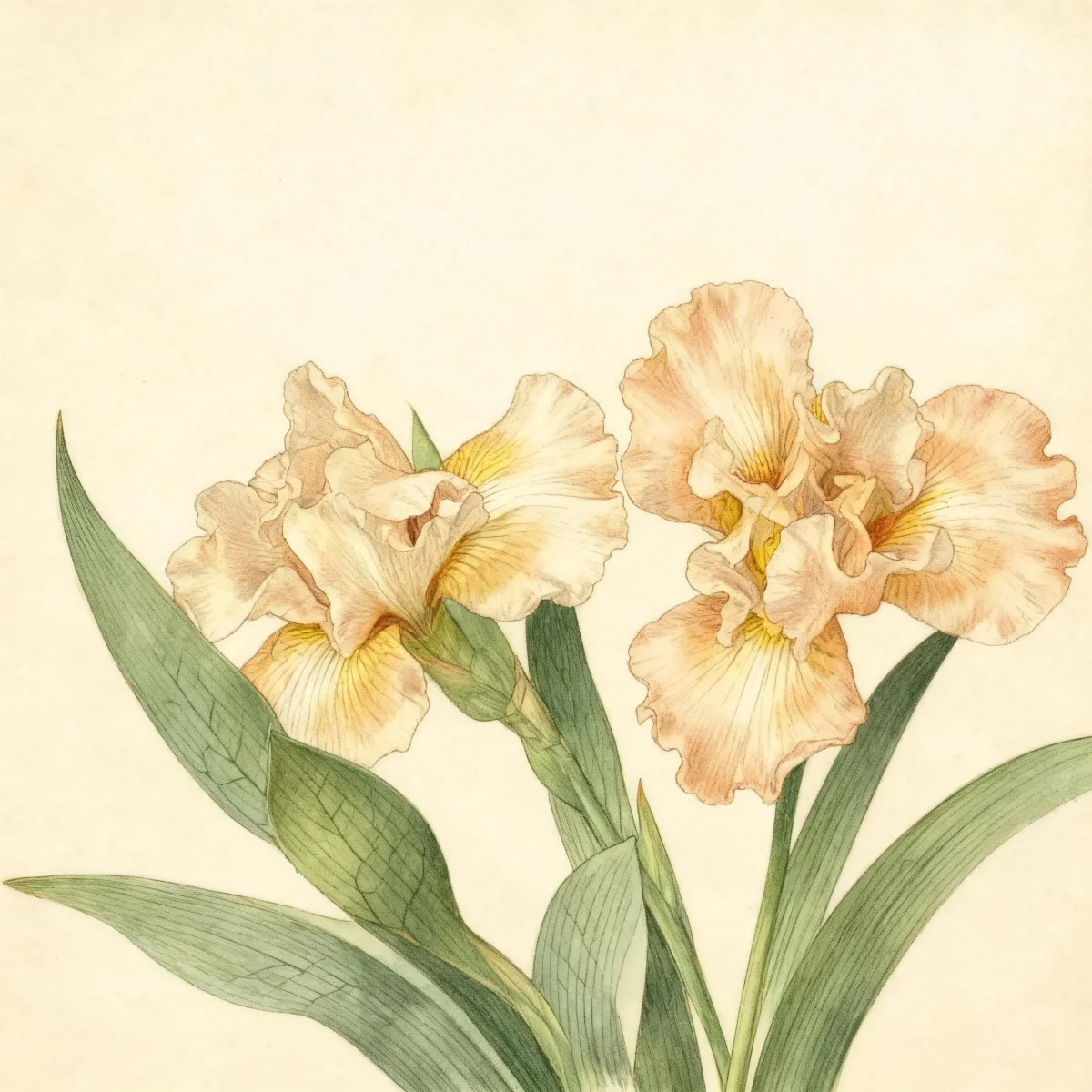
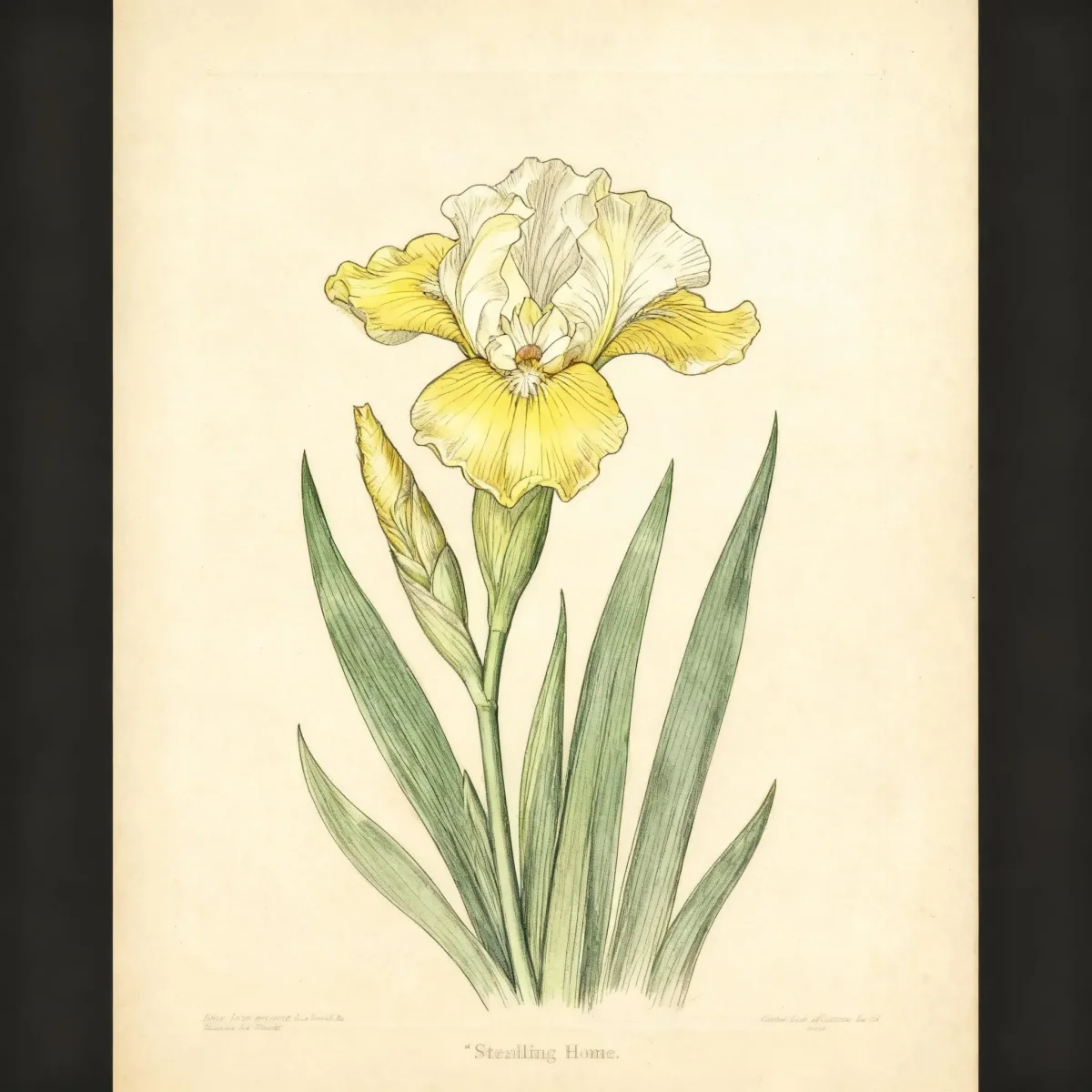
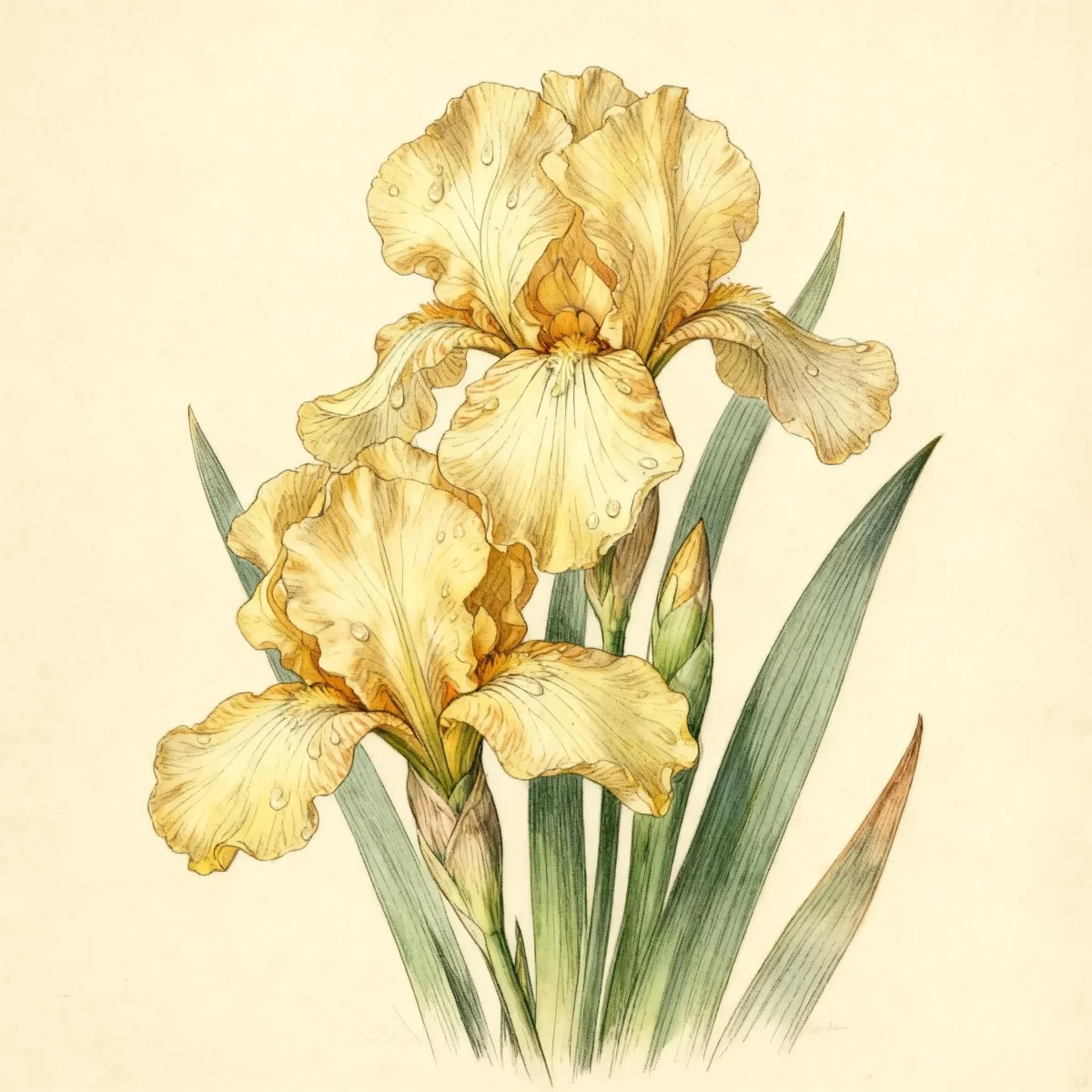
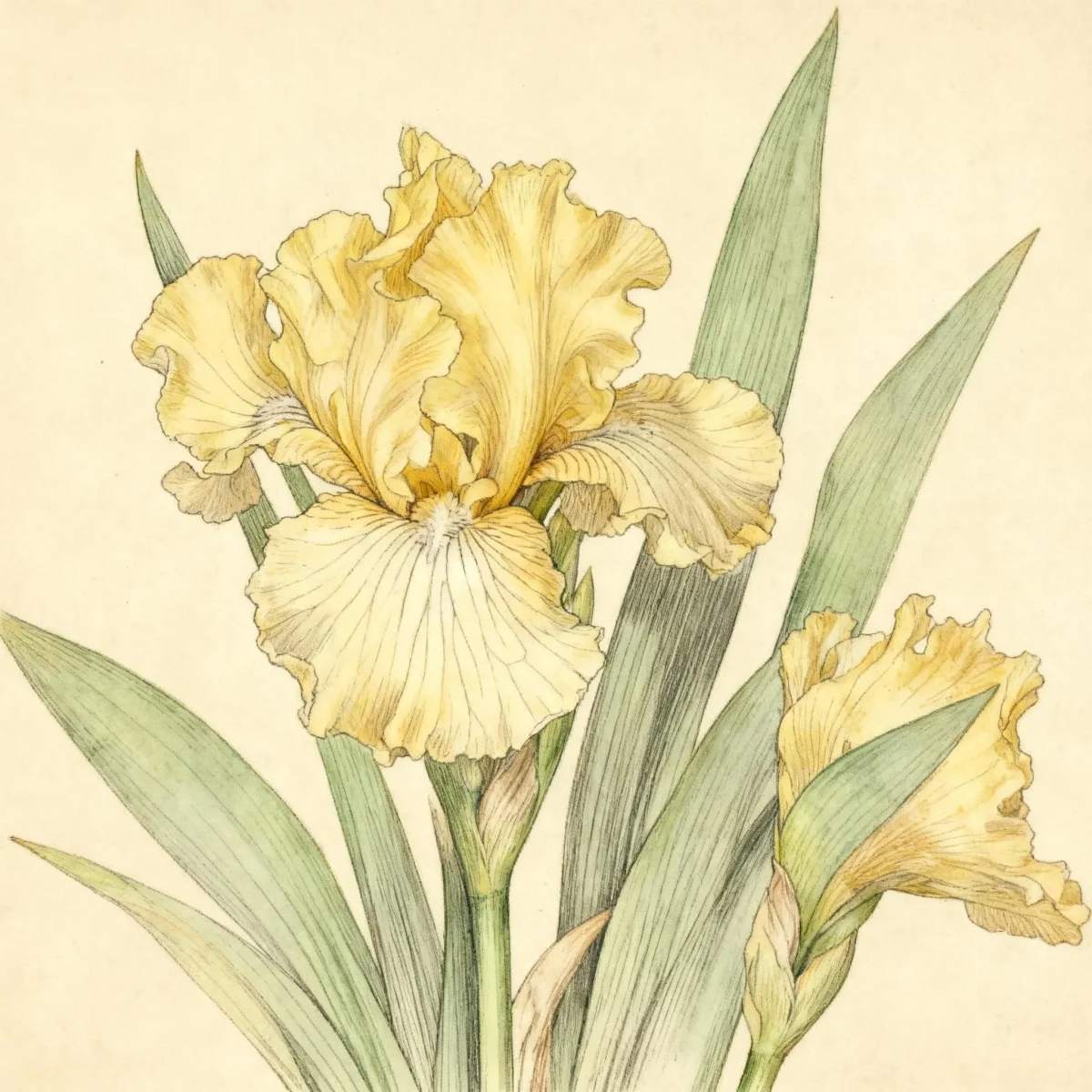
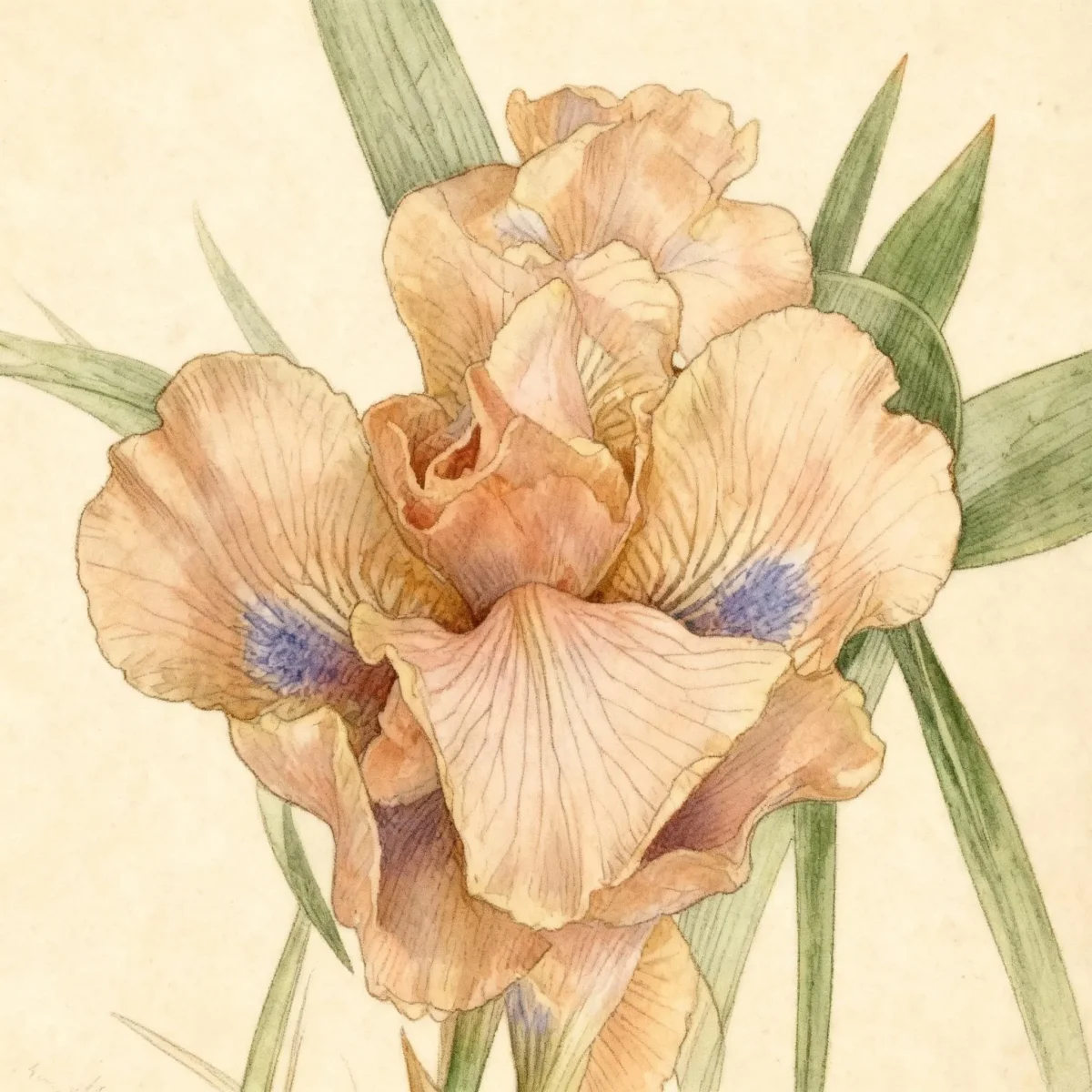
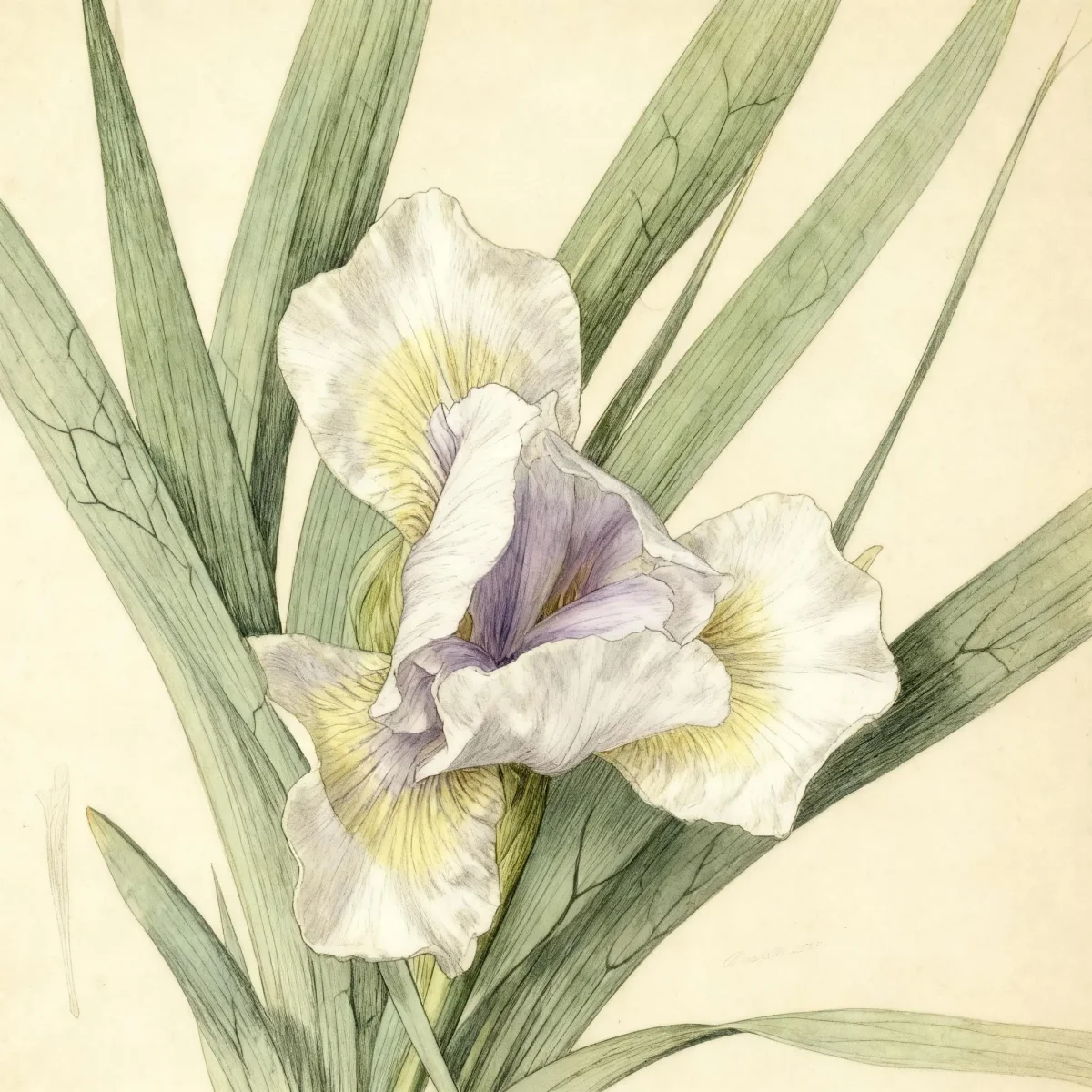
Standard dwarf bearded iris (Iris 'Kiwi Slices')
Iris 'Kiwi Slices' is a charming Standard dwarf bearded iris producing yellow blooms with a burgundy spot. Hardy in zones 3-8.
Scroll down to discover growing tips, care requirements, companion plants, and more
Complete Plant Information
Overview
The Standard dwarf bearded iris, epitomized by the cultivar Iris ‘Kiwi Slices’, brings vibrant seasonal color to the front of perennial borders. This rhizomatous variety is prized for its manageable size, reaching about 12 inches tall, and its striking flower presentation in May. Gardeners appreciate Iris ‘Kiwi Slices’ for injecting early summer brilliance combined with relative ease of care.
As a classic bearded iris, this plant thrives when situated where it receives consistent sunlight, though it tolerates slight afternoon shade in hotter regions. Successful cultivation relies on ensuring excellent drainage, a necessity for all rhizomatous irises to prevent rot issues. Iris ‘Kiwi Slices’ establishes satisfying clumps over time, offering reliable texture throughout the growing season when not in bloom.
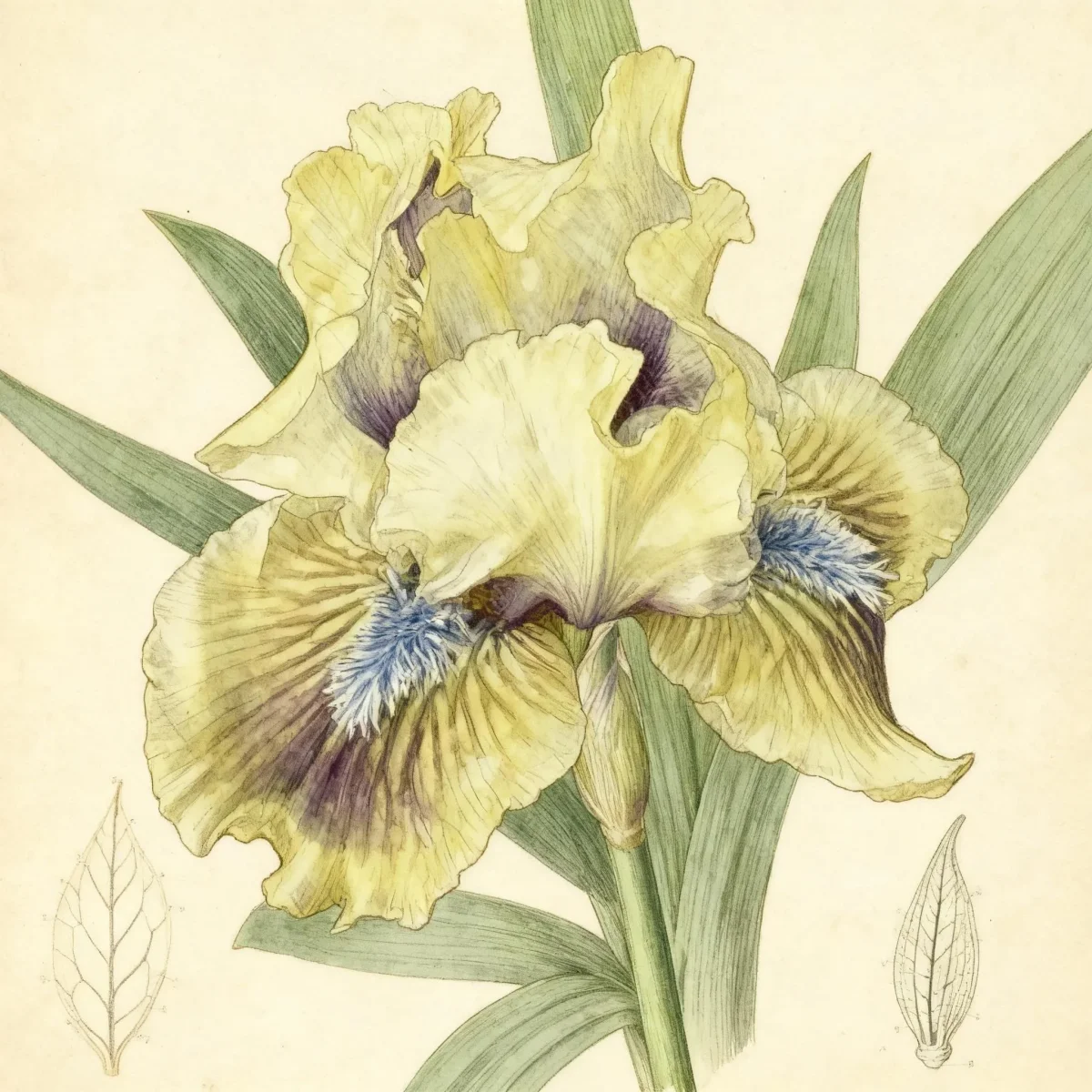
This standard dwarf bearded iris provides excellent visual contrast due to its chartreuse petals accented by a deep burgundy spot. Its performance makes it highly valuable for defining edges along pathways or in rock gardens, providing vertical structure without overwhelming surrounding plantings.
Fast Facts
- Plant Family: Iridaceae
- Plant Type: Herbaceous perennial
- Hardiness Zones: USDA Zones 3-8
- Size at Maturity:
- Height: 0.5-1 ft
- Spread: 0.5-1 ft
- Bloom Time: May
- Bloom Description: Yellow with burgundy spot
- Sun Exposure: Full sun
- Water Needs: Medium
- Maintenance Level: Medium
How to Grow
To successfully establish Iris ‘Kiwi Slices’, focus on light and drainage, especially when planting rhizomes late summer through early autumn (July through October, adjusting based on your climate). The best environment involves average, medium moisture, well-drained soils in full sun exposure. In areas where clay soil or heavy rainfall is a concern, always plant rhizomes on slopes or raised beds, ensuring the growing end faces uphill to maximize drainage and mitigate the risk of rhizome rot.
Planting depth is crucial for this standard dwarf bearded iris. Create a small mound of soil and position the rhizome so that one-third remains exposed above the soil line, spreading the roots horizontally beneath it for support. Space individual rhizomes 12 to 20 inches apart. While establishing, provide consistent moisture from spring until six weeks after the blooming period concludes in May. Once established, Iris ‘Kiwi Slices’ demonstrates some drought tolerance.
Routine maintenance involves keeping the area free of weeds, which compete for resources. If the clumps become overcrowded over the years, lift them gently with a garden fork in the late summer (August), divide the rhizomes, and replant the healthiest segments. Growth originates from the leafy, forward-facing end of the rhizome.
Landscape Uses
The compact nature of Iris ‘Kiwi Slices’ makes it an ideal component for defining garden structure. As a standard dwarf bearded iris, it excels when grouped or massed along the front edge of sunny perennial borders, adding necessary height variation near shorter groundcovers. Their upright foliage provides excellent linear contrast to rounded shrubs or mounding perennials.
These irises are particularly effective in rock gardens where sharp drainage is naturally achieved, or along walkways where their May blooms can be closely appreciated. Because they are rhizomatous, they multiply predictably, allowing for easy seasonal edging along paths or patio containers.
Design considerations should include pairing Iris ‘Kiwi Slices’ with slower-growing companions that do not aggressively crowd the rhizomes. Plants that appreciate similar sun and drainage conditions, such as certain sedums or low-growing ornamental grasses, make excellent partners that will coexist peacefully throughout the season.
Standout Features
Flower Qualities
- Showy
Noteworthy Characteristics
Standard Dwarf Bearded Iris varieties like Iris ‘Kiwi Slices’ are rhizomatous perennials known for their short stature, generally staying under 16 inches tall. The flowers, blooming around May, feature an upright standard and pendant falls, displaying a unique chartreuse color with a contrasting burgundy spot on the falls, complemented by a white-tipped blue beard. This specific 1989 cultivar, hybridized by O. D. Niswonger, showcases the broad genetic diversity available in the iris genus, named for the Greek goddess of the rainbow.
Tolerances
- Deer
- Drought
Potential Problems
Iris ‘Kiwi Slices’ is susceptible to several common iris ailments, most notably various forms of rot, including bacterial soft rot, crown rot, and root rot, often triggered by poor drainage. Fungal issues like leaf spot and iris rust can also appear, requiring attention to air circulation. Vigorous management of pests is also necessary; watch particularly for slugs, snails, aphids, and the destructive iris borer, which can cause significant damage if left unmanaged in infested regions.
Frequently Asked Questions
What hardiness zones is Standard dwarf bearded iris suitable for?
Iris ‘Kiwi Slices’ is very versatile, thriving across USDA Zones 3 through 8.
How large does Iris ‘Kiwi Slices’ grow?
This standard dwarf bearded iris typically reaches a height between 0.5 and 1 foot, with a spread matching that range.
What sun exposure does Iris ‘Kiwi Slices’ need?
For optimal flowering and health, Iris ‘Kiwi Slices’ requires full sun, though it can tolerate a little light afternoon shade in very warm summers.
When does Standard dwarf bearded iris bloom?
This variety blooms reliably in May, presenting its distinctive Yellow with burgundy spot flowers.
Conclusion
The Iris ‘Kiwi Slices’ offers exceptional value to gardeners seeking manageable, colorful perennials for the spring garden. Its bold yet refined flower display, combined with moderate maintenance needs and drought tolerance once established, makes it a reliable choice. Plan to acquire and plant your Standard dwarf bearded iris rhizomes in late summer or early fall, ensuring excellent soil drainage to guarantee a successful display next May.
Companion Planting
When planning beds around this standard dwarf bearded iris, select companions that appreciate well-drained soil and full sun exposure. Plants that finish blooming before the iris foliage matures, or those that offer contrasting foliage texture, work best. Consider low-growing companion plants such as creeping thyme or various low-growing ornamental grasses to cover the base during the iris off-season. Avoid thirsty companions that might lead to overly wet soil conditions around the rhizomes.
Seasonal Care Calendar
Spring preparation involves ensuring the area is clear of debris so that light can reach the emerging fans of the Iris ‘Kiwi Slices’. Immediately after the bloom period ends in May, consider cutting back the spent flower stalks but leave the tall, linear green foliage intact, as this is essential for gathering energy for next year’s bloom. In late summer (August), this is the ideal time to divide and replant overcrowded clumps to maintain vigor. Winter preparation is minimal if drainage is excellent; otherwise, ensure heavy mulches are kept away from the rhizomes themselves.