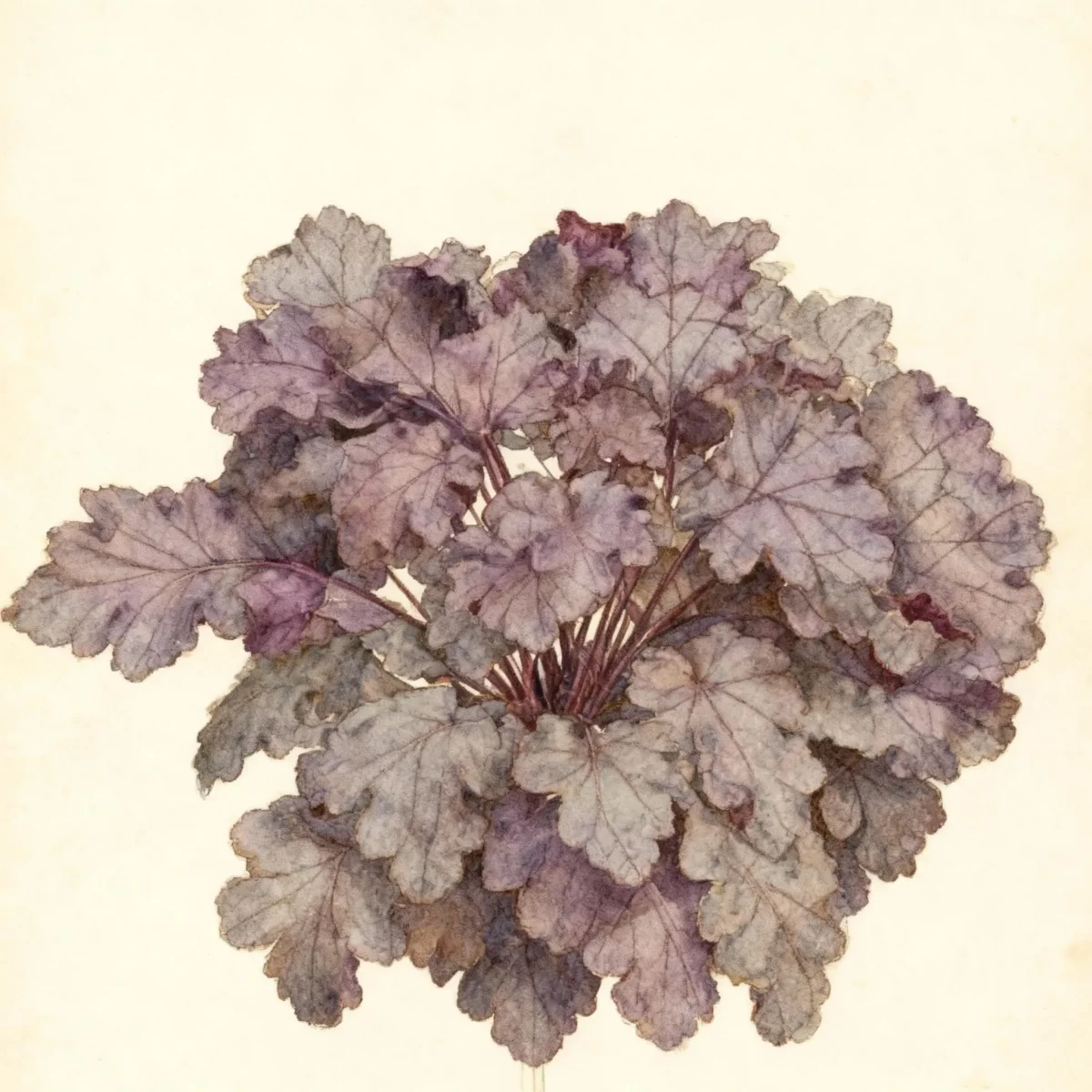
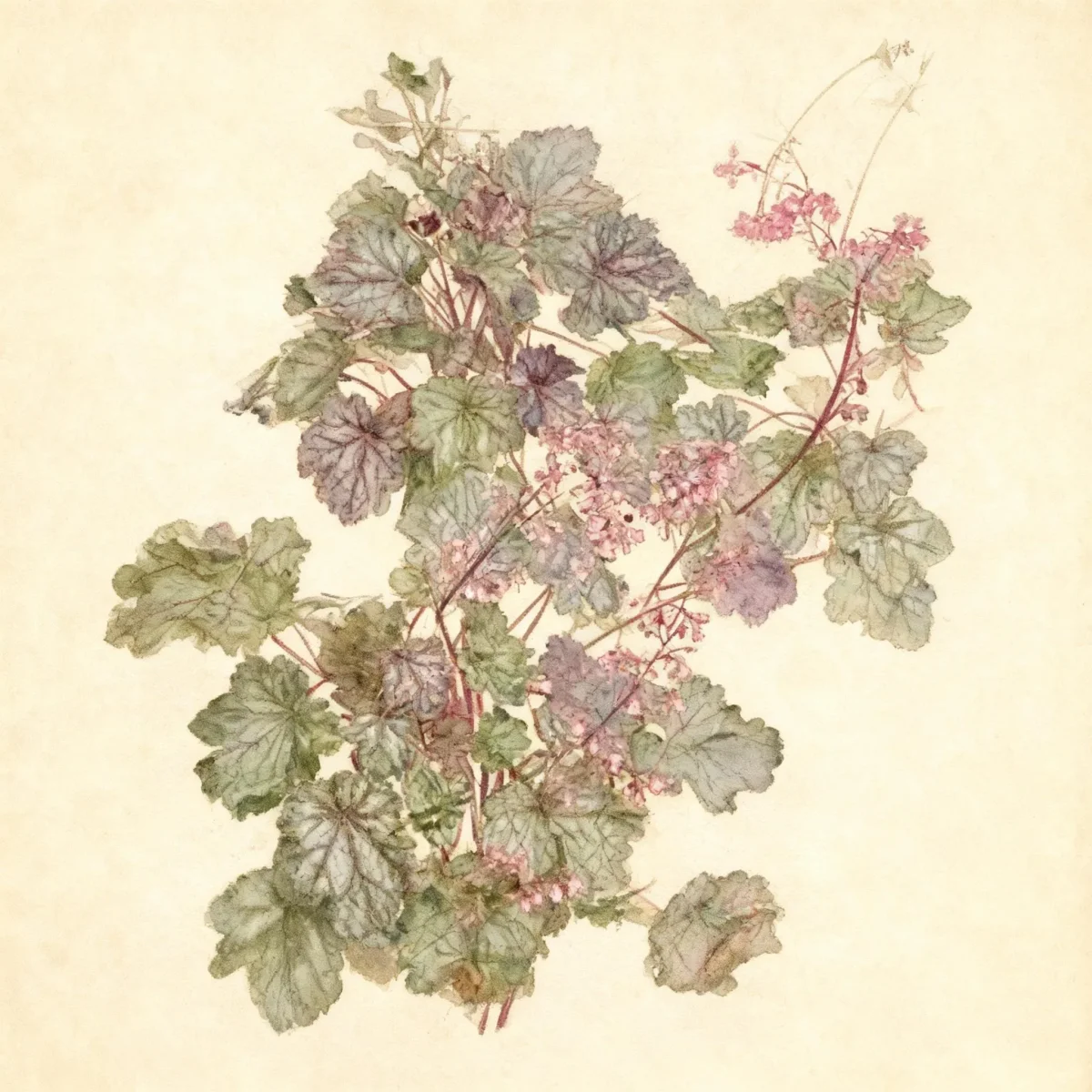
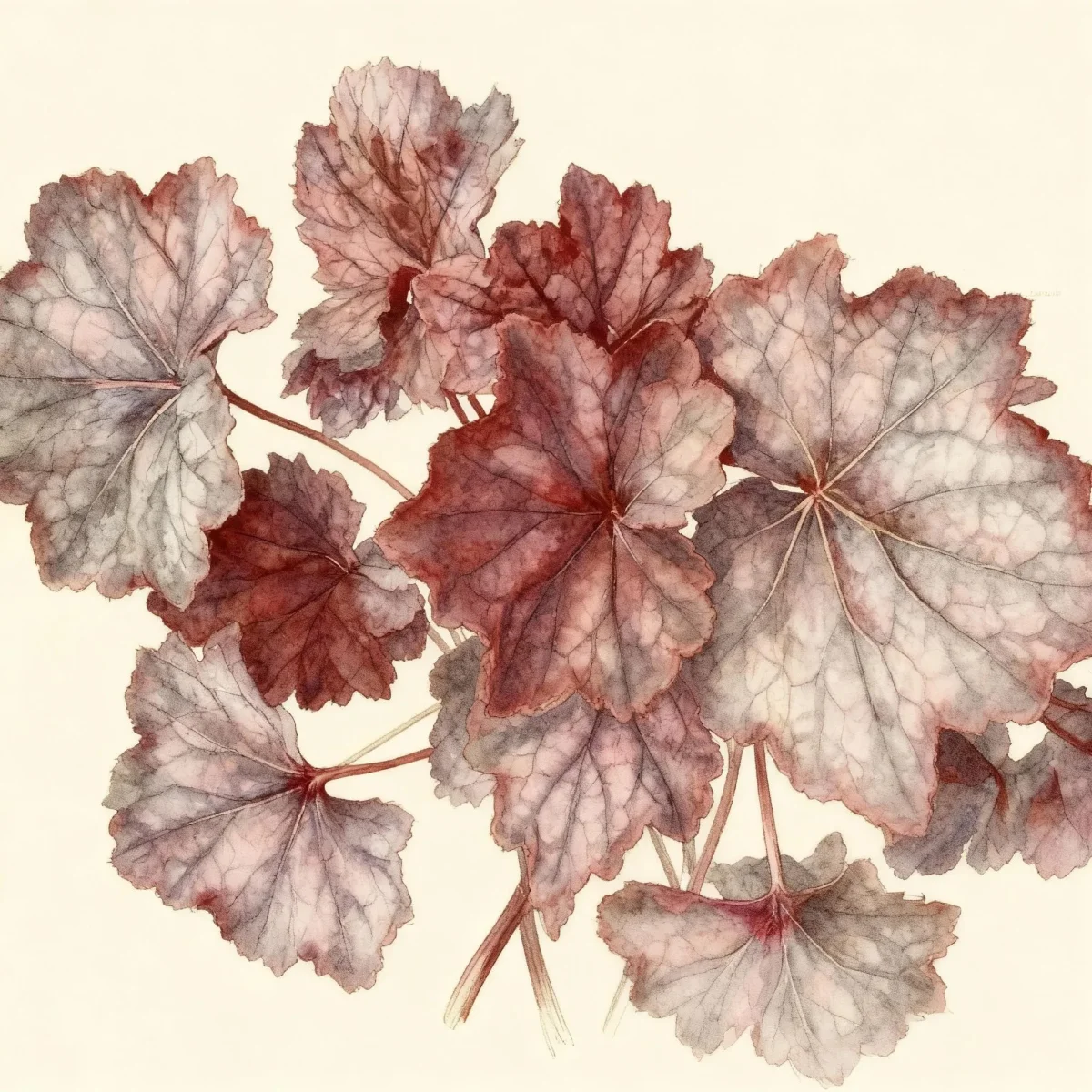
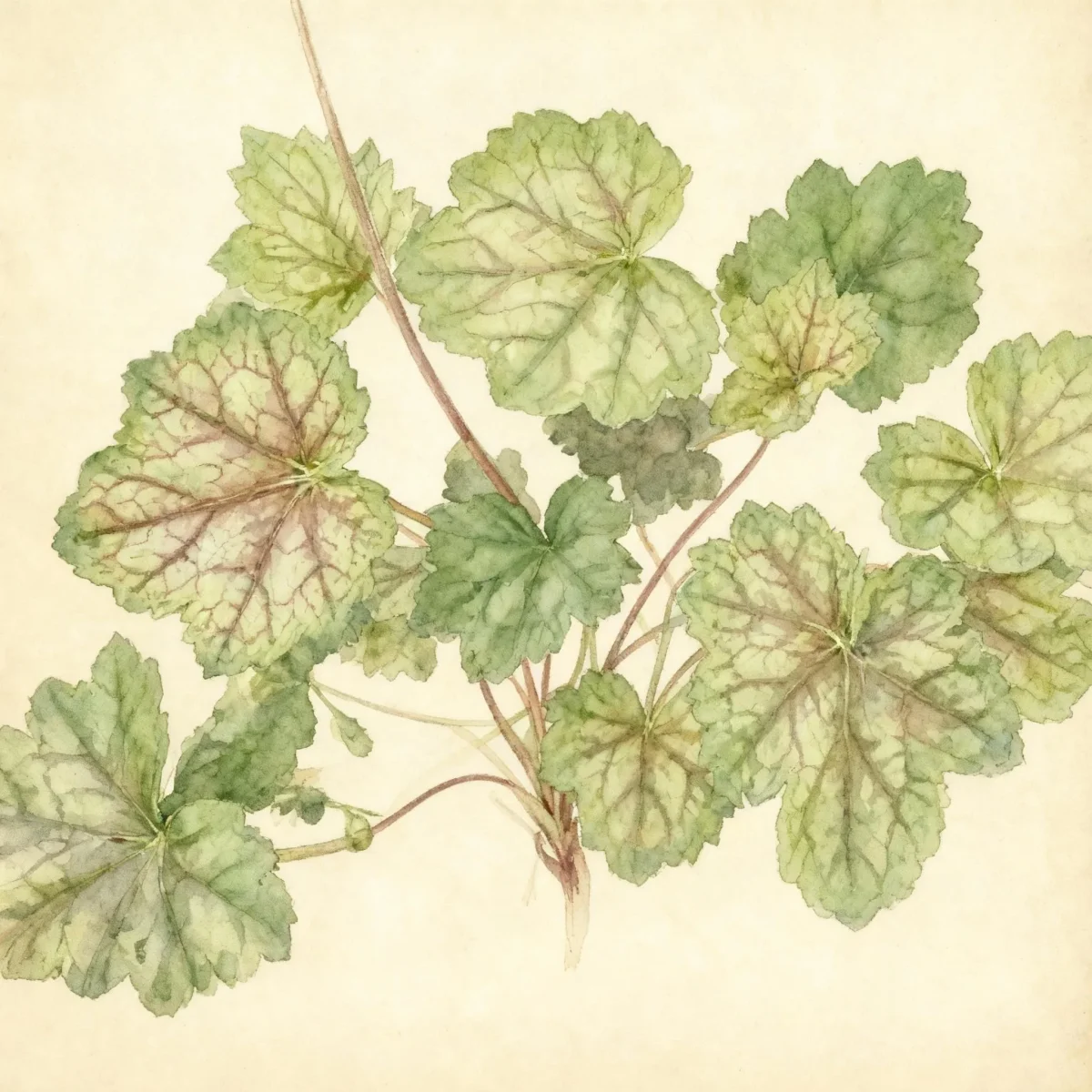
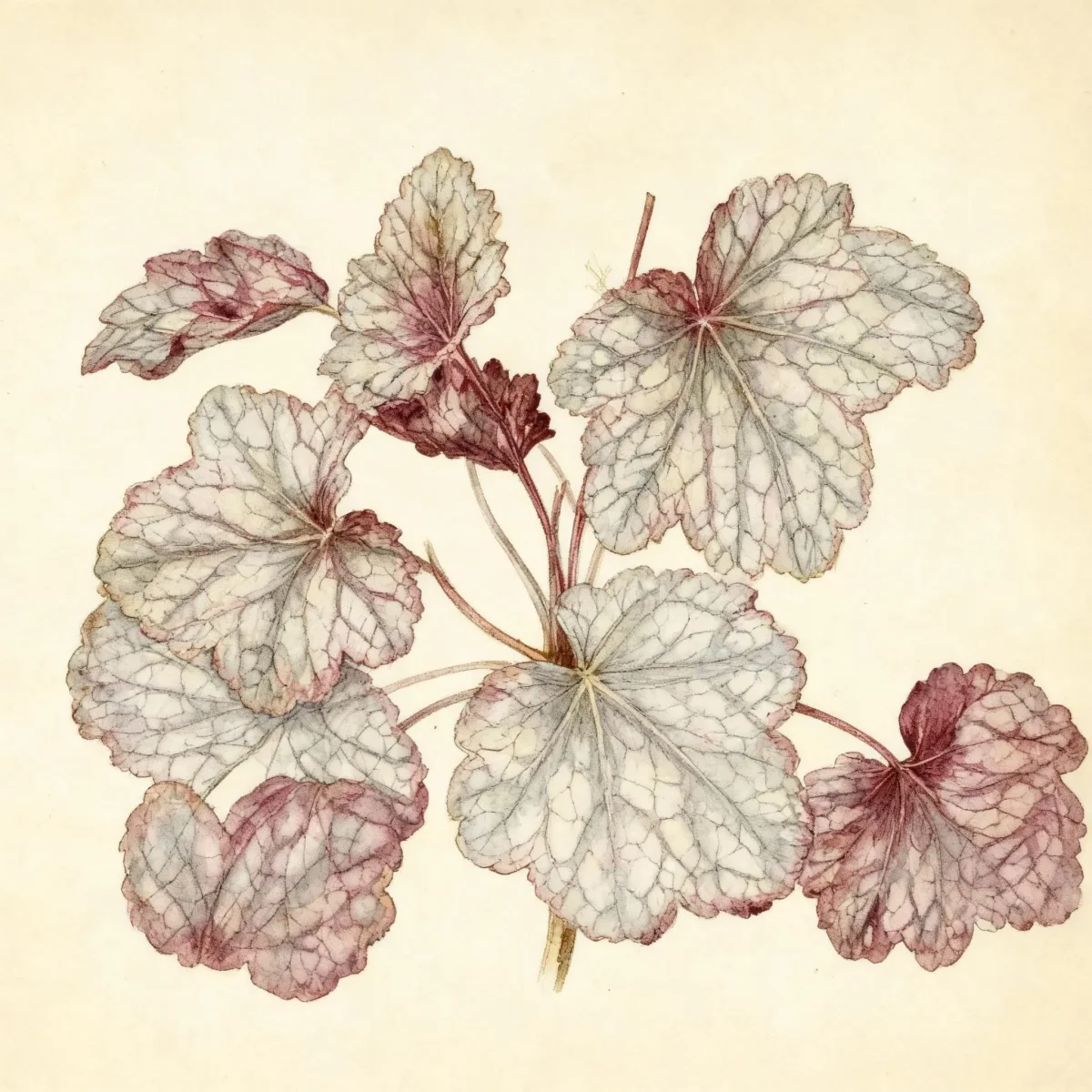
Coral bells (Heuchera 'Cultus Bay Beauty')
Heuchera 'Cultus Bay Beauty', or Coral bells, offers striking purple-veined foliage with silvery overlays and delicate pink blooms mid-summer.
Scroll down to discover growing tips, care requirements, companion plants, and more
Complete Plant Information
Overview
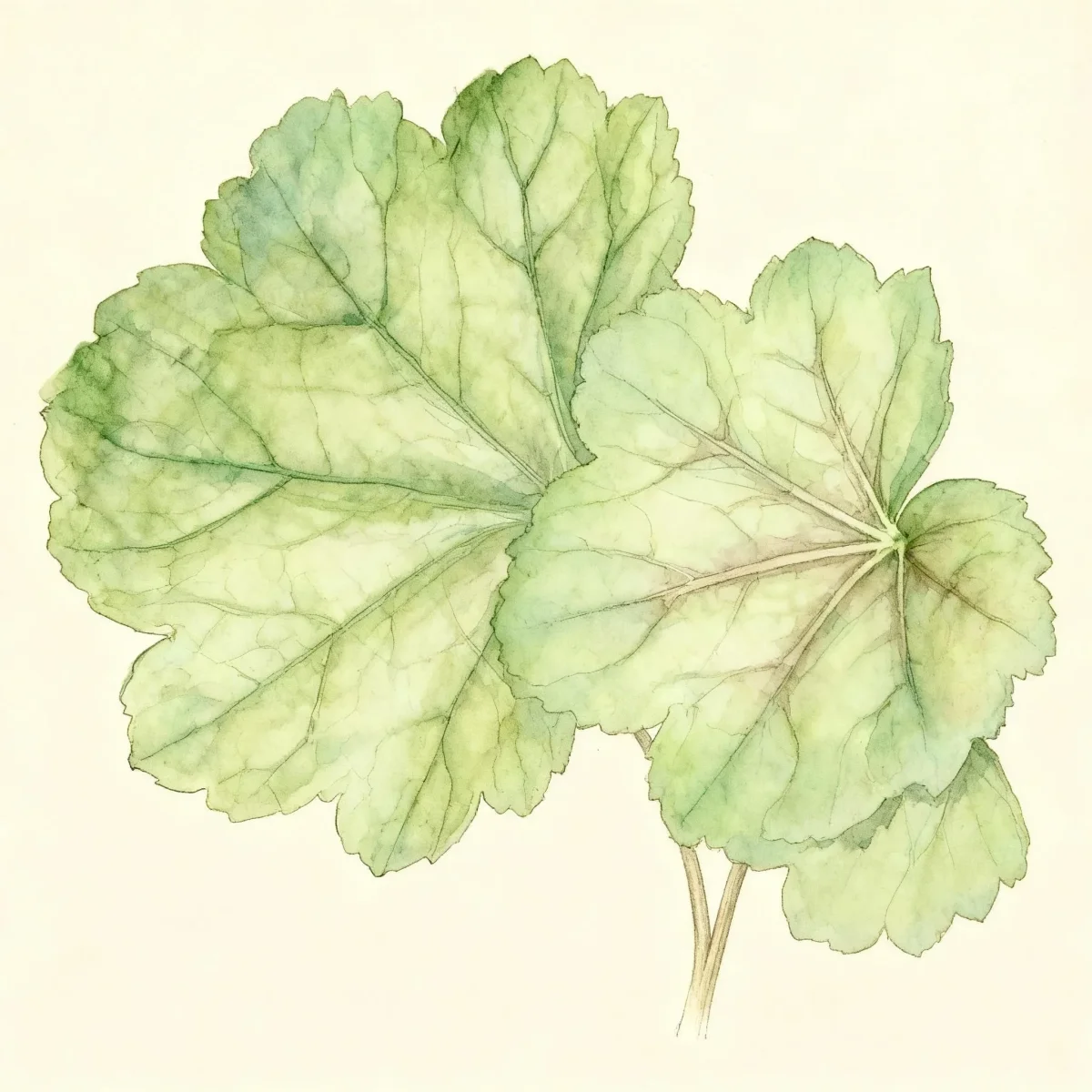
Heuchera ‘Cultus Bay Beauty’ introduces exceptional texture and color to the shade garden, making it a highly sought-after variety of Coral bells. This clump-forming perennial is valued primarily for its foliage, which features a distinct silvery overlay contrasting with purple veins and green margins. Adding aesthetic appeal are its sprays of tiny, airy pink, bell-shaped flowers that appear in early summer.
As a robust herbaceous perennial, Heuchera ‘Cultus Bay Beauty’ manages a modest size, forming a tidy basal mound ideal for edging or grouping. While many cultivars thrive in consistent partial shade, the optimal light conditions often depend on the local climate; southern gardeners should ensure afternoon protection to prevent scorching. Successful cultivation relies on recognizing the specific needs dictated by its parentage, though consistent moisture management is key across all zones.
Gardeners utilize this plant for its year-round structural interest, especially where evergreen or semi-evergreen foliage is desired through milder winters. Whether used in rock gardens or woodland settings, Heuchera ‘Cultus Bay Beauty’ provides reliable performance and subtle floral grace alongside its memorable leaf display.
Fast Facts
- Plant Family: Saxifragaceae
- Plant Type: Herbaceous perennial
- Hardiness Zones: USDA Zones 4-8
- Size at Maturity:
- Height: 1-2 ft
- Spread: 0.75-1 ft
- Bloom Time: June to July
- Bloom Description: Pink
- Sun Exposure: Full sun to part shade
- Water Needs: Medium
- Maintenance Level: Medium
How to Grow
Planting Heuchera ‘Cultus Bay Beauty’ is best achieved when the soil is workable, typically in spring or early fall. These Coral bells require organically rich, humusy soil that maintains medium moisture but must be very well-drained. Proper site selection is crucial; while they tolerate full sun, especially in cooler northern climates, most locations benefit from protection from intense afternoon heat, which can cause foliage decline if moisture levels drop.
Watering routines should prioritize consistency. If placed in full sun, maintaining even moisture is paramount to prevent leaf scorch. In shadier spots, typical medium water needs can be met without constant saturation. Fertilizing is rarely necessary if the soil is already rich in organic matter; heavy feeding can sometimes diminish foliage color contrast.
Maintenance for Heuchera ‘Cultus Bay Beauty’ is generally straightforward. Deadheading faded flower stems will encourage any subsequent blooming. In warmer regions, the foliage often remains evergreen; however, in colder areas, severe winter temperatures can reduce leaf retention. To combat root heaving caused by freeze-thaw cycles in winter, apply a layer of compost mulch only after the ground has frozen solid. Clumps benefit from division, best performed in spring every three to four years, to maintain vigor.
Landscape Uses
Coral bells excel when massed together or planted in thoughtful groupings to create impact with their contrasting foliage. Heuchera ‘Cultus Bay Beauty’ is incredibly versatile, lending fine texture and color to defined borders where it effectively acts as a low edging plant alongside walkways or paths. Its compact, rounded mound habit makes it perfect for softening the edges of hardscaping elements.
For woodland gardens or naturalized areas, these perennials integrate seamlessly under the high canopy of deciduous trees. In contemporary designs, mass groupings of Heuchera ‘Cultus Bay Beauty’ can function as bold texture blocks, contrasting nicely with fine-textured ferns or broader-leafed hostas that prefer similar moisture and light conditions. They also perform admirably in containers, providing structure throughout the growing season.
Standout Features
Flower Qualities
- Showy
Noteworthy Characteristics
Heuchera, commonly called coral bells or alumroot, is a genus consisting of about 55 species of evergreen to semi-evergreen herbaceous perennials which are all native to North America. Hybrid forms like Heuchera ‘Cultus Bay Beauty’ boast expanded leaf color palettes, though this cultivar is specifically noted for its purple-veined foliage with a silvery overlay and green margins. This clump-forming perennial produces tiny, pink, bell-shaped flowers borne in airy panicles that rise above the tight basal mound of leaves.
Potential Problems
Frost heaving of roots may occur when winter temperatures fluctuate widely, necessitating winter mulching after the soil freezes. Potential disease problems include powdery mildew, rust, and bacterial leaf spot, which are often exacerbated by poor air circulation or overhead watering. Potential insect problems include weevils and foliar nematodes, requiring vigilance to maintain healthy foliage on your Coral bells.
Frequently Asked Questions
What hardiness zones is Coral bells suitable for?
Heuchera ‘Cultus Bay Beauty’ is suitable for USDA Zones 4 through 8.
How large does Coral bells grow?
This variety of Coral bells typically reaches a height between 1 and 2 feet and spreads approximately 0.75 to 1 foot wide.
What sun exposure does Heuchera ‘Cultus Bay Beauty’ need?
It performs best in sites receiving full sun to part shade; however, provide afternoon shade in hotter climates to protect the foliage.
When does Heuchera ‘Cultus Bay Beauty’ bloom?
This plant features pink blooms primarily from June to July.
Conclusion
Heuchera ‘Cultus Bay Beauty’ offers gardeners significant aesthetic value through its unique, silvery, purple-veined foliage, complemented by delicate pink summer flowers. This reliable Coral bells variety brings structure to shady borders and woodland settings alike. Assess your local climate and ensure well-drained soil before planting this stunning perennial this season.
Propagation Tips
For established clumps of Heuchera ‘Cultus Bay Beauty’, division is the preferred method of propagation for maintaining hybrid traits true to the parent. This process should ideally be undertaken in the spring before active growth significantly increases. Gently lift the entire clump using a garden spade, taking care not to damage the roots excessively.
After lifting, gently tease the crowns apart, ensuring each new section has a healthy set of roots and an emerging shoot or developing eye. Replant divisions immediately into prepared soil, making sure the crown sits level with the soil surface, as planting too deep can lead to rot. Ensure consistent moisture following division to help the new specimens establish quickly.
While true species plants can sometimes be grown from seed, propagating hybrids like Heuchera ‘Cultus Bay Beauty’ through seed is not recommended as it rarely results in offspring identical to the parent cultivar due to unknown complex hybrid genetics. Root division ensures you replicate the exact foliage beauty that makes this specific Coral bells variety valuable.
Companion Planting
Because Heuchera ‘Cultus Bay Beauty’ thrives in medium moisture and partial shade, it pairs beautifully with other woodland-edge perennials that share similar cultural requirements. Consider combining it with Hosta varieties that offer contrasting leaf shapes, such as those with lance-shaped or narrow foliage, allowing the rounded leaves of the Coral bells to stand out.
Ferns make excellent companions, as their delicate, feathery fronds offer a textural counterpoint to the denser mound of Heuchera ‘Cultus Bay Beauty’. Additionally, plants that enjoy rich, moist soil, such as Astilbe or Tiarella (Foamflower), complement its mid-season flowering period, creating a layered tapestry of foliage color and texture beneath high shade.