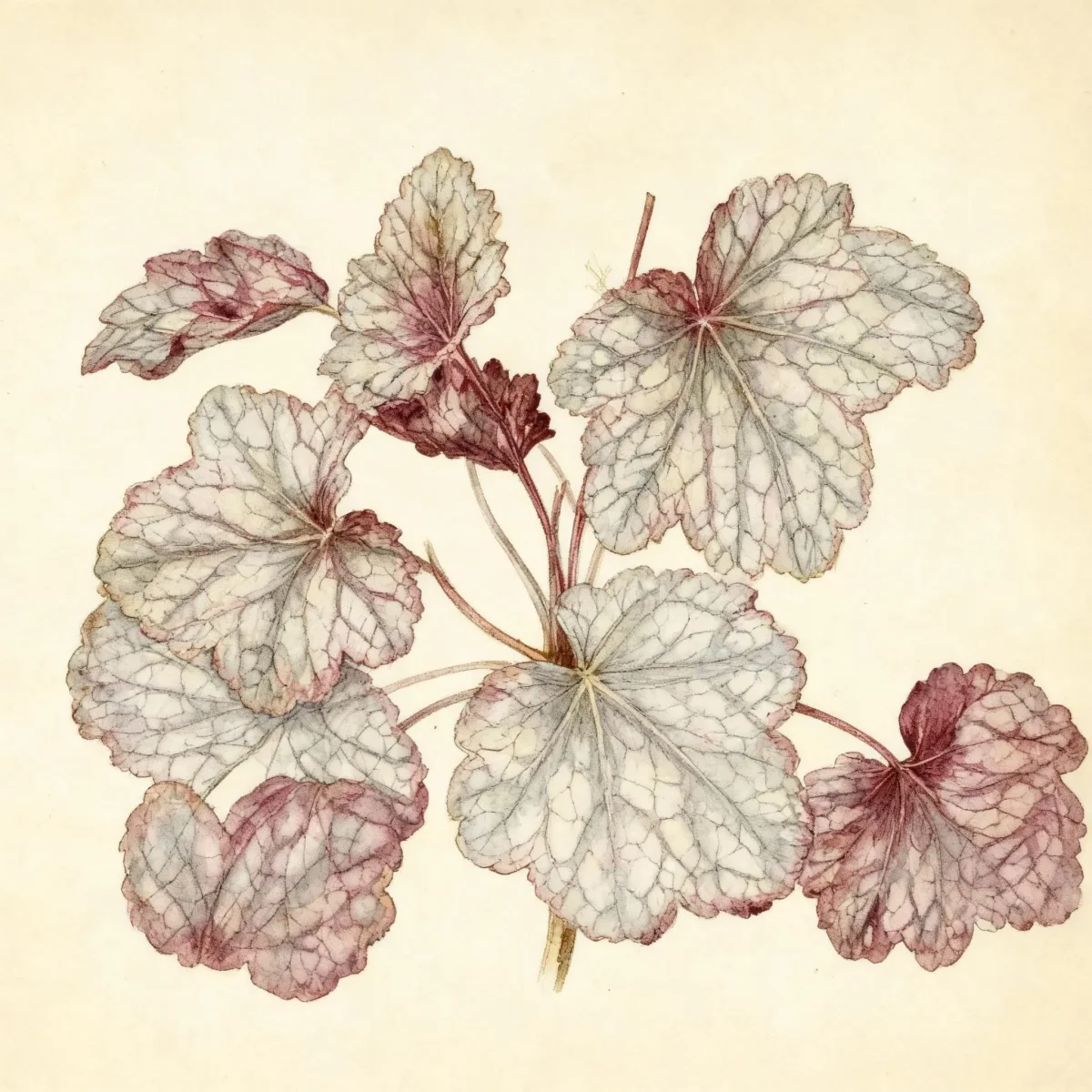
Coral bells (Heuchera 'Montrose Ruby')
Heuchera 'Montrose Ruby' offers deep ruby-marbled foliage and airy white blooms, perfect for shaded borders. This Coral bells variety thrives in Zones 4-9.
Scroll down to discover growing tips, care requirements, companion plants, and more
Complete Plant Information
Overview
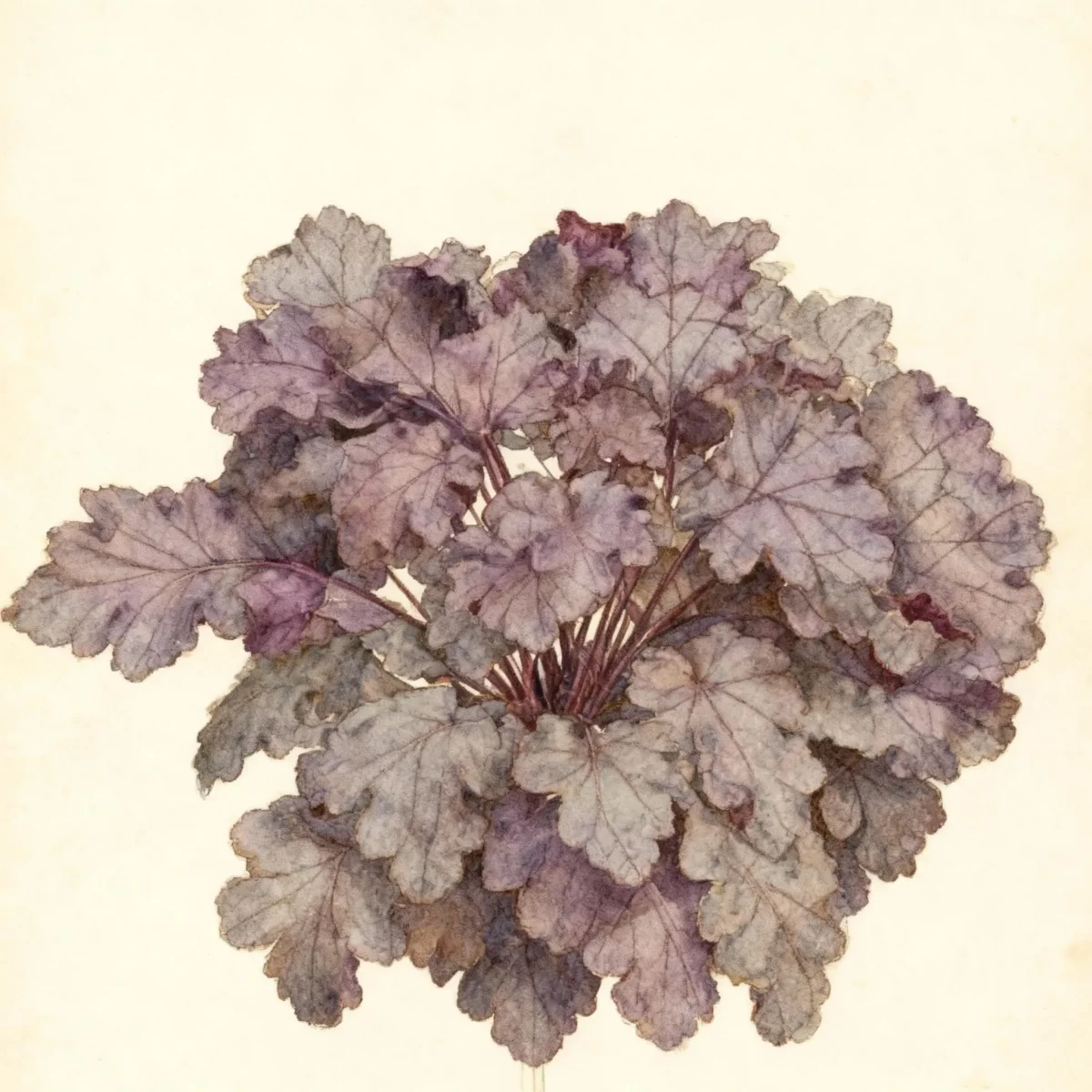
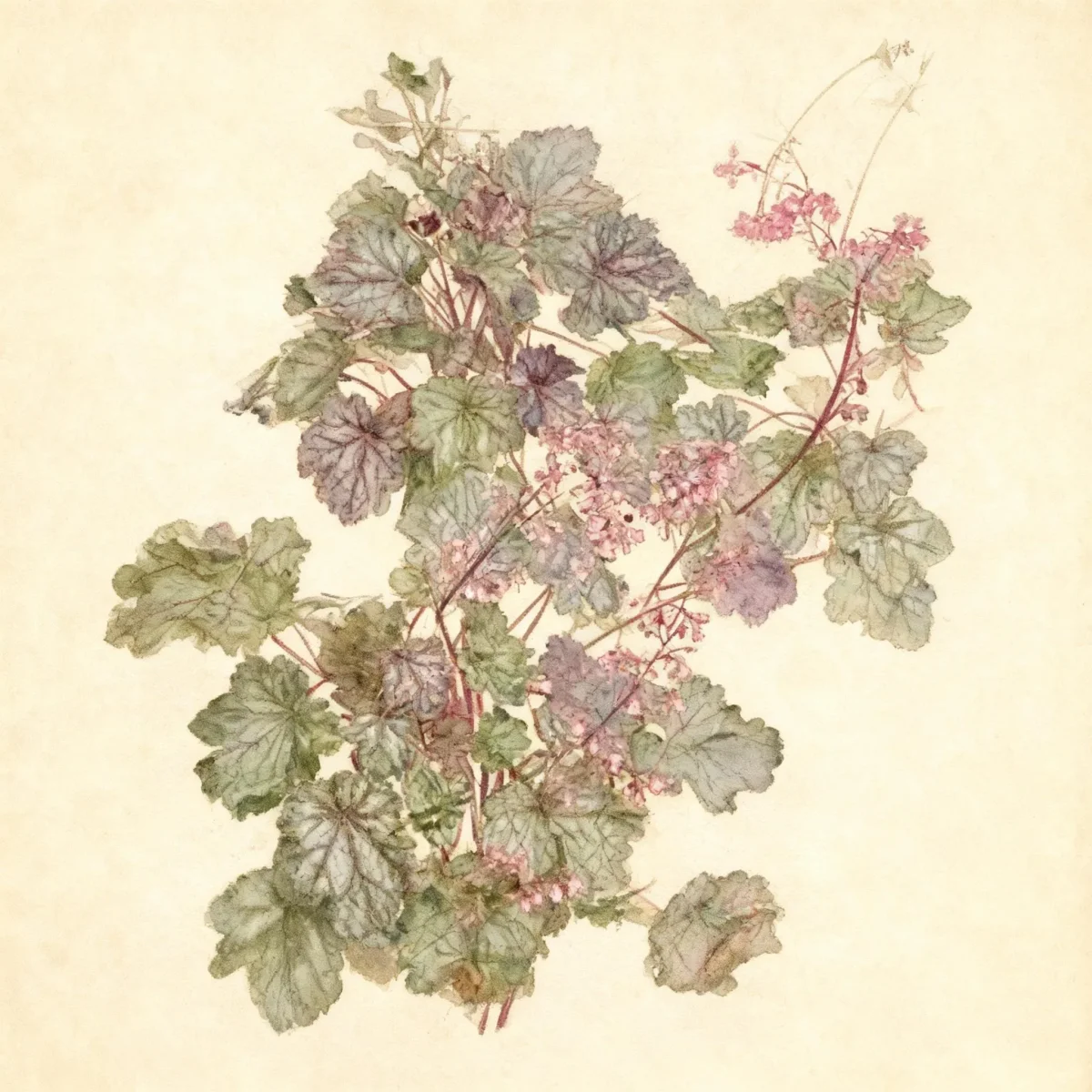
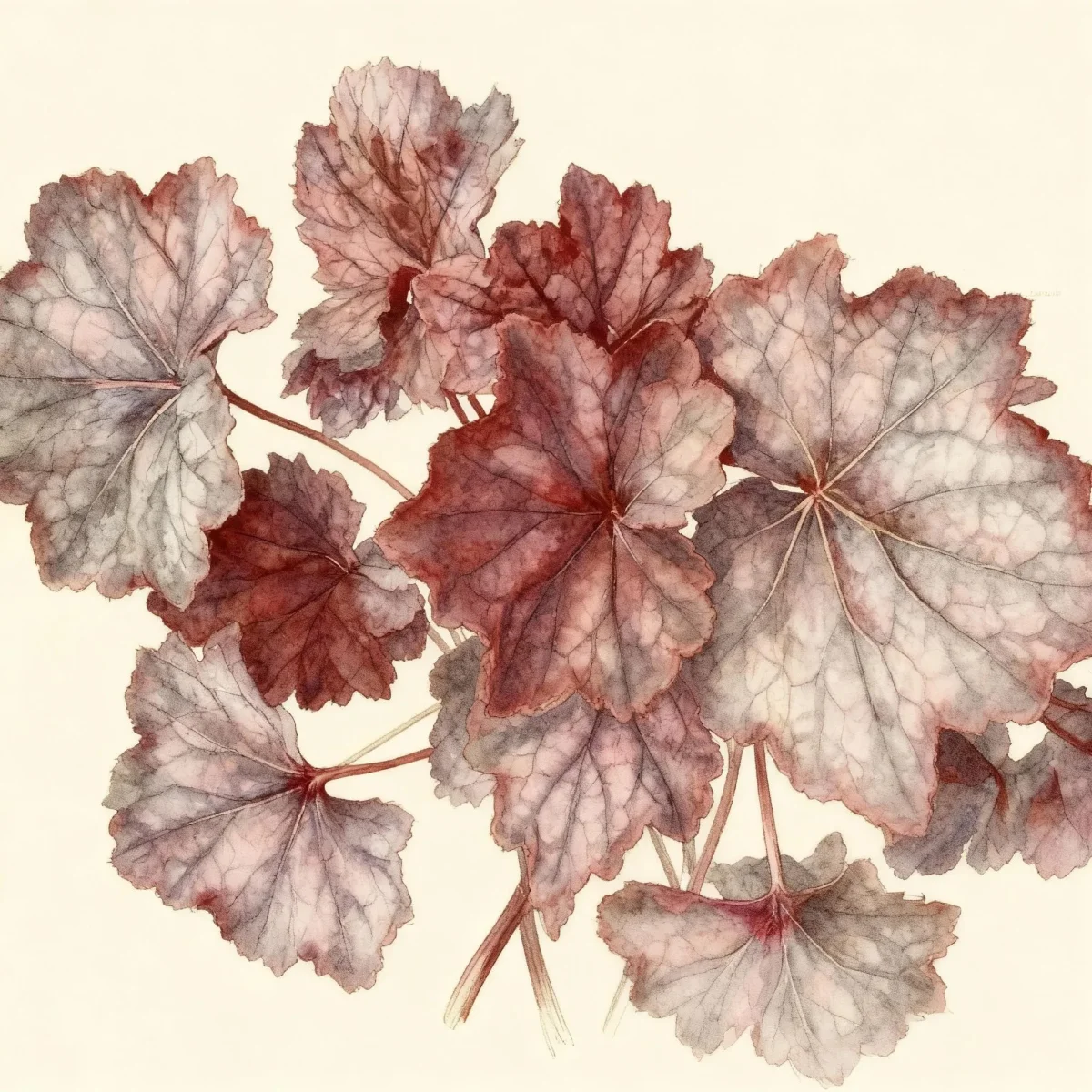
Heuchera ‘Montrose Ruby’, widely known as Coral bells, is a distinguished clump-forming perennial prized for its highly decorative, evergreen foliage. This cultivar features a basal mound of attractive, long-petioled leaves displaying a deep ruby to maroon hue richly accented with silver marbling, offering year-round interest in many climates. Beyond its foliage display, Heuchera ‘Montrose Ruby’ sends up slender, dark-red stems bearing tiny, airy white, bell-shaped flowers from late spring into early summer.
This versatile herbaceous perennial brings color and texture to shaded garden areas where many flowering plants might struggle. Its manageable size ensures it fits beautifully into mixed borders or rock gardens, providing consistent structure. Gardeners rely on Coral bells cultivars, like Heuchera ‘Montrose Ruby’, for low-maintenance elegance and year-round foliage appeal across hardiness zones 4 through 9.
Fast Facts
- Plant Family: Saxifragaceae
- Plant Type: Herbaceous perennial
- Hardiness Zones: USDA Zones 4-9
- Size at Maturity:
- Height: 1-1.5 ft
- Spread: 1-1.5 ft
- Bloom Time: May to June
- Bloom Description: White
- Sun Exposure: Full sun to part shade
- Water Needs: Medium
- Maintenance Level: Medium
How to Grow
The ideal placement for Heuchera ‘Montrose Ruby’ involves planting in organically rich, humusy soil that maintains medium moisture levels and is reliably well-drained. While parentage dictates precise sun preferences, most Coral bells perform best when shielded from the harsh afternoon sun, especially in warmer southern regions. If planted in full sun, ensuring consistent moisture is paramount, as drying conditions will quickly lead to foliage scorch and decline, which detracts from the appeal of Heuchera ‘Montrose Ruby’.
Water requirements are medium; aim for even soil moisture without allowing soggy conditions, which can lead to root issues. Pruning involves simply removing the spent flower stems after blooming concludes to encourage a tidier appearance, though this is optional. In colder climates, apply a winter compost mulch only after the ground has frozen solid to help prevent root heaving caused by freeze-thaw cycles.
After about three to four years, the plant clumps may become overcrowded. Plan to divide your Coral bells clumps in the spring to rejuvenate the plants and propagate new ones for other areas of the landscape.
Landscape Uses
Coral bells excel when incorporated into mass plantings to allow their colorful foliage to create continuous blocks of color. Their refined structure makes them perfect for edging along paths and walkways, offering a beautiful, low-maintenance border that defines space. Heuchera ‘Montrose Ruby’ is also highly effective when integrated into rock gardens where texture contrast is desired, or within open woodland garden settings where dappled light mimics their native habitat.
These plants serve as excellent blending elements in mixed perennial borders, pairing beautifully with ferns, hostas, and spring-blooming bulbs. Consider using them under taller shrubs or small trees where they can provide a splash of deep ruby color throughout the growing season.
Standout Features
Flower Qualities
- Showy
- Good Cut
Noteworthy Characteristics
Heuchera, commonly called coral bells or alumroot, is native to North America and consists of many evergreen perennial species. Hybrid forms, like Heuchera ‘Montrose Ruby’, are celebrated for their vast spectrum of leaf colors, often featuring striking variegation or mottling that complements the tiny flower spikes. ‘Montrose Ruby’ specifically features deep ruby-maroon, ivy-like leaves marbled with silver, setting it apart from similar cultivars like ‘Palace Purple’.
Tolerances
No specific tolerances were explicitly listed in the provided data outside of general cultural needs.
Potential Problems
The primary cultural concern for Coral bells is frost heaving; root systems can be pushed upward and damaged when winter temperatures fluctuate widely. To mitigate this, apply a heavy layer of compost mulch only after the soil has fully frozen. Monitor plants for common fungal diseases such as powdery mildew or rust, ensuring good air circulation to reduce spore development. Should insect issues arise, be vigilant for weevils or foliar nematodes, although significant infestations are rare in well-maintained gardens growing Heuchera ‘Montrose Ruby’.
Frequently Asked Questions
What hardiness zones is Coral bells suitable for?
This specific Coral bells, Heuchera ‘Montrose Ruby’, is suitable for USDA Zones 4 through 9.
How large does Heuchera ‘Montrose Ruby’ grow?
This perennial generally reaches a height between 1 and 1.5 feet, with a similar spread of 1 to 1.5 feet, forming a tidy basal mound.
What sun exposure does Heuchera ‘Montrose Ruby’ need?
It performs best in full sun to part shade conditions, though some afternoon shade is recommended, particularly in hotter climates.
When does Coral bells bloom?
Heuchera ‘Montrose Ruby’ typically produces its white, bell-shaped flowers in the late spring to early summer, specifically from May to June.
Conclusion
Heuchera ‘Montrose Ruby’ is invaluable for gardeners seeking reliable foliage color combined with delicate, airy springtime blooms. The dramatic ruby and silver marbling ensures that this Coral bells variety remains a focal point throughout the year. Before planting, verify that your site offers the rich, well-drained soil and appropriate light conditions that this hardy perennial requires to truly thrive.
Design Ideas
When designing shaded borders, utilize the strong color contrast provided by Heuchera ‘Montrose Ruby’ against plants that offer bright yellow or lime-green foliage, such as certain Hosta cultivars or Japanese Forest Grass (Hakonechloa macra). The dark, cool tones of the leaves help ground brighter companions.
For a sophisticated woodland edge effect, plant Coral bells en masse underneath deciduous trees. The fine texture of the flower spikes rising 15-24 inches above the 12-inch foliage mound catches the limited light beautifully. This grouping strategy effectively showcases the unique silver marbling unique to the ‘Montrose Ruby’ variety.
Propagation Tips
While species plants can be easily grown from seed, the preferred and easiest method for propagating Heuchera ‘Montrose Ruby’ and maintaining its exact characteristics is through division. Divide clumps during the spring season every three to four years when the center of the plant begins to thin out or reduce vigor. Ensure each division has a healthy segment of root structure attached for the best chance of successful re-establishment in its new location.