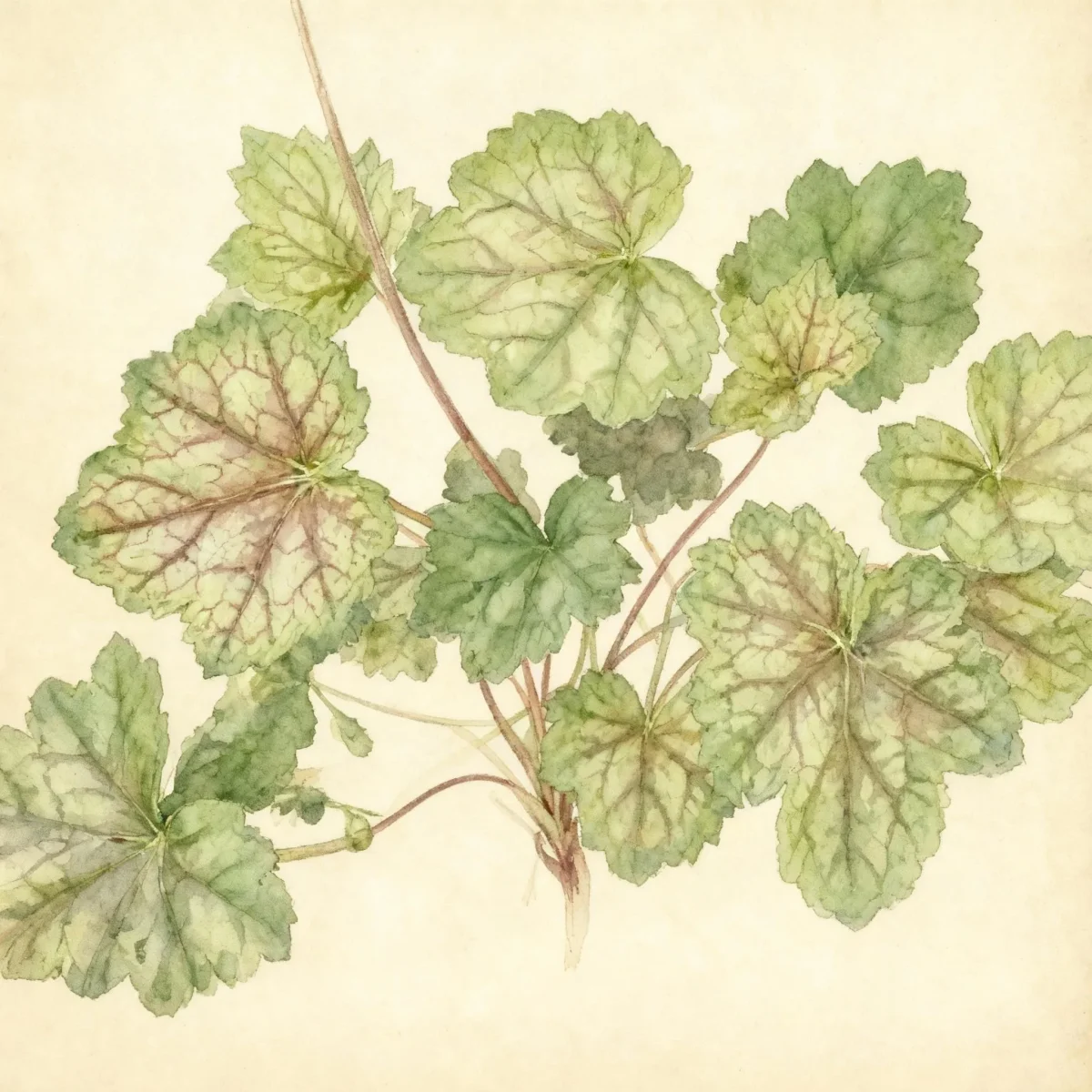
Coral bells (Heuchera 'Velvet Night')
Heuchera 'Velvet Night' offers deep plum-black foliage with silver veins; a stunning Coral bells perennial for shade gardens.
Scroll down to discover growing tips, care requirements, companion plants, and more
Complete Plant Information
Overview
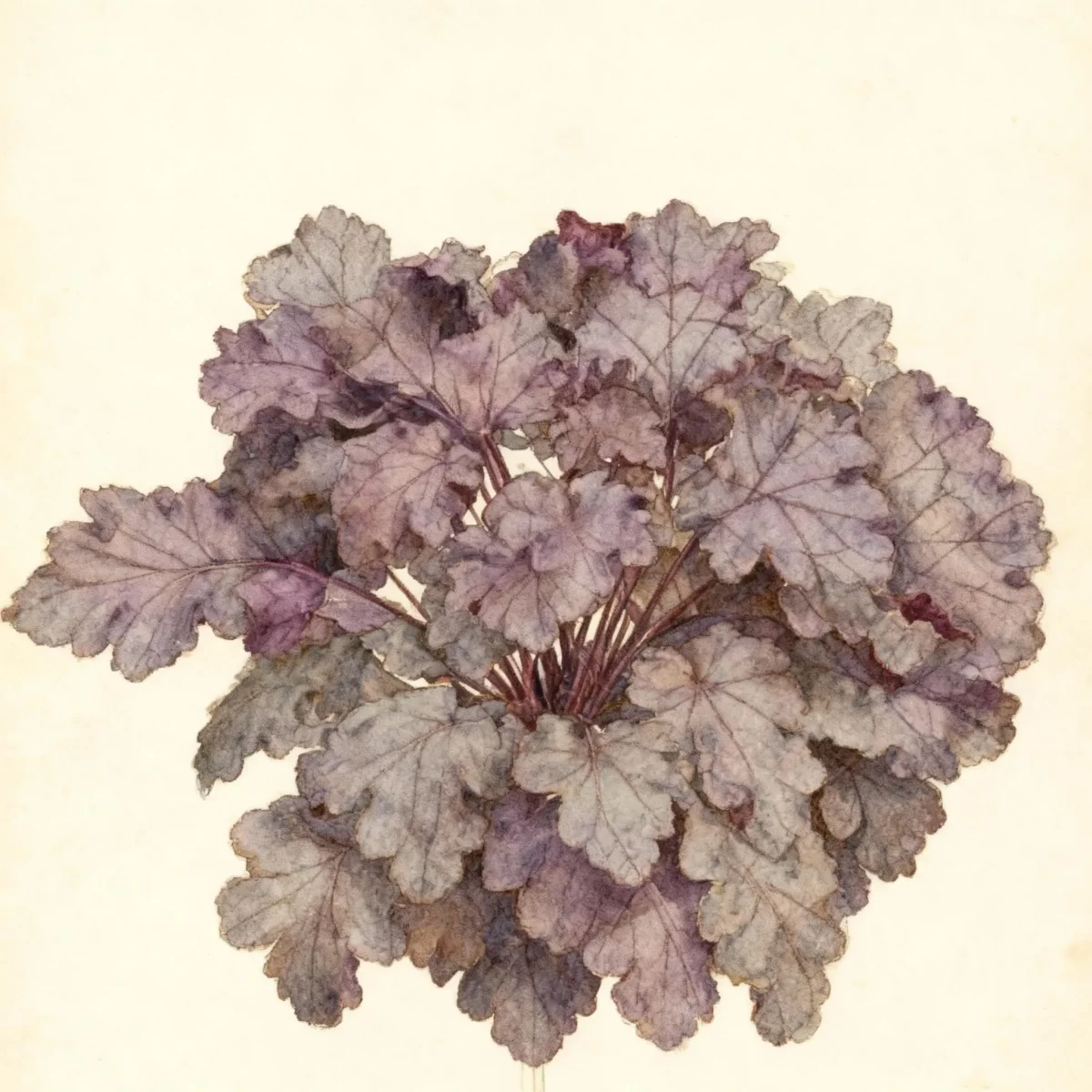
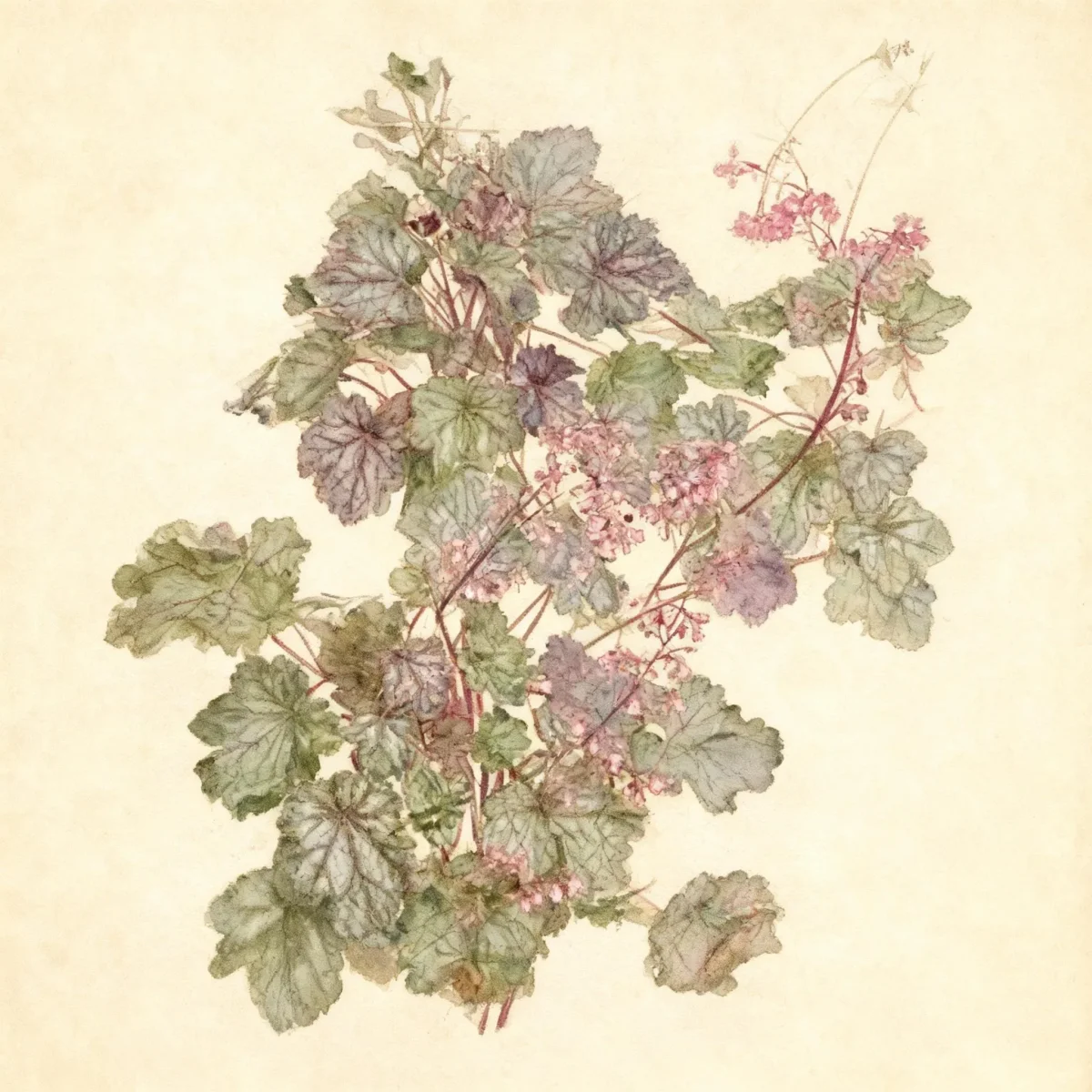
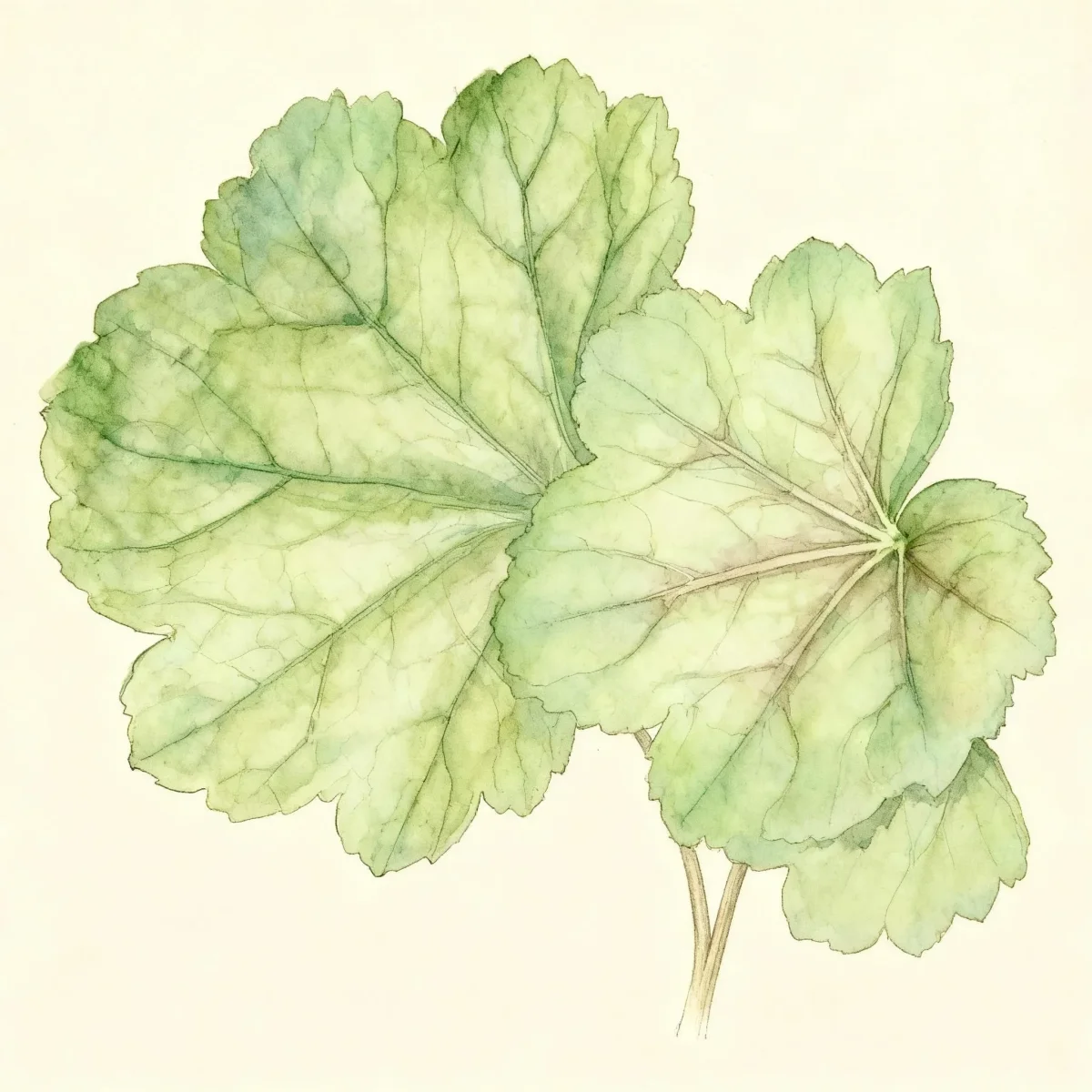
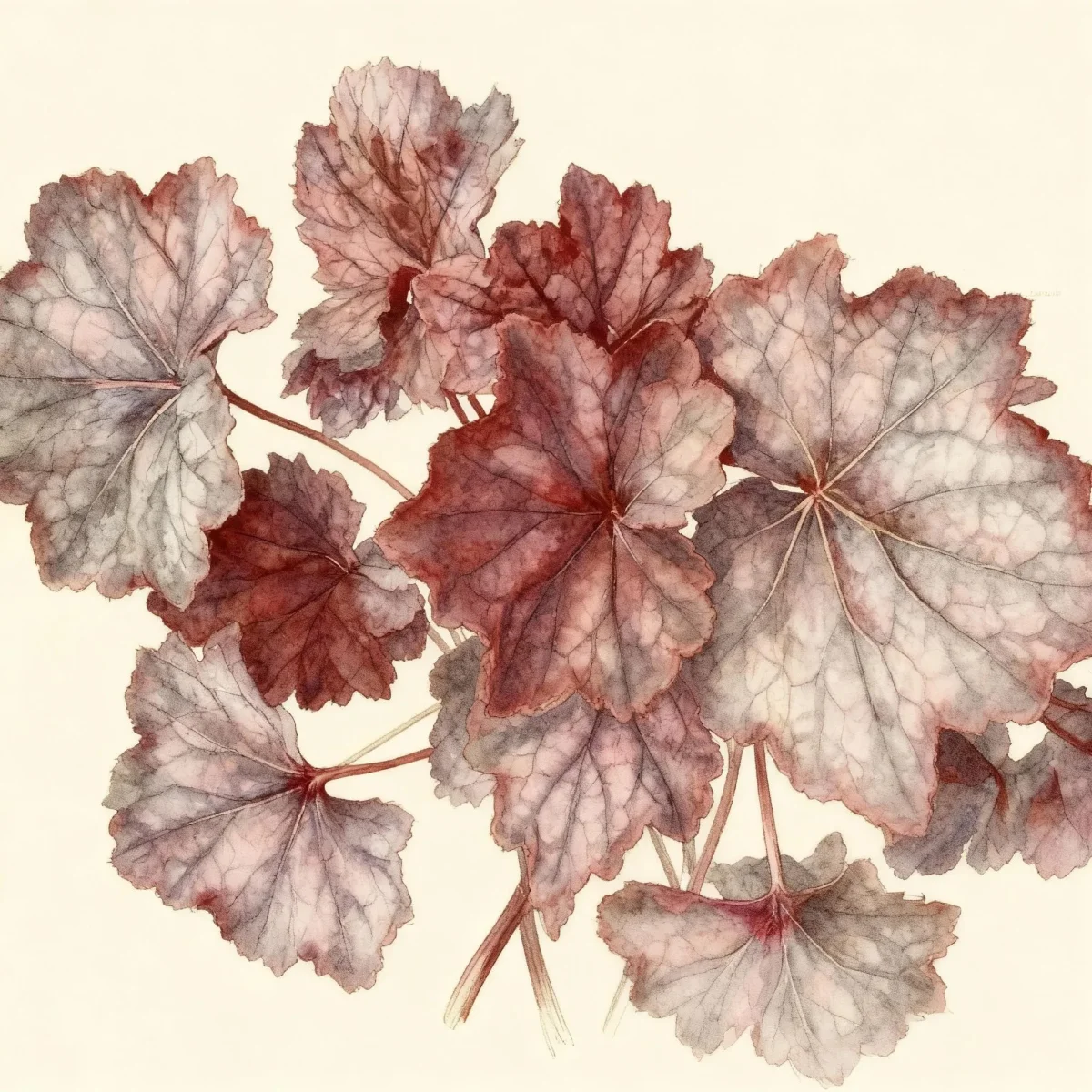
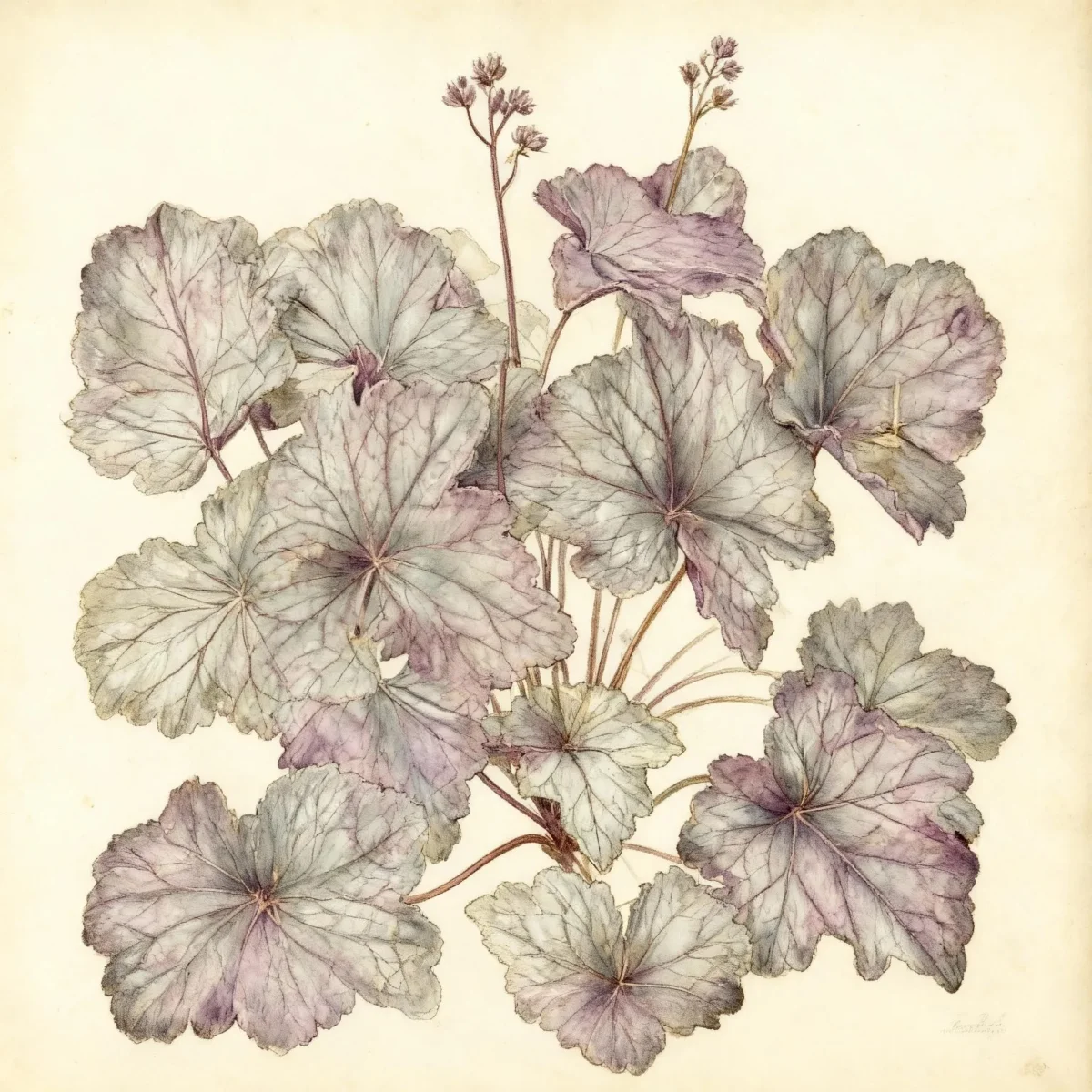
Heuchera ‘Velvet Night’, commonly known as Coral bells, is prized by gardeners for its exceptionally dark, richly colored foliage, providing year-round structure and contrast. This clump-forming perennial features lobed, heart-shaped leaves blending bluish-purple to plum-black tones, often highlighted by striking metallic silver venation. It achieves a basal mound typically reaching 12 inches tall, with slender stems bearing airy, greenish-white flowers towering up to 2 feet in early summer.
As a versatile herbaceous perennial, Heuchera ‘Velvet Night’ thrives across a wide range of climates, ideal for blending into mixed borders or adding depth to shaded woodland settings. Its primary appeal lies in its foliage color, which holds exceptionally well, making it less reliant on seasonal blooms for visual impact compared to many flowering perennials.
Successful cultivation of this robust Coral bells variety depends on providing excellent soil conditions. While it tolerates full sun in cooler northern regions, gardeners elsewhere should ensure afternoon shade to prevent leaf scorch, maintaining consistent moisture throughout the growing season.
Fast Facts
- Plant Family: Saxifragaceae
- Plant Type: Herbaceous perennial
- Hardiness Zones: USDA Zones 4-9
- Size at Maturity:
- Height: 1-2 ft
- Spread: 1-1.5 ft
- Bloom Time: June to July
- Bloom Description: Greenish white
- Sun Exposure: Full sun to part shade
- Water Needs: Medium
- Maintenance Level: Medium
How to Grow
Planting Heuchera ‘Velvet Night’ is best achieved in the spring or fall, ensuring it settles before temperature extremes arrive. These Coral bells flourish in organically rich, humusy soils that must be consistently moist yet perfectly well-drained. When selecting a site, remember that while some hybrids tolerate full sun, the deep pigmentation of the ‘Velvet Night’ foliage benefits significantly from protection against intense afternoon heat, especially in southern zones.
Care involves maintaining even soil moisture; allow specialized hybrids like Heuchera ‘Velvet Night’ to dry out slightly between watering, especially if grown in brighter exposures, as dryness can cause leaf scorch. Minimal fertilization is usually required if the base soil is rich. Deadheading faded flower stems is recommended to tidy the plant and potentially encourage a second, lighter flush of bloom.
Winter preparation is essential in colder zones (4-6). Apply a layer of compost mulch only after the ground has thoroughly frozen to prevent frost heaving, which can expose the roots. In regions with milder winters, the foliage of Heuchera ‘Velvet Night’ remains largely evergreen. Plan to divide crowded clumps every three to four years during the spring renewal period.
Landscape Uses
Heuchera ‘Velvet Night’ excels in mass plantings where its dark, near-black foliage creates a dramatic visual anchor against lighter greens and brighter flower colors. These Coral bells are highly effective as edging along borders, paths, or walkways, defining transitions within the garden space. Their medium size (1 to 2 feet tall) makes the uniform mounds suitable for layering between tall background shrubs and low foreground groundcovers.
Consider planting Heuchera ‘Velvet Night’ near plants that appreciate similar cultural needs, such as Hostas, Ferns, or bleeding hearts, creating a rich, textured woodland scene. The deep purple-black leaves provide excellent contrast for silver-leafed Lamb’s Ears or bright yellow centers of early-season Daisies. Use them liberally in rock gardens or beneath deciduous trees where they can benefit from dappled light.
Standout Features
Flower Qualities
- Showy
- Good Cut
Noteworthy Characteristics
The genus Heuchera, encompassing about 55 evergreen to semi-evergreen North American perennials, includes the stunning Heuchera ‘Velvet Night’. This cultivar is famed for having perhaps the darkest foliage available, forming a basal mound of lobed, heart-shaped leaves that are bluish purple to plum-black with contrasting metallic silver veins. While the foliage is the main attraction, it is complemented by airy panicles of tiny, greenish-white, bell-shaped flowers borne on wiry stems above the mound in late spring to early summer.
Tolerances
No specific tolerances were provided in the data.
Potential Problems
Gardeners should be vigilant regarding the risk of frost heaving; rapidly fluctuating winter temperatures can lift the fibrous root system out of the soil. To mitigate this common issue in cold climates, apply a winter compost mulch only after the ground freezes solid. Potential disease issues include fungal problems like powdery mildew and rust, as well as bacterial leaf spot, often exacerbated by poor air circulation or overly wet conditions. Watch out for common pests such as weevils and microscopic foliar nematodes which can damage the admired foliage of your Coral bells specimens.
Frequently Asked Questions
What hardiness zones is Coral bells suitable for?
Heuchera ‘Velvet Night’ is reliably hardy in USDA Zones 4 through 9.
How large does Coral bells grow?
This variety typically forms a mound reaching 1 to 2 feet in height and spreads between 1 and 1.5 feet wide.
What sun exposure does Heuchera ‘Velvet Night’ need?
This plant performs best in areas receiving full sun to partial shade; ensure protection from harsh afternoon sun, especially in hot climates, to maintain foliage quality.
When does Coral bells bloom?
Heuchera ‘Velvet Night’ produces its small, greenish-white flowers primarily from June to July.
Conclusion
Heuchera ‘Velvet Night’ is an exceptional choice for gardeners demanding sustained, dramatic color, thanks to its near-black, shimmering foliage that anchors any shade or partial sun planting scheme. This particular cultivar of Coral bells brings depth and modern contrast to traditional garden designs. Before planting, ensure your site offers the rich, well-drained soil it requires, and confirm that your hardiness zone falls within its adaptable 4-9 range.
Companion Planting
When designing beds around Heuchera ‘Velvet Night’, focus on companions that offer complementary textures and colors. Since this variety prefers medium moisture and part shade, classic woodland companions are ideal partners. Consider pairing it with light green Hostas or fine-textured Japanese Forest Grass (Hakonechloa macra) to make the dark foliage of the Coral bells pop visually. Plants with upright habits, like Siberian Iris or Tall Astilbes, also create a lovely vertical contrast to the low, mounding habit of Heuchera ‘Velvet Night’.
Design Ideas
The deep coloration of Heuchera ‘Velvet Night’ makes it an indispensable tool for creating contrast in mixed containers or shaded borders. Use it as a “Thriller” or “Spiller” in pots when paired with chartreuse accents, focusing on the metallic silver veining of the foliage. In shaded, contemporary designs, plant masses of these dark Coral bells against white gravel or limestone pavers to achieve a sophisticated, high-contrast effect that lasts nearly year-round, ensuring your garden retains interest long after other blooms fade.