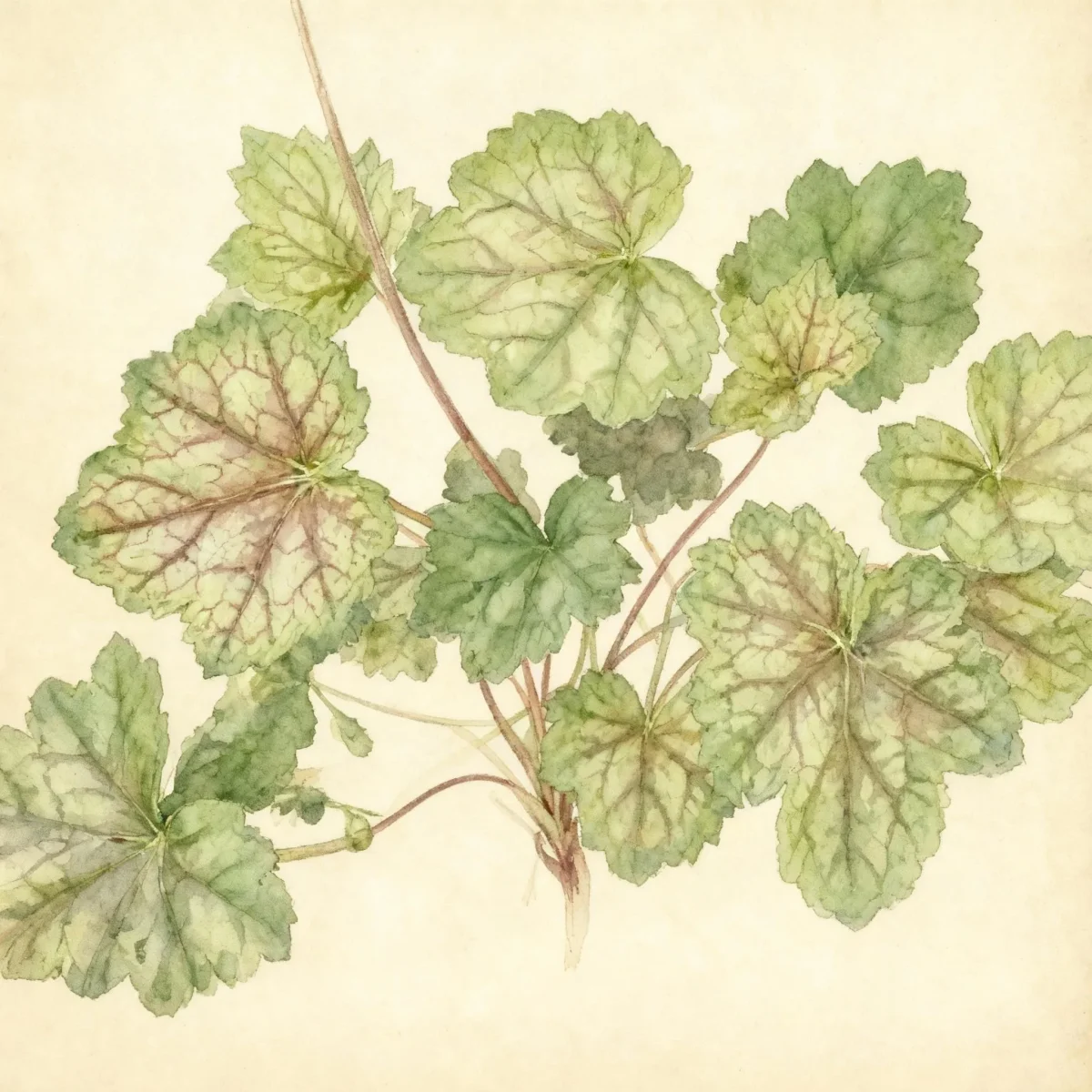
Coral bells (Heuchera americana 'Bartram')
Heuchera americana 'Bartram' Coral bells offers attractive foliage with dark-red veins and silvery blotching, thriving in zones 4-9.
Scroll down to discover growing tips, care requirements, companion plants, and more
Complete Plant Information
Overview
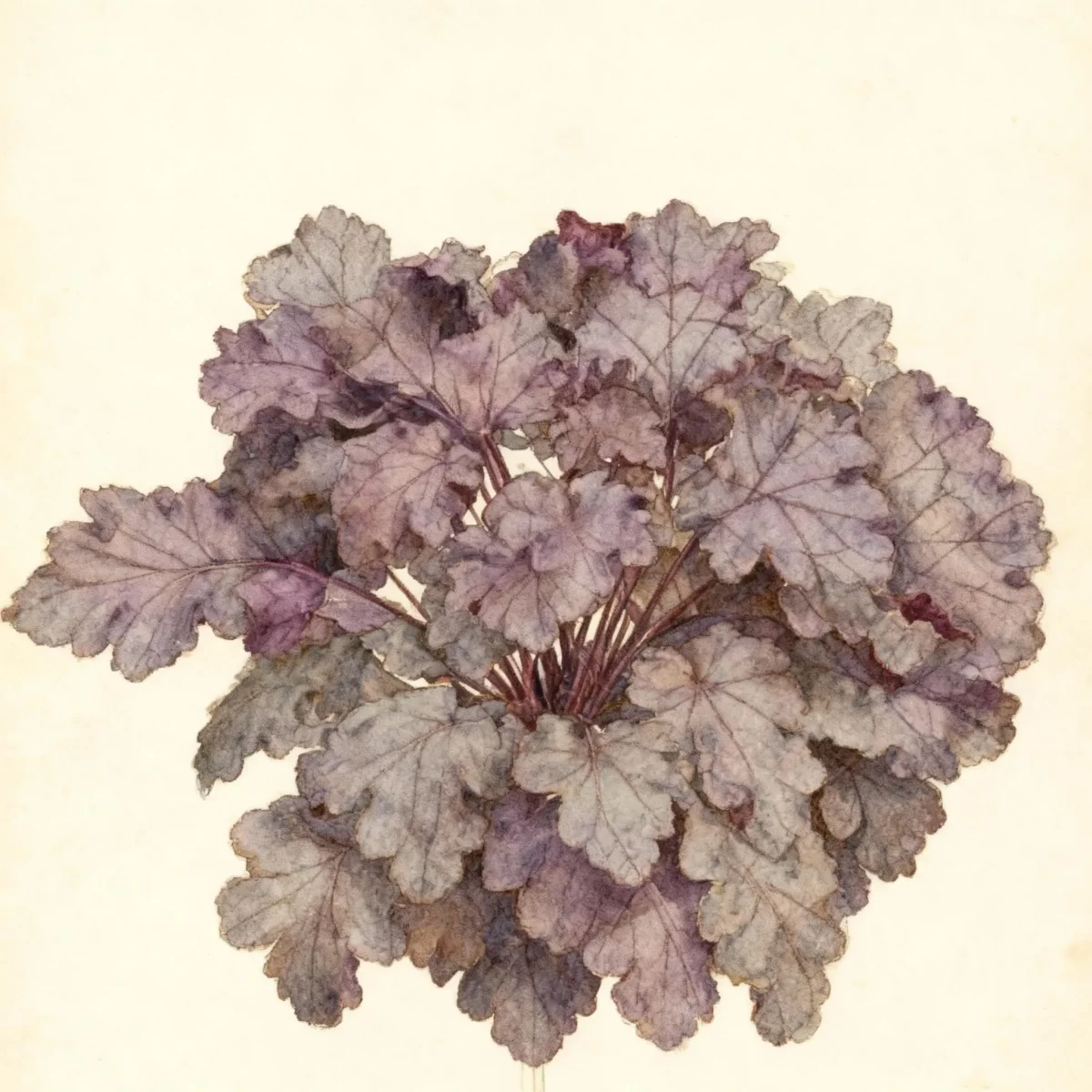
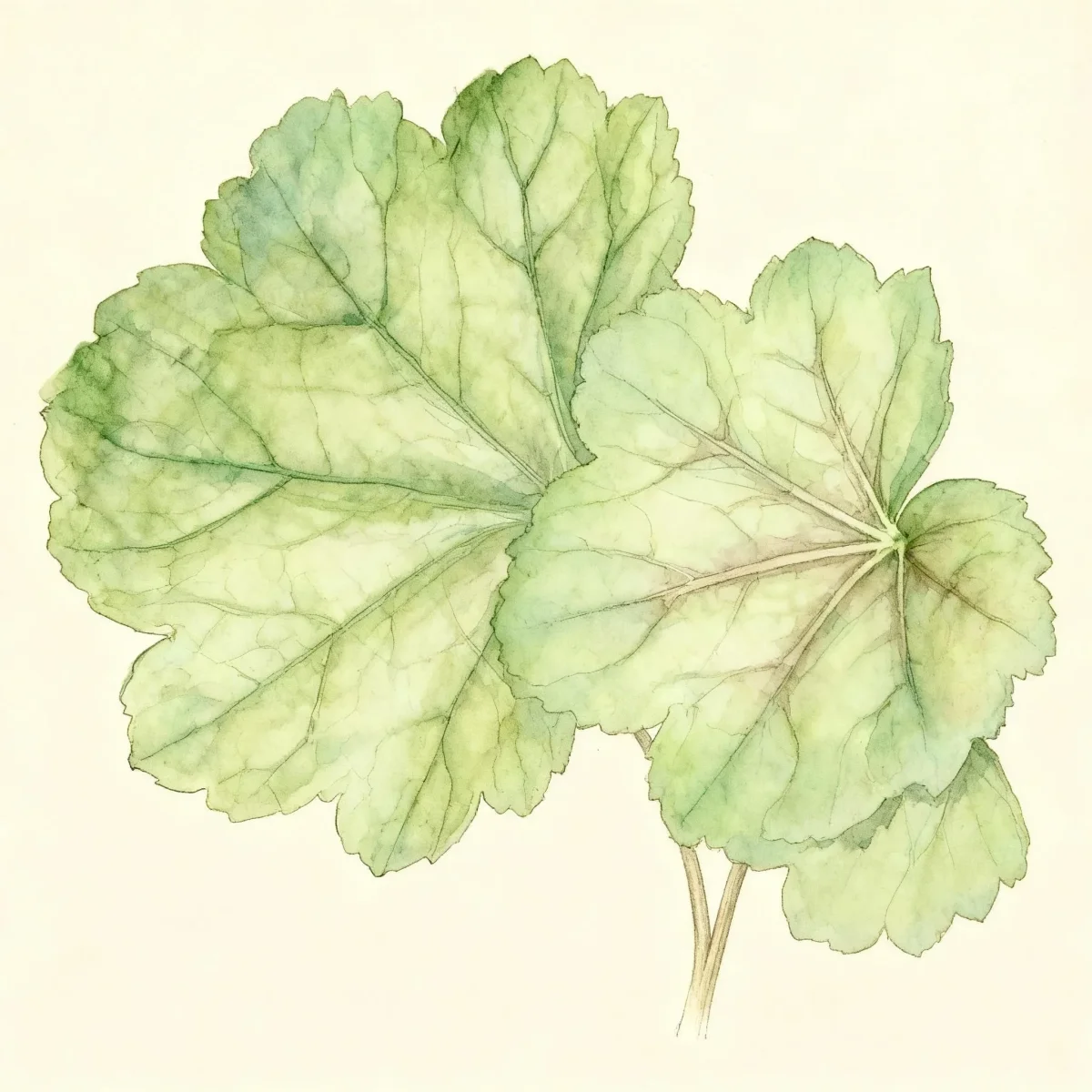
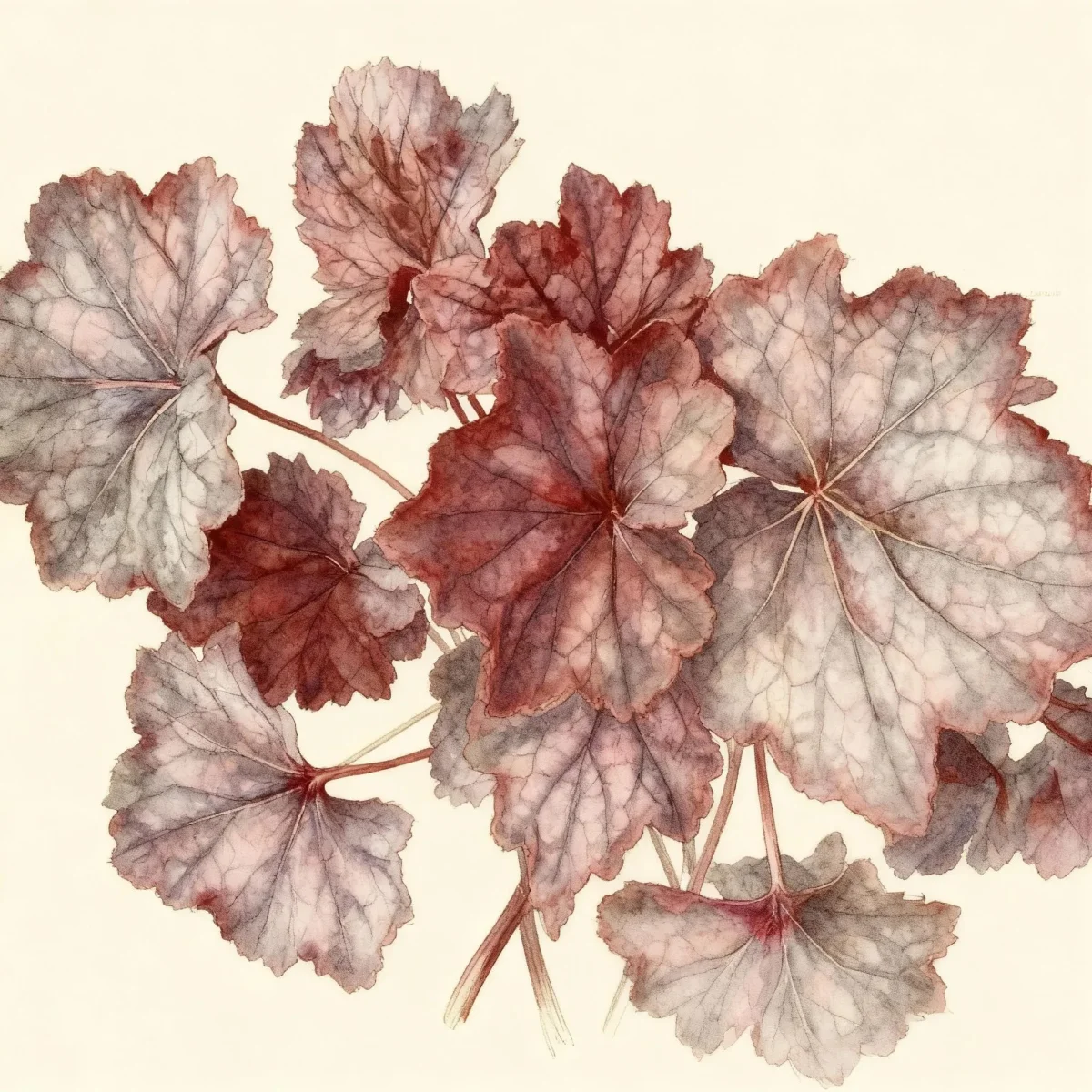
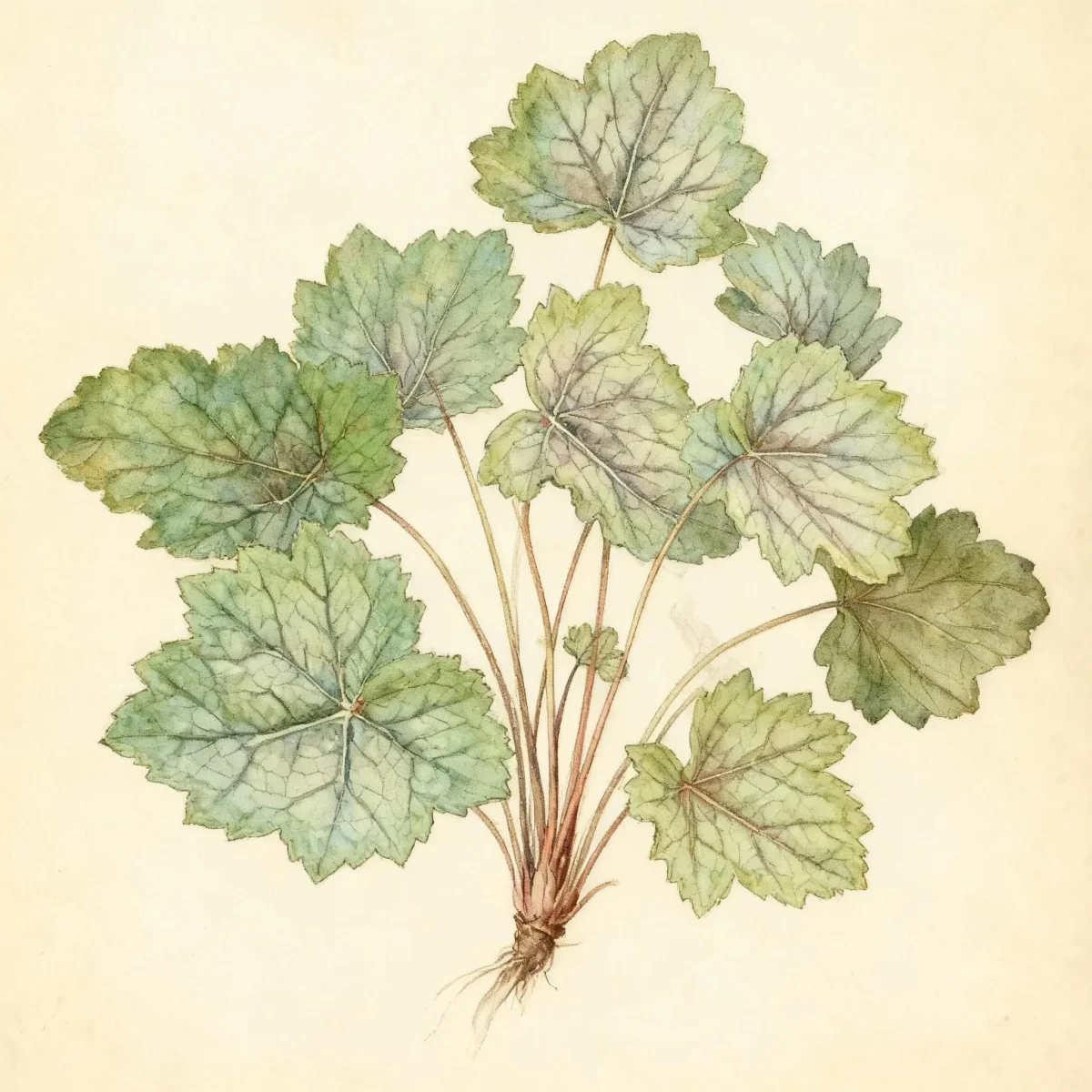
Heuchera americana ‘Bartram’, known commonly as Coral bells, is a valued herbaceous perennial prized for its basal clump of heart-shaped foliage emerging flushed with purplish-brown before maturing to green. The cultivar ‘Bartram’ offers added visual interest with distinctive dark-red veins and silvery blotching across the leaves, setting it apart from standard types. This native perennial is adaptable, performing excellently in rich woodlands or as foreground planting in borders across USDA hardiness zones 4 through 9.
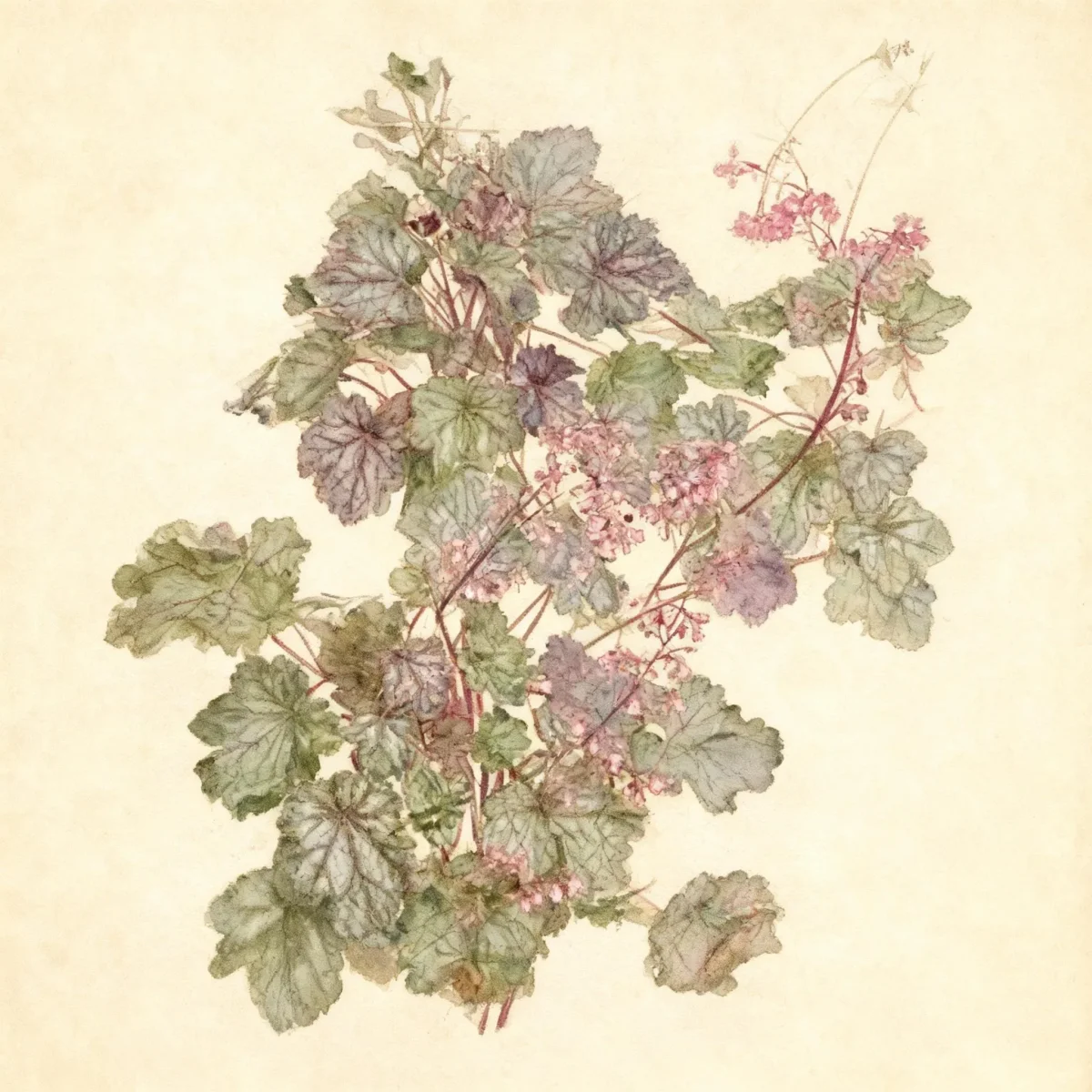
The airy sprays of tiny, greenish-white flowers borne on wiry stems provide a delicate vertical accent in late spring to early summer, contrasting nicely with the dense foliage mound. Coral bells are utilized across various garden settings, valued for providing year-round structure where winters are mild. Gardeners appreciate the robustness of Heuchera americana ‘Bartram’ as it handles varying light conditions from full sun to partial shade.
Functionally, Heuchera americana ‘Bartram’ serves effectively as an edging plant or massed out to form an attractive ground cover, requiring only medium moisture levels once established. Its relative ease of care, once properly sited, combined with its unique leaf variegation makes it an essential choice for adding texture and persistent color to the landscape.
Fast Facts
- Plant Family: Saxifragaceae
- Plant Type: Herbaceous perennial
- Hardiness Zones: USDA Zones 4-9
- Size at Maturity:
- Height: 1-2 ft
- Spread: 1-1.5 ft
- Bloom Time: May to June
- Bloom Description: Greenish white with red tinge
- Sun Exposure: Full sun to part shade
- Water Needs: Medium
- Maintenance Level: Medium
How to Grow
Planting should ideally occur in spring or fall, ensuring the location provides organically rich, humusy, well-drained soil. Coral bells thrive in full sun when summers are cool, but require some afternoon shade protection when grown in hot, humid climates to prevent foliage scorch. Proper drainage is critical for the long-term health of Heuchera americana ‘Bartram’.
Maintain medium moisture levels, especially if the plant is exposed to full sun, as consistent moisture is important under those conditions. While the plant tolerates occasional, short periods of drought, dry spells can cause the foliage appearance to depreciate over time. Deadhead stems bearing faded flowers promptly to encourage the plant to produce additional blooms throughout the season.
Seasonal care involves ensuring good winter protection in colder zones. Applying a winter mulch after the ground freezes helps prevent damaging root heaving caused by freeze-thaw cycles. In warm climates, the foliage remains essentially evergreen, while in frigid northern areas, the amount of retained color depends heavily on temperature severity. Plan to divide dense clumps every three to four years in the spring to maintain vigor.
Landscape Uses
The combination of attractive foliage and airy flower panicles makes Coral bells an excellent addition for introducing contrast and texture. Heuchera americana ‘Bartram’ excels when used as a border plant, lending structure along pathways or the edge of perennial beds. It is highly effective when massed together to create a high-impact ground cover that suppresses weeds while providing consistent visual appeal.
Consider integrating this cultivar into rock gardens or open woodland settings where its natural affinity for rocky environments can be leveraged. It pairs beautifully with ferns, hostas (in shadier spots), or spring-blooming bulbs, acting as a complementary texture element when its flowers are past. The semi-evergreen nature of Heuchera americana ‘Bartram’ ensures that the garden retains definition even outside the main growing season.
Standout Features
Flower Qualities
- Showy
- Good Cut
Noteworthy Characteristics
Heuchera americana, commonly called coral bells or alumroot, is a clump-forming perennial native to much of eastern and central North America, frequently found in rich woods or rocky outcrops. It typically features a basal clump of heart-shaped, long-petioled leaves, which are borne on slender stems topped by airy panicles of tiny, greenish-white, bell-shaped flowers in late spring to early summer. The specific cultivar, ‘Bartram’, is distinguished by its unique foliage displaying dark-red veins and characteristic silvery blotching.
Tolerances
- Drought
Potential Problems
This species generally exhibits no serious insect or disease problems, contributing to its low maintenance appeal. The primary cultural concern is frost heaving; this occurs when wide fluctuations in winter temperatures cause the soil to repeatedly freeze and thaw, potentially pushing the roots out of the ground. To mitigate this risk in cold winter climates, apply a protective layer of mulch only after the soil has frozen solid.
Frequently Asked Questions
What hardiness zones is Coral bells suitable for?
Heuchera americana ‘Bartram’ is well-suited for cultivation in USDA Hardiness Zones 4 through 9.
How large does Coral bells grow?
This perennial typically reaches a mature height between 1 and 2 feet tall, with a spread generally ranging from 1 to 1.5 feet wide.
What sun exposure does Coral bells need?
Heuchera americana ‘Bartram’ performs best in full sun to part shade conditions, though afternoon shade is recommended in excessively hot summer regions.
When does Coral bells bloom?
Coral bells produce their flowers from May to June, showcasing tiny, greenish white flowers that often carry a red tinge.
Conclusion
The persistent, patterned foliage and low-maintenance nature make Heuchera americana ‘Bartram’ an invaluable asset for texture and contrast in mixed borders and ground cover applications. Ensure your site offers medium moisture and well-drained soil, and plan your planting during spring or fall for the best establishment of your Coral bells.
Companion Planting
Selecting appropriate neighbors is vital for maximizing the aesthetic and cultural success of Heuchera americana ‘Bartram’. Because it thrives in medium moisture and appreciates dappled light as summer heats up, it pairs naturally with shade-tolerant ground cover companions. Consider low-growing ferns, such as Japanese Painted Fern (Athyrium niponicum), which echo its textural complexity without competing heavily for root space.
For perennial borders where sun exposure is high but moisture is supplied consistently, pair this Coral bells variety with other tough, lower-growing perennials that appreciate similar soil fertility. Lungwort (Pulmonaria) offers contrasting leaf shapes and beautiful spring color that resolves before the Heuchera fully dominates the understory. Avoid planting it directly beneath large trees with aggressive shallow root systems, as competition for water and nutrients can stress the plant easily.
Design Ideas
Heuchera americana ‘Bartram’ excels when used to define the foreground of a mixed border, leveraging its 1-2 foot height to transition between ground covers and taller perennials. Massing this plant creates dramatic drifts where the silvery blotching and dark veins catch the light, offering significant contrast against dark mulch or uniform green foliage nearby. It is also an excellent choice for softening the edges of walkways or patios where its fine texture breaks up hardscaping lines.
In specialty gardens, utilize the cultivar’s tolerance for rocky substrates by incorporating it into specialized scree beds or rockeries. Here, the airy flowers rise above stone elements beautifully, reflecting its native preference for rocky woodlands. This plant works equally well in containers, either as a primary spiller or as a textured focal point, provided the container allows for adequate drainage to meet its medium water needs.