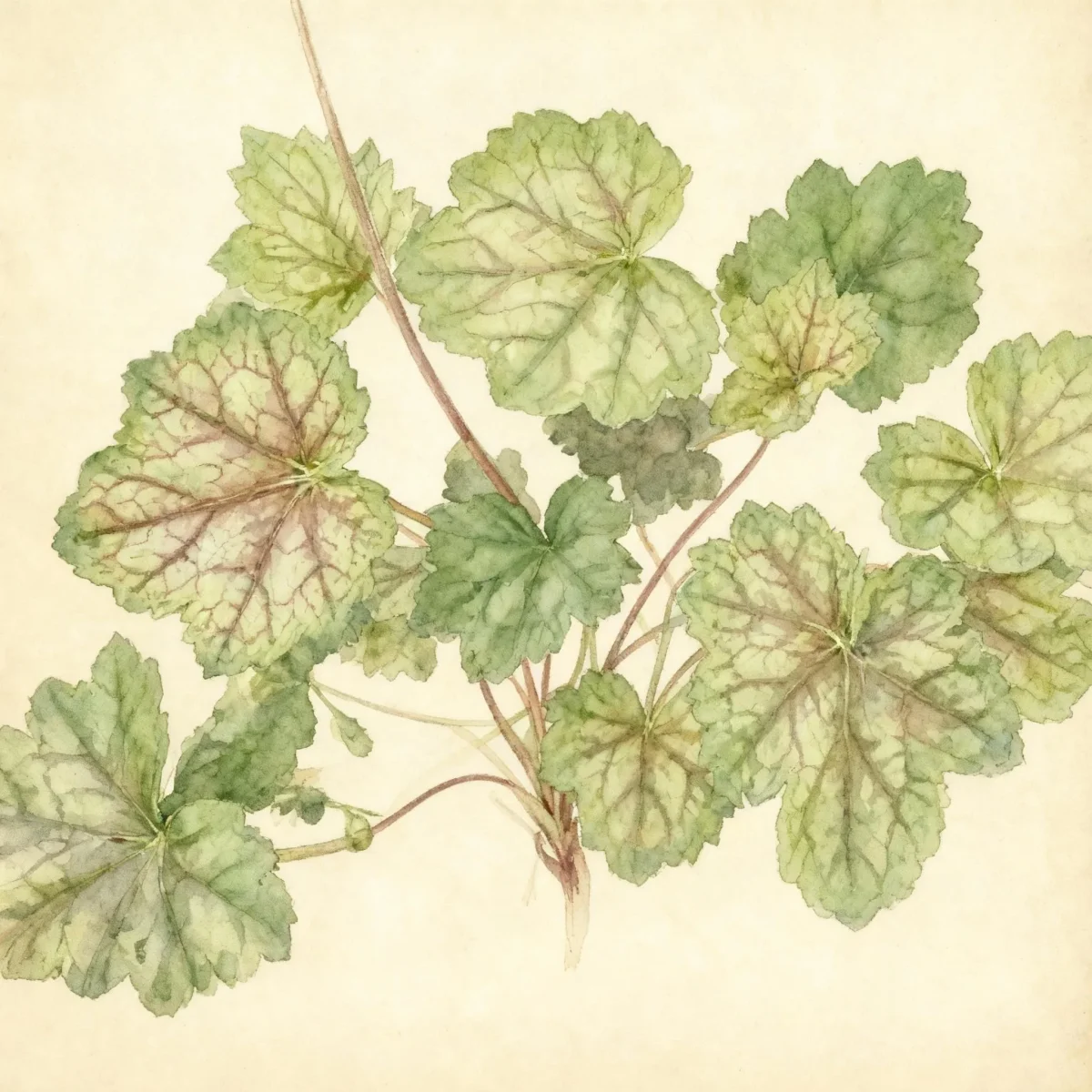
Coral bells (Heuchera 'Palace Passion')
Heuchera 'Palace Passion' Coral bells offer bronze-purple foliage and charming coral-pink summer blooms. Hardy in zones 4-9, this perennial requires medium care.
Scroll down to discover growing tips, care requirements, companion plants, and more
Complete Plant Information
Overview
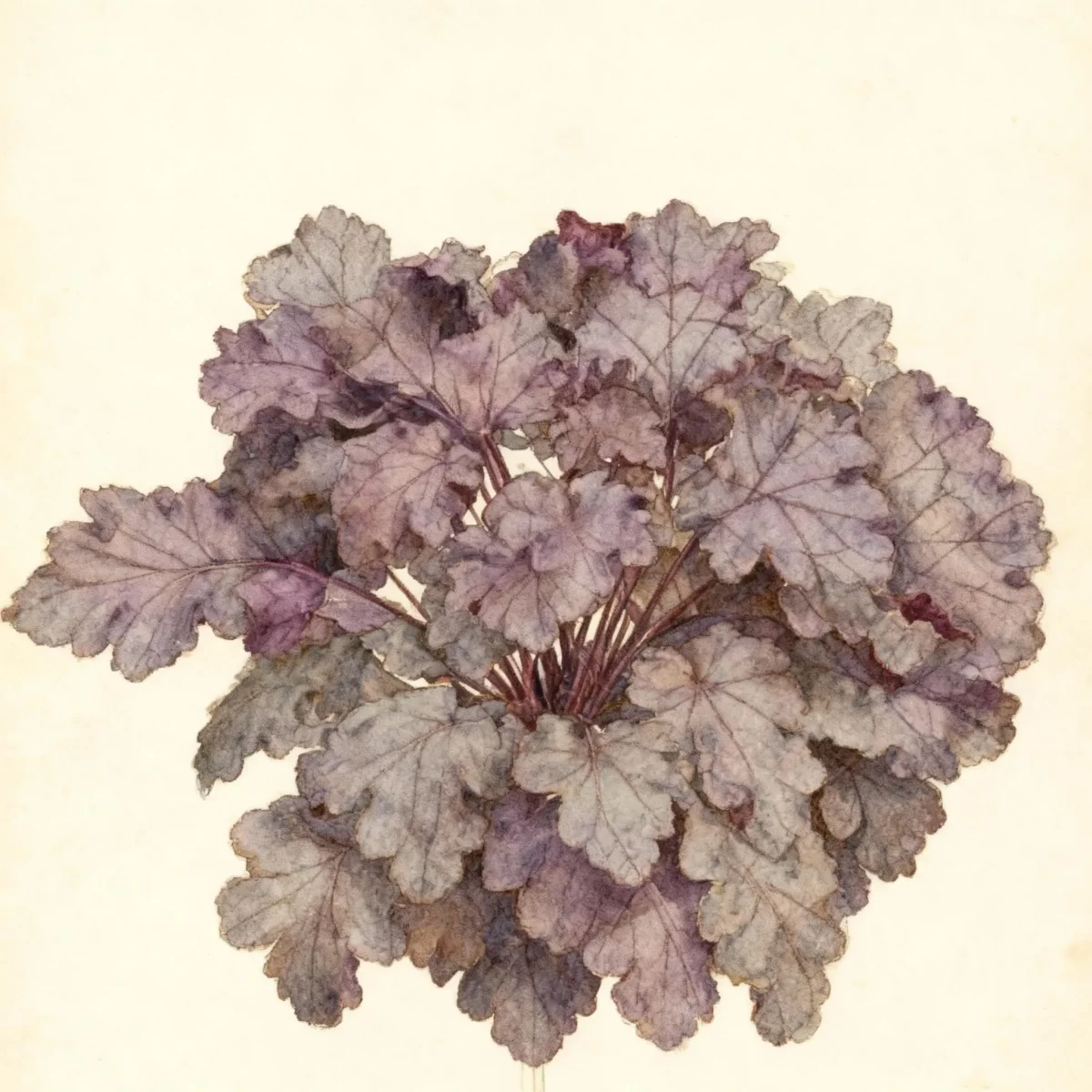
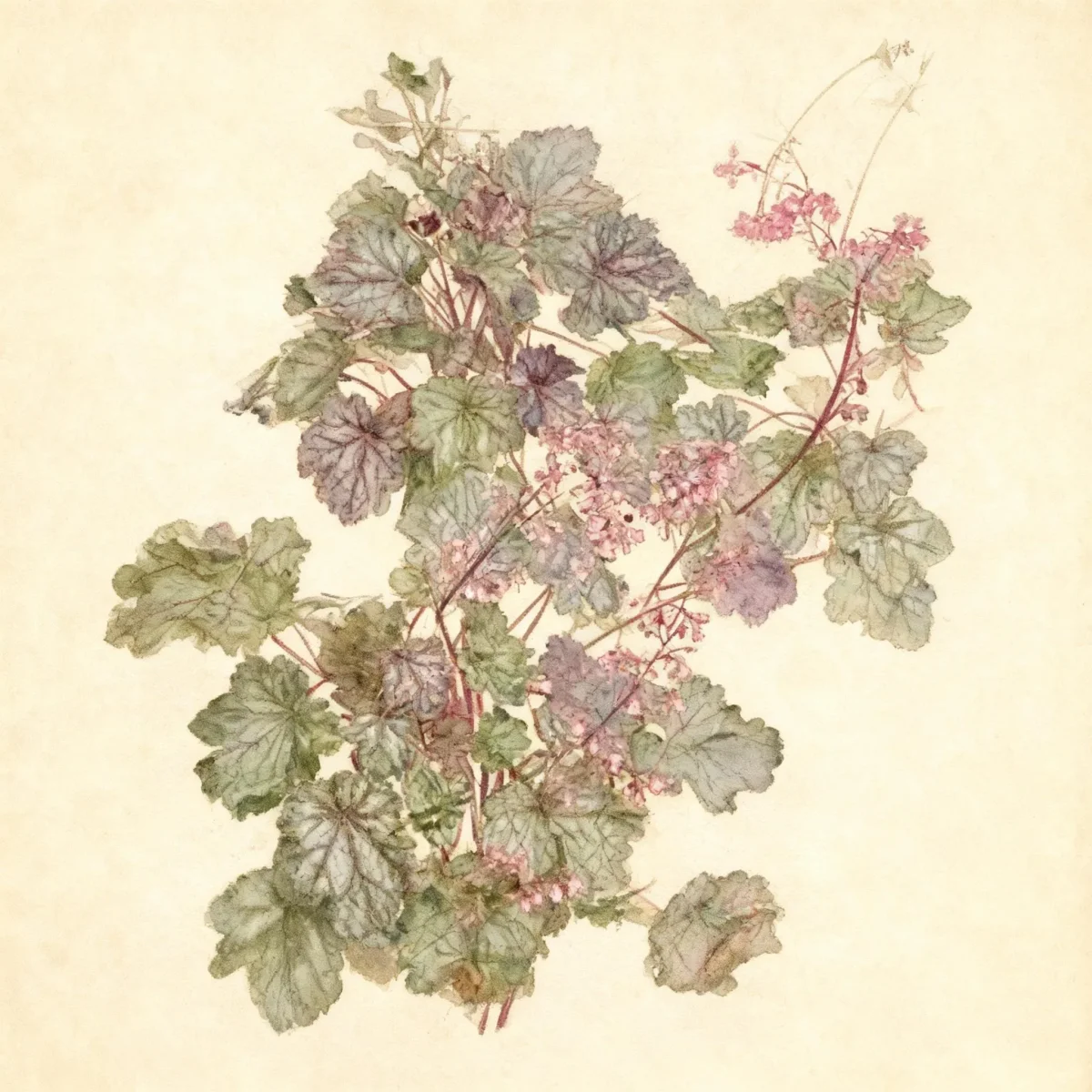
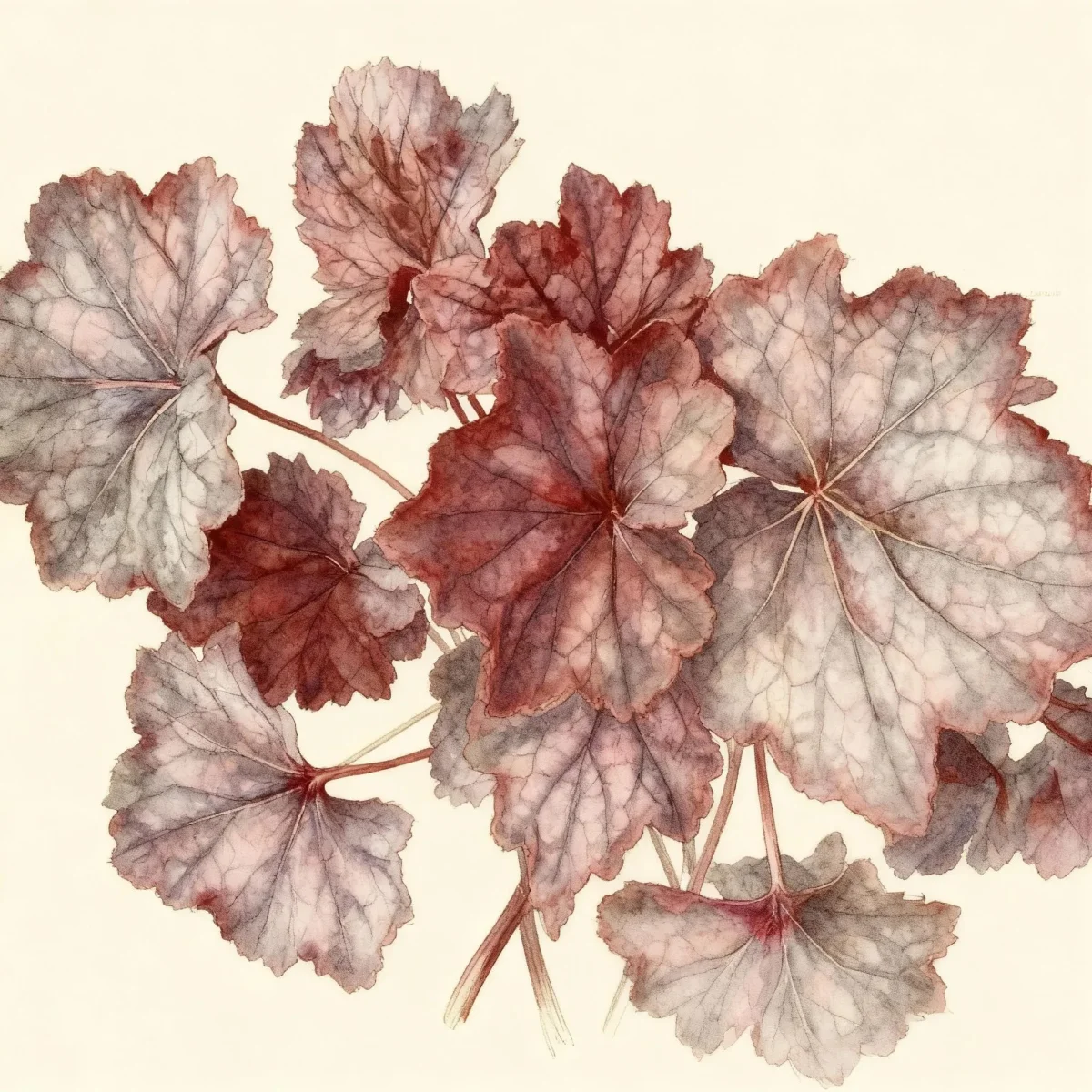
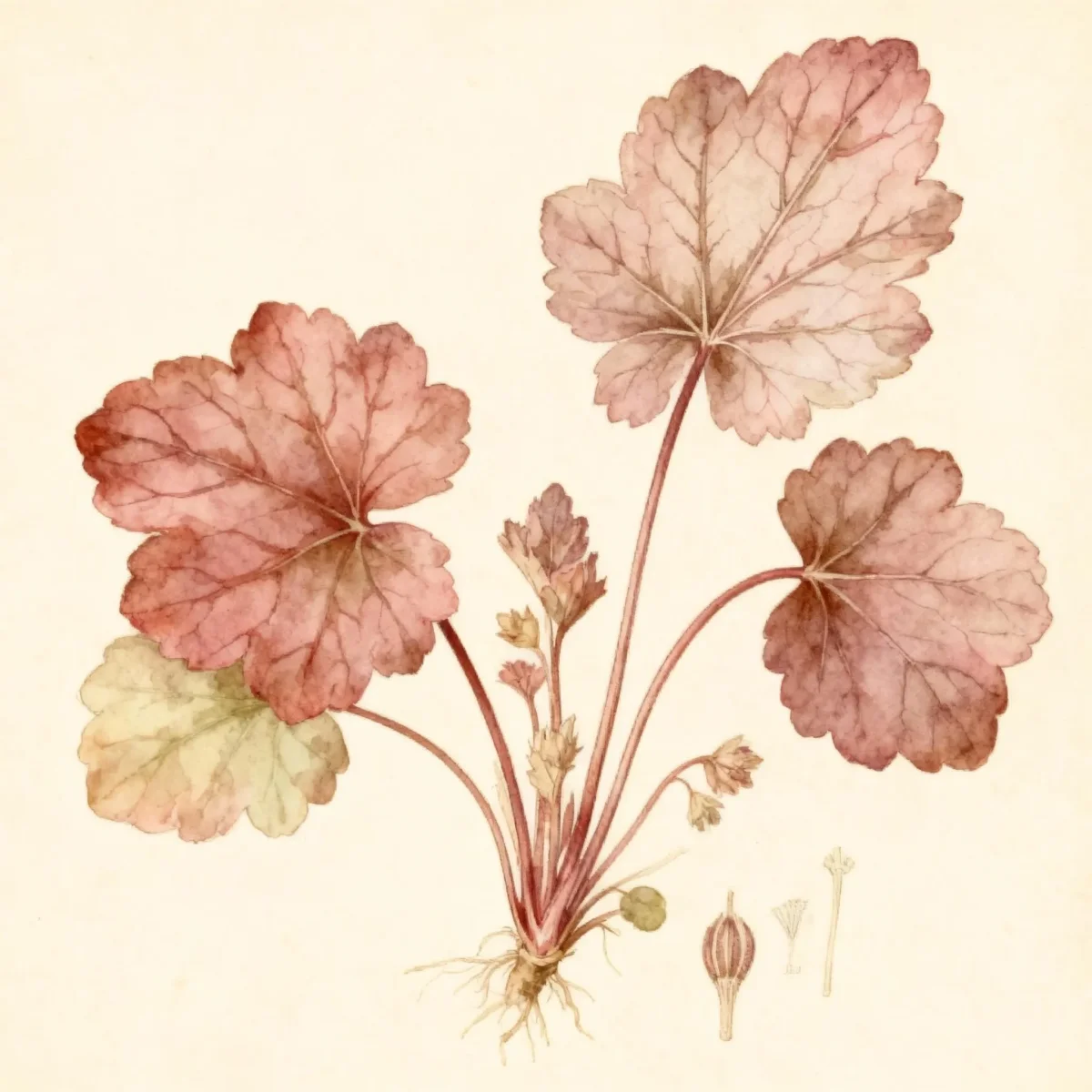
Heuchera ‘Palace Passion’, commonly known as Coral bells, is a highly valued herbaceous perennial celebrated for providing dynamic color and texture across multiple seasons. This cultivar forms a tidy, clump-forming mound primarily defined by its distinctive, maple- or ivy-like leaves emerging in an attractive bronze-purple shade, often contrasted by deep-purple leaf undersides. In mid-summer, slender, dark red stems rise above the foliage to present airy panicles of tiny, coral-pink, bell-shaped flowers, making it a standout addition to mixed plantings.
Generally adaptable, the success with coral bells often hinges on replicating its preferred environment. While the genus is known for thriving in dappled light, the precise cultural needs of Heuchera ‘Palace Passion’ are influenced by its specific unknown parentage. Gardeners should aim for organically rich, well-drained soil, ensuring consistent moisture, particularly if siting the plant where it receives afternoon sun.
Beyond its ornamental blooms, the foliage provides essential structure when many other perennials quiet down. This resilience makes Heuchera ‘Palace Passion’ a dependable workhorse for adding year-round interest and reliable color contrast in shady to partly sunny garden spaces.
Fast Facts
- Plant Family: Saxifragaceae
- Plant Type: Herbaceous perennial
- Hardiness Zones: USDA Zones 4-9
- Size at Maturity:
- Height: 1-2 ft
- Spread: 1-1.5 ft
- Bloom Time: June to July
- Bloom Description: Coral pink
- Sun Exposure: Full sun to part shade
- Water Needs: Medium
- Maintenance Level: Medium
How to Grow
Coral bells are best established in spring or fall when temperatures are mild, allowing them to settle roots before summer heat or winter cold sets in. Locate Heuchera ‘Palace Passion’ where the soil is organically rich, humusy, and extremely well-drained. While they generally prefer part shade, some hybrids tolerate full sun, especially in cooler northern climates, provided moisture is meticulously maintained.
Water needs are medium; deeply water new plantings regularly until well established. For mature plants, try to keep the soil consistently moist but never soggy. If growing Heuchera ‘Palace Passion’ in full sun, monitor soil moisture closely, as allowing the soil to dry out can lead to foliage scorch and decline. Fertilization is usually unnecessary if the soil amendment request is met during planting.
Maintenance involves deadheading: remove the slender stems bearing faded flowers to encourage any potential repeat blooming throughout the season. In warm winter areas, the foliage remains largely evergreen. In colder zones, apply a compost mulch after the ground freezes to insulate the roots and guard against damaging frost heaving. Clump division is recommended every three to four years, ideally done in the spring to rejuvenate the plant.
Landscape Uses
Coral bells excel when used to provide low-level contrast in shaded borders or woodland garden settings. Heuchera ‘Palace Passion’ is effective planted in mass groupings to create a bold statement of foliage color against green backgrounds. Its defined, mounding habit makes it an excellent edger along stone pathways or walkways where its texture can be closely appreciated.
For dynamic design, pair the bronze-purple foliage of Heuchera ‘Palace Passion’ with plants that offer contrasting leaf shapes, such as ferns or hostas with large, ribbed blue or variegated leaves. The coral-pink blooms attract attention, complementing flowers in shades of white, soft yellow, or deep maroon nearby. Integrating them into rock gardens allows their excellent drainage requirements to be naturally met.
Consider using these perennials in containers, perhaps mixed with trailing annuals, ensuring the container has sufficient drainage holes. Their structure ensures the container planting retains interest long after summer annuals fade.
Flower Qualities
- Showy
Noteworthy Characteristics
Heuchera, commonly called coral bells or alumroot, is a genus of evergreen to semi-evergreen herbaceous perennials native across various North American habitats. Hybrid plants like Heuchera ‘Palace Passion’ offer an expanded palette of leaf colors beyond the species, featuring striking variegation patterns. ‘Palace Passion’ specifically features a basal mound of maple- or ivy-like leaves in an attractive bronze-purple hue with deep-purple bottoms, topped by airy panicles of tiny, coral-pink flowers in summer.
Tolerances
- Frost heaving of roots may occur when winter temperatures fluctuate widely.
Potential Problems
The primary risk for Heuchera ‘Palace Passion’ often comes from fluctuating winter weather, which can cause frost heaving, lifting the shallow root system out of the soil. Prevent this by applying a deep compost mulch only after the ground has fully frozen in late fall.
Foliar diseases are also a potential concern; watch for powdery mildew, rust, and bacterial leaf spot, often exacerbated by poor air circulation or overly moist conditions. Ensure adequate spacing during planting. Pests are generally minor, but watch out for weevils and foliar nematodes which can damage the prized leaves of your coral bells. Proactive monitoring and good garden hygiene are the best defense.
Frequently Asked Questions
What hardiness zones is Coral bells suitable for?
Heuchera ‘Palace Passion’ is reliably hardy in USDA Zones 4 through 9.
How large does Heuchera ‘Palace Passion’ grow?
At maturity, this coral bells cultivar typically reaches a height range of 1 to 2 feet and spreads between 1 and 1.5 feet wide, forming a compact mound.
When does Coral bells bloom?
This perennial produces its signature coral-pink flowers between June and July on wiry stems extending above the foliage.
What sun exposure does Heuchera ‘Palace Passion’ need?
This plant performs well in conditions ranging from full sun to partial shade, though afternoon shade is beneficial in hotter climates for keeping the foliage pristine.
Conclusion
Heuchera ‘Palace Passion’ is a superb choice for adding lasting, season-long color depth, making it an invaluable component in any perennial border or woodland scene. The combination of striking bronze-purple foliage and delicate coral-pink flowers ensures this Coral bells cultivar remains a beloved garden performer. Before planting, confirm your garden location falls within USDA Zones 4-9 and ensure the soil offers the rich, well-drained structure necessary for optimal health.
Companion Planting for Coral Bells
Choosing suitable neighbors enhances the aesthetic appeal and cultural success of Heuchera ‘Palace Passion’. Since these coral bells prefer rich, moist soil and thrive with some protection from the harshest afternoon rays, pair them with shade-loving companions that share those needs. Good partners include woodland natives like Hellebores (Lenten Rose) or various woodland Phlox, which offer different bloom times to extend garden interest.
For complementary texture, consider planting Heuchera ‘Palace Passion’ near plants with bold, architectural foliage such as large Hostas (especially those with blue or heavily variegated leaves) or Japanese Forest Grass (Hakonechloa). This combination leverages the fine texture of the Heuchera flowers and the coarser texture of larger leaves, creating visual depth in shaded areas.
Seasonal Care Calendar for Heuchera ‘Palace Passion’
Spring is the best time to divide older clumps of Heuchera ‘Palace Passion’ to maintain vigor and refresh planting areas. As new growth emerges, clean up any old, winter-damaged leaves. During summer bloom time (June to July), deadhead spent flower stalks regularly to maintain a neat appearance and encourage secondary blooming.
In late autumn, especially in colder zones, apply a protective layer of compost mulch once the ground has frozen solid to prevent root heaving throughout winter dormancy. If planted in full sun, maintain a strict watering schedule through dry summer spells to prevent leaf scorch, as consistent moisture is key to keeping this perennial looking its best year after year.