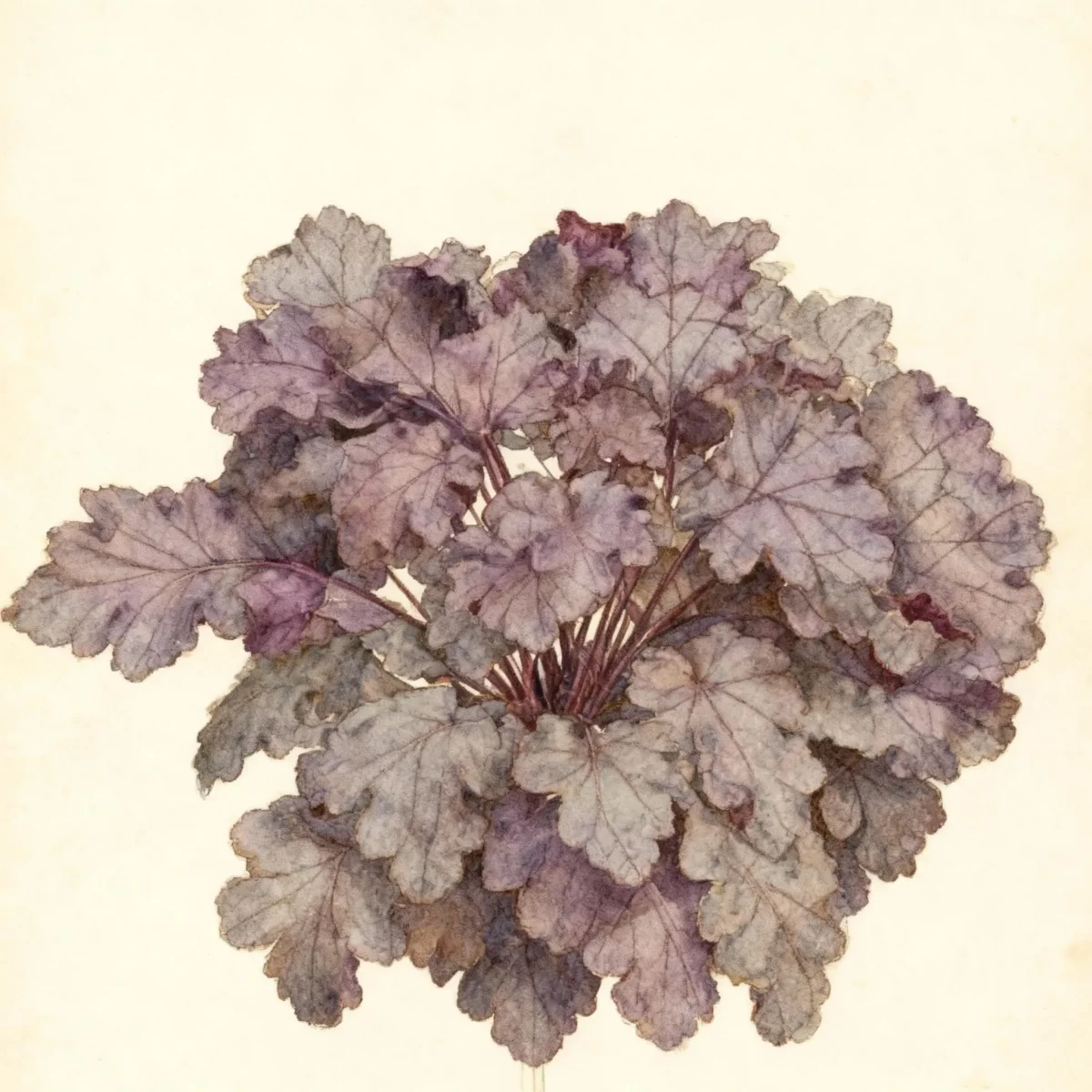
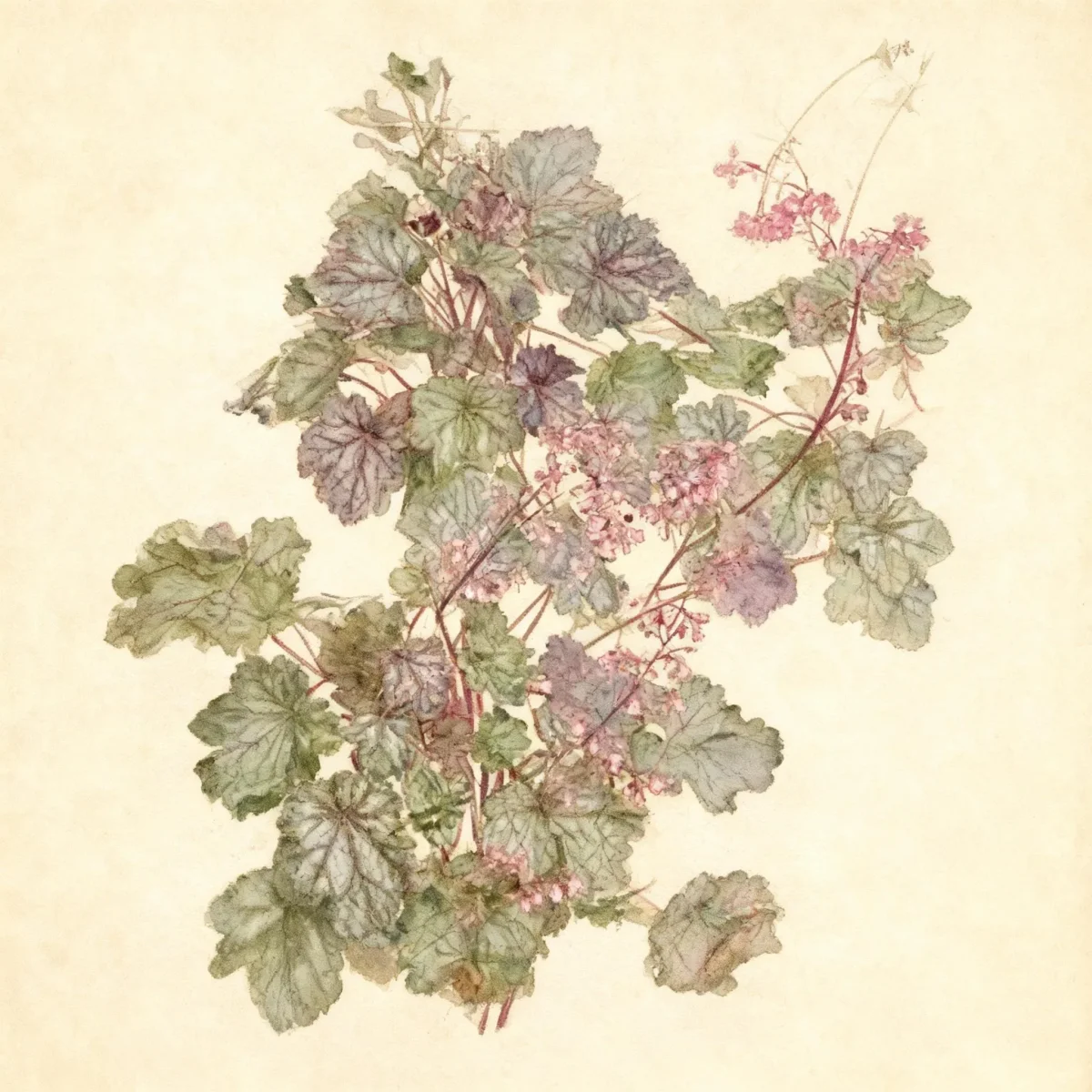
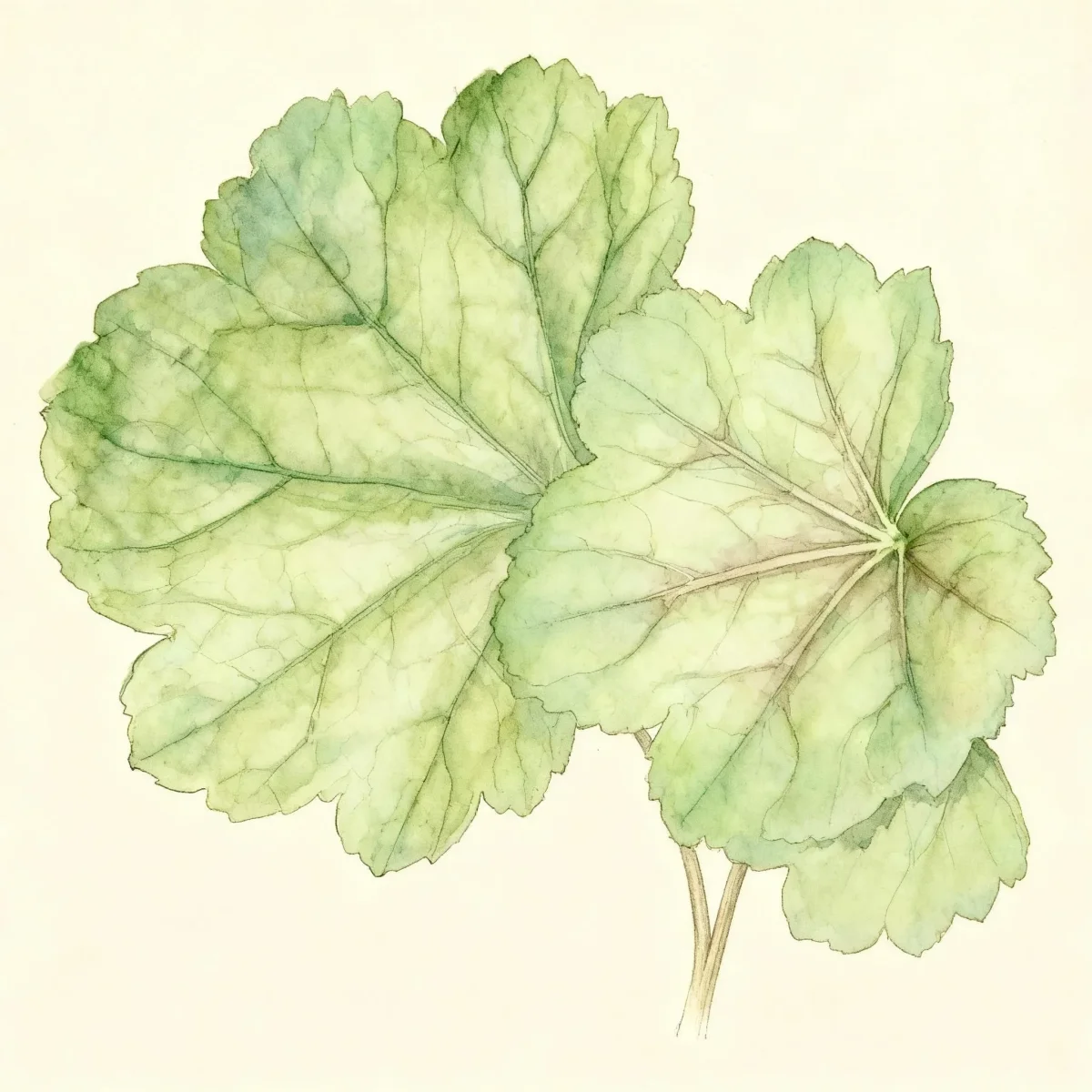
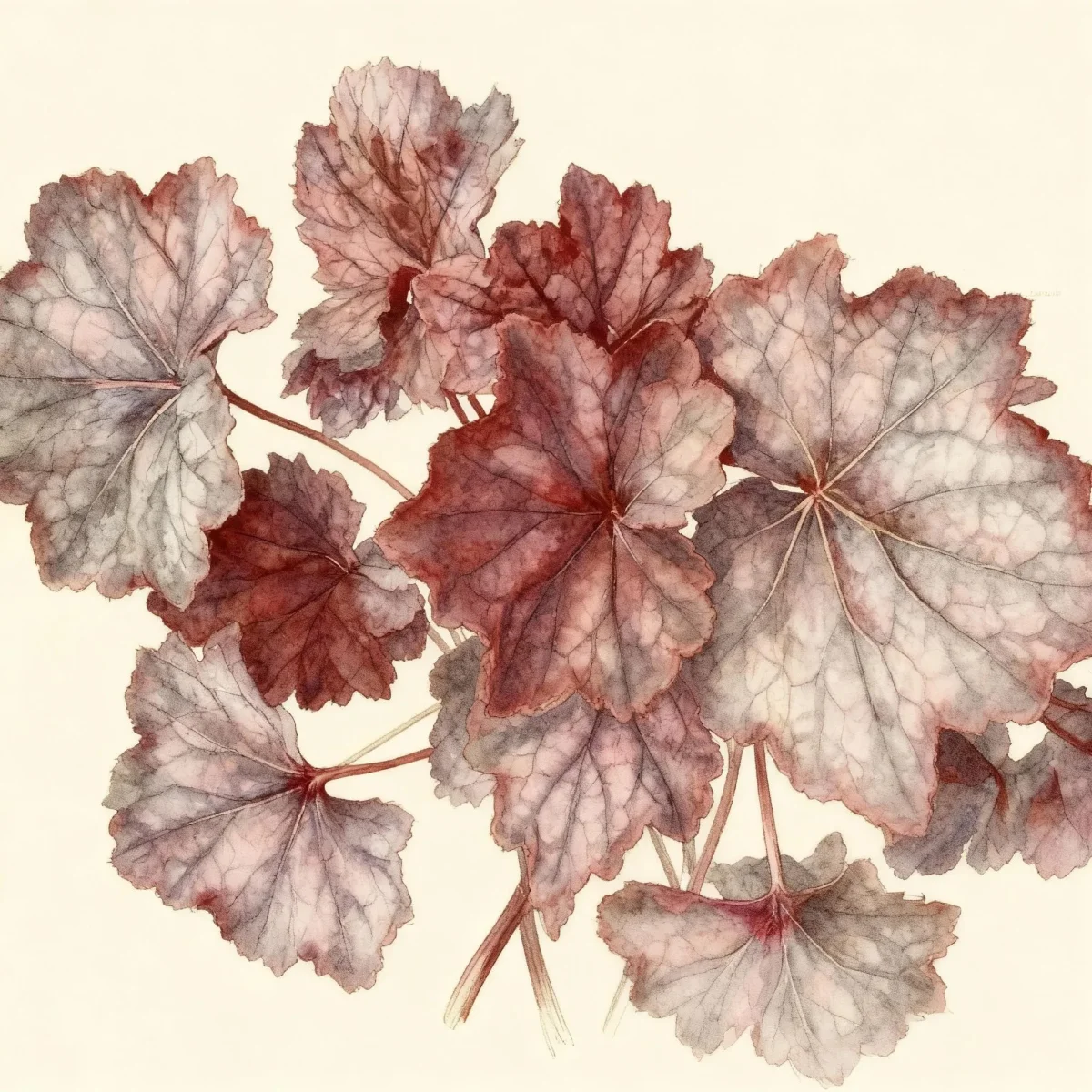
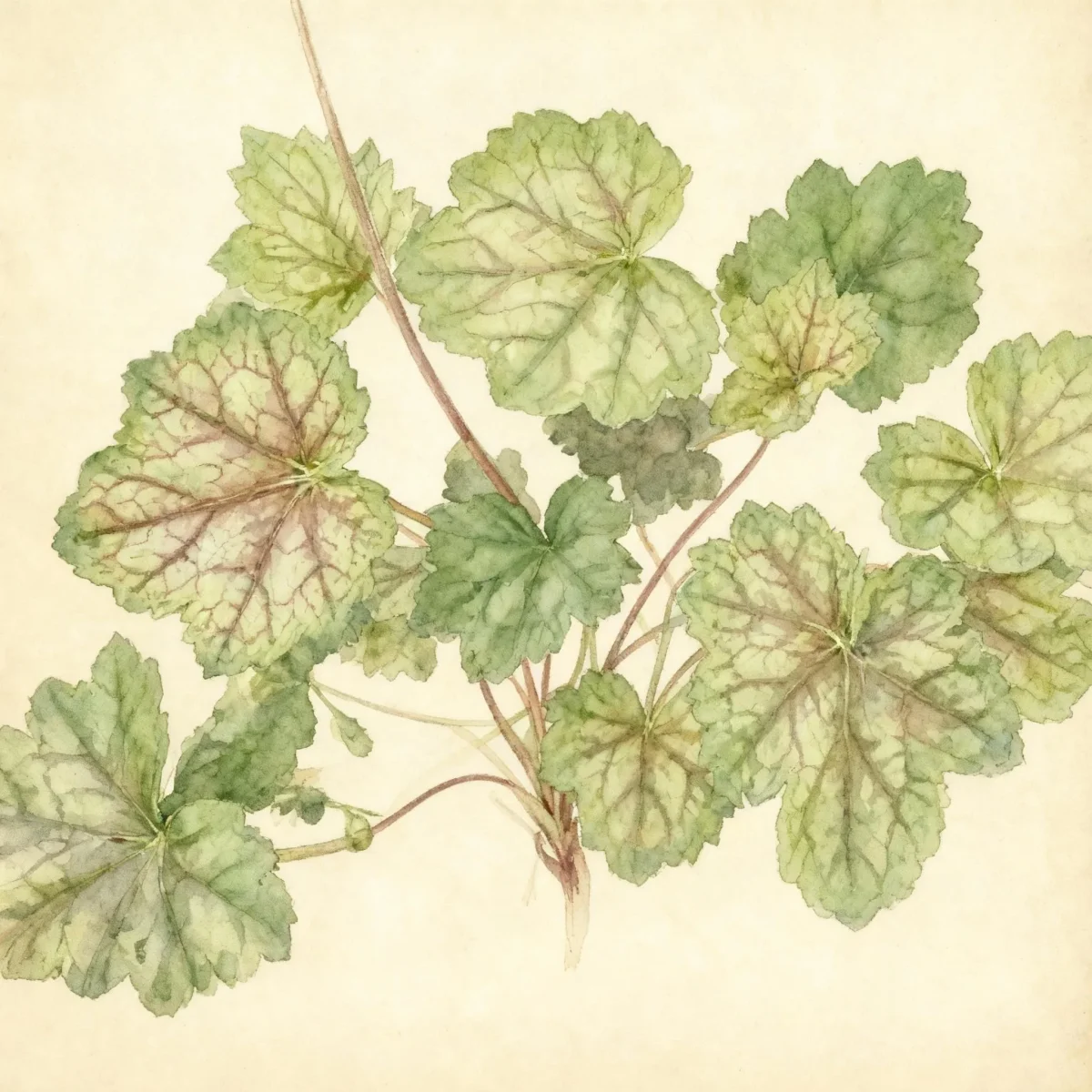
Coral bells (Heuchera 'Ruby Veil')
Vibrant Heuchera 'Ruby Veil' Coral bells offer ruby-purple foliage and delicate summer blooms. Easy care perennial for zones 4-9.
Scroll down to discover growing tips, care requirements, companion plants, and more
Complete Plant Information
Overview
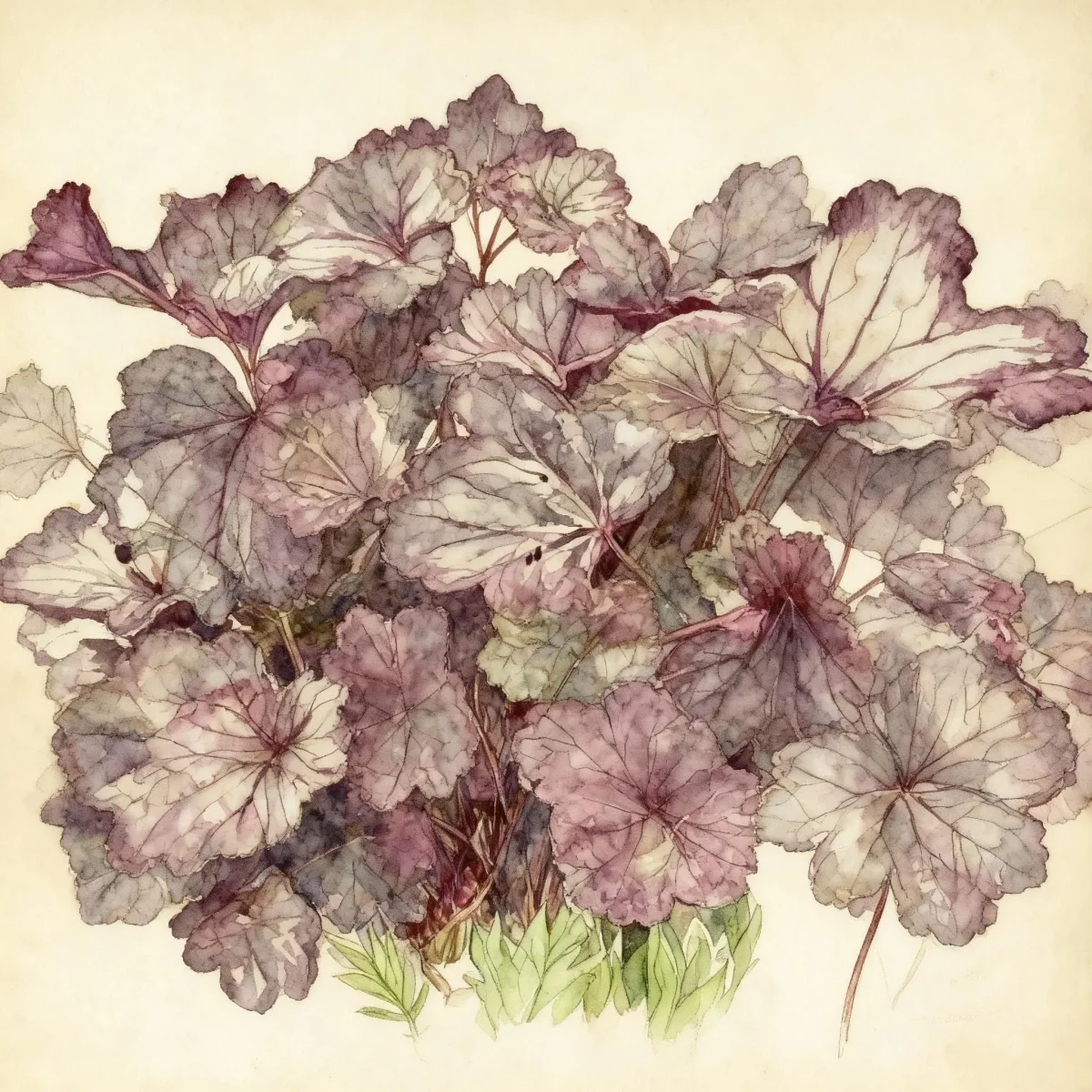
Heuchera ‘Ruby Veil’, commonly known as Coral bells, is an exceptional herbaceous perennial prized for its dramatic, colorful foliage that provides season-long interest. This cultivar stands out with large, lobed, ruby-purple leaves that feature silvery-gray venation and striking fuchsia undersides. Belonging to the Saxifragaceae family, these plants readily form a neat, clump-forming mound perfect for adding depth to mixed borders.
The beauty of Heuchera ‘Ruby Veil’ extends beyond its leaves; during summer, slender stems rise above the basal foliage, displaying airy panicles of tiny, greenish-white flowers. While the flowers are subtle, they contribute to the plant’s overall texture and can be useful as cut material. Its reliability and adaptability make it a cornerstone for gardeners seeking low-maintenance color.
Whether used to illuminate shaded corners or placed where it can catch the morning sun, Heuchera ‘Ruby Veil’ offers year-round texture, particularly in mild winter areas. Proper placement according to its sun exposure needs ensures the best performance for these outstanding Coral bells.
Fast Facts
- Plant Family: Saxifragaceae
- Plant Type: Herbaceous perennial
- Hardiness Zones: USDA Zones 4-9
- Size at Maturity:
- Height: 1-2 ft
- Spread: 1-1.5 ft
- Bloom Time: June to July
- Bloom Description: Greenish white
- Sun Exposure: Full sun to part shade
- Water Needs: Medium
- Maintenance Level: Medium
How to Grow
Heucheras like Heuchera ‘Ruby Veil’ thrive best when planted in organically rich, humusy soil that maintains medium moisture levels and offers excellent drainage. While many hybrids tolerate full sun, especially in northern climates, these Coral bells generally prefer partial shade, particularly protection from intense afternoon heat in southern regions. If planting in full sun, meticulous attention to consistent watering is non-negotiable, as drying soils can lead to leaf scorch and decline.
Watering should be consistent. Avoid letting the soil dry out completely, which is crucial for maintaining the vibrant ruby-purple foliage of Heuchera ‘Ruby Veil’. No specific fertilizing regimen is usually required if the soil is well-amended initially, but a winter compost mulch applied after the ground freezes helps insulate roots against damaging frost heaving.
Pruning involves removing the spent flower stems in the hopes of encouraging a secondary flush of blooms, though this is not strictly necessary for ornamental value. In warmer climates, the foliage remains largely evergreen. In colder zones, wait until spring to clean up any dead or frost-damaged leaves. For best vigor, plan to divide the clumps every three to four years during the spring season.
Landscape Uses
Coral bells are incredibly versatile, providing structure and color contrast in diverse garden settings. Heuchera ‘Ruby Veil’ excels when massed together for a bold impact or planted in drifts along borders where its rich color can be fully appreciated. Their low, mounding habit makes them extremely effective as neat edgers along pathways or walkways, defining lines without obscuring views.
Consider planting this cultivar within rock gardens where the contrast between the foliage and stone accents the texture. In open woodland garden settings, they thrive under the dappled sunlight cast by deciduous trees, creating beautiful cool-toned tapestry effects. They pair wonderfully with light-green hostas, ferns, and silver-leaved plants which echo the venation on the leaves of Heuchera ‘Ruby Veil’.
Standout Features
Flower Qualities
- Showy
- Good Cut
Noteworthy Characteristics
Heuchera, commonly called coral bells or alumroot, includes about 55 evergreen to semi-evergreen perennial species native to North America, growing in varied habitats like woodlands and rocky cliffs. Hybrid varieties, like Heuchera ‘Ruby Veil’, boast expansive leaf color palettes previously unseen. ‘Ruby Veil’ specifically forms a clump of large (4-8” wide), ruby-purple, heart-shaped leaves with silvery venation and fuchsia backsides, complemented by airy panicles of greenish-white flowers in early summer.
Tolerances
Potential Problems
Frost heaving is a significant concern, occurring when winter temperatures fluctuate widely, disturbing shallow roots. Management involves applying a winter compost mulch only after the soil has frozen solid to stabilize the root zone. Disease issues often center around fungal problems, including powdery mildew, rust, and bacterial leaf spot; ensure good air circulation and avoid overhead watering to mitigate these risks. Watch out for pests such as weevils and foliar nematodes, treating infestations promptly if they appear.
Frequently Asked Questions
What hardiness zones is Coral bells suitable for?
Heuchera ‘Ruby Veil’ is reliably hardy across USDA Zones 4 through 9, making it adaptable to many North American climates.
How large does Heuchera ‘Ruby Veil’ grow?
This cultivar typically reaches 1 to 2 feet in height, with a spread ranging between 1 and 1.5 feet, forming a substantial foliage mound.
What sun exposure does Heuchera ‘Ruby Veil’ need?
For the best color and performance, Heuchera ‘Ruby Veil’ prefers full sun to part shade, though afternoon shade is often recommended in hotter locations.
When does Coral bells bloom?
This variety produces its delicate, greenish-white blossoms typically from June through July, offering summer color above the vibrant foliage.
Conclusion
Heuchera ‘Ruby Veil’ adds phenomenal, reliable color to the landscape, thanks primarily to its deeply colored, distinctive, ruby-purple foliage. These Coral bells are prized for their moderate size and adaptability to varying light conditions. Assess your local USDA growing zone before planting to maximize the spectacular display offered by Heuchera ‘Ruby Veil’.
Companion Planting
Choosing the right neighbors enhances the architectural interest of Heuchera ‘Ruby Veil’. Because many Coral bells prefer slightly shaded conditions, pair them with other woodland edge plants such as Hosta varieties featuring chartreuse or blue foliage for stark color contrast. Ferns, like Japanese Painted Ferns or Autumn Ferns, offer complementary fine texture against the broad, lobed leaves of this Heuchera.
In brighter spots, consider edging with low-growing, silver-leaved perennials like Lamb’s Ears (Stachys byzantina) or dusty miller, which complement the silvery veining found on the ‘Ruby Veil’ leaves. Ensure companion plants also share similar medium water needs to simplify maintenance for this beautiful plant.
Seasonal Care Calendar
Early spring cleanup is essential for maintaining healthy Coral bells. As temperatures rise, gently remove any dead foliage remaining from the winter months to encourage fresh growth. This is also the optimal time to divide any clumps that have become overgrown, typically every 3-4 years, which rejuvenates the plant and provides new specimens.
Summer care focuses on moisture control. While Heuchera ‘Ruby Veil’ handles medium water needs, prolonged heat requires diligent monitoring, especially if grown in full sun. Deadheading the spent flower stalks encourages repeat blooming performance throughout June and July.
In the late fall, especially as winter approaches in colder Zones 4 and 5, apply a protective layer of compost mulch after the soil freezes. This prevents damaging freeze/thaw cycles that can cause root heaving, ensuring your valuable Heuchera ‘Ruby Veil’ is protected until spring reappears.