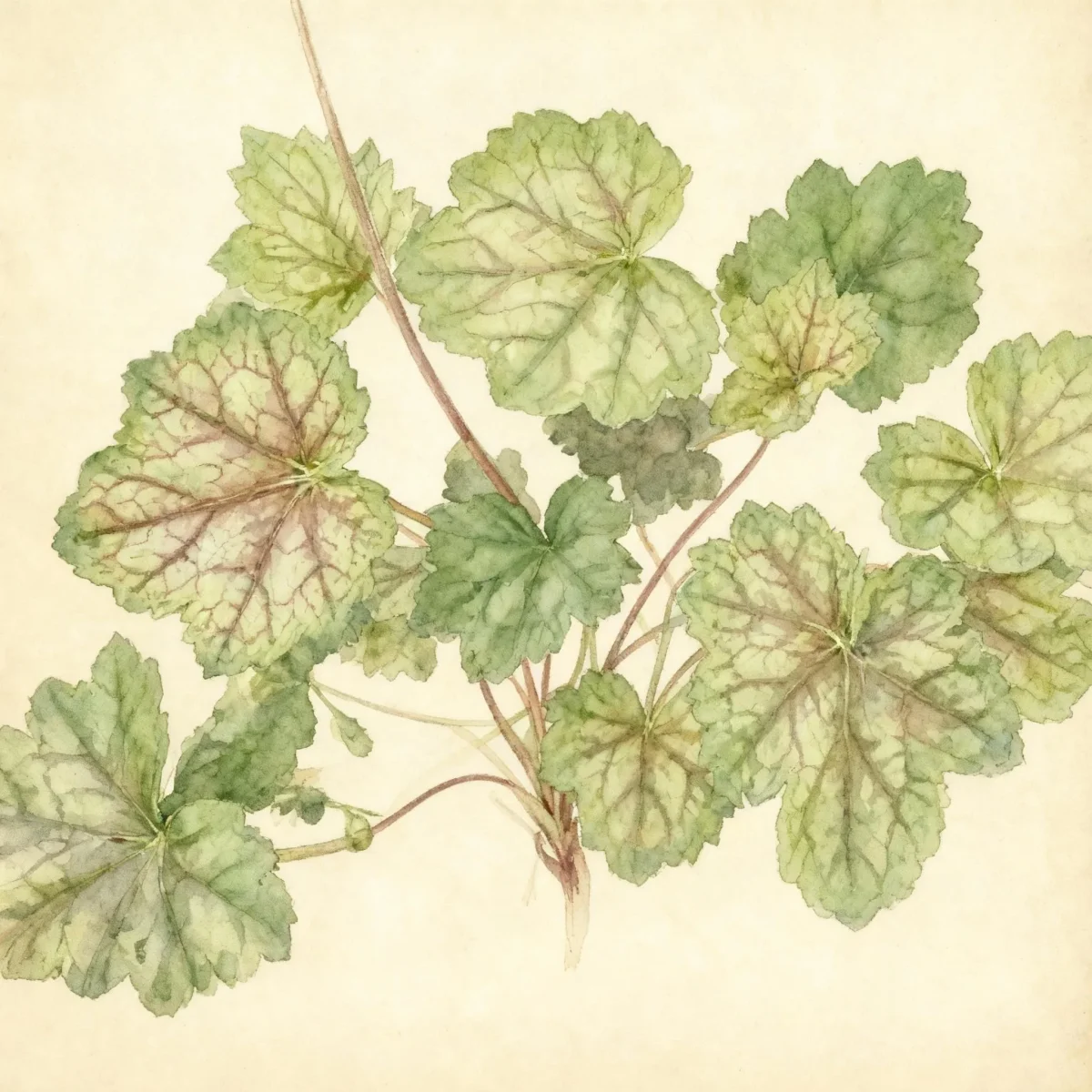
Coral bells (Heuchera micrantha var. diversifolia 'Absi' BRESSINGHAM BRONZE)
Discover Heuchera micrantha var. diversifolia 'Absi' BRESSINGHAM BRONZE, a stunning Coral bells cultivar valued for its dark, metallic bronze foliage.
Scroll down to discover growing tips, care requirements, companion plants, and more
Complete Plant Information
Overview
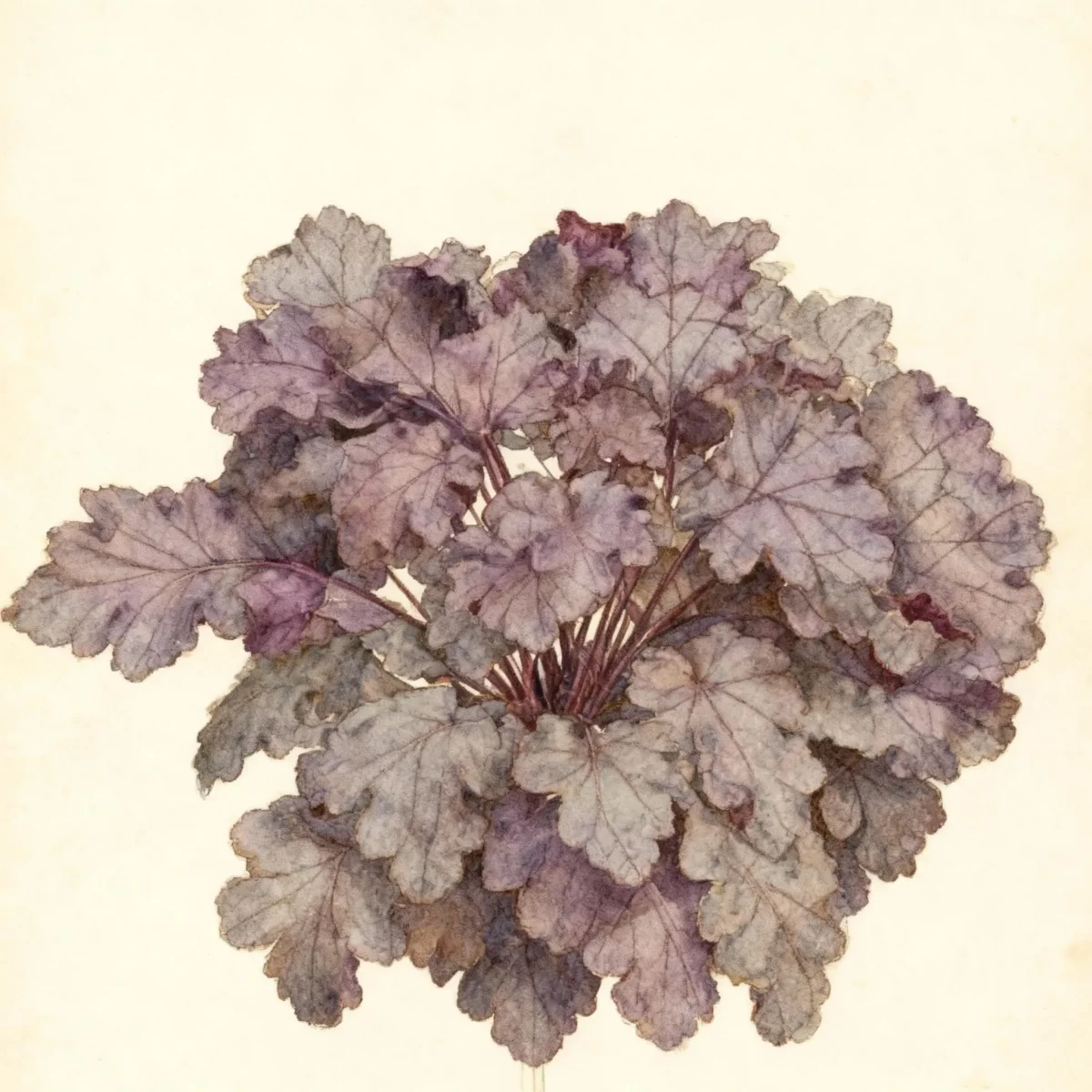
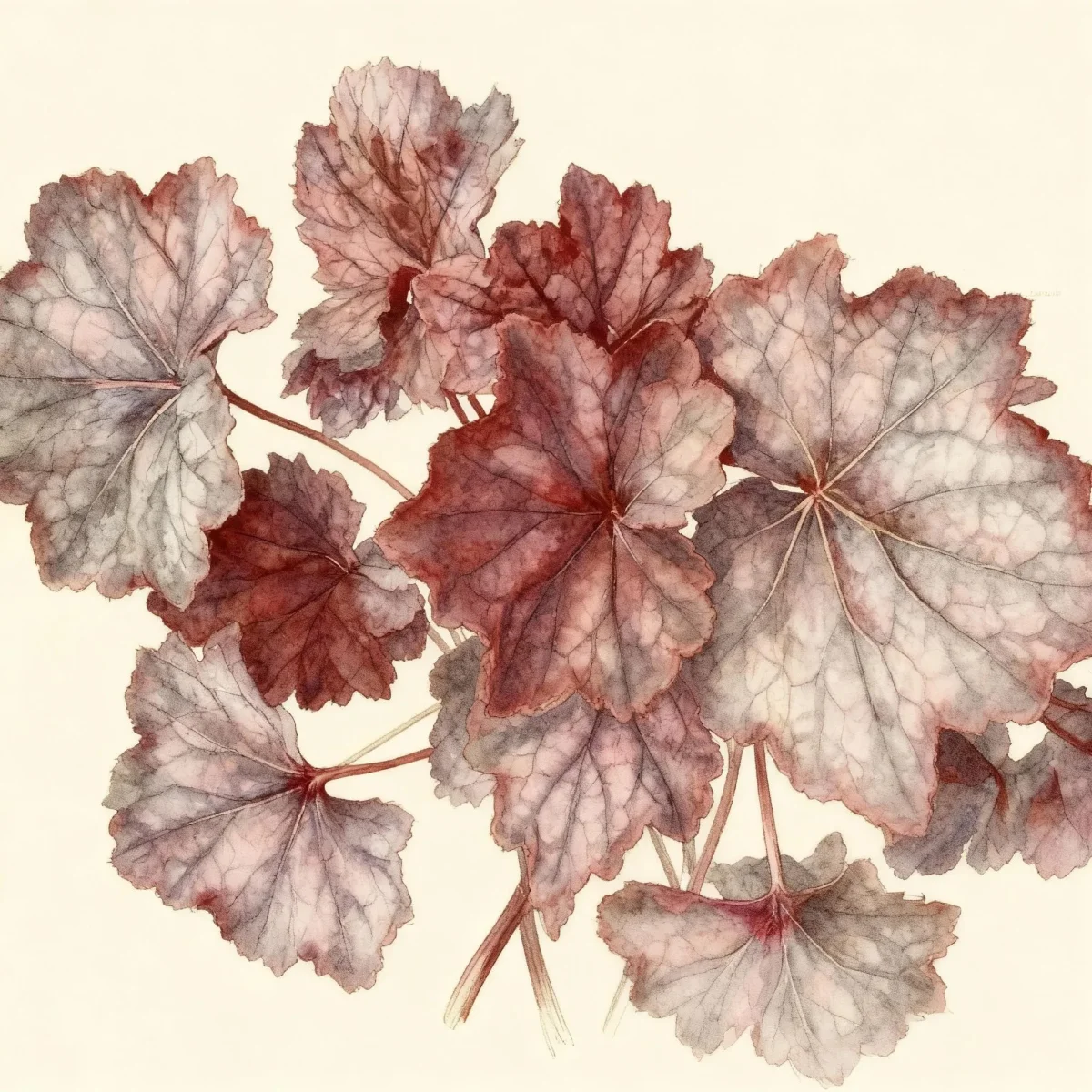
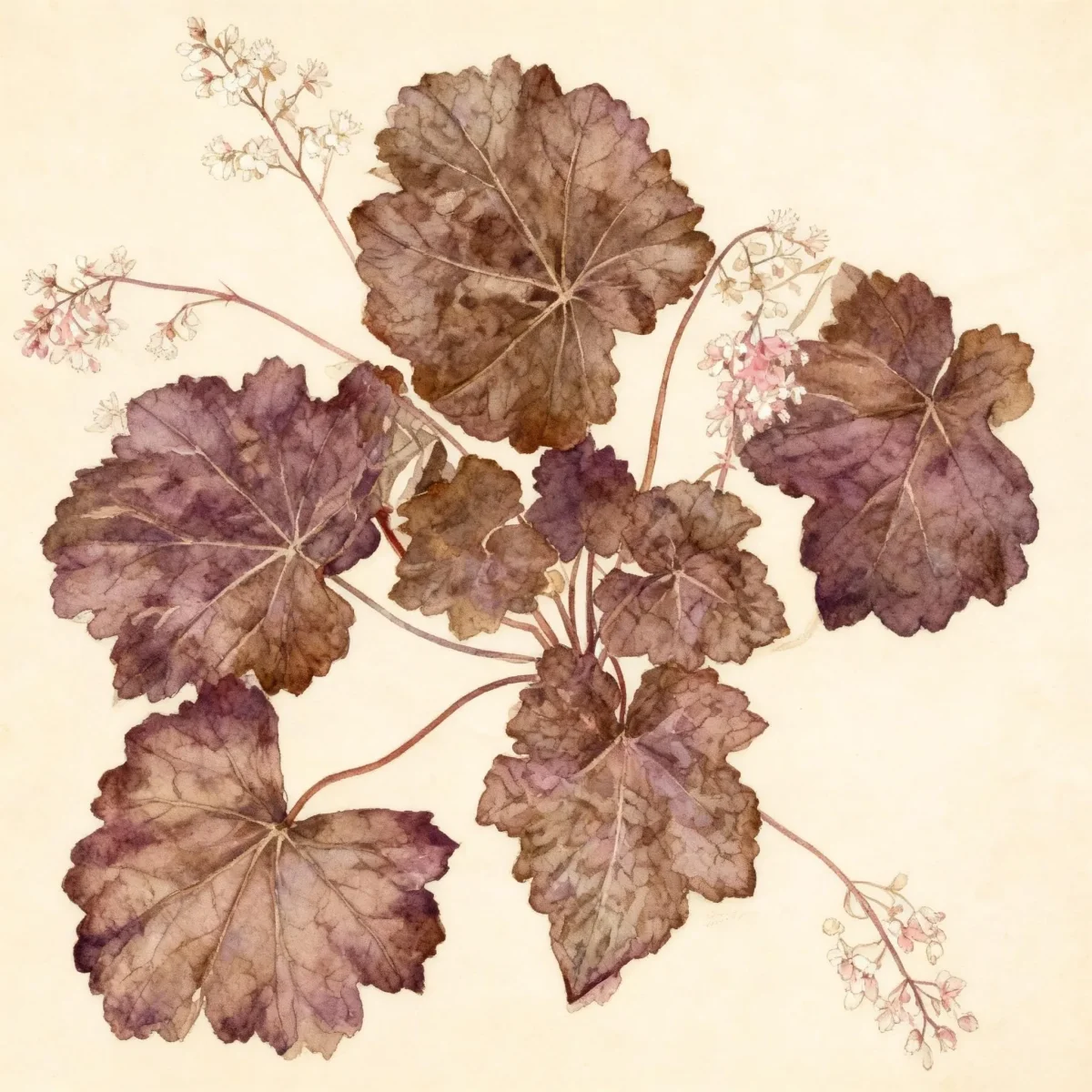
Heuchera micrantha var. diversifolia ‘Absi’ BRESSINGHAM BRONZE is a highly sought-after herbaceous perennial, prized primarily for its exceptional, year-round foliage display. This cultivar of Coral bells offers dark, metallic bronze leaves that provide striking contrast against summer’s airy white blooms, making it a standout perennial accent. It forms a neat, clump-forming mound, offering reliable texture and deep color across various garden settings.
Proper cultivation of Heuchera micrantha var. Diversifolia ‘Absi’ BRESSINGHAM BRONZE hinges on providing consistent moisture and well-drained, humusy soil. While it handles full sun well in cooler northern areas, gardeners in warmer regions should ensure afternoon shade to prevent scorching of the beautiful bronze leaves. This plant offers excellent visual impact as an edger or when massed in borders.
This specific introduction, ‘Absi’ BRESSINGHAM BRONZE, distinguishes itself from similar cultivars with its larger, stronger-ribbed foliage that maintains its deep purple-bronze color well throughout the season. Its resilience and striking aesthetic ensure that it remains vital in the garden from spring through winter, especially in milder climates where it stays largely evergreen.
Fast Facts
- Plant Family: Saxifragaceae
- Plant Type: Herbaceous perennial
- Hardiness Zones: USDA Zones 4-9
- Size at Maturity:
- Height: 1-2 ft
- Spread: 1-1.5 ft
- Bloom Time: June to August
- Bloom Description: White
- Sun Exposure: Full sun to part shade
- Water Needs: Medium
- Maintenance Level: Medium
How to Grow
The ideal planting location for Coral bells incorporates organically rich, humusy, and exceptionally well-drained soil. Plant in full sun where summers are mild, or ensure protection from intense afternoon heat in warmer zones, as prolonged dryness or excessive heat can cause foliage scorch and decline. Consistent moisture is key, especially for plants situated in sunnier exposures where the soil dries out faster.
Watering should be regular to maintain medium soil moisture; allow the top inch of soil to approach dryness slightly between waterings, but avoid letting the planting area become parched. Deadheading faded flower stems encourages any repeat bloom performance. In colder climates, apply a winter mulch only after the ground has frozen solid to prevent damaging root heaving caused by fluctuating winter temperatures.
To maintain vigor, plan to divide the clumps of Heuchera micrantha var. diversifolia ‘Absi’ BRESSINGHAM BRONZE every three to four years during the spring. This division process rejuvenates the plant and allows you to spread this superb foliage plant throughout your landscape. Good cultural practices significantly reduce the risk of common issues.
Landscape Uses
Coral bells, particularly this robust cultivar, are versatile performers in diverse garden designs. They shine when massed together to create a living carpet of bronze foliage, also functioning perfectly as an effective ground cover. Their controlled height makes them excellent for defining edges along paths, walkways, or the front ranks of mixed perennial borders.
Heuchera micrantha var. Diversifolia ‘Absi’ BRESSINGHAM BRONZE fits seamlessly into rock gardens, where their texture contrasts nicely with spiky succulents or fine grasses. They also thrive in open woodland settings receiving dappled light, echoing their native, partially shaded habitats. Look for companions that appreciate similar soil richness and moisture, such as hostas, ferns, or astilbes.
Standout Features
Flower Qualities
- Showy
Noteworthy Characteristics
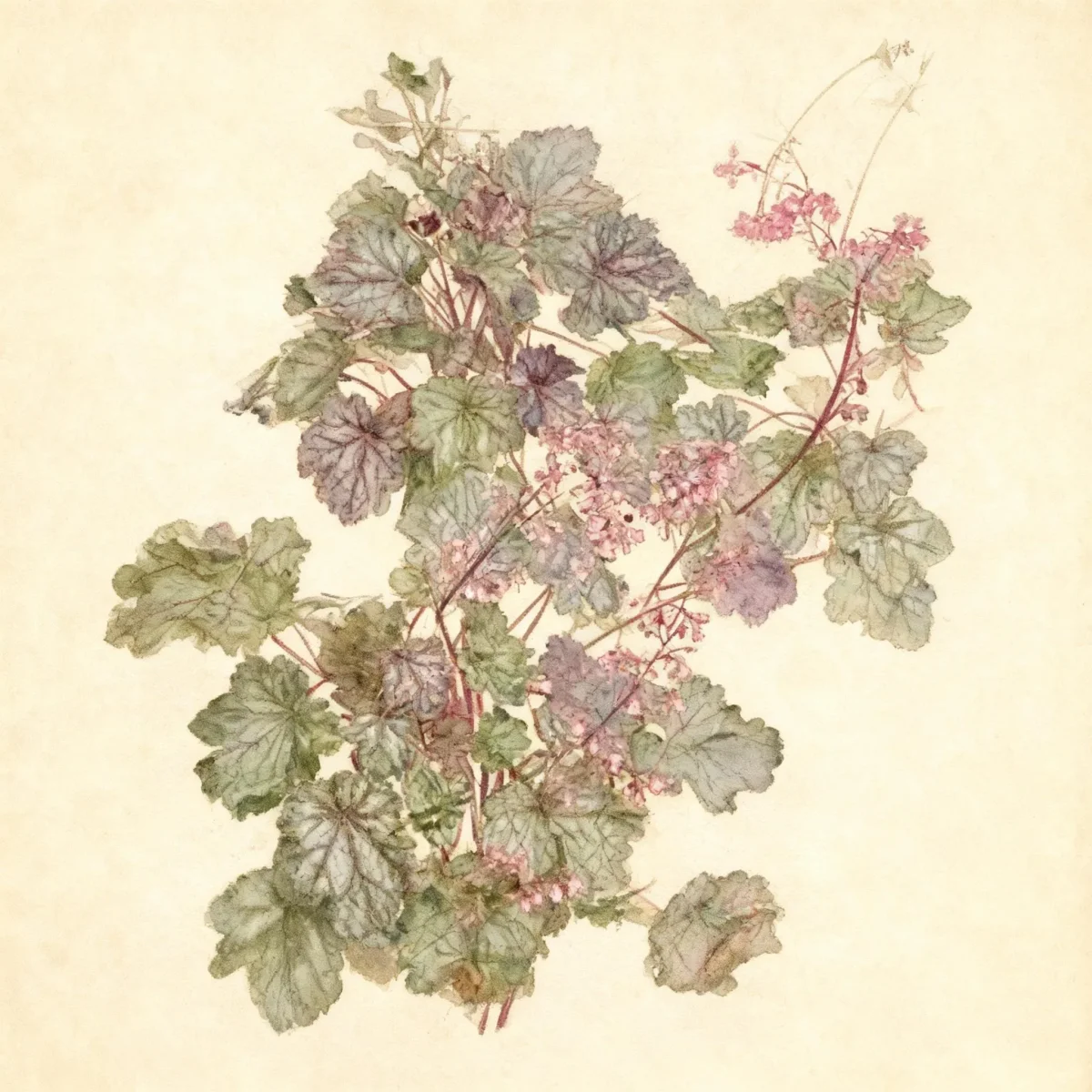
BRESSINGHAM BRONZE is a clump-forming, coral bells cultivar that features dark, metallic bronze foliage with contrasting white summer flowers. It most closely resembles H. Micrantha var. Diversifolia ‘Purple Palace’, but is primarily distinguished therefrom by having larger, stronger-ribbed leaves that are a deeper purple-bronze. Foliage typically forms a basal mound to 12-20” tall and as wide, retaining good color throughout the growing season, with airy panicles of white flowers rising above the mound to 28” tall.
Tolerances
This plant shows good resistance to powdery mildew, which is a common ailment for many shade lovers.
Potential Problems
This cultivar exhibits few serious insect or disease issues, making maintenance generally straightforward. The primary cultural concern involves hydrology and temperature fluctuations: frost heaving of roots may occur when winter temperatures fluctuate widely, necessitating winter mulching after the soil freezes in cold regions. Watch for signs of stress if the soil is allowed to dry out completely, which can lead to foliage scorch.
Frequently Asked Questions
What hardiness zones is Coral bells suitable for?
Heuchera micrantha var. diversifolia ‘Absi’ BRESSINGHAM BRONZE is suitable for USDA Hardiness Zones 4 through 9.
How large does Heuchera micrantha var. diversifolia ‘Absi’ BRESSINGHAM BRONZE grow?
This Coral bells variety typically reaches a height between 1 and 2 feet, with a spread of 1 to 1.5 feet at maturity.
What sun exposure does Coral bells need?
This plant performs best in full sun to part shade conditions, though afternoon shade is beneficial in hotter climates.
When does Coral bells bloom?
The flowers appear between June and August, manifesting as small, bell-shaped white blossoms rising above the foliage mound.
Conclusion
Heuchera micrantha var. diversifolia ‘Absi’ BRESSINGHAM BRONZE provides invaluable, season-long color through its metallic bronze foliage, complemented by delicate white summer blooms. As a dependable herbaceous perennial, this Coral bells variety is essential for adding depth and contrast to the garden border. Before planting, confirm your local USDA zone compatibility and ensure you can provide the humus-rich, consistently moist drainage it requires for peak performance.
Companion Planting
When selecting companions for Coral bells, prioritize neighboring plants that share the need for medium moisture and similar soil richness. Hostas are excellent partners, as their broad, mounding foliage offers a textural counterpoint to the finely cut texture that some Coral bells foliage shares, especially in partial shade. Try pairing Heuchera micrantha var. diversifolia ‘Absi’ BRESSINGHAM BRONZE with creeping thyme or low-growing sedums in rock gardens for contrasting fine-textured contrast.
For borders where good drainage is paramount, consider pairing this cultivar with plants like Siberian Iris or various ornamental grasses that tolerate sun but appreciate consistent water. In shadier spots, lungwort (Pulmonaria) or bleeding hearts (Dicentra spectabilis) thrive in similar conditions, allowing the dark bronze tones of the Heuchera micrantha var. Diversifolia ‘Absi’ BRESSINGHAM BRONZE to truly pop against their brighter greens or blues.
Design Ideas for Bronze Foliage
The dark, metallic quality of the BRESSINGHAM BRONZE foliage is perfect for creating sharp definition in the landscape, particularly when juxtaposed against lighter colors. Use these Coral bells as an intentional “trench” of darkness leading the eye along a pathway or border edge. They look spectacular planted against silvery foliage companions like Lamb’s Ears or Artemisia to maximize the metallic sheen.
Alternatively, employ them near water features or bright white-blooming annuals to enhance the clean look of the summer flowers. Because the foliage mounds are dense and low-growing, ‘Absi’ BRESSINGHAM BRONZE functions as a superb, colorful replacement for traditional green groundcovers, offering year-round interest even when flowers are absent.