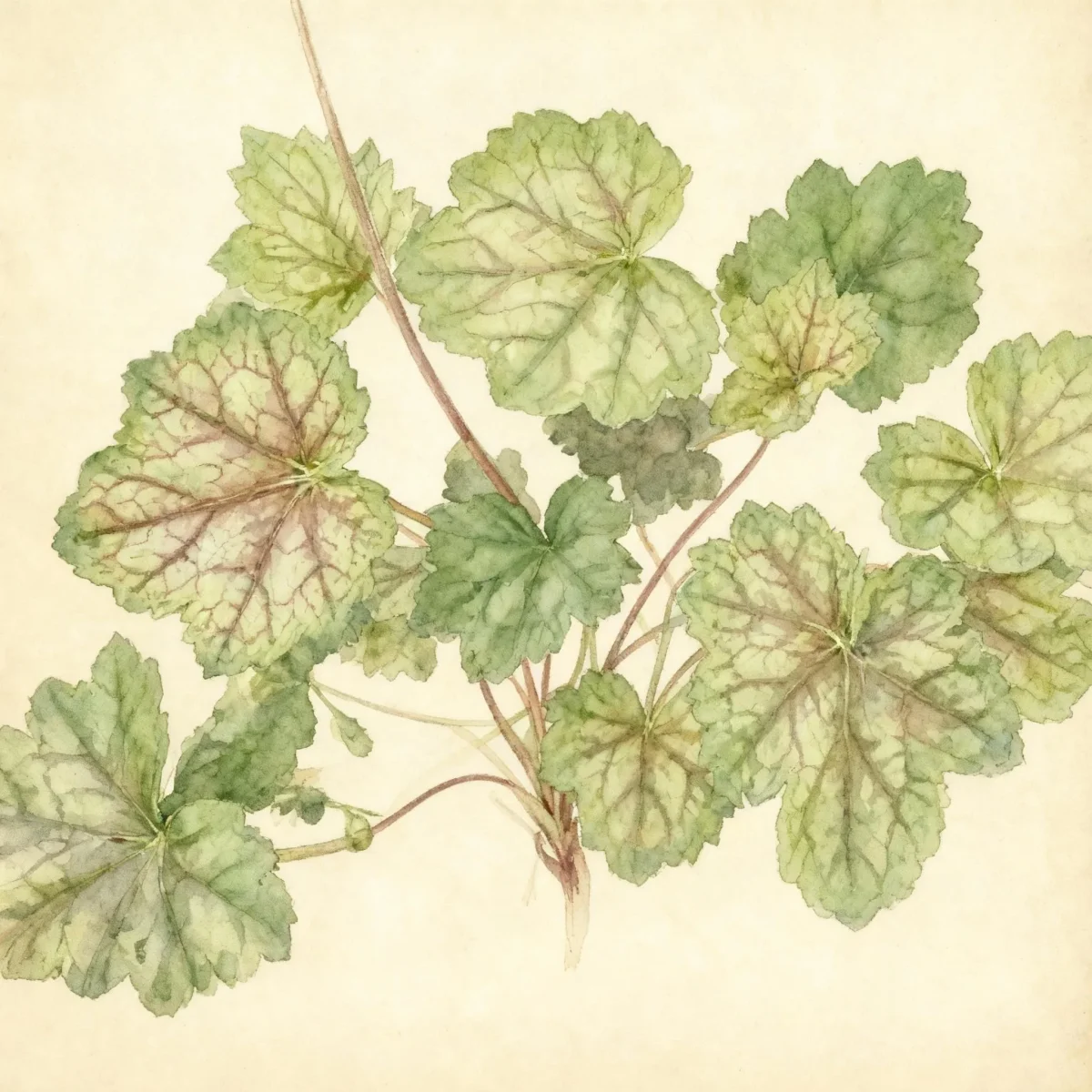
Coral bells (Heuchera 'Pewter Veil')
Heuchera 'Pewter Veil' Coral bells offer stunning metallic silver foliage with purple undertones. This easy-care perennial thrives in part shade.
Scroll down to discover growing tips, care requirements, companion plants, and more
Complete Plant Information
Overview
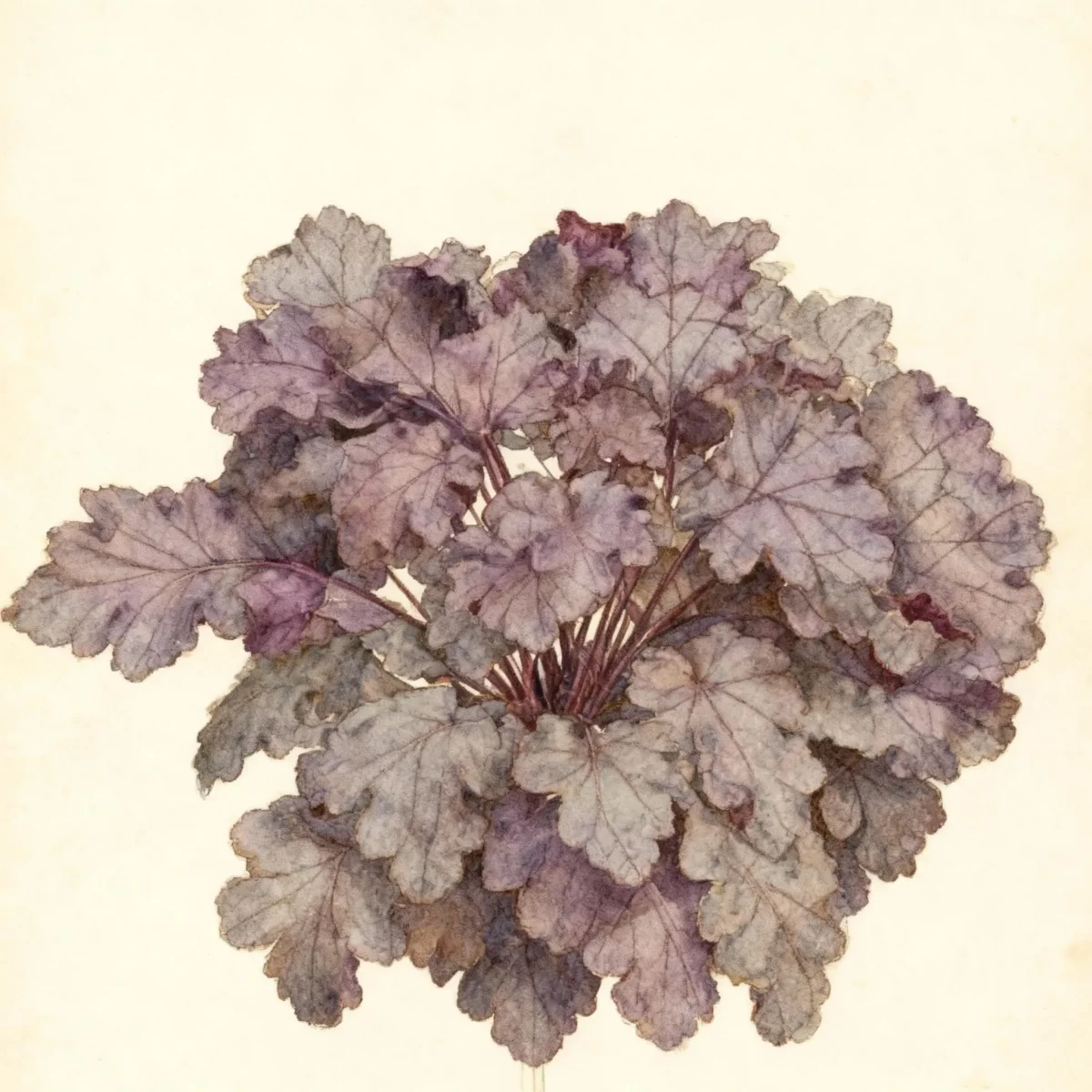
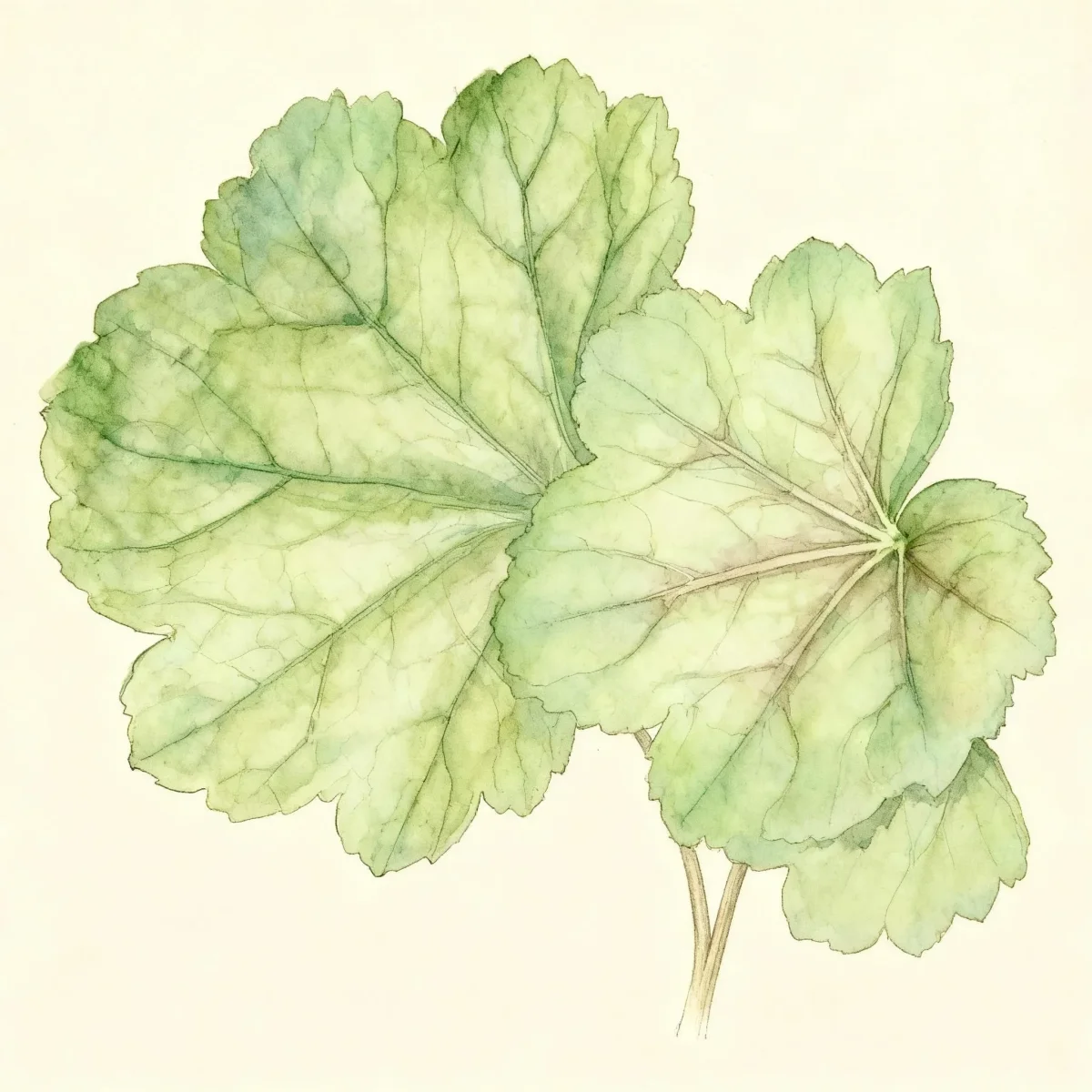
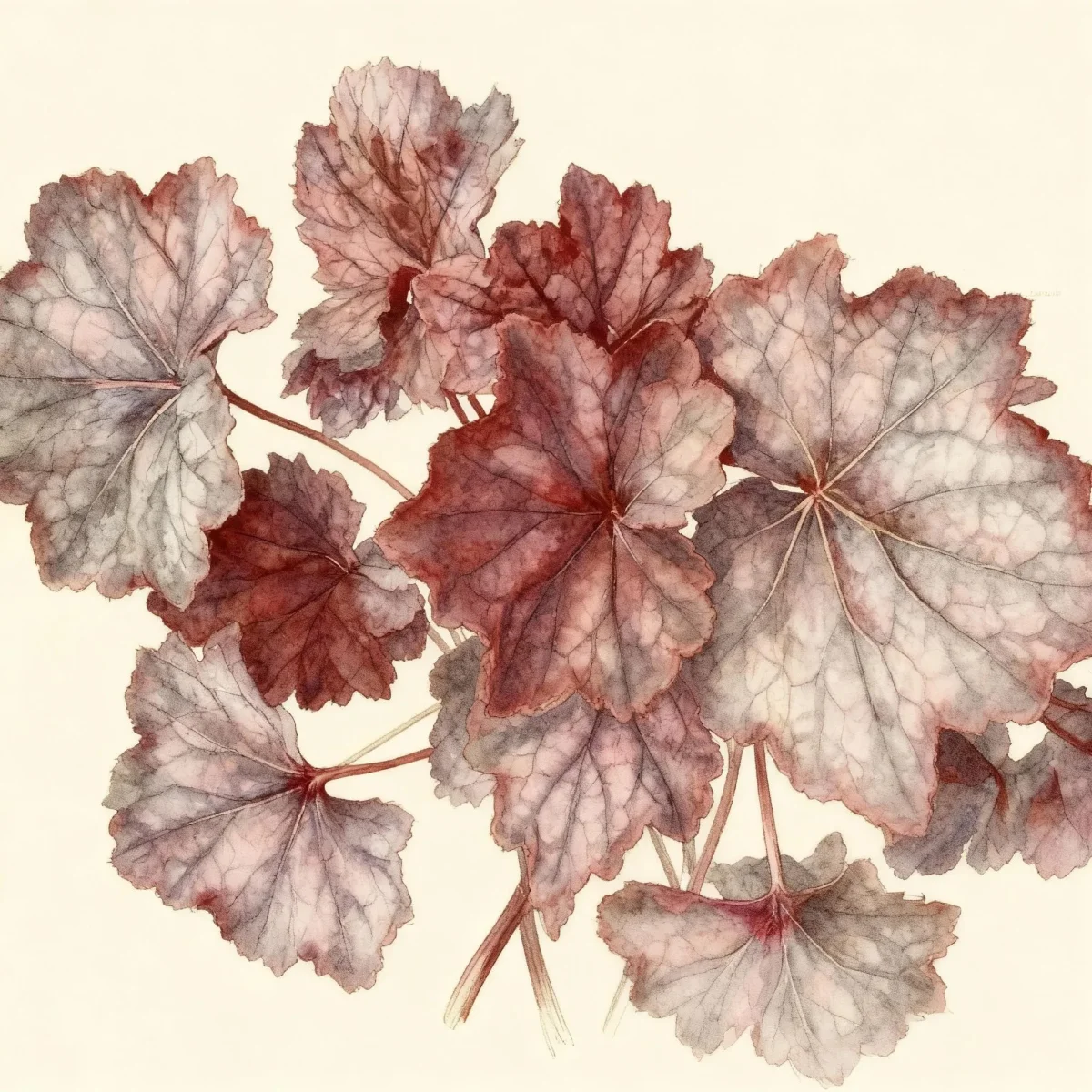
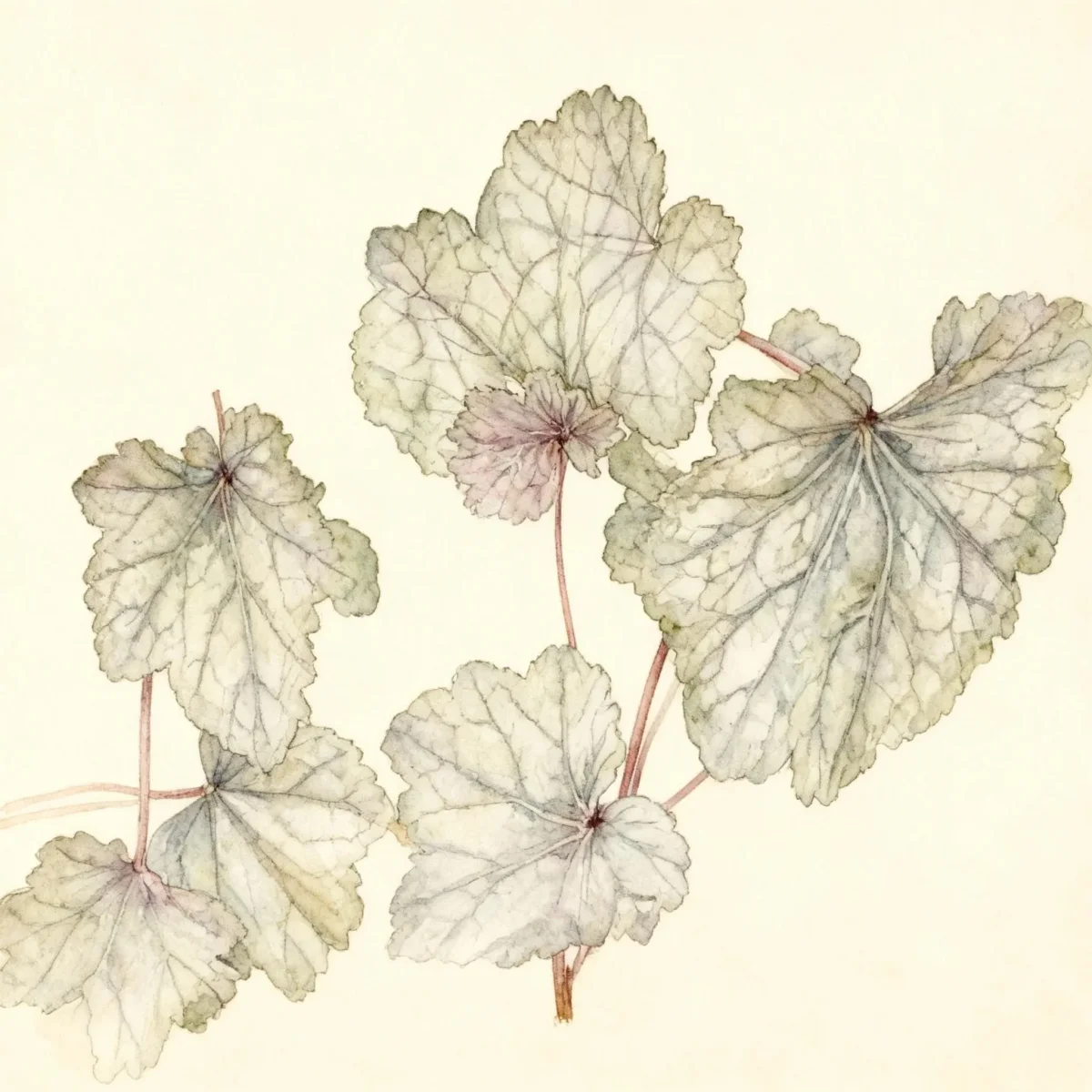
Heuchera ‘Pewter Veil’ is a highly valued herbaceous perennial, commonly known as Coral bells, appreciated for its year-round foliage interest rather than just its seasonal blooms. This cultivar forms a striking basal mound of foliage maturing to a metallic silver hue accentuated by deep purple undertones and distinct venation. As a dependable Coral bells variety, Heuchera ‘Pewter Veil’ provides excellent textural contrast in shaded garden areas.
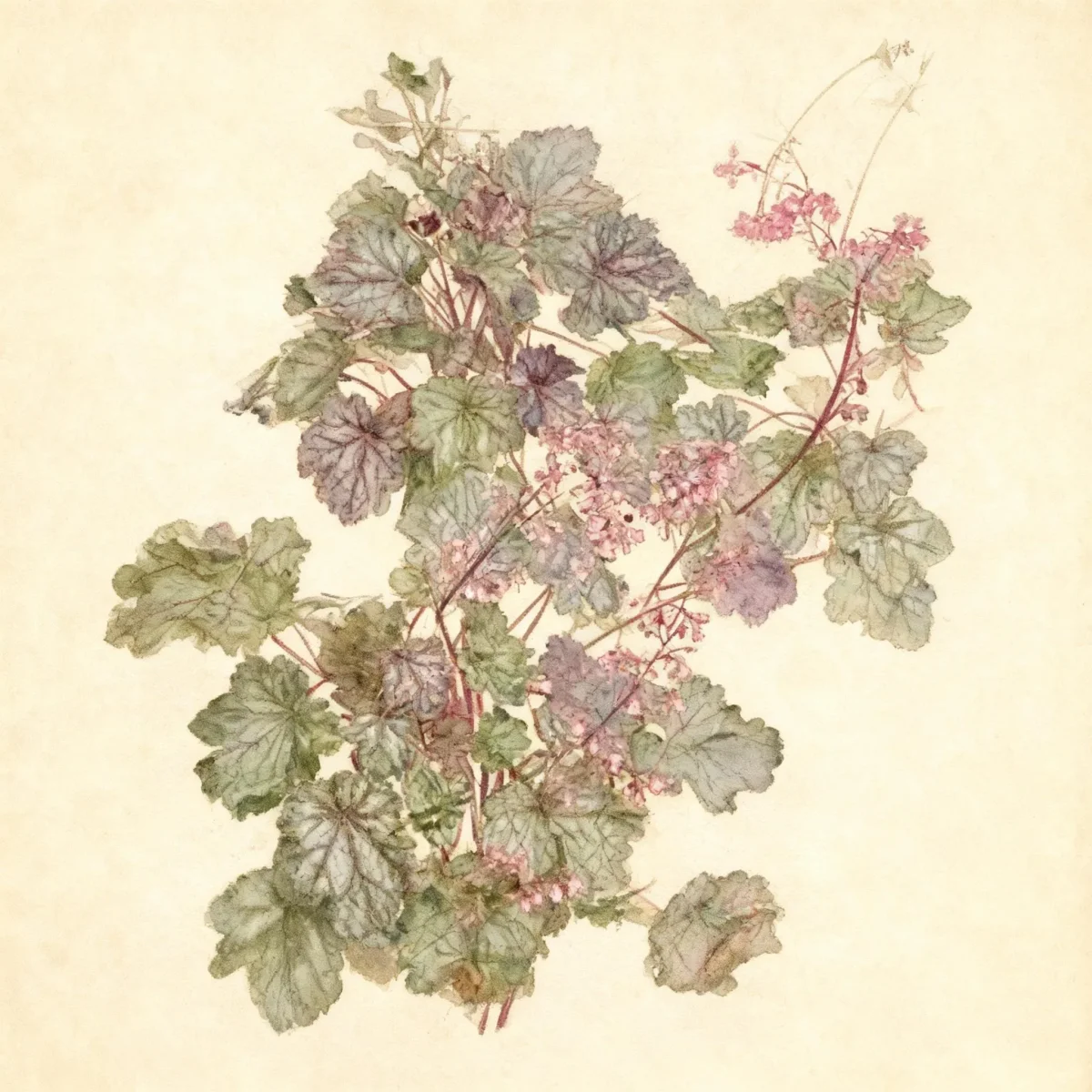
This clump-forming perennial generally reaches heights between one and two feet, featuring airy spikes of small, creamy white flowers with a purple tinge that emerge in mid-summer. While parentage often dictates exact requirements, Heuchera ‘Pewter Veil’ adapts well to a range of conditions, though afternoon shade is beneficial, particularly in hotter climates. Its evergreen nature in milder winters ensures garden structure throughout the year.
Gardeners rely on Heuchera ‘Pewter Veil’ to bring light and color to darker corners of the garden bed or border. Its manageable size and medium maintenance requirement make it a staple for both novice and experienced landscapers seeking consistent, quality foliage display from their Coral bells collection.
Fast Facts
- Plant Family: Saxifragaceae
- Plant Type: Herbaceous perennial
- Hardiness Zones: USDA Zones 4-9
- Size at Maturity:
- Height: 1-2 ft
- Spread: 1-1.5 ft
- Bloom Time: June to July
- Bloom Description: Creamy white with purple tinge
- Sun Exposure: Full sun to part shade
- Water Needs: Medium
- Maintenance Level: Medium
How to Grow
Successful cultivation of Heuchera ‘Pewter Veil’ begins with site selection, prioritizing organically rich, humusy, and consistently moist, yet well-drained soils. While this hybrid can tolerate full sun, especially in cooler northern climates, most specimens, including Heuchera ‘Pewter Veil’, will benefit from afternoon shade to prevent leaf scorch during intense summer heat. Water consistently; allowing the soil to dry out fully can cause foliage decline.
Maintenance is fairly straightforward for these Coral bells. Deadhead faded flower stems promptly to encourage any potential rebloom. In large clumps, division is recommended every three to four years, best performed in the spring to revitalize the plant structure.
For winter preparation, apply a layer of compost mulch after the ground freezes solid. This protective layer helps stabilize soil temperatures and prevents the disruptive process of root heaving common in fluctuating winter zones. In warmer zones, the foliage of Heuchera ‘Pewter Veil’ often remains semi-evergreen or fully evergreen, requiring minimal cleanup.
Landscape Uses
Heuchera ‘Pewter Veil’ shines when utilized for mass planting or grouping to maximize the visual impact of its silver-toned leaves. These Coral bells are exceptionally effective when planted as an edger along walkways or paths, clearly defining lines within the landscape design. Their mounding habit makes for perfect transitions between taller background plants and lower groundcovers.
Use Heuchera ‘Pewter Veil’ in rock gardens where good drainage is assured, or throughout woodland gardens that mimic their native, filtered-light habitat. This plant pairs beautifully with other shade-tolerant beauties like Hostas, Ferns, and Astilbes. The cool metallic tones of the foliage contrast wonderfully against deep green or burgundy companions.
Standout Features
Flower Qualities
- Showy
- Good Cut
Noteworthy Characteristics
Heuchera, commonly called coral bells or alumroot, is a genus of evergreen to semi-evergreen herbaceous perennials native to North America, featuring significant hybridization since the 1980s. The leaves of hybrids like Heuchera ‘Pewter Veil’ display an expanded palette of colors, often with complex variegation, while flowers range across white, pink, coral, or red shades. Specifically, ‘Pewter Veil’ forms a mound (to 12” tall) of lobed leaves maturing to metallic silver with purple undertones, topped by airy spikes of creamy white blooms in summer.
Tolerances
Potential Problems
The primary potential issue gardeners face with Coral bells, including Heuchera ‘Pewter Veil’, is frost heaving of the roots, which occurs when winter temperatures fluctuate dramatically, causing the ground to freeze and thaw repeatedly. To mitigate this, ensure a compost mulch is applied late in the season after the soil has fully frozen.
Disease potential includes fungal issues like powdery mildew and rust, as well as bacterial leaf spot, often exacerbated by poor air circulation or overly wet conditions. Good spacing during planting helps management. Watch also for insect pests such as weevils and foliar nematodes, addressing outbreaks promptly according to integrated pest management guidelines.
Frequently Asked Questions
What hardiness zones is Coral bells suitable for?
Heuchera ‘Pewter Veil’ is suitable for USDA Zones 4 through 9.
How large does Coral bells grow?
This variety typically reaches a height between 1 and 2 feet, with a spread of 1 to 1.5 feet.
What sun exposure does Coral bells need?
Heuchera ‘Pewter Veil’ performs well in conditions ranging from full sun to part shade, with afternoon shade often preferred in warmer regions.
When does Coral bells bloom?
The bloom time for this plant is generally from June to July, producing small, creamy white flowers with a purple tinge.
Conclusion
Heuchera ‘Pewter Veil’ offers exceptional value to the landscape due to its dynamic, easy-to-maintain metallic foliage that bridges the gap between shade perennials and textural accents. Integrating this variety of Coral bells into your garden ensures vibrant, cool-toned color throughout the growing season. Before planting, confirm your soil drainage is sufficient and select a location that matches the sun exposure requirements for optimal performance of Heuchera ‘Pewter Veil’.
Companion Planting
Selecting appropriate neighbors enhances the appeal of Heuchera ‘Pewter Veil’. Since these Coral bells prefer medium moisture and part shade, pair them with other shade-lovers that share similar cultural needs. Consider woodland plants like Hosta varieties with deep green or variegated leaves, which provide different leaf shapes and textures beneath the mound of Heuchera ‘Pewter Veil’.
For seasonal interest, interplant with spring-flowering bulbs such as Daffodils or Snowdrops; the foliage of the Coral bells will emerge soon after the bulbs fade, providing a continuous ground cover. Other excellent companions include Lungwort (Pulmonaria) for early color and low-growing groundcovers like Vinca or Ajuga that tolerate the same conditions as this specific cultivar.
Propagation Tips
The most practical way to propagate Heuchera ‘Pewter Veil’ is through division, as cloning named hybrids from seed is unreliable. Division should occur in the spring when new growth is actively starting, allowing the separated sections to establish quickly before summer heat. Gently lift the established clump and identify natural divisions, ensuring each new section has a healthy set of roots and at least one viable crown.
When dividing, use a clean, sharp knife if necessary to separate tight root masses, aiming for pieces that are substantial enough to sustain themselves. Replant immediately into the prepared, well-drained soil at the same depth as the original plant. Keep the newly divided Coral bells consistently moist for the first few weeks to encourage rapid root establishment.